PART 1
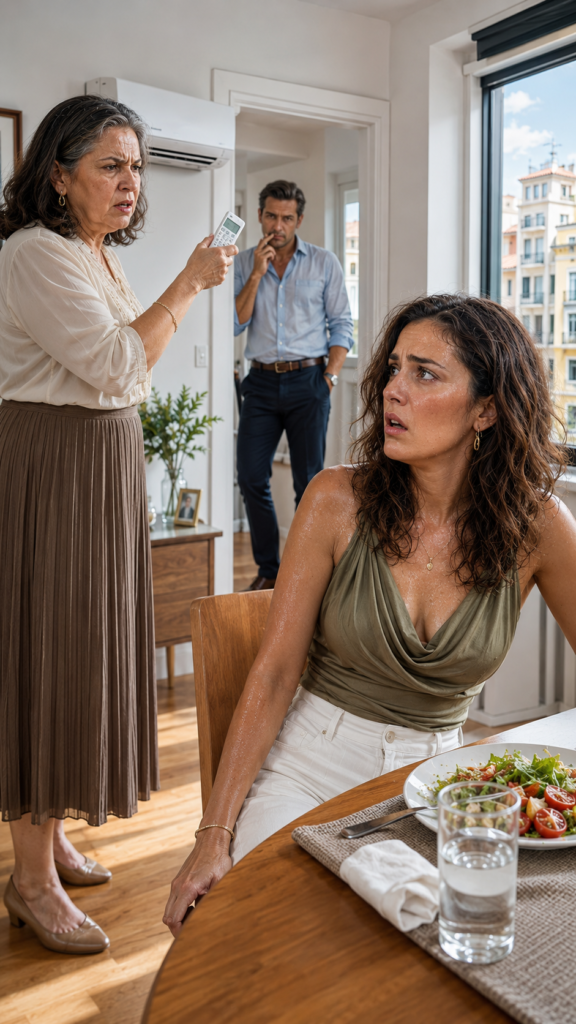
—In this house, you don’t come home late to cold food and then throw yourself like a queen with the air conditioning on.
Doña Teresa's voice sliced through the kitchen like a knife. Mariana Aguilar had barely stepped inside, her blouse clinging to her from the sweat and her face weary from the June heat.
At 32, she was the administrative head of a construction company in Mexico City. That Sunday, she had rushed out to fix an urgent payment; if it wasn't settled, more than 80 workers would go unpaid.
Before returning, she texted Diego, her husband:
“Eat without me. I’ll be late. I’ll clean up and wash.”
Diego read the message. He didn’t reply.
The house in Narvarte smelled of mole and reheated tortillas. At the table, Diego and his mother had already finished eating. Mariana found a plate in the corner: dry chicken, sticky rice, and cold sauce.
—Look at the time —Doña Teresa said—. An old woman like me cooking and the lady so executive, so important.
—It was an emergency at work —Mariana replied—. I let Diego know. I’m just going to change and I’ll wash up in a bit.
She looked at her husband, hoping for a word. Diego continued staring at his phone, as if she were mere background noise.
—Working doesn’t make you more of a woman —Doña Teresa shot back—. A decent wife attends to her husband. She doesn’t come home to be served like a kept woman.
Kept woman.
Mariana said nothing. She climbed upstairs, kicked off her heels, and turned on the air conditioning. She had bought that unit two years ago, just like the refrigerator, the washing machine, and the table where she had just been humiliated.
She just wanted to breathe for ten minutes.
But the air turned off abruptly.
Mariana stepped into the hallway. The television was still on. The living room fan was still spinning. It wasn’t a power outage.
Doña Teresa stood by the electrical panel, arms crossed.
—I turned off the waste —she said—. First, learn your place. This house doesn’t support laziness.
—I pay for the electricity —Mariana replied.
Diego appeared behind his mother.
—Don’t start. My mom just wants you to help. You come home and expect to rest right away.
—Did you read my message?
—Yes, but that doesn’t obligate my mom to serve you.
Then Mariana understood that the problem wasn’t the air conditioning or the cold plate. It was her living on tiptoes in a house that everyone enjoyed thanks to her money.
She went into the bedroom, pulled out a brown suitcase, and packed documents, clothes, cards, and a photo of her dad.
Diego scoffed from the doorway.
—Are you really going to make a scene over a light switch?
Doña Teresa lifted her chin.
—Leave. Let’s see how long you last without a roof, without a husband, and without hot food.
Mariana closed the suitcase, grabbed her phone, and called Attorney Armando Rivas.
—Attorney, get everything ready. I want to reclaim the Narvarte house. Today.
Diego went pale.
—Reclaim the house? What are you talking about?
Mariana stared at her mother-in-law without blinking.
—Don’t worry, Doña Teresa. I’m leaving. But first, I’m going to leave the house just the way you like it: without air, without water, without television, and without a daughter-in-law to trample on.
And she walked straight to the electrical panel.
PART 2
Mariana flipped the main switch.
The television went dark. The fan stopped spinning. The patio water pump died with a dull thud. The house became hot, silent, and dark.
—You’re crazy! —Doña Teresa screamed—. Turn that back on right now!
Mariana didn’t respond. She locked the panel with a small padlock, stepped out to the patio, and turned off the water supply. When she returned, Diego looked at her with rage but also with fear.
—This house is mine —he said—. You can’t do this.
—No, Diego. This house was never yours.
Doña Teresa let out a fake laugh.
—Oh, please. My son bought it with his effort. You showed up here with two suitcases and a lot of airs.
Mariana placed a copy of the deed on the table.
—I inherited it from my dad before marrying. You lived here for four years because I wanted you to. You lived here because I allowed it.
Doña Teresa looked at Diego.
—Tell me she’s lying.
Diego lowered his eyes. That gesture was enough to sink her.
Mariana grabbed her suitcase.
—You have seven days to leave. From today, I won’t pay for electricity, water, food, made-up medications, or anyone else’s debts.
Diego tried to take her hand.
—We’re married. Let’s talk, please.
She pulled away.
—You had four years to talk. You chose to stay silent every time your mom humiliated me.
Mariana called a taxi. As she got in, she glanced in the rearview mirror at Diego standing by the gate. He didn’t chase after her. Maybe he thought, as always, she would return crying.
That night, she slept in a hotel near Reforma. She ordered chicken soup with tortillas. When the warm plate arrived, she cried. She realized she had spent years accepting crumbs in her own house.
At ten that night, Attorney Rivas confirmed that the property was an inherited asset, registered under Mariana’s name before the marriage. They could also initiate divorce proceedings and formally reclaim the property.
—Do it —she said—. This time, I won’t ask for permission to save myself.
The next day, she checked the joint account. She had opened it for household expenses; Diego had an additional card.
She found a purchase at a jewelry store in Polanco for 180,000 pesos. The receipt read: “diamond ring.” It had been picked up by Valeria Montes.
Mariana recognized that name. Diego said she was an intense client who worked late at night.
Then expensive dinners, boutique hotels, and trips to addresses that weren’t client-related began showing up. While Mariana ate cold leftovers, Diego bought another woman a ring with money from their household.
But the dirtiest reveal came from an old tablet:
“Did you get rid of your wife yet? Your mom told me that when Mariana leaves, I can move into the house.”
Mariana read that line several times. She didn’t feel jealousy. She felt disgust. They were already planning to occupy her bed, her kitchen, and her walls as if she were an old piece of furniture.
Attorney Rivas found more transfers. Doña Teresa withdrew money claiming it was for medications and groceries, but much of it ended up in the account of Iván, her youngest son, who owed over 250,000 pesos in sports betting debts.
That afternoon, Mariana received a call.
—Tell Iván he has three days. If he doesn’t pay, we’re coming to collect at the house.
Mariana hung up without trembling.
Then came the twist no one expected.
Diego worked as a commercial manager at Construcciones Rivera. For months, he bragged that he was about to close the biggest contract of his career with Grupo Salgado Aranda.
What Diego didn’t know was that Mariana not only worked at a subsidiary of that group. She was the heir of its founder and a board representative.
Her father had taught her not to flaunt money.
—Sweetheart, those who respect you when they think you have nothing deserve to see you when you have everything.
That’s why Mariana lived discreetly. She wanted to know if Diego loved her or the comfort she could provide.
On Thursday, Mariana entered the conference room on the 16th floor in an ivory suit, hair tied back and a folder under her arm. She wasn’t going as a betrayed wife. She was going as a legal representative.
When Diego walked in with two colleagues, his smile froze upon seeing her sitting at the head of the table.
—Mariana?
—Good morning, Mr. Rivera. Please have a seat.
Engineer Héctor Cárdenas opened the session.
—The review will be led by Mrs. Mariana Salgado Aranda, chairperson of the board.
For an hour, Mariana dismantled his proposal without raising her voice. There were overcharges, unverified expenses, duplicate commissions, and 11 strange deposits tied to his management. Everything bore his signature.
—Here are 420,000 pesos for commercial representation —she said—. Where are the invoices?
—We’re gathering them.
—Then you submitted unverified costs.
—It must be an administrative error.
Mariana turned the page.
—Administrative errors don’t repeat 11 times with the same signature.
The proposal was suspended and sent for independent audit. Diego followed her into the hallway.
—Mariana, please. Let’s talk as family.
She stopped.
—In this room, we talk business. You lost family when you watched me eat cold food and preferred to defend your mother.
That afternoon, Diego returned to Narvarte furious. He found Doña Teresa fanning herself with a cardboard, without television, without water, and with the gas collector demanding three overdue cylinders.
—You pay him, son —she said—. That woman left us like beggars.
Diego exploded.
—That woman paid for everything! The house is hers! And the contract that could save my job depended on her too!
Doña Teresa wanted to cry.
—A wife must support her husband.
—Support? She supported us while you called her a kept woman.
At that moment, Iván walked in, pale, with his phone vibrating nonstop. Diego snatched it and put it on speaker.
—You have three days —said a cold voice—. Or we’ll collect at the house.
Doña Teresa covered her mouth.
—It was your brother —she sobbed—. A mother helps her children.
Iván, cornered, dropped the bomb.
—Don’t play the victim, Mom. You knew about Valeria. You even told her to measure the bedroom curtains when Mariana left.
The lie could no longer hold among them.
Three days later, at a corporate gala in Polanco, Doña Teresa put on her last show. She saw Mariana near the VIP area and headed straight for her.
—Look at this —she said loudly—. The ungrateful daughter-in-law also enters these places. Who paid for your dress? Have you found another man to support you?
Several people turned. Diego squeezed her arm.
—Mom, shut up.
But she continued.
—A woman who leaves an old lady without light and water has no shame.
Mariana set her glass down on the table.
—Good evening, Doña Teresa.
—Don’t call me that. You’re no longer my daughter-in-law.
—On that, we agree.
Doña Teresa spat out the last phrase with anger.
—Money doesn’t buy class.
Mariana looked at her calmly.
—You’re right. That’s why, even though you lived in my house for four years, you never learned to behave like a lady.
Before Doña Teresa could respond, Engineer Héctor appeared with two assistants.
—Mrs. Mariana, the board is waiting for you.
—Mrs. Mariana? —Diego murmured.
Héctor shot him a serious look.
—Mrs. Mariana Salgado Aranda is the heir and chairperson of the board of Grupo Salgado Aranda.
The hall seemed to lose air.
Mariana stepped onto the stage amidst applause. She didn’t name names. She spoke of integrity, audits, and suppliers who confused trust with abuse. Diego hung his head. Doña Teresa hid behind him.
When she finished, Diego waited for her in the hallway.
—Why did you hide who you were?
—I didn’t hide it to deceive you. I did it to see if you loved me or my last name.
—I did love you.
—No, Diego. You loved the house, the account, and the image of a successful husband. But you left me alone, eating cold food and asking for permission to rest for ten minutes.
Then Valeria appeared.
—Is it true? You don’t have a house? You don’t have a contract?
Diego didn’t respond.
Valeria took off the ring and left it on a table.
—Then I’m not interested either.
She walked away without saying goodbye. Mariana didn’t feel triumph. She felt sadness for the man who traded love for appearance.
A week later, Diego, Doña Teresa, and Iván left the house with cardboard boxes. Neighbors watched from their windows. There were no shouts. No genuine apologies.
Doña Teresa tried to speak at the door.
—Mariana, I didn’t know the house was yours.
Mariana held the new key between her fingers.
—I didn’t need to know that to be treated with dignity.
Diego signed the divorce months later. He lost his job after the audit. Iván faced his debts without other people’s money. Doña Teresa went to stay with a sister in Ecatepec and stopped flaunting successful children.
Mariana returned one Saturday morning. She opened windows, changed locks, painted the kitchen white, and donated the table where she had often been served cold food. That night, she made soup, turned on the air conditioning, and sat alone, at peace.
Many believe a family breaks when someone leaves. But sometimes it breaks earlier, when one person has to shrink so that others feel big.
And Mariana understood something no woman should forget: a home is not where they let you in, but where no one needs to turn off your light to feel powerful.