PART 1
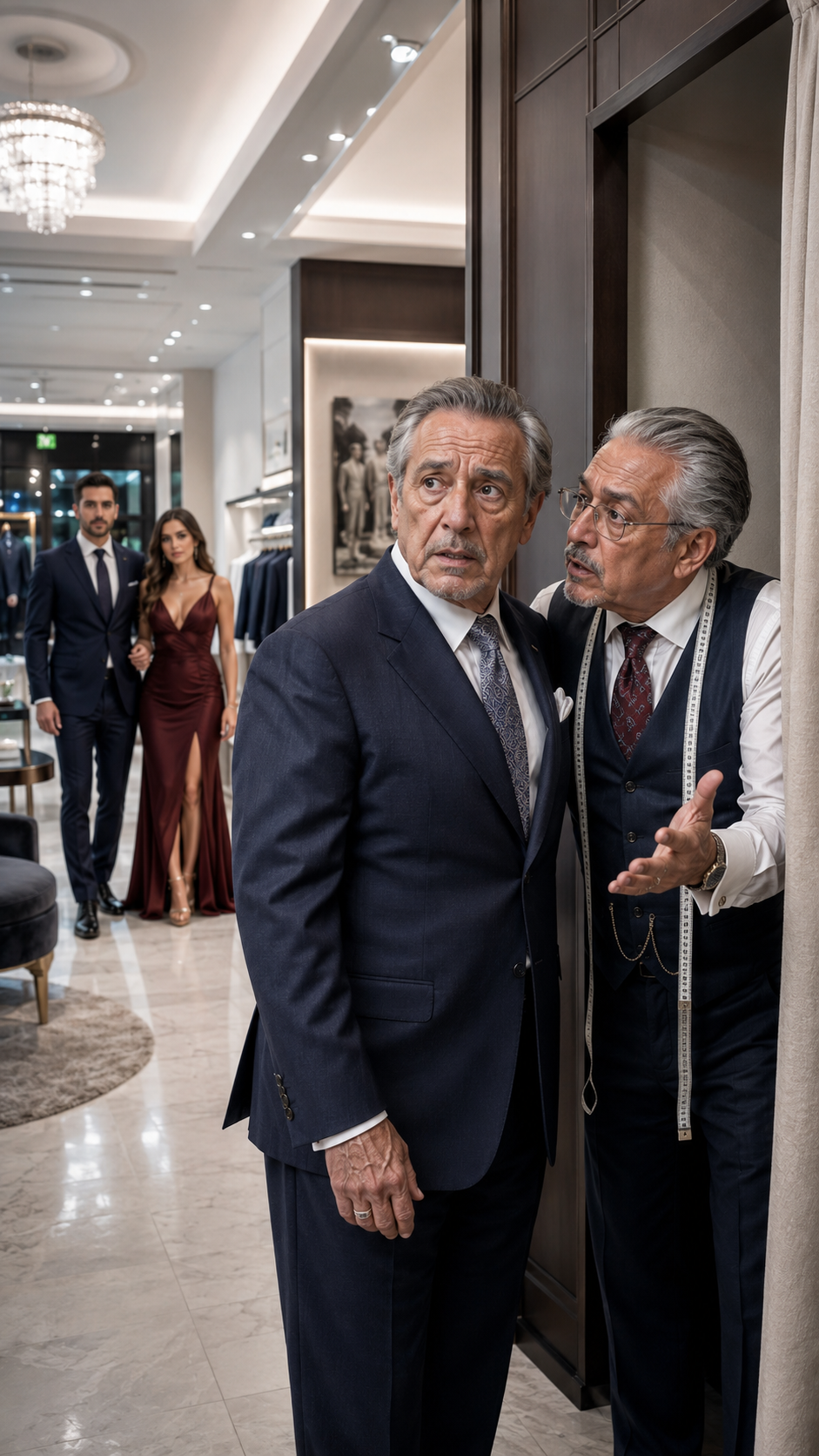
Four days before his only daughter was to walk down the aisle, Raúl Cárdenas stepped into a tailor shop in Mexico City's Historic Center to try on his wedding suit.
He left with ice-cold hands.
Not from fear of losing her to marriage.
But because he had just uncovered that the man she loved was planning to kill her.
Raúl was seventy years old and had been a structural engineer for forty-two. He had built skyscrapers in Reforma, Santa Fe, Monterrey, and Guadalajara. His craft was finding cracks before everything came crashing down.
But the most dangerous crack in his life was sitting at his daughter’s table, smiling with perfect teeth.
Lucía, thirty-two, owned a small gallery in Roma Norte. Ever since Elena, her mother, passed away seven years ago, she had become the center of Raúl’s world.
Her fiancé called himself Sebastián Larios.
Expensive suits.
Sports car.
Perfect backstory.
He claimed to come from an important family in Monterrey, investing in technology and having partners in Spain.
Raúl never fully believed him.
But Lucía looked at him as if she had finally found peace. And a father, when he sees his daughter happy, sometimes swallows his suspicions to avoid looking like a bitter old man.
The wedding was to be held at a private club in Las Lomas. Raúl was paying for everything: flowers, banquet, dress, music, and honeymoon. Sebastián said he could pay for it too, but Raúl wanted to give Lucía what Elena could no longer witness.
That Tuesday, Raúl went to the tailor shop of Don Julián Arriaga, a friend of his for thirty years.
As soon as the bell rang, Julián looked up.
He turned pale.
He closed the door, flipped the sign to “closed,” and locked it.
“Raúl, come. Quickly.”
“What’s wrong, Julián?”
The tailor said nothing. He grabbed Raúl by the arm and pulled him into a private fitting room, one with dark wooden walls and heavy curtains.
“Hide here. Don’t make a sound. Whatever happens, don’t come out.”
Raúl wanted to protest, but he saw the tearful eyes of his friend.
“Trust me, buddy.”
Julián closed the door.
Raúl stood in darkness, furious, confused, with his heart pounding in his chest.
Then the bell rang again.
Two voices entered.
The first was Sebastián’s.
The second belonged to Mariana, the supposed older sister who had come from Monterrey to help with the wedding.
They sat right on the other side of the wall.
“The old man is already under control,” Sebastián said coldly, a chill Raúl had never heard before. “He’s going to sign everything at the rehearsal dinner. He thinks it’s a trust to protect Lucía.”
Mariana let out a giggle.
“And the medical letter?”
“It’s tucked away among the documents. He won’t even read it, dude.”
Raúl stopped breathing.
Sebastián continued speaking as if he were negotiating a watch.
“As soon as he signs, the life insurance of 180 million is clean. Then, the trip to Pico de Orizaba. The poor bride will feel sick from the height, won’t make it, and everyone will cry.”
Mariana asked if Lucía suspected anything.
“Not a thing. She’s in love. And with the vitamins I’m giving her, she’s getting weaker by the day. By the time we climb, her body will look like a bomb ready to explode.”
Raúl pressed his hand against the wall.
His daughter hated the cold.
She knew nothing about mountains.
She had accepted this “spiritual adventure” only because Sebastián insisted.
It wasn’t a honeymoon.
It was an execution.
When the couple left, Julián opened the fitting room. Raúl said nothing. He just breathed as if returning from the grave.
And in that moment, he understood something terrible.
If he ran to warn Lucía without proof, she might never believe him.
PART 2
But Raúl couldn’t hold back.
Rage overwhelmed reason.
He left the tailor shop with the unfinished suit, climbed into his truck, and drove straight to Lucía’s apartment in Roma Norte.
When she opened the door, she was holding wedding invitations.
Sebastián was in the living room, calm, sipping sparkling water with lemon.
He didn’t even seem surprised to see him burst in like a storm.
“I know what you’re planning,” Raúl said, pointing at him with a trembling hand. “The medical letter, the insurance, the trip to Pico de Orizaba. I heard you.”
Lucía turned pale.
“Dad, what are you talking about?”
Sebastián sighed, as if facing a sick old man and not a desperate father.
“Mr. Raúl, I understand that the death of Mrs. Elena still weighs on you,” he said softly, “but this is getting out of hand.”
He pulled out documents from a black briefcase and arranged them on the counter.
He spoke of trusts.
Of taxes.
Of asset protection.
Of international protocols.
He explained the 180 million insurance as a banking guarantee for a real estate project. He presented the medical letter as a simple formality for emergencies during the trip.
He did it so well that even Raúl felt, for one second, the poison of doubt.
Lucía was crying.
“Dad, ever since Mom died, you haven’t let me live. Sebastián loves me. You just fear being alone.”
Those words broke something inside him.
“Listen to me, daughter…”
“No. Go. Don’t come back until you can respect the man I’m marrying.”
Sebastián embraced her.
Lucía buried her face in his chest.
And over her shoulder, Sebastián looked at Raúl.
He smiled.
A little.
Barely.
But it was a victorious smile.
Raúl walked out destroyed. In the elevator, he understood his mistake. If he attacked head-on, Lucía would run to Sebastián. If he shouted louder, he would come off as the controlling father, the bitter widower, the man who couldn’t stand to see his daughter happy.
He had to be an engineer again.
He had to find the crack.
The next day, he called Lucía. He pretended to be remorseful. He told her that the grief over Elena had made him paranoid, that he was scared, that he didn’t want to lose her.
Lucía hesitated.
But her heart remained noble.
She invited him to breakfast with them at the club “to make amends.”
Raúl went.
He smiled.
He ordered coffee.
And he watched.
Sebastián talked too much. He mentioned a ranch in San Pedro Garza García, private schools, vineyards, partners in Madrid, and names of old money.
But when he lifted the cup, Raúl saw his watch.
It was fake.
The golden case imitated luxury, but the second hand skipped like a cheap watch. It didn’t glide like a fine piece.
First crack.
Then Raúl let the napkin fall. Bending down, he saw Mariana’s bare foot caressing Sebastián’s leg under the table.
No sister touches her brother like that.
Second crack.
Then he looked at Lucía.
His daughter, always radiant, looked dim. Pale skin. Slow eyes. Clumsy hands. Every time she tried to respond to something, Sebastián spoke for her.
“She’s tired from the wedding,” he said.
No.
She wasn’t tired.
They were weakening her.
That same afternoon, Raúl contacted Víctor Salas, a former financial investigator who owed him a favor from a job in Guadalajara.
They met at a discreet café in Narvarte.
Raúl placed an envelope with cash on the table.
“I need to take down a ghost.”
Víctor didn’t ask any further questions.
Within twenty-four hours, he found the first bombshell.
Sebastián Larios didn’t exist.
His real name was Tomás Velasco. He had been convicted years ago for property fraud against widows and single businesswomen.
Mariana wasn’t his sister.
She was his legal wife of eight years.
And it wasn’t the first time they had prepared a tragedy.
In Veracruz, one young woman had died during a yacht outing. The report said “accident.” Tomás appeared crying for the cameras, hugging the family, speaking of eternal love.
Then he collected a million-dollar insurance payout.
And then he disappeared.
Raúl looked at the photos in the file and felt his blood turn to stone.
He was no longer facing a con artist.
He was facing a murderer.
Víctor secured a warrant with the help of a known prosecutor. While Sebastián and Mariana took Lucía to a cake tasting in Polanco, they entered the apartment.
In Sebastián’s study, they found a safe behind a false panel.
Inside was a disposable phone, contracts with different names, copies of IDs, and an unlabeled jar with blue capsules.
On the lid, handwritten, it said:
“Lucía’s Vitamins.”
Raúl felt like vomiting.
They brought two capsules to a private lab.
The result confirmed the worst: they contained a dangerous mix that could cause extreme weakness, disorientation, and a simulated cardiac crisis under exertion or altitude.
That explained Lucía’s dim eyes.
That explained her fainting spells.
That explained why Sebastián insisted so much on the trip to the mountain.
Raúl wanted to go after him and punch him in the face.
Víctor stopped him cold.
“If you hit him, you turn him into a victim. If you want to save your daughter for good, you don’t need revenge. You need a cage.”
The cage was the rehearsal dinner.
Raúl’s lawyer prepared a special document. It looked like the trust that Tomás expected, but it included a clause that voided any medical letter if the signer used a false identity.
It also activated the freezing of accounts linked to his aliases.
The prosecutor’s office agreed to collaborate.
Undercover agents would enter as waiters, valet parking, sound technicians, and club staff.
Everything depended on one thing.
Tomás had to sign.
The night of the dinner, the club’s hall sparkled with candles, white flowers, and soft music. Guests spoke of the wedding as if it were a fairy tale.
Lucía wore an ivory dress.
She looked beautiful.
But still tired.
Raúl watched her from his table and felt a longing to scoop her up in his arms, like when she was a child, and run her away from there.
But he couldn’t.
Not yet.
Sebastián was impeccable. Mariana, in a dark blue dress, smiled too much. They seemed to own the world.
Raúl stood up to toast.
Everyone fell silent.
“When Lucía was a little girl,” he said, “she painted purple suns on the walls of our home. Her mom would get mad, but then she’d end up taking photos because she said a house with art was never lonely.”
Lucía smiled sadly.
Raúl took a deep breath.
“For forty-two years, I built buildings. I learned that a structure doesn’t collapse suddenly. First, a crack appears. Then another. And if no one looks at them, one day everything crumbles.”
Sebastián clapped first, theatrically, like the perfect son-in-law.
Raúl glared.
“A family can’t be held together by money or appearances either. It’s upheld by truth. And when someone truly loves, they don’t control. They don’t isolate. They don’t make sick. They protect.”
Lucía lifted her gaze.
Something changed in her eyes.
A doubt.
Small, but alive.
Sebastián stopped clapping.
The lawyer appeared with the documents.
“Only your signature is missing, Mr. Larios.”
Sebastián regained his smile.
“With pleasure.”
He took the pen.
Mariana raised her glass, just slightly.
Raúl counted silently.
1.
2.
3.
Sebastián signed.
Then the hall doors swung open.
The waiters set down trays on the tables.
The sound technician took off his headphones.
The valets entered from the hallway.
They all pulled out badges.
“Tomás Velasco,” said a prosecutor’s agent, “you are under arrest for identity fraud, fraud, criminal conspiracy, and attempted homicide.”
The hall erupted in screams.
Mariana tried to run toward the exit, but two agents stopped her.
Sebastián stood up furiously.
“You’re crazy! I’m Sebastián Larios!”
The hall screen lit up.
First, his marriage certificate with Mariana appeared.
Then his criminal record.
After that, the toxicology report of the capsules.
Finally, the photo of the dead woman in Veracruz.
Lucía covered her mouth with her hands.
“No… it can’t be.”
Sebastián took a step toward her.
“Love, this is a setup. Your dad is sick. He always wanted to tear us apart.”
Lucía looked at him as if seeing him for the first time.
She no longer saw the elegant man.
She saw the monster beneath the suit.
“Don’t call me love.”
That was the moment Raúl regained his daughter.
Not when they handcuffed him.
Not when Mariana screamed that it was all a lie.
Not when guests pulled out their phones to record.
It was when Lucía took a step back and stopped protecting the man who was destroying her.
Tomás was taken out of the hall amidst cameras, murmurs, and horrified faces. Mariana too. The wedding was called off that very night.
Lucía spent two weeks in a private clinic to cleanse her body of what they had slowly given her.
She cried a lot.
She blamed herself.
She said she had been foolish, that she didn’t understand how she hadn’t seen the signs.
Raúl sat by her side every afternoon.
One day, he took her face in his hands.
“No, my girl. Predators don’t come showing their teeth. They come with flowers, with promises, and with a pretty smile. That wasn’t your fault.”
Lucía cried like she hadn’t since Elena’s death.
Months later, she reopened her gallery in Roma Norte. The first exhibition was called “Foundations.”
On the main wall hung an enormous painting: a cracked house supported by two pairs of hands, some old and others young.
Below, she wrote:
“My father didn’t destroy my wedding. He gave me back my life.”
That night, Lucía walked toward Raúl among the crowd. She wasn’t wearing a wedding dress. She wore a stylish white suit, her hair down, and her eyes once again filled with light.
She hugged him tight.
“Dad, Mom would be proud of you.”
Raúl looked up at the ceiling so no one would see his tears.
“No, daughter. She’d be proud of both of us.”
From then on, Lucía kept painting. She began to laugh again. She distrusted a little more, yes, but she also learned to listen to herself better.
Raúl returned to his routines as an old engineer, looking at columns, walls, and cracks.
But he understood something no blueprint teaches.
Sometimes, the most important structure a father must protect isn’t made of steel or concrete.
It’s made of blood, memory, and love.
And when someone tries to tear it down, even a tired man can become the whole building.





