PART 1
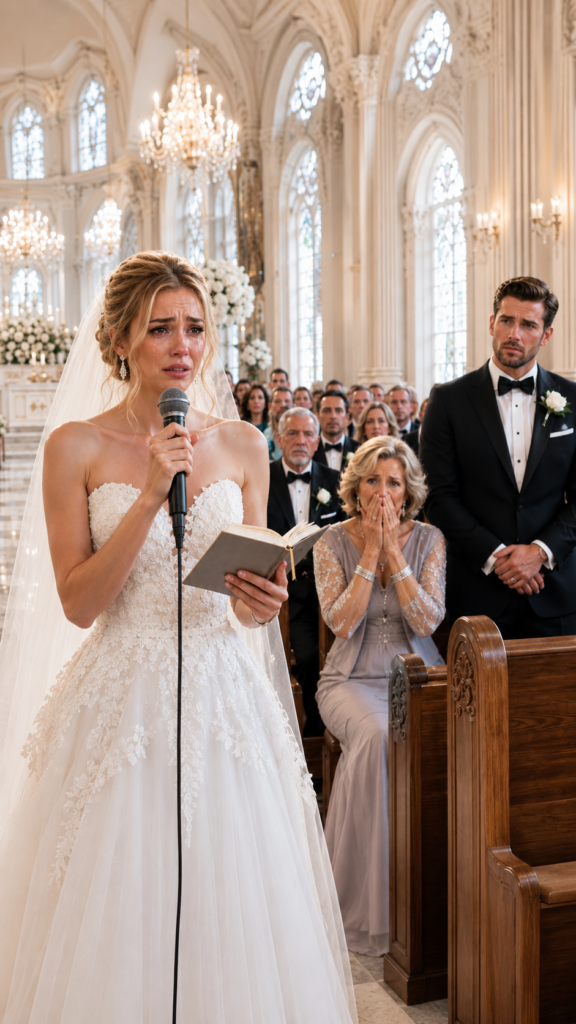
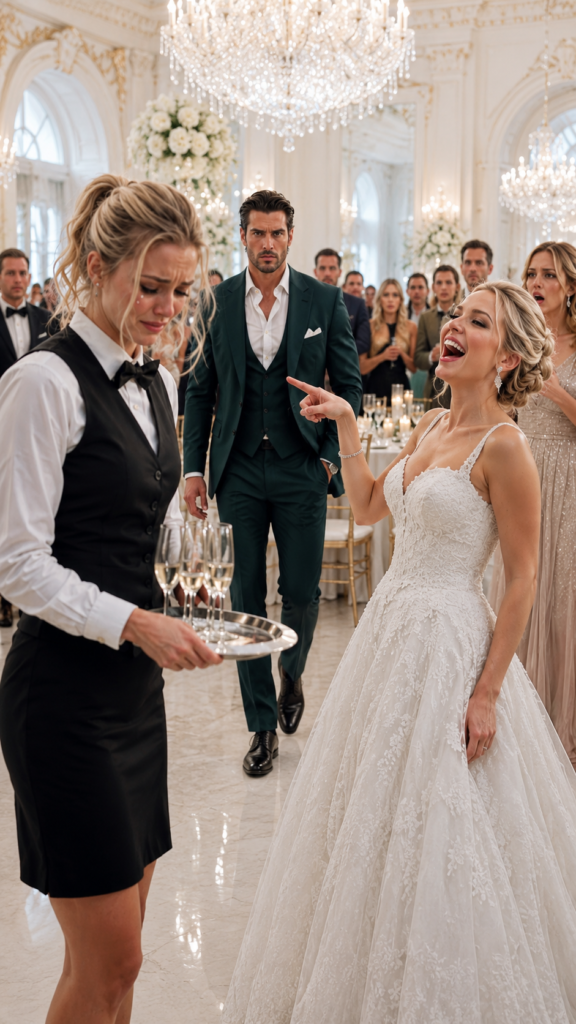
In the most elegant hall in Polanco, surrounded by arrangements of white roses, live violins, and champagne glasses that cost more than a month's salary, Victoria Larrañaga believed everyone was there to admire her.
Her dress sparkled as if it had been made for the cover of a magazine. Her smile was flawless. Her family, powerful. Her fiancé, Daniel Arriaga, heir to a huge construction company in Monterrey, looked at her as if she were incapable of causing harm.
But ever since she saw Sofía Méndez enter in a black service uniform, something twisted inside her.
Sofía wasn’t famous. She wasn’t wealthy. She didn’t have a socialite surname. She was an event waitress, 29 years old, living in Iztapalapa, working double shifts to care for her sick mother.
And yet, there was something about her that made Victoria uncomfortable.
Maybe it was her calmness. Maybe it was the way she walked without looking down. Maybe it was that, although her body didn’t fit the slenderness Victoria flaunted like a trophy, Sofía possessed a dignity that required no permission.
The problem began with an error from the coordinator.
During the arrangement of tables, Marla, the organizer, mistook Sofía for a guest of the Arriaga family because she wore her hair elegantly pinned back and was carrying a tray covered with fine napkins. She asked her to sit for a moment at the main table while they adjusted the protocol.
Sofía tried to explain she was part of the service, but Marla, stressed, said:
"Just sit for a minute, please. It's only 1 minute."
Sofía obeyed.
And Victoria saw her.
The bride approached slowly, with a sweet smile that smelled of poison.
"Excuse me?" she said in front of 12 guests. "Who told you you could sit here?"
Sofía stood up immediately.
"It was a misunderstanding, ma'am. I’ll leave now."
Victoria let out a short laugh.
"Good, because this table isn’t for just anyone. Besides, that uniform dress is already suffering enough, isn’t it?"
Some guests laughed.
Not everyone. But enough.
Sofía felt the heat rise to her face, but she didn’t cry. She didn’t respond. She just bowed her head and said:
"I apologize for the confusion. Enjoy the wedding."
That infuriated Victoria even more.
Because Sofía didn’t break.
During dinner, the bride sought new ways to showcase her. She asked for water five times. She switched perfectly fine plates. She called her "my queen" in a tone that held no affection. Then, when Sofía passed by with desserts, Victoria took the microphone from the band.
"A round of applause for our star waitress," she said, laughing. "Because today we learned that confidence can make someone believe they belong where they clearly don’t."
The hall went cold.
Sofía stopped with the tray in her hands.
Daniel murmured:
"Victoria, enough."
But she didn’t stop.
"Tell us, Sofía… how does it feel to pretend for 1 minute that you’re one of us?"
Then, from the back of the hall, a deep voice cut through the air.
"No."
Everyone turned.
Alejandro Russo, the most feared man of the night, owner of half the private security in the country and a close friend of the Arriaga family, stepped forward without raising his voice.
He stood beside Sofía.
He looked at Victoria and asked:
"Do you know who she is?"
PART 2
The silence was so heavy that even the waiters stopped moving.
Victoria gripped the microphone with a false smile.
"Who’s she going to be? A waitress."
The word fell like a slap.
Sofía looked down. Not out of embarrassment, but because she hated being the center of a spectacle. She just wanted to finish her shift, collect her pay, and catch the last subway before it became impossible to get home.
But Alejandro didn’t move.
"No," he said. "She is the woman who saved my sister’s life."
A murmur exploded in the hall.
Daniel frowned.
Victoria let out a nervous laugh.
"What?"
Alejandro barely turned his head toward the entrance. There stood Isabel Russo, his younger sister, in a cream coat, her eyes filled with tears. She held her 6-month-old baby in her arms.
Sofía saw her and felt the air leave her lungs.
She didn’t recognize her at first. Eight years had passed. But then she saw a small scar near her left eyebrow, the same one that had been covered in blood that night.
And everything came flooding back.
The rain on Viaducto Tlalpan.
The broken glass.
A car crushed against a pole.
People filming with their phones, saying not to get closer because it smelled like gasoline.
Sofía, at 21, returning from working at a diner. Her feet swollen, 180 pesos in her pocket, and a desperate need to sleep. But she heard a girl scream from inside the car.
"Honestly, I don’t want to die."
Sofía didn’t think.
She ran.
She squeezed between bent sheets of metal, cut her arms on shards of glass, and took the hand of the trapped young woman.
"Breathe with me," she said. "Tell me your name."
"Isabel."
"Okay, Isabel. I’m Sofía. You’re going to stay with me. Don’t close your eyes."
"I’m scared."
"Then be scared with me, but don’t leave me."
Sofía stayed until the paramedics arrived. When they pulled her out, she had blood on her uniform, scraped knees, and trembling hands.
The police wanted to take more details, but Sofía provided the basics and left. She had a shift at 7 the next morning and couldn’t afford to lose her job.
She never asked for money.
She never sought cameras.
She never told the story to make herself famous.
To her, helping wasn’t a feat. It was the bare minimum any decent person should do.
Isabel crossed the hall in tears.
"It was you," she whispered.
Sofía swallowed hard.
"I didn’t know who you were."
"Exactly," Isabel said, taking her hands. "You didn’t know my last name. You didn’t know my brother could pay you whatever you asked. You knew nothing. You just saw someone trapped and you jumped in."
Several people looked away.
Alejandro spoke, looking at everyone.
"My family searched for her for years. There was a hospital recognition, an incomplete statement, a note in Civil Protection. Nothing more. She disappeared because she didn’t want a reward."
Victoria was pale.
One of her bridesmaids murmured:
"Well, that doesn’t change that she’s working here."
The phrase was so cold that even Daniel’s mother closed her eyes in embarrassment.
Alejandro turned slowly.
"Of course she’s working," he said. "And working doesn’t make anyone less. But humiliating someone who works says a lot about the person who does it."
No one laughed.
The music had died. The cake remained untouched. The expensive flowers looked ridiculous against the discomfort of everyone.
Daniel looked at Victoria as if he were finally seeing something he had previously refused to accept.
"Was this all night long?" he asked.
Victoria tried to approach.
"Honey, it was a joke. You’re overreacting. Everyone was laughing."
"Yeah," Daniel said. "And that makes it worse."
She blinked.
"Daniel, you’re not going to ruin our wedding over a waitress."
He took a deep breath.
"No. You ruined the wedding when you decided that a person was worth less because they served you dinner."
Victoria opened her mouth, but found no words.
Daniel took off the ring. His hand trembled. He had worn it for only 2 hours, but suddenly it felt like a lie.
"I married the woman I thought you were," he said. "Not the one who enjoys crushing someone because she thinks they can’t defend themselves."
The entire hall froze.
Victoria began to cry, but Sofía understood those tears. They weren’t out of guilt. They were about losing control. About losing the perfect picture. About losing the story she had sold.
"Daniel, please."
He placed the ring on a table.
"I can’t."
Victoria’s mother stood up angrily.
"This is a public humiliation!"
Alejandro replied without looking at her too much:
"No, ma’am. The public humiliation started when your daughter took a microphone to mock a worker."
That blow left everyone silent.
Then came the twist that shattered the night.
Marla, the coordinator, approached with her face twisted and a cellphone in her hand.
"Mr. Daniel… there’s something else."
Victoria turned abruptly.
"Marla, shut up."
But Marla was already crying.
"I wasn’t going to say anything, but this has gone too far. Ms. Victoria requested earlier that Sofía be placed in the visible area of the hall. She said she wanted 'aesthetic diversity' so her friends could laugh for a bit."
Sofía felt a blow to her chest.
Daniel stood frozen.
"What did you say?"
Marla showed the chat.
There it was, Victoria’s message, sent at 4:16 p.m.:
"Put the chubby waitress near my table. I need entertainment, haha."
No one breathed.
Victoria’s face twisted.
"That’s taken out of context."
Daniel took the cellphone, read the message, and let out a broken laugh, devoid of joy.
"Context? What context can save this?"
The guests began to murmur. Some stood up to leave. Others pulled out their phones, but Alejandro just raised a hand and his security team moved instantly.
"No one records Sofía," he said. "You’re not going to turn her pain into gossip."
Sofía looked at him, astonished.
For the first time all night, someone wasn’t using her.
They were protecting her.
Victoria tried to regain control.
"This is my wedding!"
Isabel, still teary-eyed, responded:
"And yet you found a way to make it about your cruelty."
The words hurt more than any scream.
An older lady from table 6 approached Sofía. She was a guest who had seen everything from the beginning.
"I’m sorry, dear," she said. "I didn’t laugh, but I didn’t say anything either. And sometimes staying silent is also being part of it."
Sofía pressed her lips together.
"You don’t have to…"
"Yes, I do," the woman interrupted. "Because in Mexico, we’re very good at saying ‘poor thing’ when it’s all over, but very cowardly at saying ‘enough’ when it’s happening."
That sentence pierced the hall.
One by one, some guests approached. A cousin of Daniel apologized. A bridesmaid cried. A businessman who had mocked at first admitted he had been miserable.
Sofía accepted it all without smiling too much.
Not because everyone deserved immediate forgiveness.
But because she didn’t want to carry their poison.
Victoria stood alone by the cake, with the perfect dress, the perfect makeup, and the perfect life unraveling before everyone.
Daniel left with his parents.
Before leaving, he paused in front of Sofía.
"I’m sorry," he said. "I should have stopped this earlier too."
Sofía replied softly:
"Then do it the next time you see someone being humiliated."
Daniel nodded, his eyes red.
Later, when the hall began to empty, Sofía went to the service hallway for her coat. Her coworkers hugged her. Kayla, a young waitress who had seen everything, said:
"You’re so strong, dude."
Sofía let out a tired laugh.
"No. I’m just tired of people confusing patience with permission."
As she left through the main entrance, something she never did, she found Alejandro by the hall stairs.
The night in Mexico City was cool. In the distance, the sounds of cars, a street organist, and the murmur of a party that didn’t know another had just died.
"I don’t want money," Sofía said before he could speak.
Alejandro barely smiled.
"I haven’t offered you anything yet."
"Your face did."
He looked down, almost embarrassed.
"My family owes you more than I can explain."
"You owe me nothing. Isabel is alive. That’s enough."
"Maybe for you."
"Definitely for me."
Isabel appeared behind with the sleeping baby in her arms.
"Her name is Gracia," she said.
Sofía stood still.
"Why?"
Isabel cried again, but now she smiled.
"Because that night you told me that grace is what one offers when fear wants to turn cruel. I don’t know if you remember."
Sofía covered her mouth.
She didn’t remember.
She had said so many things to keep a stranger awake that she didn’t know which had survived.
But there was a girl named Gracia because of words spoken amid smoke, rain, and blood.
Sofía cried.
Not out of shame. Not out of pain.
She cried because, after years of being invisible, someone was telling her that her kindness had left a mark.
Alejandro took a step back to give her space. That gesture, small and silent, meant more to her than any speech.
When Sofía calmed down, he said:
"Would you accept to have dinner with me someday? Not as a debt. Not as a reward. Just because I’d like to get to know you."
Sofía scrutinized him carefully.
"The most feared man in Polanco inviting a waitress to dinner after indirectly canceling a wedding?"
"I was hoping it sounded less dramatic."
"I work in events. Drama pays my rent."
Isabel burst into laughter with tears.
Alejandro smiled too.
"A simple place," Sofía said. "No weird reserved tables, no bodyguards watching me eat, no menus without prices."
"That eliminates several restaurants."
"Alejandro."
"How about some tacos, then?"
Sofía thought about it.
"Al pastor."
"Of course."
"And I’ll pay my share."
"We’ll negotiate that."
"We’re not negotiating anything."
He raised his hands.
"Alright. As you say, boss."
Sofía laughed, and that laughter was the first clean thing of the entire night.
Before getting into the taxi, she took one last look at the hall. Hours earlier, she had entered through the service door, like someone everyone believed was replaceable. Now she was leaving through the main entrance, not because Alejandro had given her courage, but because he had forced others to recognize the value she already possessed.
Victoria didn’t lose her wedding because of a waitress.
She lost it because she believed that money, beauty, and surname gave her the right to destroy someone without consequences.
And that night, many guests learned something that was too uncomfortable:
True class isn’t noted at the table where you sit but in how you treat those who serve you water.