PART 1
—Don’t tell Sofía the baby looks so much like Andrés… not yet.
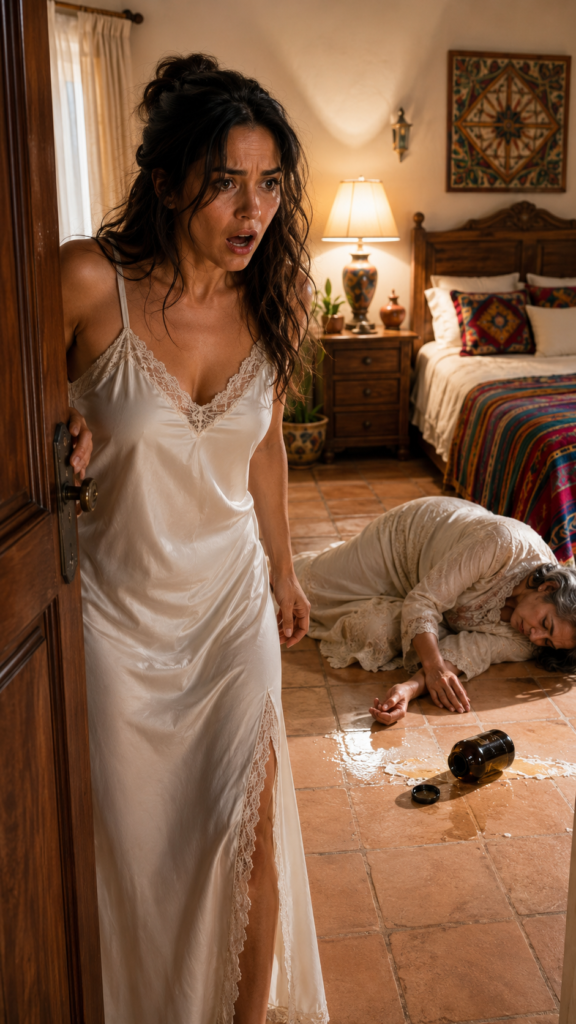
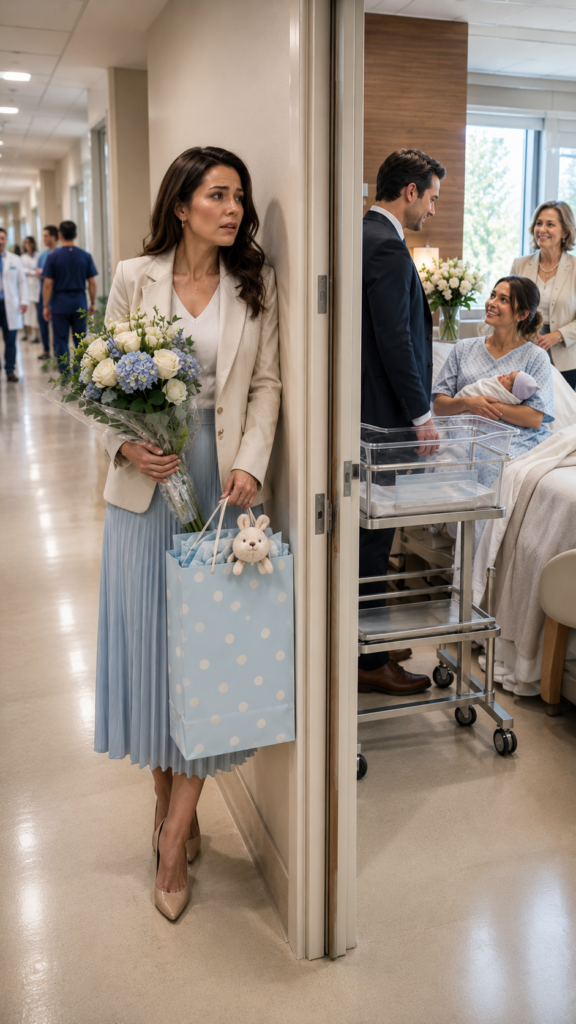
Sofía Cárdenas stood frozen in front of the half-open door of room 312 at Hospital Ángeles de Puebla, a gift bag in her hand and a lump caught in her throat.
She had arrived full of joy.
Inside the bag were white onesies, a blue blanket embroidered with moons, and a teddy bear she’d bought at Angelópolis because her younger sister, Camila, couldn’t sleep as a child without hugging one.
That morning, Sofía still believed she had family.
She believed Andrés Salgado, her husband, had been coming home late for months because of audits at the construction company where he worked as a financial manager.
She believed her mother, Graciela, was cold to her because life had made her tough.
She believed Camila never wanted to say who the baby’s father was out of shame, fear, or her habit of playing the victim when it suited her.
And above all, Sofía believed her marriage was tired, yes, but not dead.
Andrés had left home at 8:10 AM, wearing a navy suit, expensive cologne, and that calm smile that had disarmed her for so many years.
—I would’ve loved to accompany you, my love, but I got pulled into a meeting with the partners —he said while kissing her forehead.
Sofía believed him.
—Don’t worry. I’ll tell Camila you sent hugs.
He smiled without his lips trembling.
—Tell her I hope she and the baby are doing well.
So when she heard his voice inside the room, the pain didn’t hit like a scream.
It came like ice.
—Sofía still thinks my late nights are for the Querétaro project —Andrés said, laughing softly—. Last week, she even deposited another 20,000 into the treatment account, thinking we’re going to try again.
Sofía felt the bag slip from her fingers.
Then she heard her mother.
—Leave her. As long as she’s calm, she’ll keep paying without asking questions. You and Camila already have a child. Sofía has always been better at supporting than receiving.
Her breath caught.
Camila spoke in a sweet voice, as if recounting a blessing.
—When she sees the baby, she’ll understand that Andrés and I were meant to be. She could never give him a family.
Andrés let out a short laugh.
—He has my eyes. No way she can deny it when everything comes out.
Sofía didn’t enter.
She didn’t slam the door.
She didn’t scream like in the novels.
She just stood there, her heart shattered in silence, listening to the three people she loved most speak of her as if she were a debit card with legs.
A few meters away was a metal trash can.
Sofía walked slowly, threw away the white flowers she’d brought for Camila, and returned the teddy bear to the bag. Then she turned around in the hallway while a nurse smiled at her, unaware she had just crossed paths with a destroyed woman.
But before reaching the elevator, Sofía slipped her hand into her purse.
She touched the small digital recorder she used to dictate measurements for her decoration projects.
It was on.
It had recorded everything.
And then she understood that what she had just heard could not only break her.
It could sink them all.
PART 2
The drive back to Lomas de Angelópolis felt fake, as if the city continued to function merely to mock her.
The traffic lights changed. People bought coffee. Guards waved. Trucks entered the neighborhood like any other afternoon.
Everything remained the same.
Except Sofía.
Upon arriving home, she placed the blue bag on the dining table. She stared at it for several minutes, as if it contained the last innocent version of herself.
Then she opened online banking.
For two years, Sofía and Andrés had saved money for a fertility treatment at a private clinic. She took on early morning jobs, sold her grandmother’s jewelry, canceled vacations, and stopped buying even the essentials because she believed every peso brought them closer to having a child.
The account was empty.
Not almost empty.
Empty.
There were transfers in Camila Cárdenas’s name. Payments for ultrasounds. Medical studies. Private delivery package. Baby furniture. Professional photographs. A luxury stroller bought 18 days prior.
Sofía felt nauseous.
Every peso she had saved to become a mother had been used to pay for her sister’s pregnancy with her husband.
She didn’t cry.
She downloaded bank statements, took screenshots, printed receipts, and organized everything in a folder labeled “catalogs,” because Andrés never checked his work stuff.
Then she opened the shared laptop.
Andrés had no password. Not out of trust, but out of arrogance. He thought Sofía was too good to suspect.
There were the messages.
Not all of them, but enough.
Photos of ultrasounds sent by Camila.
Hearts from Andrés.
Messages from Graciela organizing schedules so that Sofía would never run into them at the appointments.
And one phrase that left her breathless:
“Sofía serves as long as she believes we’re saving the marriage.”
Sofía printed that too.
At 7:30 PM, Andrés came home with cemitas, her favorites.
—And where’s Camila? —he asked, kissing her cheek—. Did she like the gift?
Sofía looked at him from the kitchen.
—She was sleeping when I arrived.
The lie came out perfectly.
Andrés nodded.
—Poor thing. First-time moms are wiped out.
Sofía watched him open a beer as if nothing was wrong.
That man had slept in her bed, had used her money, had kissed her forehead, and then had gone to the hospital to show off the child he had with her sister.
For three weeks, Sofía acted.
She cooked. Smiled. Asked about the supposed Querétaro project. Answered calls from her mother. Faked excitement when Camila sent photos of the baby, carefully cropped so no male hand appeared.
Meanwhile, she gathered evidence.
Her best friend, Renata Villaseñor, was a family lawyer in CDMX. When Sofía finally called her, Renata listened without interrupting.
At the end, she said:
—Don’t confront them with tears. Build a case where the truth has nowhere to escape.
And Sofía built it.
Bank statements.
Messages.
Audios.
Dates of supposed meetings of Andrés crossed with Camila’s medical appointments.
The property deed of the house.
The prenuptial agreement that Andrés’s family demanded before the wedding, believing it would protect him someday.
But there was something more.
A twist even Sofía didn’t expect.
While reviewing an old folder in the office, she found transfer receipts from Andrés’s construction company to an external account. The descriptions read “travel expenses,” “Querétaro project,” “urgent supplier.”
The supplier’s name was fake.
The final account belonged to Camila.
Andrés hadn’t just used the money for the treatment.
He was also diverting company funds to sustain the secret life he built with his sister-in-law.
When Sofía showed this to Renata, the lawyer fell silent for a few seconds.
—This is no longer just about divorce, my friend. This could take down his career.
Sofía swallowed hard.
—Then let it fall.
When her father, Manuel Cárdenas, returned from working four months on an industrial project in Sonora, Sofía called him to a discreet café.
She played the hospital audio.
Manuel listened with his hands tightly gripping the cup.
When it ended, he asked in a broken voice:
—Did your mom know?
Sofía nodded.
—Not only did she know. She helped.
Manuel’s face aged suddenly.
—I thought leaving them with her was protecting them.
Sofía took his hand.
—I don’t need guilt, Dad. I need you not to say anything until Friday.
Manuel looked up.
—What’s happening on Friday?
Sofía took a deep breath.
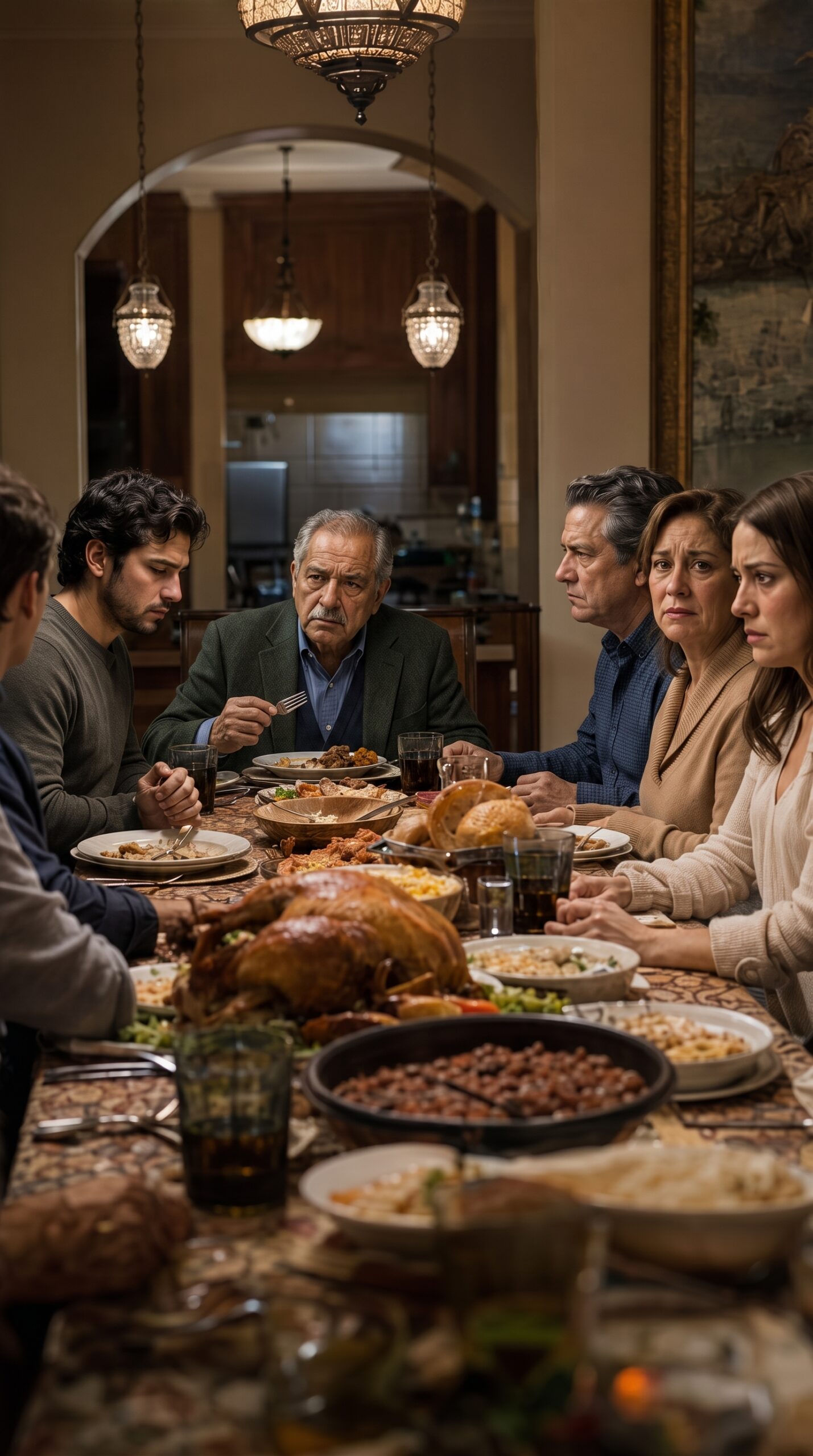
—Everyone is coming over for dinner.
Andrés thought the dinner was a reconciliation.
Camila thought it was a surrender.
Graciela thought Sofía would finally accept to stay quiet to “not harm the baby.”
Only Manuel knew that the table was set like a tribunal.
Sofía prepared roast chicken, rosemary potatoes, salad, and hibiscus water. She wanted a normal, almost beautiful dinner, because betrayals look uglier when they appear between clean plates.
Camila arrived with the baby wrapped in a beige blanket. She looked tired, fragile, protected by that face of “I did nothing” that had always worked for her.
Graciela entered behind her, carrying the diaper bag as if she were the proudest grandmother in the world.
Andrés arrived last, loosening his tie.
Upon seeing the baby, he smiled.
Not as an uncle.
As a father.
Sofía felt a pang in her chest, but didn’t lower her gaze.
During dinner, Camila talked about diapers, colic, and sleepless nights. Graciela laughed too much. Andrés asked if the child was taking the formula well.
Sofía listened to everything with a calm so strange it began to unnerve them.
Finally, Andrés asked:
—You’ve been very quiet today, love.
Sofía set her utensils down.
—I’ve been listening.
She pulled out a manila envelope and placed it next to Andrés’s glass.
—Open it.
He smiled nervously.
—What is this?
—The truth.
Inside were the divorce papers, bank statements, the transfers, the printed messages, and a photograph of the zero balance in the fertility account.
Andrés lost color.
Camila dropped her fork.
Graciela pressed her lips together.
—Sofía, we don’t talk about this like this —Andrés said in a low voice.
She took her cell phone and pressed play.
Andrés’s voice filled the dining room.
—Sofía still thinks my late nights are for the Querétaro project. Last week, she even deposited another 20,000 into the treatment account.
Camila began to cry.
Graciela whispered:
—Turn that off.
But the audio continued.
—Leave her —said Graciela’s voice—. As long as she’s calm, she’ll keep paying without asking questions. Sofía has always been better at supporting than receiving.
Manuel stood up so forcefully that the chair scraped the floor.
—Graciela, tell me that’s not you.
She opened her mouth, but pride overcame shame.
—You don’t know what it was like to carry everything while you were gone.
Manuel looked at her as if he were meeting a stranger.
—No. Today I’m understanding who carried everything. And it wasn’t you.
Andrés threw the papers onto the table.
—Did you record me? Are you really going to do this show?
Sofía stared at him without blinking.
—I recorded the exact moment my marriage stopped pretending to be alive.
Camila hugged the baby.
—We didn’t want to hurt you.
Sofía let out a dry laugh.
—You planned appointments, payments, lies, cropped photos, fake meetings, and a complete life behind my back. Don’t insult me by saying you didn’t plan it.
Andrés hardened his jaw.
—Be careful. A divorce could cost you dearly.
At that moment, Renata stepped out of the hallway.
Andrés turned pale.
—What is she doing here?
Sofía replied calmly:
—She’s at her client’s house.
Renata left another folder on the table.
—Mr. Salgado, we have documented unauthorized transfers, financial abuse, asset concealment, and possible diversions linked to your company. Mrs. Sofía is ready to seek divorce, total restitution, protective measures, and a review of business transactions.
Graciela rose indignantly.
—What a mother! Camila just gave birth.
Manuel pointed at her with frozen sadness.
—And you helped steal from one daughter to finance the betrayal of the other.
The dining room fell silent.
Not even the baby cried.
Weeks later, the first hearing hit Andrés like a blow. The judge ordered part of his accounts frozen, reviewed the fertility money movements, and demanded the return of every peso used without authorization.
The construction company opened an internal investigation when it received documents about the supposed travel expenses to Querétaro.
Andrés no longer looked like the confident manager.
He looked like a man trapped by his own arrogance.
Camila cried outside the courthouse.
—I loved him —she told Sofía.
Sofía looked at her without hatred but without tenderness.
—No. You loved feeling that you took something from me. And you used your child to convince yourself that you won.
Camila lowered her head.
—At first, I didn’t know about the account.
—But later you did.
She didn’t reply.
And that silence spoke louder than any confession.
The divorce was finalized five months later. Andrés signed the total money return, assumed debts related to the pregnancy, and withdrew any insinuation about Sofía’s supposed emotional instability.
Graciela had to sign a statement acknowledging her participation in the concealment.
When she hesitated, Manuel told her:
—Sign. For once, stop making Sofía pay for your pride.
She signed with a trembling hand.
As they exited, Andrés caught up with Sofía in the hallway.
—Did you ever love me?
Sofía looked at him like one looks at a house that has burned down.
—Yes. That’s why I believed you for so long.
He lowered his voice.
—And now?
—Now I love myself enough to stop proving anything to you.
A year later, Sofía opened a consultancy in Puebla for women needing to regain control after frauds, hidden debts, and marriages filled with lies.
She didn’t become invincible.
She became precise.
Manuel visited her every Sunday. He separated from Graciela and never hid behind work again to avoid seeing what was happening at home.
Camila sent a message when her son turned one.
“I don’t ask you to forgive me. I just want you to know that I understood something: my son was not proof that I won. It was proof of how many people we were willing to hurt.”
Sofía read it twice.
She replied:
“Teach him not to lie.”
She heard little about Andrés. He lost his position, moved to Monterrey, and his relationship with Camila crumbled amid debts, diapers, and shame.
Sofía didn’t celebrate.
Celebrating would have meant giving him space in her life.
One morning, while opening the window of her office, she saw Puebla waking up among cars, coffee vendors, and women walking briskly toward battles no one imagined.
She thought of the blue bag.
Of room 312.
Of the half-open door.
And she understood something that hurt her but also saved her.
The truth didn’t destroy her.
It pulled her out of a life where everyone expected her to keep paying in silence.
That day, she locked the case folder, took her coffee, and smiled without guilt.
She was no longer behind any door.
Now she had the keys.