Victor Kellner arrived at Mai's apartment building on a Thursday morning with a letter from the family's solicitors and a manner that suggested he considered the matter already settled.
She had been expecting the letter. Not quite so soon — Dorothy had been gone for three weeks — but she'd known it was coming from the moment she heard Victor in the library at the reception, speaking to the man in the grey suit.
She opened the envelope after he left it with the front desk and read it at her kitchen table with a second cup of coffee.
Dorothy Kellner had left her a fifteen percent interest in the Kellner estate.
The family was contesting the bequest on grounds of undue influence.
She had twenty-one days to respond.
She put the letter face-down on the kitchen table next to Dorothy's fifty-three.
Then she called a legal aid line. Then, on their advice, she called a solicitor.
The solicitor's name was Priya. She was thirty-eight, very efficient, and had clearly handled this exact situation before.
They met on a Friday afternoon in Priya's office — a room that looked out over the canal and smelled of espresso and careful thinking. Mai brought the folder of letters. She put it on the desk between them.
"It's not uncommon," Priya said, after reading the first letter and skimming the second. "A wealthy family, a late-in-life bequest to someone outside the inner circle, a contest filed the moment probate opens. They'll argue your client was compromised by illness. They'll argue you cultivated a relationship for personal gain."
"Dorothy found me on purpose," Mai said. "Before I was hired. She hired a private investigator. She tracked my foster care records. She waited three years before making contact."
Priya looked up.
"The first letter in that folder is dated three years before I was employed," Mai said. "She had been writing to me — without sending the letters — since before I knew she existed."
"That changes things considerably," Priya said.
"She also — there's a letter in there, around the fortieth, that raises another matter entirely. About Edward Kellner's younger brother."
Priya picked up the folder and found letter forty. She read it slowly. Read it again.
She set it down.
"This is not the record of a woman whose judgment was failing," she said. "This is a woman who knew exactly what she was doing and why. She was making restitution." She paused. "Are you aware of what restitution implies, legally?"
"I'm beginning to understand it," Mai said.
"The question isn't just the inheritance," Priya said carefully. "If what she describes in that letter is accurate — if there was a pregnancy, if there was a payment made to suppress it, if you are who this letter suggests you might be — then what Dorothy left you isn't a bequest. It's a correction."
"A thirty-year correction."
"Yes."
They sat with that for a moment.
"Can you fight the contest?" Mai asked.
"With these letters? Yes. Comprehensively." Priya closed the folder. "But I want you to think about something. The contest is Victor's move. He filed it. He can also withdraw it. Before we go into court over this, there may be someone else in that family who, once fully informed, might choose a different path."
"Edward," Mai said.
"He's a reasonable man?"
Mai thought about sixteen months of nods at the front door. Sixteen months of the closed study.
"I don't know him well enough to say," she said. "But I think he might be."
She gave the letters to a friend to keep safe — physical copies, not the originals — and kept the originals with her solicitor.
Over the next week she reread specific letters, the ones that felt most important, as though she was preparing for a conversation she couldn't quite see the shape of yet.
Letter twelve, dated four months into her employment:
You were in the waiting room on Thursday and I watched you for a moment before you saw me. You were reading something. A paperback with a broken spine. And there was something about the way you were sitting — the particular quality of someone who has learned to be very still in rooms where other people are anxious — that reminded me of him. Of James. He had that quality too. He said once that he learned it in hospital waiting rooms, during a year when his father was ill. I don't know where you learned it. But I recognized it.
Letter twenty-three, dated seven months in:
I keep telling myself that what I'm doing is enough. That giving you this job, this income, this contact — that this is sufficient, that this is my making of things right. But I know it isn't. You deserve the truth. Not a job. Not access. The truth. And I keep not saying it, because I don't know how to say it without destroying everything at once.
Letter thirty-five, dated eleven months in:
You told me today about your grandmother's envelope. You said she'd left you a name — a good man, she wrote, find him if you ever need help. You assumed it was Edward. I didn't correct you. I should have. The good man in that envelope isn't Edward. But I let you go on assuming it. One more thing I'm letting pass.
She sat with letter thirty-five for a long time.
Her grandmother had known.
She had not been pointing her at Edward. She had been pointing her at James. At a dead man. At the part of this family that had been good, as though goodness wasn't extinguished by death, as though finding the good in a family meant finding the people who carried it.
Dorothy had known this too.
Two women, separated by thirty years and a secret that had passed through both their hands, both of them leaving maps that led to the same place.
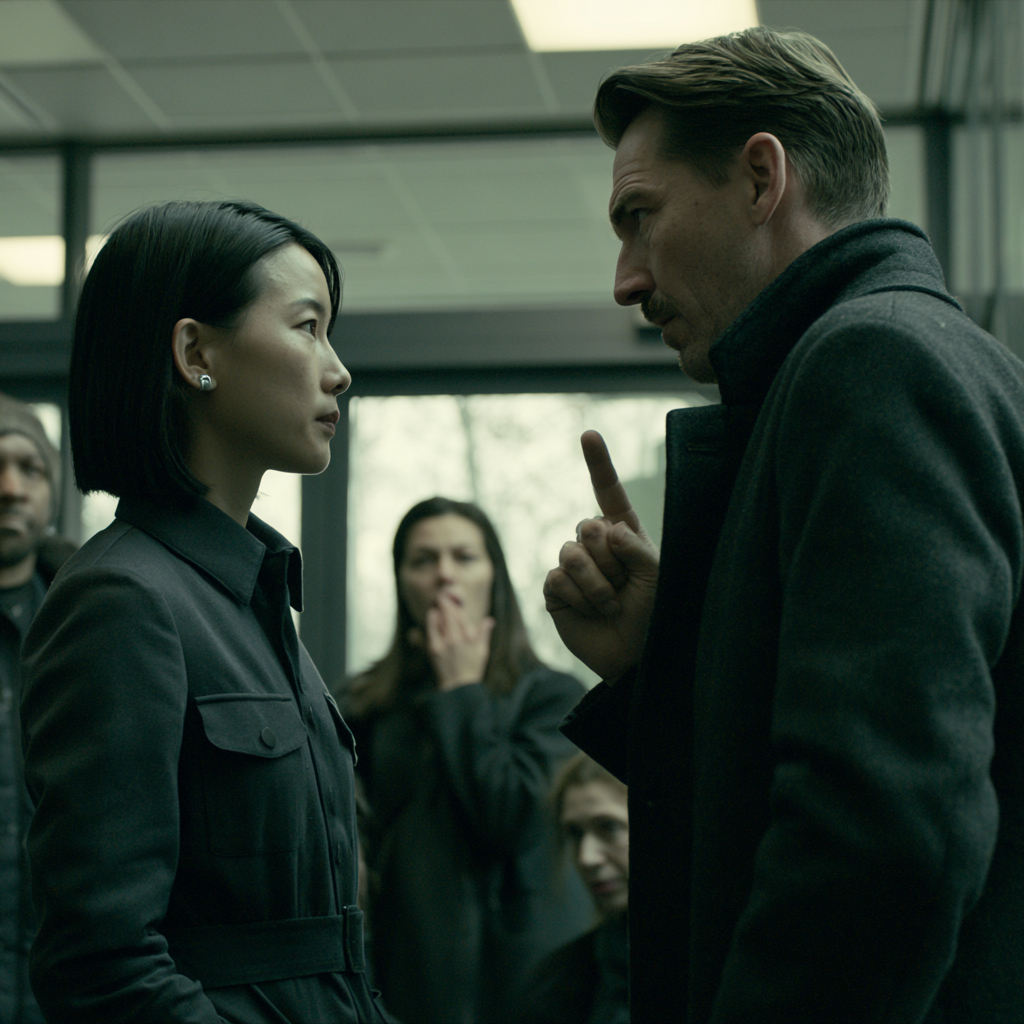
Victor came to her apartment building himself on a Friday evening.
She met him in the lobby. This was not a conversation that was going to happen in her home.
The pleasant, camera-ready version of Victor Kellner had been put away for the occasion. He was not smiling.
"I'm going to say this simply," he said. "You are nothing. You were hired help. My mother was ill and lonely and you inserted yourself into a situation that you had no right to, and whatever she put in that will was the result of compromised judgment. We will prove that. And when we do, you will get nothing, and the professional reputation you've built will be very effectively destroyed."
"Your mother found me on purpose," Mai said. "She hired a private investigator in 2018. She tracked my foster care records and waited three years before making contact."
Victor's jaw tightened. "What are you talking about?"
"Fifty-three letters, the earliest dated four years before I was hired. She wasn't a sick woman who got attached to a convenient driver. She was a woman who had been looking for me specifically for years. Because she knew who I was. Because she had been trying for thirty years to find a way to make right something she had done wrong."
"That's—" He stopped. Recalibrated. "What did she think she'd done wrong?"
"Your grandfather and grandmother paid a woman twenty thousand pounds to disappear in 1993," Mai said. "She was four months pregnant. She was twenty-two years old. The child she was carrying was your uncle James's daughter."
Victor stared at her.
"Call your father," Mai said. "He has the letters now. Ask him about a woman named Linh. Ask him about the papers from 1993 that are in the family archive."
Victor Kellner stood in her lobby for a moment that felt like a held breath.
Then he left without saying another word.
And Mai understood, for the first time, that whatever Dorothy had put in those letters was more than a bequest. It was a map. And the map went somewhere Victor had not known existed, but that she was beginning to see very clearly.
Edward Kellner called her on Monday morning.
Not through the solicitors. His actual voice, on her phone, while she was driving another client to an early appointment and had to pull over to take it.
"My wife left you something," he said. "I didn't know about the letters. I'd like to read them, if you'd be willing."
His voice was careful in a way she hadn't heard before — not the impersonal efficiency of the man at the front door for sixteen months. Careful in the way of someone who has recently received information that has required him to revise a large number of assumptions and is not sure how far the revision goes.
"I'll think about it," Mai said.
She drove her client to the airport. She sat in the short-stay car park for a while afterward. She thought about fifty-three letters. About Dorothy saying don't put things off the way I did. About the particular cowardice of waiting for a better moment that never comes.
She called him back. "Yes," she said. "I'm willing."
They met at a café on Wednesday — not the house, neutral ground. He came without Victor. He came in the dark wool suit he always wore and he sat down across from her and he did something he had apparently not done in sixteen months — he actually looked at her. The way Dorothy had, on that first Monday in September. As though he was trying to see something and was no longer willing to not see it.
She passed him the folder.
He read the first letter. The second. The third.
On the fifth he closed the folder.
"I need to do this at home," he said. "Somewhere I can take my time."
"Take them," she said.
He looked at her. "You trust me with them."
"They were your wife's letters," she said. "You deserve to read them."
He took the folder. He stood. He looked at her for a moment — the look of a man who has realized, too late, that he has been missing something that was present in front of him for two years — and then he left.
She sat alone in the café with a cold coffee she didn't finish, and she thought about nothing in particular, and let the afternoon pass around her.
Edward read the letters in his study that night.
The closed room. The room whose door Mai had walked past for two years — always closed, always with the faint sounds of work behind it.
He read letter by letter in the light of the desk lamp. He did not have dinner. He did not answer Victor's calls.
He read Dorothy's account of the private investigator. The foster care records. The years of circling. The decision to hire Mai specifically, to give her the job, to spend two years learning who she was from a distance of one car's length.
He read the middle letters — Dorothy's small observations. The way Mai held herself in waiting rooms. The way she organized the medication without making it a gesture of pity. The way she'd called him directly when Dorothy came home weak in March, without asking permission, simply because it was the kind of information a husband should have.
He'd registered that phone call at the time. Hadn't thought much of it.
He read letter forty.
He read it twice.
James. Linh. The graduate student. The pregnancy his parents had managed so efficiently in 1993 that he had never known there was a pregnancy to manage. He had been thirty-one years old. He had told himself that whatever his parents were handling, they were handling. His younger brother had just died, and grief was the only thing that had seemed to matter.
He got to letter fifty-one, dated six months before Dorothy died:
I found a photograph of James from 1990. He was twenty-nine in the photograph, standing in the garden. I sat with it for an hour. Then I sat with what I know about Mai — the way she holds herself, the jaw, the particular quality of her stillness. I already know. I have known for some time. I have been a coward about this for longer than I have been ill, and that is saying something.
He set the letter down.
He opened the bottom drawer of the desk.
He took out a framed photograph — James Kellner, 1990, standing in the garden of this same house at twenty-nine years old, laughing at something just off-camera, one hand raised to push his hair from his face.
He put it on the desk beside letter fifty-one.
He looked at both.
He did not move for a very long time.
He called Victor the next morning.
"Victor. I need to talk to you about your uncle James."
"What about him? He's been dead for thirty years."
"I know. I've been going through the family archive. There are documents from 1993 — papers your grandparents prepared when Linh Chen was four months pregnant and twenty-two years old and in no position to know her rights." Edward paused. "I want you to come to the house. Before we go any further with the solicitors, there are things you should know."
Silence on the phone.
"What things?"
"James had a daughter," Edward said. "Your grandparents paid her mother twenty thousand pounds to disappear. Your mother found the daughter twenty-eight years later and spent four years trying to figure out how to tell her the truth. And we have spent sixteen months nodding at her in the driveway."
The silence on the other end was different now.
"Come to the house," Edward said.
He hung up.
He looked at the photograph of James for a moment. Twenty-nine years old, laughing in the garden, not knowing what was coming.
He thought about sixteen months of nods. Sixteen months of the closed study door.
He thought about the word he owed her.
Niece.
Just a word. Four letters. It had been sitting in front of him for two years without his knowing it was there.
He picked up his phone and called Mai's number.