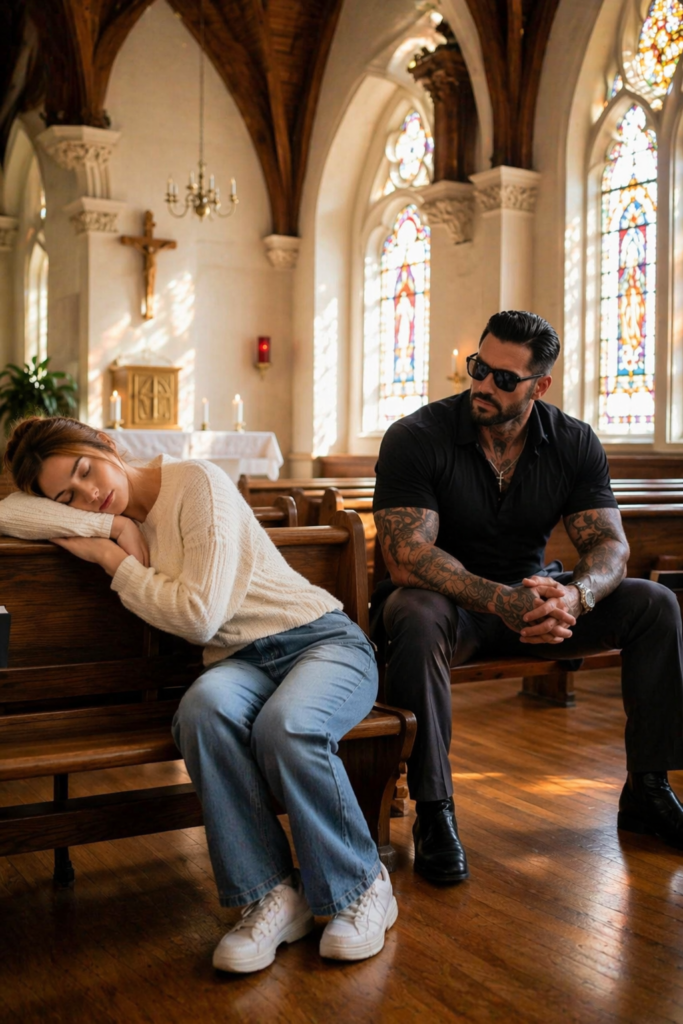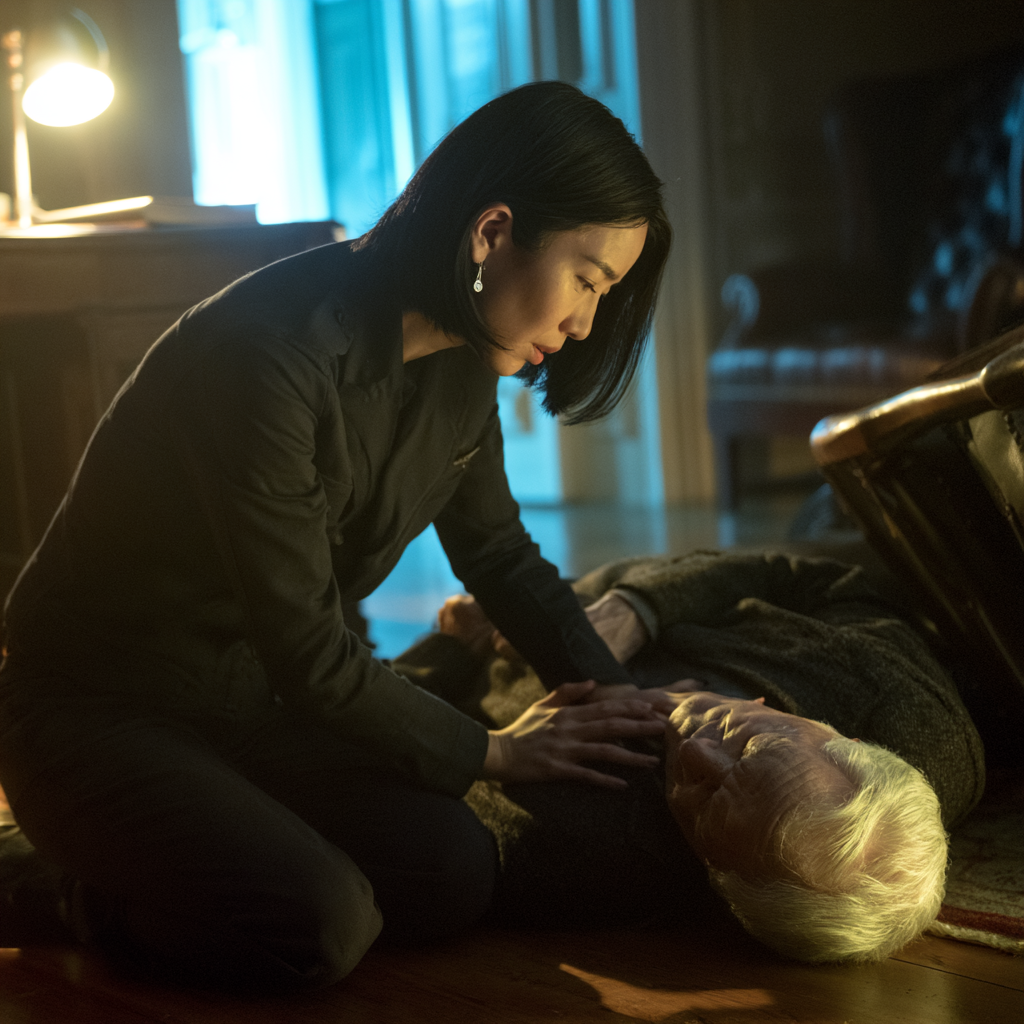
Mai had been the twelfth driver hired to take Dorothy Kellner to her chemotherapy appointments.
The first eleven had lasted between four days and three weeks. Mrs. Kellner was demanding, the agency told applicants. She preferred silence but wanted company. She had opinions about routes. She needed help getting in and out of the car on bad days but disliked being helped.
What the agency didn't say was that Dorothy Kellner was a woman who had spent forty years making herself agreeable in a house that had never quite belonged to her — and now that she was dying, she had quietly decided she was finished with it.
Mai understood this without being told.
She arrived on a Monday morning in September, three minutes early, car clean, wearing a dark jacket over simple dark trousers. Dorothy Kellner came to the front door herself — thin, white-silver hair loose to her shoulders, one hand on the doorframe in a way that looked casual until you noticed the knuckles.
"You're new," Dorothy said.
"Yes, Mrs. Kellner."
Dorothy looked at her for a moment — not through her, the way most people looked at drivers, but at her. As though she was actually trying to see something.
"Come in," Dorothy said. "I need to sit down before we go."
The Kellner house was what money looked like when it had stopped trying to impress anyone. Dark wood paneling. Oil paintings of landscapes nobody looked at. A library that smelled of leather and old paper and the faint chemical trace of an air purifier Dorothy's doctors had recommended.
Mai spent the first weeks learning the house without meaning to. She noted the kitchen where the housekeeper Maria left covered plates for Dorothy when the appetite came and went. The back hallway with the folded wheelchair — dusty, untouched, because Dorothy refused it even on the difficult days. The study door that stayed closed from seven in the morning until seven at night, where Edward Kellner worked, and where the light was still burning when Mai drove Dorothy home from the late appointments.
Edward Kellner did not speak to her.
Not rudely. Not consciously. He simply had the quality of a man whose attention stopped precisely at the edge of what he'd decided mattered, and a driver fell well outside that boundary. He offered the same small mechanical nod every morning — a brief dip of the chin that acknowledged her presence without quite registering it — and that was the full extent of their communication in sixteen months.
She drove Dorothy to St. Michael's on Tuesdays and Fridays. She waited. She drove her home.
In the waiting rooms she learned to read clinical spaces the way you read a room before a difficult conversation — which staff moved with urgency, how long a wait usually ran, where the least uncomfortable chairs were. She chose the chairs closest to the doors Dorothy would come through. She was always standing when Dorothy appeared.
Dorothy noticed. She didn't say anything for the first month.
It was a Tuesday in October when Dorothy finally said, from the back seat: "You don't talk much."
"I didn't think you wanted me to."
"I don't want most people to. You're different."
Mai kept her eyes on the road. "What makes you say that?"
"You've been driving me for five weeks and you've never once looked at me like that."
"Like what?"
"Like you feel so terribly sorry for me." Dorothy's voice was even. "I find pity exhausting. Sympathy I can manage. Pity makes me feel like I'm already dead."
Mai was quiet for a moment.
"I don't pity you," she said. "I think you're going through something terrible and handling it with more composure than most people would. That's different."
From the back seat came a small, dry sound. It might have been a laugh.
"You're the first person who's said something like that in two years," Dorothy said. "Everyone else has been trying to make me feel brave. It's very tiring, being made to feel brave."
"I imagine it is."
They drove in silence for a while.
"What's your name?" Dorothy asked. "Your first name."
"Mai."
"That's Vietnamese?"
"My grandmother was. I grew up mostly here."
"And where is she now?"
"She died when I was nineteen. She was the last family I had."
The silence that followed was different from the ones they'd been sitting in — fuller, with more inside it.
"I'm sorry," Dorothy said.
"Don't be. She was a remarkable woman. What she gave me in five years was more than most people get in a lifetime."
Victor Kellner came home the first weekend of November.
He was thirty-four and the kind of handsome that cost money to maintain. He moved through the house the way men do when they've been the center of it for a long time — fluid, certain, never quite waiting for a room to absorb him. He brought Grace, his wife. She was blonde and watchful and smiled in the careful way of people who have learned that a smile can be very effective camouflage.
Mai was polishing the car in the driveway when they arrived. Victor walked past her as though she were part of the landscaping. Grace's eyes swept over her once — a quick, professional assessment — and found nothing she needed to address.
She overheard them at lunch through the kitchen window she'd left cracked while she waited.
"She's still using the same driver?" Victor's voice, carrying the particular tone of a man who finds everything slightly below his expectations. "I thought Mother went through them."
"This one has stayed." Edward's voice, lower.
"Why?"
A pause.
"I don't know," Edward said. "Your mother seems comfortable."
"Mother gets comfortable with people who pay attention to her. It doesn't mean anything."
Mai closed the car hood. She got in the driver's seat and sat there for a moment, looking at the house.
Then she drove to the pharmacy to pick up Dorothy's prescriptions.
December came with bad days clustering closer together, the good ones shorter and further between.
On a Thursday afternoon twelve days before Christmas, Mai arrived for a scheduled appointment and found Dorothy in the kitchen, still in her robe at noon, struggling with the medication bottles. Her hands were shaking — worse than usual. The pill organizer sat open and half-filled in front of her.
Maria, the housekeeper, had called in sick. Edward was in a meeting. Victor was in London.
Mai stood in the doorway for a moment.
Dorothy heard her and looked up, and for just an instant the expression on her face was one that Mai recognized from her grandmother in the hard years — the look of a person who has been strong for so long they've forgotten how to ask for help, and who is now in the position of needing it in front of someone who is not supposed to see.
"I'll do that," Mai said.
"You don't have to—"
"I know." She came in and sat down across from Dorothy at the kitchen table and began sorting. "The Tuesday and Friday ones are in the blue compartments? How do you want the rest organized?"
Dorothy told her. Mai filled the organizer without a word of sympathy and without the particular careful expression — that gentle, over-considerate look — that everyone else wore around Dorothy now. The look that made Dorothy feel like a museum exhibit.
When it was done, Dorothy looked at her hands.
"You're good at this," she said. "You've done it before."
"My grandmother had Parkinson's. I learned to help her without making it feel like help."
Dorothy looked at her with the fuller, considering look.
"How did you end up with her?"
"She found me when I was fourteen. I'd been in foster care since I was four. She spent ten years trying to track me down through the system." Mai paused. "She was the kind of person who keeps trying even when they've been told to stop."
"Were you ever looked for before that? By anyone else?"
"No. Just her."
Dorothy nodded once, slowly. Something in her face settled — not quite relief, not quite sorrow, but something that sat between them and stayed there.
"We should go," she said. "We'll be late."
January — cold, flat grey light outside the hospital — was when Victor made his position clear.
Dorothy was having blood drawn, third floor, thirty-minute wait. Mai was in the lobby with a coffee she'd bought from the cart and a paperback she was three pages into when a hand closed lightly on her arm.
Victor Kellner. He steered her to a quieter corner near the elevator bank.
"I want to be direct with you," he said. He had the same smile Grace used — the camera smile, the one that didn't quite move the eyes. "I've noticed you've developed quite a close relationship with my mother."
"I drive your mother to her appointments," Mai said. "I help her with tasks that are difficult for her when no one else is available."
"Of course." The smile held. "But my mother is ill. And people in her condition sometimes form attachments that are disproportionate. To people who show them attention."
Mai said nothing.
"I'll be very direct," Victor said. "Our solicitors have advised us to be aware of any potential undue influence. If there were any suggestion that you've been using your position — that my mother has been making decisions while her judgment was compromised — we have legal counsel who would have no difficulty building that case."
"I haven't asked your mother for anything," Mai said.
"I didn't say you asked. I said I noticed." His tone stayed pleasant throughout — the particular pleasantness that is a threat wearing nice clothes. "I just want us to understand each other. We're not adversaries."
He held her gaze for a moment, apparently satisfied with what he found there — which was nothing he could read.
"I appreciate you being direct," Mai said.
Victor nodded, still smiling, and went back toward the elevator.
Mai stood in the corner for a moment.
Then she went back to her paperback. Found her page. Read two more pages before Dorothy's name was called.
She did not look up when Victor crossed the lobby.
She didn't tell Dorothy.
She told herself this was because it wasn't her place — that Dorothy was carrying harder things than her son's anxieties, and she was not going to add to the weight. That was true.
But there was also something else she allowed herself to look at once and then set aside: something had shifted, quietly, over sixteen months, and she was not entirely sure what to do with it.
She had told herself for a long time that this was a job. That Dorothy Kellner was a client. That the warmth she felt sitting across a kitchen table sorting medications, or in the car on long drives home when Dorothy was tired and the radio was low and the city moved past the windows — that all of this was professional competence and nothing more.
But Dorothy had started calling her Mai instead of Ms. Chen, sometime around October.
And Mai had started saying things in those silences that she hadn't said to anyone else. About her grandmother's garden in Ohio. About the apartment at twenty-one that flooded every spring and that she'd loved anyway because it was hers. About the particular feeling of knowing you have no one to call when something goes wrong, and deciding that's all right, it's just how things are, and eventually believing it.
Dorothy listened the way people do when they are storing things.
Mai had noticed. She hadn't known what to do with the noticing.
February. The last good month.
On a Sunday that was warm enough to be deceptive — the kind of late-February day that lies about what's coming — Dorothy said she wanted to see the hothouse flowers at the botanical garden. Not for an appointment. Just to drive.
Mai brought a blanket for Dorothy's knees and did not make a thing of it.
They walked through the hothouse for nearly an hour. Dorothy needed to sit twice. Mai found the benches. They didn't talk much — they'd reached the kind of ease where silence wasn't something to fill.
On the way back to the car, Dorothy said: "Do you know what I think about most lately?"
"What?"
"All the conversations I kept putting off. Not regrets, exactly. More like — I keep seeing all the moments where I could have said something and chose not to. Told myself there was more time." She paused. "There's always more time. Until there isn't."
They reached the car. Mai opened the back door. Dorothy stopped before getting in.
"Don't do that," she said. "Don't put things off the way I did. There are things that need to be said out loud and to the person who needs to hear them. Don't convince yourself there will always be a better moment."
"All right," Mai said.
"I mean it."
She got in. Mai closed the door. Got in the front. Started the car.
They were ten minutes onto the highway before Mai said quietly: "Is there something you want to tell me?"
Dorothy looked out the window at the passing grey fields.
"Not yet," she said. "But soon."
It was a Monday in March when Dorothy pressed the envelope into her hands.
Not dramatically. Mai had arrived for a scheduled appointment, and Dorothy was in the sitting room in her usual chair, smaller than she'd been in September, the quality of the light around her different in a way that had nothing to do with the lamps.
She held out the envelope without preamble. It was sealed and thick — the kind that holds more than one page.
"Don't open this until I'm gone," Dorothy said. "Promise me."
Mai looked at it.
"Promise me," Dorothy said again, and there was something in her voice that Mai had not heard before — not urgency exactly, but the weight of someone who has been holding a thing for a very long time and is finally setting it down.
"I promise," Mai said.
She put the envelope in the inside pocket of her jacket.
They drove to the hospital. On the way home Dorothy dozed, and Mai let the radio stay off. She helped Dorothy up the front steps. Edward was in the doorway — she had called him from the clinic, because she could see how weak Dorothy was and it seemed like the kind of information a husband should have, and she hadn't asked permission before calling, just called.
He looked at his wife. Then he looked at Mai.
He said nothing. He put his arm around Dorothy and took her inside.
Mai walked back to the car.
Dorothy died three days later, in the early morning, with Edward beside her.
The funeral was on a Wednesday.
Mai was not invited to the chapel. This was not said explicitly — there was no conversation, no instruction. But when she arrived at the stated time, Victor appeared on the front steps and said, pleasantly, "You can wait with the car. We'll need you for some of the overflow guests after."
So she waited.
She sat in the driver's seat for three hours in the dark jacket she'd bought the day before and listened to the sound of a ceremony she could not see.
At the reception afterward she moved through the edges with a glass of water she didn't drink. She heard Grace tell a woman in a green coat: "Dorothy was so generous. Almost to a fault." She heard Victor, near the library door, speaking in a lowered voice to a man in a grey suit: "Get legal to look at what might have been discussed with the driver. Two years is a long time. We need to understand the exposure before it becomes something."
The man nodded and moved away.
Mai set her glass of water down on a passing tray.
She went through the house to the back door and stood in the garden for a while. The rosebushes were bare. Nobody had tended them since autumn.
The envelope was still in her jacket. She'd been moving it from coat to coat for three days without thinking about it, always in the inside pocket, always over her heart, as though her body had made a decision her mind hadn't caught up to yet.
She drove home alone at half past nine.
She put the envelope on the kitchen table. Made tea. Sat across from it.
She thought about Dorothy's hands shaking over the medication bottles in December. About the botanical garden and the grey February fields. About "Not yet. But soon" — and then time running out before the soon could become now.
I promised not to open it until you were gone.
You're gone.
She picked it up. She opened it.
Inside were letters. Not one. Not five.
Fifty-three letters, each in Dorothy's handwriting, each addressed to "Dear Mai." The dates ran back four years — the first one written three years before Mai had ever been hired.
She read the first line of the first letter.
I have been trying to find the right way to tell you something for a very long time, and I have run out of excuses for not saying it. So I will say it plainly: I found you on purpose.
She set it down.
She sat very still for a long time.
Then she picked up the next letter.
She read all fifty-three over three nights.
The early letters were circling — Dorothy explaining how she'd found her, the private investigator she'd hired quietly in 2018, the foster care records tracked down through intermediaries. The careful, guilty account of a woman who had spent years watching someone from a distance before working up the courage to make contact.
The middle letters were warmer. Dated from the months after Mai was hired. Small observations. "You drove me past the cemetery today and said nothing about it and I was grateful." "You found the blanket in the boot without being asked. I don't know why that moved me." "I watched you in the waiting room today. You were reading but your eyes kept going to the door. You were watching for me."
And then, letter forty — written eighteen months into the job, on a Tuesday evening that Dorothy noted was a very cold night:
There is something I need to tell you that I have been putting off for thirty years. Longer, if I'm honest. You know I have spoken of Edward's family. You have met his son. But I haven't told you about Edward's younger brother. His name was James. He died in 1993, when he was thirty-two years old. He had a girlfriend whom the family did not approve of. Her name was Linh. She was twenty-two, a graduate student, Vietnamese-American. They were very happy together. James was already ill when they met, and she stayed through all of it. He died not knowing she was pregnant. Or rather — I believe that is true. I believe he died not knowing. Because the people who knew were Edward's parents, who told no one. And me, who was twenty-eight years old and newly married into this family and who signed the papers they put in front of me because I didn't know enough yet to understand what I was signing away. I need you to know that. I need you to know I have been living with it for thirty years. I will tell you the rest when I can find the right words. I am taking too long. — D
She read letter forty three times.
Then letter forty-one. Then forty-two.
She read through to letter fifty-three, the last one, dated two weeks before Dorothy died.
It said, in handwriting shakier than the rest: I know whose daughter you are. I have always known. I helped it happen, and I have been trying for two years to find the right moment to say it to your face. I am a coward. I am so sorry. Tell Edward, if I can't. He doesn't know yet. He deserves to know, and so do you.
She set it down.
She sat in the dark kitchen at two in the morning with fifty-three letters spread across the table, and she thought about a man named James Kellner whom she had never met, and whose photograph hung on the wall of a study she had walked past for two years and whose door she had never once been invited to open.
She thought: I should have knocked on that door.
She thought: I am going to knock on it now.