PART 1
Valeria Mendoza was two weeks away from giving birth when her husband took her to the Nevado de Toluca under the pretense of spending one last morning together before their child arrived.
Santiago Robles had reserved a fancy cabin, prepared hot chocolate, and even insisted on taking pictures in front of the frozen lagoon. He seemed attentive, almost affectionate.
But when they reached a secluded viewpoint, his facade crumbled.
—I can’t take your complaints anymore—he said, staring at the snow-covered cliff—. You always ruin everything.
Valeria begged him to turn back. The wind was cutting against her skin, and a storm was beginning to close in. Besides, she had been feeling mild contractions for days.
Santiago didn’t respond.
For weeks he had been distant. He slept with his phone under the pillow, avoided touching Valeria’s belly, and got angry every time she asked about the company’s finances.
Still, she never imagined that this outing was a farewell he had orchestrated. They had been married for five years.
Valeria held onto the naive hope that the attentive man from their early months was still hiding behind all this coldness.
Santiago simply placed both hands on her shoulders and pushed.
Valeria fell, screaming. She glimpsed her husband’s face peering down from above, calm, satisfied, as if he had just closed a business deal.
—Don’t worry—he shouted—. You and the baby won’t suffer much.
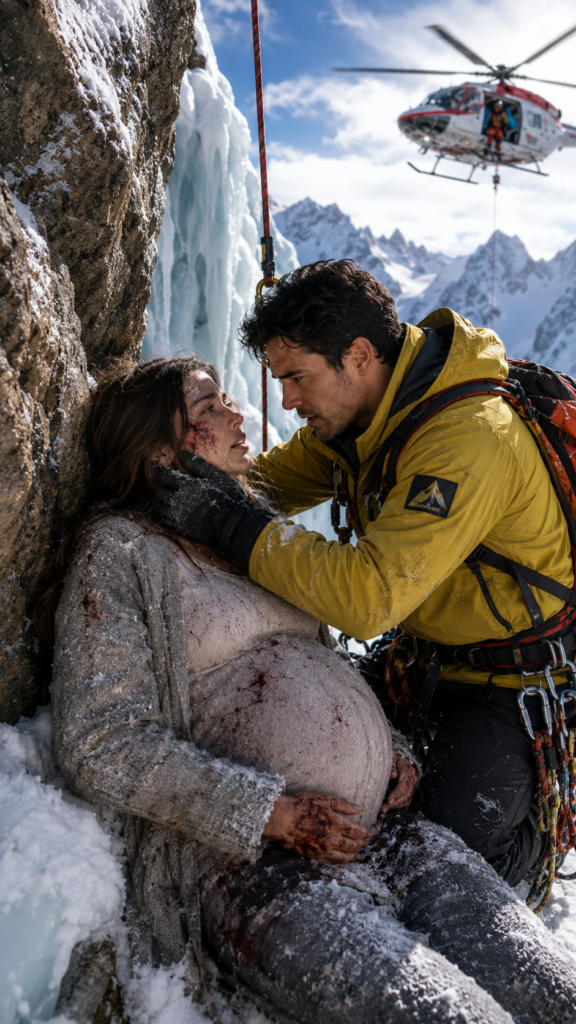
Her body struck a narrow ledge halfway down the ravine. She felt her ribs crack, her wrist bend, and hot blood soaking the snow beneath her legs.
Even so, she cradled her belly.
—Stay with me, Mateo. Please, my love.
Then she heard another voice above.
It was Camila Soria, Santiago’s “executive assistant,” the woman who always smiled too much during dinners and sent midnight texts about supposed work matters.
—Is she dead yet?—she asked, annoyed.
Santiago laughed.
—For 50 million pesos, she better be.
Valeria felt the pain of betrayal worse than the pain of the fall.
The life insurance policy had been taken out four months earlier. Santiago claimed it was a responsible measure now that they were becoming parents.
If Valeria and the baby died together in an accident, he would receive an amount capable of saving his company, drowning in debt.
Everything had been planned.
The trip. The storm. The location without cell service. Even the date.
Santiago and Camila walked away chatting about returning to the cabin before the road closed.
For nearly two hours, Valeria remained trapped between life and death. The snow covered her legs, and each breath burned like glass.
When she was about to give up, she felt a kick.
Mateo was still alive.
Minutes later, a light pierced through the blizzard. A black helicopter appeared over the ravine, and a rescuer descended by cable.
The man had silver hair, blue eyes, and a face Valeria had seen only once, in a photograph her mother hid inside a cookbook.
He knelt, touched her frozen cheek, and lost all composure.
—Valeria… I finally found you.
She wanted to ask him who he was, but a brutal contraction stole her breath.
The stranger ordered an immediate evacuation. Before Valeria lost consciousness, she heard him say something impossible:
—Hang on, daughter. I’m not going to lose you again.
PART 2
Valeria woke up in a private hospital in Toluca with her body bandaged and her belly empty.
Terror closed her throat.
A nurse rushed to her.
—Your baby is alive. He was born emergency. He’s small, but he’s fighting.
Valeria cried until she had no strength left.
Mateo remained in intensive care, connected to tiny wires, breathing with assistance. When she could see him, she slipped a finger through the opening of the incubator.
The baby wrapped his hand around it.
In that moment, Valeria decided that she would not die within the story Santiago had invented.
The man from the helicopter appeared that afternoon.
His name was Ricardo Alcázar, a shipping magnate and owner of one of the country's most discreet fortunes. He had financed the rescue with a private team because he had been watching Santiago for three months.
—Why?—Valeria asked.
Ricardo pulled out a yellowed envelope.
—Because your mother asked me to find you if you were ever in danger.
The handwriting on the envelope was unmistakable.
Valeria recognized the script of her mother, Teresa, who had passed away when she was 14.
Ricardo explained that the storm had disrupted official reports. The hospital had registered her under special protection, and the police allowed Santiago to believe that she and Mateo had died.
—He already organized your funeral—Ricardo said—. And submitted the preliminary notice to claim the policy.
Two days later, Valeria watched her own funeral via a private transmission.
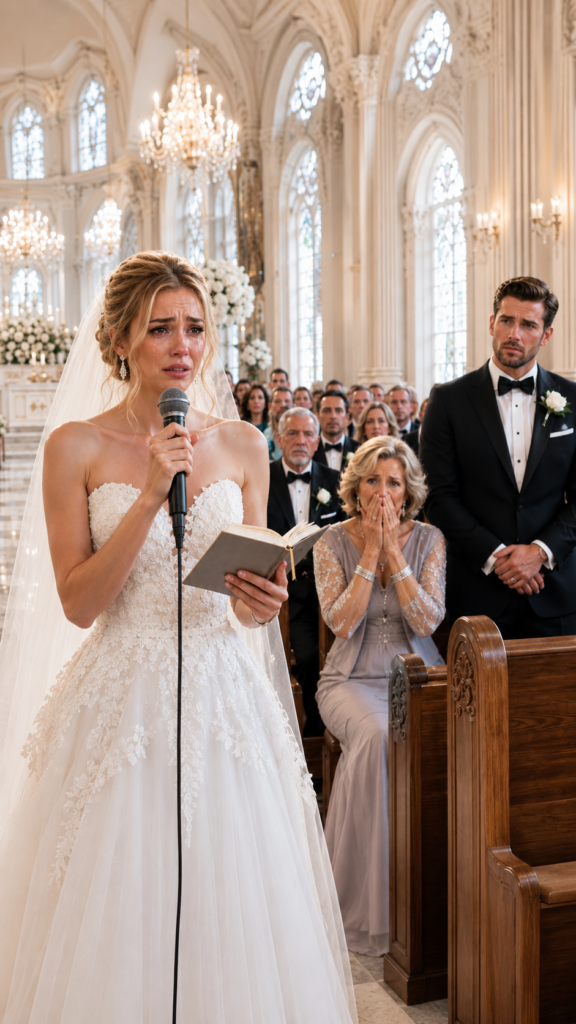
In a church in Polanco, her pregnancy photo was placed beside a closed coffin. Neighbors, old friends, and family wept.
Santiago did not.
Dressed in a black suit, he placed a hand on the casket and said that Valeria was “emotional, impulsive, and difficult.” He claimed she insisted on walking during the storm.
He was not just burying her.
He was making her culpable for her own death.
Camila sat two rows back, in a dark dress with her gaze downcast. She looked like a respectful employee, but she wore the ring Santiago had bought during a trip to Cancun.
Then a woman stood up at the back of the church.
—Since you’re going to carry something, carry the truth.
She introduced herself as Nora Beltrán. She said she had heard Santiago arguing with Camila in the cabin.
He was talking about cashing in the insurance before the quarter ended.
Santiago called her a liar.
Nora raised her phone.
—I also have a recording. And I know why you chose Valeria. Ask Ricardo Alcázar about the fire in Puerto Escondido.
Ricardo cut the transmission.
Valeria confronted him.
—No more secrets.
He handed her Teresa's letter.
In it, her mother recounted that she had worked on a property owned by the Alcázar family in Oaxaca. There, she discovered illegal transfers, shell companies, and a network used by Ricardo’s older brother to siphon money.
Ricardo tried to protect her. He also fell in love with her.
Teresa became pregnant.
—You are my father—Valeria said, her voice breaking.
Ricardo did not deny it.
He had obeyed Teresa’s request to stay away because she feared the Alcázar family would use the girl to recover documents that were still missing.
Valeria felt rage, sorrow, and a lifelong emptiness.
—I needed you.
—I know—Ricardo replied—. And I arrived too late.
She did not forgive him, but she allowed him to protect Mateo.
The investigation revealed something even worse.
Santiago had not met Valeria by chance. Six months before approaching her, he paid for files related to Teresa Mendoza and the Oaxaca fire.
His company was bankrupt. He needed money and believed Valeria was a woman without family, secretly linked to a millionaire, and perfect to turn into a wife, beneficiary of hidden documents, and later a victim of an “accident.”
The policy was just one part.
Santiago was also looking for a file that Teresa had hidden, which could prove ownership of shares worth hundreds of millions.
Camila had been his accomplice, but she began to get scared.
On the night of the fifth day, she called the hospital.
—I know you’re alive—she whispered—. Santiago wants to flee. He lied to me too.
Valeria felt disgust.
—You saw me fall and you left.
Camila broke down in tears.
—I know. I’m not asking for forgiveness. Just listen: the letter is incomplete. Ask Ricardo what happened to the other baby in Puerto Escondido.
The call dropped.
Valeria reviewed the envelope and discovered a torn page.
When Ricardo returned, she held the letter in front of him.
—Tell me the whole truth or get out of this room.
Ricardo confessed that Teresa had not been the only woman pregnant that night of the fire.
Nora was also expecting a child from Ricardo’s brother, Julián Alcázar. During the chaos, Nora gave birth prematurely.
Julián ordered that the baby be declared dead because he feared a scandal and a dispute over the inheritance.
But the baby survived.
Teresa helped get him out of the property and delivered him to a family far from Oaxaca.
—Who was it?—Valeria asked.
Ricardo closed his eyes.
—Santiago.
The world tilted again.
Santiago hadn’t investigated Valeria just for money. He had discovered he was the son of Julián Alcázar and believed Teresa had stolen proof of his origins and the inheritance that belonged to him.
He approached Valeria to find those documents.
Then he married her.
When he found nothing, he decided to kill her, cash in the insurance, and later file a lawsuit against the Alcázar family using the file Camila had located.
Nora was not a casual witness.
She was Santiago’s biological mother.
She had shown up at the funeral to prevent her son from committing an even greater crime.
The police tracked down Camila at a bus terminal. She agreed to hand over the prepaid phone and testify in exchange for protection.
The messages were devastating.
Santiago had written: “With the blow, the cold will do the rest.”
Camila replied: “What if the baby survives?”
He answered: “Then we go back and finish the job.”
They also found transfers to the guide who pointed out the most isolated viewpoint and searches about how long it took for a pregnant person to die from hypothermia.
The prosecution set a trap.
Santiago was summoned to an insurance company in Santa Fe to “authorize” the payment of 50 million. Believing he had won, he arrived with Camila as his supposed advisor.
But Camila wasn’t there.
In the room were an agent, the prosecutor, Ricardo, and Nora.
Santiago tried to remain calm.
—This is madness. My wife died.
Then a side door opened.
Valeria entered in a wheelchair, her wrist in a cast and a photo of Mateo on her lap.
Santiago turned pale.
For the first time, he couldn’t find a quick lie.
—It can’t be—he murmured.
—That’s what you said when you left me in the snow—she replied.
Nora approached her son.
—I saved you when you were born so you could have a life, not to take others’ lives.
Santiago glared at her with hatred.
—You stole my last name, my money, and my place.
—No—Nora said—. I gave you a chance. You chose to become a monster.
When the agents tried to arrest him, Santiago grabbed Valeria by the neck and demanded they let him go.
Ricardo moved forward, but Valeria dug her fingers into the wound on the hand with which Santiago was holding her.
He screamed and released her.
The police tackled him.
As they handcuffed him, Santiago pointed at Ricardo.
—This is all your fault too. Your family destroyed mine.
Ricardo did not look away.
—My family committed crimes. You committed yours.
Months later, Santiago was convicted of attempted femicide, attempted homicide against the baby, fraud, conspiracy, and kidnapping.
During the trial, he tried to present himself as another victim of the Alcázar, but the audio recordings, messages, and Valeria’s testimony dismantled every one of his excuses.
Camila received a lesser sentence for cooperating, though she never approached Valeria again.
Nora testified against her own son and left the room crying, aware that saving him at birth had not saved him from himself.
The 50 million was never paid.
The hidden shares did exist, but Teresa had left clear instructions: they were to fund shelters for women and neonatal care, not enrich any family.
Valeria respected that will.
Mateo left the hospital seven weeks later.
Ricardo went to receive him but stayed at a distance until Valeria gestured him closer.
—You can hold him—she said—. It doesn’t mean I’ve forgiven you yet.
—I understand.
Ricardo took the baby with tears in his eyes.
—Hello, Mateo. I arrived too late, but I plan to stay.
Valeria watched her father and her son. There were wounds that didn’t disappear with a sentence, a fortune, or an apology.
But there were also lives that could begin anew.
Many debated whether Nora deserved compassion, whether Camila should have received more years, and whether Ricardo had the right to call himself a father.
Valeria had only one certainty.
Blood could explain a story.
But it was the choices that revealed who each person truly was.