PART 1
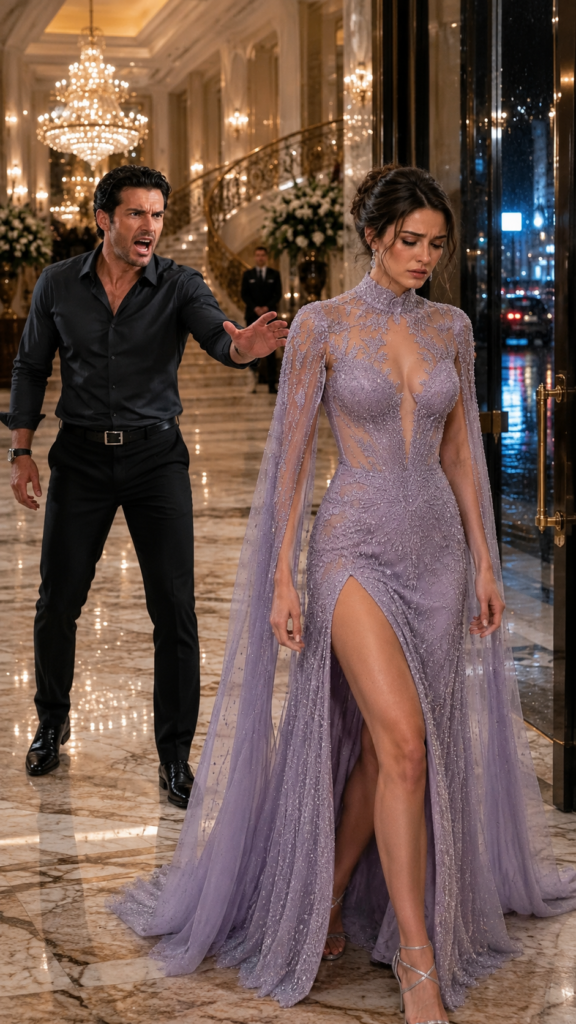
Valeria Montiel didn’t scream when Julián Cárdenas pushed her down the service stairs.
The impact stole her breath, twisted her leg, and left a metallic taste in her mouth, but it didn’t erase her memory. As the cold marble of that mansion in Las Lomas scraped against her back, all she could see was her husband’s face looming above her.
—If you want to act so dignified, stay down there until you learn to obey.
Renata, the woman who minutes before had been sitting in the dining room wearing Valeria's anniversary bracelet, stood behind him with her hand over her mouth. She didn’t seem horrified. She looked more worried about her light shoes, as if the blood would be a hard stain to remove.
Valeria hadn’t made a scene. She only asked, in a calm voice, why that woman was wearing jewelry he swore he’d sent to be cleaned.
Julián turned red, not with shame, but with fury.
—You humiliated me in front of her.
Valeria let out a dry laugh.
—No, Julián. You exposed yourself.
Then he shoved her.
The house, perfect from the outside, smelled of expensive wax, fresh flowers, and old lies. The family portraits hanging in the hallway showed flawless smiles: Julián with his father Guillermo, Julián with his mother Mercedes, Julián with Valeria on their wedding day, when everyone said she was lucky to marry such a “decent” businessman.
That night, luck cracked in her leg.
Julián took two steps down and spoke to her as if he were scolding a servant.
—You’re going to say you fell. No one will believe anything else.
Then he turned off the light and locked the door.
Valeria lay on the service floor for several minutes. The cellphone still clutched in her hand, the screen cracked but lit. Her fingers trembled. She could call an ambulance, a friend, the police.
But she dialed another number.
One that her mother had made her swear never to seek, before she died.
There was silence on the other end.
—Dad… —Valeria whispered.
The voice that answered was deep, old, and painfully alive.
—Don’t hang up, daughter. I’m coming for you.
Valeria closed her eyes.
Alejandro Montiel had been dead for 15 years to all of Mexico. He died, according to the newspapers, in an industrial explosion in Veracruz when she was 14. Her mother cried that loss until she fell ill. Valeria grew up hating an empty grave without knowing it.
But 20 minutes later, the main gate of the mansion trembled with a sharp knock.
There were footsteps, low voices, a forced lock.
The door opened.
A man dressed in black came down with a lamp.
—Mrs. Valeria Montiel, my name is Damián. We’re here to take you out.
He lifted her carefully. The pain tore a scream from her.
When they reached the garden, Valeria saw a black truck with no plates. Next to it stood a silver-haired man, dark suit, and a stone-cold gaze.
Her father.
Alejandro Montiel.
The dead man breathing in the rain.
—You’re dead —she said, shattered.
He stared at her without blinking.
—That’s what they think, because if they knew I’m still alive, too many powerful men wouldn’t sleep soundly.
Valeria didn’t cry. She just looked at the house where her husband pretended to be a gentleman.
Alejandro opened the truck door.
—Julián Cárdenas touched something he should never have.
—I’m not something of anyone —she murmured.
For the first time, his eyes softened.
—I know. That’s why you’re going to decide how it falls.
And as the truck drove down Paseo de la Reforma, Valeria clutched to her chest her broken ring, a medical bill, and her mother’s last letter, not imagining that on this very night, all of Julián’s partners would begin to abandon him.
PART 2
They didn’t take her to a regular hospital.
They treated her in a hidden house on the outskirts of Toluca, behind nameless gates, discreet cameras, and men who spoke little. It smelled of disinfectant, strong coffee, and secrets kept for too many years.
A doctor set her leg, placed a splint, and checked her ribs. He didn’t ask questions. No one there seemed to ask questions.
Valeria remained silent as they cleaned her wounds. She only placed the broken ring on a metal tray. Then she pulled out an old medical bill and a yellowed letter, folded so many times it seemed about to fall apart.
Alejandro Montiel looked at her with pain.
—Your mother wanted you to read that when you were ready.
—My mother died believing you were dead.
He clenched his jaw.
—Your mother died for knowing too much.
Valeria felt the room tilt.
For 15 years, Alejandro had lived in hiding because the explosion that supposedly killed him was no accident. Cárdenas Constructora, Julián’s father’s company, had used cheap materials on a federal project in Veracruz. When an engineer reported flaws, the explosion occurred. Seven workers died. The documents disappeared. Alejandro survived, but he faked his death to protect those who could testify.
Valeria’s mother, Mariana, kept copies.
And before she died, she left a letter with names, accounts, bribes, and a line written in trembling ink:
“If one day a Cárdenas tries to silence you, don’t cry. Keep proof.”
Valeria read that line three times.
Then she understood why her mother always feared her husband’s last name.
—Did you know who Julián was when I married him? —she asked.
Alejandro didn’t answer immediately.
That silence hurt more than a confession.
—I watched you —he finally said—. I tried to keep you away without appearing. But Julián moved influences, bought friendships, closed doors. When I understood what he was doing, you were already isolated.
Valeria looked at him with rage.
—You protected me so well that you almost killed me.
Damián lowered his gaze.
Alejandro accepted the blow without defending himself.
—You’re right.
The next day, Valeria appeared in a private hospital in Santa Fe.
Julián arrived with white flowers, the face of a shattered husband, and perfectly rehearsed tears. Mercedes, his mother, brought a rosary in her hand and poison on her tongue. Guillermo Cárdenas arrived later, in an expensive suit and patriarch’s smile.
—It was a regrettable accident —Guillermo said in front of the doctor—. Our daughter-in-law has always been a bit nervous.
Julián leaned over Valeria and took her hand.
—Shut up for the good of the family —he whispered—. You’ve already embarrassed us enough.
Valeria didn’t respond.
She just looked at the medical bill that a nurse left on the table. She folded it calmly and put it in her purse, along with the broken ring and her mother’s letter.
Julián thought that silence was fear.
How wrong he was.
Over the next few days, Valeria pretended to be fragile. She returned to the house in Las Lomas with her leg bandaged and walked supported by a cane. She accepted soups, flowers, uncomfortable visits, and family sermons.
Mercedes told her that an intelligent woman doesn’t destroy her marriage over “a little push.”
Guillermo spoke to her about reputation, inheritance, and discretion.
Julián promised to change in the mornings and received messages from Renata in the bathroom at night.
Valeria listened to it all.
Damián entered the house twice while Julián was in meetings. He installed small cameras behind a ceramic Virgin of Guadalupe, in a Talavera vase, and under the main desk. He also copied files from Julián’s computer.
What they found was not just infidelity.
There were false contracts, inflated invoices, deposits to municipal officials, altered reports, and emails where Julián authorized works with low-quality materials.
One of those emails mentioned a housing project near Texcoco.
Another, a bridge in Veracruz.
And another linked Guillermo to the explosion from 15 years ago.
Valeria felt nauseous.
Julián hadn’t just hit her. His family had been building wealth on corpses for years.
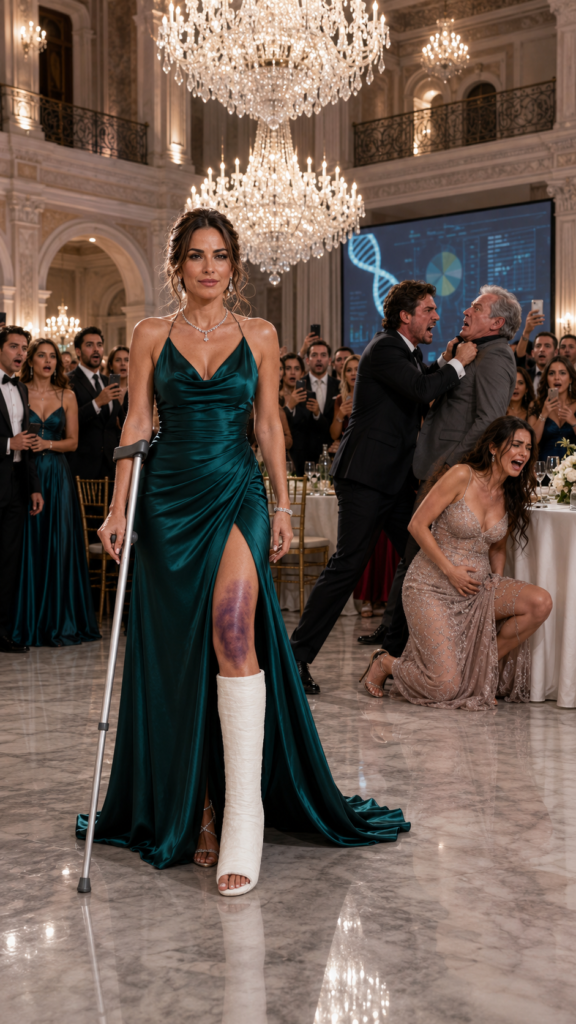
The first fall occurred at an investor event in Polanco.
Julián took the stage in an Italian suit, perfect smile, with Renata sitting in the front row. She wore a silver dress and the bracelet that sparked it all.
Valeria arrived late, with her cane and a simple black dress. No one expected to see her there.
When Julián began to speak about trust, future, and legacy, the giant screen changed.
First, a video of him in the living room of his house appeared.
—Valeria is only good for signing and lowering taxes. She doesn’t even understand what she reads.
The hall went cold.
Then emails appeared, transfers, altered contracts, and audios where Julián asked to “fix” inspections.
A journalist raised his cellphone.
Then another.
Renata tried to stand, but her name appeared on the screen in secret payments.
Julián shouted for them to turn everything off.
Valeria moved slowly to the front.
—I’m not crazy, Julián. I just stopped obeying.
That phrase ignited the hall.
The partners began to withdraw. Some left without saying goodbye. Others made nervous calls. In less than an hour, three investors canceled contracts. Before midnight, five banks froze lines of credit.
But the dirtiest truth was not yet on the screen.
That very night, Damián found a folder in Renata’s car.
Medical receipts.
Ultrasounds.
Blood tests.
Renata was pregnant.
And the father wasn’t Julián.
The DNA test indicated a 99.8% paternity match with Guillermo Cárdenas Robles.
Julián’s father.
The man who filled his mouth talking about family.
Valeria felt no pleasure. She felt disgust. Not for the baby, but for the chain of lies everyone was willing to cover up.
Alejandro told her not to go to Guillermo’s birthday party.
—The Cárdenas won’t let this end in public.
But Valeria had already learned that silence was the dark room where monsters feel safe.
The Cárdenas mansion shone as if it had no shame.
Guillermo was turning 60 and had invited politicians, businessmen, journalists, and family. There was mariachi, waiters with silver trays, expensive tequila, and women discussing the Polanco scandal as if it were a soap opera.
Valeria walked in with her cane.
Julián saw her from the center of the hall. His gaze was sunken, but he still smiled, as if the last name could cover any crime.
Renata stood near the stairs, pale, hands on her belly.
Guillermo opened his arms.
—Valeria, my daughter, this family has always loved you.
She kissed his cheek.
—Happy birthday, Dad Guillermo.
She said it loud enough for Julián to hear.
When they turned off the lights to show the tribute video, Damián was already connected to the system from a truck outside.
The screen showed photos of a young Guillermo, Guillermo at work sites, Guillermo greeting governors.
Then the music cut off.
Renata appeared entering a private clinic in Interlomas.
Then, bank transfers for “prenatal expenses.”
Sender: Guillermo Cárdenas Robles.
The murmur became a wildfire.
The last image was the DNA test.
Paternity match: 99.8%.
Julián stood up as if someone had ripped the floor from under him.
—Tell me it’s a lie.
Guillermo opened his mouth.
—Son, it was a mistake…
Julián crossed the hall and punched him in front of everyone.
Mercedes screamed. Renata sat down on the stairs, crying. The guests recoiled. The journalists recorded every second. The same partners who had toasted for Guillermo just ten minutes earlier began to leave without looking back.
Valeria didn’t smile.
She had imagined satisfaction, but felt only fatigue. The truth doesn’t always liberate beautifully. Sometimes it enters like a stone and breaks everything.
She left before the police arrived.
But by dawn, Alejandro had disappeared.
At 3:17, Valeria received a message from his number:
“Don’t come to Dock 4.”
Of course, she went.
The port area of Veracruz was almost empty. Stacked containers, flickering lamps, smell of salt and old oil. Damián drove without speaking. Valeria carried in her purse copies of all the files: the contracts, the videos, her mother’s letter, and the medical bill from the hospital.
Inside a warehouse, Alejandro was tied to a chair, beaten.
Julián stood behind him with a gun.
—You took everything from me —Julián said—. My company, my name, my family.
Valeria lifted her chin.
—You destroyed everything before I said a single word.
Julián pressed the gun against Alejandro’s head.
—Give me the memories. All of them.
Then Renata appeared from a side door. She looked haggard, holding a folder in her hands.
—I also declared —she said, trembling—. Guillermo wanted to send me out of the country. Then he sent someone to follow me. I’m not going to lie for you anymore.
Julián looked at her as if he wanted to hate her and need her at the same time.
Valeria pulled out her cellphone.
—This is streaming live for the last 12 minutes.
Julián blinked.
—What?
Damián pointed to a hidden camera among the beams.
—Your partners, your employees, the Prosecutor’s Office, and half of Mexico heard everything.
Julián’s phone began to vibrate nonstop.
Messages.
Calls.
Panic.
Julián screamed and raised the gun.
Damián rushed in from the side. There was a struggle, a dry shot, and screams.
Valeria fell to the floor.
When she looked up, Alejandro was standing in front of her.
The bullet had hit him in the chest.
—No… —she whispered.
She ran to him, forgetting her leg, the cane, and the pain. She held him as Damián subdued Julián and the agents from the Prosecutor’s Office rushed in with guns and flashlights.
Alejandro squeezed her hand.
—Your mother was right —he murmured—. You were the crack through which the truth would come out.
—Don’t leave. You just came back.
He smiled faintly.
—I never really left.
His fingers loosened.
The rain began to pound the warehouse roof.
Valeria had won.
And still, she had just lost again.
The following months were headlines, trials, and ruins.
Julián was detained for assault, kidnapping, money laundering, and organized crime. Guillermo faced charges for fraud, cover-up, and industrial homicide. His partners abandoned him as if they had never shared coffee in his office. Mercedes sold jewelry to pay lawyers and still ended up alone.
Renata testified as a protected witness and moved to Mérida with her son. She never sought Valeria again. Once she sent her a photo of the baby. Valeria didn’t write anything back. She only responded with a blessing.
The investigation confirmed the worst.
Valeria’s mother didn’t die by accident. Mariana Montiel had entered a warehouse to rescue files before Guillermo destroyed them. She knew she might not come out.
In an old recovered tape, Mariana was seen writing on a metal panel:
“For Valeria. For the truth.”
Valeria broke down seeing it.
Not because her mother had been a victim, but because she had been the first to fight.
Almost a year later, Valeria sold the house in Las Lomas. She didn’t want to keep even the curtains. With part of the recovered money, she opened the Mariana Montiel Foundation, dedicated to abused women, silenced whistleblowers, and families destroyed by powerful people.
On the inauguration day, there were no politicians or elegant ribbons.
There were mothers, nurses, workers, students, widows, construction workers, and women who had learned to lower their voices to survive.
Valeria stepped up to a small podium.
—For years, many believe family protects you by keeping quiet —she said—. But a family that demands silence while destroying you is not family. It is a prison with pretty pictures on the wall.
Some people cried. Others clapped.
That afternoon, Valeria walked alone to the Papaloapan River. She pulled the broken ring from her bag. She had held onto it for too long, not for love, but for fear of accepting that a part of her died on those stairs.
She looked at it under the bright light.
Then she threw it into the water.
The ring fell, spun once, and disappeared.
Valeria felt no hatred. Not even forgiveness.
She felt something harder.
Peace.
Because there are blows that don’t just break bones. They shatter the lies that others built over your life. And when a woman who survived silence learns to speak, she no longer asks for permission to save herself.