PART 1
Camila Arriaga had counted the days for five years to wear the black gown, receive her law degree, and see her mom cry in the front row without hiding her face.
That morning, in the auditorium of the University of Guadalajara, everyone embraced her.
Her teachers told her she had grit.
Her classmates asked for pictures.
Even her younger brother sent her an audio message from Querétaro shouting:
—You’re a lawyer now, Cami, how awesome!
But there was one congratulation that never came.
From her father.
Óscar Arriaga, owner of a construction company in Zapopan, barely touched her shoulder as he left the auditorium and said, without looking at her properly:
—Don’t get overly emotional at the meal. Important people are coming today.
The meal turned into a party that very night at the family home in Puerta de Hierro.
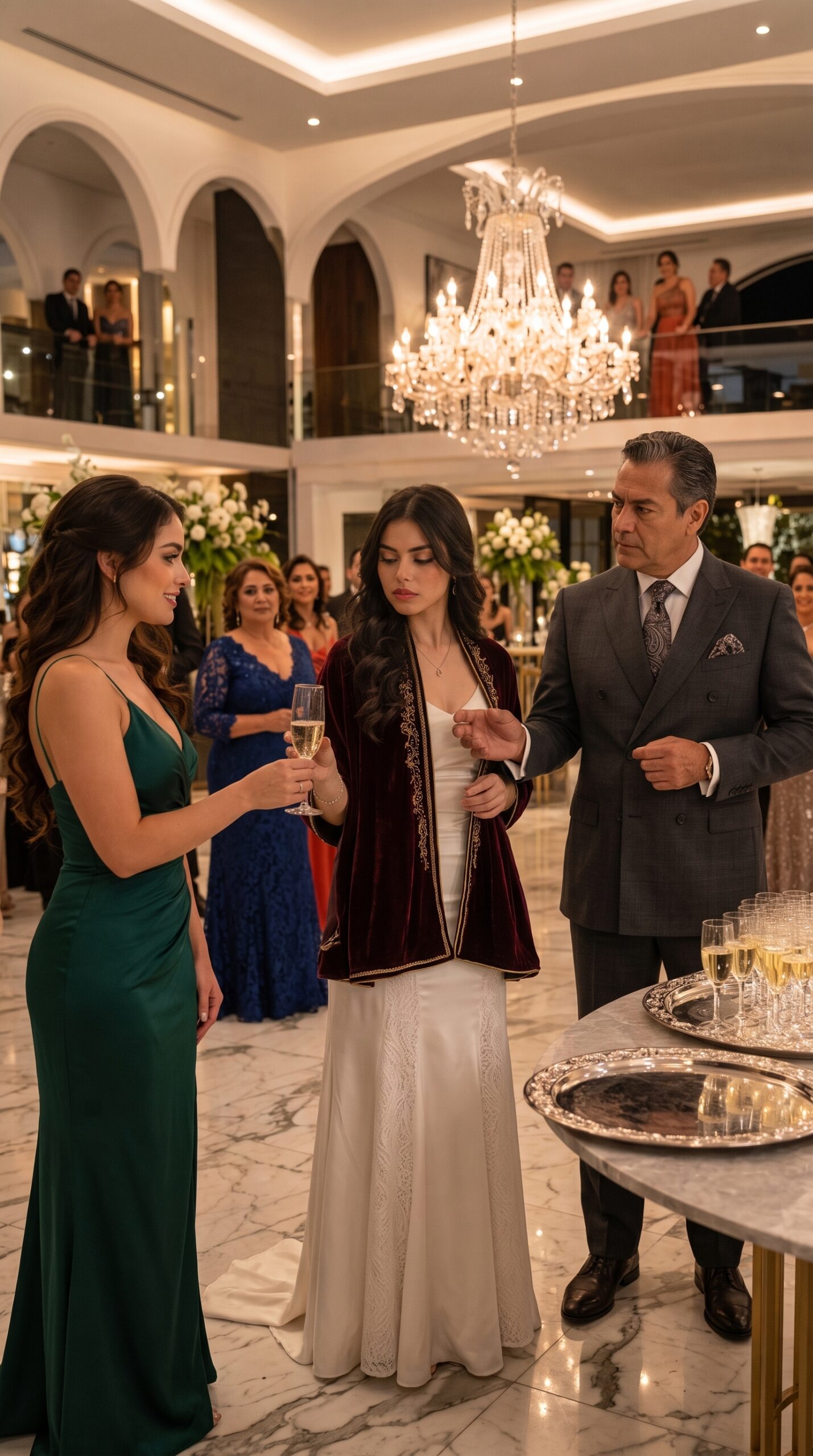
There was an illuminated garden, elegant mariachis, waiters in white gloves, expensive whiskey, and over 150 guests, including businessmen, local politicians, clients, and relatives who only showed up when money was in the air.
Supposedly, the celebration was for Camila.
But in that house, everyone knew nothing was really for her.
Everything revolved around Paulina, her younger sister.
Paulina was Óscar’s jewel.
The one who smiled without contradicting.
The one who studied finance because he ordered her to.
The one who wore designer dresses and said “yes, daddy” even though her eyes cried for help.
Camila, on the other hand, had always been “the difficult one.”
The one who questioned.
The one who read contracts before signing.
The one who wouldn’t accept a “because I’m your father” as a legal or moral answer.
That’s why Óscar called her exaggerated, ungrateful, contentious.
That night, Camila tried to enjoy herself.
She wore an ivory dress, her hair up, and small earrings that her mom, Lucía, had lent her.
—You look beautiful, my daughter —Lucía said, adjusting a strand of hair.
Camila barely smiled.
Then she saw him.
At the far end of the garden, next to the champagne table, her father wasn’t toasting or greeting anyone.
He was watching a tray.
On it were 2 glasses with gold cards.
One said “Camila.”
The other said “Paulina.”
Camila felt a strange tug in her stomach.
Óscar reached into his dark gray jacket.
He pulled out a tiny white envelope.
He looked around.
And dumped a fine powder into the glass marked with Camila’s name.
It wasn’t an accident.
It wasn’t a mistake.
He did it with a chilling calm, like someone sweetening coffee.
Then he stirred the drink twice with a spoon, wiped the edge of the glass with a napkin, and left everything exactly the same.
Camila froze.
The music continued.
A cousin laughed near the fountain.
An aunt filmed stories for Instagram.
No one saw anything.
Only her.
Óscar looked up.
He found her watching him.
For 1 second, his face showed no fear.
It showed calculation.
Camila didn’t scream.
She didn’t run.
She pulled out her phone, pretended to reply to a message, and recorded 13 seconds: the glass, the empty envelope in her father’s hand, and Óscar’s hard gaze.
She then sent the video to Daniela, her best friend, an intern doctor at a hospital in Guadalajara.
The message was direct:
“If anything happens to me, it was my dad. Don’t let this glass disappear.”
Then she walked to the table.
Óscar followed her with his eyes.
Camila picked up the glass with her name and slowly raised it.
At that moment, Paulina appeared, radiant, in a burgundy dress and a perfect smile.
—Lawyer! —she said, hugging her—. I’m so proud of you, even if it doesn’t seem like it.
Camila looked at the glass.
Then she looked at her father.
And then at the sister who had always been used to make her feel lesser.
—Pau —she said with a dry smile—, this glass is for you.
Paulina blinked.
—For me?
—Yes. Dad said it was something special. And you’ve always been his favorite.
Paulina let out a nervous giggle, took the glass, and drank it all before Camila could stop her.
Across the garden, Óscar Arriaga turned pale as if he had just seen a ghost.
PART 2
For a few seconds, the party continued as if nothing had happened.
The mariachi played softly.
Guests chatted with glasses in hand.
A cousin adjusted herself for a photo next to the flower arrangement.
Paulina placed the empty glass on the tray and touched her throat.
—It’s strong, isn’t it? —she said, trying to joke.
Camila didn’t respond.
Her gaze was fixed on Óscar.
Her father began to walk towards them with quick steps, but pretending to be calm. That mix of urgency and control made him look more guilty.
—Paulina, come with me —he ordered.
—What’s wrong?
—Come. Now.
Camila interposed herself.
—No.
Óscar looked at her as if she had just betrayed him.
—Move aside, Camila.
—First tell us what you put in my glass.
The noise in the garden dropped abruptly.
It wasn’t total silence.
It was worse.
That uncomfortable murmur of people who hear something serious and pretend they still don’t understand.
Lucía, Camila’s mom, dropped her napkin.
—What did you say?
Óscar let out a dry laugh.
—She’s started with her novels again. Always wanting attention.
Camila raised her phone.
—This isn’t a novel. I have video.
Paulina looked at her sister, confused.
—Video of what?
Camila played the recording.
On the screen, Óscar was seen next to the tray, pulling out the white envelope, emptying the powder, and stirring the glass marked with Camila’s name.
It wasn’t a perfect recording.
But it was enough.
Crystal clear.
The murmur exploded.
—Did he put something in it?
—No way...
—To his own daughter?
Paulina placed a hand on her chest.
—Dad… tell me it wasn’t my glass.
Óscar swallowed hard.
—It wasn’t for you.
The phrase fell like a slap.
Paulina’s eyes widened.
Camila felt the air grow heavy.
Because Óscar did not defend himself.
He sank all on his own.
—So it was for me —Camila said.
Óscar tried to grab Paulina by the arm, but she stepped back.
—What did I just drink?
—Nothing serious.
—What did I just drink? —she repeated, now with a trembling voice.
Óscar looked around.
His partners were watching.
His pals were watching.
The waiters were watching.
All those people who had called him “Mr. Óscar” for years were now looking at him like a dangerous man.
—It was a mild sedative —he finally admitted.
Lucía let out a groan.
—You drugged your daughter?
—It wasn’t for Paulina —he responded, desperate.
Camila took a step forward.
—And that makes you less of a monster?
Óscar lost his patience.
—It was to calm you! Only so you’d stop asking questions!
—Questions about what?
He clenched his jaw.
He didn’t answer.
Paulina began to breathe rapidly.
An aunt brought her water, but Camila pushed the glass away.
—Don’t give her anything until a doctor arrives.
At that moment, Daniela entered through the side door with a backpack slung over her shoulder.
She had arrived in less than 10 minutes.
She approached Paulina, checked her pulse, and looked at Óscar with a coldness that froze several.
—She needs urgent care. And we need to know what substance it was.
—Don’t exaggerate —Óscar said.
Daniela didn’t lower her gaze.
—Sir, you don’t decide if an intoxicated person is exaggerating.
Paulina began to feel dizzy.
She didn’t faint, but had to sit down.
Her hands trembled.
Camila crouched in front of her.
—Breathe, Pau. I’m here.
Paulina looked at her with tears.
—It was for you, Cami.
—I know.
That “I know” broke something in both of them.
Because suddenly there was no favorite daughter or problem child.
There were only 2 sisters looking at the same man and understanding that both had lived inside different cages.
Óscar tried to regain control.
—The party is over. Everyone can leave.
No one moved.
Don Ramiro Vázquez, an old partner in the construction company, crossed his arms.
—No, Óscar. Now we’re going to listen.
Camila seized that moment.
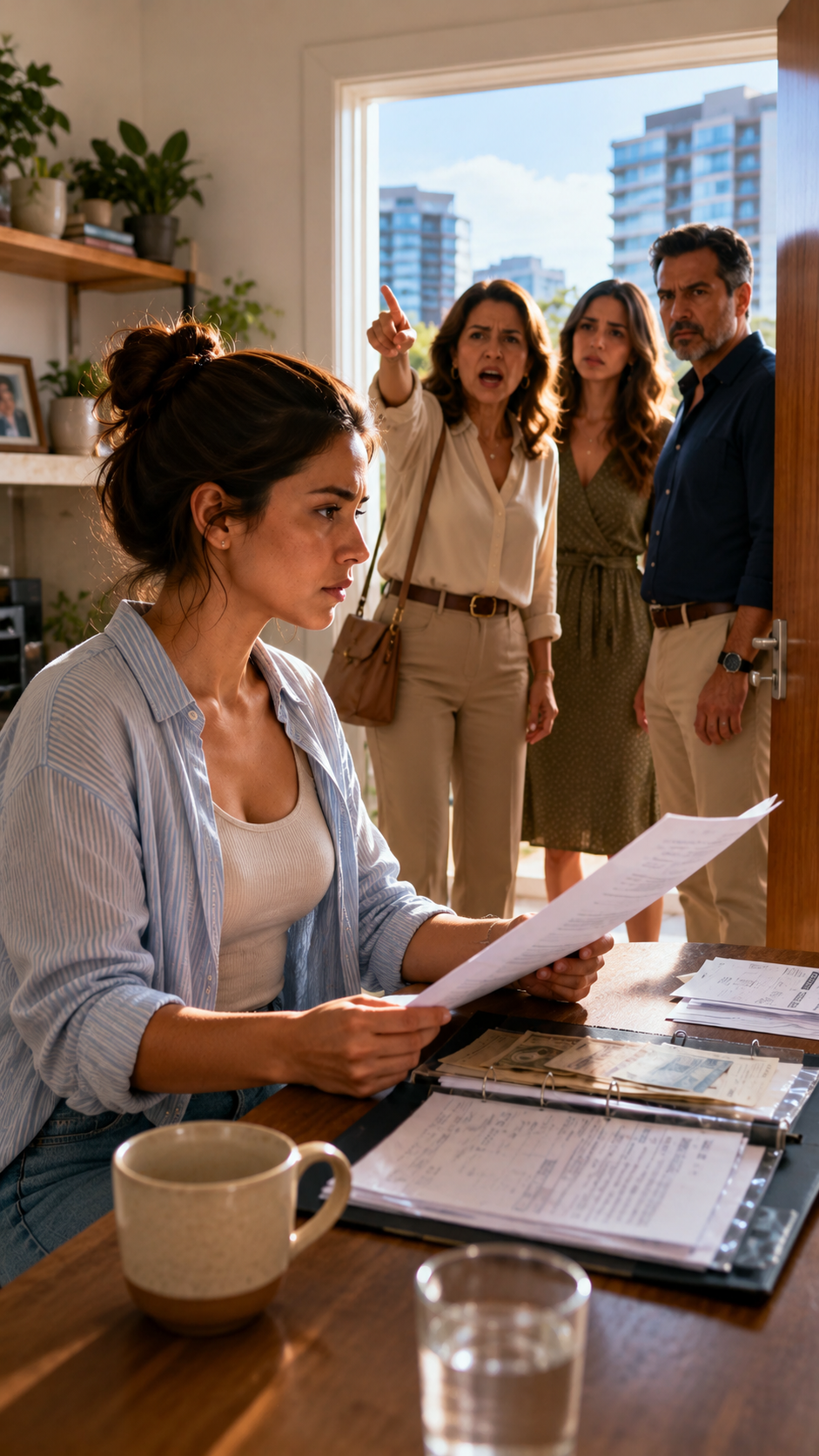
—Mom, tell me the truth. What papers did he want me to sign tomorrow?
Lucía paled.
Óscar shot her a lethal glance.
—Lucía, don’t you dare.
The woman who had bowed her head for 30 years, asked for permission to breathe, and smiled in photos where she didn’t want to be, raised her face.
She was afraid.
But she was also angry.
—They were documents for relinquishment.
The garden fell silent.
Camila felt her throat close up.
—Relinquishment of what?
Lucía took a deep breath.
—Of your shares in Grupo Arriaga.
Óscar shouted:
—Shut up!
But Lucía didn’t shut up.
—Your grandfather Salvador left 50% of his shares divided between both of you. 25% for Camila and 25% for Paulina. He didn’t leave them to Óscar. He left them to his granddaughters.
Camila turned to her father.
—You told me it was a fiscal update.
—It was necessary —he said.
—Necessary for whom?
Don Ramiro stepped forward.
—Salvador spoke to me about that will before he died. He also asked me to keep copies in case Óscar tried something.
Óscar wiped the sweat from his forehead.
—That proves nothing.
—Maybe not —Don Ramiro replied—, but today’s video will definitely interest the Public Prosecutor’s Office.
Camila understood the complete plan then.
Her father wanted to sedate her at her own party.
The guests would see her clumsy, confused, maybe aggressive.
The next day, he would say Camila was unstable due to the pressure of graduating.
Then he would take her to sign documents “to protect her.”
And if she refused, he would use the night before to say she wasn’t in her right mind.
It wasn’t just a sedative.
It was a trap.
A way to rob her of her inheritance and destroy her credibility before she could defend herself.
Paulina, pale in her chair, lifted her gaze.
—Were you also going to take my part?
Óscar changed his tone.
—With you, it was different, my girl.
—Different how?
—You understand how the family works. You were going to represent the image. Camila was just going to be a nuisance.
Paulina let out a broken laugh.
—So you didn’t love me more. You just needed me more.
Óscar pursed his lips.
—I gave you everything.
—No. You gave me fear wrapped in expensive dresses.
Camila looked at her sister.
For years, it hurt her to see Paulina receive trips, trucks, jewels, and soft words that had been denied to her.
That night, she understood something worse.
Paulina hadn’t been loved.
She had been trained.
Polished.
Displayed like a showcase.
And Camila had been punished for daring to notice the cracks.
Daniela checked Paulina’s pulse again.
—The ambulance is on its way.
Óscar wanted to approach, but Camila lifted her hand.
—Not one step closer.
—I’m her father.
—No. Today you’re the man who drugged a glass with his daughter’s name on it.
The phrase left several breathless.
Because it sounded brutal.
Because it was true.
Minutes later, paramedics and 2 municipal patrols arrived.
Daniela handed over the video.
Camila stored the empty glass in a clean bag that a waiter got from the kitchen.
Another guest, a criminal lawyer, asked that no one touch the tray or the trash envelopes.
The waiters pointed out the exact spot where Óscar had been.
Paulina was loaded into the ambulance, conscious but weak.
Before leaving, she took Camila’s hand.
—Don’t let him fix this with money.
Camila understood.
It wasn’t revenge.
It was justice.
Óscar tried to speak with the police the way he spoke with everyone: with surname, money, and a patron’s voice.
—Officer, this is a family matter. Let’s not make a scene.
The officer looked at the glass, the video, and Paulina in the ambulance.
—No, sir. This is no longer a family matter.
When they asked him to accompany them, Óscar refused.
Then Don Ramiro spoke loudly so everyone could hear:
—I’m going to testify too. And I’ll deliver the emails where Óscar requested to modify records without Camila’s signature.
Óscar’s face crumpled.
Camila turned to him.
—Emails?
—Your grandfather distrusted your father long before he died —Don Ramiro said—. He left me copies. I’m sorry for taking so long, girl.
Lucía covered her mouth.
—Oh my God...
The ambulance started.
The patrols did too.
The party was transformed into a garden full of abandoned glasses, muted music, and relatives pretending they hadn’t applauded for years for the wrong man.
That night, Camila didn’t sleep.
She stayed with Paulina in the emergency room until 4 AM.
The doctor confirmed that the sedative wasn’t lethal, but enough to cause deep drowsiness, disorientation, and partial loss of recent memory.
Paulina cried when she heard that.
—If you had drunk that glass, tomorrow everyone would have said you were crazy.
Camila took her hand.
—And you would have believed them.
Paulina didn’t deny it.
—Yes.
That honesty hurt.
But it also opened a door.
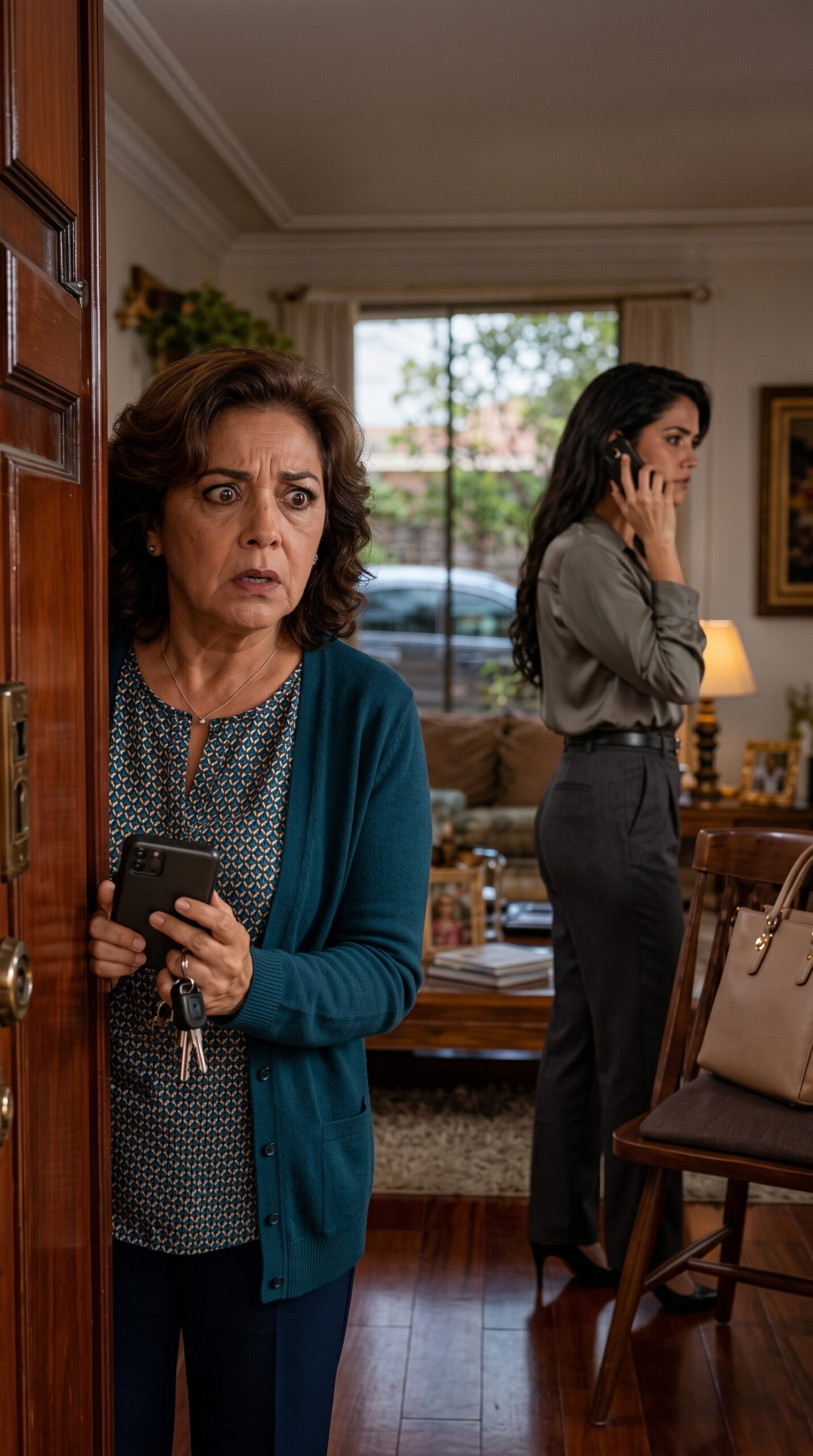
The next day, Lucía arrived at Camila’s apartment with a folder hidden for weeks.
Inside were drafts of relinquishment, notarized powers, psychological evaluations prepared without real assessment, and messages from Óscar to a trusted notary.
One said:
“After the party, she’ll be manageable.”
Camila read that phrase three times.
She didn’t cry.
Not anymore.
She just took a deep breath and called the prosecutor’s office.
In the following months, Óscar Arriaga discovered that money doesn’t always buy silence.
The investigation revealed more things.
Irregular transfers.
False signatures.
Properties moved to shell companies.
Payments to a private doctor to justify supposed episodes of severe anxiety from Camila.
And the cruelest blow came when Paulina found a file about her in her father’s office.
It also had documents ready to take her 25% if she ever “stopped cooperating.”
The favorite daughter understood she had never been safe.
She had just been waiting for her turn.
Óscar was charged with improper supply of substances, document forgery, attempted fraudulent administration, and domestic asset violence.
His lawyers tried to say that Camila had made everything up out of jealousy.
But the video, the glass, the emails, the messages, and the testimonies of the guests weighed more than any lie.
Lucía filed for divorce.
For the first time in her adult life, she signed without Óscar standing behind her telling her where to put her hand.
She rented a small house in Providencia, bought 3 pots, a simple table, and started over with a freedom that scared her, but also brought her peace.
Paulina left the company.
She canceled her engagement to a man chosen by her father.
She entered therapy.
She learned to say “no” without smiling to soften it.
Camila began working at a firm specializing in corporate and estate law.
She didn’t want to take the company immediately.
First, she wanted to understand it.
Clean it.
Separate what her grandfather had built with effort from what her father had sullied with abuse.
One year later, the two sisters met on a humble terrace in Guadalajara.
There were no waiters.
No politicians.
No silver trays.
Just 2 glasses of mineral water with lemon and a little box that Paulina placed on the table.
—I brought you something —she said.
Camila opened it.
Inside were 2 new glasses.
One said “Camila.”
The other said “Paulina.”
Under each name was an engraved phrase:
“No one decides for me again.”
Camila smiled with wet eyes.
—Champagne?
Paulina shook her head.
—Water. Bubbles still make me angry.
The two laughed.
A strange laugh.
Painful.
Necessary.
They toasted in silence.
Not for Óscar.
Not for the company.
Not for the perfect family that never existed.
They toasted because the truth, even though it arrived in the cruelest way, returned something their father had tried to take from them since they were girls:
their voice.
And since that night in Puerta de Hierro, many learned one uncomfortable truth:
sometimes the monster doesn’t come from outside.
Sometimes it lives in the house, wears expensive suits, smiles in family photos, and sits at the head of the table saying it does everything for love.