PART 1
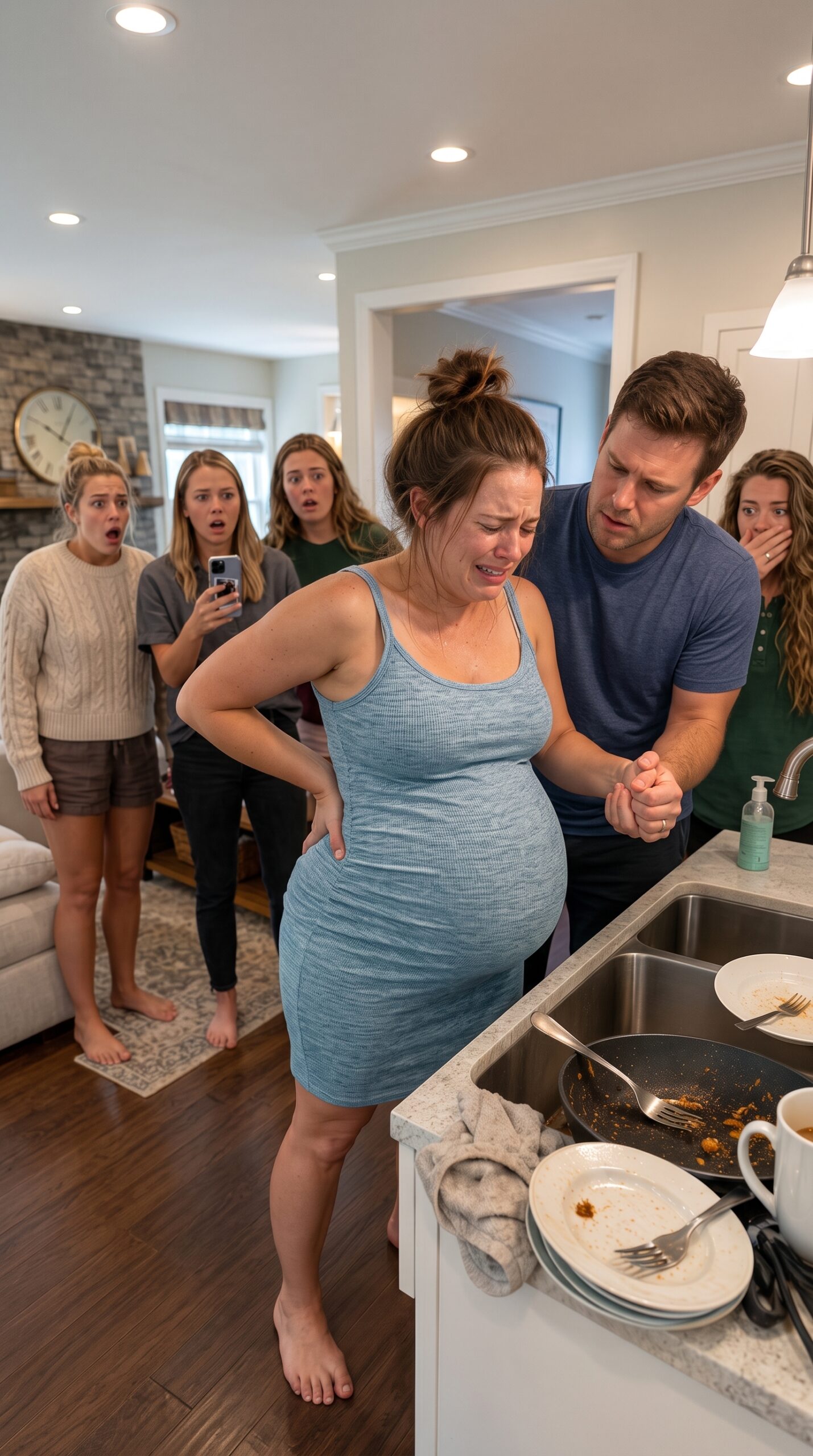
Mariana Castañeda read her mother’s message while sitting at the kitchen table of her small apartment in the Del Valle neighborhood, a medical binder tight against her abdomen, a bowl of cold noodle soup in front of her.
The phone vibrated again.
“We’re short $200,000 to pay for Valeria’s dress. Don’t start with your hospital drama. Family supports each other.”
Mariana stared at the screen, frozen.
It had been just three weeks since she’d left the hospital after a surgery that had nearly cost her life. At first, she’d thought it was exhaustion. Then gastritis. Then stress, because she’d been working overtime at a logistics agency for months to pay debts that weren’t even hers.
One morning, in the middle of the office, she doubled over in pain and collapsed on the floor.
It was Óscar, her coworker, who called the ambulance.
Not her mom. Not her dad. Not Valeria, her younger sister.
In the emergency room, the doctor was blunt:
“You arrived with a ruptured appendix. The infection has spread. If you’d waited one more day, we wouldn’t be talking to you.”
Óscar called the family from the hospital. Patricia, Mariana’s mom, answered.
“We’re discussing Valeria’s wedding. If it gets serious, let us know.”
It did get serious.
Mariana went into emergency surgery. She spent days with fever, drains, antibiotics, and a nurse who changed her sheets while she gritted her teeth to hold back tears.
No one came.
Her dad, Ramiro, sent a voice message two days later:
“Hang in there, daughter. You’ve always been tough.”
Meanwhile, Valeria was posting photos from a fancy boutique in Polanco. White dress, wine glasses, friends screaming and a caption above the story:
“I found the perfect dress.”
Mariana saw that post from her hospital bed, her lips dry and her hands trembling.
In their family, Valeria had always been the fragile child.
If Valeria cried, everyone rushed to her side.
If Mariana cried, they called her dramatic.
If Valeria quit jobs because “the vibes were heavy,” Patricia said her daughter deserved peace.
If Mariana worked while sick, Ramiro called that being responsible.
Over the years, Mariana understood something ugly: when they said she was strong, they meant they could use her without guilt.
When she left the hospital, she returned alone to her apartment.
Her clothes had been left wet in the washing machine since the day the ambulance took her away. The plants were dead. The fridge smelled of rotten food.
And still, no one asked if she could walk.
No one asked if she had money for medicine.
Just the message about the $200,000 came.
Mariana opened the banking app.
She made a transfer.
Amount: $1.00.
Concept:
“Hope it’s enough.”
Then she blocked her phone.
The calm lasted less than ten minutes.
Patricia called 26 times. Ramiro sent messages calling her ungrateful, bitter, and a bad daughter. Valeria wrote:
“You’re ruining the most important moment of my life.”
Mariana looked at the scar beneath the binder.
She had also had an important moment.
It was called survival.
At 11:12 PM, another message from Ramiro arrived:
“Tomorrow we’re coming to your place. You’re not going to humiliate this family.”
Mariana left the phone on the table.
Then she looked at a yellow folder that Óscar had helped her organize during her recovery.
There were years of transfers, loans, credit card payments, invented emergencies, and favors that were never returned.
But there was something worse.
A loan for $1,200,000 taken out in her name as a guarantor.
With a signature that was supposedly hers.
There was just one detail.
On the day she supposedly signed, Mariana was unconscious in intensive care.
And when she understood what her family had done while she fought to breathe, she didn’t cry.
She smiled softly.
Because the next day, they wouldn’t just be asking her for money.
They would discover that Valeria’s wedding was built on a crime.
PART 2
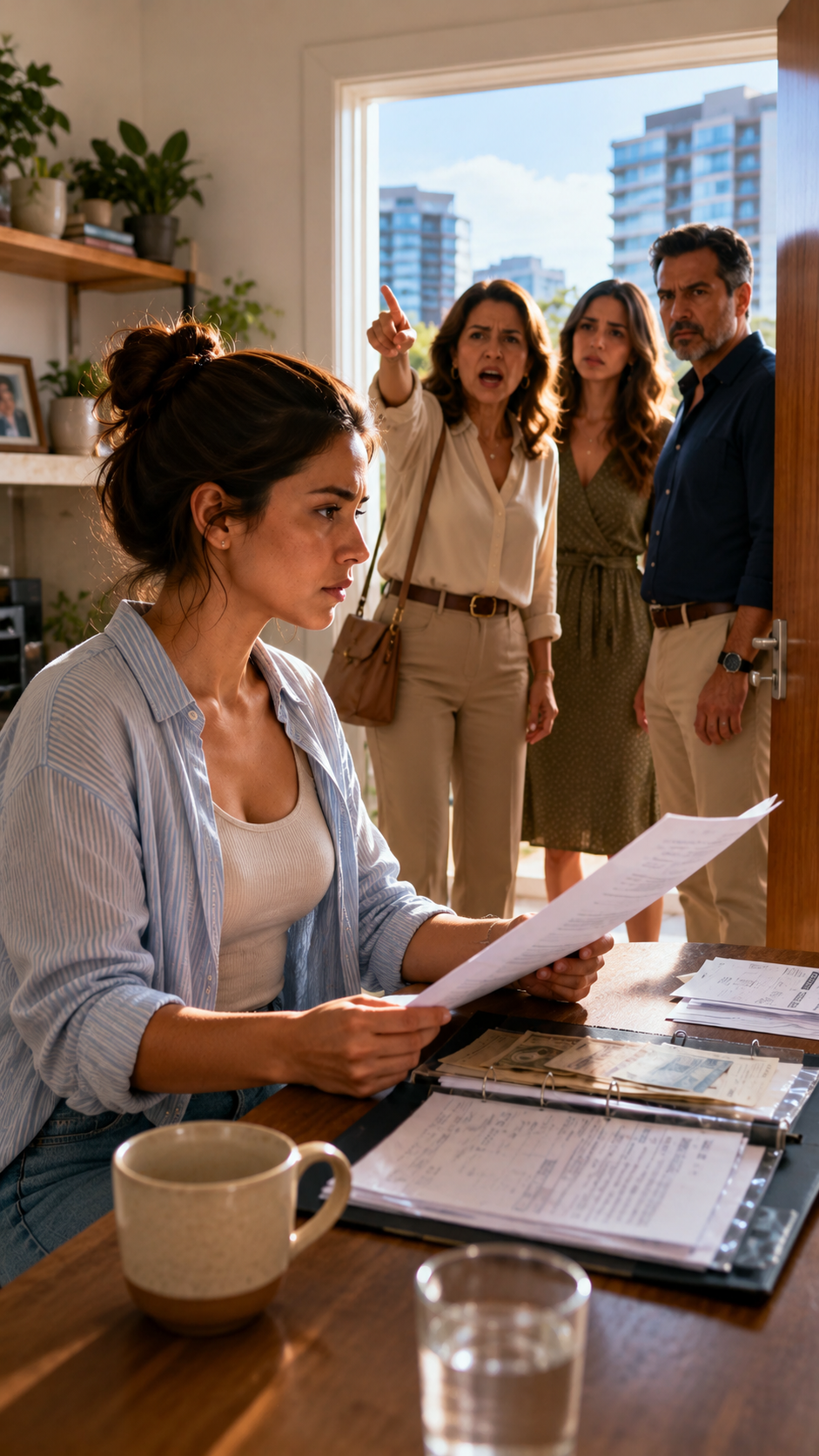
The next morning, they didn’t knock gently.
They banged on the door as if they owned the apartment, the hallway, and even the air Mariana breathed.
“Open up, Mariana!” Patricia shouted. “Enough with your victim act!”
Mariana stood up slowly. The wound tugged inside her, as if someone had slipped a rope beneath her skin.
She made no gesture.
In that house, she had learned that showing pain was giving them an advantage.
When she opened the door, there they were, the three of them.
Patricia with dark glasses, expensive perfume, and a tragic face.
Ramiro with crossed arms, as if ready to scold a child.
And Valeria dressed in beige, made up, hair done, sparkling, with that expression of an offended princess that always worked for her.
“Oh look at you,” Patricia said, stepping in uninvited. “All skinny, all pale. And still with enough energy to make us look bad.”
“Good morning,” Mariana replied.
Ramiro walked straight into the living room.
“We’re here to fix this as a family.”
Mariana almost laughed.
In her dad’s mouth, “family” meant “obey and pay.”
Valeria sat down on the kitchen chair and sighed as if she were the sick one.
“My wedding is in two weeks, Mariana. Do you have any idea how hard it was to secure that dress? It’s an exclusive design.”
“I was in intensive care,” Mariana said.
Patricia rolled her eyes.
“But you’re here now, aren’t you? You didn’t die.”
Something inside Mariana switched off.
Or maybe it turned on.
It was no longer anger. It was clarity.
She took the yellow folder and placed it on the table.
“Perfect. Let’s talk as a family.”
Ramiro furrowed his brow.
“And what is that?”
“The complete story of how you’ve used me for eight years.”
She opened the first page.
“52 transfers for house repairs. 18 credit card payments for mom. 9 supposed emergencies for Valeria. 6 installments for your truck, dad. And 4 loans for businesses that never existed.”
Patricia pressed her lips together.
“You gave that willingly.”
“No,” Mariana replied. “I gave it because every time I said no, you called me selfish, a bad daughter, and envious.”
Valeria let out a nervous giggle.
“How embarrassing. Are you going to bill us for family now?”
Mariana stared at her without blinking.
“What you owe comes separately.”
She pulled out the loan contract.
Ramiro’s face changed first. It was quick, barely a second, but Mariana saw it.
“This document appeared while I was recovering,” she said. “A loan for $1,200,000 where I supposedly agreed to be a guarantor for a company related to Iván, Valeria’s fiancé.”
Valeria stiffened.
“Don’t drag Iván into your drama.”
“Iván put my name on a fake debt.”
Ramiro cleared his throat.
“Maybe you signed it and don’t remember. With so much medication, who knows?”
Mariana slid another page.
“On that day, I was intubated. Here’s the medical certificate. Time, date, diagnosis, and the surgeon's name.”
The silence became heavy.
Patricia no longer seemed angry.
She looked scared.
“Mariana, don’t make this bigger.”
“Bigger?” she asked. “Bigger was that I almost died while you toasted over a dress.”
Then the doorbell rang.
Patricia turned furiously.
“Who did you call?”
“Someone who actually showed up when I couldn’t even lift myself.”
Mariana opened the door.
Óscar walked in with a black backpack and a serious look. Behind him was a woman in a blue suit, hair tied up, and a briefcase in hand.
“Good morning. I’m lawyer Camila Robles, Mariana Castañeda’s attorney.”
Ramiro turned red.
“Lawyer? Are you out of your mind or what?”
Camila didn’t flinch.
“I suggest you watch your words. Everything that happens here will be documented.”
Patricia stepped back.
“Are you recording us?”
Óscar lifted his phone.
“Since you knocked on the door, ma’am.”
Valeria opened her mouth, indignant.
“How low can you be? You’re betraying us.”
Mariana looked at her with a calmness that was frightening.
“Betrayal was trying on veils while your sister had a 104-degree fever.”
For the first time, Valeria had no pretty phrase to defend herself.
Camila opened the briefcase.
“We’ve already requested a certified copy of the bank file. The signature has visible irregularities. Additionally, there are medical documents proving that Mariana was neither physically nor legally in a condition to sign.”
Ramiro approached the table.
“Okay, let’s calm down. This can be solved without making a scene.”
“Like you solved my hospitalization?” Mariana asked. “With a voice message saying ‘hang in there’?”
Patricia lowered her gaze.
Just for a moment.
Then she stiffened again.
“You’ve always been resentful. Valeria is getting married. You have no right to destroy her happiness over a misunderstanding.”
Camila took out another page.
“This is not a misunderstanding. It could be a case of forgery, fraud, misuse of personal data, and possible involvement of third parties.”
Valeria paled.
“Third-party involvement?”
“Yes,” Mariana said. “A complaint will be filed today.”
Ramiro slammed the table.
“You’re not going to report your family!”
Mariana felt a stab in her wound, but she didn’t retreat.
“My family left me alone in a hospital and then came to charge me for a dress.”
The phrase fell like a stone.
Even Patricia fell silent.
But Valeria made the mistake that changed everything.
“Mariana, please. If you do this, Iván will cancel the wedding.”
There it was.
She didn’t care about the fraud.
She didn’t care about the debt.
She didn’t care that her sister had been on the brink of death.
She cared about losing the rich fiancé.
Óscar let out a dry laugh.
“Seriously, Valeria. What a heartwarming detail you have.”
Valeria shot him a glare.
“Shut up. You’re not even family.”
Óscar stepped forward.
“Exactly. And yet I was the one who signed papers in emergencies, bought antibiotics, and sat outside intensive care. Your family was busy looking at lace in Polanco.”
Patricia clutched her bag to her chest.
Ramiro grabbed the folder abruptly.
“This isn’t going to leave here.”
Camila firmly held his wrist.
“Release those documents.”
Ramiro looked ready to push her.
But he didn’t dare.
Abusers feel brave only when the other person is alone.
He released the folder.
“What do you want?” he spat. “Money? How much?”
“I don’t want money,” Mariana said.
“Then what?”
“I want to know who forged my signature.”
Valeria started shaking her head.
“I didn’t know anything.”
Patricia looked at her too quickly.
That gesture betrayed her.
Camila noticed it too.
“Mrs. Patricia, did you know about the loan?”
Patricia swallowed hard.
“We just wanted to help Valeria.”
Mariana felt the air choking her chest.
“And who helped me?”
No one answered.
Ramiro ran a hand over his face.
“Iván said it was temporary. That he needed the guarantor to release money before the wedding. That Mariana wouldn’t even know because he would pay everything in six months.”
“Dad!” Valeria shouted.
And everything broke.
Ramiro had just confessed.
Óscar lowered his gaze to his phone.
The recording was still running.
Patricia slumped into a chair.
“We didn’t want to hurt you.”
Mariana let out a sad laugh.
“Then what did you want? To squeeze me dry until nothing was left?”
No one had an answer.
At 12:35, Mariana arrived at the Prosecutor’s Office with Óscar and Camila. She walked slowly, her abdomen rigid, but she walked straight.
Her parents followed behind, silent.
Valeria wouldn’t let go of her phone.
Before entering, Iván appeared.
Expensive suit, dark glasses, shiny watch, and a smile of a man who always thinks everything is for sale.
“My love,” he said to Valeria, “what’s going on?”
She ran to him.
“Mariana wants to destroy us.”
Iván looked Mariana up and down.
“Sister-in-law, you’re confused. We should sort this out among adults.”
“I’m not your sister-in-law,” Mariana said.
Iván’s smile tightened.
“Look, you’d better think carefully. There are battles that people without money can’t win.”
Óscar raised his phone.
“Repeat that, dude. So it sounds good.”
Iván lost his smile.
Camila stepped forward.
“We have bank documents, medical certificates, and a recording where the misuse of my client’s identity to obtain a loan is acknowledged.”
Iván looked at Ramiro.
Ramiro lowered his head.
That was enough.
Valeria understood.
Her wedding wasn’t held up by love.
It was held up by fraud.
“Iván… tell me it’s not true,” she whispered.
He adjusted his jacket.
“I didn’t forge anything.”
Ramiro exploded.
“But you told us how to do it! You said that between family, nothing would happen!”
Iván looked at him coldly.
“I didn’t force anyone to commit a crime.”
Patricia gasped.
Valeria looked at him as if she finally saw him without a disguise.
“Are you going to leave me alone?”
Iván took a step back.
“I’m not going to sink with your family.”
And just like that, the man Valeria had demanded a $200,000 dress for left her crying at the entrance of the Prosecutor’s Office.
Mariana felt no satisfaction.
She felt tired.
A deep, accumulated tiredness, the kind that doesn’t heal with sleep.
The following days were a storm.
The wedding was canceled.
The boutique wouldn’t refund the deposit.
Iván disappeared for a few days until they located him for other irregular loans in Naucalpan, Santa Fe, and Tlalnepantla.
Ramiro was summoned to testify.
So was Patricia.
Valeria sent messages first furious, then desperate.
“It was my wedding.”
“I didn’t know everything.”
“Please, answer me.”
Mariana didn’t reply.
Not because it didn’t hurt.
But because she understood that responding also meant opening the door.
And that door was already closed from the inside.
A month later, the bank froze the loan while the investigation progressed. Mariana’s name was provisionally protected.
Camila explained that the process would be long.
“It’s going to wear you out,” she said, “but you’re no longer alone.”
Mariana looked at Óscar, who was dropping grocery bags on the table in her kitchen.
“Yes,” she replied. “I’ve realized that.”
Óscar smiled.
“I brought soup, fruit, and gelatin. And don’t make that face; it’s not pity. It’s true friendship.”
That phrase hurt more than her family’s insults.
True friendship.
Someone who arrived without emotional bills.
Someone who asked if she’d taken her antibiotics without demanding $200,000 in return.
Little by little, Mariana began to walk without slouching.
She returned to work with reduced hours. Her coworkers did a collection to help with medical expenses. She cried in the bathroom when she saw the deposits: $100 from a delivery guy, $300 from an assistant, $500 from a supervisor, $1,000 from Óscar.
The family that held her up didn’t share her last name.
Three months later, Valeria showed up outside the office.
She no longer had perfect nails or a queen's smile. She was thin, without makeup, with swollen eyes.
“I just want to talk,” she said.
Mariana could have kept walking.
But she stopped.
Not out of pity.
Maybe because she needed to close that wound without letting it fester.
They went to a nearby café.
Valeria didn’t order anything.
“Iván left me,” she murmured.
“I know.”
“My friends too. When the wedding was canceled, they all disappeared.”
Mariana remained silent.
Valeria lowered her gaze.
“Mom says you destroyed the family.”
“Mom needs to believe that to avoid looking in the mirror.”
Valeria pressed her lips together.
“I knew they were using your data.”
Mariana felt a dry blow to her chest.
“I didn’t know about the forged signature,” Valeria continued. “But I did know Iván needed your name. He told me that between sisters it didn’t matter. I didn’t ask more because I wanted to get married.”
Her tears, this time, were real.
“I also went to the hospital,” she whispered.
Mariana stopped breathing.
“What?”
“I went once. You were asleep. You had tubes. It scared me to see you like that. I left before you woke up.”
The cup in Mariana’s hand trembled.
“And then you posted stories with dresses?”
Valeria cried in silence.
“Yes.”
There was no excuse enough.
Both knew it.
“I didn’t come to ask you to withdraw the complaint,” Valeria said. “I came to tell you I’m sorry. Even if it’s too late.”
Mariana looked at her for a long time.
The pampered sister was broken, but not from losing a wedding. She was broken because for the first time she had seen herself as she was.
“It doesn’t erase anything,” Mariana said.
“I know.”
“But it might help you if you decide not to be that person again.”
Valeria covered her face.
“Will you forgive me?”
Mariana closed her eyes.
She remembered the hospital.
The white ceiling.
The phone without calls.
The message about the $200,000.
When she opened her eyes, she spoke the truth.
“Not yet.”
Valeria nodded, crying.
“But maybe someday it won’t hurt so much,” Mariana added. “That’s the only thing I can offer.”
Six months later, Mariana’s life wasn’t perfect.
But it was hers.
She moved to a smaller apartment, with a window where sunlight streamed in the mornings. She started therapy. She learned to say “no” without giving 20 explanations. She learned that not all messages deserve a reply.
Ramiro accepted part of his responsibility to reduce consequences.
Patricia denied everything until the recording caught up with her.
Iván ended up being investigated for more frauds.
Valeria found a job at a fabric store. With her first paycheck, she deposited $500 to Mariana.
In the concept, she wrote:
“First payment. Sorry.”
Mariana didn’t respond that day.
But she also didn’t return the money.
One afternoon, after work, she passed by the hospital where she almost died. She stood looking at the emergency entrance from the sidewalk.
That’s where her story almost ended.
That’s where she understood that someone can have many relatives and still not have a family.
The phone vibrated.
It was Óscar.
“Ready for dinner? No more sad soup tonight. Today we’re having pozole.”
Mariana smiled.
Before putting the phone away, she saw a new message from Patricia.
“Daughter, I need to talk to you. I’m your mother.”
Mariana stared at it for several seconds.
Before, those words would have bent her.
I’m your mother.
As if giving birth entitled her to hollow her out.
As if blood justified abandonment, debt, and lies.
This time she didn’t reply.
She put her phone away, took a deep breath, and kept walking.
The scar tugged a little.
But it no longer hurt the same.
That mark wasn’t a misfortune.
It was a boundary.
On one side was the woman who bought love by paying other people's bills.
On the other side was the woman who understood that surviving wasn’t enough.
She also deserved to live.
That night, while sharing pozole with Óscar and several coworkers, someone raised a glass.
“To Mariana.”
She felt like crying, but not out of sadness.
She raised her glass.
And for the first time in many years, she toasted for herself without guilt.
Because she hadn’t lost a family.
She had stopped financing her own loneliness.