PART 1
—In this house, nobody lives as a freeloader, Mom. If you don't contribute, at least obey.
The words bounced around the living room like a slap to the face.
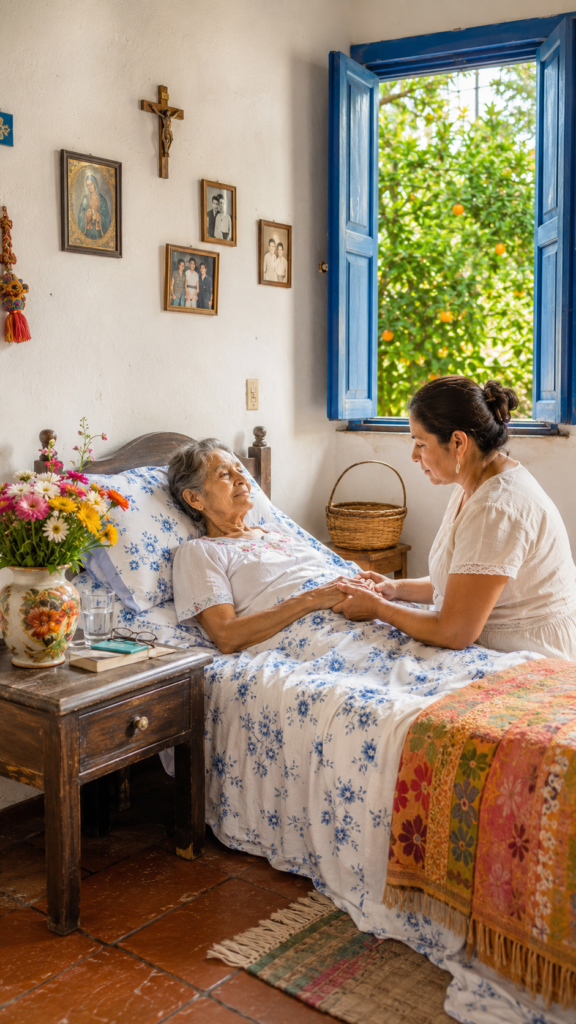
Rosa Elvira Cárdenas stood frozen by the sink, hands wet, apron still tied at her waist. At 67, with her white hair gathered in a loose braid and that serene gaze of women who have swallowed pain to keep their children from hunger.
Her oldest son, Mauricio, lounged on the new couch, feet resting on the coffee table.
Beside him, Brenda, his wife, scrolled through her phone with an insipid smile, as if humiliation was part of the meal.
The apartment was in the Portales neighborhood, in Mexico City. It wasn’t luxurious, but it had light, plants, old photographs, and the aroma of freshly brewed coffee. Here, Rosa had raised her two children. Here, she had cared for her husband, Julián, during four years of illness. Here, she had mourned him one fateful November morning when cancer finally took him.
That place was not a favor from anyone.
Rosa had paid for it with 38 years of work as an administrative chief in an auto parts factory in Iztapalapa. She knew how to read invoices, payrolls, contracts, and lies disguised as pretty numbers.
But Mauricio spoke as if she were a nuisance.
It all began three months earlier when he arrived with Brenda and nine suitcases.
—Mom, we’re staying a few days. The house in Tlalnepantla has horrible humidity. You can’t even breathe.
Rosa hesitated.
Her youngest son, Daniel, a doctor in Toluca, warned her over the phone:
—Mom, help them, but don’t give them the house. You know how Mauricio gets when he feels entitled.
But Rosa was a mother. Sometimes a mother opens the door thinking she’s offering refuge, not realizing she’s also handing over her peace.
At first, Brenda was sweet.
She called her “Rosita,” bought her sugar-free cookies, and even told her to rest.
Then she began to move everything.
She stored away photos of Julián because “they looked too sad.” She removed the embroidered tablecloths because “they looked too rustic.” She threw out pots of basil because “they attracted mosquitoes.” She turned the room where Rosa sewed into an office for Mauricio.
Then came the meals with business partners.
Mauricio invited people over without warning. Brenda ordered expensive salads through an app and then told Rosa to heat up beans “in case someone wanted something homemade.”
One night, Daniel came for dinner.
Rosa prepared green enchiladas, her children’s favorite. But Mauricio arrived with four guests and a bottle of wine.
During dinner, one guest asked if Rosa lived with them.
Mauricio laughed.
—More like we live with her to take care of her. She’s getting old. Sometimes she loses track of things.
Rosa lowered her gaze.
Daniel put down his fork.
—This is my mom’s house, Mauricio.
The atmosphere froze.
Mauricio shrugged.
—Come on, don’t start. Honestly, Mom doesn’t do anything anymore. She watches soap operas, waters plants, and scrolls through Facebook. If she doesn’t work, she doesn’t eat. At least she could help without playing the victim.
Brenda pretended to take a sip of water to hide her smile.
Daniel stood up, furious.
—You’re a miserable jerk.
But Rosa didn’t shout.
She simply looked at Mauricio as if she had just recognized a stranger wearing her son’s face.
That night, while everyone slept, Rosa pulled out her old cellphone, created a folder, and named it simply:
“Gas Receipts.”
And there she stored the first audio that would change everything.
PART 2
Since that night, Rosa Elvira was no longer just the quiet woman who walked slowly down the hall.
On the outside, she remained the same.
She brewed coffee. Bought rolls early in the morning. Greeted the doorman. Slipped on her lilac sweater to go down for tortillas. Served food to those who didn’t even thank her.
But inside, another woman awakened.
The same one who had found fake bills for years where others only saw neat columns. The same one who could spot a fraud with just two misaligned receipts. The one who had never needed to shout to prove her intelligence.
Rosa began to collect everything.
Audios.
Messages.
Photos.
Bank statements that Mauricio left lying around.
Brenda’s Facebook posts where she presented herself as a self-sacrificing daughter-in-law.
“Caring for Rosita with love. Elderly people need patience.”
In another, she wrote:
“Sometimes difficult decisions must be made when someone can no longer take care of themselves.”
Rosa read that sitting in the kitchen and felt a cold that didn’t come from the floor.
It wasn’t love.
It was preparation.
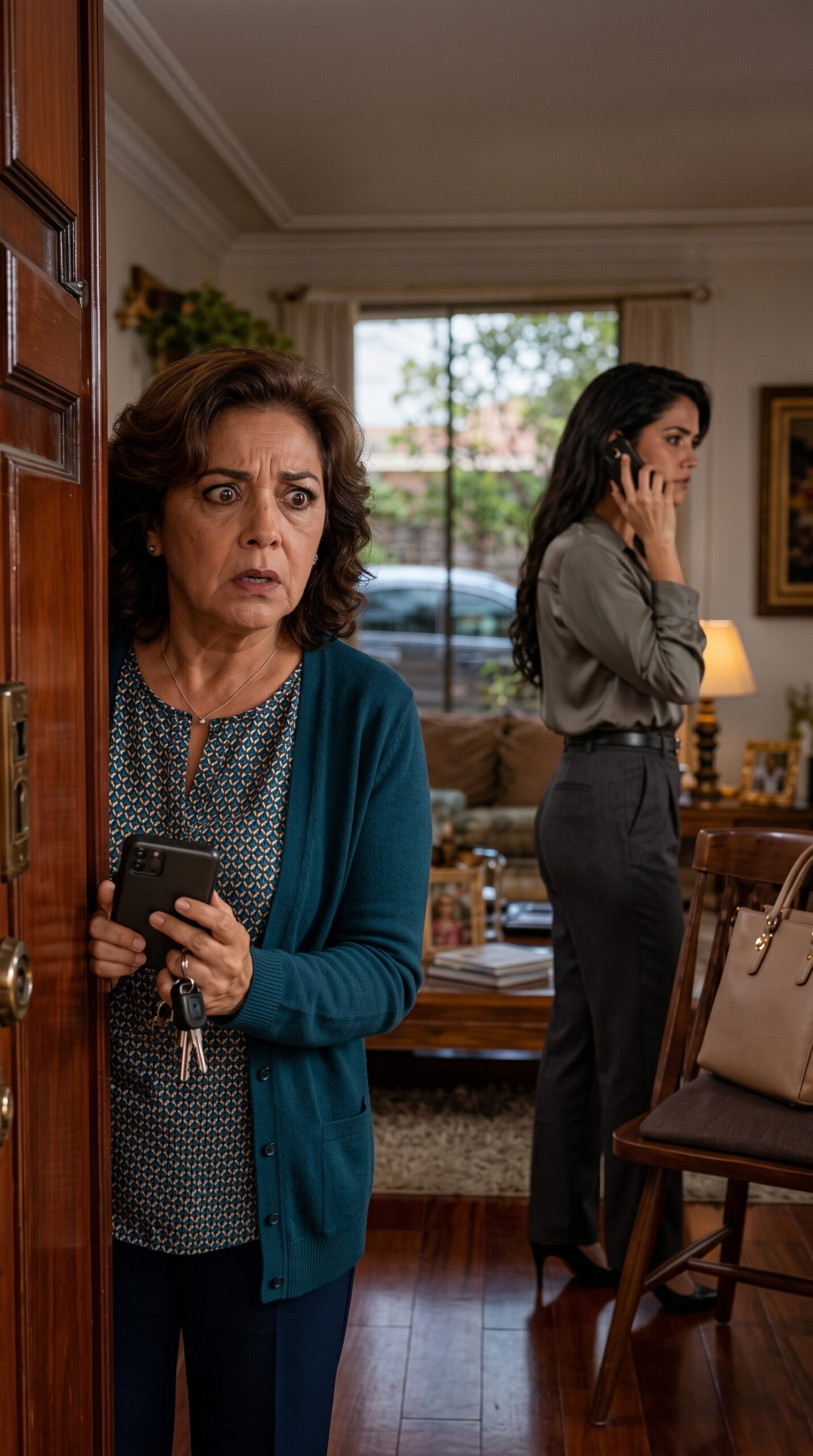
A few days later, while folding sheets near the hallway, she overheard Mauricio and Brenda talking in the sewing room.
—Your Aunt Lupe already asked me if your mom has dementia —Brenda said.
—Better —Mauricio replied—. If Daniel gets too nosy, we’ll just say that since he lives in Toluca, he doesn’t know what’s going on here.
—We need a doctor to sign something.
—My partner knows one. He charges a lot, but he’ll sign.
Rosa stopped breathing.
—Then we sell the apartment —Brenda added—. We put her in a decent nursing home so no one criticizes, and that covers your mess.
—Don’t call it a mess.
—Well, debts, Mauricio. You owe banks, loan sharks, and even suppliers. Your mom is the way out.
Rosa pressed the sheets to her chest.
Then she understood everything.
They hadn’t come for shelter.
They weren’t there out of family necessity.
They wanted to declare her incapable, take her house, and turn her entire life into money to pay for someone else’s mistakes.
That night she couldn’t sleep.
She pulled out a black notebook where she had once kept Julián’s medications. On the first page, she wrote:
“My house. My name. My defense.”
And began organizing proof with date and time.
The stroke of luck came on a Thursday.
Mauricio rushed out to a meeting in Santa Fe and left the printer on. Rosa entered to turn it off because it smelled like it was burning. A crumpled sheet was sticking out of the tray.
It was a rental contract.
The supposedly uninhabitable house in Tlalnepantla was rented for 75,000 pesos a month to a foreign couple.
The humidity had never existed.
Mauricio and Brenda collected rent while living for free in Rosa’s apartment, eating her food, using her electricity, her water, her internet, and still treating her like a servant.
Rosa photographed every page.
Then she found more papers: collection notices, overdue payments, printed emails from banks, and a conversation where Brenda wrote:
“If she doesn’t sign willingly, we’ll make her sign for incapacity.”
Rosa’s legs trembled.
She sat on Julián’s bed and cried silently.
Not out of fear.
Out of shame for having allowed her own son to speak to her like a boss in the house she had bought penny by penny.
The next day, she called Carmen, a friend from her old job whom she hadn’t seen in years. They agreed to meet at a café in Narvarte, near the market.
Carmen arrived with large glasses and the same character as always.
—Rosita, you’re looking so thin. What have they done to you?
Rosa tried to say “nothing.”
She couldn’t.
She talked for almost an hour.
She recounted the phrases, the taunts, the posts, the plans, the papers.
When she finished, Carmen didn’t tell her to endure it because “blood calls.”
She didn’t say a mother must sacrifice herself.
She said:
—Do you still know how to review accounts?
Rosa blinked.
—I never forget that.
—Then come work with me. I have a small firm. I need someone to review billing for shady clients. You always sniffed out traps before anyone else.
—I’m 67, Carmen.
—And they want you to believe you’re no longer useful. Don’t do them that favor.
That phrase settled something in her chest.
A week later, Rosa began working early in the morning from her room, with a borrowed laptop.
At first, it was hard.
Her fingers kept hitting the wrong keys. Her back ached. She feared she wouldn’t measure up.
But the numbers came back like old friends.
She detected duplicate invoices. Inflated payments. Ghost suppliers. Altered receipts.
When she received her first deposit, she cried in front of the screen.
It wasn’t much.
But it was hers.
Earned with her mind, her experience, and that part of her that Mauricio wanted to bury under the word “old.”
Carmen also recommended a lawyer: Licenciada Rebeca Sandoval, an expert in estate and elder abuse.
Rosa arrived at her office with a bag full of papers.
Rebeca listened without interrupting.
Then she reviewed the deeds.
—The apartment is solely in your name.
—Yes.
—Are they paying rent?
—No.
—Did they sign any contract?
—No.
—Then they’re there by family tolerance. You can revoke it. We notify them that they have 15 days to leave. And if they try to get a false incapacity, we file a complaint.
Rosa swallowed hard.
—They’re going to say I’m a bad mother.
Rebeca looked at her firmly.
—A bad mother doesn’t gather evidence to prevent destroying her son. A cornered woman does.
Rosa left that office changed.
Not bigger.
Not younger.
But more in charge of herself.
She chose Friday.
Mauricio and Brenda returned from lunch in Polanco. They came laughing, bags from an expensive store in hand, complaining about traffic as if their lives weren’t built on lies.
Rosa waited for them in the living room.
No apron on.
She wore black pants, a cream blouse, and the gold earrings Julián had given her on their 30th wedding anniversary.
On the table sat a yellow envelope.
—Mauricio —she said.
He barely looked at her.
—What now, Mom?
Brenda sighed.
—Rosita, we’re exhausted. We’ll see what you need tomorrow, okay?
—I don’t need permission to speak in my own house.
Mauricio frowned.
—What did you say?
Rosa handed him the envelope.
—You have 15 days to vacate my apartment.
Brenda froze.
Mauricio let out a dry laugh.
—No way. Who put those ideas in your head?
—A lawyer.
He opened the envelope abruptly. Read three lines, and his face changed.
—You consulted against your own son?
—I defended myself from my own son.
Brenda stood up.
—How strong, ma’am. We came to take care of you. Is this how you repay us?
Rosa looked at her without blinking.
—You didn’t come to take care of me. You came to live for free while renting out your house in Tlalnepantla for 75,000 pesos a month.
The silence was deafening.
Mauricio looked up.
—How do you know that?
—Because you left the contract in my printer. I also saw your debts and the messages where you planned to declare me incapable.
Brenda turned pale.
—That’s an invasion of privacy.
Rosa smiled faintly.
—Privacy was my room, my drawers, and the photos of my husband that you stored away as if they bothered you. You invaded my life.
Mauricio took a step toward her.
—Mom, calm down. You’re confused.
Rosa unlocked her cellphone and played an audio.
Brenda's voice filled the room:
“If we get a doctor to sign, we sell the apartment and put her in a nursing home.”
Mauricio froze.
Brenda started to cry, but not out of sadness. Out of rage.
—That’s edited.
Rosa played another audio.
It was Mauricio’s voice:
“If Daniel gets involved, we say he doesn’t know anything. My mom is old, and everyone is going to believe it.”
Mauricio clenched his jaw.
—Did you call Daniel?
—Daniel already knows.
At that moment, the doorbell rang.
Rosa opened the door.
Daniel entered with a folder under his arm and a hard expression. Behind him was Licenciada Rebeca Sandoval.
Mauricio stepped back.
—What is this little theater?
Daniel looked at him with furious sadness.
—This is what I should have done the first time you treated Mom like an unpaid employee.
Brenda tried to approach.
—Daniel, you don’t understand. Your mom is being manipulated.
—Don’t say that again —he replied—. I’m a doctor. I evaluated her. She’s lucid, oriented, and more together than you two combined.
The lawyer laid documents on the table.
—Here is the formal notification. From today, the 15 days start. It’s also noted that any attempt to fabricate incapacity will be reported.
Mauricio ran his hand through his hair.
—Mom, this is going to destroy the family.
Rosa felt a pang in her chest.
For a moment, she saw the boy running toward her in a stained uniform. She saw the teenager asking for money for a school trip. She saw the man who allowed his wife to erase her from her own home.
—No, son —she said calmly—. The family isn’t destroyed when a mother sets boundaries. It’s destroyed when a son sells her to pay his debts.
Mauricio didn’t respond.
The following days were a silent war.
Brenda stopped greeting her. She spoke on the phone, calling Rosa cruel, manipulative, and ungrateful. But the same posts insinuating dementia began circulating among relatives and neighbors.
Doña Lupita, the neighbor from 302, confessed that Brenda had told her Rosa left the stove on and hid money under the mattress.
Carmen spoke with Rosa’s former colleagues.
They all agreed on one thing: Rosa could forget where she left her glasses, like anyone, but she would never forget a bill.
The lie began to return to them like stones against glass.
On day six, Mauricio knocked on Rosa’s door.
For the first time, he knocked.
—Mom, can we work things out?
She was reviewing invoices from a client in Puebla.
—There’s nothing to work out.
—I’ll pay you rent.
—I don’t want your rent.
—Then tell me how much you want.
Rosa lifted her gaze.
—I want respect. And that can’t be deposited by transfer.
Mauricio hung his head.
—I was wrong. The business collapsed. Brenda pressured me. The banks were drowning me.
—Don’t put on Brenda what you accepted to do.
He cried.
Maybe out of guilt.
Maybe out of fear.
Rosa didn’t hug him.
That was the hardest part.
Because she still loved him.
But she finally understood that loving a child doesn’t mean letting him strip away your dignity.
On day twelve, Brenda left first. Her mother arrived in a white truck. They unloaded three suitcases and several bags.
Before leaving, Brenda looked at Rosa with hatred.
—You’re going to be all alone.
Rosa replied calmly:
—Worse than being accompanied by you.
On day fifteen, Mauricio left with two boxes, a backpack, and his wrinkled suit.
In the elevator, he stopped.
—Will you ever forgive me?
Rosa looked around the living room.
Julián’s photos were back on the wall. Her plants by the window. Her embroidered tablecloths on the table. The house breathed as if it had survived too.
—Maybe someday —she said—. But forgiving doesn’t mean giving you the key again.
Mauricio tried to speak.
He couldn’t.
The elevator doors closed.
Rosa locked the door.
The silence didn’t sound like abandonment.
It sounded like peace.
That afternoon, she opened the windows. The noise from the street came in: the tamale vendor, a barking dog, a laughing girl, the garbage truck moving slowly around the corner.
She brewed coffee.
Put on music from Los Panchos, Julián’s favorite, and sat down in her living room without asking anyone’s permission.
In the following months, her work with Carmen grew. Clients from Querétaro, Guadalajara, and Monterrey sought out Rosa because they said she had an eye for uncovering traps.
She smiled.
Of course, she had an eye.
She had had two sitting in her dining room.
Daniel visited her every two weeks. Sometimes he brought flowers. Sometimes sweet bread. But he always knocked before entering.
And for Rosa, that simple gesture was worth more than any speech.
She heard little about Mauricio.
A cousin mentioned he lost partners. An aunt said Brenda went with her family to Cuernavaca. Someone mentioned they sold the house in Tlalnepantla to pay debts.
Rosa didn’t ask any more.
Six months later, she received a message from an unknown number:
“Mom, can we talk? I really regret it.”
She stared at it for a long time.
She didn’t block the number.
Nor did she respond.
She left the cellphone on the table and kept working.
Because she learned late, but in time, that a mother can love with all her heart and still close the door.
Dignity has no age.
And if Mauricio thought a 67-year-old woman was too old to start anew, he was mistaken about his mother.