PART 1
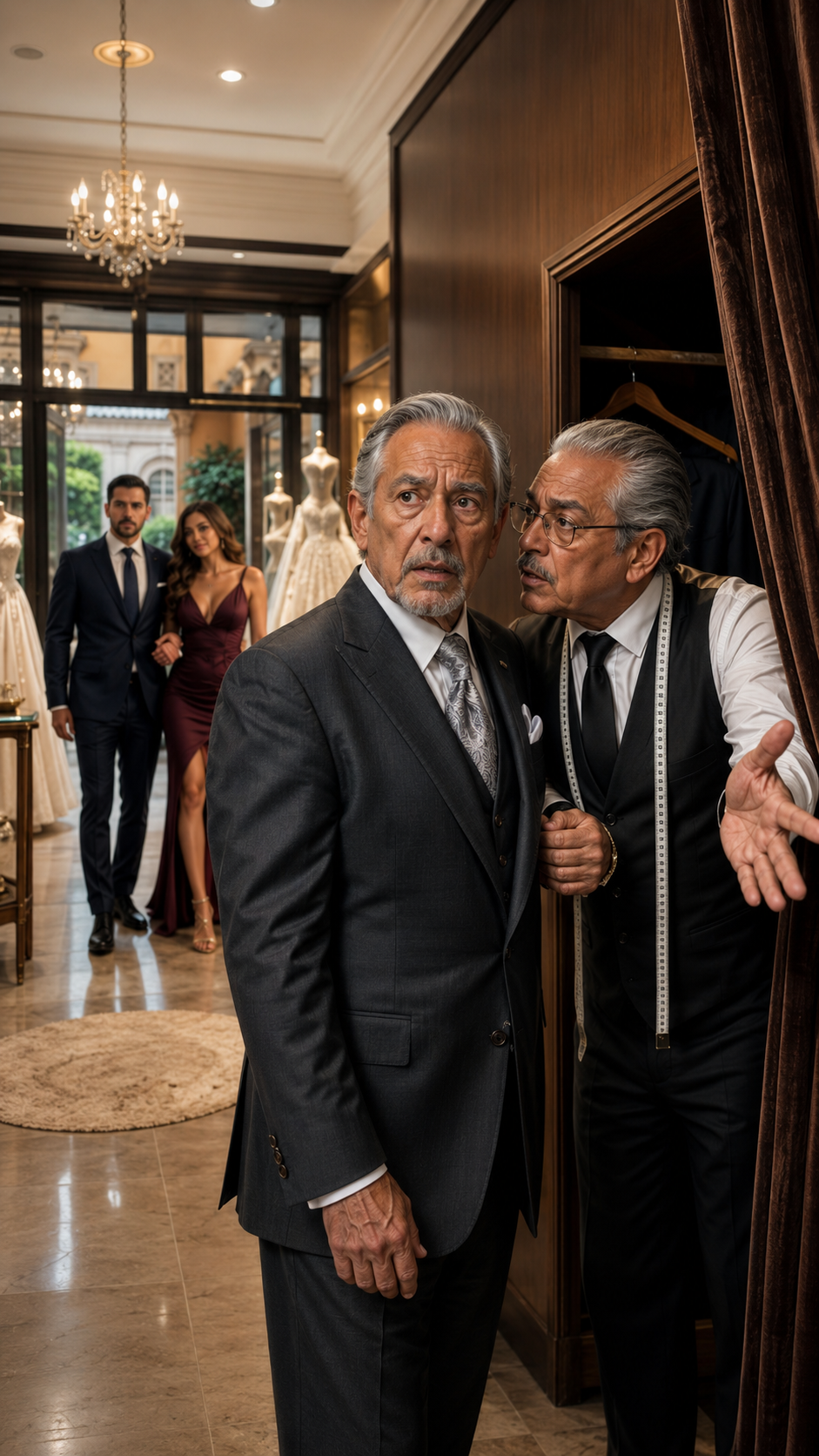
Three days before the wedding, Ernesto Rivas stepped into a bridal boutique in Puebla's Historic Center to pick up the suit he would wear to give away his only daughter at the altar.
He walked out with trembling hands.
Not from excitement.
But because he had just overheard the man Camila loved was planning to kill her.
Ernesto was 68, having spent half his life inspecting bridges, columns, and old buildings. He knew how to spot a crack before everything came crashing down.
Yet he had failed to see the fissure opening within his own family.
Camila was 31, owned a small café-gallery in Cholula, and had a smile that reminded him of Rosa, his wife, who had passed away six years ago.
Since then, Camila had been his home, his pride, his reason to rise every morning.
The fiancé was named Bruno Téllez.
Or at least that’s what he claimed.
He was 36, drove a luxury truck, wore expensive watches, had contacts in Monterrey, and spun a well-rehearsed tale about investments, real estate, and “old money” families.
Camila saw him as the man who had rescued her from sadness.
Ernesto never fully trusted him.
But a father, when he sees his daughter happy, often swallows his doubts to avoid appearing a bitter old man.
That afternoon, Don Antonio, the boutique owner and Ernesto’s friend for over 25 years, didn’t greet him with jokes as usual.
Upon seeing him enter, he turned pale.
He shut the door.
Lowered the metal curtain halfway.
And whispered:
“Get into the fitting room, Ernesto. Now. No questions.”
“What’s wrong, Toño?”
“Seriously, trust me. If you make a sound, you’ll lose your daughter.”
That phrase froze his blood.
Don Antonio shoved him toward the largest fitting room, behind wedding dresses covered in plastic. He closed the thick curtain and turned off the light.
Ernesto barely breathed when the entrance bell jingled.
Two people entered.
Bruno’s voice.
And Valeria’s, his supposed cousin, the elegant woman who had come from Guadalajara to “help with the wedding.”
They sat just on the other side of the thin wall.
“The old man is already docile,” Bruno said, without the sweet tone he used around Camila. “At tomorrow’s dinner, he signs everything.”
Valeria chuckled softly.
“Even the medical authorization?”
“It’s in the trust documents. He won’t even realize.”
Ernesto felt the floor drop away beneath him.
He had indeed agreed to review a trust to protect family properties.
But never a medical authorization.
“After the trip to Nevado de Toluca, everything will fall into place,” Valeria continued. “The poor bride will be sick from the altitude, the cold, the exhaustion… and everyone will cry.”
Bruno replied with a disgusting calmness:
“A perfect tragedy. I come off as a heartbroken widower. You as the supportive cousin. And with the $150 million insurance, we sell the old man’s houses and get the hell out.”
Ernesto had to bite his hand to keep from screaming.
Camila hated the cold.
Camila never went on excursions.
She had agreed to that trip because Bruno told her it would be “an energy cleansing” before starting her marriage.
It wasn’t a honeymoon.
It was a trap.
Then Valeria asked something that shattered his soul:
“What if the girl holds up?”
Bruno laughed.
“She won’t hold up. I’ve been giving her the capsules for two weeks.”
Ernesto shut his eyes.
In that moment, he realized he wasn’t hearing a threat.
He was listening to a countdown.
PART 2
When Bruno and Valeria left, Don Antonio opened the fitting room curtain.
Ernesto stepped out as if he had aged 20 years in 20 minutes.
At first, he said nothing.
He simply walked to the table where his suit lay, perfectly pressed, waiting for a wedding that might never happen.
Don Antonio’s eyes were filled with tears.
“Forgive me, compadre,” he murmured. “Last week, I overheard them talking about strange papers. Today I learned they were coming, and that’s why I hid you. I didn’t know how to tell you without proof.”
Ernesto placed a hand on his shoulder.
“You just saved my life. But now we need to save Camila’s.”
His first impulse was to run to his daughter’s apartment, punch Bruno in the face, and carry her out.
And that’s what he did.
It was his worst mistake.
Camila opened the door with boxes of wedding mementos. She looked tired, pale, with dark circles she was trying to cover with makeup.
Bruno was in the living room, calm, checking his cell phone.
Valeria pretended to arrange ribbons.
“I know what you’re doing,” Ernesto said, without greeting. “The insurance, the medical authorization, the trip to Nevado. I know you want to kill my daughter.”
Camila let out a nervous laugh.
“Dad, what are you talking about?”
Bruno stood slowly, as if dealing with a confused old man.
“Don Ernesto, I understand that the loss of Mrs. Rosa left you with many wounds, but this is going too far.”
Valeria lowered her gaze, a perfect actress.
“How horrible that you think that about us.”
Bruno pulled documents from a folder.
He talked about asset protection, taxes, investments, medical emergencies while traveling, protocols for newlyweds.
He explained everything so well that any stranger would have believed him.
Camila began to cry.
“Dad, enough. Ever since Mom died, you want to control everything. Bruno loves me. You hate him because you’re afraid of being alone.”
Something inside Ernesto broke.
Not because she yelled.
But because he understood that Bruno had planted that idea in her head long before.
“Honey, look at me. They’re giving you something.”
“NO!” she shouted. “I’m tired because I’ve been preparing my wedding for weeks. My wedding, Dad. Not yours.”
Bruno hugged her.
Camila cried against his chest.
And over her shoulder, Bruno looked at Ernesto.
He smiled.
A minimal grin.
One of those smiles that only cowards show when they think they’ve already won.
Ernesto lowered his voice.
“Forgive me, Camila.”
And he left.
But he didn’t give up.
Because a man who built for 40 years doesn’t tear down a wall with brute force.
First, he finds the crack.
The next day, he called his daughter and feigned remorse.
He told her that the pain from Rosa had made him distrustful, that he didn’t want to ruin her happiness, and that he only wished to make amends before the wedding.
Camila, still having a good heart, agreed to meet him for breakfast with Bruno and Valeria.
Ernesto arrived with a smile.
He ordered coffee from the pot.
And observed.
Bruno talked too much. He boasted about a childhood in San Pedro Garza García, business friends, private schools, and family ranches.
But when he picked up the cup, Ernesto noticed his watch.
He claimed it was a piece inherited from his grandfather.
It was fake.
The second hand jumped like a cheap market clock.
First crack.
Then Valeria leaned down to pick up a napkin, and Ernesto saw how she brushed Bruno’s hand under the table.
It wasn’t a cousin’s gesture.
It was a wife’s gesture.
Second crack.
Afterward, he looked at Camila.
His daughter was slow to respond. She blinked slowly. She moved her hands as if each gesture cost her.
“She’s nervous about the wedding,” Bruno said, answering for her.
Ernesto didn’t argue.
He just smiled.
That afternoon, he called Nora Salcedo, a criminal lawyer who had been a friend of Rosa’s. He also contacted a private investigator named Héctor Luna, a former ministerial agent who knew too many backdoors.
“I need to know who Bruno Téllez is,” Ernesto said. “And I need to know now.”
In less than 24 hours, the perfect story began to rot.
Bruno Téllez didn’t exist.
His real name was Darío Molina.
He had been investigated for asset fraud in Querétaro, Morelos, and Jalisco.
Valeria wasn’t his cousin.
She was his legal wife for nine years.
And the worst was not in the papers.
The worst was in an old note from Veracruz.
A woman named Fernanda, 29 years old, heir to a chain of pharmacies, had died during a private boating trip.
The widower cried on camera.
The widower collected a million-dollar insurance payout.
The widower disappeared.
In a blurry photo from the funeral, Ernesto saw the same chin, the same cold gaze, the same way of faking sorrow.
Darío.
Bruno.
The monster had many names.
But always the same method.
Héctor managed to enter Camila’s apartment when the couple went out for a menu tasting. They stole nothing. They only searched.
In Bruno’s closet, they found a false compartment.
Inside was a cheap cell phone, several identifications with different names, and an unlabeled jar with green capsules.
On the lid, written in marker, it said:
“Vitamin C.”
Ernesto felt nauseous.
Camila had told him weeks before that Bruno was giving her vitamins to “boost her energy.”
They sent three capsules to a private lab.
The result was brutal.
The mixture could cause weakness, arrhythmias, confusion, and collapse under physical stress, especially at altitude.
It was the perfect crime.
They didn’t need to push her.
Just take her to the cold.
Wait.
Cry.
Collect.
Ernesto wanted to go after Darío that very night.
He wanted to enact justice with his own hands.
Nora stopped him.
“If you hit him, you’ll become the crazy dad who never accepted the son-in-law. If you want to save Camila for good, we need him to sign, to talk, and to fall with evidence.”
The trap was set at the rehearsal dinner.
The hall was in an elegant estate on the outskirts of Puebla. There were bougainvilleas, candles, trio music, and tables filled with excited family members.
Camila arrived in a simple white dress.
She looked beautiful.
But her sparkle was dimmed.
Ernesto had to clench his fists to keep from taking her out of there.
Bruno entered like a telenovela prince.
Valeria behind, pretending familial tenderness.
The Prosecutor's Office was already inside.
Waiters.
Valet parking.
Sound technicians.
A flower team member.
They were all agents.
Nora prepared documents almost identical to those Bruno expected, but with a hidden clause: if the person signed with a false identity, they authorized the immediate verification of accounts, insurances, and attached medical powers.
There were also microphones under the main table.
Ernesto stood up to toast.
The hall fell silent.
“When Camila was born,” he said, “Rosa told me that a daughter is not possessed. She is accompanied. I have made mistakes out of fear. I’ve tried to protect so much that sometimes I’ve tightened too hard.”
Camila looked at him with tear-filled eyes.
Bruno was smiling, sure he was winning.
Ernesto continued:
“But I also learned something in my trade. Houses don’t fall suddenly. First, a crack appears. Small. Almost invisible. And those who truly love do not cover the crack with pretty paint. They face it before it kills someone.”
Camila frowned.
For the first time, she hesitated.
Bruno applauded before anyone else.
“What beautiful words, Don Ernesto.”
Then came the moment for the papers.
Nora placed the folder in front of him.
“Only your signature is needed, Mr. Téllez.”
Bruno picked up the pen.
Valeria raised her glass.
Camila looked at her father, restless.
Ernesto didn’t blink.
Bruno signed.
In that second, the hall doors swung open.
The waiters dropped their trays.
The trio stopped playing.
The technician turned off the music.
And six agents showed their badges.
“Darío Molina,” said one prosecutor, “you are under arrest for identity falsification, fraud, conspiracy, and attempted homicide.”
The hall exploded.
Screams.
Broken glasses.
Aunts praying.
Cousins recording with their phones.
Valeria tried to escape through the kitchen, but an agent grabbed her by the arm.
Bruno stood up furiously.
“You’re crazy! I’m Bruno Téllez!”
The hall screen lit up.
First, his marriage certificate with Valeria appeared.
Then his false identifications.
Next, the toxicology result of the capsules.
And finally, the photo of Fernanda, the woman from Veracruz.
Camila stood up slowly.
“No…” she whispered. “It can’t be.”
Bruno’s face changed.
He was no longer sweet.
He was no longer elegant.
He was a cornered animal.
“Camila, love, listen to me. Your dad set all this up because he never wanted to see me with you.”
She stepped back.
“Don’t call me love.”
Those four words brought more justice than any badge.
Because in that moment, Camila stopped defending him.
Darío tried to approach, but agents handcuffed him in front of everyone.
Valeria screamed that they knew nothing, that Camila had signed of her own free will, that there was no evidence.
Then Nora played an audio.
Darío’s voice filled the hall.
“If the girl holds up, we’ll raise the dosage. With what I’m giving her, she won’t make it to the viewpoint alive.”
Camila covered her mouth.
Ernesto wanted to hold her, but he didn’t dare.
He thought she would hate him.
He thought that even if he saved her, she might never forgive him for exposing her pain in front of everyone.
But Camila walked toward him.
Slowly.
Shaking.
And collapsed into his arms.
“Dad…” she cried. “Forgive me.”
Ernesto held her like he did when she was a little girl and had nightmares.
“No, my girl. You’re not to blame. Predators don’t come showing their fangs. They come saying what one needs to hear.”
The wedding was canceled that night.
Darío and Valeria were taken away amid cameras, insults, and the icy silence of a family that didn’t know whether to cry from shame or relief.
Camila spent three weeks in a private clinic.
Her body needed to detox.
Her heart, even more.
At first, she didn’t want to see anyone. She blamed herself for believing, for defending Darío, for telling her father she was afraid of being alone.
Ernesto never held it against her.
Every day, he arrived with fresh flowers, chicken soup, sweet bread, and a notebook.
He didn’t speak much.
He just sat next to her.
Like a column.
Steady.
Silent.
A month later, Camila returned to her café-gallery in Cholula. She reopened it with an exhibition called “Cracks.”
The main painting showed a house split in half.
On one side, a stained wedding dress.
On the other, old hands holding up a wall to prevent it from falling.
Below, she wrote:
“My dad didn’t ruin my wedding. He saved me from the funeral.”
The phrase went viral on Facebook.
Thousands commented.
Some said Ernesto did well.
Others asked why Camila hadn’t believed him from the start.
Some women shared similar stories.
Some fathers cried silently in front of the screen.
On the last night of the exhibition, Camila approached Ernesto with eyes full of light.
“Mom would be proud of you,” she said.
Ernesto shook his head slowly.
“She would be proud of you, daughter. Because surviving is also a form of courage.”
Camila hugged him.
And for the first time in a long time, Ernesto stopped looking at the cracks with fear.
Because he understood something that no blueprint, no calculation, and no construction had ever taught him.
Sometimes, the hardest structure to save is a family.
And when someone tries to tear it down disguised as love, it’s not enough to shout the truth.
You have to hold it up until everyone can see it.





