PART 1
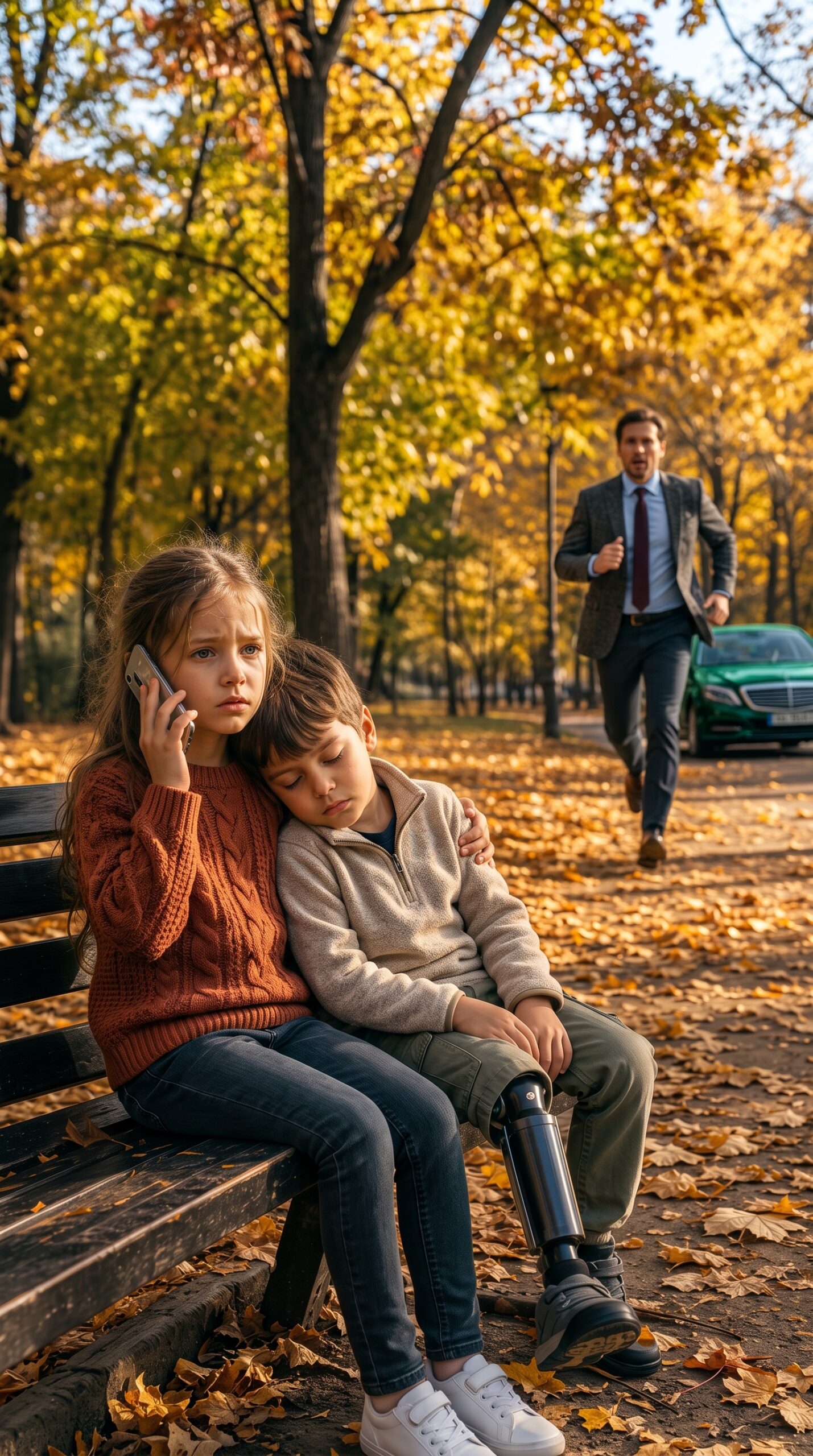
The afternoon Valeria found Emiliano Arriaga lying among the trees in Chapultepec, she wanted just one thing: to get some food before the stalls closed.
She was 8 years old, wearing a torn sweatshirt, her sneakers open at the toes, and that look of a girl who had learned too soon not to trust anyone.
For the past 3 weeks, she had been sleeping wherever she could.
Sometimes on a bench near the Auditorio Metro.
Sometimes under the awning of a closed pharmacy.
And when it rained, she would hide in the entrance of a parking lot, clutching an old backpack where she kept a burned photo of her grandmother.
Her life had shattered since the fire in the tenement in the Doctores neighborhood.
Then came the DIF.
Then a group home where the ladies smiled in front of visitors but screamed when no one was watching.
Valeria escaped one morning, convinced that the street was scary, yes, but at least it didn’t pretend to care.
That afternoon was cold.
The sky was gray, and Chapultepec Park was beginning to empty. Families left with their balloons, their corn on the cob, and their thick jackets.
Valeria walked quickly, her hands tucked into her sleeves, searching for a cart where she had once been given a tamale.
But the cart was gone.
Then she heard a moan.
—Hello...? Is anyone there?
Valeria froze.
She had learned that not all cries for help were good. Sometimes behind a weak voice came an adult with bad intentions.
But the sound came again.
Fainter.
More desperate.
Valeria swallowed hard and approached the trees.
A few meters from a bench, she found a boy lying on the wet grass. He wore an expensive jacket, clean pants, and white sneakers that were already caked in mud.
Next to him, several steps away, were 2 crutches.
The boy trembled so much he could barely speak.
—I can’t get up —he murmured.
Valeria looked around.
There was no nanny.
No parents.
No one.
—What’s your name? —she asked.
—Emiliano.
—And your crutches?
He pointed with his chin.
—I fell… my leg wouldn’t respond.
Valeria noticed that the boy was trying to move, but one of his legs remained stiff.
—How long have you been here?
Emiliano looked down.
—Since before lunch.
Valeria felt a punch in the chest.
The sun was already hiding.
—Who left you?
The boy pressed his lips together.
—My dad’s girlfriend said she was going for coffee. She told me not to make a fuss because people would laugh.
Valeria didn’t understand millionaires, but she understood when an adult abandoned a child.
—Do you have a phone?
—In my bag. My hands are freezing.
Valeria hesitated.
A phone meant adults.
Adults meant questions.
Questions meant going back to the place she had fled.
But Emiliano’s lips were already turning purple.
She pulled out the phone.
The screen showed many missed calls.
Dad.
Dad.
Emergency Dad.
Valeria pressed the contact.
The man answered on the first ring.
—Emiliano! Where are you? Answer me, son!
Valeria took a deep breath.
—Sir, I found your son in Chapultepec. He’s lying down, very cold, and no one is with him.
There was a terrible silence.
Then the man’s voice came out broken.
—Tell me exactly where they are.
Valeria explained as best she could.
The man said he would arrive in minutes.
While they waited, she took off her sweatshirt and put it over Emiliano.
—You’re cold too —he said.
—I’m used to it —Valeria lied.
Shortly after, a black SUV stopped near the walkway. A man in a suit ran down, pale, without bodyguards, without pride, with nothing but fear.
—Emiliano!
He fell to his knees beside the boy and hugged him as if his life had slipped away.
Then he looked at Valeria.
She stepped back, ready to disappear.
But Emiliano grabbed her sleeve with his frozen fingers and whispered:
—Dad… if you let her go, she’ll die alone like I was left alone.
PART 2
Santiago Arriaga froze.
He was one of the most well-known businessmen in Mexico, owner of hotels, shopping centers, and luxury buildings in Polanco, Santa Fe, and Monterrey.
But in front of that little girl, wearing his son’s old sweatshirt, he didn’t seem powerful.
He seemed guilty.
—What’s your name? —he asked in a low voice.
Valeria didn’t respond.
She had seen too many times how adults’ faces changed when they knew a girl had no one.
First pity.
Then questions.
Then patrols.
—She helped me —said Emiliano, shivering—. If it weren’t for her, no one would have found me.
Santiago took off his jacket and put it over Valeria.
She tried to pull away.
—I don’t want any trouble.
—You’re not in trouble —he said—. I promise.
Valeria let out a dry laugh, too bitter for an 8-year-old.
—Adults always promise that.
The phrase hit Santiago harder than any insult.
He carefully lifted Emiliano and asked his driver to bring a thermal blanket from the car. Then he called his private doctor but also requested an ambulance.
He didn’t want to hide anything.
He wanted it to be recorded that his son had been abandoned for hours.
When the paramedics arrived, Valeria made herself small behind a tree.
An elegant woman appeared running down the walkway, wearing high heels, a white coat, and perfect makeup.
—Oh, my love! —she shouted—. What a scare you gave us!
It was Renata Villaseñor, Santiago’s fiancée.
She tried to hug Emiliano, but the boy turned his face away.
—You left me here.
The people around stared.
Renata paled but quickly feigned indignation.
—That’s not true! I went for help. You know I would never…
—You said you were embarrassed that I walked slowly —Emiliano interrupted her—. You said my dad couldn’t show up at the meeting with me looking pitiful.
Santiago looked up.
His gaze changed.
It was no longer fear.
It was ice.
—Renata, tell me my son is confused.
She pressed her purse against her chest.
—Santiago, please. He’s a sensitive boy. Besides, that girl probably put ideas in his head. Look at her. Who knows where she came from?
Valeria lowered her head.
She already knew that tone.
The tone of people who didn’t need to hit you to make you feel like trash.
Emiliano tried to sit up.
—Don’t talk to her like that.
Renata let out a nervous laugh.
—My love, you’re upset.
—I’m not your love.
The ambulance took Emiliano to a private hospital in Lomas de Chapultepec. Santiago ordered that Valeria go with them.
She refused.
—I’m not getting in.
—You can sit by the door —Santiago said—. No one will touch you. No one will force you.
Valeria looked at Emiliano.
The boy, wrapped in blankets, waved his hand at her.
—Please.
And for the first time in weeks, Valeria accepted to follow someone.
At the hospital, they confirmed mild hypothermia, dehydration, and a severe bruise on his hip. The doctor explained that if Emiliano had spent one more hour in the park, the cold could have caused him serious harm.
Santiago listened without blinking.
Renata kept repeating that it was all a misunderstanding.
But then a nurse arrived with a transparent bag.
—Mr. Arriaga, these are the boy’s belongings.
Inside were the crutches, the phone, and a small smart watch.
Santiago took the watch.
Emiliano tensed.
Renata did too.
—That watch records fall alerts, right? —the doctor asked.
Santiago nodded slowly.
He had bought it specifically because of his son’s motor disability. The watch tracked location, heart rate, and activated audio after a hard fall.
Renata stepped back.
—Santiago, don’t do this here.
He opened the app.
On the screen, a log appeared from 12:18.
Fall detected.
Audio available.
The room fell silent.
Santiago pressed play.
First, the thud was heard.
Then Emiliano’s voice crying.
—Renata, help me. I can’t get up.
Then her voice, clear and cruel.
—you always ruin everything. Your dad was going to close a deal for 40 million and you had to fall like always.
Emiliano sobbed.
—I’m in pain.
—Well, stay still. I’m going for coffee. And don’t make a scene, okay? It’s difficult enough to convince your dad that he can still have a normal family.
Santiago turned off the audio.
No one spoke.
Renata covered her mouth with a hand.
—I… I was stressed.
—You left my son lying for hours —Santiago said.
—I didn’t think it would get dark so quickly.
—You took away his crutches.
Renata’s face fell apart.
Emiliano whispered:
—She threw them. She said that’s how I’d learn not to be spoiled.
Santiago closed his eyes.
When he opened them, he called his lawyer.
—I want to file a complaint. Now. And cancel everything related to the wedding.
Renata let out a scream.
—You can’t do this to me! My family already invited half of Mexico!
—Well, tell them there won’t be a wedding.
—For a homeless girl and your son’s tantrum?
Santiago approached her without raising his voice.
—For my son. And for the girl who had more humanity than all of us combined.
Renata was escorted out by security, crying more for the scandal than for Emiliano.
Valeria watched everything from a corner, clutching Santiago’s jacket.
She thought that after this, the hard part would come.
The patrol.
The DIF.
The interrogation.
And yes, a social worker came to the hospital. Her name was Clara, and she had tired eyes but a kind voice.
—Valeria, we need to know where you live.
The girl closed in on herself.
—Nowhere.
—Do you have family?
Valeria tightened her grip on the backpack.
—My grandmother died.
—And your parents?
—I don’t know.
Santiago, who was sitting beside Emiliano’s bed, looked up.
—What was your grandmother’s name?
Valeria took a moment to respond.
—Rosario Mejía.
Santiago went cold.
—Rosario Mejía… from the Doctores neighborhood?
Valeria looked at him suspiciously.
—Did you know her?
Santiago brought a hand to his face.
—Yes.
Clara frowned.
—From where?
Santiago swallowed hard.
—Rosario worked in my father’s house for 22 years. She cared for my sister and me when we were children.
Valeria didn’t understand why the man’s voice cracked.
—My grandmother never talked about rich people.
—Because my family failed her —Santiago said.
The silence weighed like a stone.
Santiago asked for permission to make a call. In less than 20 minutes, his assistant arrived with an old folder, pulled from the family archive.
Inside were receipts, letters, and a yellowed photograph.
In the image was Rosario, younger, carrying a baby.
Next to her was an elegant man: Arturo Arriaga, Santiago’s father.
On the back of the photo was a note.
“Rosario is not a service. Rosario is family.”
Valeria touched the photo with trembling fingers.
—She kept one like that, but it burned.
Santiago opened another letter.
It had been written by Rosario years ago, after she resigned.
In it, she asked for help for her sick daughter, Valeria’s mother. The letter was never answered.
Not because Arturo Arriaga didn’t want to.
But because, as they discovered in the records, Arturo’s wife had received it and hidden it.
Santiago’s grandmother, a woman obsessed with family name and reputation, had decided that helping an employee was “opening the door to abuse.”
Rosario ended up selling what little she had.
Valeria’s mother died.
And years later, Rosario died in the fire, unaware that the Arriaga family had left a granddaughter alone.
Valeria listened to everything without crying.
Children who have cried too much sometimes run out of tears just when they need them most.
Santiago cried.
Not for show.
Not for false guilt.
He cried with the shame of a man who finally understood that his family’s wealth also had ghosts.
That night, Emiliano asked for a foldable bed to be placed next to his.
Clara explained that she couldn’t stay without a legal process.
Santiago didn’t try to buy the law.
He didn’t offer money under the table.
He asked to do it right.
In the following weeks, the story exploded on social media.
“Homeless Girl Saves Millionaire’s Son in Chapultepec.”
“Fiancée Abandons Disabled Boy Out of Embarrassment.”
“Businessman Cancels Luxury Wedding and Reports His Future Wife.”
Mexico reacted as it always does: with rage, with tears, with theories, and with people arguing in the comments.
Some said Valeria was a gold digger.
Others said Santiago just wanted to clean his image.
But those who saw her in the hospital knew the truth: Valeria asked for nothing.
In fact, every time she was given something, she would ask if she had to return it.
Emiliano improved slowly.
He had a neuromuscular condition that made it hard for him to walk, but he was smart, stubborn, and braver than his family ever admitted.
Emiliano’s mother had died 3 years prior.
Since then, Santiago had tried to fill the void with work, gifts, and a relationship that seemed perfect in magazines but smelled of contempt at home.
Renata never loved Emiliano.
She tolerated him.
And that, for a child, can hurt more than an insult.
When the case reached a family judge, Renata appeared with expensive lawyers and a victim’s face.
She said Santiago was destroying her due to media pressure.
She said Emiliano was exaggerating.
She said Valeria had manipulated everything to enter a rich family.
Then Santiago’s lawyer presented the complete audio from the watch.
Then he presented cameras from the park.
In one image, Renata was seen walking calmly toward her SUV at 12:31.
In another, at 14:05, she appeared eating in a restaurant in Polanco with 2 friends.
In the recovered messages from her phone, one of them asked her:
“And the boy?”
Renata replied:
“Let him learn. Santiago needs to realize that this problem doesn’t fit into our life.”
The courtroom fell silent.
Even the judge looked down.
But the final blow didn’t come from Santiago.
It came from Emiliano.
The boy asked to speak.
With his crutches resting beside the chair, he looked at Renata and said:
—I’m not a problem. I’m a person. And Valeria, who had no home or food, treated me better than you, who were going to be my family.
Renata broke down in tears.
But it was too late.
The wedding was definitively canceled.
The complaint continued its course.
And Renata lost contracts, friendships, and that image of the perfect woman she had worked so hard to maintain.
However, the most powerful thing happened 4 months later.
Clara called Santiago to tell him they had found documents regarding the fire where Rosario died.
It hadn’t been a simple accident.
The tenement had ignored reports of electrical failures. The building owner had collected insurance and disappeared.
That owner, years ago, had been a minor partner in a real estate company linked to Renata’s family.
Santiago hired investigators.
The truth came out little by little.
Rosario’s building had been bought to raise luxury apartments. The tenants refused to leave. The management stopped repairing wires, pipes, and stairs, hoping they would tire of waiting.
The fire wasn’t planned as murder, but it was a consequence of ambition.
And Renata knew.
Her family had profited from the tragedy that left Valeria on the street.
When Santiago discovered this, he didn’t shout.
He didn’t threaten.
He did something worse for the culprits: he handed everything over to the Prosecutor’s Office and the press.
The scandal was brutal.
The Villaseñor family, who mocked a “street girl,” ended up linked to real estate corruption, negligence, and dispossession.
Valeria watched the news from the living room of the transitional house where she lived temporarily.
She didn’t smile.
She only asked:
—So my grandmother didn’t die for nothing?
Santiago knelt in front of her.
—No, Vale. And I swear I won’t let them erase her.
She looked at him for a long time.
—My grandmother said that rich people always arrive late.
Santiago lowered his head.
—This time I did arrive late.
Valeria tightened her grip on her backpack.
—But you came for Emiliano.
That phrase was the beginning of something neither of them expected.
With legal authorization, evaluations, supervised visits, and months of process, Santiago requested to become Valeria’s guardian.
It wasn’t quick.
It wasn’t like in the movies.
There were interviews, doubts, reviews, psychologists, tears, and nights when Valeria hid bread under her pillow because she still didn’t believe there would be breakfast the next day.
Emiliano was patient.
He showed her his room, his video games, and also his fears.
She taught him to distinguish when an adult lied with a pretty smile.
They became siblings before a piece of paper said so.
The day the judge authorized provisional guardianship, Valeria didn’t run to hug Santiago.
She stood still, as if happiness could also be a trap.
Then Emiliano, from his chair, extended his hand to her.
—You don’t have to sleep with one eye open anymore.
Valeria looked at him.
And for the first time, she cried like a girl.
Not like a survivor.
Not like a street kid.
Like a girl.
Santiago fulfilled another promise.
He bought the burned tenement in Doctores, not to build luxury apartments, but to create a children’s shelter with psychological support, school, dining hall, and legal advice for homeless children.
He named it Casa Rosario.
At the entrance, he placed a simple plaque:
“For the children nobody wanted to listen to in time.”
On the inauguration day, several reporters tried to ask Valeria if she felt lucky to have met a millionaire.
She looked at Emiliano, then at Santiago, and replied:
—He was the lucky one. Because if his son hadn’t called me with his eyes, maybe the adults would never have learned to see.
The phrase went viral.
Some applauded.
Others said she was too harsh.
But no one could deny the truth.
Sometimes a homeless girl can have more home in her heart than a mansion full of cold people.
And sometimes, the call that seems to save a rich child ends up revealing who the truly poor were: those who had money, a name, and a set table, but not a single ounce of love to care for a child lying on the ground.





