PART 1
—Starting next month, you’re going to send us 18,000 pesos, Sofía. And no drama, because that’s what being part of this family means.
Doña Carmen said this while serving herself more red rice at Sofía's table, as if she were collecting the utility bill or the rent.
It was Sunday in the Narvarte neighborhood. It was pouring outside, and inside, the air was thick with cochinita, warm tortillas, and old resentment.
Sofía Duarte was 36 years old, an administrative manager for a chain of private clinics, and for the past 5 years, she had been carrying the financial burdens of her husband Andrés's family.
She paid for Don Efraín's medications, Andrés's car insurance, her brother-in-law Mauro's internet, her mother-in-law's overdue bills, and even the “little luxuries” of Brenda, Mauro's wife, who always flaunted new bags and fresh nails.
Andrés said nothing. He sat next to his mother, scrolling through his phone as if this conversation didn’t concern him.
—Carmen, if there’s a real medical emergency, we’ll discuss it —Sofía said calmly—. But I’m not handing over fixed money every month anymore.
Mauro chuckled.
—Oh, sister-in-law, come on. For you, 18,000 is like 18 pesos.
Brenda raised her eyebrows.
—Besides, a decent family shouldn’t be begging for money. I have my niece’s First Communion, and I’m not going to show up dressed like anyone.
Sofía looked at Andrés, hoping, just this once, he would defend her.
He sighed.
—My mom is just asking for support. Don’t get intense.
Sofía set her glass down on the table.
—It’s not support if it’s demanded. It’s not family if they only come to me when they need money. For 5 years, I’ve been paying for medications, credit cards, the car, bills, and whims. Today, that ends.
Doña Carmen flushed red.
—Look at her, Efraín. She thinks she’s of a different class because she earns well. My son gave you his last name, young lady.
—I already had a house, a job, and dignity before I married your son.
Silence fell heavily.
Andrés shot up from the table.
—Apologize to my mom.
—I’m not going to apologize for setting a boundary.
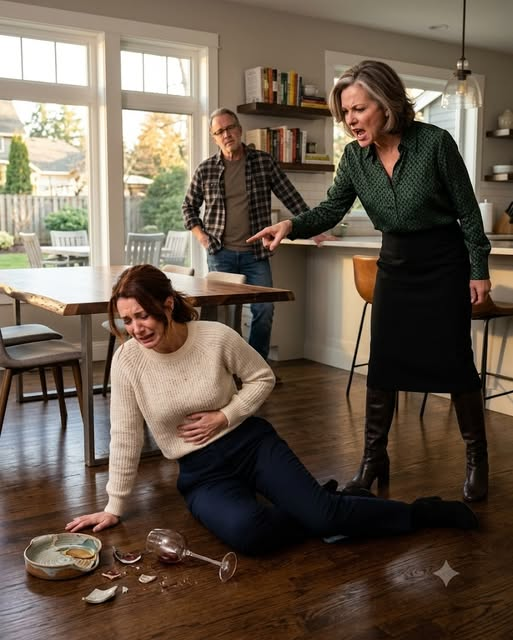
The first slap crossed her face.
Sofía froze, her cheek burning. There were 5 witnesses at the table. No one moved.
—Andrés… —murmured Don Efraín, without standing up.
Doña Carmen pressed her lips together.
—That’s how they learn, those rebellious women.
Sofía slowly turned her face toward her husband.
—Did you just hit me?
Andrés breathed angrily.
—And you still talk back.
The second slap knocked her back against the chair. Her bag fell to the floor, her phone slid under the table, and Brenda picked it up, more concerned about the cracked screen than the blood on Sofía's lip.
—Come on, Sofi —Brenda whispered—. Just apologize and don’t make it worse.
Sofía stood up slowly. She didn’t cry. She didn’t scream.
She just smiled with a calmness that froze the dining room.
—For 5 years, I’ve been your ATM —she said, wiping her mouth—. Good thing I was hit in front of everyone. Now no one can say I exaggerated.
Andrés frowned.
—What are you going to do?
Sofía picked up her broken phone and dialed a number.
—Close the account.
No one at that table imagined that by that same night she would be left without cards, without a car, without lies... and with an email that would destroy them all.
PART 2
Andrés stepped toward her, but this time he didn’t dare touch her.
There was something different about Sofía. The blows hadn’t broken her. They had awakened her.
—You’re crazy —he said—. Hang up that phone.
Sofía didn’t look at him. She waited for someone to answer.
—Licenciada, everything okay? —Mariana, her assistant, asked.
—No. I need you to do 3 things tonight.
Doña Carmen let out a bitter laugh.
—Oh, yes, the powerful lady calling her lackeys.
Sofía kept talking.
—First: block all additional cards linked to my account. Andrés’s, Carmen’s, Mauro’s, and Brenda’s. From this moment on.
Brenda opened her mouth.
—I have an appointment tomorrow in Polanco!
—You pay for it —Sofía replied.
Mauro stood up angrily.
—Don’t push it, Sofía! My business depends on that card!
—Your business of selling counterfeit phone cases on Instagram doesn’t depend on me.
Andrés tried to snatch the phone from her.
Sofía raised her gaze.
—If you touch me again, I’ll call 911 and request a patrol. With 5 witnesses and my face like this, let’s see who dares to lie.
Don Efraín lowered his head. Doña Carmen did not.
—Second —Sofía continued—: notify the bank that I’m withdrawing my authorization for any charges on Andrés's car loan. If he wants a truck, he can pay for it himself.
Andrés paled.
—That truck is in my name.
—And the debt comes out of my account.
—Sofía, don’t mix things up.
—You mixed my money with your family and my face with your hands.
The dining room fell silent.
—Third: tomorrow first thing, I want a review of all contracts with Distribuidora Mendoza. Especially those signed by Andrés. I’m not going to keep authorizing suppliers based on family trust.
That’s when Andrés lost all color.
—Don’t drag my work into this.
Sofía put her phone away.
—Your work got mixed in when you used my last name to close deals.
She left the apartment with a split lip and a stained dress. She didn’t go to her mother’s house in Tlalpan. She didn’t want her to see her broken. She drove through the rain to a small loft in Roma that she had secretly rented months earlier, afraid that one day Andrés would cross a line.
That night, she understood it wasn’t fear. It was intuition.
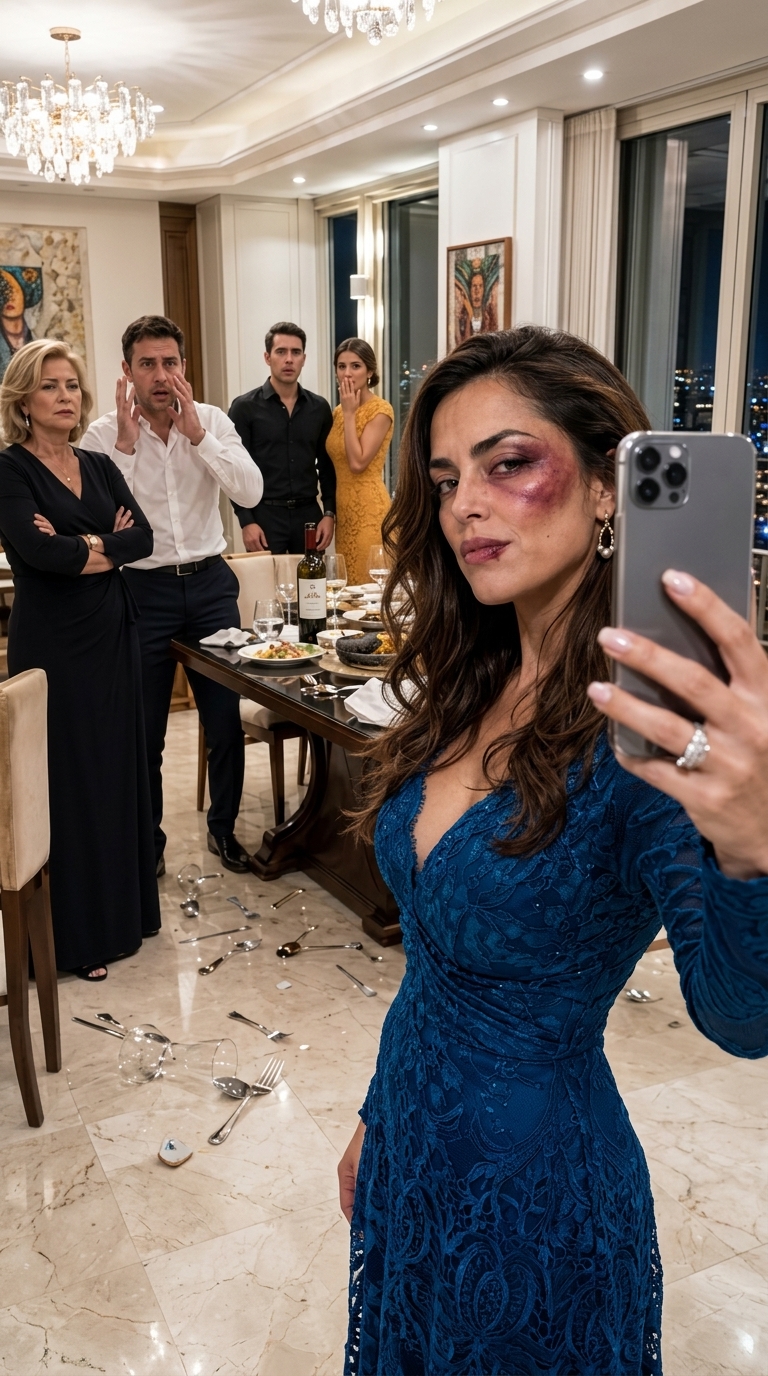
In the bathroom, she took photographs. Left cheek red. Lip split. Wrist marked. Then she recorded an audio with time, date, place, and names of the 5 witnesses.
By 6 in the morning, she was in the ER requesting a medical certificate. By 8, she called lawyer Arturo Rivas, her family’s attorney.
—My husband hit me —she said—. I want a divorce.
Arturo didn’t ask if she was sure.
—Then don’t cry in front of them. Document. Save bank statements, messages, audios, emails, and receipts. Abusive people scream. Intelligent people archive.
At 10, Sofía arrived at the office wearing dark glasses and carrying a gray folder.
Mariana was waiting with a report.
In 5 years, the Mendoza family had received 936,000 pesos in transfers, cards, insurance, monthly payments, private consultations, overdue tuition for nephews, and supposed loans.
It wasn’t help.
It was a drain.
At noon, Andrés burst into the clinic’s reception, shouting that his wife was ungrateful, that she had abandoned her sick father, and that she was destroying an honest family.
Security escorted him out while the cameras recorded everything.
At 4:37 in the afternoon, the email arrived.
It came from an unknown address.
Subject: “Review this before continuing to protect Andrés Mendoza.”
Sofía opened it with cold hands.
Inside were captures of internal emails, inflated invoices, and an audio. Andrés had authorized purchases of defective medical supplies for the clinics where Sofía worked. The supplier was Distribuidora Mendoza, a company under Mauro’s name, but operated by Andrés for the past 3 years.
In a message, Andrés wrote:
“My wife signs whatever I put in front of her. As long as she hands over money, she doesn’t ask.”
Sofía felt something break deeper than her lip.
Not only had they used her as an ATM.
They had used her as a shield.
That night, Doña Carmen posted a video on Facebook from her living room. She was crying, a shawl draped over her shoulders.
“My rich daughter-in-law left my husband without medicine and my son without a job. She punishes us because we asked for family support.”
The video spread quickly. Cruel comments began to pour in.
“What a lowlife.”
“There are women who lose their hearts for money.”
“Poor lady.”
“She probably exaggerated the beating.”
Sofía didn’t respond that night.
She saved captures.
She saved links.
She saved names.
The next morning, she posted a single statement. No insults. No drama. No sad music.
She showed the medical certificate listing her injuries. She uploaded captures of Andrés’s message admitting he “lost control.” She added a table with the 936,000 pesos given over 5 years. She also explained that Don Efraín was still receiving medical attention through his public insurance and that she had only stopped paying for premium consultations and non-prescribed medications.
Then she attached the anonymous email with the inflated invoices and defective materials.
The internet shifted sides within hours.
“Did he really hit her?”
“936,000 pesos and they still demanded more.”
“Mother-in-law wanted an ATM, not a daughter-in-law.”
“How scary that clinics were used to steal.”
Doña Carmen deleted her video, but it was too late.
Andrés called 27 times. Sofía answered the 28th call with the recorder on.
—Delete that post —he said—. You’re destroying me.
—You destroyed yourself.
—My mom is heartbroken.
—I was on the floor too, and she said that’s how rebellious women learn.
Andrés fell silent.
—Sofi, for real, I’m sorry. I let my anger take over.
—It wasn’t anger. It was habit. The habit of thinking my money, my work, and my body were yours.
Two days later, Doña Carmen showed up in the lobby of Sofía's building with Mauro and Brenda.
—Come out, coward! —she shouted—. Tell everyone how you want to kill my husband!
Sofía went down with lawyer Arturo and requested that the cameras keep recording.
—Mrs. Carmen, if you have anything legal to claim, speak with my lawyer.
—I’m your mother-in-law!
—No. You are the woman who watched your son hit me and justified it.
Mauro approached with a raised finger.
—You don’t want to mess with us.
Arturo opened the folder.
—Threats, harassment, and defamation. The police are on the way.
Brenda started crying.
—I didn’t know about the invoices, Sofía. I swear.
Sofía looked at her. For the first time, Brenda wasn’t wearing expensive nails or a new bag. She looked tired, scared, small.
—Then speak —Sofía said—. Because keeping quiet also makes you part of it.
That phrase was the first real blow against the Mendoza family.
Brenda arrived at the office the next day with a USB drive. She handed over audios of Doña Carmen saying: “Sofía pays out of shame, we need to squeeze her more.” She also showed messages from Mauro boasting that Andrés made duplicate orders and then charged the differences.
But the hardest twist was in another file.
It was an audio of Andrés talking to his mother.
—If Sofía finds out about the supplier, we’ll make her look crazy. I’ll say she provoked me, you cry on Facebook, and Mauro says she signed everything.
Doña Carmen replied:
—That’s what wives are for, son. They endure or leave with nothing.
Sofía listened to the audio once. She didn’t need more.
The complaint advanced.
Mauro was summoned for fraud. Andrés lost his position when the audit confirmed rigged purchases and low-quality materials. Doña Carmen received a restraining order for harassment. Brenda separated from Mauro and agreed to testify.
Don Efraín called one night.
—Sofía… I didn’t know everything.
She closed her eyes.
—But you saw enough.
The man breathed with difficulty.
—I was ashamed to get involved.
—I was ashamed to endure. The difference is that I’m already doing something about it.
He never called her again.
At the divorce hearing, Andrés showed up with unkempt facial hair and a soft voice, as if tenderness could erase the evidence.
—I love my wife —he said in front of the judge—. It was a mistake. She knows my family is complicated, but I never meant to hurt her.
Arturo placed the medical certificate, the audios, the bank statements, the inflated invoices, the lobby video, and the captures of the defamation campaign on the table.
When Sofía spoke, she didn’t tremble.
—I’m not here for revenge. I’m here because for 5 years, they confused my love with obligation. My money with entitlement. My silence with permission. And my body with something they could correct with blows.
Andrés lowered his gaze.
—I don’t want anything that isn’t mine —she continued—. But what’s mine will never be touched again.
Months later, the divorce was signed. The apartment remained in Sofía’s name because she had bought it before marrying. The truck was sold to cover part of the debts. The cards were permanently canceled. Andrés had to post an apology for defamation. Mauro faced charges for fraud. Doña Carmen deleted her videos, but in the neighborhood, no one believed her tears anymore.
One afternoon, Sofía returned home with her mother. She didn’t make an elegant dinner. They ordered barbacoa tacos, bought sodas, and sat at the table where it had all begun.
Her mother looked around and said:
—Now it really feels like your home, daughter.
Sofía smiled.
Before, that place was filled with people eating at her table while tearing pieces of her life away. Now, there was silence, new plants, and a peace that didn’t need witnesses.
In time, her story circulated on Facebook as “the woman who shut down the ATM.” Some people said she was cold. Others wrote her private messages sharing that they too supported families that humiliated them.
Sofía rarely gave long advice.
She simply replied:
“Save your evidence. Set boundaries. Don’t confuse love with debt.”
Because she learned that a family isn’t demonstrated when it extends a hand to ask. It’s demonstrated when someone falls to the floor, and another person bends down to lift them.
For 5 years, she believed being a good wife meant enduring.
That night, she understood that enduring, sometimes, is the cage where others keep your dignity.
And if someone was uncomfortable seeing her free, let them be uncomfortable.
Because an ATM can run out of cash.
But a woman who regains her voice never gives change again.