PART 1
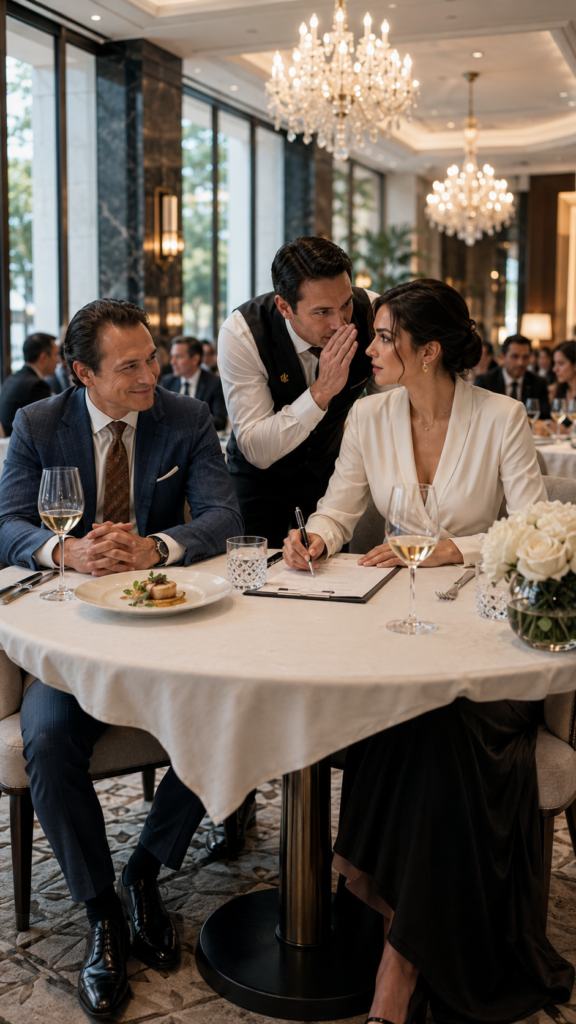
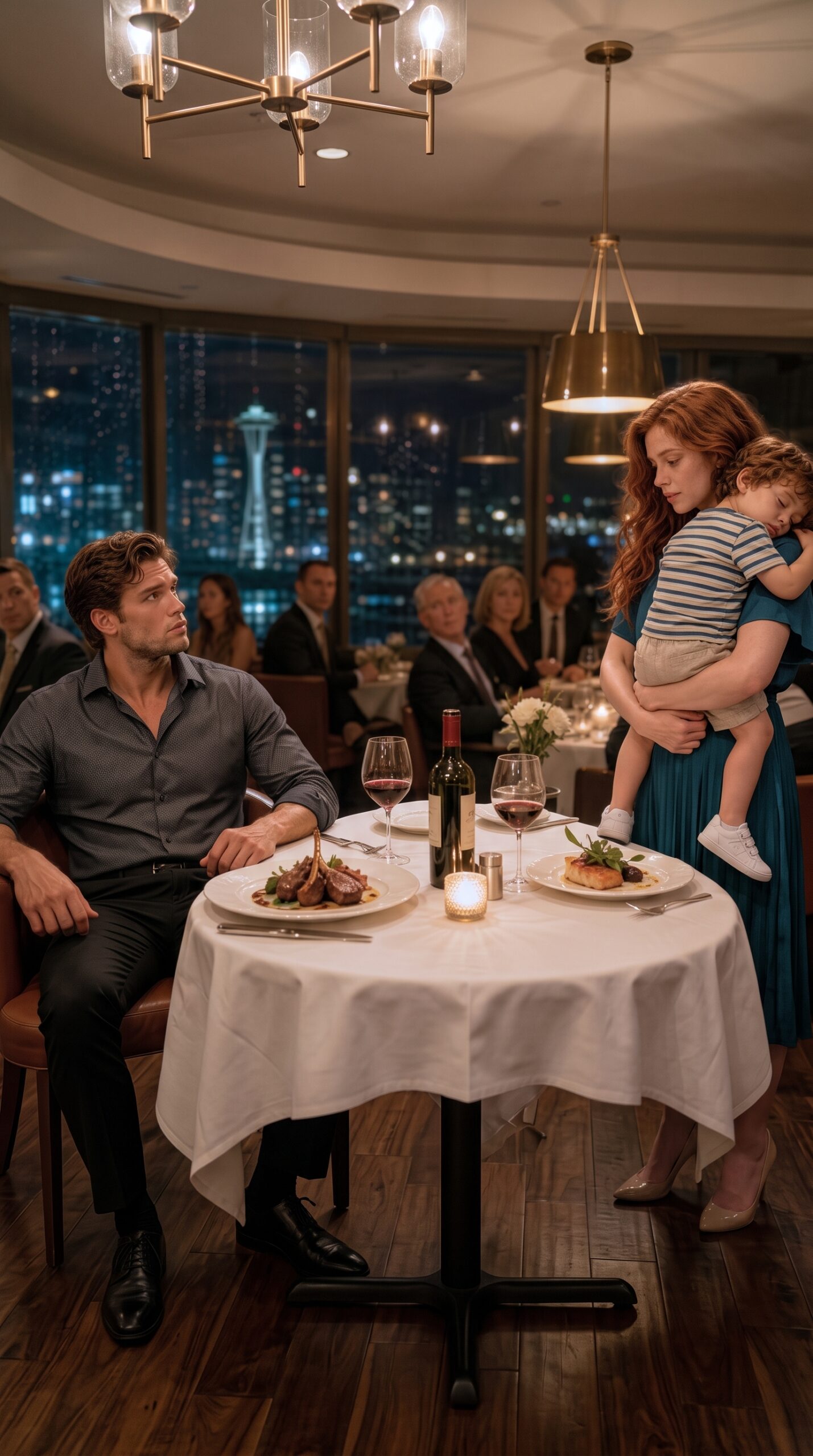
"I’m so sorry, truly sorry for arriving like this," Camila said, entering the restaurant in the Narvarte neighborhood, cradling a sleeping child, a dinosaur backpack slung over her shoulder, her hair held back by a nearly broken hair tie.
Mateo Luján looked up from the table by the window.
For three seconds, he thought the app had made a mistake.
In the photo, Camila wore a white blouse, small earrings, and a calm smile, the kind that seemed to carry no burdens.
The woman before him had deep bags under her eyes, a smear of caramel on her sleeve, one child’s sneaker in her hand, and the face of someone who had survived a war before dinner.
"I’m Camila," she said, embarrassed. "I know this looks terrible."
Mateo slowly stood up.
"It doesn’t look terrible. It looks... intense."
She let out a tired laugh.
"Intense is a very polite way to say disaster."
The child, around five years old, slept against her chest, clutching a brown stuffed dog with one ear sewn on with blue thread.
The hostess looked at them as if unsure whether to lead them to a table or ask if they needed a doctor.
"The babysitter canceled thirty minutes ago," Camila explained. "My neighbor didn’t answer, my aunt was in Ecatepec, and I’d already canceled on you twice. If I canceled again, you’d think I was just playing games."
"Mateo," he corrected gently.
"What?"
"Don’t call me ‘usted’. It sounds like a tax form."
Camila smiled for the first time.
Mateo helped her with the backpack, picked up a juice box that had fallen to the floor, and pulled out a chair.
"Sit down before all the little you have left falls apart."
She sat carefully, adjusting the child on her lap.
"Almost everything has fallen. I’m just trying to keep it quiet."
Mateo laughed.
It wasn’t a polite laugh. It was real.
The waiter arrived with the menu. Camila ordered soup and still water, the cheapest options. Mateo ordered arrachera, bread, quesadillas for the child, and cake "just in case someone wakes up hating life."
"That’s a lot," she murmured.
"Then they’ll have a nice breakfast tomorrow."
Camila wanted to protest, but she was too exhausted to refuse a kindness that came without conditions.
For twenty minutes, the date almost felt normal.
She shared that she worked as a teacher’s aide in an elementary school in Portales and that on Saturdays she made decorated jellies to cover the rent.
Mateo said he ran a tech company for digital payments and hated dinners where everyone flaunted their watches as if they were personality traits.
Camila laughed.
He discovered she had a dry, sharp sense of humor, the kind that emerges when life treats you poorly and all that’s left is to respond with sarcasm.
Then the child opened his eyes.
He looked at Mateo as if assessing whether he posed a danger.
"Who are you?"
Camila tensed.
"He’s Mateo."
"And why?"
Mateo coughed to keep from bursting out laughing.
"That’s a very good question."
"Because that’s his name, Nico," Camila said.
The child looked him up and down: pressed shirt, discreet watch, clean shoes, calm smile.
"Are you rich?"
Camila closed her eyes.
"Nico, please."
"What? He looks like one of those guys who don’t gather points for gas."
Mateo let out a laugh so loud that a lady at the next table turned around in indignation.
"He has a good eye for finances."
Nico took a quesadilla without asking for permission.
Then he asked, mouth full:
"Are you going to be my new dad?"
Silence fell like shattered glass.
Camila stopped breathing.
So did Mateo.
The child kept chewing, waiting for a response, as Camila lowered her gaze with a sadness so deep it constricted Mateo’s chest.
She stroked the child’s hair and said in a broken voice:
"No, my love. We’ve talked about this. I’m your aunt."
And Mateo understood that this date was not a disaster: it was a life crying out for help, too afraid to say it.
PART 2
After that phrase, nothing felt light again.
Camila tried to regain normalcy. She wiped Nico’s mouth with a napkin, fixed his hair, and pretended she hadn’t just opened a wound in the middle of the restaurant.
Mateo didn’t ask.
Something in her eyes told him that if he pushed too hard, Camila would get up, carry the child, and disappear forever.
So he talked about something else.
"What’s your dog’s name?"
Nico hugged the stuffed animal proudly.
"General Fluff."
"Strong name."
"He lost one ear in a battle."
"Against whom?"
Nico pointed at Camila.
"Against the washing machine."
Camila covered her face.
"It was a domestic accident. Not a battle."
"Battles also start from accidents," the child replied very seriously.
Mateo laughed again.
And Camila, unwittingly, did too.
When they left the restaurant, the night in Mexico City was cool. It smelled of rain, suadero tacos, and tired traffic.
Nico fell asleep again before they reached the car.
Mateo walked beside Camila without invading her space.
"Thanks for not running away," she said, buckling the child into his seat.
"Thanks for not pretending everything was perfect."
Camila looked at him.
For one second, it seemed she was about to tell him something.
But she just closed the door.
"Good night, Mateo."
"Good night, Camila."
He thought he wouldn’t see her again.
He was wrong.
The second date was in a park in Del Valle.
Nico arrived with General Fluff, a green lollipop, and a mental list of questions.
"Do you know how to drive?"
"Yes."
"Do you know how to make pancakes?"
"Sort of."
"Do you know how to kill cockroaches?"
"Depends on the cockroach."
"Hmm. You’re on trial."
Camila turned red.
"Sorry. He’s in a phase of interviews."
"Seems fair," Mateo said. "The position looks tough."
From that day on, Nico stopped calling him Mateo.
He called him "Mr. Clean Shoes," because according to him, no normal adult could have such clean shoes after walking in the city.
Mateo accepted the nickname with a dignity that made Camila laugh for three blocks.
The dates stopped feeling like dates.
They were snacks with interruptions, walks where Nico would lie in the grass because "his bones needed a vacation," trips to the movies where Camila fell asleep before the trailers, and Mateo ended up recounting the movie the next day.
He began to notice things.
Camila always carried two cereal bars in her bag, though she almost never ate.
She checked her phone with fear every time it vibrated.
She counted coins before paying the parking meter.
And when Nico laughed very loudly, she smiled with both joy and panic, as if she wanted to preserve that sound in case it was taken from her one day.
One afternoon, Mateo saw her close her eyes for five seconds at a red light, hands still on the wheel.
"When do you rest?"
"When Nico takes too long putting on his shoes."
"That doesn’t count."
"In my house, everything that lasts more than ten seconds counts."
Camila said it jokingly, but it didn’t make Mateo laugh.
The first time he watched Nico alone, he understood the magnitude of chaos.
Camila had an urgent meeting at school and couldn’t find anyone to watch the child. Mateo offered his apartment in Roma Norte, convinced that two hours wouldn’t destroy a functional adult.
Eighteen minutes in, he was doubting everything.
Nico turned the living room into a stuffed animal hospital.
He used spoons as scalpels, put Band-Aids on the remote control, drew mustaches on a corporate photo of Mateo, and buried cereal in a pot because "plants have breakfast too, dude."
Then one shoe disappeared.
Mateo searched under the couch, in the kitchen, in the bathroom, inside a box of cables, and even in the refrigerator.
"Adults get scared in really strange ways," Nico said, sitting on the floor with absolute calm.
The final tragedy occurred when Mateo stepped into the hallway for a pizza.
Nico closed the door.
The automatic lock clicked.
"Nico, open."
"I can’t."
"Why?"
"I’m busy."
"Doing what?"
"Making cookie smoothies."
Mateo closed his eyes.
When Camila arrived, she found him sitting in the hallway with the cold pizza, while Nico sang inside and General Fluff peeked under the door.
She stood still.
Then she laughed so hard that she ended up crying.
"Now I understand a lot of things," Mateo said solemnly.
"What do you understand?"
"Why you always look like a hurricane survivor."
Camila’s laughter faded slowly.
Something changed between them in that hallway.
It was not a promise.
It was more dangerous.
It was trust.
Weeks later, on a rainy night, Nico fell asleep on the couch with one sock missing. Camila and Mateo were in the kitchen with two cups of reheated coffee.
"My sister’s name was Renata," she said suddenly.
Mateo didn’t move.
"She was six years older than me. Bossy, intense, the kind who arrived late and would still get mad at you for worrying."
"Sounds fierce."
"She was. She was also my favorite person."
Camila looked down.
"When Nico was two, Renata got sick. At first, everyone said, 'treatment,' 'faith,' 'keep fighting.' As if cancer obeyed cheers.
Mateo tightened his grip on the cup.
"Then other words came—hospice, custody, signature, guardianship. I was 24 and barely knew how to pay my electric bill. But my sister asked me not to leave Nico with his dad."
"Does his dad live?"
Camila nodded.
"His name is Darío. He only showed up when he wanted money or needed to feel like a victim. Renata left him because he sold things from the house, yelled, disappeared for three days, and then came back as if nothing happened."
"And did he want to keep Nico?"
"Not out of love. For the pension, for my sister's house, and because his parents said, 'A child should be with their own blood.' As if blood changed diapers at three in the morning."
Mateo fell silent.
"Renata signed everything before she died. She gave me custody. But since then, Darío shows up every few months, threatens, insults, demands. Says I stole his son."
Camila swallowed hard.
"That’s why I’m scared of Nico loving someone. Because people come, promise, get attached… and then leave. And kids don’t know how to break a little bit."
Mateo moved his hand across the table.
He didn’t take it.
He just left it there.
Camila looked at it for several seconds.
Then she placed her hand over his.
The kiss was about to happen when Nico appeared at the door, eyes swollen from sleep.
"I’m emotionally hungry."
Mateo blinked.
"And what does that get cured with?"
"With cereal."
"Serious, but treatable."
Camila wanted to scold him but ended up smiling.
For one moment, the small kitchen didn’t feel like a trench.
It felt like home.
But happiness didn’t arrive alone.
It came with watchful eyes.
Mateo’s mother, Doña Elvira Luján, found out from a photo taken at a family baptism. Camila was seen holding Nico, with Mateo by her side, holding the dinosaur backpack as if it were the most normal thing in the world.
The next day, she invited her son to lunch in San Ángel.
Doña Elvira wore pearls, expensive perfume, and soft phrases that cut deeper than any knife.
"You have a child."
"He’s my nephew."
"You’re raising him."
"Yes."
"And you’re stepping into that life."
Mateo put down his fork.
"It’s not 'that life,' Mom. They’re people."
"Don’t misunderstand me. The girl might be good. But one thing is helping, and another is carrying a story that isn’t yours."
"Camila isn’t a burden."
"Then don’t treat her like a rescue."
The phrase stung because it hit right where it hurt.
Mateo didn’t respond.
Meanwhile, Nico was getting attached without permission.
He sent Mateo voice messages to tell him he could tie his shoes now.
He demanded photos of his dead plants.
He asked if adults with nice cars also caught colds.
Mateo answered everything.
Sometimes with absurd seriousness.
"Report for Licenciado Nico: basil was declared a total loss."
Nico listened to the audios nine times.
Camila smiled.
And then felt fear.
Because Mateo wasn’t just any man.
He had a growing business, investors behind him, travel, elegant meals, a world where no one arrived with a sleeping child and spilled juice in their bag.
That fear became reality one night.
Mateo received a call while he was at Camila’s house. He thought Nico was watching cartoons in the room.
"Yes, I understand about Querétaro," he said quietly. "If we open the branch there, I’d have to move for at least a year."
A thump sounded behind him.
General Fluff was on the floor.
Nico looked at him with wide eyes.
"You’re leaving."
Mateo froze.
Camila came out of the kitchen with a pot in her hand.
"What happened?"
Nico hugged the stuffed toy against his chest.
"Like my mom."
That phrase shattered the house.
Mateo wanted to explain everything, but he had nothing clear.
He said he hadn’t decided yet.
He said it was a huge opportunity.
He said he didn’t want to hurt anyone.
Camila didn’t cry.
That was worse.
"I’m not hurt that you have an opportunity," she said. "I’m hurt that I found out because my nephew overheard a hidden call."
"I wasn’t hiding it."
"Then why were you speaking softly?"
Mateo had no answer.
For days he tried to fix it. He brought food, called, sent messages.
Camila responded little.
Until a business note appeared online:
"LujánPay Announces Strategic Expansion in Querétaro."
Mateo’s smiling photo with his partners hit Camila like a slap.
That night, when he knocked on the door, she already had her phone in hand.
"You were going to tell me, right?"
"Yes."
"When? After signing? After packing? After Nico asked again why everyone leaves?"
Mateo looked down.
"All my life, I’ve left doors open just in case something goes wrong."
"How nice for you," she said, her voice trembling. "I can’t live with open doors. I have a child who’s seen too many close."
He accepted Querétaro.
And Camila cut what had barely begun, before Nico could break more.
There were no screams.
Just a gray, adult farewell, one of those that hurt because no one is a complete villain.
The morning Mateo left, Camila came down with Nico.
The child carried General Fluff hugged to his chest.
"I’ll lend it to you," he said, extending the stuffed animal.
Mateo felt his throat close up.
"Until when?"
Nico looked at him with a seriousness that no child should have.
"Until you come back. But if you don’t come back, it’s no longer a loan. It’s abandonment."
Mateo hugged the stuffed animal to his chest.
He didn’t promise.
Because he understood that promising out of guilt was also lying.
For a year, Querétaro was a success for everyone but him.
The company grew. Investors celebrated. Magazines talked about his vision.
But every Sunday at six, Mateo connected via video call with Nico.
Without fail.
Even if he was in meetings. Even if he was traveling. Even if he had a fever.
"Hello, Mr. Clean Shoes."
"One day you’ll accept my real name."
"I don’t think so."
Camila sometimes appeared in the background, pretending to organize toys.
At first, they only talked about Nico.
Then about school.
Then about exhaustion.
Then about themselves.
Mateo never again asked for trust as if it were a formality.
He built it.
One Sunday, he didn’t call from Querétaro.
He called from Narvarte.
Camila didn’t know.
Marisol, her best friend, tricked her into the same restaurant as that first date.
"It’s for my birthday," Marisol said.
"Your birthday was two months ago."
"I’m emotionally late."
Camila walked in and paused.
At the window table, Nico was there in a dinosaur shirt, red bowtie, and a folded sheet of paper.
In front of him, Mateo.
Thinner. More serious. With General Fluff on the table, clean, stitched, and with a new ear.
Camila brought her hand to her mouth.
"What is this?"
Mateo stood up.
"A blind date."
"But I already know you."
"That’s why I came better prepared."
Nico placed the sheet in front of her.
It read, in crooked letters:
"Contract to go out with my aunt Camila and not do silly things."
Camila read it while crying.
Rule 1: Don’t disappear.
Rule 2: Don’t lie softly.
Rule 3: Go to school festivals even if there’s horrible traffic.
Rule 4: Learn to make pancakes without burning them.
Rule 5: Don’t make my aunt cry in a mean way.
Rule 6: If you leave, warn in advance and come back with proof.
Mateo pulled out a pen.
"I already signed it."
Camila looked at the sheet.
There was her signature.
And below, another line:
"I left the operational address in Querétaro. I returned to Mexico City. Not because I failed. Because I chose where I wanted to be."
Camila couldn’t speak.
"I’m not here to ask you to forget," Mateo said. "I’m here to show you that I learned. That being present isn’t saying ‘I love you’ when everything looks good. It’s carrying backpacks, listening to fears, repairing stuffed animals, and not hiding calls."
Nico raised his hand.
"And buying tacos."
Mateo nodded.
"And buying tacos. That was negotiated in private."
Camila laughed while crying.
The dinner was a beautiful disaster.
Nico spilled water, Marisol toasted to her talent for getting involved where no one called her, and Mateo burned his reputation trying to explain how a company could still thrive without him living in Querétaro.
In the end, when Nico went to the bathroom with Marisol, Camila and Mateo were left alone by the window.
"I arrived late the first time," she said.
"I remember."
"I thought you were going to run away."
"I considered it when Nico asked if I was rich."
She let out a soft laugh.
Then she grew serious.
"I’m still scared."
"So am I."
"Darío still shows up sometimes."
"Then you’re not going to face him alone."
"Nico isn’t easy."
"Neither am I."
Camila looked at him with tired tears, the kind that no longer ask for rescue, just truth.
"Why did you come back?"
Mateo took a breath.
"Because in Querétaro, I understood that success can applaud you very loudly, but it doesn’t hug you when you get home."
She closed her eyes.
When she opened them, Nico came running with General Fluff held high.
"So, are you guys staying together or is there still paperwork to do?"
Marisol nearly choked on her laughter.
Mateo looked at Camila.
Camila looked at Nico.
There was no guarantee that everything would be simple.
Darío could come back with threats.
The rent could tighten.
Exhaustion could win some nights.
Doña Elvira could keep saying that this wasn’t a “normal” family.
But this time, no one was pretending perfection.
Mateo extended his hand toward Camila, not as the owner of an answer, but as someone willing to walk slowly.
She took it.
Nico smiled as if he had won a war.
Sometimes love doesn’t arrive clean, punctual, or without a past.
Sometimes it arrives late, with a sleeping child, a broken stuffed animal, dark circles, fear, and a brutal question in the middle of dinner.
And sometimes, when someone decides to truly stay, a date that seemed disastrous teaches that family isn’t always the blood that claims, but the person who returns, repairs, and stays after getting to know all the chaos.