PART 1
The honeymoon ended when Bruno Ledesma locked the door.
It wasn't a slam.
It was a dry, cold click, the kind that doesn't make a loud noise but freezes your spine.
Diana Rivas still had sand in her sandals, a cheap bracelet bought in Playa del Carmen, and the civil bouquet wrapped in a bag because she didn't want to throw it away. Just four days ago, Bruno had sworn love to her in front of a judge, her mother, and half of his family in a hall in the Narvarte neighborhood.
Everyone cried when he said that Diana was "the woman who had taught him to be a better man."
But that night, in their newly rented apartment in Portales, Bruno no longer looked like a loving husband.
He looked like a master.
He dropped the keys on the table, took off his black belt, and slowly folded it between his hands.
Diana, 29 years old, a physical education teacher at a public high school in Iztapalapa, looked at him, not fully understanding. She was tired from the trip, her suitcase open, and her heart still trying to believe she had started a beautiful life.
—What are you doing, Bruno?
He barely smiled.
—Putting things in order before you forget that you're my wife now.
The silence was worse than a scream.
Bruno told her that starting the next day, he wanted access to her mobile banking, her payroll portal, her pay stubs, everything related to her job. He also forbade her from going out with her colleagues without telling him and demanded she stop wearing tight workout clothes at school.
—I don’t need my wife showing off in front of hot-blooded teenagers and teachers—he said.
Diana felt disgust, but she didn’t look down.
—Your mom told you that, didn’t she?
Bruno's expression changed.
—My mom says a wife needs to be trained early. Especially if she comes from a family where no one taught her to obey.
Diana thought of don Aurelio, her 82-year-old grandfather, a former boxer from Ciudad Neza. He had raised her among old sacks, bandages, broken gloves, and a phrase she would never forget:
"Defense isn't for humiliation. It's to return home alive."
Bruno lifted the belt.
He didn’t get to touch her.
Diana stepped sideways, grabbed his wrist, turned her body like in training, and snatched the belt away before he could react. Bruno fell to his knees on the carpet, red with shame.
She didn’t hit him.
She just threw the belt away.
—Don't confuse marriage with permission to break me.
Bruno looked at her with hatred.
—You're crazy.
Diana locked the bedroom door and didn’t sleep.
At 2:17 AM, Bruno's phone lit up in the kitchen.
The message was from his mother, Ofelia:
"Has she reacted yet? If she got aggressive, record her tomorrow. I’ll talk to Karen about the payroll and the loan."
Then another message appeared:
"Don’t let her see her family before she signs."
Diana froze.
The belt hadn’t been a spur-of-the-moment act.
It was the first piece of a trap.
And she couldn’t believe what they were about to do to her.
PART 2
Diana didn’t touch the phone more than necessary.
She took pictures of the messages with her phone, went back to the bedroom, and sat on the floor with her back against the door. Outside, cars, dogs, and a distant patrol could be heard. Inside, her four-day-old marriage was crumbling like a rotten wall.
At 7:30 AM, Bruno knocked softly.
—Dianita, love… open up. We need to talk.
She didn’t answer.
He waited a few seconds and changed his voice, sweeter, more rehearsed.
—I’m sorry about last night. I let my tiredness get the better of me. My mom has old-fashioned ideas, you know how she is. Let’s not make a drama out of being newlyweds.
When Diana opened the door, Bruno had coffee and sweet bread.
He looked at her as if the belt had been a bad joke.
—It was a silly thing—he said—. But we’re married. It's normal to share everything.
—Sharing isn’t demanded through threats.
Bruno clenched his jaw.
—Don’t start.
That same day, Diana asked for leave from school citing a family emergency and went to Neza. Her mother cried when she saw the pictures of the messages. Her father wanted to go straight to smash Bruno's face, but don Aurelio raised his hand from his chair.
—Don’t take away your daughter's decision. They already tried to do that. Here we breathe, gather evidence, and hit where it hurts: in the truth.
Diana ate chicken soup without hunger.
Then she called a lawyer named Ximena Robles, recommended by a colleague who had experienced economic violence. Ximena said something that gave her a bit of air:
—Don’t go back alone. And if you do return, don’t argue without recording. These people don’t want to talk. They want to fabricate a story for you.
Two days later, Diana returned to the apartment.
She carried a small camera hidden in a pot, a recorder on her keychain, and copies of all her documents stored with her father.
For 48 hours, Bruno acted like the perfect husband. He bought flowers, washed dishes, sent her messages with hearts, and even made her chilaquiles. But every time Diana mentioned her payroll, her Credit Bureau, her INE, or her RFC, he tensed up like a rubber band about to snap.
Friday came, and Ofelia arrived.
She walked in with two suitcases, dark glasses, and that confidence of a woman who believes that simply being the mother of the husband gives her authority over her daughter-in-law's life.
—I’ll stay for a few days—she announced—. This marriage needs order. It's obvious no one taught you how to run a household.
Diana didn’t respond.
Ofelia checked the kitchen, criticized the workout clothes, said a secondary school teacher shouldn’t “feel licensed,” and let slip while arranging her creams in the bathroom:
—Women with a steady income become arrogant. They forget that the husband is the head of the family.
The recorder caught it all.
That night, Ofelia followed her to the laundry area.
—Look, girl. Sign whatever Bruno asks of you. A man tired of a stubborn wife ends up seeking peace elsewhere.
Diana stared at her.
—Your son threatened me with a belt.
Ofelia didn’t even blink.
—Maybe you provoked him.
That’s when Diana understood the second part.
They didn’t just want money.
They wanted to make her seem dangerous.
They wanted her to react, to scream, to push, to grab something with her hands. They wanted a video where the strong teacher looked like a violent madwoman.
Later, Bruno's phone lit up again.
The message was from Karen:
“Is your mom pressuring her? We need Diana to grab something or get upset. With video of aggression towards an elderly woman, we can scare her at school.”
Then another came:
“Without her payroll and a clean record, the bank won’t approve the 700,000. Monterrey isn't waiting for us.”
Diana felt her blood drain to her feet.
Karen wasn’t just any advisor.
She was Bruno's colleague at a financial firm.
And from the messages, she was also his mistress.
Bruno had hidden debts, lost money in stupid investments, and was planning to go to Monterrey with Karen using Diana's stable salary as a guarantee. If she signed, she'd be in debt. If she refused, they would provoke her, record her, and threaten to ruin her reputation at school.
Everything was set up.
On Sunday, they prepared the final trap.
Diana left early for the market. She bought fruits, tortillas, flowers, and a pack of candles for her mom. Upon returning, she noticed the guest room door was open.
That room held school supplies, sports uniforms for students who couldn't afford them, training ropes, and two wooden canes that her grandfather had given her when she was 16.
She heard bags.
She entered quietly.
Ofelia was in front of the closet, stuffing things into a black bag.
—What are you doing with my stuff?
Ofelia jumped but quickly raised her chin.
—I’m removing weapons from this house. I won’t allow an unstable woman to endanger my son.
Diana took the bag.
Inside were her canes, yes.
But there were also two gold bracelets belonging to Ofelia, a new men's watch, copies of her INE, her RFC, payroll receipts, and a loan application with her name printed on it.
Diana hadn't signed anything.
Before she could speak, Bruno appeared in the doorway with his phone raised.
—Enough, Diana!—he shouted, recording—. Let go of my mom! Everyone will see who you really are!
Ofelia clutched her chest like a soap opera actress.
—I’m being attacked, Bruno!
Diana slowly released the bag.
Then she looked straight into the camera.
—Good thing you're recording. The pot camera has been recording since your mother came in to plant jewels and documents in my room.
Bruno turned pale.
Ofelia opened her mouth, but no sound came out.
—That's illegal—she murmured.
Diana took a deep breath.
—No. Illegal is fabricating a crime, using my data to request a loan, planning fraud with Karen, and threatening my job to force me to sign.
There was a knock at the door.
Bruno turned, scared.
It wasn’t a neighbor.
It was Ximena Robles, the lawyer, with Diana's father behind her. He didn’t enter shouting or pushing. He simply stood at the entrance, serious, large, eyes fixed on his daughter.
—I’m here for Diana and her documents—he said—. Nothing more.
Ximena placed a folder on the table.
It contained printouts of messages, audios, screenshots, and a statement ready to present to the authorities.
Ofelia began to cry.
—We’re being attacked. That girl manipulates everything. Look at what family she comes from.
Ximena turned on her own recorder and spoke calmly.
—Mrs. Ofelia, I advise you not to add more statements until you know what we have.
The room filled with evidence.
The messages from 2:17.
The audio where Ofelia said a wife should sign before the husband got tired.
The video from the pot camera.
Karen's instructions.
The loan application for 700,000.
The suspicious accesses to Diana's financial profile.
Bruno tried to change his expression.
—Diana, this is out of control. Karen pressured me. My mom exaggerated. I do love you. We can fix this between us, really.
Diana looked at him like someone finally seeing clearly after a storm.
—Did Karen also pressure you to marry me and use my salary before leaving with her to Monterrey?
Diana's father took a step forward.
—Did you have another woman before marrying my daughter?
Bruno didn’t answer.
Ofelia, desperate to save him, ended up sinking him.
—She’s his wife! A husband has the right to use his household information if it's to get out of a crisis.
Ximena raised an eyebrow.
—Thank you. That was also recorded.
Then everything broke apart.
Bruno accused his mother of ruining the plan. Ofelia yelled that he had begged for help because Karen would leave him if he didn’t get the money. Bruno responded that if she hadn’t brought in jewels like a “cheap soap opera lady,” nothing would have gone wrong.
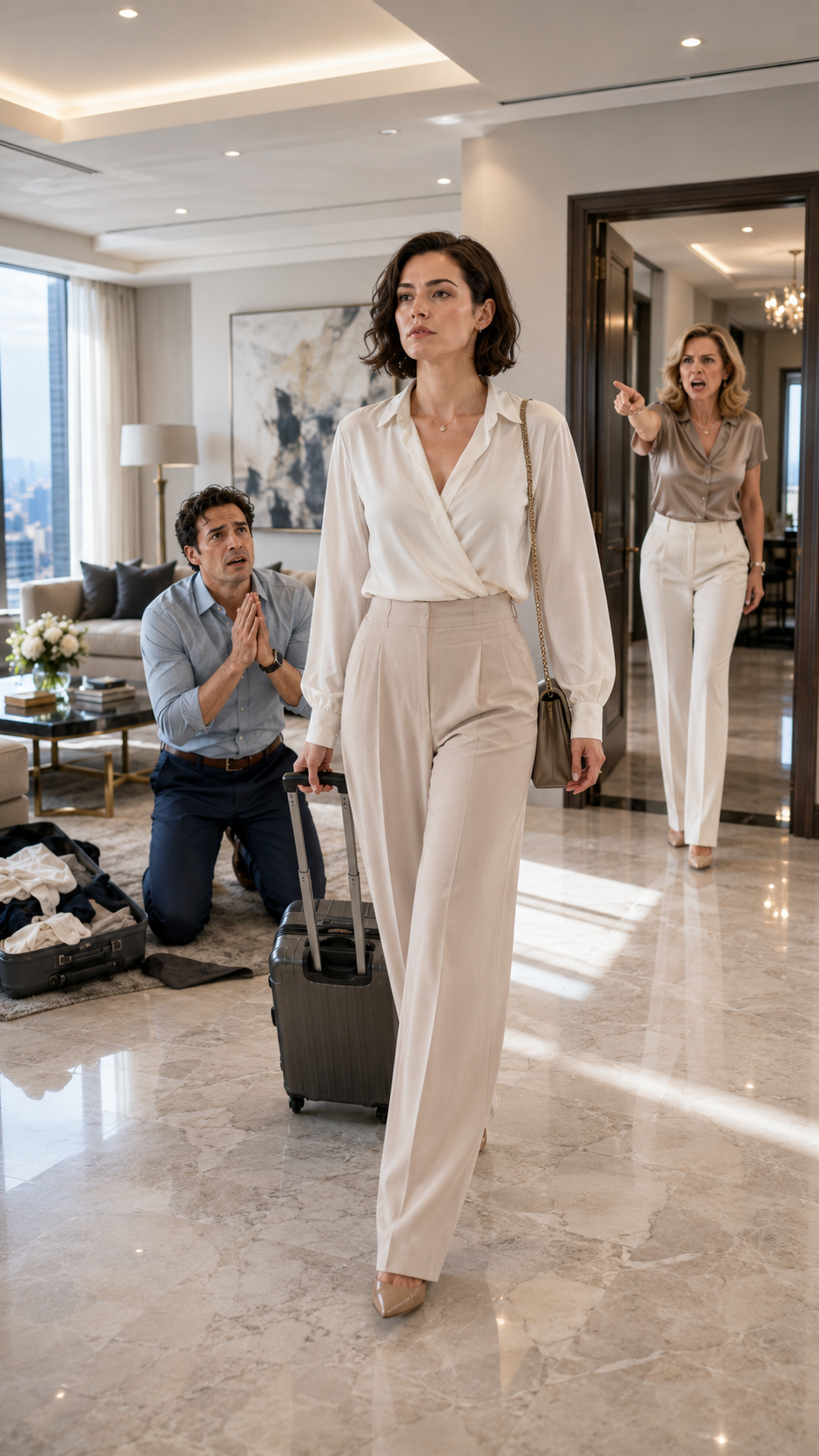
Diana went to the bedroom and started packing her things.
Her documents.
Her teaching certificate.
Her notebooks.
Her canes.
Two photos of her family.
She didn’t touch the embroidered towels, the new dishes, or the wedding gifts. She didn’t want reminders of a house built like a cage.
Bruno followed her.
—You can’t leave like this. We’re married.
Diana closed the suitcase.
—Marriage isn’t a prison with a civil registry certificate.
—We can handle this privately.
—Private was what you wanted when the evidence had no sound.
At the door, Ofelia threw out her last line:
—A woman like you ends up alone.
Diana turned around.
—Being alone in peace is better than living on my knees for people like you to call family.
She left without looking back.
The legal process wasn’t pretty.
It wasn’t like in the movies.
It was exhaustion, paperwork, appointments, statements, and nights when Diana woke up at the sound of any door click. Ximena requested a protection order, initiated the divorce, and filed complaints for attempted fraud, misuse of personal data, and economic violence.
She also sent a report to the school before Bruno could invent his version.
Two days later, the principal called Diana.
—I read what your lawyer sent. Your job is secure. Take all the time you need.
Diana cried sitting on the floor of her parents' house.
Not just out of sadness.
She cried because that phrase gave her back a piece of the world.
Karen was suspended from the financial firm while they investigated irregular accesses to Diana's information. Bruno lost his job when the compliance department received the file. Ofelia tried to present herself as a scared mother, but her own voice betrayed her in the hearing.
The judge listened to the audio:
“If we push her a little and she reacts, even better. This way the school will see what kind of woman she is.”
Ofelia looked down.
Bruno stared at the floor.
Diana didn’t feel joy.
Nothing could erase the sound of that door closing. Nothing could return her honeymoon without shadows. Nothing could turn that belt into something that never happened.
But the truth served for something.
It served so that the lie wouldn’t take her name.
Months later, Diana returned to the apartment with her father and two cousins for the last of her things. Bruno sat on the couch, thinner, unshaven, surrounded by boxes.
Without a suit, without the smile of a perfect man, without his mother whispering in his ear, he looked ordinary.
That was what hurt her most to understand: sometimes danger doesn’t come screaming. Sometimes it brings you coffee at school, greets your family, cries at the wedding, and saves the poison for when it closes the door.
—Can’t you really forgive me?—Bruno asked.
Diana looked around the room.
—Forgiveness isn’t a door to return to the cage.
—I loved that you were strong.
She shook her head.
—No, Bruno. You loved imagining you could be the man capable of controlling me.
Back in Neza, don Aurelio waited for her at the old gym. He didn’t ask if she was okay. He just handed her the canes and sat down to watch her train.
Diana started with slow movements.
Without rage.
Without the desire to prove anything.
Just breathing.
—You’re not fighting against him anymore—her grandfather said.
Diana lowered the canes.
—No. I’m returning to myself.
Time passed, and she went back to teaching. At first, her students noticed she was quieter. Then they saw she was still herself. She organized races, corrected postures, and opened a free self-defense workshop for teachers and students.
The first week, 12 showed up.
By the end of the semester, there were 46.
Diana always repeated to them:
—Defending yourself doesn’t mean living in fear. It means remembering that your body, your money, your voice, and your decisions belong to you.
A colleague confessed to her that her husband controlled every penny of her paycheck. Another shared that her mother-in-law threatened to take her children away. Diana didn’t judge. She listened. She passed on Ximena's number.
Over time, she understood that her true victory wasn’t taking the belt from Bruno.
Nor exposing Ofelia.
Nor winning papers before the law.
The true victory was not allowing them to call her crazy for defending herself.
Because sometimes a closed door doesn’t announce the end.
Sometimes it announces the first minute of freedom.
And the question lingers painfully: how many women remain trapped because people confuse "couple problems" with a perfectly planned trap?