PART 1
Captain Mateo Salazar returned to Guadalajara after six months away, a medal tucked in his backpack and a strange anxiety tightening his chest.
He had imagined a thousand times the same scene: Laura running toward him, embracing him at the door of their house in Tlaquepaque, laughing with that laughter that made him forget even the noise of helicopters.
But when he inserted the key and crossed into the living room, Laura did not run.
She stood by the kitchen, thin and pale, wearing an oversized sweater despite the heat. Her hands were hidden in the sleeves, and her eyes were fixed on the floor.
“Welcome back, Mateo,” she said.
She didn’t say “my love.”
She didn’t say “finally.”
Just Mateo.
His smile caught in his throat.
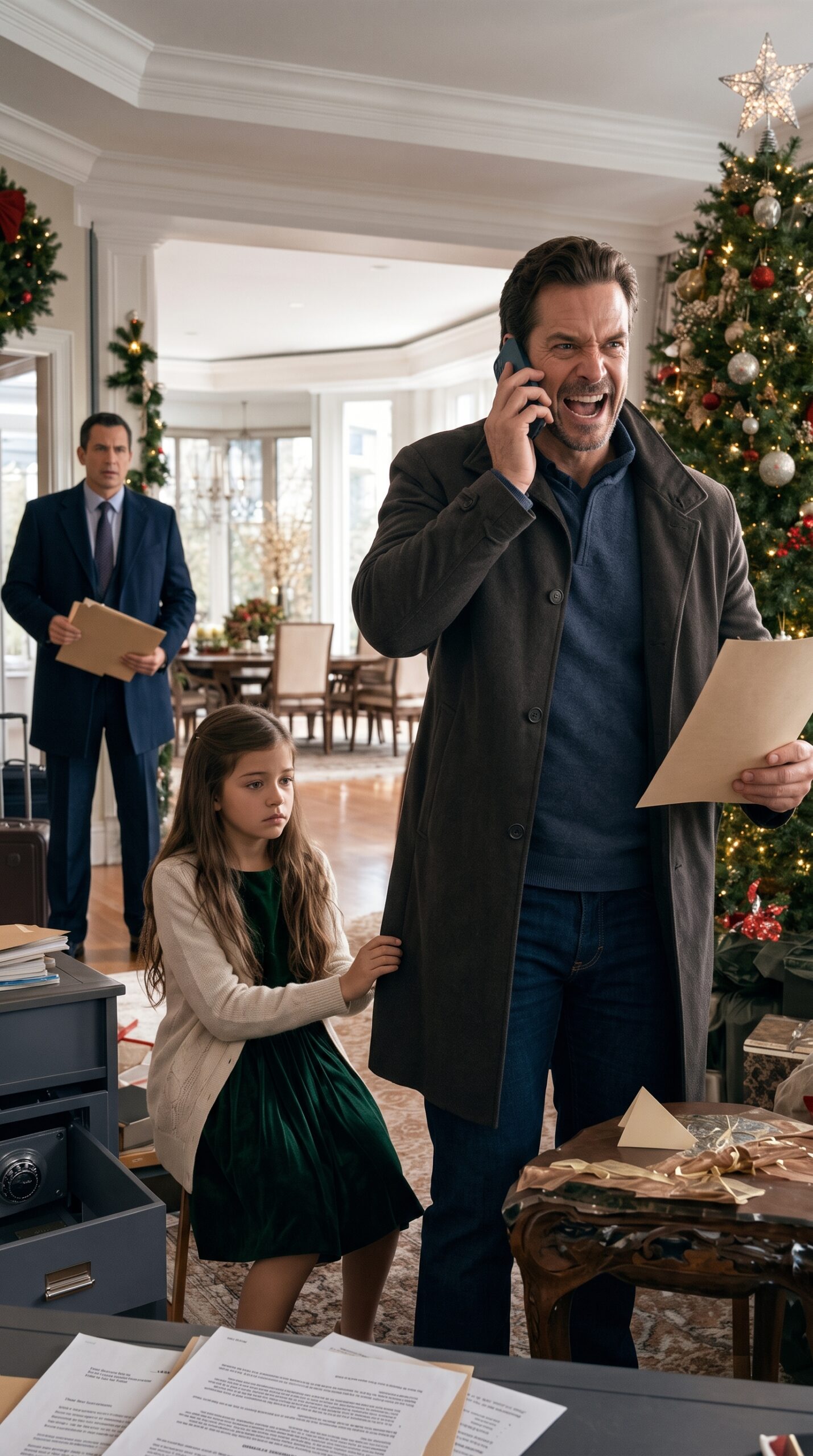
Before he could approach her, his mother, Doña Carmen, appeared, impeccable, wearing a new necklace, red nails, and expensive perfume.
“Oh, son, you’re back,” she said, embracing him tightly. “Laura’s been acting strange. You know, loneliness makes women intense.”
Behind her was Diego, his younger brother, wearing a leather jacket that Mateo recognized instantly. It was his.
He also wore Mateo’s watch.
And a cynical smile, one that demanded no permission.
“Good to see you, bro,” Diego said. “The house kept running without you, don’t worry.”
Laura pressed her lips together.
Mateo noticed something odd in the living room. There were new furniture pieces. Expensive paintings. Wine bottles on the dining table. Things he had never bought.
On the wall, where their wedding photo used to hang, now there was a family picture with Doña Carmen in the center, Diego to one side, and Laura in the back, almost erased.
That night, Mateo wanted to hold his wife.
Laura climbed into bed dressed in sweats and a sweater. She lay on the edge, facing away, wrapped in the blanket as if she were freezing.
When he touched her shoulder, she trembled so violently that Mateo withdrew his hand immediately.
“It’s me, Lau,” he whispered. “I’m your husband.”
She didn’t respond.
For six months, Mateo had survived heavy shifts, dropped calls, and horrible coffee thinking of returning to her. But now Laura looked at him as if his shadow could strike her as well.
Doubt gnawed at his pride.
“Is there someone else?” he asked, hating himself for even hearing his own voice.
Laura closed her eyes.
A tear slid down her cheek, but she said nothing.
The next day, Mateo found an old cellphone of Laura’s hidden inside a shoebox. It had deleted messages, appointments with a notary in Zapopan, bank transfers, and photos of signed documents written in shaky handwriting.
He also saw his own name.
But he hadn’t signed anything.
The house. The spare parts business that he and Laura had built from scratch. Their savings. Everything had been transferred to a company called Grupo DICAR.
DICAR.
Diego and Carmen.
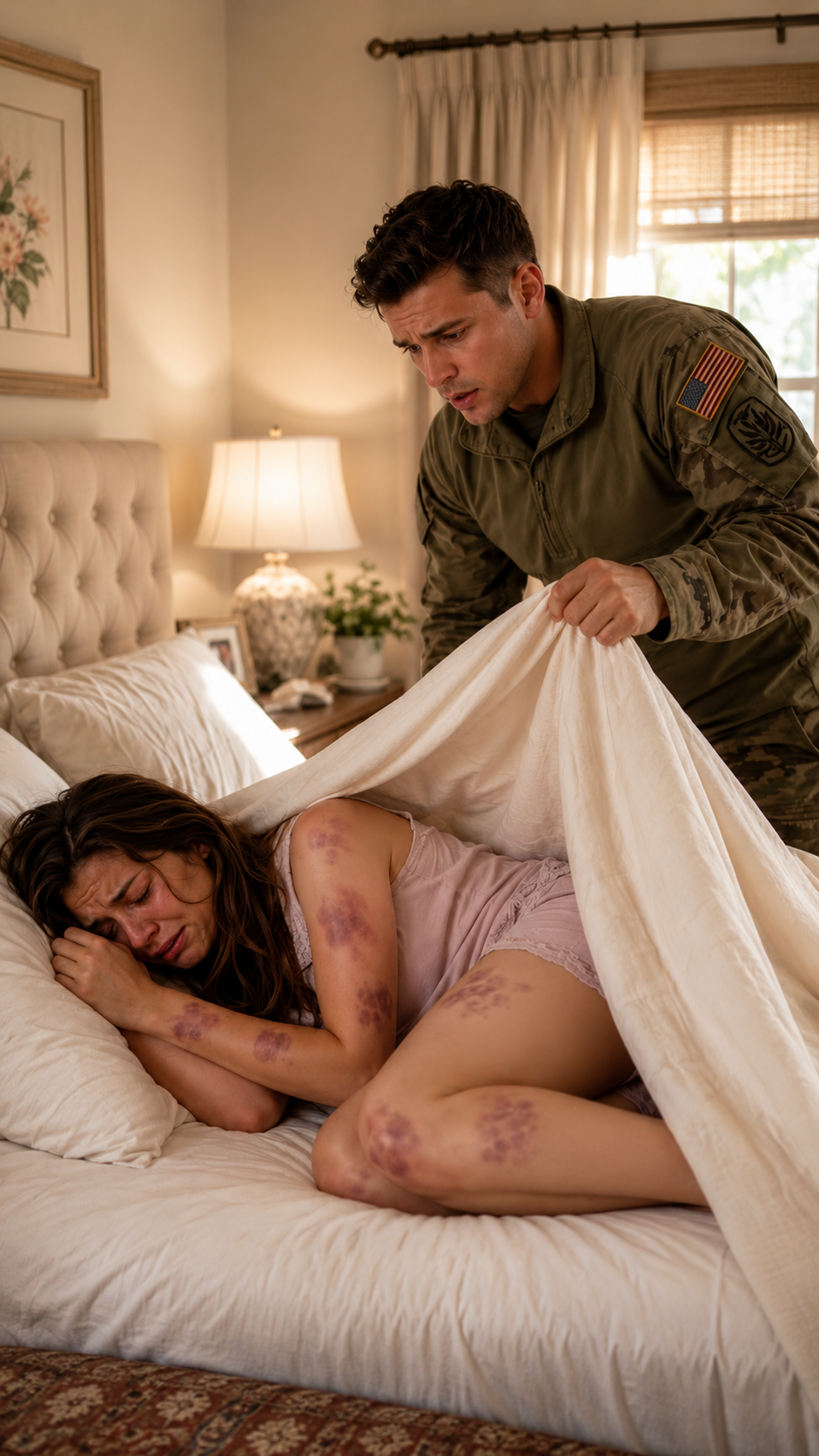
That night, with his heart turned to stone, Mateo slowly lifted the blanket, searching for a truth that would destroy him.
But what he saw took his breath away.
Purple bruises on Laura’s ribs. Finger marks on her arms. Wounds healing on her back.
Mateo felt the world tilt.
“Who did this to you?” he asked, his voice broken.
Laura cried silently.
“Your mom and your brother forced me to sign everything.”
From the garden came the sound of Doña Carmen’s laughter, toasting with Diego as if the house was already a trophy won.
Mateo carefully covered Laura, kissed her forehead, and whispered:
“Then they didn’t just steal from my wife. They declared war on the wrong man.”
PART 2
Laura trembled so much that Mateo had to sit beside her without touching her.
He didn’t want to scare her more.
Rage boiled in his blood, but he understood something in that moment: before facing the monsters in his own house, he had to return Laura’s sense of safety.
“I’m not going to shout,” he said slowly. “I’m not going to do anything without you asking me to. But I need to know the truth.”
Laura covered her face with her hands.
For several minutes, only the music from the garden and the clinking of glasses were heard. Downstairs, Doña Carmen and Diego celebrated as if Mateo were still far away, as if Laura were still alone.
“It all started two weeks after you left,” Laura finally said. “Your mom came saying you had given her permission to manage your accounts.”
Mateo gritted his teeth.
“Never.”
“I knew. But Diego had copies of your credentials, papers, power of attorney. They said if I didn’t sign, they would report you for military fraud, for abandonment of responsibilities, for anything they could invent.”
Laura lowered her gaze.
“They told me they could ruin your career.”
Mateo felt a blow to his chest.
He had been fulfilling his duty while his wife was cornered in her own home.
“And the beatings?” he asked, barely breathing.
Laura swallowed hard.
“The first time was because I refused to sign the transfer of the business. Diego grabbed my arm. Your mom closed the door. She said I was just a barrio girl who had climbed into a life that wasn’t meant for me.”
Mateo stood up, but Laura grabbed him by the wrist.
This time she didn’t pull away.
That small gesture almost broke him.
“Don’t go down yet,” she pleaded. “They have cameras. They have guards. They have lawyer Pineda involved in everything. If you do anything now, they’ll say you came in violently, that you’re unstable from the service.”
Mateo understood the play.
Not only had they robbed him.
They were waiting for him.
They wanted him to explode.
They wanted to turn his fury into evidence against him.
So he took a deep breath, sat down again, and pulled out a black notebook from his backpack. It was the same one where he kept notes on operations, names, schedules, and details others overlooked.
“Okay,” he said. “We’ll do it my way.”
Laura looked at him with fear and hope.
Mateo didn’t sleep.
At three in the morning, he quietly went down to the study. The house still smelled of expensive perfume and alcohol. On the desk, he found invoices in the name of Grupo DICAR, receipts from jewelry stores, payments to a notary, deposits to a Diego account in Puerto Vallarta.
But the most damning evidence was in a gray folder.
There were copies of documents with his forged signature.
And a contract where Laura supposedly renounced any rights to the business, the house, and even a truck she had bought with her savings.
Mateo photographed everything.
Then he checked the security camera system.
Diego had been so arrogant that he didn’t erase the internal videos. Or perhaps he thought no one would dare to watch them.
Mateo found Laura sitting at the dining table, crying, while Doña Carmen pushed a document toward her.
He found Diego pulling her by the arm.
He found his mother saying something that, although there was no audio, was clearly read on her lips:
“Sign, or Mateo sinks with you.”
His stomach dropped.
At dawn, Laura was still awake in the bedroom.
Mateo showed her the photos and videos without forcing her to watch everything.
“With this, we can go to the Prosecutor’s Office,” he said.
Laura shook her head.
“Pineda works with them. If they find out first, they’ll destroy everything.”
Mateo thought of a name.
Retired Colonel Tomás Arriaga, his former instructor, now a legal advisor for military families. A dry, serious man who never promised what he couldn’t fulfill.
Mateo called him from the backyard.
“I need help. It’s my wife.”
Tomás didn’t ask stupid questions.
“Send me your location. And don’t confront anyone until I arrive.”
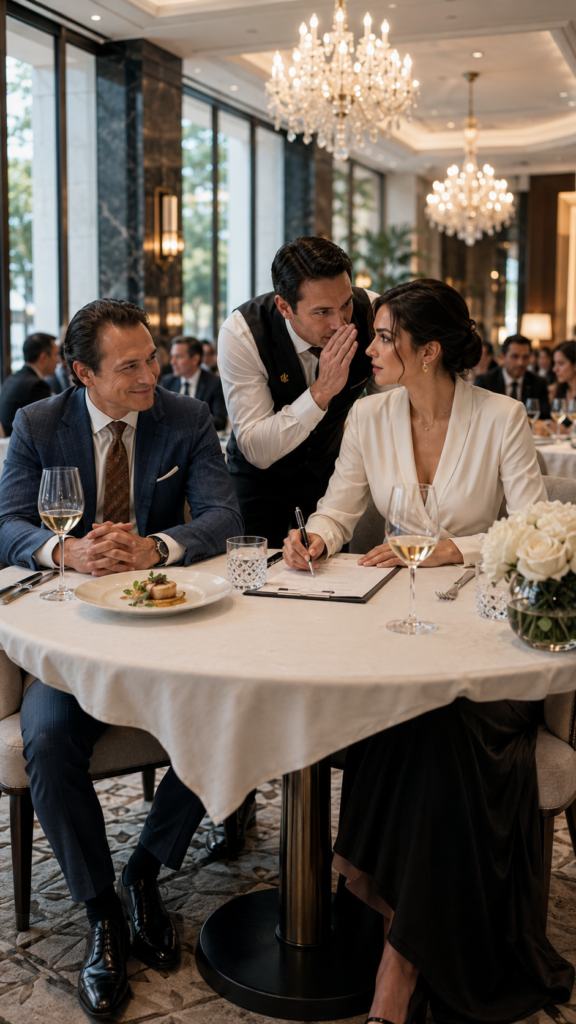
At nine, Doña Carmen organized a family breakfast as if nothing had happened. There were chilaquiles, orange juice, and a fake smile on every plate.
“Today we’re going to the notary,” she said. “We still need to sort out some details about your return, son.”
Diego poured coffee into Mateo’s favorite mug.
“Yeah, bro. To keep everything clean. You know, business is business.”
Laura sat next to Mateo, rigid, her hands in her lap.
Doña Carmen looked at her with disdain.
“And you, Laurita, don’t even think about making a scene. It cost us enough to take care of you while my son was gone.”
Mateo set his fork down on the table.
The sound was small.
But everyone fell silent.
“Take care of her?” he asked.
Diego let out a laugh.
“Oh, don’t start, dude. You’re being too sensitive.”
Mateo stared at him.
“I’m not your dude.”
Doña Carmen frowned.
“Mateo, don’t talk to your brother like that. He was the man of this house while you were off playing hero.”
That phrase ignited something inside him.
But he didn’t explode.
He simply smiled.
“Good you say that, Mom. Because today I also want to know who was the man who forged my signature.”
Diego’s face drained of color.
Laura raised her gaze.
Doña Carmen let out an exaggerated laugh.
“Don’t be ridiculous. You’re tired. You need to rest.”
“No,” Mateo said. “I need to hear my wife.”
Diego slammed the table.
“Now you believe her more than your own blood?”
Mateo leaned toward him.
“My blood doesn’t make me your doormat.”
The doorbell rang.
Doña Carmen stood up, annoyed.
“I’ll see who it is.”
But before she could reach the door, Tomás Arriaga, a lawyer named Renata Molina, and two police officers entered.
Behind them was lawyer Pineda.
But he didn’t come in calm.
He came in handcuffed.
Doña Carmen froze.
“What does this mean?”
Renata opened a folder.
“It means that lawyer Pineda was arrested this morning attempting to destroy documents related to Grupo DICAR. He also decided to testify.”
Diego stood up so quickly that he knocked over his chair.
“That’s a lie!”
Pineda didn’t look at him.
He had the face of a man who had already chosen to save himself.
“I only did what Doña Carmen asked me to,” he said. “She gave me copies of the captain’s IDs. Diego got the digital signature. I prepared the powers of attorney.”
Doña Carmen raised her hand to silence him.
“Shut up, idiot!”
Mateo felt Laura shrink beside him.
Then he placed his open hand on the table, close to her, without touching her.
Laura, after six months of fear, placed her fingers over his.
That was the moment Doña Carmen realized she had lost him.
“That woman is manipulating you,” she spat. “She always did. She arrived with nothing and took you away from us.”
Mateo looked at her as if he were seeing a stranger.
“Laura built with me what you stole.”
Diego lost control.
“If she didn’t want problems, she should have signed from the start!” he yelled. “No one told her to act dignified.”
Silence fell like a slab.
The officers looked at him.
Renata did too.
Laura let out a sob.
Diego wanted to correct himself, but it was too late.
Mateo stood up.
“Thanks for confessing, brother.”
Diego launched himself at him.
He didn’t get to touch him.
The officers pinned him against the wall. Diego screamed that everything was his, that Mateo didn’t even deserve that house because he was always leaving, that Doña Carmen had convinced him the business should stay in “real family hands.”
Doña Carmen didn’t cry.
She didn’t apologize.
She simply looked at Mateo with a coldness that hurt more than any bullet.
“I made you strong,” she said. “And you repay me by choosing some random woman.”
Mateo took a deep breath.
“No, Mom. You taught me to endure. Laura taught me not to become someone like you.”
Renata asked Laura to tell what happened.
Laura spoke slowly, her voice broken, but she spoke.
She recounted the threats, the forced signatures, the nights locked in the bathroom, the beatings in places that could be hidden by clothing. She told how Doña Carmen said no one would believe her because Mateo came back tired, changed, damaged.
And then she revealed something Mateo didn’t even know.
“They also told me that if I called Mateo, they would send an edited video to his superiors. A video where it looked like he accepted moving money from the business to personal accounts.”
Mateo felt nausea.
Tomás looked at Pineda.
The handcuffed lawyer lowered his head.
“That video exists,” he admitted. “Diego made it with old family call audios.”
It was the twist that shattered everything.
Not only had they stolen assets.
They had set a trap to destroy Mateo’s career if Laura resisted.
Doña Carmen, upon being discovered, still had the audacity to try to negotiate.
“Mateo, son, we can sort this out as a family. Your brother made a mistake, yes, but prison isn’t for us. Think of the family name.”
Mateo let out a bitter laugh.
“The name? Seriously, Mom, what a joke.”
Laura stood up with difficulty.
For the first time, she didn’t hide behind anyone.
“You told me I was worth nothing without Mateo,” she said to Doña Carmen. “But today I understand something: I was worth it. That’s why you had to beat me to make me sign.”
Doña Carmen pressed her lips together.
She didn’t answer.
Because there wasn’t an insult that could cover that truth.
In the following weeks, the story exploded in Guadalajara. The Salazar family, so respected at weddings, dinners, and business meetings, ended up making local news for fraud, domestic violence, forgery, and criminal conspiracy.
Grupo DICAR was frozen.
The house legally returned to Mateo and Laura’s name.
The business was intervened until every peso was accounted for.
Diego tried to say it was all his mother’s idea.
Doña Carmen tried to say it was all Diego’s idea.
And the two sank together, as often happens when accomplices discover that loyalty runs out at the courthouse door.
Laura took months to sleep without startling.
Mateo also had to learn not to touch a wound thinking that just because he loved her, he had the right to heal it quickly.
They went to therapy together.
Sometimes they argued.
Sometimes Laura cried because she felt guilty for having signed.
Mateo repeated the same thing every time:
“You survived. That’s not guilt. That’s strength.”
One Sunday, now without the expensive furniture or the fake photos, Laura hung the picture of their wedding back on the wall.
Not because everything was perfect.
But because that house, at last, was no longer filled with fear.
Months later, during a hearing, Doña Carmen asked to speak with Mateo.
He agreed to see her for five minutes, with Laura present.
His mother had her hair tied up and a tired expression.
“Son,” she said, “I just wanted to protect what was yours.”
Mateo looked at her without hatred but also without tenderness.
“No, Mom. You wanted to keep what was ours.”
Doña Carmen turned to Laura.
“You destroyed my family.”
Laura didn’t lower her gaze.
“No, ma’am. Your family destroyed itself the day you thought a lonely wife would be easier to break.”
Mateo took Laura’s hand.
This time she didn’t tremble.
As they left the courthouse, some reporters asked them if they would forgive Doña Carmen and Diego.
Mateo didn’t respond immediately.
He looked at Laura, and Laura looked at the street, the trees, the life she was still learning to reclaim.
“Forgiveness can’t be another way to force the victim to stay silent,” he finally said. “Sometimes justice is also love.”
The phrase went viral.
Some said Mateo had been too harsh with his own mother.
Others said Laura should have reported them sooner.
But those who truly understood knew something deeper: not always does the enemy enter through the window.
Sometimes it has the key to the house, sits at your table, and calls you family while it takes everything away.
And that’s why the question lingered in the comments:
Does blood deserve forgiveness when it was the first to raise a hand?