PART 1
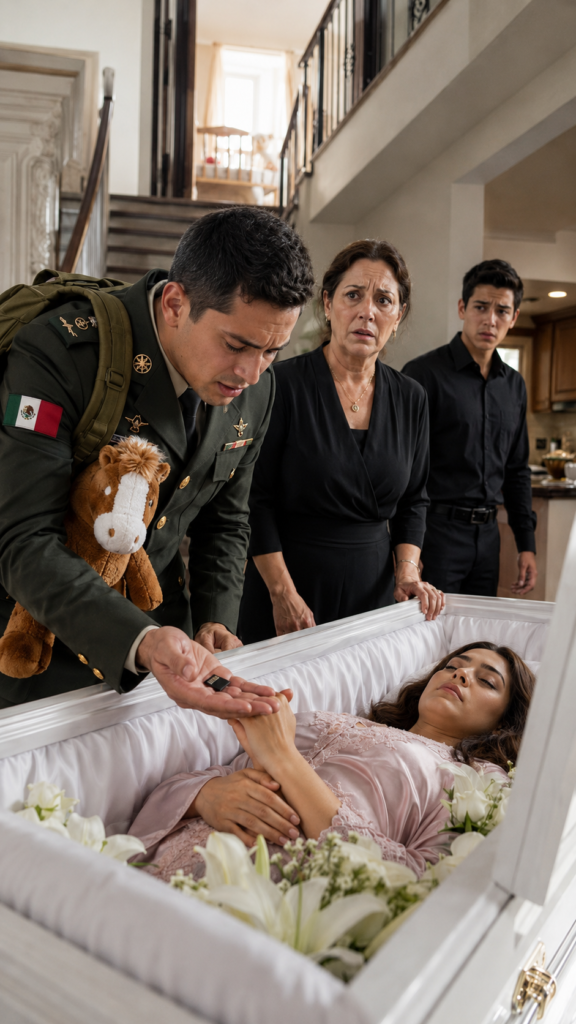
When Captain Santiago Reyes stepped out of the taxi with his military backpack slung over his shoulder, he expected to smell coffee brewing, to hear his mom calling out "my boy" from the kitchen, and to see Renata, his wife, rushing to embrace him after seven long months deployed on the border.
But the first thing he heard was Renata's sweet, false voice talking to Doña Lupita, the neighbor.
—Poor Doña Elena, she’s really not right in the head anymore. She hits herself, screams at night, and sometimes gets aggressive. We’re looking into how to place her somewhere safe.
The second thing he heard was a desperate thud from the second floor.
—Santiago! Please, son, don’t leave me locked up!
His heart tightened as if someone had reached into his chest.
Renata turned quickly. She was wearing a pristine beige dress, a pearl necklace, and a smile meant for church, not to greet a husband returning from a dangerous zone.
—Honey, you’re here —she said, hugging him tightly.
But Santiago did not respond to the embrace. He looked toward his mother’s bedroom window. The curtain barely moved.
—Why is my mom’s door locked?
Renata didn’t blink.
—For her safety. The doctor said it’s better to avoid accidents. You have no idea what I’ve been through, Santi. Your mom doesn’t recognize reality anymore.
Santiago forced a smile.
—Of course. I understand.
He had learned in the Army that losing one’s cool meant giving up the advantage. And before becoming a soldier, Santiago had worked four years as an investigator in property crimes. He knew a lie when it was dressed up and well-groomed.
He waited.
He greeted Doña Lupita. He left his backpack in the living room. He let Renata perform her act of the suffering wife, repeating that Doña Elena had episodes, that she confused people, that she had tried to escape, that she hurt herself.
When the neighbors left, Santiago climbed the stairs without haste.
He knew where the key was hidden: in Renata's mahogany jewelry box, beneath a gold bracelet she never wore. He found it there, as if the house itself were screaming the truth at him.
He opened the bedroom door.
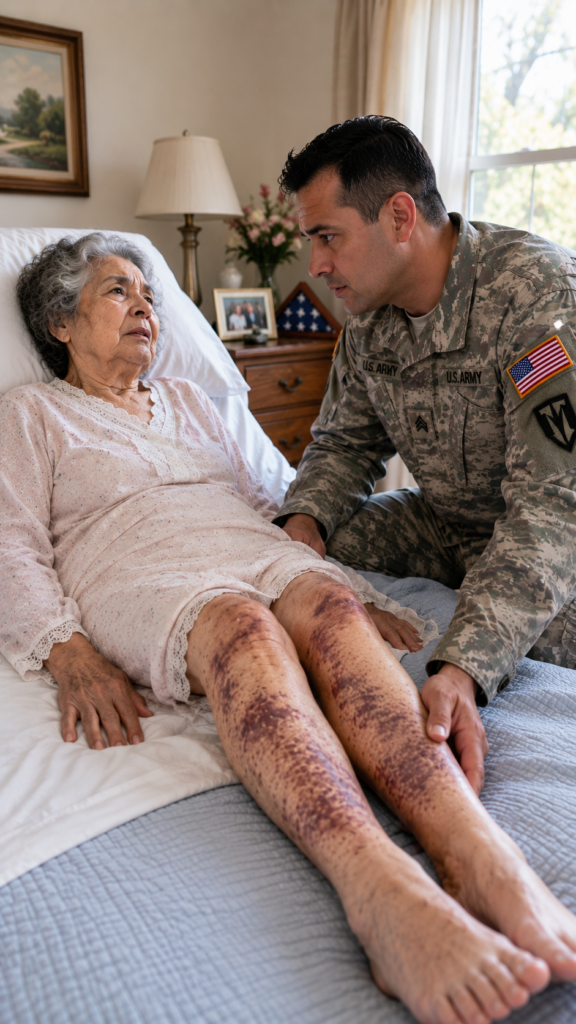
The room was dark. The curtains were drawn. The bed was bare. In one corner sat a plastic cup with lukewarm water and a plate of stale bread. Doña Elena was sitting on the floor, wearing the same blue blouse she had on during their last video call five days ago.
She didn’t have a cellphone.
Her wrists bore purple bruises, marked as if by fingers.
Santiago swallowed hard.
—Mom…
Doña Elena looked up. Her eyes were not lost. They were filled with rage, pain, and a clarity that shattered his soul.
—I want you to know something, son. I’m not crazy.
Santiago crouched down in front of her.
—I know.
She tried to speak, but footsteps echoed in the hallway.
Immediately, Doña Elena changed her expression. She stared at the wall, her mouth slightly open, as if she were absent.
—Not yet —she whispered—. She checks everything.
Santiago understood.
He closed the door again from the outside, hating himself for every second of that act. Just as he descended the stairs, Renata appeared with a smile that was too calm.
—Did you see her? Isn’t she worse?
—Yeah —he replied—. She’s delicate.
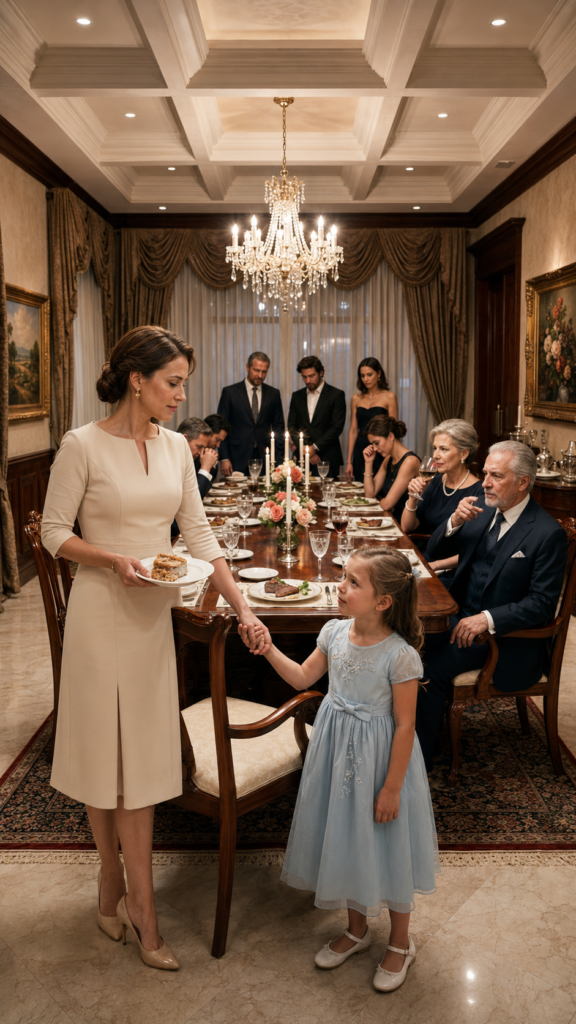
During dinner, Renata placed wine, documents, and a medical folder on the table.
She said she had already scheduled an appointment with a psychiatrist the next day at 9:00. If they declared her incompetent, Santiago just needed to sign the legal guardianship. After that, they could sell Doña Elena’s house in Coyoacán and pay for a “decent” residence.
—Your mom needs professional help —Renata said—. And we need peace.
Santiago looked at the folder.
—Sell her house?
—She’s alone, Santi. Besides, that house is already paid for. It would be the most practical thing to do.
There it was. The word that changed everything: practical.
That night, while Renata slept, Santiago reviewed the security cameras. Someone had deleted three months of recordings, but the cloud records were still alive. All deletions came from Renata’s personal laptop.
Then he found something worse.
Doña Elena’s bank statements had been redirected to Renata’s email. There was a pending request to transfer 80,000 pesos to an unknown account.
At 12:16 AM, Santiago placed a recorder under the kitchen table. He changed passwords, blocked bank access, and sent an urgent email requesting family leave.
Then he went upstairs, opened the door, and whispered to his mother:
—Tomorrow, I need you to pretend to be confused.
Doña Elena looked at her swollen wrists. Then she raised her face.
—How confused do you want me to be, son?
PART 2
The next morning, Doña Elena came down to the kitchen wearing a clean robe that Santiago had passed to her through the window before dawn. She walked slowly, hunched over, with a vacant stare.
Renata was pouring coffee when she saw her enter. Her face lit up with a horrible satisfaction.
—Good morning, Elena. Did you sleep well?
Doña Elena stared at the toaster as if it were a television.
—Does the bus stop here to go to the market?
Renata sighed loudly, ensuring Santiago heard.
—See, honey? She’s like this all day. Honestly, I can’t take it anymore.
Doña Elena took the ceramic sugar bowl and dropped it on the floor. It shattered into pieces.
Renata lost her mask for two seconds. She grabbed her by the wrist so hard that the old woman's skin turned white.
—Stop making me look bad in front of your son —she hissed in her ear.
Santiago looked down at the plate to keep himself from lunging at her.
—Renata, please, have some patience.
She released Doña Elena and let out a giggle.
—Thank God you’re finally understanding.
After breakfast, Renata opened another folder. There were studies, medical notes, neighbor testimonials, and a guardianship form ready to sign. All put together as if Doña Elena had already been condemned before stepping into the office.
—Dr. Martínez is highly respected —Renata said—. When she confirms the deterioration, we sign this. Then we talk to a buyer.
—Is there already a buyer? —Santiago asked.
Renata froze.
—A friend. A developer. He can pay quickly.
—What’s his name?
—Mauricio Cárdenas. But don’t worry about that, love. You just sign.
Santiago didn’t argue. That was his best move.
Over the next few hours, he gathered evidence as if he were closing a military operation.
He called a certified locksmith, who documented that the bedroom lock had been modified to only open from the outside. He contacted a trusted military doctor who examined Doña Elena and photographed the bruises, making it clear they didn’t look like falls, but rather strong restraint.
Then he sought help from an old colleague from the prosecutor’s office. They discovered that the transfer of 80,000 pesos bore a scanned signature from Doña Elena, but compared to real documents, it was fake.
They also found a red flag in the Public Registry: someone had attempted to start a process to sell the house in Coyoacán to a shell company linked to Mauricio Cárdenas.
But the missing twist came from Doña Elena.
While Santiago was storing the files, she touched his arm.
—Check your dad’s old desk. The bottom drawer.
Santiago went down to the study that no one had used since his father died. At the back of the drawer, he found a memory stick and a tiny camera hidden inside an old smoke detector.
His father had installed it years ago due to a wave of robberies in the neighborhood. Renata had deleted the modern cameras, but never imagined that this little device was still recording directly to a card.
When Santiago saw the content, his blood froze.
There was Renata pulling Doña Elena by the arms.
There she was taking away her cellphone.
There she was locking the door while Doña Elena cried.
There she was rehearsing in front of the mirror:
—My mother-in-law has dementia. She hits herself. Poor thing, she doesn’t even know what she’s saying.
And three nights before, the camera showed Renata sitting in the living room with Mauricio Cárdenas, the developer.
—Once she’s declared incompetent, the house sells below value, and no one can claim it —he said.
Renata smiled.
—My husband is a soldier. He comes home tired. He’ll sign whatever I put in front of him.
Then Mauricio took her hand. Renata didn’t pull it away. On the contrary, she leaned in and kissed him.
Santiago closed his eyes.
The betrayal was no longer just against his mother. It was against everything he had believed his home was.
That night, Santiago duplicated everything into three files. One was sent to Dr. Martínez. Another to the elder abuse unit. The third was programmed to be sent to Renata’s attorney as soon as the evaluation began.
At dinner, Renata drank more wine than usual. She was confident, almost happy.
—Your mom has always hated me —she said—. But now she’s pitiful. No one will believe an old woman who screams, falls, and forgets everything.
Santiago looked at her calmly.
—Maybe she’ll recover.
Renata burst into laughter.
—From dementia? Oh, Santi, don’t be naïve.
—I was talking about her wrists.
Silence fell like a rock.
Renata stared at him, measuring whether he knew something.
—Listen to me carefully —she said in a low voice—. Tomorrow a doctor will write that your mother isn’t fit to make decisions. And when that happens, no one, absolutely no one, will trust that old woman over me.
The recorder beneath the table captured every word.
Santiago raised his glass.
—Then let’s toast to tomorrow.
Renata smiled, unaware she was toasting to her own downfall.
The next day, she dressed as if she were going to a fancy wedding: white pants, a silk blouse, and pearls. Doña Elena sat in the backseat, silent, wearing a navy blue dress and holding a photo of her husband in her bag.
During the drive, Renata instructed her as if she were talking to a child.
—Don’t contradict the doctor. Don’t get aggressive. If she asks you the date, don’t invent. Just say you don’t know.
Doña Elena looked out the window.
—I’ll do my best to remember that I shouldn’t remember.
Renata frowned, but said nothing.
In the office, Renata submitted her folder first. She spoke in a sad tone, positioning herself as the victim.
—Doctor, I just want my mother-in-law to be safe.
Then Santiago stood up and placed another folder on the desk.
—Dr. Martínez, before evaluating my mother, you need to see this.
Renata turned pale.
—What is that?
The doctor opened the folder. She saw the photos of the bruises, the report on the lock, the deleted access, the false transfer, the bank records, and video captures.
Her expression changed.
—Mrs. Renata, please remain seated.
—No, no, this is disrespectful —Renata said, rising.
At that moment, a nurse closed the office door from inside.
The evaluation lasted 42 minutes.
Doña Elena stated the exact date. She named the president. She recalled her address, her CURP, her medications, Santiago’s birthday, the date of her husband’s death, and even the account number where she received her pension.
Then she solved memory tests without failing.
When the doctor asked her to explain what had happened, Doña Elena spoke without trembling.
She recounted how Renata started by hiding her cellphone. Then she changed her medications. After that, she began telling neighbors that she was confused. When Doña Elena threatened to report her, Renata locked her up.
—She told me that no one would believe me because I was an old woman all alone —she said.
Renata slammed the table.
—She’s lying! She was coached!
Santiago placed his cellphone on the desk and pressed play.
Renata’s voice filled the room:
—No one, absolutely no one, will trust that old woman over me.
Renata recoiled as if she had been pushed.
Then the video began.
They saw Renata dragging Doña Elena down the hallway. They heard the old woman’s choked cries. They saw the door closing. They saw Mauricio speaking about the house. They saw the kiss.
—Santiago… —Renata whispered—. Love, I can explain.
The side door opened.
Two investigative agents entered.
—Renata Salcedo, you are under arrest for elder abuse, illegal confinement, forgery, and attempted property dispossession.
Renata started screaming.
—It was Mauricio! He put ideas in my head! Your mother provoked me! I was alone while you played hero!
Doña Elena stood up. She didn’t look fragile. She looked like a woman who had survived to look her aggressor in the eyes.
—No, sweetie. You closed the door.
Renata glared at Santiago with hatred.
—I’m your wife!
He replied without raising his voice:
—And she’s my mother.
At the same time, Mauricio Cárdenas was arrested at a notary in Polanco while attempting to move papers for the house. Authorities discovered files for two other elderly individuals from whom he had sought to take properties using dubious diagnoses.
Dr. Martínez’s final report declared Doña Elena fully competent. The prosecutor’s office froze Renata’s accounts, canceled the transfer of 80,000 pesos, and annulled any document she had touched.
Renata ended up accepting charges when her own attorney saw the videos. No pretty speech could save her. The neighbors, the same ones who had believed her act, attended the hearing only to apologize to Doña Elena.
Santiago’s divorce went through swiftly. Renata left with debts, a sentence, and a tarnished name. Mauricio received a longer sentence because his business wasn’t about building buildings, but destroying families.
Eight months later, the afternoon light poured into the room where Doña Elena had been locked up. She had the lock removed, painted the walls light blue, and placed a chair by the window.
On a small table, she left a new phone and a picture of her husband.
Santiago returned to service only when she asked him to. Before heading to the airport, he found her in the kitchen preparing lemon pie.
—Are you still confused, Mom? —he asked, smiling.
Doña Elena let out a soft laugh.
—Very much so, son. I still don’t understand how someone can call family a cage.
And that phrase lingered in the house like an uncomfortable truth: sometimes the worst enemy doesn’t come through the door; they’re already sitting at the table.