PART 1
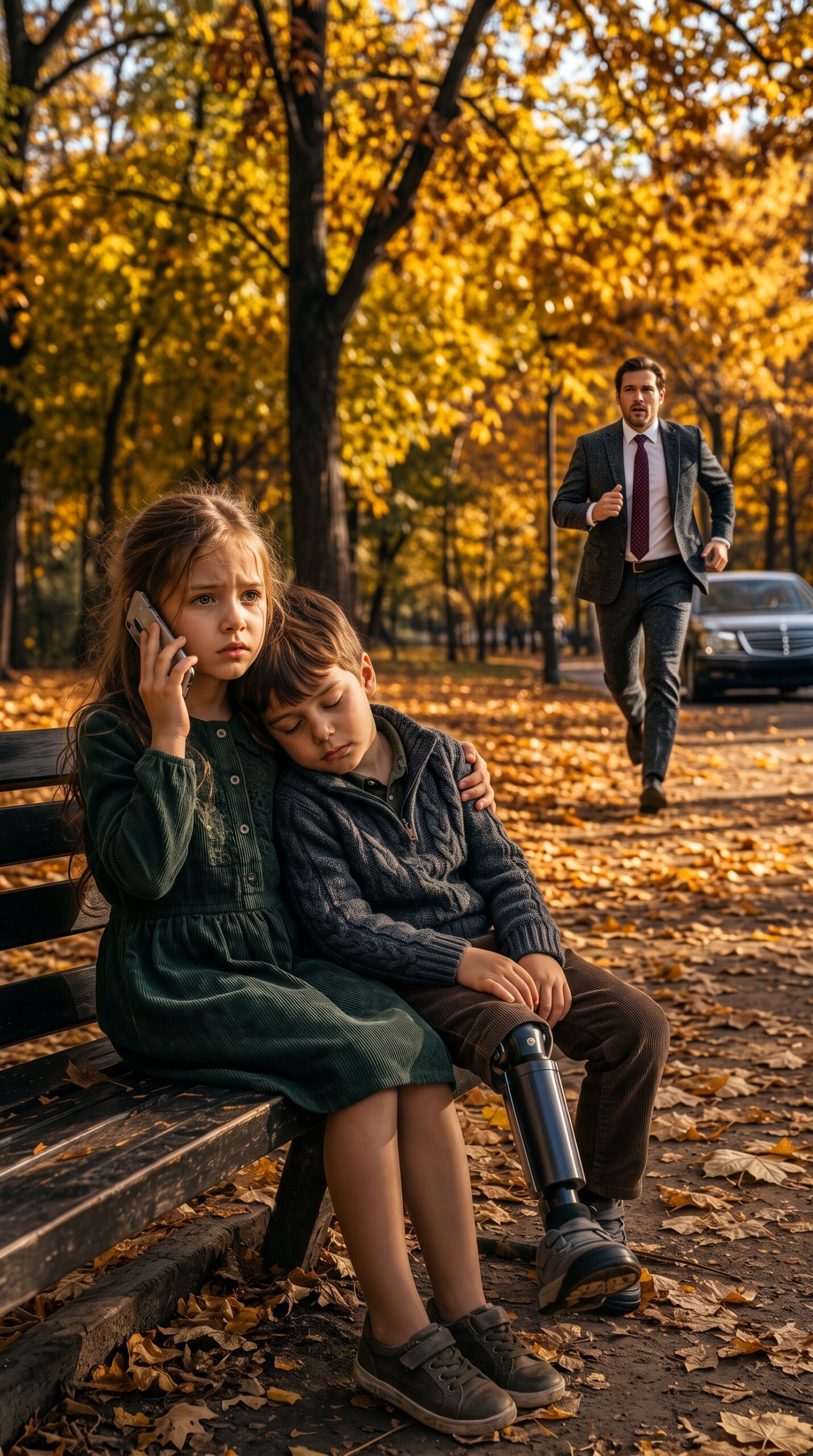
The afternoon Sofía found Mateo Salvatierra lying behind some ahuehuete trees in Chapultepec, she wasn’t looking for heroes or trouble.
She just wanted to catch the tamale man before he packed up his steamer.
She was 8 years old, wearing a torn jacket, her hair tangled, and her sneakers so worn that the cold seeped in between her toes.
For the past 21 days, she had been sleeping wherever she could.
Sometimes on a bench near the Chapultepec Metro.
Sometimes at the entrance of a closed stationery store.
And when it rained, she would hide under the awning of an Oxxo, holding onto an old backpack where she kept a singed photo of her grandmother.
Her life had shattered in a fire in a rundown tenement in the Guerrero neighborhood.
Then the ladies from the DIF came.
Then a home where they smiled during visits but yanked her by the arm when no one was watching.
Sofía escaped one early morning.
Yes, she was afraid of the streets, but at least the streets didn’t pretend to care for her.
That afternoon, the park was almost empty.
Families were leaving with balloons, esquites, and thick jackets. The sky turned gray, and the air began to sting her face.
Sofía walked quickly, her hands tucked into her sleeves.
Then she heard a whimper.
—“Hello...? Anyone?”
She froze.
She had learned that not every weak voice meant help.
Sometimes it was a trap.
Sometimes it was an adult waiting for a girl to come closer.
But the whimper returned, quieter, as if it were fading away.
Sofía swallowed hard and moved between the trees.
There he was.
A boy lying on the damp grass, wearing an expensive jacket, dress pants, and white sneakers caked in mud.
A few feet away lay his two crutches.
The boy was shaking so much that his teeth chattered.
—I can’t get up —he whispered.
Sofía looked around.
There were no parents.
No nanny.
No one.
—What’s your name?
—Mateo.
—And your crutches?
He pointed with his chin.
—I fell. My leg is stiff.
Sofía noticed one of his legs wasn’t responding well. The boy tried to move, but his body wouldn’t cooperate.
—How long have you been here?
Mateo looked down.
—Since before lunch.
Sofía felt a blow to her chest.
It was getting dark.
—Who left you here?
The boy pressed his lips together.
—My dad’s girlfriend. She said she was going for coffee. Told me not to make a scene because people would laugh.
Sofía didn’t know about millionaires, but she did know when an adult abandoned a child.
—Do you have a cell phone?
—In my pocket. I can’t feel my hands.
Sofía hesitated.
A cell phone meant adults.
Adults meant questions.
Questions meant going back to the place she had escaped from.
But Mateo’s lips were purple.
She pulled out the phone.
The screen showed many missed calls.
Dad.
Dad.
Emergency Dad.
Sofía dialed.
A man answered, almost screaming.
—Mateo! Where are you, son? Answer me!
Sofía took a deep breath.
—Sir, I found your son in Chapultepec. He’s lying down, he’s very cold, and no one is with him.
On the other side, there was a dreadful silence.
Then the man’s voice broke.
—Tell me exactly where you are.
Sofía explained as best she could.
While they waited, she took off her old jacket and put it over Mateo.
—You’re cold too —he said.
—I’m used to it —she lied.
Minutes later, a black truck screeched to a halt near the walkway.
A man in a suit jumped out, pale, without bodyguards, without the pose of a rich man, just terror.
—Mateo!
He fell to his knees and hugged the boy as if his world had collapsed.
Sofía took a step back, ready to disappear.
But Mateo grabbed her sleeve with his frozen fingers and said:
—Dad… if you let her go, she’ll be alone until she dies too.
PART 2
Rodrigo Salvatierra gasped for air.
He owned construction companies, hotels, and shopping malls in Mexico City, Querétaro, and Monterrey.
His surname appeared in business magazines.
His face showed up at charity events.
But in front of that skinny girl, with her torn jacket over his son’s shoulders, he didn’t seem powerful.
He seemed ashamed.
—What’s your name? —he asked slowly.
Sofía didn’t answer.
She already knew that look from adults when they discovered a girl had no one.
First pity.
Then questions.
Then the patrol.
—She helped me —Mateo said, shivering—. If it wasn’t for her, no one would find me.
Rodrigo took off his blazer and draped it over Sofía.
She recoiled as if the fabric burned.
—I don’t want trouble.
—You’re not in trouble —he said—. I promise.
Sofía let out a dry laugh.
Too bitter for an 8-year-old girl.
—Adults always promise that.
Rodrigo looked down.
That phrase hurt more than any insult.
He carefully picked up Mateo and asked his driver for a thermal blanket. Then he called his doctor but also requested an ambulance.
He didn’t want to hide anything.
He wanted it documented that his son had been abandoned for hours.
When the paramedics arrived, Sofía hid behind a tree.
Then an elegant woman sprinted down the walkway.
High heels, beige coat, perfect hair, and flawless makeup.
—Oh, my child! —she shouted—. You scared us!
It was Camila Rivas, Rodrigo’s fiancée.
She tried to hug Mateo, but the boy turned his face away.
—You left me here.
People around stared.
Camila paled for just a second.
Then she put on an offended expression.
—That’s not true, my love. I went for help. You know I would never do something like that.
—You said I walked like an old man —Mateo murmured—. That Dad couldn’t make it to his business meal with me embarrassing him.
Rodrigo lifted his gaze.
His face changed.
It was no longer fear.
It was ice.
—Camila, tell me my son is confused.
She clutched her purse against her chest.
—Rodrigo, please. Mateo is very sensitive. Besides, who knows what that girl told him. Just look at her. Where did she come from?
Sofía looked down.
She recognized that tone.
The one from people who didn’t need to hit to make you feel like garbage.
Mateo tried to sit up.
—Don’t talk to her like that.
Camila let out a nervous giggle.
—Sweetheart, you’re upset.
—I’m not your sweetheart.
The ambulance took Mateo to a private hospital in Lomas de Chapultepec.
Rodrigo asked for Sofía to go with them.
She shook her head.
—I’m not getting in.
—you can sit by the door —he said—. No one will touch you. No one will force you.
Sofía looked at Mateo.
The boy, wrapped in blankets, raised a hand.
—Please.
And for the first time in three weeks, Sofía decided to follow someone.
At the hospital, they confirmed mild hypothermia, dehydration, and a severe bruise on his hip.
The doctor explained that if Mateo had spent one more hour in the woods, the cold could have complicated his neuromuscular condition.
Rodrigo listened without blinking.
Camila kept repeating it was all a misunderstanding.
That she had gone for help.
That Mateo exaggerated when he got scared.
Then a nurse walked in with a transparent bag.
—Mr. Salvatierra, here are your son’s belongings.
Inside were the crutches, the cell phone, and a smart watch.
Rodrigo took the watch.
Mateo tensed.
Camila did too.
—That watch activates audio when it detects a hard fall, right? —the doctor asked.
Rodrigo nodded slowly.
He had bought it due to Mateo’s motor disability. It recorded location, heart rate, and fall alerts.
Camila stepped back.
—Rodrigo, don’t make a scene here.
He opened the app.
On the screen appeared a log at 12:24.
Fall detected.
Audio available.
The room fell silent.
Rodrigo pressed play.
First, there was the impact.
Then Mateo’s voice crying.
—Camila, help me. I can’t get up.
Then came her voice, clear and cold.
—You always ruin everything. Your dad was going to close a $50 million deal and you had to fall like always.
Mateo sobbed.
—I’m in pain.
—Just stay still. I’m going for coffee. And don’t scream, okay? It’s hard enough to convince your dad that he can still have a normal family.
Rodrigo turned off the audio.
No one said anything.
Camila brought a hand to her mouth.
—I… was stressed.
—you left my son lying there for hours —Rodrigo said.
—I didn’t think it would get dark so quickly.
—you took away his crutches.
Camila’s face crumpled.
Mateo spoke softly.
—She threw them. She said it was how I would learn not to throw tantrums.
Rodrigo closed his eyes.
When he opened them, he called his lawyer.
—I want to file a complaint today. Cancel the wedding. Cancel the venue, the church, everything.
Camila screamed.
—you can’t do this to me! My family already invited half the world!
—Tell them there won’t be a wedding.
—For a street girl and your son’s tantrum?
Rodrigo stepped closer without raising his voice.
—for my son. And for a girl who had more mothering than all of us combined.
Camila left escorted by security, crying more over the scandal than for Mateo.
Sofía watched it all from a corner, clinging to Rodrigo’s blazer.
She thought the worst was yet to come.
The patrol.
The DIF.
The interrogation.
And yes, a social worker arrived. Her name was Mariana, she had tired eyes and a gentle voice.
—Sofía, we need to know where you live.
The girl tightened her backpack.
—I don’t live anywhere.
—Do you have family?
—My grandmother died.
—What was her name?
Sofía took time to answer.
—Elena Morales.
Rodrigo, sitting next to Mateo’s bed, lifted his gaze.
—Elena Morales… from Guerrero?
Sofía looked at him with suspicion.
—What do you know about my grandmother?
Rodrigo went pale.
—She worked at my father’s house for 19 years. She took care of me when I was a child.
Sofía didn’t understand why this man’s voice was breaking.
—My grandmother never talked about the rich.
—Because my family failed her —he said.
A heavy silence fell.
Rodrigo asked to make a call. In less than 30 minutes, his assistant arrived with an old folder from the family archive.
There were letters, receipts, and a yellowed photo.
In the picture, Elena Morales was holding a small child.
That child was Rodrigo.
On the back of the photo was a phrase written by his father:
“Elena is not service. Elena is family.”
Sofía touched the photo with trembling fingers.
—My grandmother had one like this, but it burned.
Rodrigo opened a letter.
Elena had written it years before, after leaving the house. She asked for help for her sick daughter, Sofía’s mother.
The letter was never answered.
Not because Rodrigo’s father didn’t want to.
But because Rodrigo’s mother had received it and hidden it.
A woman obsessed with the Salvatierra name had decided that helping an employee was “opening the door to abuse.”
Elena sold what little she had.
Sofía’s mother died.
And years later, Elena perished in the tenement fire, unaware that she had left a granddaughter alone.
Sofía listened without crying.
Children who have cried too much sometimes run out of tears when they need them most.
Rodrigo cried.
Not theatrically.
Not to look good.
He cried with the shame of a man who understood too late that his fortune also carried ghosts.
That night, Mateo asked for a foldable bed to be placed next to his.
Mariana explained that she couldn’t stay without a legal process.
Rodrigo didn’t try to buy the law.
He didn’t offer favors.
He asked to do it right.
In the following weeks, the story exploded on social media.
“Homeless girl saves millionaire’s son in Chapultepec.”
“Fiancée abandons disabled boy because he embarrassed her.”
“Businessman cancels luxury wedding after brutal audio.”
Mexico reacted as Mexico always reacts: with rage, tears, theories, and people fighting in the comments.
Some said Sofía was interested.
Others said Rodrigo just wanted to clean up his image.
But those who saw her in the hospital knew the truth.
Sofía asked for nothing.
Every time someone gave her food, she asked if she had to return it.
Mateo slowly improved.
He had a condition that made it hard for him to walk, but he was smart, stubborn, and braver than many adults could bear.
His mom had died four years earlier.
Since then, Rodrigo had tried to fill the gap with work, gifts, and a perfect relationship for magazines.
But Camila never loved Mateo.
She tolerated him.
And for a child, feeling tolerated can hurt more than an insult.
When the case reached a family judge, Camila appeared with expensive lawyers and a victim’s face.
She said Rodrigo was destroying her due to media pressure.
She said Mateo was exaggerating.
She said Sofía had manipulated everything to enter a rich family.
Then Rodrigo’s lawyer presented the complete audio from the watch.
Then they showed park cameras.
One showed Camila walking away calmly at 12:36.
In another, at 14:10, she was seen eating in Polanco with two friends.
Then they presented recovered messages.
A friend texted her:
“And the boy?”
Camila replied:
“Let him learn. Rodrigo has to understand this problem doesn’t fit in our life.”
The courtroom fell silent.
But the final blow didn’t come from Rodrigo.
It came from Mateo.
The boy asked to speak.
With his crutches beside the chair, he looked at Camila and said:
—I’m not a problem. I’m a person. And Sofía, who had no home or food, treated me better than you, who were going to be my family.
Camila broke into tears.
But it was too late.
The wedding was canceled.
The complaint continued its course.
And Camila lost contracts, friendships, and that image of the perfect woman she cared for so much.
However, the most impactful event occurred four months later.
Mariana called Rodrigo to inform him that they had found documents about the fire where Elena Morales had died.
It hadn’t been just any accident.
The tenement had ignored reports of electrical failures. The owner had collected insurance and disappeared.
That owner was tied to a real estate firm owned by the Rivas family.
Camila’s family.
Rodrigo hired investigators.
The truth emerged as dampness seeps from an old wall: slowly, but impossible to conceal.
The building had been purchased to erect luxury apartments.
The neighbors refused to leave.
The administration stopped repairing wires, pipes, and stairs, hoping they would tire out.
The fire wasn’t planned as murder, but it was a consequence of ambition.
And Camila knew it.
Her family had profited from the tragedy that left Sofía on the street.
When Rodrigo discovered this, he didn’t scream.
He didn’t threaten.
He did something worse for the guilty.
He handed everything to the Prosecutor’s Office and the press.
The scandal was brutal.
The Rivas family, who called Sofía “street trash,” ended up linked to real estate corruption, negligence, and dispossession.
Sofía watched the news from the transitional house where she was living temporarily.
She didn’t smile.
She only asked:
—So my grandmother didn’t die for nothing?
Rodrigo knelt in front of her.
—No, Sofi. And I swear I won’t let it be erased.
She looked at him for a long while.
—My grandmother used to say that rich people always arrive late.
Rodrigo hung his head.
—This time I did arrive late.
Sofía tightened her backpack.
—But you came for Mateo.
That phrase changed everything.
With legal authorization, evaluations, supervised visits, and months of process, Rodrigo requested to become Sofía’s guardian.
It wasn’t quick.
It wasn’t like a movie.
There were interviews, psychologists, doubts, difficult nights, and days when Sofía hid bread under her pillow because she still didn’t believe there would be breakfast the next day.
Mateo was patient.
He showed her his room, his video games, and his fears.
She taught him to recognize when an adult lied with a pretty smile.
They became siblings before a piece of paper said so.
The day the judge authorized the provisional guardianship, Sofía didn’t run to hug Rodrigo.
She stood still, as if happiness could also be a trap.
Then Mateo extended his hand.
—You don’t have to sleep with one eye open anymore.
Sofía looked at him.
And for the first time, she cried like a girl.
Not as a survivor.
Not as a street girl.
As a girl.
Rodrigo fulfilled another promise.
He bought the burned tenement in Guerrero, not to build luxury apartments, but to create a children’s shelter with a dining room, school, psychological support, and legal advice.
He called it Casa Elena.
At the entrance, he placed a simple plaque:
“For the children who no one listened to in time.”
On the inauguration day, a reporter asked Sofía if she felt lucky to have met a millionaire.
She looked at Mateo, then at Rodrigo, and answered:
—He was the lucky one. Because if his son hadn’t looked at me like he was asking for help, maybe the adults would have never learned to see.
The phrase went viral.
Some applauded.
Others said it was too harsh.
But no one could deny the truth.
Sometimes a homeless girl can have more home in her heart than a mansion full of cold people.
And sometimes, the boy everyone calls a "problem" ends up saving an entire family from living without a mother.





