PART 1
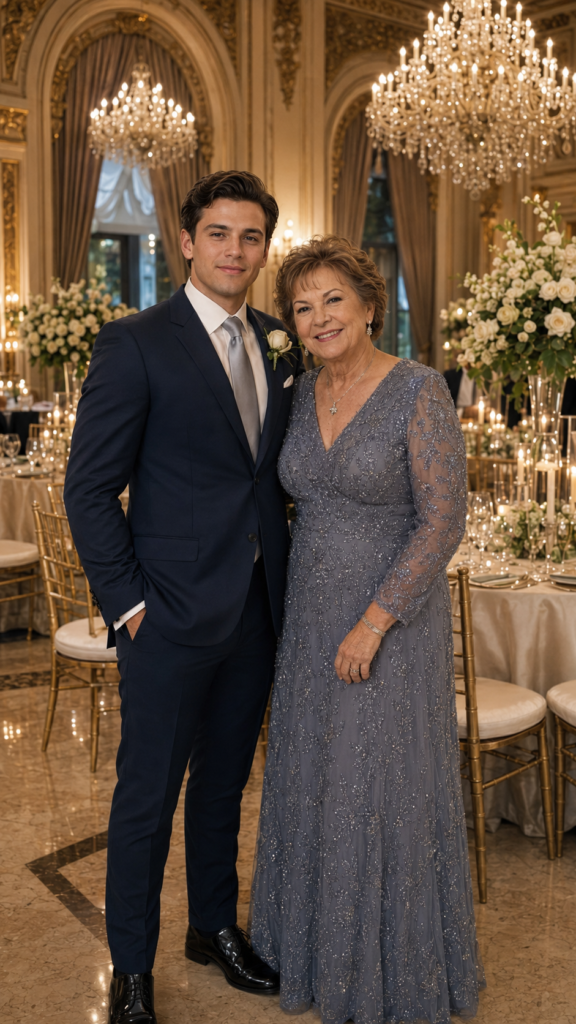
When Diego married Doña Elvira, the entire neighborhood of Narvarte began to whisper.
He was 25.
She was 71.
He arrived with a torn backpack, three wrinkled shirts, and a debt that breathed down his neck. She was a widow, living alone in an old blue house, with bougainvilleas at the entrance and a Virgin of Guadalupe by the door.
People said it was a strange kind of love.
The truth was uglier.
Diego didn’t love her.
He had met her in a bank line, when she didn’t understand how to withdraw money from the ATM, and he helped her. Then he accompanied her to buy bread, then coffee, then started visiting her “so she wouldn’t be alone.”
But in his mind, it was all calculation.
Doña Elvira owned her home.
She had a good pension.
She had no living children.
And Diego was sleeping in his old truck, parked behind an Oxxo in Portales, covering himself with a blanket that smelled of dampness.
He told himself it was just survival.
That life had treated him so poorly that he had the right to cling to an opportunity.
“A few years of putting up with it, I’ll behave, keep her company, and when she’s gone… I’m set,” he thought more than once.
On the day of the civil wedding, Doña Elvira wore a beige dress and an embroidered shawl. She smiled as if God had returned a piece of youth to her.
Diego, on the other hand, mentally counted the years.
Her nephews didn’t come. Just a neighbor, the judge, and a friend of Diego’s who later whispered to him:
“You hit the jackpot, dude. That house is worth a fortune.”
Diego smiled without answering.
During the first months, Doña Elvira treated him like a miracle.
She made him green chilaquiles on Sundays.
She washed his shirts even if he left them lying around.
She bought him new boots when she saw his had a split sole.
She even left a black coat by the door one cold morning.
“You’re going to get sick with that thin jacket, son… sorry, Diego,” she said, correcting herself shyly.
That word annoyed him.
Son.
As if it were a taunt.
Because Diego had grown up without a mother, without a father, and without anyone. He had passed through temporary homes, worn-out guardians, and promises that always broke.
That’s why he swore he would never need affection.
Only money.
Only a roof.
Only papers in his name.
Doña Elvira, however, seemed to see it all.
When he came home late smelling of beer, she didn’t yell at him.
When he answered curtly, she poured him coffee.
When he pretended to sleep to avoid hearing her talk about her late husband, she turned off the light without complaint.
That patience drove him mad.
Because it was easier to take advantage of someone cruel.
But taking advantage of someone good felt like swallowing glass, even if one pretended it didn’t.
Every medical appointment of Doña Elvira awakened in Diego a dirty attention.
If she coughed, he turned.
If she got tired climbing the stairs, he stared.
If he saw medicine bottles on the table, a part of him thought of deeds, notaries, and inheritances.
Until one Tuesday morning, while she was heating up atole in the kitchen, the glass slipped from her hand.
Diego heard the thud.
When he entered, Doña Elvira was on the floor, eyes open, one hand clutching her chest.
The ambulance took its time.
He went with her to the hospital, not because he wanted to, but because all the neighbors were watching.
Three days later, Doña Elvira died.
At the wake, her nephews arrived like vultures in expensive perfume.
A woman named Patricia pointed at him in front of the coffin.
“Are you happy now? Old interest. Seriously, you have no mother.”
Diego didn’t respond.
Because it hurt more than he expected.
Not from the insult.
But because it might be true.
The next day, in lawyer Cárdenas's office, the will was read.
The house would go to Patricia.
The savings account would go to a group home in Coyoacán.
The jewelry, to a neighbor who had cared for her for years.
Diego received nothing.
Not a peso.
Not a picture.
Not a chair.
He felt the floor open beneath him.
Then the lawyer pulled out an old shoebox, tied with a red ribbon.
On the lid, it said “Diego” in Doña Elvira’s shaky handwriting.
He swallowed hard.
“What is that?”
The lawyer looked at him intently.
“She said this was what you really wanted.”
Diego opened the box in anger.
But the first thing he saw inside wasn’t money or property papers.
It was an old photo of a seven-year-old boy sitting on the sidewalk of a group home, wearing a jacket too big for him and eyes filled with fear.
On the back, it read:
“My Diego. I hope one day you forgive me.”
And then he understood that the story hadn’t ended there, but was just about to shatter his life.
PART 2
Diego stared at the photo as if someone had poured ice into his chest.
It couldn’t be.
That boy was him.
He recognized the small scar over his left eyebrow, the horrible haircut they gave him at the group home, and the green jacket he hated because it smelled of chlorine.
Patricia approached with a venomous smile.
“What? Did she give you a photo to cry over? You’re useless for even that.”
But lawyer Cárdenas raised his hand.
“Not done yet.”
He pulled out a yellow envelope from the box.
Inside were letters.
Many.
All with old dates.
Diego awkwardly took the first one.
The handwriting was Doña Elvira’s.
“Today you turned 8. I watched you from afar because they wouldn’t let me get close. They told me it was better not to confuse you. You were holding a little cake. I cried in the taxi on the way back.”
Diego felt the air leave him.
He flipped to another letter.
“When you were 12, you asked about your mom. I wanted to tell you that she was alive, that she was looking for you, that not a day went by without thinking about you. But your file was closed. They told me it was too late.”
Patricia paled.
“That’s a lie,” she murmured.
The lawyer looked at her without blinking.
“No, ma’am. Everything is documented.”
Diego didn’t understand anything.
His throat tightened.
“What does this mean? She couldn’t be… no…”
The lawyer pulled out an old act, a report, and a folder with stamps from the DIF.
“Doña Elvira was not your biological mother,” he said slowly. “But she was going to be your adoptive mother.”
The silence fell heavily.
Diego looked up.
The lawyer continued.
“When you were 4, she and her husband, Don Ernesto, started the adoption process. They were already visiting you. They had your room ready. You even spent two weekends in this very house.”
Diego crumpled the photo in his grip.
A strange, buried memory crossed his mind.
A patio with flower pots.
A lady giving him rice pudding.
A man teaching him to kick a red ball.
He always thought it was a dream.
“Then why did they leave me?” he asked, his voice breaking.
The lawyer took a deep breath.
“Because someone falsely reported Don Ernesto. He was accused of child abuse. The process was canceled. Years later, it was proven that the report was fabricated, but you had already been transferred to another institution and then to various temporary homes. Doña Elvira never received clear information about you again.”
Patricia began to shake her head.
“Don’t you dare, lawyer.”
But the lawyer pulled out another document.
“The report was made by your mother, Mrs. Alicia. Doña Elvira’s sister.”
Patricia froze.
Diego turned to her.
“Your grandmother?”
Patricia lowered her gaze.
The lawyer nodded.
“Alicia wanted Doña Elvira not to adopt. She said bringing a child from outside the family was a disgrace. She also feared that if Doña Elvira had a child, the inheritance of the house would never reach her own descendants.”
The room turned into a boiling cauldron.
Patricia screamed that that was the past, that there was no proof, that her grandmother was dead and couldn’t defend herself.
But there was more than letters in the box.
There were copies of receipts.
Deposits.
School notes.
Medical reports.
Doña Elvira had followed Diego for years from afar, as best she could, secretly paying for supplies, consultations, and uniforms when she found a way to do so.
It hadn’t been enough to pull him from loneliness.
But she had never forgotten him.
Diego covered his mouth.
The woman he used for money had been the only person who sought him out when he was a child.
The woman he saw as an old clock waiting to stop had spent half her life trying to find him.
When they finally reunited at that bank, Doña Elvira recognized him.
Not immediately by his adult face.
But by the scar.
By the name.
By the way he scratched his wrist when he got nervous, just like that boy she had carried 20 years ago.
That’s why she invited him for coffee.
That’s why she accepted to see him every day.
That’s why she married him, even knowing Diego didn’t love her.
The lawyer pulled out one last letter, carefully sealed.
“This is for you. She asked that you read it only after showing you the others.”
Diego opened it.
The letter said:
“Diego, my boy.
I know you married me out of necessity. I knew from the beginning.
I don’t blame you.
A child no one hugged learns to bite before trusting.
I was also at fault, though everyone told me I wasn’t. I should have fought harder. I should have searched for you more. I should have broken down doors to find you.
When you appeared in the bank, old for my arms but still a child in your eyes, I knew God was giving me one chance.
Not for you to love me as a wife.
I never expected that.
I agreed to marry you because it was the only way to give you a roof without your pride running away. I knew if I told you the truth, you would flee.
I also knew you were waiting for my death.
Yes, Diego. I knew.
I saw you counting my pills. I saw you listen to my diagnoses. I saw you look at the house like someone looking for an exit.
And yet, I loved you.
Because a mother doesn’t stop loving the child she couldn’t raise, even if that child arrives late, wounded, and with a heart full of stones.
I didn’t leave you the house because I don’t want you to confuse love with reward.
I didn’t leave you money because the money was what brought you to me.
I left you the truth.
And I also left you something more.
What you truly wanted was never a property.
It was to know that someone chose you.
I chose you since you were 4 years old.
Forgive me for not arriving on time.”
Diego dropped the letter on the table and broke down.
It wasn’t a pretty cry.
It was an ugly, deep sob, the kind that emerges when a person understands they can no longer ask for forgiveness where they should.
Patricia seized the moment to speak.
“Very sad and all, but the house is mine. That’s what the will says.”
Lawyer Cárdenas closed the folder.
“In reality, there’s a condition.”
Patricia froze.
“The house is in your name only if you agree that 70% of its value goes to the group home where Diego lived. If you don’t accept, the property will be sold and the total will go to the foundation.”
Patricia exploded.
“That old lady was crazy!”
Diego lifted his face.
For the first time, he felt neither fear nor shame.
He felt anger.
But not the dirty anger of before.
A clean one.
“Shut up,” he said.
Patricia looked at him as if she didn’t recognize him.
Diego stood up with the photo in one hand and the letter in the other.
“You can call me selfish. I was. You can call me trash. Maybe I was. But you won’t ever call her a crazy old lady again.”
The niece stormed out, slamming the door, swearing to sue everyone.
Months later, she lost.
The house was sold.
Most of the money went to the group home, which opened a small dining room named after Doña Elvira and Don Ernesto.
Patricia received far less than she expected, and still had to sign papers with a hardened face, in front of the portrait of the aunt she always saw as an easy-to-deceive woman.
Diego received no money.
No house either.
He rented a small room near the Villa de Cortés Metro and got a job in a carpentry shop.
At first, everyone thought it was punishment.
But for him, the hardest part wasn’t living with little.
The hardest part was coming home each night and remembering Doña Elvira’s table.
The plate served.
The hot coffee.
The voice asking:
“Have you eaten, Diego?”
He started visiting the dining room on Saturdays.
He didn’t say who he was.
He just fixed chairs, painted walls, carried groceries, and sat to listen to the children no one picked up on time.
One day, a six-year-old girl asked him about the scar on his eyebrow.
“I got it when I was a kid,” he replied.
“Did your mom take care of you?”
Diego took time to answer.
Then he pulled out the old photo, now protected with plastic, and looked at Doña Elvira’s handwriting on the back.
“No,” he said in a soft voice. “But someone searched for me my whole life to do it.”
Years later, when people in the neighborhood spoke of Doña Elvira, they no longer said she was a naive old woman who let herself be deceived by a poor boy.
They said something else.
That she had been a woman so strong that she could love even knowing she was being used.
And that sometimes, the heaviest inheritance isn’t a house or a bank account.
It’s discovering too late that someone truly loved you, when you were just waiting for them to die.





