PART 1
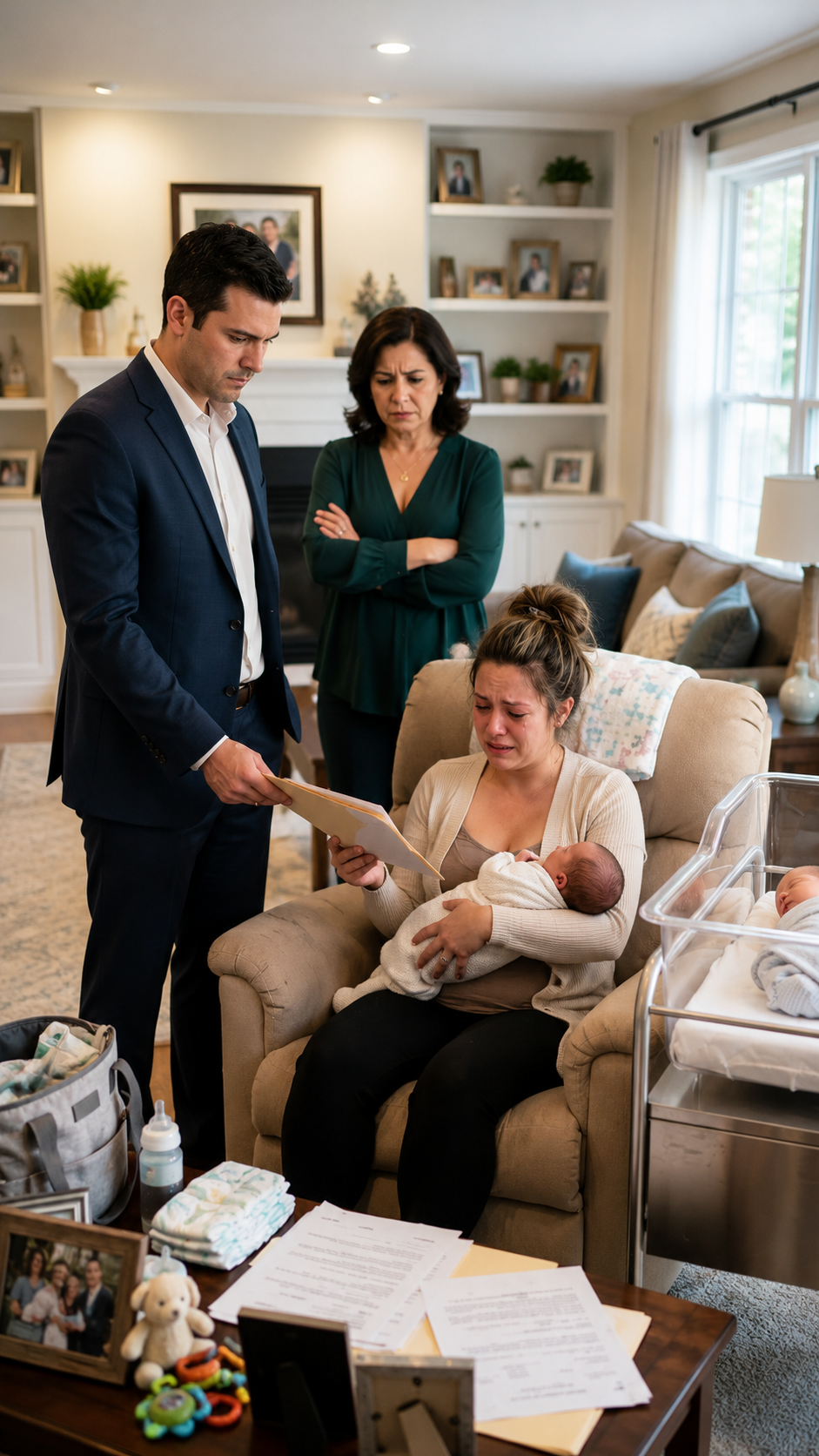
Rodrigo left the divorce papers on the pink blanket of one of his newborn daughters.
—Sign them. Right now.
Mariana looked at him from the living room couch, still struggling with the postpartum girdle beneath her sweatpants, her hair hastily tied up, dark circles under her eyes from three sleepless nights. She had given birth to twins less than 72 hours ago.
One baby slept on her chest. The other cried softly in the crib.
Rodrigo, the man who months before had cried at the sound of his daughters' heartbeats during the ultrasound, stood by the window of their home in Satélite, adjusting the cuffs of a gray jacket as if he were late for a meeting, not as if he were tearing apart his family.
—Please —Mariana said with a broken voice—. Not today. We just got out of the hospital.
He didn’t even look at her.
—I’ve already signed my part.
Outside, a fine drizzle fell on the street. The house smelled of talcum powder, warm milk, and hospital. That scent should have represented a beginning. But for Mariana, it smelled like an end.
In the kitchen doorway stood Beatriz, her mother-in-law, with her handbag hanging from her arm and an expression of annoyance that hurt more than any insult.
—Oh, Mariana —she sighed—. Every woman gives birth. You’re not the first or the last. My son deserves peace too.
Mariana looked down at the documents. Immediate dissolution of marriage. Separation of assets. Custody pending. All written with a coldness that felt unreal.
Three days earlier, Mariana had spent 34 hours in labor. Then an emergency C-section. Then high blood pressure. Then two premature babies that needed feeding every few hours.
And now her husband was asking her to sign as if she were canceling a bill.
—I don’t understand —she whispered.
Rodrigo finally looked at her. His face was clean, calm, almost empty.
—You’ve changed, Mariana. You’re no longer the woman I married.
She let out a dry, incredulous laugh.
Of course she had changed. She had carried two lives inside her body. She had vomited for months. She had slept sitting up. She had cried in fear at every doctor's appointment when the doctor repeated that the pregnancy was delicate.
But before she could respond, Beatriz crossed her arms.
—My son shouldn’t have to live trapped in an environment of complaints, diapers, and drama.
The baby in the crib began to cry louder. Mariana tried to get up, but a sharp pain shot through her C-section wound.
Rodrigo didn’t move.
Not a step.
Not even glancing at his daughter.
And that was when something inside Mariana truly broke.
It wasn’t when she saw the papers. It wasn’t when she heard her mother-in-law humiliate her. It was when she realized that the father of her daughters could hear a newborn cry and remain standing as if nothing happened.
Then Rodrigo’s phone vibrated on the counter.
He picked it up quickly. And smiled.
A soft, intimate, warm smile. A smile that Mariana hadn’t seen in over a year.
—It’s her, isn’t it? —she asked.
Beatriz scoffed.
—Please don’t start with your jealousy.
Rodrigo put the phone away.
—That’s no longer your concern.
But Mariana already knew.
Camila Rivas. 30 years old. Real estate influencer in Polanco. Blonde, immaculate, perfect smile, perfect life on Instagram. The woman who commented on Rodrigo’s photos since he started coming home late.
First it was meetings. Then hidden messages. Then criticisms.
That Mariana was careless. That she cried too much. That she didn’t dress up. That pregnancy had made her “heavy.”
One night, in her seventh month, Rodrigo had told her:
—It doesn’t feel the same being with you anymore.
Mariana cried silently that night, wondering how a man could despise the body that was forming their daughters.
Now she understood.
He had left long before he opened the door.
Rodrigo looked at his watch.
—I need you to sign.
Mariana took the pen with a shaking hand. Tears fell onto her baby’s blanket as she signed one page, then another, then another.
Rodrigo collected the papers immediately. A relief appeared on his face so clear it seemed like triumph.
Then he leaned down to the twins.
For a moment, Mariana felt hope. Maybe he would kiss them. Maybe there was still something of a father left in him.
But Rodrigo only looked at them as if they were strangers.
Then he straightened his jacket.
—I’ll send someone for my things next week.
And he left.
Beatriz lingered for a few more seconds.
—You’re still young —she murmured—. Maybe one day you’ll find someone who actually wants this kind of life.
This kind of life.
She said it looking at the babies, at the couch, at Mariana still bleeding inside and out.
Then she left too.
That night, while feeding one of the twins at midnight, Mariana turned on the television to drown out the silence.
And there was Rodrigo.
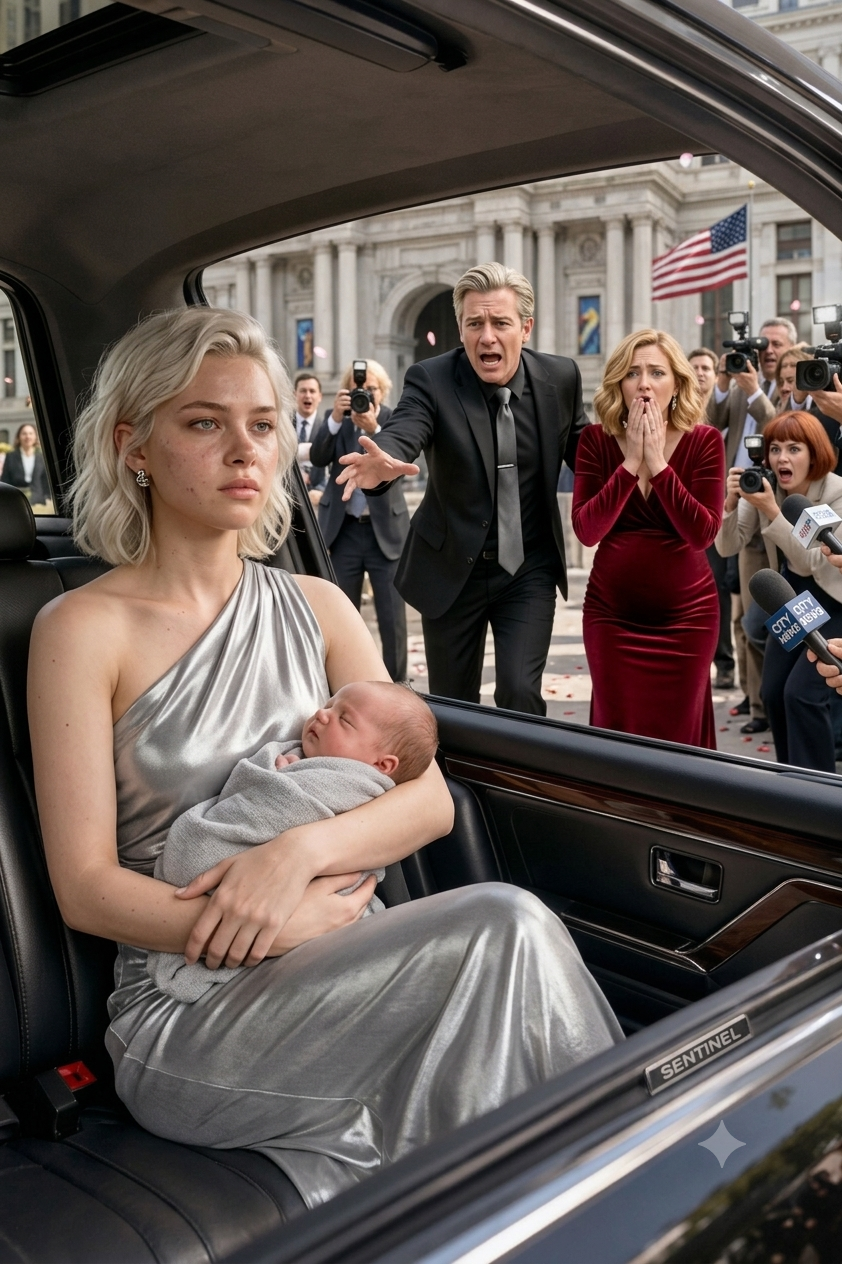
On a red carpet at a charity event in Mexico City, holding Camila Rivas by the waist.
She smiled at the camera and said:
—Sometimes you meet the person with whom you truly deserve to build a life.
Rodrigo smiled beside her.
Then Camila added:
—Some women just don’t have the strength to keep a successful man happy.
The people around them laughed.
Mariana turned off the television with a cold hand. She hugged her two daughters against her chest and glanced toward the hallway closet.
There remained an old cardboard box she hadn’t opened since her father died, a neighborhood journalist who had spent 40 years telling real stories.
Inside were notebooks, recorders, press badges, and a yellow note written by him:
“When life breaks your heart, tell the truth.”
Mariana read those words over and over.
And for the first time since Rodrigo closed the door, she stopped crying.
PART 2
The twins seemed to have agreed to never sleep at the same time.
If Valentina closed her eyes, Lucía screamed. If Lucía finally fell asleep, Valentina woke up hungry as if the world were ending.
By the third week, Mariana no longer remembered what it felt like to sleep more than 90 minutes straight.
The house in Satélite became enormous. In some rooms, there was too much silence. In others, too much crying. Everything reminded her of abandonment: the empty side of the closet, the favorite mug that Rodrigo did take, the clean mark in the garage where his truck used to sleep.
The bills started coming in quickly.
Hospital. Pediatrician. Electricity. Gas. Diapers. Formula.
Rodrigo deposited only what the provisional agreement stated. Not a peso more. Not a question. Not a “how are the girls doing?”.
Beatriz sent a message two weeks later:
“You urgently need to learn to be independent.”
Mariana deleted it and cried for 20 minutes while folding tiny clothes.
But life, even when it hurts, still demands breakfast.
Doña Lupita, the neighbor, began to drop off chicken soup on Sundays. The pharmacy cashier saved diaper coupons for her. A retired nurse from the parish offered to babysit the babies for two hours on Thursdays so Mariana could bathe and buy groceries.
Older women recognize when another woman is sinking.
One rainy afternoon, while the girls slept, Mariana opened her father’s box again.
She found a recording marked with a marker:
“My first favorite story.”
She played it.
Her dad’s voice filled the living room.
—Real journalism isn’t about celebrities. It’s about ordinary people surviving pains that nobody sees.
Mariana stood still.
Before marrying Rodrigo, she had written chronicles. Stories of markets, grandparents, seamstresses, single mothers, migrants, invisible people carrying entire worlds in silence.
She gradually let it go. Marriage. Pregnancy. Exhaustion. Then he took up so much space that she stopped listening to herself.
That morning, at 2:00, with a baby asleep in each arm, she opened her old laptop.
She began to write.
She wrote about an 82-year-old bolero singer who still worked in La Lagunilla to pay for his wife’s medications. She wrote about a waitress from Iztapalapa who worked double shifts to buy insulin for her grandson. She wrote about a widow who went to the cemetery every Friday with two coffees, one for herself and one for her dead husband.
They weren't spectacular stories.
They were human.
And by writing about the resilience of others, Mariana began to hold her own.
A week later, she sent a chronicle to a small community radio station in Mexico City. She didn’t expect anything.
Two days later, her phone rang during a diaper change.
—Is this Mariana Salas? I’m Don Ernesto Leal from Radio Centro Barrio.
Mariana thought it was a joke.
—I read your text. You made my producer cry over her milanesa sandwich. Are you still writing?
That was the first job someone offered her in months.
It paid little. Very little. But it was something of her own.
While the twins slept in borrowed cribs, Mariana edited audio with one hand and held bottles with the other. She interviewed seniors between naps. She recorded segments at midnight in a shirt stained with milk.
It was chaos.
But it was life.
In the meantime, Rodrigo seemed happy on social media.
Trips to Tulum. Dinners on terraces. Perfect photos with Camila. Phrases like “new beginnings” and “choosing peace.”
Mariana stopped looking.
Not because it didn’t hurt anymore. But because it hurt too much.
Then the story arrived that changed everything.
Don Ernesto assigned her a small piece about a group of seniors in a tenement in the colonia Doctores. The building was going to be sold, and 11 people were at risk of losing their homes.
Mariana spent two days interviewing them.
An old man showed her the letters his wife wrote him before she died. A grandmother confessed she couldn’t pay rent and buy medicine at the same time. Another man cried as he said that this room was the last thing he had left of his life.
When the segment aired, it exploded.
People called the station. Merchants offered support. A lawyer showed up for free. In 48 hours, they gathered resources to temporarily stop the eviction.
And suddenly everyone was asking who had told that story.
Don Ernesto entered the studio with a huge smile.
—Girl, I think Mexico just discovered you.
Mariana looked up, tired.
—What do you mean?
He placed a printed email on the table.
It was an invitation to appear on a national morning show.
Mariana felt breathless.
—No. No way.
—Your father would shake me if I let you say no —Don Ernesto replied.
That same afternoon, an alert appeared on her phone.
“Camila Rivas announces engagement to businessman Rodrigo Ibarra.”
In the photo, Rodrigo smiled in front of a luxury hotel, as if his daughters had never existed.
Mariana blocked the screen.
She looked at the email again.
And understood something: her life hadn’t ended the day she signed those papers. It had merely split in two.
The morning of the interview, Valentina vomited in her hair.
Mariana was in a dressing room at National Television at 5:40 a.m., trying to wash up as best as she could in the sink while the two girls cried in their strollers.
—You really know how to keep a woman humble —she murmured.
Don Ernesto arrived with coffee and a nervous expression.
—Ready to become famous?
—First, I’d like to survive breakfast.
He let out a laugh so loud that a makeup artist turned to look.
But Mariana was scared.
Not of the cameras.
Of being seen.
For months she had been the abandoned wife, the exhausted mom, the woman who cried alone. Now millions of people were going to hear her voice.
And maybe Rodrigo too.
The host, a silver-haired woman named Teresa Molina, approached her before going on air.
—Are you Mariana?
She nodded.
Teresa looked at the sleeping babies and squeezed her hand.
—Sweetheart, you’ve already survived the hard part.
When the cameras turned on, Mariana thought her voice would tremble. But she remembered her father. She remembered how he leaned toward people, as if every story were sacred.
Then she stopped looking at the cameras.
And told the truth.
She spoke of the elderly in Doctores. Of loneliness. Of the fear of losing a home. Of the silent pain that many carry without making a sound.
Teresa asked her:
—Why do you think your stories are connecting so much with people?
Mariana looked at her daughters.
—Because almost everyone carries a wound that nobody sees —she said—. And when someone names it with respect, that person stops feeling alone.
In an apartment in Polanco, Rodrigo nearly dropped his coffee cup.
Camila was checking floral arrangements for the engagement party when she heard Mariana’s voice on the television.
—Are you listening to this? —she demanded.
But Rodrigo couldn’t respond.
There was Mariana. Not destroyed. Not begging. Not humiliated.
Strong. Tired, yes, but beautiful in a way he had never known how to see.
The camera focused on the twins.
Rodrigo sat down slowly.
They looked bigger. Different. As if time had gone on without asking for his permission.
Teresa asked:
—You recently became a mother of two girls. What has motherhood taught you?
Mariana took a deep breath.
—That love isn’t comfort —she replied—. Real love stays when life gets hard.
Rodrigo felt the blow to his chest.
Camila looked up.
—Oh, come on. Are you still obsessed with her?
He said nothing.
For the first time in months, he saw Camila without a filter. Not as a fantasy, not as freedom. Just as a woman who had mocked the mother of his daughters.
—You told me she was unstable —Camila spat—. That she trapped you with those girls.
Rodrigo looked at the blank screen when she changed the channel.
And there he understood the ugliest truth: Mariana had never exposed him. She had never insulted him. She had simply rebuilt her life while he disguised his selfishness as happiness.
That night, when the twins slept in the hotel, Mariana received a call from an unknown number.
She almost didn’t answer.
But something tightened her chest.
—Hello.
Silence.
Then a broken breath.
—I saw you today —Rodrigo said.
He was crying.
Mariana closed her eyes.
Six months ago, she would have given anything to hear that cry. Now she just felt tired.
—You hurt too much —she said.
—I know.
—No. I don’t think you do.
The silence weighed heavily.
—I convinced myself I deserved something easier —he admitted—. Something without exhaustion, without hospitals, without diapers, without fear.
Mariana looked at her sleeping daughters.
—That thing you called difficult was your daughters.
On the other side, a sob was heard.
—I’m ashamed of the man I became.
That phrase sounded more real than any apology.
Mariana hung up without crying.
The following months were strange.
The interview went viral. Her chronicles reached more people. They offered her a weekly segment about ordinary Mexicans surviving enormous things: grandmothers raising grandchildren, rural teachers, widowers, nurses, single mothers, elderly men forgotten by their families.
Mariana was no longer just “the woman who was abandoned.”
She was a voice.
And that voice was valuable.
Rodrigo kept calling. At first, she didn’t answer. Then came sunflowers. Not roses, because he remembered that she hated them.
The notes didn’t say “come back to me.”
They said:
“I’m trying to be someone my daughters can respect.”
Or:
“Thank you for not teaching them to hate me.”
Mariana didn’t trust him.
Not one bit.
Because apologizing is easy when guilt bites. Changing is another thing.
One Thursday, Rodrigo appeared at the pediatric clinic with a stuffed elephant.
Mariana froze.
He looked thinner. Without an expensive watch. Without the smile of a successful businessman. Just sad.
—Can I see them?
Her first impulse was to say no.
But Lucía saw the stuffed toy and let out a happy squeal.
Rodrigo broke down.
Mariana carefully handed him the baby. He held her awkwardly, as if he were carrying something sacred and knew he didn’t deserve it.
When the baby squeezed his finger, Rodrigo cried in the waiting room.
It wasn’t a dramatic cry.
It was shame.
It was loss.
It was late understanding.
Outside, next to the car, he said:
—I broke up with Camila.
Mariana felt no joy. Just a strange calm.
—Why?
Rodrigo swallowed hard.
—She said the girls were baggage. And I realized that I had become the kind of man who let someone talk about his daughters like that.
Mariana looked at him for a long time.
—And now what do you want?
—I don’t know if I deserve anything —he replied—. But I want to show up. Even if it’s late. Even if you never forgive me.
And he did.
Not with speeches. With presence.
Medical appointments. Diapers. Sleepless nights. Midnight pharmacy runs when Valentina had a fever. Parenting classes. Awful attempts at making pigtails. Off-key lullabies.
Forgiveness didn’t come like a miracle.
It came, if anything, in pieces.
Sometimes Mariana saw him and remembered the room, the papers, the blood, the humiliation. She remembered Beatriz saying “this kind of life.” She remembered Camila laughing on television.
Those scars don’t disappear just because someone cries.
But one afternoon, Mariana returned from recording a story and found Rodrigo asleep on the floor, next to the playpen, with a twin resting in each arm and a children’s book open on his chest.
She stood in the doorway, watching.
And understood something difficult: people are not just the worst thing they did. But they also don’t have the right to demand that others forget.
Rodrigo was trying to be better.
That didn’t erase the past.
But it changed the future.
Mariana’s career grew faster than she imagined. Her national segment became one of the most viewed. People said her stories had soul, that they reminded them of a Mexico that still knew how to take care of its own.
In December, they asked her to host a special television program about resilience.
She accepted with fear.
That night, in the studio, the lights were intense. Don Ernesto held Lucía in the front row. Rodrigo carried Valentina with a tenderness that months ago would have seemed impossible.
At the end of the program, Teresa Molina asked her a question live:
—After everything you’ve lived this year, Mariana, what do you think matters most?
The studio fell silent.
Mariana looked at her daughters. Then she looked at Rodrigo. Not as the perfect husband. Not as a savior. But as a broken man trying to repair what he broke.
Then she answered:
—The love that remains.
She paused.
—Not the pretty love for photos. Not the comfortable love. The love that changes diapers at 3:00 a.m., that shows up at the hospital, that asks for forgiveness without expecting a reward, that understands that a family isn’t abandoned just because it became difficult.
The audience remained silent for a few seconds.
Then they applauded.
Behind the scenes, Rodrigo approached with Valentina sleeping on his shoulder.
—You became the woman I should have protected from the beginning —he whispered.
Mariana’s eyes filled with tears.
But they were no longer tears of humiliation.
They were of mourning. Of strength. Of a peace that cost too much.
Because some things break forever.
And yet, sometimes, among the pieces, a truth is born that no one wants to accept: those who abandon may regret it, but those who stayed surviving are never the same again.