PART 1
—If you don’t sign tomorrow, your mom is going to a nursing home where nobody asks about old women... and I swear this time I won't feel sorry for her.
That was the first thing Alejandro Salvatierra heard when he stepped into his house in the Del Valle neighborhood of Mexico City.
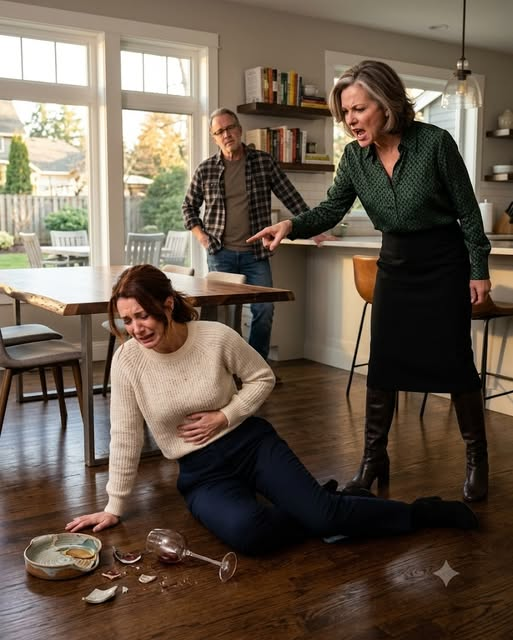
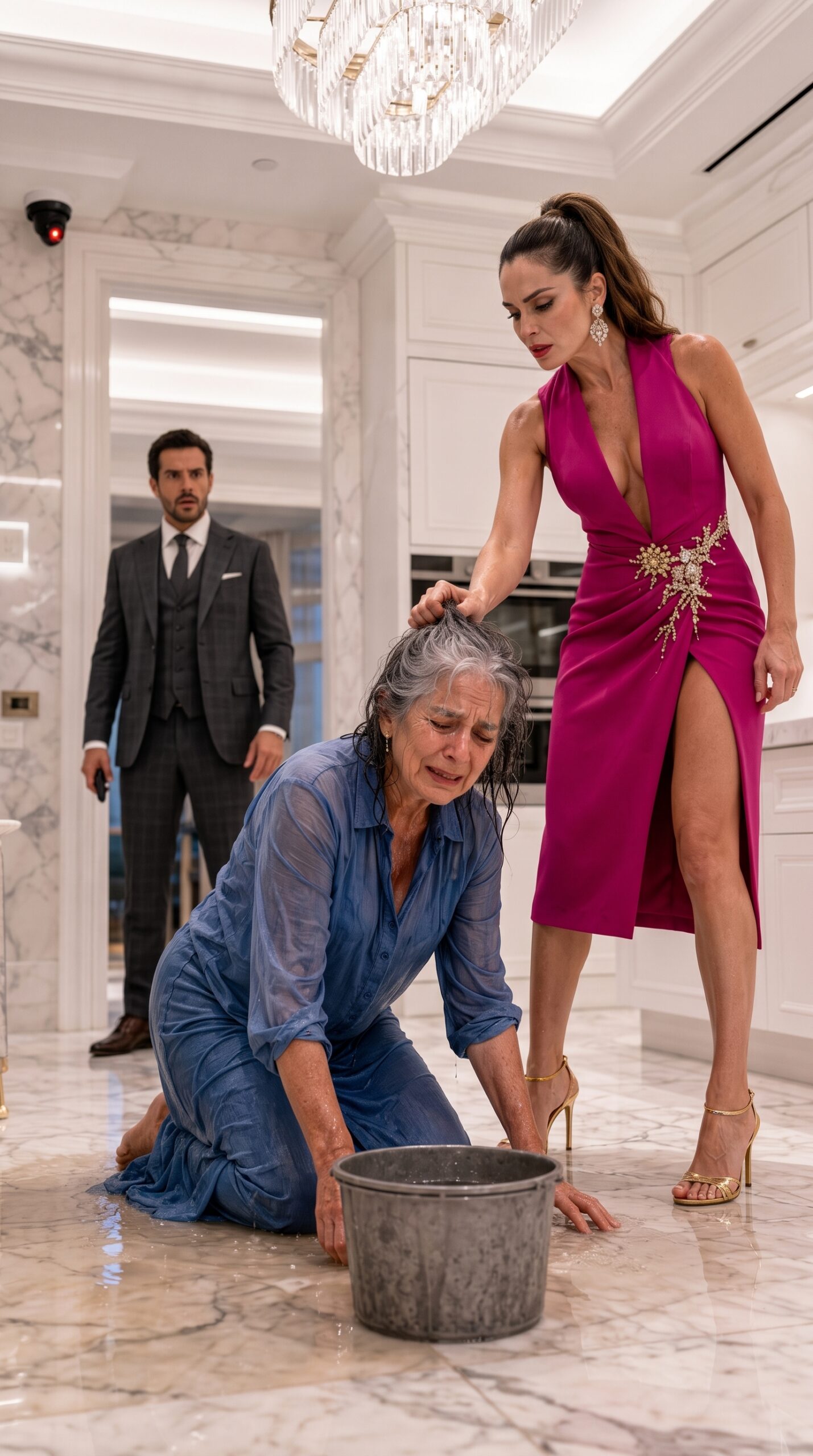
The door had barely closed behind him when he saw Doña Carmen, his 72-year-old mother, kneeling by the laundry sink in the backyard.
Her shawl was soaked, her hands red from bleach, and her hair clung to her forehead. The floor was a mixture of dirty water, soap, and grime. In front of her stood Renata, his wife, immaculate in a beige dress and heels, holding her hair back as if it were a rag.
—Let her go —Alejandro said.
Renata turned calmly. She wasn’t afraid. She smiled.
—Oh, Alejandro... you arrived early. Your mom was just starting to understand that she has responsibilities in this house too.
Doña Carmen tried to get up, but slipped. Alejandro rushed to catch her before she fell again.
—Son, don’t cause a scene —she whispered, trembling—. I was almost done.
That phrase hurt more than seeing her on her knees.
Doña Carmen had sold tamales outside a secondary school in Iztapalapa to pay for his education. She had cared for her husband, Don Julián, as cancer consumed him. She had helped to build Laboratorios Salvatierra, a family business in Querétaro that many believed Alejandro had inherited by luck.
And now she was apologizing for existing in her own home.
Renata wiped a drop of water off her shoe.
—Tomorrow we have an appointment with the notary in Polanco —she said—. You will sign the full power of attorney. I will manage the company, the accounts, and this house. Your mom will go wherever I decide.
Alejandro stared at her, unmoving.
For six years, Renata had been perfect in front of everyone. At meetings, she hugged Doña Carmen, brought her sweet bread, and called her “the sweetest mother-in-law in the world.” In front of business partners, she held Alejandro's hand and called him “my love.”
But behind closed doors, she called him coward, useless, mama’s boy.
He had endured it.
Not because he didn’t understand.
But because he was waiting for the right moment.
—Do you really think I’m going to sign that? —he asked.
Renata let out a dry laugh.
—Of course you are. Because if you don’t sign, I’ll start the process to declare your mother incapacitated. I have a doctor, witnesses, and paperwork to prove she’s not right in the head anymore.
Doña Carmen lowered her gaze.
In that moment, Alejandro understood it wasn’t a couple's quarrel.
It was a plan.
Renata didn’t just want money. She wanted to erase the only person who still reminded her who she was before living in fear.
Alejandro looked up at what he thought was a smoke detector above the patio door.
A red light was blinking.
Renata didn’t know it wasn’t a detector.
She didn’t know he had been recording threats, insults, and pushes for three weeks.
Nor did she know that morning, Alejandro's lawyer had already submitted a first folder to a family judge.
He hugged his mother and led her out of the patio.
Renata screamed behind them:
—You’re signing tomorrow, Alejandro! Or that old lady won’t sleep under this roof again!
Alejandro didn’t respond.
He just pressed the letter his father had hidden away years ago against his chest, because what Renata didn’t know was that the next day they wouldn’t be signing her victory… but her downfall.
PART 2
That night, Alejandro couldn’t sleep.
He made his mother a cinnamon tea, gave her dry clothes, and sat beside her bed until she stopped crying. Doña Carmen stared at the wall as if she felt more ashamed to have been seen on the floor than to have been humiliated.
—Forgive me, son —she murmured—. I didn’t want to cause you problems.
—You didn’t cause anything, Mom.
—Renata said no one would believe me. That at my age, one starts to make things up. That you would get tired of me.
Alejandro took her hands.
—Tomorrow it ends.
Doña Carmen shook her head slowly.
—You don’t know her. That woman won’t back down.
Alejandro took a deep breath.
—I know her better than she thinks.
At 2 a.m., Renata crossed the hallway speaking on the phone. Her voice was soft, almost happy.
—Tomorrow he signs. I already have him broken… Yes, my love, then we’ll move the shares to the new company and sell before the Board asks.
Alejandro stood still.
—Your mom won’t be a problem —Renata continued—. Dr. Meza has already understood. With two reports, we can put her in a private residence and that’s it.
“My love.”
Alejandro didn’t need to ask who she was talking to.
Diego Armenta, an external lawyer from a competing company, had appeared in his life a year earlier. Renata said he was just an advisor. Alejandro pretended to believe her, because his father, Don Julián Salvatierra, had taught him that sometimes it’s better to let the traitor think no one is watching.
Before dying, Don Julián had left a wooden box hidden in the old office in Querétaro. Inside was a letter, an encrypted USB drive, and a phrase written in shaky handwriting:
“When someone asks you to sign quickly, open this and don’t trust even the prettiest smile.”
Alejandro opened the box six weeks before.
He found internal audits, hidden contracts, emails between Renata and Diego, suspicious transfers, and the draft of a bridge company created to drain Laboratorios Salvatierra.
In one email, Diego wrote:
“When Alejandro hands over control, we sell the patent, liquidate the company, and leave him fighting with paperwork.”
But the strongest part was at the end.
Don Julián had included a second letter addressed to Doña Carmen.
In it, he apologized for not having lived long enough to protect her from others' ambition. He also made it clear that the family home did not belong solely to Alejandro: it was protected in a trust where Doña Carmen had a lifetime right to reside.
Renata wanted to throw her out of a house that legally she could not take from her.
At 5 a.m., Alejandro sent three folders: one to his lawyer, Mariana Ríos; another to the notary; and the third to the Financial Crimes Prosecutor’s Office.
At 9, Renata came down to the dining room wearing dark glasses, red lips, and an ivory dress. She looked ready for an interview, not to destroy a family.
—Let’s go —she ordered—. I don’t want to be late.
—My mom is coming.
Renata took off her glasses.
—She has nothing to do there.
—She does —Alejandro replied—. She’s a witness.
Renata studied him for several seconds. Then she smiled.
—Perfect. Let her see how her son hands everything over to me.
The notary was in Polanco, in a glass building where the coffee smelled expensive, and the receptionists spoke softly. Diego was already waiting in the lobby, dressed in a blue suit and that smile of a man who believes the law bends with money.
—Alejandro —he said, extending his hand—. You’re making a mature decision. Renata has vision.
Alejandro didn’t shake his hand.
The notary placed the documents on the table. It wasn’t just a power of attorney. It was a disguised cession: shares, voting rights, control of accounts, intellectual property, real estate management, and medical decisions regarding Doña Carmen.
Renata put a pen in front of Alejandro.
—Sign.
Alejandro looked at his mother. She was scared, but she didn’t lower her gaze.
Then he took out his cell phone.
—First, I want you to hear something.
Renata’s voice filled the room:
“If you don’t sign tomorrow, your mom is going to a nursing home where nobody asks about old women…”
Diego turned pale.
Renata jumped up.
—That’s edited. That’s illegal.
Alejandro opened his portfolio and placed printed copies on the table: emails, transfers, contracts, messages with Dr. Meza, call screenshots, and photos of Doña Carmen cleaning on her knees.
—Then this must also be edited, right?
The notary stopped touching the papers.
Renata looked at him as if for the first time she didn’t recognize the man she had despised.
—Where did you get all that?
Alejandro leaned slightly.
—from my father. And your arrogance.
The door to the room opened.
But it wasn’t the police who entered.
A woman in a black jacket and tired face came in. It was Laura Armenta, Diego's wife.
Renata lost her color.
Diego stepped back.
Laura didn’t scream. She didn’t cry. She walked to the table and left a yellow envelope next to the document.
—I also brought my evidence —she said.
Renata gritted her teeth.
—Who let you in?
Laura looked at her with a hard calmness.
—The same person who told me my husband had been planning to steal a company with a woman who thought she was smarter than everyone.
Diego tried to touch her arm.
—Laura, this isn’t what it seems.
—Don’t touch me —she replied.
Mariana Ríos, Alejandro's lawyer, entered behind Laura with a black folder.
—Sir —she said to the notary—, this document cannot be signed. There is a request for precautionary measures, a complaint of asset coercion, and evidence of psychological domestic violence against an elderly adult.
Renata let out a nervous laugh.
—Violence? Please. These are family disputes.
Doña Carmen lifted her face.
—They weren’t disputes.
The room fell silent.
The elderly woman tightened her brown purse, the one where she always kept handkerchiefs, holy cards, and a photo of Don Julián at the Basilica of Guadalupe.
—For months, I thought the fault was mine —she said—. I thought that being old was in the way. That maybe I was forgetting things. That maybe I was a burden.
Renata interrupted her.
—Carmen, don’t exaggerate.
Doña Carmen stared at her.
—You hid my medications. You turned off my cell phone. You told me Alejandro no longer wanted me in the house. You took my glasses only to then say I broke things because I was losing my mind.
Alejandro felt the air closing in on him.
He didn’t know that.
—Did you take her medications? —he asked, looking at Renata.
Diego raised his hands.
—I didn’t know that.
Renata glared at him.
—Shut up.
Laura let out a bitter laugh.
—Look at them. They’re sinking by themselves.
Then she opened the yellow envelope.
—Diego forged my signature to create the bridge company. I realized two weeks ago when the bank called me about a transaction I never authorized. I also found reserved tickets.
Renata turned to Diego.
—Tickets?
Laura laid a sheet on the table.
—Cancún. Two passengers. Open date.
Renata looked at Diego.
—you told me it would be Madrid.
That detail changed everything.
Until that moment, Renata was still pretending to be in control. But realizing Diego had also used her, her mask shattered.
—You designed the plan! —she yelled.
Diego lost his calm.
—You sought me out! You said your husband was useless and that his mother was a burden!
—You said you could get her out of the house without a problem!
Doña Carmen closed her eyes.
Alejandro felt rage, but he didn’t raise his voice. He wasn’t going to give them the spectacle they wanted anymore.
Mariana placed a tablet in front of the notary.
—Here is the complete backup of the recordings. Copies were already delivered to the court this morning.
The video started.
There was no need to watch it all. Twenty seconds were enough: Renata pushing the bucket towards Doña Carmen, ordering her to clean on her knees, telling her that nobody would believe an old confused woman.
The notary removed his glasses.
Laura covered her mouth.
Diego stopped talking.
Renata looked at the screen as if she were seeing a stranger.
—Turn that off —she said.
Nobody moved.
—Turn it off!
Then Doña Carmen spoke.
—No. Leave it.
Her voice was low but firm.
And in that instant, Alejandro understood that his mother wasn’t asking for permission to suffer. She was reclaiming the right to tell what was done to her.
The door opened again.
This time two judicial agents and a court official entered. They didn’t come with shouts or scandal. They came with documents.
They asked for Renata Pineda and Diego Armenta.
Mariana stood up.
—Here they are.
The agent explained that there was an investigation for threats, document fraud, possible fraudulent management, forgery, and psychological domestic violence against an elderly adult.
Renata tried to straighten up.
—My husband is being manipulated by his mother.
Alejandro looked at her with a calmness he had never had before.
—Don’t ever use my mother again to hide who you are.
Diego wanted to speak as a lawyer, but the agent interrupted him.
—You will have the opportunity to testify.
They weren’t taken away in handcuffs like in the movies. The reality was colder. They were asked to accompany them. Diego left first, sweating, with his tie loose. Renata walked behind, still trying to appear untouchable.
Before crossing the door, she turned.
—Without me, you won’t be able to manage the company.
Alejandro looked at her as one looks at a room finally being abandoned.
—I might struggle —he said—. But I’d rather learn alone than keep dying with you.
Renata opened her mouth but found no phrase that sounded like victory.
And she left.
That afternoon, the house in Del Valle fell silent. Mariana recommended that Alejandro and Doña Carmen not return until the judge resolved the protective measures. They stayed a few days with a cousin in Coyoacán, in a small apartment with plants on the balcony and the smell of noodle soup.
There, Doña Carmen slept again without waking up in fright.
Two days later, the judge prohibited Renata from approaching her and entering the house. He also froze any movements related to the shares of Laboratorios Salvatierra.
Diego was reported to the bar association. Laura filed a lawsuit for forgery and embezzlement. Dr. Meza, facing accusations, admitted that Renata had asked him for false reports to justify Doña Carmen's internment.
Renata tried to play the victim.
She said Alejandro manipulated videos, that her mother-in-law was possessive, that it was all a trap to take away what “was rightfully hers as a wife.”
But every lie clashed against evidence.
The emails showed the plan.
The transfers showed the money’s route.
The recordings showed the cruelty.
In the end, Renata and Diego did what people united by ambition do: they betrayed each other when there was no longer any spoils to share.
Three months later, Alejandro officially returned to Laboratorios Salvatierra. The Board, which had once seen him as a timid heir, welcomed him with surprise. He didn’t arrive shouting orders. He arrived with audits, new controls, and a clear decision: no signature would ever again depend on blind trust.
At the entrance, he ordered a simple plaque to be placed:
“Carmen Salvatierra Program: legal and psychological support for elderly victims of domestic abuse.”
Doña Carmen didn’t want it.
—Don’t put my name, son. How embarrassing.
—Embarrassment should be for those who harm those who cared for them —he replied.
On the day of the inauguration, she arrived wearing a navy blue dress and a light shawl. She walked slowly, leaning on her son’s arm. When she saw her name on the plaque, she started to cry.
—Your dad would be proud —she whispered.
Alejandro looked at the plaque.
—He left the letter because he knew one day we would need strength.
Doña Carmen smiled through her tears.
—Your dad always said you were calm, not weak.
—It took me years to understand the difference.
One year later, Doña Carmen cooked mole for the family again. She invited neighbors, cousins, and former employees of Don Julián. The house smelled of chocolate, roasted chili, and warm tortillas.
In the patio, where she had once been on her knees, there were now new pots, clean light, and a long table full of people.
Doña Carmen sat at the head.
No one asked her to.
Everyone understood that place belonged to her.
As she served coffee, she looked at Alejandro.
—Do you know what the worst was, son? It wasn’t what she did to me. It was believing for a moment that I deserved it.
Alejandro felt his throat tighten.
—You never deserved it.
She took his hand.
—Then promise me something. That when someone says “these are family matters,” you won’t stay silent.
Alejandro looked around. The family laughed, plates passed from hand to hand, and for the first time in years, the house didn’t seem like a pretty facade, but a home.
—I promise.
That night, before going to sleep, he passed through the patio. The floor was dry. The laundry sink was clean. The fake detector was no longer over the door, but Alejandro still imagined that red light blinking.
That light reminded him of something he never wanted to forget.
Renata thought power was humiliating without witnesses.
Diego thought the law was a piece of paper that could be twisted.
Alejandro had thought for years that enduring in silence was protecting his family.
The three were wrong.
The real power was when Doña Carmen said: “Leave it.”
When she decided her pain would no longer be hidden.
When she stopped asking for forgiveness for existing.
Because that day Alejandro didn’t lose a marriage.
That day he regained his mother.
And with her, he regained his life.