PART 1
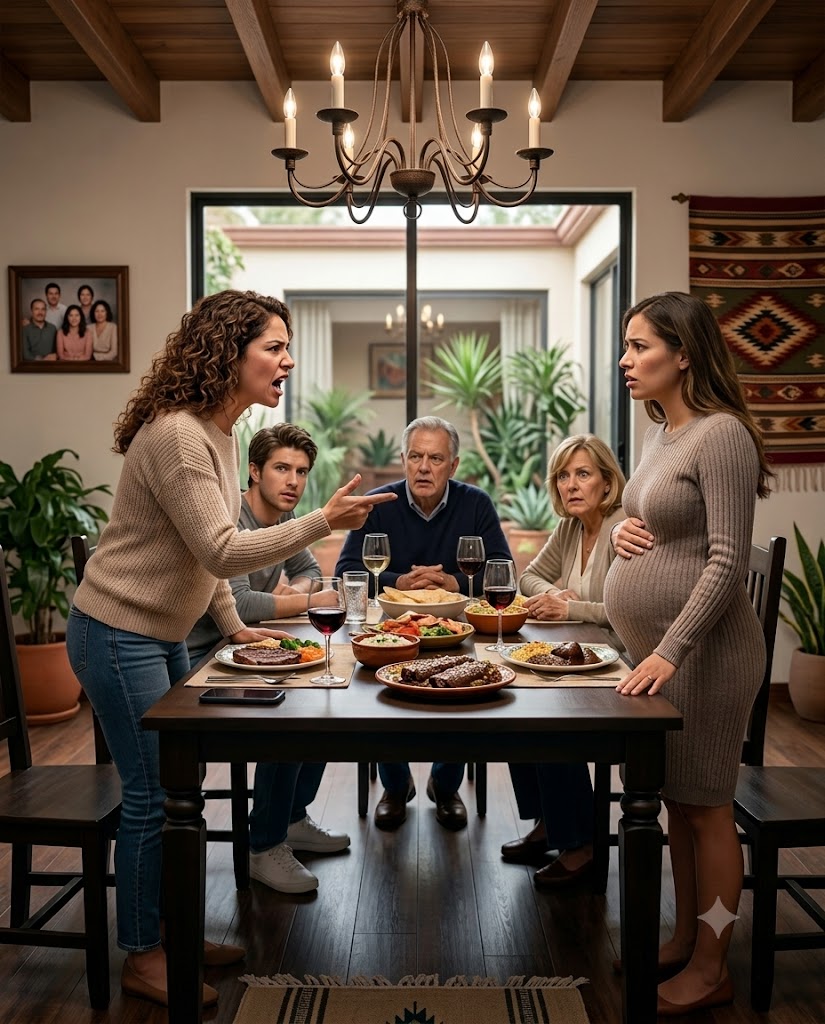
—So it’s clear: you’re going to take care of the kids when the baby is born.
Doña Carmen's voice rang firm, as if she had just declared who would take the dishes to the kitchen.
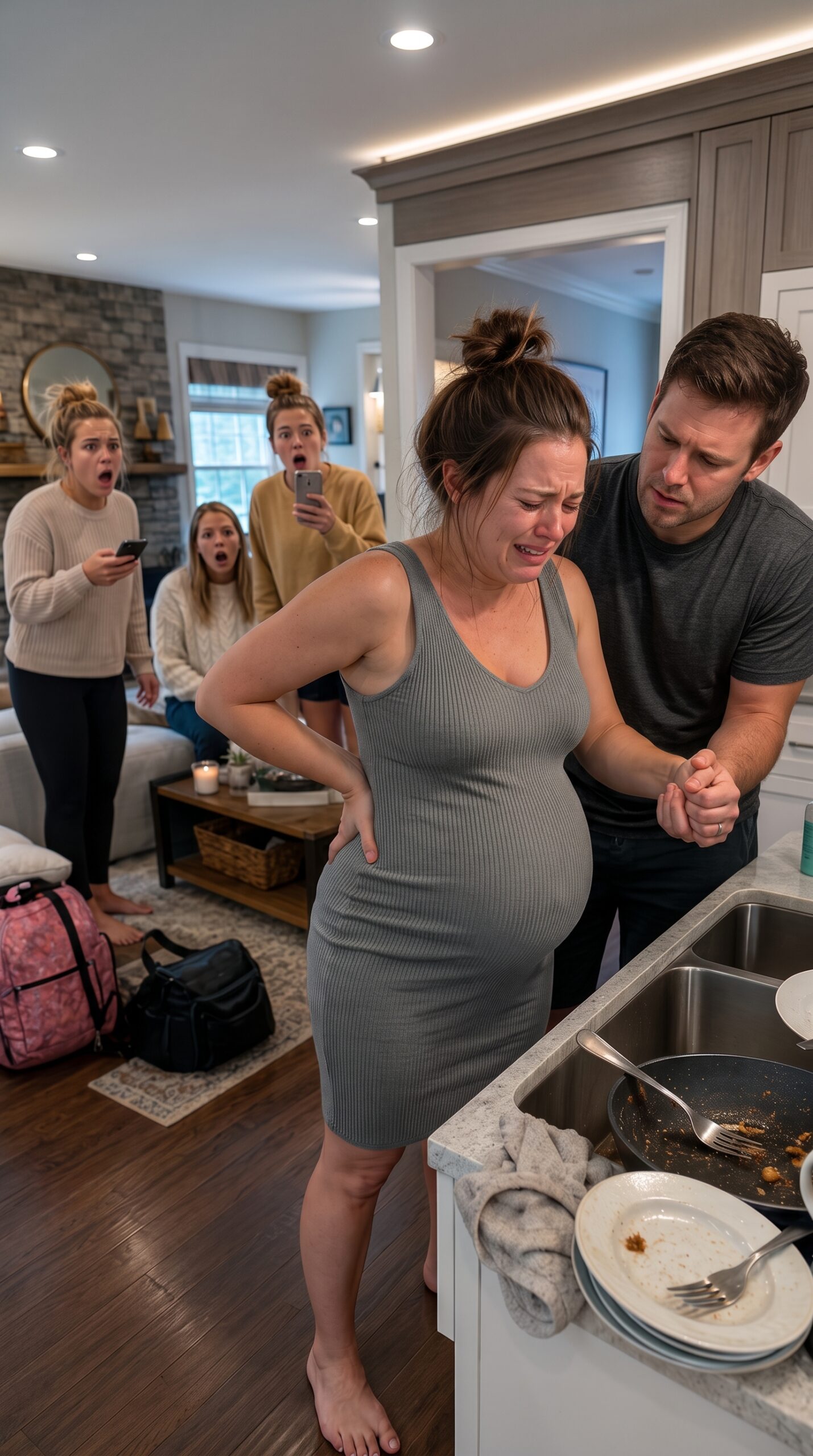
The family meal was at the Medina's, in a quiet neighborhood of Zapopan. There was birria, freshly warmed tortillas, sodas on the table, and four kids running between the living room and the patio as if the house were a public park.
Sofía, 34, sat by the window, a glass of water in her hands.
She had come because it was Sunday. Because her mom insisted. Because for years she believed that “family” meant enduring, staying silent, and being available even when no one asked if she could.
Her older brother, Raúl, stood up with a huge smile. He wrapped his arms around his wife, Valeria, and dropped the news like it was a prize.
—We’re having another baby. Number 5.
Everyone applauded.
Don Ignacio nearly choked on his excitement.
—That’s it, son! That’s how you grow the family!
Doña Carmen cried with happiness.
—Another little angel on the way. What a great blessing.
Valeria touched her belly, though she was barely a few weeks along, and smiled at everyone as if waiting for a reverence.
Sofía tried to smile.
She wanted to be happy for them. She truly did.
But then she saw one of her nephews spill juice on the couch, another tugging the hair of the smallest girl, and the oldest throwing a ball against a shelf.
No one stopped them.
Raúl was recording the family’s reaction to post it on Facebook.
Valeria was checking comments on her phone.
And doña Carmen, as always, looked at Sofía.
—Daughter, you’re going to help us with the four while Valeria recovers and with the baby after.
Sofía slowly lifted her gaze.
—No.
The word was small, but it fell like a stone.
Raúl stopped recording.
—What do you mean no?
—No —Sofía repeated—. I’m not going to take care of your kids.
Valeria let out a dry laugh.
—Oh, how intense. You’ve always done it.
—That’s the problem —Sofía said—. I’ve always done it, and you turned it into an obligation.
Doña Carmen frowned.
—Don’t talk like that. They’re your nephews.
—I love them. But they’re not my kids.
Raúl slammed his fingers on the table.
—Come on, Sofía, don’t start with your independent woman drama.
She clenched her jaw.
For years, she had picked up kids from school, bought medicines, paid for forgotten uniforms, canceled appointments, outings, and breaks. She had missed work courses because Valeria “couldn’t take it anymore.” She had spent entire nights caring for fevers while Raúl and Valeria went out to dinner “to clear their heads.”
And they never asked her.
They just informed her.
Valeria leaned toward her.
—Look, you don’t have your own family. You don’t have a husband, you don’t have kids. This is good training for you to know what a real household is like.
The silence was brutal.
Sofía felt something crack, but she didn’t lower her gaze.
The worst part wasn’t the phrase.
The worst part was that no one defended her.
Her mom looked at her plate.
Her dad cleared his throat.
Raúl sighed as if she were throwing a tantrum.
Sofía stood up.
—You’re right about one thing. Here, I don’t have a family that respects me.
She took her bag.
Doña Carmen shot up quickly.
—Don’t be dramatic. Tomorrow you’ll get over it.
Sofía opened the door.
—No, Mom. Tomorrow is just the beginning.
That night, she cried in her apartment in the Americana neighborhood, not out of guilt, but out of rage. Rage at having only been useful when she obeyed. Rage that her time was worth less for not having children.
The next morning, at 7:42, her phone rang.
It was an unknown number.
—Hello?
—Good morning. Am I speaking with Miss Sofía Medina? I’m Officer Ramírez from the Municipal Police.
Sofía shot up.
—Yes. What happened?
—We need you to come in for a statement.
—Statement about what?
There was a cold pause.
—Your brother and sister-in-law registered you this morning as responsible for four minors.
Sofía felt her hands go cold.
—That’s a lie.
The officer lowered his voice.
—The children were found alone in the house. One of them was outside, barefoot, next to the avenue.
Sofía closed her eyes.
And in that instant, she understood that her “no” hadn’t mattered to them.
Her family had just used her name to cover up an abandonment.
PART 2
Sofía arrived at the precinct with her hair tied back, her face pale, and a folder full of screenshots.
She didn’t know if they would be of any use, but she brought them because, for the first time, she wanted someone to hear the whole story.
Officer Ramírez welcomed her into a small room. He was about 40, with a serious gaze and tired patience.
—Before we continue, Miss Medina, the children are fine —he said—. A neighbor called when she saw the three-year-old crying outside, without shoes.
Sofía pressed a hand to her chest.
—I wasn’t with them.
—That’s what we need to confirm.
The officer placed a folded sheet of paper in a transparent bag on the table.
Sofía immediately recognized Valeria's handwriting.
“Sofía is in charge of the children until noon. She’s been informed. We went to an urgent medical appointment.”
Sofía felt nauseous.
—I didn’t know anything. I told them no yesterday, in front of everyone.
Ramírez looked at her closely.
—Do you have proof that you didn’t agree?
Sofía opened the folder.
There were the messages.
Raúl, weeks earlier:
“It’s your turn to pick them up on Friday. Don’t make plans.”
Valeria:
“I need you to stay with them. You don’t have as many responsibilities.”
Doña Carmen:
“Daughter, a woman without children should support her family more. Don’t be harsh.”
And then the message sent by Valeria the night before, at 10:26:
“You’re going to regret making us look bad. No one says no to their family and comes out clean.”
The officer read everything without interruption.
Then he looked up.
—This changes the situation.
Sofía took a deep breath.
—They’re going to say it was a misunderstanding.
—They already said it.
She let out a bitter laugh.
Of course.
When Raúl messed up, it was a misunderstanding.
When Valeria insulted her, it was exhaustion.
When Doña Carmen manipulated, it was motherly love.
But when Sofía set a boundary, then it was selfishness.
A few minutes later, she heard voices in the hallway.
The first was her mother’s.
—My daughter always takes care of those kids. She’s probably exaggerating.
Then Raúl’s voice.
—This is easy to fix. Sofía is just bitter because we told her the truth.
And after Valeria, with that sharp tone she used when she wanted to humiliate without yelling:
—If she had done what she was supposed to, none of this would be happening.
The officer opened the door.
Everyone walked in.
Doña Carmen was red with anger. Don Ignacio walked behind her, shoulders slumped. Raúl looked at Sofía as if she had betrayed him. Valeria wore dark glasses and held a hand over her belly, using her pregnancy as a shield.
—Was it you? —Valeria spat—. Did you call the police on a pregnant woman?
The officer replied before Sofía could.
—No, ma’am. A neighbor called when she found your child alone in the street.
Valeria fell silent.
Raúl pointed at Sofía.
—She was supposed to be there.
Sofía stood up.
—No. You wanted me to be there. It’s not the same.
Ramírez placed the note on the table.
—I need to know who wrote this.
No one answered.
Doña Carmen gripped her purse tightly.
—Officer, it was a family misunderstanding. Sofía always helps. She got upset yesterday, but we all know she gets over it.
Sofía looked at her sadly.
—I didn’t get over it, Mom.
Raúl let out a nervous laugh.
—Come on, Sofía. Don’t destroy the family over a tantrum.
—I’m not destroying anything —she said—. I’m stopping carrying something that doesn’t belong to me.
The officer insisted:
—Who wrote the note?
Valeria barely looked down.
Sofía saw it.
And she knew the lie was about to break.
—Valeria —Sofía said—. Tell them the truth.
—Shut up.
—No. Not anymore.
The officer looked at Valeria.
—Ma’am, did you write this note?
Valeria breathed heavily.
—Yes, I wrote it.
Doña Carmen closed her eyes.
Don Ignacio lifted his head.
Raúl turned red.
—But it was because she always comes —Valeria added, desperate—. She always ends up helping. It was only a matter of time.
The officer took notes.
—Did Miss Sofía agree to take care of the minors that morning?
Valeria looked at Raúl, hoping he would save her.
Raúl said nothing.
For the first time, she was alone with her own lie.
—No —she admitted—. She didn’t agree.
Sofía felt the air return to her lungs.
She didn’t agree.
She hadn’t been informed.
She wasn’t responsible.
She wasn’t the maid.
She wasn’t the second mother.
She wasn’t a vacant woman available to fill the lives of others.
The officer spoke calmly.
—Then you left four minors unsupervised and attributed the responsibility to a person who did not give consent.
Valeria began to cry.
—I’m pregnant. I felt bad. We had an appointment. I didn’t think the child would go outside.
Sofía looked at her with wet eyes.
—That’s the problem. You never think. You just drop the burden and expect me to show up.
Doña Carmen approached.
—Daughter, understand. Your brother has a lot of pressure. Valeria is expecting another baby. You’re alone.
The phrase hurt more than all the previous ones.
Sofía smiled sadly.
—I’m not alone, Mom. I’ve been left alone every time you allowed me to be used.
Don Ignacio covered his face with one hand.
For years, her father had been silence. He didn’t order, shout, or insult. But he also didn’t defend. And Sofía understood that silence could also be a form of abandonment.
—I’m sorry —he murmured.
She looked at him.
—Why only today?
Don Ignacio didn’t know what to answer.
The process wasn’t cinematic.
There were no handcuffs, no shouting, no patrols taking everyone away. It was worse because it was real.
The DIF opened a family review. The neighbor testified that she had seen the child leave alone through the front door. The report made it clear that Sofía had never agreed to take care of the minors. Raúl and Valeria received a formal warning, had to present a childcare plan, and prove who would be in charge of the kids in emergencies.
But the hardest consequence wasn’t legal.
It was financial.
They had to hire a nanny.
Pay by the hour.
Ask for time off at work.
Cancel outings.
Organize themselves as adults.
And then they discovered that everything Sofía had done for free over the years had a price, fatigue, and value.
For two months, Sofía blocked almost everyone.
At first, it hurt.
Sundays felt strange without the kids' screams, without urgent calls, without her mother saying: “just a little longer.”
Then, silence began to feel like rest.
She went back to running in the mornings in Chapultepec.
She signed up for pottery classes.
She accepted dinner invitations with friends without checking her phone every five minutes.
She took a nap without guilt for the first time in years.
One day, Raúl sent her a message from another number:
“Enough. You’re their aunt. The kids miss you.”
Sofía took hours to respond.
“I miss them too. But missing them doesn’t mean obeying.”
He didn’t reply.
Months later, baby number 5 was born.
Sofía sent a white blanket, diapers, and a simple card:
“May he grow up healthy, loved, and cared for by those who chose to bring him into the world.”
She didn’t write more.
Doña Carmen called her crying.
—Your brother says you’ve become cold.
Sofía closed her eyes.
—No, Mom. I became clear.
There was silence.
—Are you coming on Sunday?
—Yes. I’m coming to eat. Not to take care of kids. If they try to leave me with a responsibility I didn’t accept, I’m leaving.
This time, her mother didn’t argue.
On Sunday, Sofía arrived wearing a blue dress and a tranquility that felt more uncomfortable than any shout.
The children ran to hug her. She hugged them tightly, for they had never been the enemy.
The problem was the adults who confused love with obedience.
Valeria barely greeted her.
Raúl didn’t look at her.
Don Ignacio poured her water and said quietly:
—I’m glad to see you here.
Sofía nodded.
Not everything was resolved.
Maybe it never would be.
At the end of the meal, Valeria picked up the baby and said:
—Sofía, can you hold him for a bit while I go to the bathroom?
The whole table froze.
Sofía looked at the baby.
Then she looked at Valeria.
—Yes. Just for a bit.
She held him carefully, rocked him for a few minutes, and returned him as soon as Valeria came back.
Then she took her bag.
—I’m leaving.
Doña Carmen stood up alarmed.
—So soon?
Sofía smiled.
—Yes. Tomorrow I work. And today I want to rest.
No one dared to stop her.
That night, close to midnight, her phone rang.
It was Raúl.
For years, she would have answered in a rush, ready to resolve an emergency that wasn’t hers.
This time she let it ring.
Then she flipped the phone face down and breathed in peace.
Because some families don’t break when someone says “no.”
They reveal themselves.
And Sofía, for the first time, understood that choosing herself didn’t mean abandoning her family.
It meant stopping abandoning herself.