PART 1
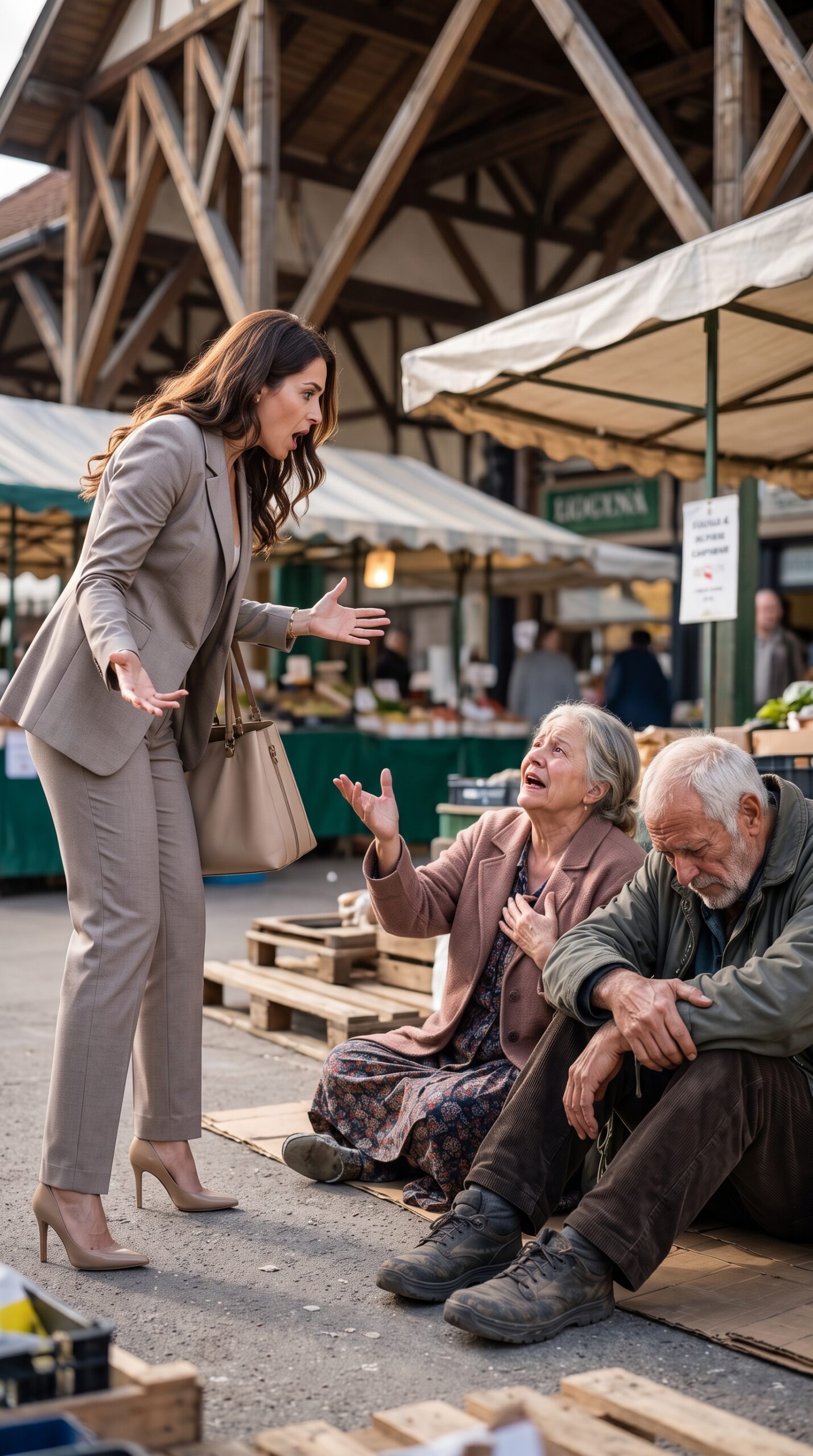
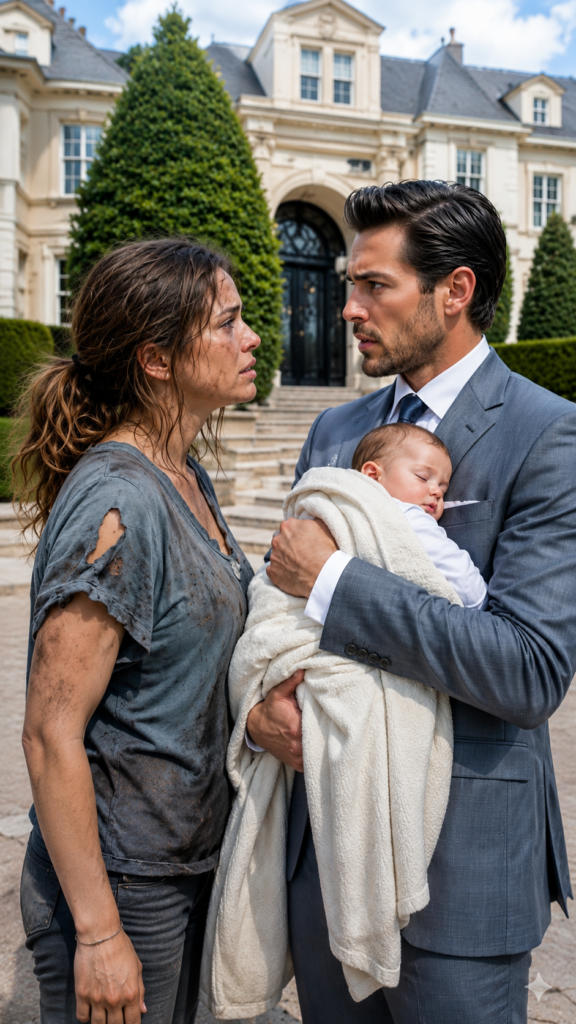
—Sir, do you need a girl to clean? I can cook, wash, iron… my daughter hasn’t eaten.
Alejandro Santillán stopped under the awning of the Hotel Reforma Dorada, right on Paseo de la Reforma, as the November rain pounded against the windows, as if it wanted to shatter them.
The woman was soaked, her sneakers untied, a gray sweater clinging to her body, and a sleeping girl pressed against her chest.
Alejandro was late for a board dinner. His mother, Doña Beatriz, was waiting for him in the main hall to announce a new million-dollar alliance for the Santillán Group.
But something in that voice pierced through him.
The woman lifted her face.
Alejandro felt the ground disappear beneath him.
—Valeria?
She paled. Her lips trembled. She had a yellow bruise on her cheek, her hair was cut haphazardly, and her eyes no longer sparkled like before.
—Don’t react —she whispered—. Your mom has people watching.
Alejandro couldn’t breathe.
Valeria, his wife, had been missing for two years. Everyone had declared her dead after they found her burned truck on the road to Toluca, along with some remains a doctor had identified as hers.
Doña Beatriz organized the funeral.
She had wept in front of everyone.
She had held Alejandro while he was crumbling inside.
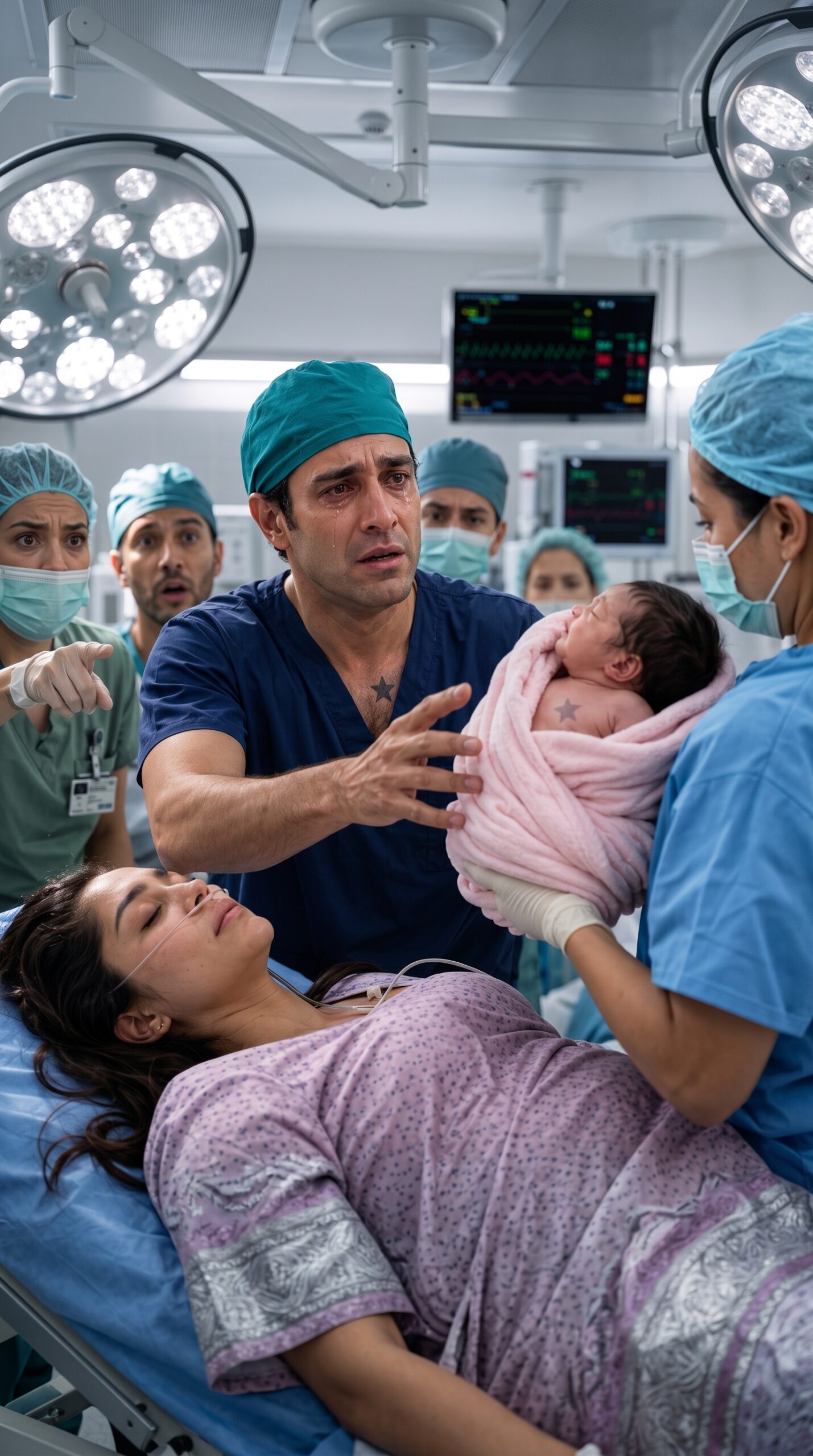
And now Valeria was there, alive, shivering with cold, with a one-year-old girl asleep in her arms.
—She’s your daughter —she said, barely moving her lips—. Her name is Lucía.
Alejandro felt his soul shatter.
He wanted to embrace them, scream, call everyone, but Valeria tightened her hold on the child.
—If you do anything strange, they’ll take me away again.
Alejandro swallowed hard. Then he raised his voice, pretending indifference.
—They might need help in the kitchen. Come this way.
The guard at the entrance looked at them suspiciously. Alejandro didn’t greet him. He just walked with Valeria to the private elevator, as if that woman meant nothing.
When they reached the presidential suite, he closed the door, pulled down the curtains, and fell to his knees.
Valeria placed Lucía in his arms.
The girl opened her eyes for a second. She had Alejandro’s same gaze.
He covered his mouth to stifle a sob.
—Your mom had me kidnapped —Valeria said—. She paid Dr. Gálvez to falsify the remains. She kept me locked up in a house in Morelos. When she found out I was pregnant, she said that baby would ruin the inheritance.
Alejandro looked up, his eyes filled with rage.
—Why?
—Because your dad wrote that if anything happened to you, the control of the group would pass to your wife and children. Your mom wanted an obedient son, a widower without descendants.
At that moment, his cell phone rang.
It was Doña Beatriz.
Alejandro answered with a calm that was frightening.
—Son, where are you? Dinner starts in an hour.
—I’m on my way, Mom.
Valeria shook her head, terrified.
—Alejandro, if she finds out, she’ll kill us.
He opened a secret compartment in his briefcase and pulled out another phone.
For two years, everyone thought that the pain had made him weak.
But the pain had made him patient.
He wrote a message to a federal investigator.
“VALERIA IS ALIVE. INITIATE PHASE 2.”
Then he looked at his wife and said:
—Tonight my mother will smile in front of everyone… without realizing that before midnight she will be handcuffed.
PART 2
Valeria froze.
Not because she doubted Alejandro, but because she knew Doña Beatriz Santillán. She knew her all too well.
That woman didn’t scream, didn’t lose control, didn’t dirty her hands.
She smiled, sent flowers, paid doctors, bought police, and made people disappear while serving coffee in porcelain cups.
—You don’t know what she’s capable of —Valeria said—. That lady isn’t alone.
Alejandro laid Lucía on the bed, covered her with a hotel blanket, and approached Valeria.
He didn’t touch her without permission.
Two years had passed, but in her eyes, she was still trapped in that confinement.
—That’s why I haven’t stopped investigating her —he replied—. I found inconsistencies in the death certificate. The dental file number was repeated. Dr. Gálvez disappeared three months after the funeral. And the property in Morelos was in the name of a shell company linked to my mom.
Valeria looked at him as if she could finally breathe.
—You knew?
—I didn’t know you were alive. But I never fully believed you were dead.
Alejandro opened a digital folder on a tablet.
There were pictures of the house, vehicle plates, bank transfers, intercepted calls with judicial orders, and reports from a private firm he had hired without anyone in the family knowing.
Valeria brought her hands to her face.
—Really… I thought no one was looking for me.
Alejandro closed his eyes. That phrase hurt him more than any blow.
—I searched for you every day.
She lowered her gaze.
—I was told that you had signed everything. That you already knew. That you didn’t want the baby.
Alejandro clenched his fists.
—They will pay for that too.
Two people entered the suite through a side door: lawyer Mariana Robles, a criminal attorney, and Commander Sergio Ibarra, from a federal unit against kidnapping and extortion.
Valeria stepped back, scared.
Mariana raised her hands.
—Calm down. We’re here to protect you. Alejandro alerted us months ago that something didn’t add up. We just needed to find you alive or locate where you were kept.
The commander looked at the sleeping girl.
—Mrs. Valeria, we need you to tell us if you can recognize the house, the caretakers, and anyone who participated.
Valeria swallowed.
For two years she had survived in silence.
Now she had to speak to avoid becoming invisible again.
—There was a man named Ramiro. They called him “El Güero.” He brought me food every two days. A woman named Irma took care of my daughter when she was born. And once I heard your mom say on the phone that if the girl came out with your eyes, we’d have to “resolve it once and for all.”
Alejandro felt a brutal sting in his chest.
Lucía stirred in her sleep.
He approached her as if the whole world could attack her.
The commander made a brief call.
—The team is already in position in Morelos. If the lady confirms the location, we’ll go in.
Valeria looked out the window covered by curtains.
—It was a house with purple bougainvilleas. In the back, you could hear a road. There was an old chapel and a shed with a red roof.
Mariana showed a satellite image.
Valeria covered her mouth.
—It’s that one.
The commander nodded.
—Then this ends today.
But Alejandro knew it wasn’t enough to rescue documents and arrest employees. Doña Beatriz had to fall in front of her own kingdom, in the place where she cared most about her image.
The board dinner was about to start.
In the hotel’s main hall, businessmen, partners, politicians, and family members raised glasses of wine. There were white flower arrangements, soft music, and a massive screen with the Santillán Group logo.
Doña Beatriz entered dressed in navy blue, impeccable, with discreet diamonds and a queen’s smile.
—My son will arrive any moment —she told the guests—. He has been a strong man, though life hit him hard.
Several ladies sighed.
Everyone remembered Valeria’s tragedy.
Some even admired Doña Beatriz for “holding” Alejandro up after his wife’s death.
No one knew that the same woman had bought the coffin, the tears, and the lie.
Alejandro descended to the hall 20 minutes later.
He wore a dark suit, a serene face, and a calm so cold that his mother noticed immediately.
—Son —she said, kissing his cheek—. You look pale.
—It’s been a long day.
—We’ll talk later. Today we need to close ranks.
Alejandro barely smiled.
—Of course, Mom. Today it all closes.
Doña Beatriz didn’t understand the phrase.
She went up on stage with him.
The master of ceremonies announced the new stage of the Santillán Group, a hotel expansion to Monterrey, Mérida, and Cancún. Applause filled the hall.
Then Alejandro asked for the microphone.
—Before talking business, I want to thank my mother.
Doña Beatriz bowed her head, emotional.
—She was with me in the worst moment of my life —Alejandro continued—. When my wife Valeria disappeared. When I was told she was dead. When we buried a coffin that, according to everyone, contained her remains.
The hall fell silent.
Doña Beatriz maintained her smile, but her fingers tightened around the glass.
—Mom taught me that there are people capable of acting as if they mourn a loss… even though they actually caused it.
Murmurs erupted immediately.
—Alejandro —she said in a low voice—, get down from there.
He didn’t move.
The screen behind them lit up.
A bank transfer appeared in Dr. Gálvez’s name.
Then, an audio recording.
Doña Beatriz’s voice thundered throughout the hall.
—I don’t want mistakes. The woman must disappear before she signs more documents. And if she’s pregnant, that will be handled later.
A scream echoed among the guests.
Doña Beatriz lost her color.
—That’s false.
Alejandro turned to her.
—Is this false too?
The screen showed photos of the house in Morelos, surveillance reports, and call logs between Doña Beatriz, the doctor, and Ramiro “El Güero.”
But the final blow came when the hall doors opened.
Valeria walked in slowly.
She wore clean clothes that Mariana had found for her, her hair still uneven, her face tired, and Lucía sleeping in her arms.
The entire hall stood up.
Some crossed themselves.
Others began to record with their cell phones.
Doña Beatriz recoiled as if she had seen a ghost.
—No… it cannot be.
Valeria did not scream.
She didn’t need to.
—Yes, it can be, Beatriz. I’m alive.
Alejandro stepped off the stage and stood next to them.
For the first time in two years, the family that Doña Beatriz wanted to erase was in front of everyone.
—That girl —Alejandro said, looking at the guests— is my daughter. My mother called her “an inheritance problem” before she was born.
Doña Beatriz regained her composure with terrifying speed.
—Son, please. That woman is manipulating you. You don’t even know if the girl is yours.
The comment split the hall in two.
Valeria tightened her embrace around Lucía.
Alejandro pulled an envelope from his jacket.
—I knew you would say that. The DNA test was done this afternoon, with urgent judicial authorization. Lucía is my daughter with 99.9% compatibility.
Doña Beatriz looked at the partners, seeking support.
No one approached.
Then came a twist no one expected.
An older man stood up from the last table.
It was Don Esteban, the driver who had worked for the Santillán family for 30 years and had been fired after Valeria’s supposed accident.
—I also have something to say —he murmured.
Doña Beatriz shot him a deadly glare.
—You shut up.
But Don Esteban was no longer afraid.
—The night Mrs. Valeria disappeared, I drove the truck to a workshop in Naucalpan. They told me it was for safety, that there was a threat against the family. Then I saw how they put another body in the vehicle before setting fire to it.
The hall froze.
—Another body? —Mariana asked.
Don Esteban nodded, crying.
—It was a woman no one claimed. A homeless person. Doña Beatriz said that, for the world, one dead could serve to cover another alive.
Valeria let out a sob.
This wasn’t just kidnapping.
It was a monstrosity.
Doña Beatriz raised her hand to slap the driver, but Commander Ibarra entered with several federal agents.
—Beatriz Santillán, you are under arrest for aggravated kidnapping, forgery of documents, criminal association, and whatever results from the manipulation of human remains.
She stepped back.
—Alejandro, I’m your mother!
He looked at her with a dry sadness, with no visible hatred, but with a firmness no one had ever seen in him.
—Mother was the woman who taught me not to harm. You only taught me that blood can also rot.
The agents put handcuffs on her.
Doña Beatriz began to scream that it was all a trap, that the group belonged to her, that Valeria was a nobody, that that girl wouldn’t take away what she had built.
But no one believed her.
Outside, almost simultaneously, another operation was entering the house in Morelos.
They found the room where Valeria had been locked up, baby clothes, expired medications, a notebook with expenses, and a makeshift crib made from wooden boxes.
They also found Irma, the woman who had cared for Lucía.
She confessed that Doña Beatriz had ordered to hand the baby over to a family in the north when she turned one year old.
Three days remained.
Valeria broke down upon hearing this.
For two years she had thought that confinement was the worst punishment.
But discovering they were three days away from taking her daughter away shattered her completely.
Alejandro embraced her then.
Not as the owner of a story or as the hero of revenge.
He embraced her as a man who finally understood that he had arrived late, even though he had never stopped searching.
—I’m sorry —he whispered—. I’m sorry for not finding you sooner.
Valeria cried against his chest.
—Don’t apologize. Just promise me that no one will ever decide for us again.
—Never again.
The following days were a national scandal.
Videos from the dinner went viral. People debated whether Alejandro did the right thing by exposing his mother in front of everyone or if he should have let the police act in silence.
Some said it was justice.
Others said it was cruelty.
But no one could deny the truth: Doña Beatriz had built an empire on a lie and nearly destroyed her own family to keep it.
The board suspended her voting rights.
Alejandro's father's will was read again.
Valeria, as the legally alive wife, regained her place. Lucía was recognized as an heir. And Alejandro temporarily resigned from the presidency to dedicate himself to rebuilding what his mother had destroyed.
It wasn’t a perfect ending.
Valeria had nightmares.
Lucía cried every time she heard a door slam.
Alejandro woke up at midnight to check that both were still there.
But one afternoon, two months later, the three of them walked through Chapultepec under a soft sun.
Lucía took her first steps between them.
Valeria let out a small, broken but real laugh.
Alejandro knelt in front of his daughter and let her advance.
The girl fell seated, looked at her parents, and tried again.
Valeria wiped her tears.
—Look at her —she said—. She doesn’t know they almost took everything from her.
Alejandro looked at Lucía, then at Valeria.
—Then let’s give her a life where she never has to know it out of fear, but out of truth.
Years later, when people still talked about the Santillán case, many repeated the same question:
Can a mother still call herself a mother when she tries to erase her own son’s family?
Valeria never answered in interviews.
Neither did Alejandro.
But every time Lucía ran through the hallways of the hotel where her mother asked for a job one rainy night, everyone understood the answer.
Justice doesn’t always return what was lost.
But sometimes it arrives in time to prevent love from being buried alive.