PART 1
Abril Santos was 12 years old and had been sleeping wherever the night left her for three weeks.
Sometimes under the archways of the Historic Center.
Sometimes near a Metro station.
Sometimes behind a tamale stall when the owner looked the other way.
Since her grandmother died in the fire at the tenement, Abril had learned not to trust too much.
The DIF had taken her to a shelter in Iztapalapa, but they took away the little medal of the Virgin that her grandmother had left her before she died. She also overheard a caregiver say that “that girl caused problems.”
That same night, she escaped.
She had no family.
No bed.
No one who asked about her.
But she had something strange for a girl living on the street: she still helped.
That afternoon, she entered Chapultepec Forest looking for a trash can where tourists left half-eaten food. She wore torn sneakers, an oversized sweatshirt, and kept her hands hidden in the sleeves because the air was really cold.
The sky was already turning orange.
Abril knew she had to leave before it got dark. On the street, after a certain hour, even shadows became dangerous.
Then she heard a whimper.
—Is anyone there? —a tiny voice said.
Abril stopped.
Honestly, her first impulse was to run.
She had learned that not everyone who asked for help was a victim. Sometimes it was a trap. Sometimes there were adults hiding, waiting.
But the voice sounded again.
—Please… I can’t move.
Abril walked slowly among the trees, holding a rock in her hand just in case.
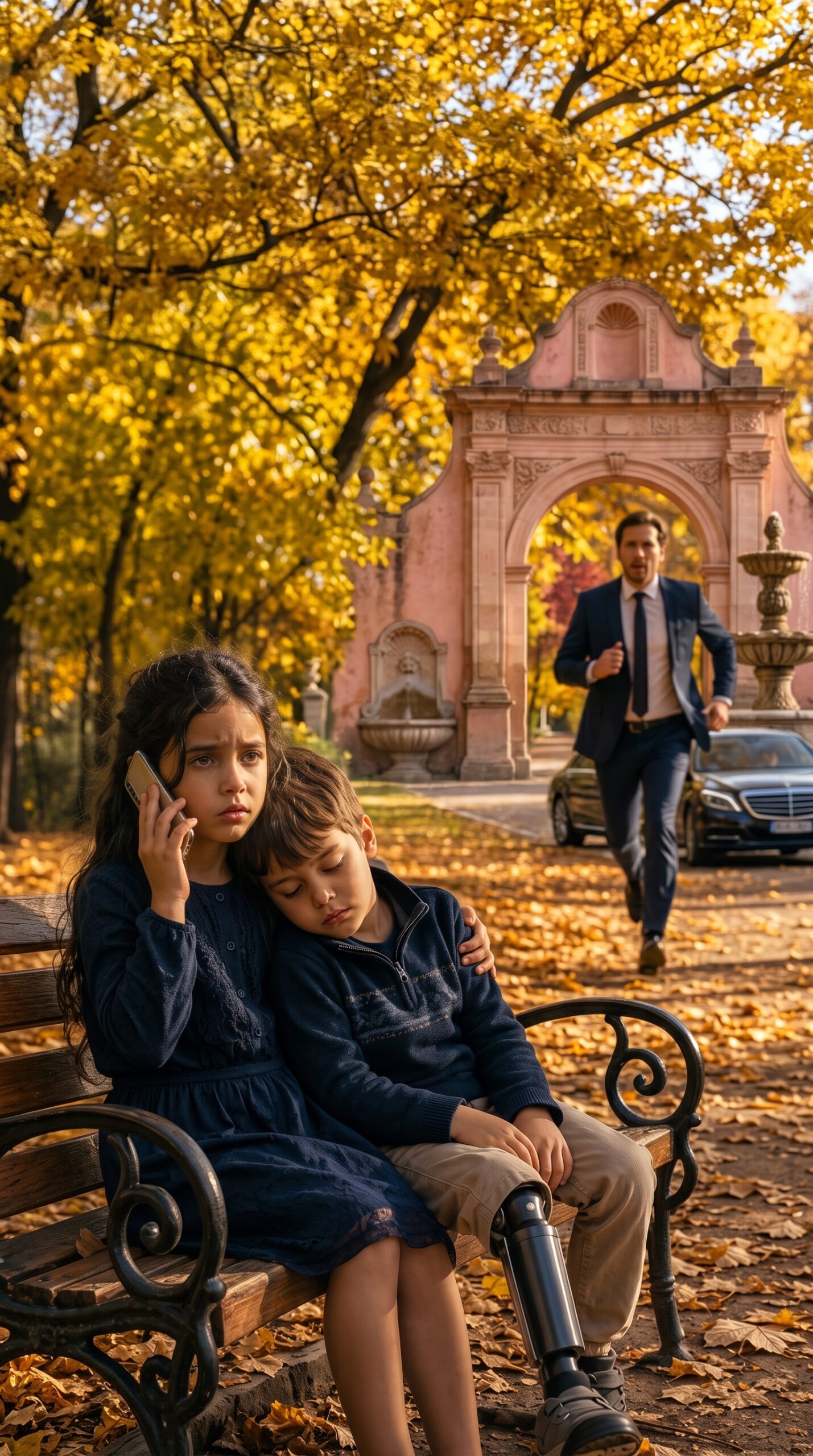
Near a bench, next to some discarded crutches, she found a boy her age on the ground. He wore expensive pants, a padded jacket, and white sneakers that looked brand new.
His face was pale.
His lips trembled.
He had a leg bent in an odd way.
—What happened to you? —Abril asked.
—I fell —he replied, trying not to cry—. My name is Mateo.
—And your parents?
The boy swallowed hard.
—My dad is working. The lady who takes care of me said she was going to get water… but she never came back.
Abril looked around.
There was no one.
No nanny.
No bodyguard.
No concerned adult.
Just that rich kid, lying on the floor as if someone had left him there on purpose.
—How long have you been here?
Mateo looked down.
—Since this morning.
Abril felt anger in her chest.
—All morning, dude?
The boy nodded, embarrassed.
—My cell phone is in my bag. I can’t reach it.
Abril hesitated.
A phone meant adults.
Adults meant questions.
Questions meant patrols, social workers, and going back to the shelter.
But Mateo was freezing.
She pulled the phone out of the jacket. The screen showed 27 missed calls.
“Dad.”
“Dad.”
“Emergency, Dad.”
—Should I call? —Abril asked.
Mateo could barely nod.
Abril pressed the contact.
The call connected almost on the first ring.
—Mateo! Where are you? —a man shouted, desperate.
Abril gripped the phone tightly.
—Sir, I found your son in Chapultepec. He’s lying down, he’s cold, and I think he’s hurt.
There was a silence that felt heavy.
—Tell me exactly where you are.
Abril explained as best she could, using the red bench, the closed corn stand, and the entrance near the lake as reference points.
—Don’t move. I’m on my way.
The call ended.
Abril took off her sweatshirt and put it over Mateo.
—You’re cold too —he said.
—I can handle it —she lied.
Minutes later, a black van screeched to a halt near the path. A man in a suit rushed out, not caring about the mud or the people staring at him.
—Mateo!
He fell to his knees beside the boy and hugged him as if his soul had returned to his body.
He didn’t look like a millionaire.
He didn’t look powerful.
He looked like a dad terrified for his child.
Then he looked at Abril.
She stepped back, ready to disappear.
But Mateo grabbed the torn sleeve of her sweatshirt and whispered:
—Dad… please… don’t leave her alone.
PART 2
Daniel Robles, owner of one of the largest hotel groups in Mexico, lifted his gaze and looked at Abril with the same fear he had looked at his son.
—What’s your name? —he asked.
Abril didn’t respond.
There were too many lights.
Too many people.
Too many men with radios approaching.
—She saved me, Dad —Mateo said—. If she hadn’t come, I would have stayed here all night.
Daniel clenched his jaw.
—Where’s Berenice?
Mateo looked down.
—She said she was sick of taking care of me. That because of me you would never marry her.
Abril felt her stomach twist.
Daniel stood frozen.
Berenice was his fiancée. The elegant woman who appeared in magazines with him, smiling in designer dresses. The one who insisted that Mateo needed “discipline” because, according to her, the boy used his disability to get attention.
Mateo had been born with a hip condition. He could walk with crutches, but not long distances. That’s why Daniel had hired nurses and drivers.
But that afternoon, Berenice convinced everyone that she would take him out for a walk.
—She said that if I got lost even a little, maybe you’d understand that you needed a wife, not a child stuck to you —Mateo confessed, crying.
Daniel closed his eyes.
Abril looked down. She didn’t want to get involved. It wasn’t her family. It wasn’t her problem.
But then an ambulance arrived and Daniel carefully carried his son. Before getting in, Mateo reached out his hand to her again.
—Let Abril come.
—I can’t —she said.
—Yes, you can —Daniel replied, his voice broken—. I won’t let you go until I hear your story.
Abril wanted to run, but a guard stepped in her way.
She tensed up.
—I’m not a thief.
—No one said that —Daniel replied.
—But they thought it.
The silence confirmed she was right.
In the private hospital in Polanco, Abril sat in a corner of the waiting room, wrapped in a thermal blanket. A nurse offered her hot chocolate and sweet bread. She took it with both hands, as if someone could take it away.
Mateo had a fracture in his leg and was showing early signs of hypothermia.
Daniel paced back and forth, making calls.
—I want cameras from the park. I want the driver. I want to know who turned off my son’s cell phone GPS. And I want Berenice here now.
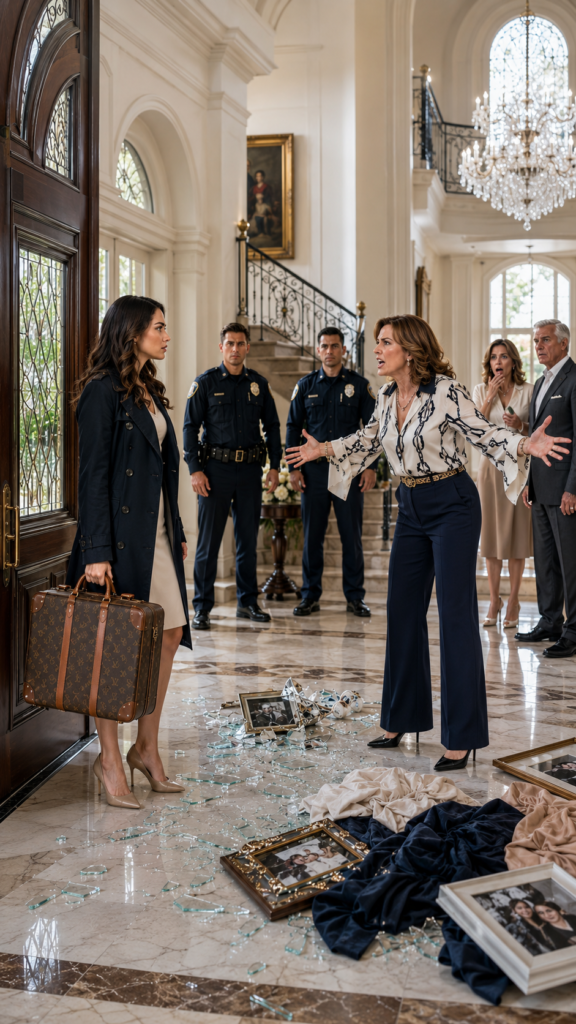
An hour later, Berenice appeared wearing dark glasses, expensive perfume, and an offended expression.
—Daniel, what a scare. My phone was stolen and I couldn’t let you know…
Mateo, from the stretcher, went pale.
Abril looked at her and felt something strange.
She had seen her before.
Not in magazines.
Not on TV.
In the shelter.
That woman had gone two weeks ago with a social worker. She had a folder and was asking about a girl named Abril Santos.
Abril slowly stood up.
—You were looking for me.
Berenice lost all color for a second, but then she smiled.
—Oh, sweetie, don’t make things up.
Daniel turned.
—What are you talking about?
Abril gripped the invisible medal she no longer had around her neck.
—She went to the shelter where they took me. She asked about me. She said my grandmother left papers and that she needed to find them before I claimed them.
Berenice let out a dry laugh.
—Daniel, please. She’s a street girl. She probably heard my name in the news.
Abril felt shame.
Then rage.
—My grandmother’s name was Carmen Santos. She had a tenement in the Doctores neighborhood. It burned down three weeks ago.
Daniel froze.
—Carmen Santos?
Berenice took a step back.
Abril noticed the change.
—Did you know her?
Daniel took a while to respond.
—Your grandmother worked for many years with my mother. When my mom died, she left her a small house and shares of land in Santa Fe. My family searched for Carmen for years.
Abril furrowed her brow.
—My grandmother said that someone wanted to take the house from us.
Daniel looked at Berenice.
—What did you do?
Berenice raised her hands.
—Nothing. This is absurd.
But at that moment, Daniel’s lawyer entered with a tablet. He had a serious face.
—Mr. Robles, we reviewed the park cameras. Ms. Berenice left the boy around 10:12 in the morning. There’s also video of her throwing the crutches away from him.
Mateo started to cry silently.
Daniel said nothing. His face hardened in a way that even Abril felt fear.
—And about the girl? —Daniel asked.
The lawyer looked at Abril.
—We found something else. The fire at the tenement was not accidental. There’s an anonymous complaint about a man hired to cause a short circuit in the meter room. The payment came from a shell company linked to Ms. Berenice's family.
The room went silent.
Berenice screamed:
—It’s a lie!
But her voice no longer sounded elegant. It sounded desperate.
Abril felt the world tilt beneath her.
—Did my grandmother die because of that?
No one answered.
And sometimes silence is the cruelest answer.
Daniel approached Berenice.
—You were going to marry me to gain access to my mother’s trust. But you discovered that part of it wasn’t mine. It belonged to Carmen. And if Carmen died, the heir was Abril.
Berenice pressed her lips together.
—You would never understand. That old woman had papers worth millions. And this girl can’t even read a contract properly.
Abril felt a stab in her chest.
Not from the insult.
But for her grandmother.
Carmen Santos, who sold quesadillas to pay for school supplies.
Carmen, who said, “Sweetheart, one day this city will respect us.”
Carmen, who died trapped in smoke while Abril shouted outside.
Mateo raised his voice from the stretcher.
—You left me too, so I could die.
Berenice looked at him with contempt.
—Don’t exaggerate, Mateo. No one dies from sitting still for a few hours.
Daniel stepped forward, but Abril spoke first.
—No. But one dies when no one returns.
That phrase shattered something in the room.
The lawyer called the police. Berenice tried to leave, but the guards closed the door.
When the agents arrived, she was still shouting that it was all the fault of a street girl and a disabled boy. She used those words. Just like that, without shame.
Daniel didn’t let Mateo hear any more of it. He covered his ears and kissed his forehead.
Abril, on the other hand, heard everything.
Because she had learned that the truth, even if it hurts, also returns your name.
The following days were a national scandal.
News outlets spoke of the millionaire fiancée who abandoned her future husband’s son in Chapultepec. Then came the news about the fire, the stolen properties, the forged papers, and the illegal search for an orphaned girl.
People on Facebook were divided.
Some said Daniel was guilty for not seeing the signs sooner.
Others said the rich always believe money can buy people.
Many cried over the photo of Mateo holding Abril’s hand in the hospital.
But no one knew the most important thing.
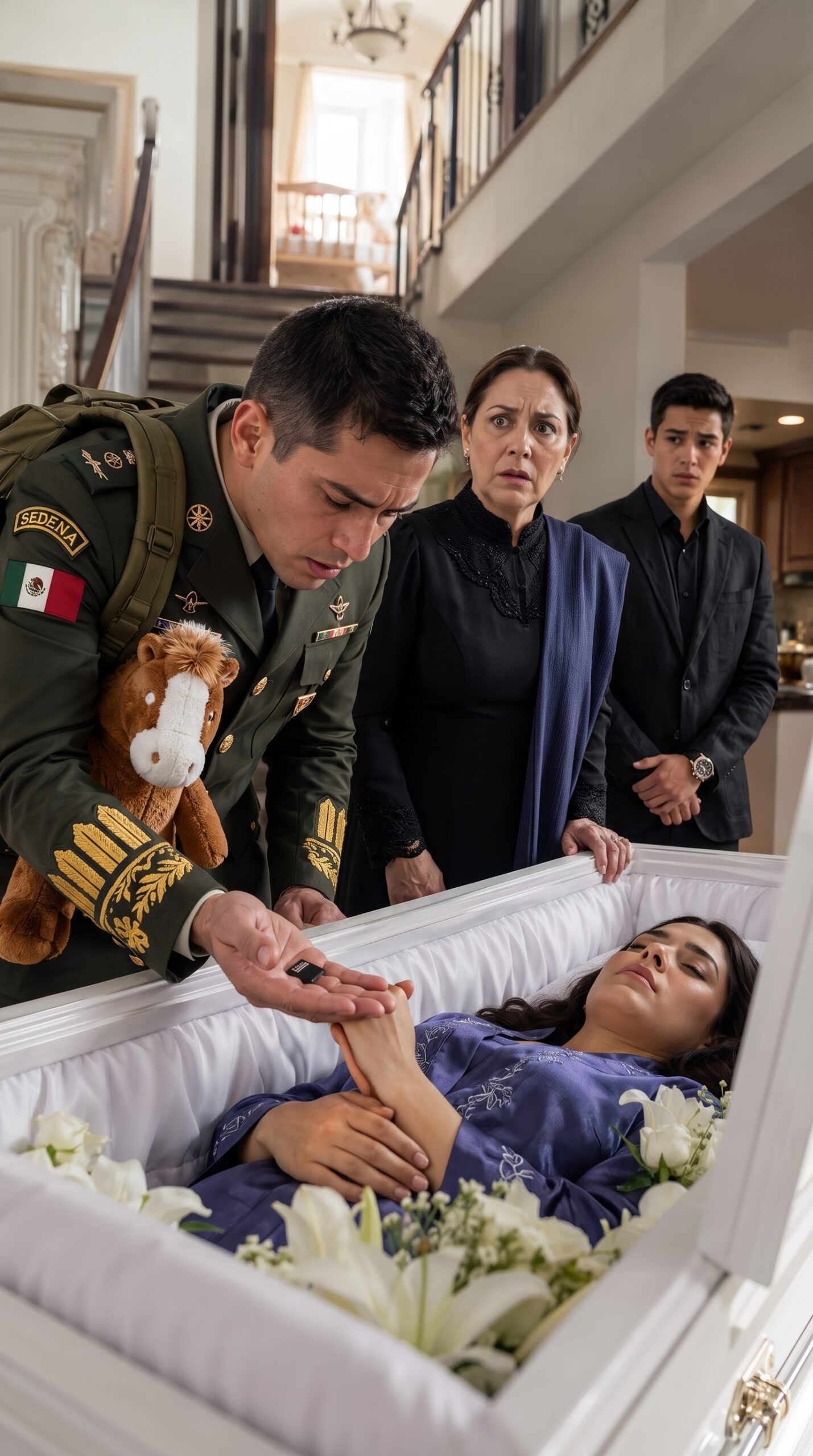
The night before the dignified funeral that Daniel organized for Carmen, Abril found inside a box recovered from the fire a half-burned letter. It was hidden in a cookie tin.
Daniel read it with her.
The letter said that Carmen Santos had not only worked for Daniel’s mother.
She had been the woman who, years ago, saved Daniel from a kidnapping when he was a child. That’s why Daniel's mother left her that inheritance, not as payment, but as gratitude.
And at the end of the letter, there was a phrase written in Carmen’s trembling handwriting:
“If something happens to me, protect Abril. She has a heart that this world still doesn’t deserve to break.”
Abril cried for the first time since the fire.
She didn’t cry on the street.
She didn’t cry in the shelter.
She didn’t cry when she was hungry.
She cried when she understood that her grandmother, even in death, had continued to take care of her.
Daniel didn’t try to replace anyone. He didn’t say, “Now I’m your dad,” like in the movies. He just sat beside her and promised her three things.
That he would recover what was hers.
That Berenice would pay for her crimes.
And that she would never sleep in fear again.
Months later, Abril lived in a quiet house in Coyoacán, under temporary legal guardianship of Daniel while her situation was resolved. Mateo was in rehabilitation and walking a little stronger each week.
Between them, a rare and beautiful friendship was born.
He taught her math patiently.
She taught him to distinguish when someone smiled genuinely and when they smiled to deceive.
One day, during a hearing, Berenice asked to speak.
She was without makeup, hair tied back, and her gaze hollow.
—I didn’t want anyone to die —she said—. I just wanted to secure my future.
Abril watched her from the bench.
That phrase gave her more courage than any shout.
Because Carmen also wanted a future.
Mateo also wanted to go home.
Abril also wanted to be a normal girl.
Daniel didn’t respond. Neither did Mateo.
Abril stood up and said firmly:
—You didn’t want a future. You wanted to steal everyone else’s.
The room fell silent.
Berenice lowered her head for the first time.
In the end, she was prosecuted for abandonment, fraud, forgery, and her involvement in the fire. Her accomplices fell one by one, including the social worker who tried to hand Abril over for money.
Daniel created a foundation named after Carmen Santos to protect homeless children and monitor shelters where no one asked questions.
On the first day of the foundation, Abril cut the ribbon with trembling hands.
Mateo was by her side, leaning on his crutches.
—Do you remember when you found me? —he asked her.
Abril smiled a little.
—Yeah. You were so dramatic, dude.
Mateo laughed.
Daniel watched them from behind, his eyes filled with tears.
That day, a reporter asked Abril what she had learned from everything that happened.
She looked at the cameras, then up at the sky, as if her grandmother could hear her.
—That sometimes the person everyone ignores is the only one brave enough to do what’s right.
Then she took Mateo’s hand and walked into the building.
People applauded, but Abril didn’t think about fame or money.
She thought of the girl who trembled with cold in Chapultepec with a rock in her hand.
She thought of the boy who had been waiting for hours for someone to return.
She thought of all the adults who failed before two children saved each other.
And maybe that’s why the story hurt so much in Mexico.
Because everyone wanted to know who the real hero was.
The billionaire who opened the doors in the end.
The boy who asked not to leave her alone.
Or the homeless girl who, having nothing, was still able to give everything.