PART 1
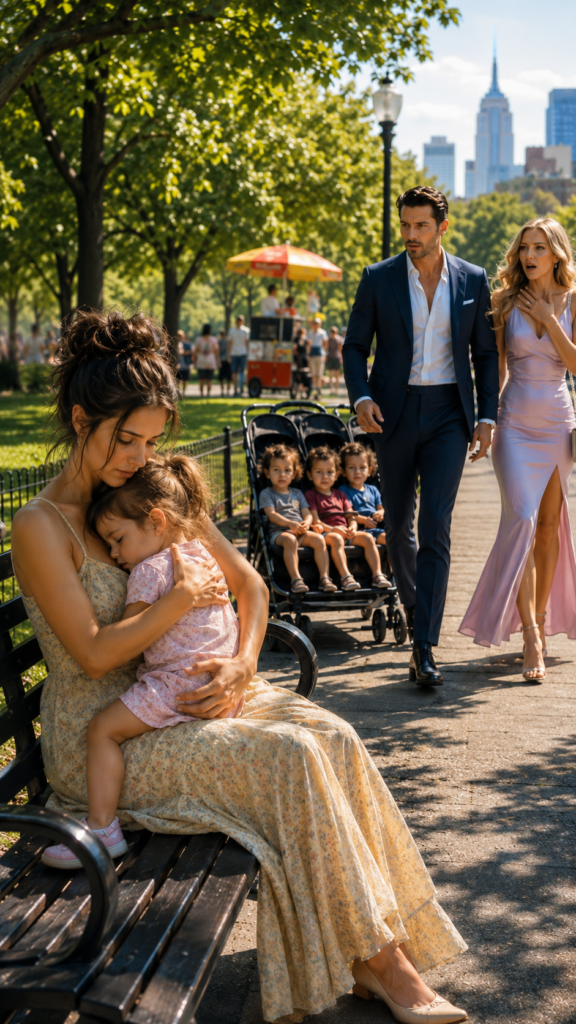
Mateo Valcárcel walked through Chapultepec Park with Renata Landa, the woman he was to marry in two months.
The engagement ring sparkled in her hand as if it wanted to shout to the world that she already owned him.
Renata smiled, perfect, impeccable, with designer sunglasses and a wrinkle-free white dress.
—My mom says the wedding should be in San Miguel de Allende, not Valle de Bravo—she commented, fixing her hair—. And no banda, Mateo. Something elegant, with a quartet. I don’t want it to look like a ranch party.
Mateo nodded without really hearing.
He was the heir of Grupo Valcárcel, an empire of transportation, customs, and private security that newspapers called a “family business.”
But at family gatherings in Mexico City, everyone knew otherwise.
The Valcárcels didn’t just move merchandise.
They moved favors, silence, and fear.
His grandfather, Don Aurelio Valcárcel, had built the fortune with a gentleman's smile and hands stained with secrets.
In that family, love was dangerous.
Trust was for the naive.
And disobedience could cost you everything.
Mateo glanced toward an area where several children were running after bubbles. For a second, he felt a strange nostalgia, as if he were seeing a life he’d never allowed himself to have.
Then he saw her.
Air caught in his chest.
A few meters away, by a corn-on-the-cob stand, was Lucía Robles.
His Lucía.
The woman he had loved four years ago and had destroyed with a cruel phrase to push her out of his world.
Her hair was hastily tied back, wearing a simple blouse, worn sneakers, and the tiredness of someone who hadn’t slept soundly in years.
But her eyes were still the same.
Warm.
Wounded.
Impossible to forget.
Mateo took a step without realizing.
Renata continued talking about flowers, guests, and important surnames, but her voice became noise.
Then he saw the stroller.
This wasn’t an ordinary stroller.
It was a triple stroller.
Three small children were seated there, curiously watching the park.
A girl laughed at the sight of a red balloon.
A boy pressed a blue cart against his chest.
The other observed everything in silence, serious, as if he understood too much for his age.
Mateo froze.
The girl turned her head.
And when her eyes met his, the world split apart.
They were gray.
Cold.
Intense.
Exactly like his.
Lucía raised her gaze.
Upon seeing him, she turned pale.
For a few seconds, nobody moved.
Then, fear crossed her face.
Lucía grabbed the stroller with both hands and began to walk quickly.
Then she ran.
—Mateo?—Renata asked, irritated—. Where are you going?
He didn’t respond.
He just watched Lucía disappear into the crowd with those three children.
His children.
His blood.
And he understood that the biggest lie of his life had just passed in front of him.
PART 2
Mateo ran through families, vendors, and tourists without caring that his escort was shouting his name behind him.
—Lucía!—he shouted, voice breaking—. Lucía, wait!
She didn’t stop.
She pushed the stroller as if death were chasing her.
The gray-eyed girl began to cry. One of the children asked something Mateo couldn’t hear. The third pressed his blue cart against his chest, frightened by the race.
Lucía turned toward a side exit of the park, where several taxis were waiting.
Mateo managed to reach her just before she got into one.
—Don’t come near—she said, placing herself between him and the children.
Mateo raised his hands.
He had never felt so powerful and so useless at the same time.
—They’re mine, right?
Lucía swallowed hard.
Her eyes filled with tears, but her voice came out firm.
—You have no right to ask that after four years.
—I didn’t know.
She let out a bitter laugh.
—Of course, you knew enough to humiliate me, Mateo. You knew enough to tell me I was a cheap distraction. That a waitress from Coyoacán couldn’t be with a Valcárcel. That I should find someone more my level.
Each word hit him like stone.
Mateo recalled that night.
The rain pounding against the windows of the house in Las Lomas.
Lucía in front of him, crying, asking for an explanation.
And he, repeating the phrases his grandfather had ordered him to say.
Because Don Aurelio had shown him photos of Lucía leaving work, of her mom, of her home.
“If you love her, you let her go,” he had said.
Mateo let her go.
But he shattered her so she wouldn’t return.
—I did it to protect you—he murmured.
Lucía looked at him with a fury that left him defenseless.
—Protect me? Really? You left me pregnant with three babies, alone, with no money, while your family watched me. They closed doors on me at hospitals. Kicked me out of two jobs. Sent me envelopes with no return address containing photos of my newborns.
Mateo felt his stomach sink.
—What envelopes?
Lucía reached into her bag and pulled out an old phone with a shattered screen.
She opened a folder.
There were photos.
Her leaving a clinic.
The babies in an incubator.
A sheet with an address.
Another with a typewritten threat:
“If you seek Mateo, your children will grow up without a mother.”
Mateo stopped breathing.
—Lucía, I would never…
—I know you weren’t the one—she interrupted—. That was the worst. For years I thought you were a coward, but not a monster. Until six months ago when I discovered who truly was.
Before he could say more, Renata appeared behind Mateo.
She was furious, her heels stained with dirt and her pride wounded.
—What is this?—she asked, looking at Lucía as if she were trash—. Another woman asking you for money?
Lucía clenched her jaw.
Mateo turned slowly.
—Renata, go away.
She let out a laugh.
—Don’t talk to me like that in front of the maid.
It was then that the girl with gray eyes stopped crying and looked at Renata with an unsettling seriousness.
—My mom isn’t a maid—she said softly.
Mateo felt something inside him crack.
—What’s your name?—he asked carefully.
The girl looked at Lucía, seeking permission.
Lucía didn’t respond.
—Valentina—answered the little one.
Mateo almost fell to his knees.
Valentina.
The name that he and Lucía had chosen one night in a taquería in Condesa, when they still believed they could have a future.
—And they are Emiliano and Nico—Lucía said, her voice trembling—. Your children, yes. But not because you deserve them.
Renata stood still.
For the first time, she lost her smile.
—Mateo, let’s go. This is a staged show. She probably wants to get money from you.
Lucía pulled another envelope from her bag.
—How curious you say that.
She extended it to Mateo.
He opened it.
Inside were copies of bank transfers, printed messages, and a blurry photograph taken outside a clinic.
In the photo was Renata.
Talking to a security man from the Valcárcels.
Mateo looked up.
—What is this?
Renata paled.
—I don’t know what you’re talking about.
Lucía took a deep breath.
—When the children were born, I tried to find you. I sent letters to your office. Called. Went to the corporate office three times. The last time, this woman came out to meet me.
Mateo looked at Renata as if he didn’t recognize her.
—Did you see her?
Renata pressed her lips together.
—Your grandfather asked me to resolve an uncomfortable situation.
—Uncomfortable?—whispered Mateo.
—Yes!—she exploded—. What did you want me to do? Let a pregnant ex ruin a multi-million alliance? My family and yours needed that wedding. You needed a wife from your world, not a little lady selling lunch.
Lucía wanted to respond, but Mateo raised a hand.
Not to silence her.
To hold on to reality.
—Did you know they were my children?
Renata didn’t answer.
That silence was enough.
Mateo felt a brutal cold run down his back.
—I asked if you knew.
—I wasn’t sure—she said—. But it was probable.
Emiliano began to cry.
Nico covered his ears.
Valentina hugged her mom.
And Mateo, the man who had intimidated businessmen, politicians, and judges with a single glance, couldn’t say anything.
Lucía put the phone away.
—Now you know. And you also know why I ran.
—Lucía, please. Let me take a test. Let me help them.
She shook her head.
—Help isn’t showing up four years late with escorts and a surname. Help would have been believing me. Finding me. Breaking your chains before they were used against my children.
Mateo took a step closer.
—I’ll fix it.
—Not everything can be fixed with money, Mateo.
That phrase hurt more than any blow.
Then Renata’s phone rang.
She looked at the screen and stepped away a few meters.
But Mateo caught a glimpse of the name.
Don Aurelio.
Something wild crossed his expression.
—Answer—he ordered.
Renata tensed.
—No.
Mateo snatched the phone and put it on speaker.
His grandfather’s voice came out dry, calm, as always.
—Have you solved the problem at the park?
Lucía closed her eyes.
Mateo felt his blood boil.
—I’m here, grandfather.
There was silence.
Then Don Aurelio let out a sigh.
—Mateo, don’t make a drama. That woman doesn’t belong to this family.
—My children do.
—Those kids are a threat. Any enemy can use them against you. That’s why I did the right thing.
Mateo squeezed the phone until it nearly broke.
—Was threatening a pregnant woman the right thing?
—Saving the surname was the right thing.
Renata tried to take the phone from him, but Mateo pushed her away with his arm, not touching her hard, just distancing her from his life.
—It's over—he said.
Don Aurelio laughed softly.
—Nothing is over until I say it is.
But this time, Mateo felt no fear.
He looked at Lucía.
He looked at Valentina, Emiliano, and Nico.
And for the first time in years, he understood that his grandfather was not an impossible shadow to defeat.
He was just an old man who had ruled using everyone’s terror.
Mateo hung up.
Then he called his personal lawyer.
—I want a DNA test today, with a notary. I want independent security for Lucía and the kids. And tomorrow morning, you file a complaint against Don Aurelio Valcárcel and Renata Landa for threats, concealment, and whatever is appropriate.
Renata opened her mouth, horrified.
—Are you crazy? I’m your fiancée!
Mateo took the engagement ring out of his pocket, because he’d never worn it, and let it drop on the sidewalk.
—No. You were the warden of my children.
People around began to stare.
Someone was recording with a cellphone.
Renata, used to getting her way in private, didn’t know how to act when disdain became public.
—You’ll regret this—she whispered.
Lucía stepped forward.
—No, Renata. Regret comes when a person still has a conscience. You only have fear.
Hours later, in a private clinic in Polanco, the test was conducted under legal supervision.
Mateo didn’t touch the kids without permission.
He didn’t try to bribe them with gifts.
He just sat at a distance, watching as Valentina gave water to Emiliano and Nico arranged their carts by color.
He cried silently.
Lucía saw him, but didn’t console him.
She had already spent too many years comforting herself alone.
When the result came, there was no surprise.
Paternal compatibility: 99.99%.
Mateo closed his eyes.
Father.
The word hit him late, but it hit him whole.
In the following weeks, everything exploded.
Don Aurelio’s audios reached the prosecutor’s office.
Renata’s transfers came to light.
An old driver confessed he was ordered to follow Lucía during her pregnancy.
And a doctor revealed that someone had attempted to buy the triplet’s birth record to erase it from the system.
The press tore apart the Valcárcel family.
Don Aurelio was summoned to testify.
Renata lost the ring, the wedding, the surname she so desired, and the social respect she used as a mask.
But the harshest punishment wasn’t for them.
It was for Mateo.
Because every Friday, when he went to see his children under a legal agreement, he had to knock on the door like any visitor.
He didn’t enter as the owner.
He didn’t command.
He didn’t demand.
He waited.
Valentina took three months to hold his hand.
Emiliano took five to accidentally call him “dad.”
Nico said nothing until one afternoon in Xochimilco, when he handed over his blue cart and murmured:
—Take care of it.
Mateo understood that cart was worth more than all his fortune.
Lucía never returned to him.
And that was the part that sparked the most comments when the story came out online.
Some said he should forgive him because he had been manipulated.
Others said four years of abandonment couldn’t be erased with tears or DNA.
Lucía only said one thing when a reporter waited for her outside the courthouse:
—A man can truly regret and still not deserve to return to the place he broke.
Mateo accepted watching her happy from a distance.
He paid for therapy, schools, and security, but never used money as an excuse again.
He learned to arrive early.
To ask for permission.
To listen.
To not promise what he couldn’t repair.
One afternoon, Valentina asked him why he wasn’t there when they were born.
Mateo felt the world crashing down.
Lucía was just a few meters away, listening.
He could blame his grandfather.
He could blame Renata.
He could say he didn’t know.
But he looked at his daughter and chose, for the first time, not to hide behind anyone.
—Because I was a coward—he replied—. And I will spend my life trying not to be one again.
Valentina didn’t hug him.
She just nodded.
And for Mateo, that was justice.
Not the kind in the newspapers.
Not the kind from judges.
The real kind.
The kind that doesn’t erase the damage, but forces the one who caused it to live facing what they lost.
Because sometimes the punishment isn’t to be left alone.
Sometimes the punishment is discovering you did have a family… and that you arrived too late to deserve it completely.