PART 1
"Invite her, Mom. But tell her to come in style. I want to see if she shows up in a thrift store dress."
The words slipped from Renata Arriaga's mouth as she tried on diamond earrings in front of the mirror in the main living room. Her mother, Beatriz Castañeda de Arriaga, let out a cold laugh, one that didn’t arise from joy but from the habit of stepping on others.
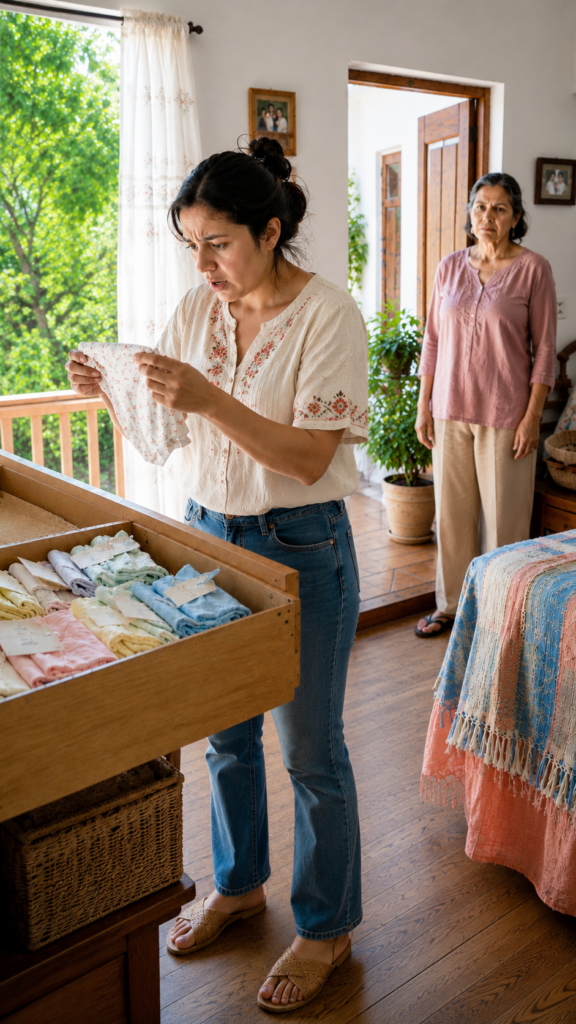
The mansion was in Lomas de Chapultepec, with marble floors, enormous windows, and employees moving like shadows to avoid disturbing anyone. Outside, by the service hallway, Sofía Luna quietly wrung out a mop.
She was 27, her dark hair pulled into a low bun, and her calm eyes drove Beatriz insane. Sofía had been cleaning that house for three years. She knew every stain on the marble, every broken glass hidden by drunken guests, and every insult disguised as a joke.
"Sofía," Beatriz called, raising her voice.
The young woman approached in her crisp gray uniform.
"Yes, ma'am?"
Beatriz took an ivory invitation with golden edges. It was for the anniversary gala of the Arriaga Foundation, a night filled with businessmen, politicians, artists, and 300 guests who would pretend to care about poor children while sipping French champagne.
"I want you to come on Saturday," Beatriz said. "As a guest."
Renata stifled a laugh.
Sofía looked at the card, then at Beatriz.
"Thank you very much, ma'am."
"Just so you know," Beatriz added, slow and venomous, "it’s strict formalwear. Don’t come looking like you do every day, sweetheart. One thing is cleaning, and another is showing up among decent people."
Renata burst into laughter.
Sofía didn’t look down. She took the invitation carefully, as if it were not a mockery but a key.
"Understood."
As she walked down the hall, Renata murmured:
"Seriously, this is going to be the best gossip of the night."
Beatriz raised her glass.
"Someone needs to teach that girl her place."
Neither of them noticed that Emiliano Arriaga, Beatriz's eldest son, had just entered the room and heard everything.
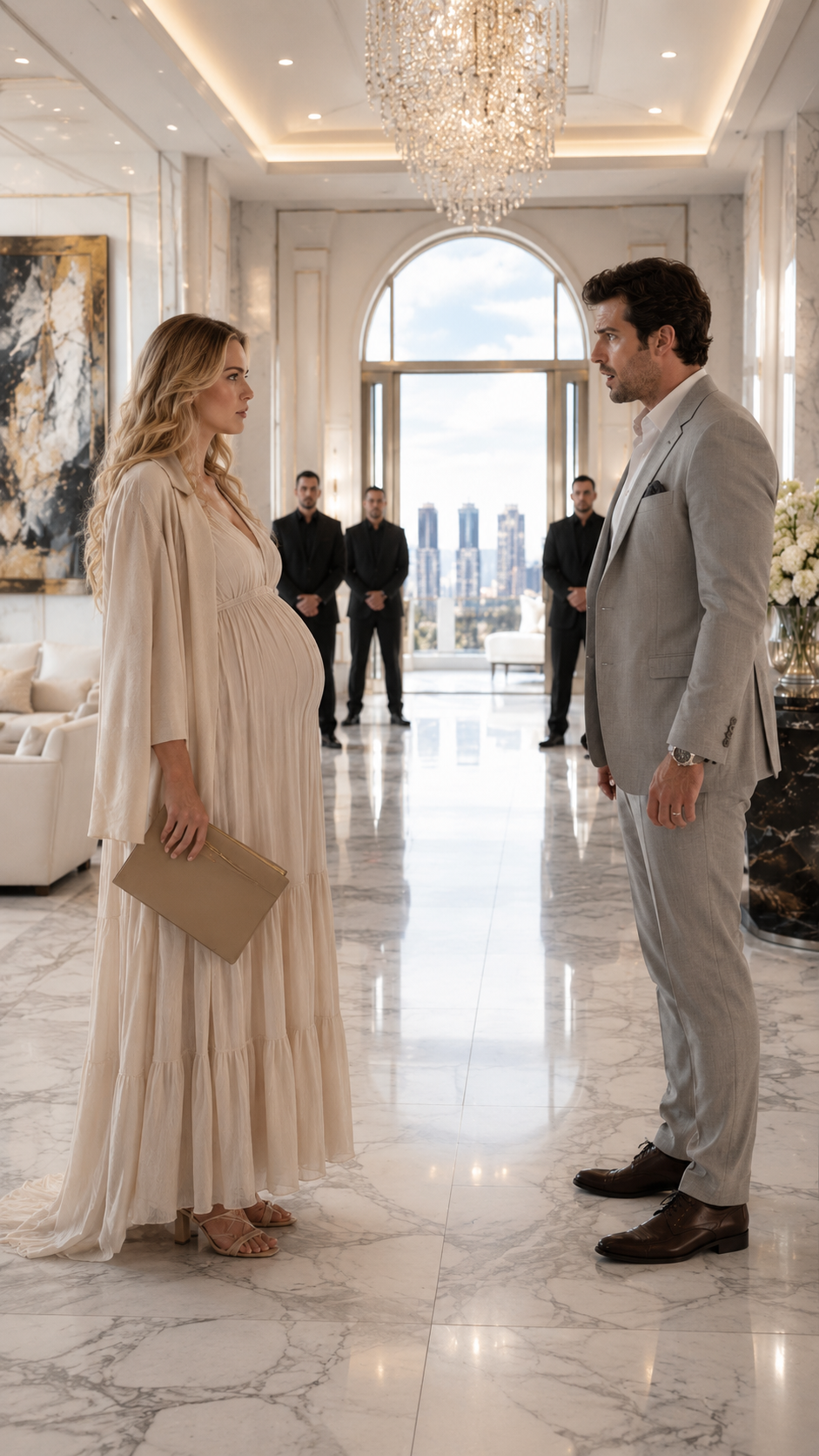
Emiliano was 35, wearing a dark suit, a well-groomed beard, and an air of seriousness that didn’t match the house. Since the death of his father, he had taken over part of the family business, even though his mother still wore the Arriaga surname like a crown.
"That was cruel," he said.
Beatriz didn’t even turn around.
"Don’t exaggerate."
"You invited her to humiliate her."
"I invited her to a party. If she feels humiliated, that’s her problem."
Emiliano clenched his jaw.
"One day, you’ll mock the wrong person."
Beatriz smiled disdainfully.
"In this house, there’s no one above me."
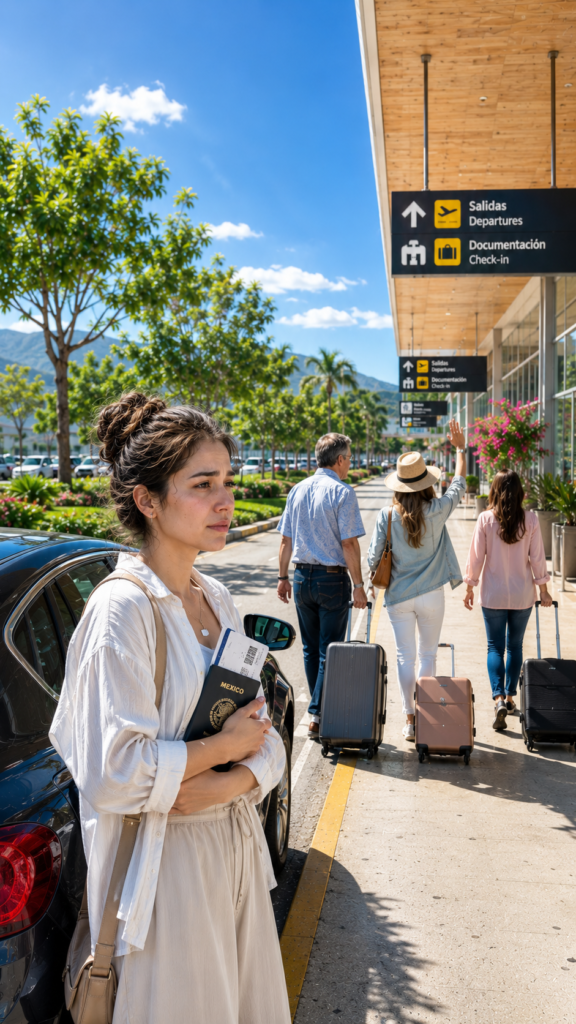
That night, Sofía arrived at her small apartment in Portales. She closed the door, placed the invitation on the table, and stared at it for a long time.
Then she opened a wooden box hidden under her bed. Inside lay an old photo of an elegant woman, a birth certificate, three yellowed letters, and a ruby brooch that didn’t seem to belong in that humble room.
Sofía dialed a number.
"Grandpa," she said as soon as he answered. "I was invited."
On the other end, an older man fell silent.
"Was it to humiliate you?"
"Yes."
"Then the time has come."
Sofía closed her eyes.
"I’m ready."
On Saturday, the Arriaga mansion sparkled like a society magazine. There were orchid arrangements, waiters in white gloves, live music, and cameras snapping photos of all the important surnames in Mexico.
At 8:47 PM, a black car stopped at the main entrance.
The driver opened the door.
A woman stepped out in a deep red dress, hand-embroidered, ancient jewelry, and a silent confidence that made even the security guards step aside.
Beatriz watched from the stairs.
It took her several seconds to recognize her.
It was Sofía.
And in her hand, she held the golden invitation that Beatriz had given her as a joke.
PART 2
The murmur began as a small vibration and then grew throughout the foyer.
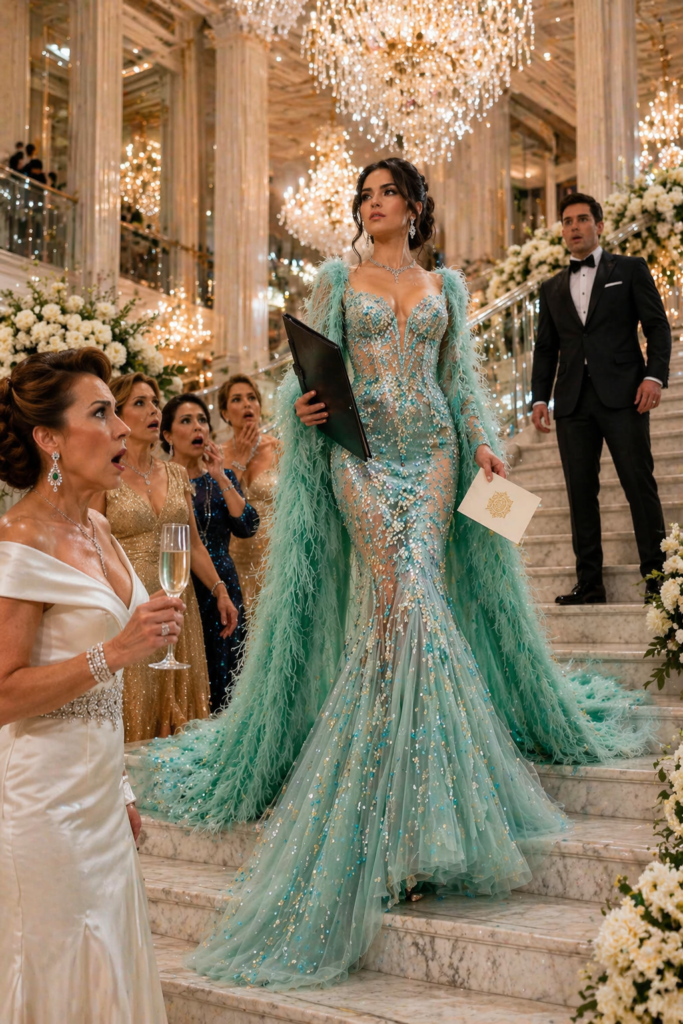
Sofía Luna walked across the marble in a wine-red dress that seemed made for her, not to impress anyone. The neckline was elegant, the sleeves fell softly over her arms, and the ruby brooch on her chest had an antique shine, one of old family wealth, not from an expensive store.
Beatriz Castañeda felt the blood drain from her face.
Renata stopped smiling.
"This can’t be," she whispered. "Where did she get that?"
Sofía halted before them. She didn’t hide her hair or hunch her back. She wore the same calm demeanor as always, but now no one could mistake her for submissive.
"Good evening, Mrs. Beatriz," she said. "I came as you asked. In strict formalwear."
Some guests let out awkward chuckles. Others approached, curious, smelling the scandal like sharks.
Beatriz tried to regain control.
"Sofía, what a surprise. I didn’t expect you to be so... theatrical."
"I didn’t expect to be invited either," she replied. "But here’s the card."
She lifted it slightly. Beatriz’s name gleamed in golden letters.
Emiliano watched from the bar, immobile. He didn’t look surprised. He looked sad, like someone finally confirming a fear.
Renata leaned in closer to her mother and spoke softly, but not softly enough.
"Mom, tell security to kick her out. This is getting weird."
"They can’t kick me out," Sofía said, her voice steady.
Renata froze.
"Excuse me?"
Sofía looked toward the entrance.
"Because I didn’t come alone."
The main doors opened once more.
In walked Don Julián Ledezma, an 82-year-old retired businessman, owner of half the industrial corridor between Querétaro and the State of Mexico. His name didn’t appear much in magazines, but in banks and notaries, it was still spoken of with respect.
He walked with a cane, in a black suit, wearing a serene expression that silenced several powerful men.
Beatriz blinked.
"Don Julián..."
He didn’t greet her with a kiss. He positioned himself next to Sofía.
"Thank you for welcoming my granddaughter."
The statement fell like a shattered glass.
A murmur of surprise rippled through the hall.
Renata let out a nervous laugh.
"Your granddaughter? No, excuse me, but she cleans the bathrooms in my house."
Don Julián looked at her like one looks at a stain on a tablecloth.
"And even while cleaning them, she had more education than you sitting at this table."
Renata opened her mouth, but Beatriz squeezed her arm.
"Don Julián, there must be a misunderstanding," Beatriz said, trying to smile. "This young woman’s name is Sofía Luna."
"Her name is Sofía Ledezma Luna," he corrected. "Daughter of Mariana Ledezma."
The name made Beatriz lose her balance for a second.
Emiliano noticed.
So did Sofía.
There lay the first crack.
Mariana Ledezma had been, 30 years ago, a junior partner of Arturo Arriaga, Beatriz's late husband. Together, they built a medical supply company that later became the Arriaga Group. In the official version, Mariana retired young, sold her shares, and disappeared from social life.
But the official version was a perfectly glossed lie.
Don Julián gestured. A woman in a navy blue suit, a lawyer from his team, handed a folder to Sofía.
The orchestra stopped playing without anyone asking.
Sofía ascended three steps on the main staircase. The same staircase she had spent years cleaning on her knees when Beatriz organized breakfasts with ladies who spoke of charity while ignoring the maid just two meters away.
"I don’t want to ruin a party," Sofía said, taking a microphone. "But this party started with a mockery. And sometimes mockeries open doors that should have remained closed."
Beatriz pressed her lips together.
"Get down from there."
Sofía looked at her.
"For three years, I obeyed when you told me that. Today, I won’t."
A hard silence filled the mansion.
Sofía took a deep breath.
"My mother, Mariana Ledezma, didn’t sell her shares by choice. She was pressured, isolated, and deceived when she was pregnant with me. They made her sign papers she never fully understood, after falsely accusing her of stealing money from the company."
Beatriz stepped forward.
"That’s slander."
"No," Emiliano said.
Everyone turned to him.
Beatriz froze.
"What did you say?"
Emiliano walked to the center of the hall. He held another folder in his hand, thicker.
"Six months ago, I found documents in Dad’s office. Letters, transfers, lawyer notes. My father knew that Mariana was deceived, but didn’t have the courage to correct it before he died."
Beatriz looked at him as if he had plunged a knife into her.
"You don’t know anything."
"I know too much, Mom."
Renata took a step back.
Emiliano opened the folder.
"I also know that after Dad’s death, you continued to collect benefits from shares that legally shouldn’t have been in your name. And I know you used the Arriaga Foundation to move money that didn’t always reach community hospitals."
Several guests exchanged glances.
A deputy set his glass down on a table.
A lady from Polanco started recording with her cell phone until her husband lowered her hand.
Beatriz lifted her chin.
"Everything I did was to protect this family."
Sofía looked at her with a sadness that hurt more than anger.
"My mother died believing she had failed. She died thinking she had lost her dignity, her job, and her place for being naive. She was 31 years old. She could never defend herself."
Don Julián closed his eyes.
Sofía’s voice barely trembled, but it didn’t break.
"I grew up hearing her name spoken softly. My grandfather gave me everything I needed, but I wanted to understand the truth. Three years ago, I came to work here under another surname, through a cleaning agency. I didn’t come to spy out of whim. I came to see who you were when no important person was watching."
Renata blurted out:
"That’s sick."
Sofía turned to her.
"Sick is inviting a worker to laugh at her clothes in front of 300 people."
No one defended Renata.
Not her friends.
Not her mother.
Beatriz changed tactics. She brought a hand to her chest and looked at Emiliano.
"Son, tell me you aren’t going to allow this. I’m your mother."
Emiliano closed his eyes for a few seconds.
"You repeated that so many times so no one would question you."
"I gave you everything."
"You gave me a tainted name and asked me to smile."
The statement shattered something in the hall.
Sofía opened her folder and pulled out a copy of the original partnership deed, signed by Mariana Ledezma and Arturo Arriaga. She then showed old emails, notarial receipts, a letter from Arturo addressed to Don Julián, and a recovered recording from an old tape.
Arturo’s voice resonated through the speakers:
"Mariana didn’t steal. I let Beatriz and the lawyers corner her because I was afraid of losing everything. If my son finds this one day, may he do the right thing."
Beatriz turned pale.
Renata covered her mouth.
Emiliano didn’t cry, but his face cracked in silence.
"Dad knew," he murmured.
"And you knew too, Beatriz," Don Julián said. "Because your signature is on four documents."
The lawyer stepped forward.
"The evidence has already been presented to the appropriate authorities. This evening, we are not asking for revenge. We are announcing a legal claim for dispossession, document fraud, and irregular management of foundation funds."
The hall exploded in murmurs.
A businessman from Monterrey approached his assistant and asked to review any contracts with the Arriaga Group. An influencer who had come to flaunt the event deleted two Instagram stories. The director of a private hospital stepped out into the garden to make an urgent call.
Beatriz watched as the world she had built with dresses, photos, and surnames began to crumble in minutes.
"Hypocrites!" she suddenly shouted. "You all come to my parties, eat at my table, ask me for favors, and now pretend to be saints!"
No one replied.
Because she perhaps had a part of the truth.
But in Mexico, when a ship sinks, many rich people are experts at pretending they never boarded.
Desperate, Renata pointed at Sofía.
"You’re a climber! You wormed your way into our house to destroy us!"
Sofía slowly descended the stairs.
"No, Renata. You all let me into your house. You allowed me to clean your rooms, listen to your mockeries, clear your plates, and see how you treated people when you thought they were worthless."
She stopped before Beatriz.
"You invited me to embarrass me. But I didn’t bring shame. Shame already lived here."
Beatriz wanted to slap her.
Emiliano stopped her before her hand could touch Sofía’s face.
The image was brutal: the son holding his mother’s wrist in front of everyone.
"No more," he said.
Beatriz glared at him with hatred.
"You’re betraying me."
"No. I’m arriving late to the truth."
For the first time, Sofía looked down. Not out of fear, but exhaustion.
Don Julián approached her.
"That’s enough, daughter."
But Sofía gently shook her head.
"There’s one thing left."
She returned to the microphone.
"To everyone working in this house tonight: waiters, cooks, drivers, cleaning staff. No one will lose their pay because of this scandal. My family will cover your entire night and any tips you were promised."
A small applause began from the service kitchen.
Then another.
And another.
It wasn’t an elegant applause. It was a human applause.
Beatriz heard it like a sentence.
The party ended before 11. The guests left quickly, pretending to make calls, commitments, or sudden ailments. No one wanted to appear in a photo alongside Beatriz Castañeda de Arriaga.
Renata cried in rage in a corner.
Emiliano handed the lawyer a USB drive.
"Here are the internal records of the foundation," he said. "All of them."
Beatriz listened and understood that there was nothing left to control.
Sofía walked toward the main exit.
She didn’t take the service hallway.
She didn’t ask for permission.
She didn’t lower her head.
As she reached the door, she looked back at the mansion one last time. She had spent three years cleaning that place. She had endured humiliating phrases, curt orders, and laughter intended to belittle her.
But that night, she understood something her mother never saw: dignity isn’t regained when others return it to you. It’s reclaimed when one stops asking for permission to have it.
Emiliano approached before she got into the car.
"Sofía… I’m sorry."
She looked at him calmly.
"I’m sorry doesn’t change 30 years."
He lowered his head.
"I know. But I will do the right thing."
"Then do it without expecting applause."
Emiliano nodded.
Don Julián opened the car door for his granddaughter. Before getting in, Sofía took the ivory invitation with golden letters from her purse.
She observed it for a moment.
Then she handed it to Beatriz, who still stood at the entrance like a broken statue.
"Keep it," Sofía said. "So you never forget whom you invited as a joke."
Beatriz couldn’t respond.
Months later, the Arriaga Foundation was intervened. Several accounts were frozen. Renata lost image contracts and disappeared from social events. Beatriz sold the mansion to face lawsuits and legal agreements.
Emiliano publicly assumed the family’s mistakes and returned part of the shares that belonged to Mariana Ledezma’s line. Many said it was justice. Others said it was too late.
Sofía never used the surname Luna to hide again.
Nor did she become an arrogant woman.
With Don Julián’s support, she created a program to legally protect domestic workers, cooks, drivers, and service workers who suffered abuse in homes where no one listened to them.
In her office, she kept two things inside a wooden box: the perfectly folded gray uniform and her mother’s ruby brooch.
One reminded her of the work.
The other, of blood.
But neither brought her shame.
Because that night, in front of 300 people, Sofía taught something many prefer to forget:
True class isn’t found in the dress, the bank account, or the surname that opens doors.
True class shows in how you treat someone when you believe they have no power to defend themselves.
And that’s why, every time someone in Lomas de Chapultepec told the story of the maid who arrived dressed for a gala at the party meant to humiliate her, it always ended with the same phrase:
She entered as “the girl who cleaned the bathrooms.”
But she left as the woman who brought an entire family to its knees.