PART 1
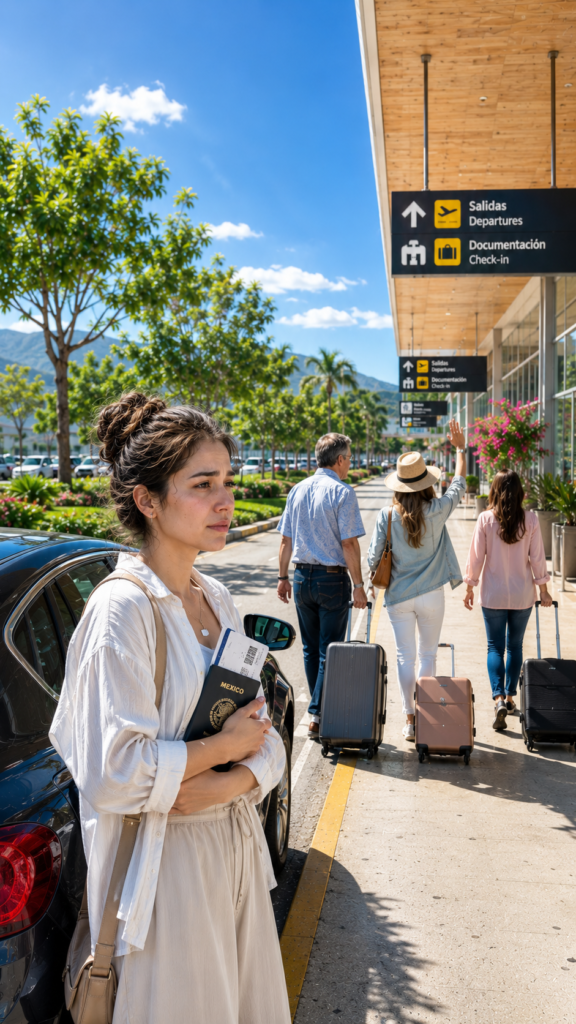
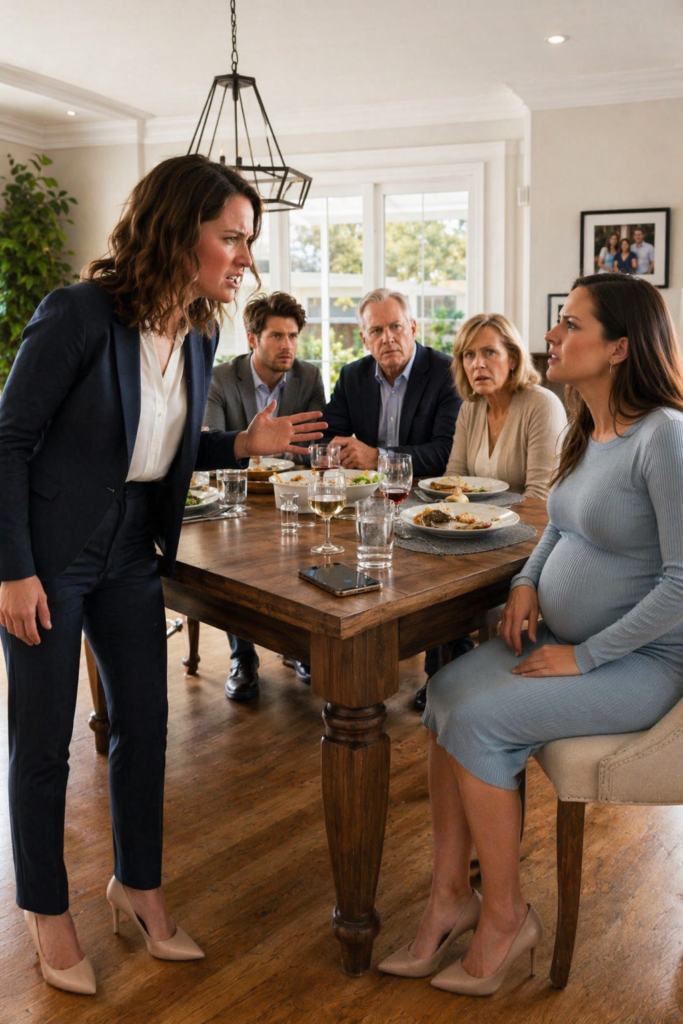
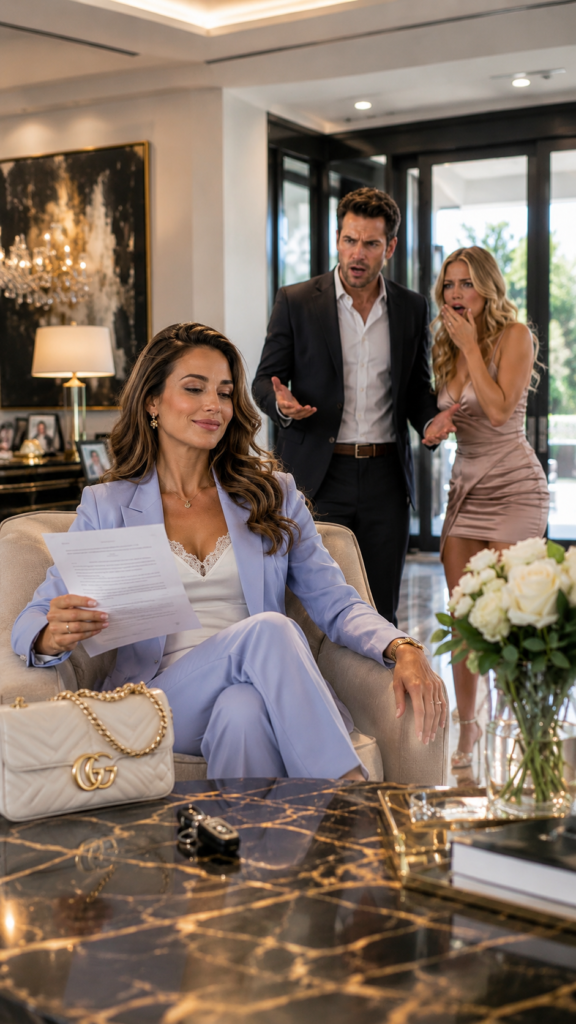
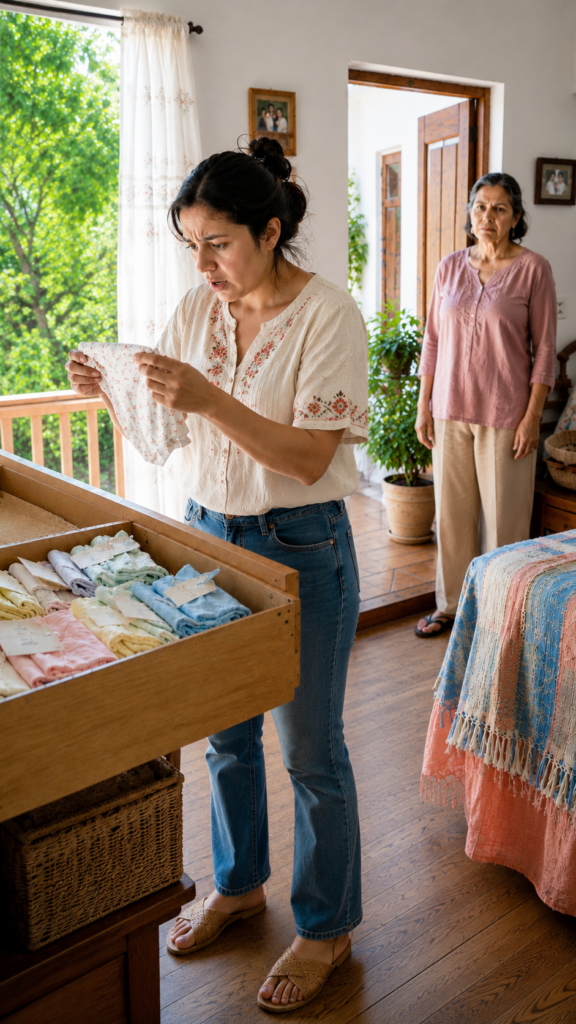
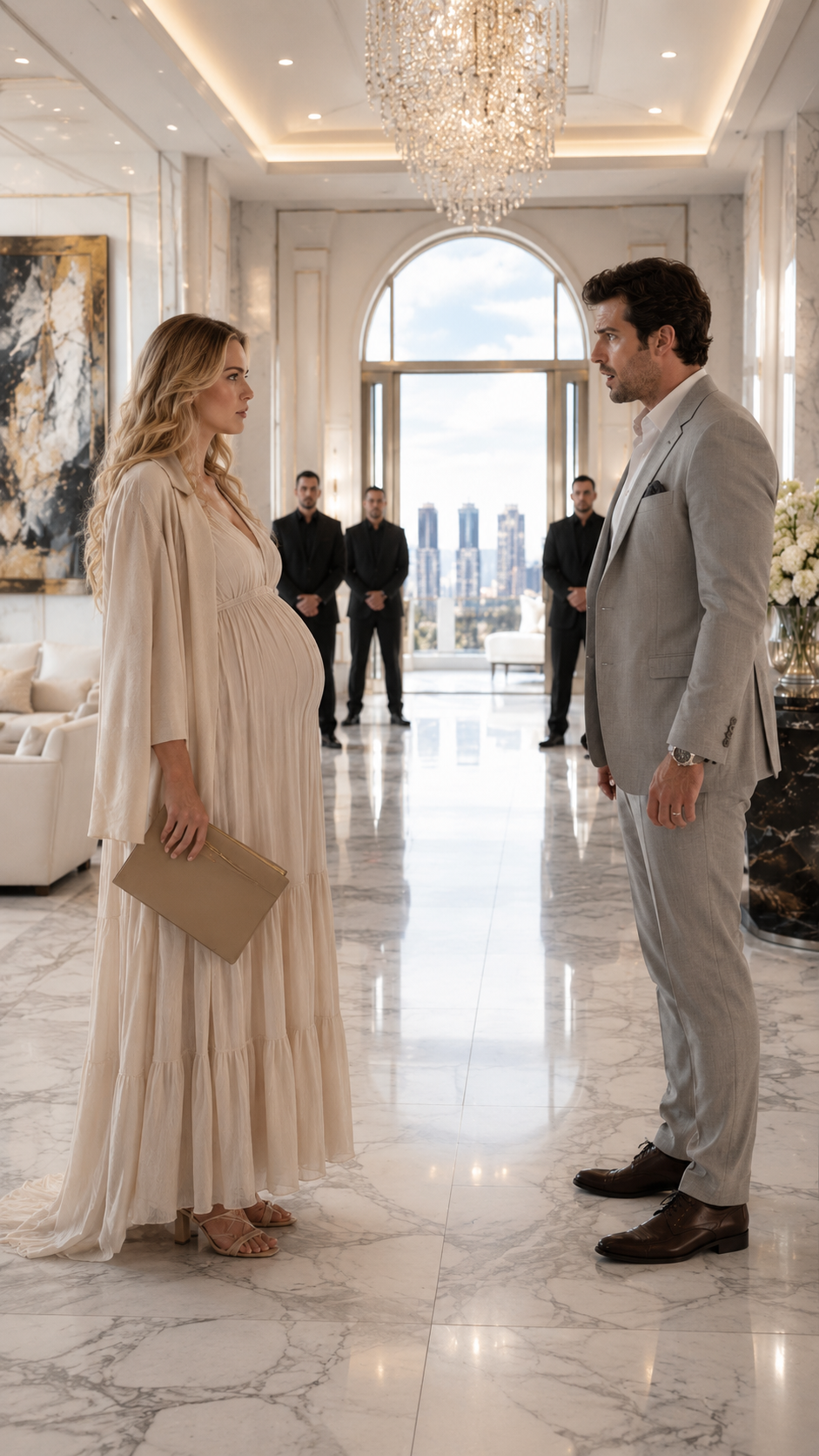
Valeria Cruz returned to Monterrey with a black folder, two sleepless nights, and seven months of pregnancy hidden beneath a beige dress.
The reception of the Salvatierra tower in San Pedro Garza García fell silent as she crossed through the glass doors.
Everyone recognized her.
The vanished wife of Mateo Salvatierra.
The woman who had disappeared eight months ago, without luggage, without security, without saying goodbye to anyone.
Mateo was no ordinary man. To the press, he was a businessman in private security, owner of fleets, warehouses, and contracts across half the north of the country.
To those who knew too much, he was something else.
A man powerful enough to silence the waitstaff, make the police look the other way, and have enemies hesitate before even breathing near his name.
Valeria ascended to the 32nd floor without warning.
When she entered the office, Mateo stood by the window, speaking on the phone. He wore a black suit, a white shirt, and that dangerous calm that always made everyone feel indebted to him.
Upon seeing her, he halted his conversation.
The cell phone was forgotten in his hand.
His gaze dropped to Valeria's belly.
And for the first time in years, the boss of the Salvatierras was rendered speechless.
—It can't be —he murmured.
Valeria placed the folder on the desk.
—I came for you to sign the divorce.
Mateo didn't look at the papers. He only stared at her pregnancy as if the ground had been yanked from beneath him.
—How far along?
—Seven months.
His jaw tightened.
—Is it mine?
The question fell like a slap.
Valeria swallowed but didn't avert her gaze.
—It's your daughter.
Mateo took a step toward her.
—Daughter?
The word broke something in his face. Not rage. Not pride.
Pain.
Valeria forced herself to open the folder.
—The agreement is ready. Your lawyers can review it. I don't want your companies, your houses, or your dirty money. I just want you to sign and let me live.
Mateo let out a dry laugh, devoid of humor.
—You disappear for eight months, come back pregnant with my daughter, and expect me to sign as if nothing happened.
—That was the healthiest thing for everyone.
—Don't talk to me about healthy, Valeria. I searched for you in hospitals, along roads, cheap hotels, border crossings. I thought you were dead.
She gripped the edges of the folder.
—I thought I was going to be if I stayed.
The silence shifted.
Mateo raised his gaze.
—Who threatened you?
Valeria closed her eyes for a moment.
She had promised not to say it. Because saying it was opening a door she had kept shut with fear, hunger, and endless nights in borrowed rooms.
—That's why I left —she said—. Because you always turn a threat into war.
—When my wife is threatened, yes.
—I'm not your wife anymore.
Mateo looked at her hand.
Valeria still wore the ring.
It was habit. It was weakness. It was truth.
He didn't try to touch her, even though everything in his body seemed to fight against that decision.
—You’re going to stay at the Chipinque house —he ordered.
—No.
—You’re pregnant, without security, and someone made you run for eight months. You’re not going to a hotel like this is a tantrum.
—You don’t command me.
Mateo lowered his voice.
—Then I’m not ordering you. I’m asking. Stay where I can know my daughter is breathing. Hate me from the guest room if you want. Close the door on me. Call your lawyer every hour. But don’t force me to see you leave again with danger hanging over you.
Valeria wanted to say no.
But the baby moved.
And she was tired.
Too tired.
—Thirty days —she said—. Just while the agreement is reviewed.
Mateo breathed as if he had just returned from the dead.
—Thirty days.
That same night, in the house surrounded by pines, Valeria couldn’t sleep.
At 2:17 in the morning, she heard footsteps downstairs.
They weren’t from staff.
They weren’t Mateo's.
Her phone vibrated with an unknown message:
“If you want the girl to be born, don’t scream.”
Then a voice behind the door whispered:
—The lady is here.
PART 2
Valeria backed up to the closet, one hand on her belly and the other dialing Mateo’s number.
He answered on the first ring.
—What happened?
Valeria could barely speak.
—There are men inside the house.
From the other side, chairs fell, doors opened, engines ignited.
—Lock yourself in. Don’t make a sound. I’m coming.
The bedroom door shook with a blow.
Valeria squeezed herself between coats that smelled of fine wood and old perfume. Her breath grew small.
Another blow.
The lock creaked.
—The order was to bring a photo —said a man—. Show the belly.
Valeria felt her blood rush to her feet.
Photo.
Belly.
This wasn’t a robbery.
It was a message.
The door burst open.
A man in a ski mask checked the bed, the bathroom, the curtains. Then he walked to the closet.
Valeria held her breath.
The door opened.
For a second, he didn’t see her.
Then a coat shifted.
—Look at this —he said—. Here’s the lady of the house.
Valeria screamed as he yanked her by the arm.
Not because she thought someone in the house would save her.
She screamed so Mateo would hear her.
She screamed so that, if she died, he would know she had fought.
The man dragged her into the room. Another waited at the entrance with a gun and a cell phone.
—Record well —he ordered—. The boss wants proof before finishing the job.
Valeria dug her nails into the hand holding her. She kicked, bit, twisted.
The man slapped her.
The blow burned her face.
The baby moved hard.
Then Valeria stopped being a wife, a fugitive, or a scared woman.
She became a mother.
She elbowed the man in the throat and ran toward the hallway.
A shot exploded the doorframe.
Before she could fall, another shot rang out from the stairs.
Mateo appeared with two bodyguards behind him, his face pale with fury.
He didn’t shout.
He didn’t threaten.
He just shot the arm of the man pointing at Valeria.
The other attacker tried to run, but the bodyguards brought him down.
Mateo reached Valeria and held her as if she were made of glass.
—Did they touch you? Are you bleeding? Is the baby moving?
—I’m fine —she said, although she was shaking all over—. I think she’s okay.
Mateo looked at the red mark on her cheek.
His face changed.
It was the same look Valeria had seen the night she fled.
The look of a man capable of burning a city for a wound.
—Don’t do it —she whispered.
—They hit my pregnant wife.
—I’m alive. Your daughter is alive. Don’t turn us into an excuse to kill.
He closed his eyes, breathing as if holding back pained him physically.
Minutes later, ambulances, patrol cars, and lawyers filled the house.
Mateo had plenty of contacts, but that night Valeria demanded one thing: State Prosecutor's office and National Guard, no more “private arrangements.”
In the hospital, the monitor confirmed the baby’s heartbeat.
Strong.
Fast.
Stubborn.
Mateo sat beside the bed and took Valeria’s hand without asking for permission.
She didn’t pull away.
—Someone opened the door from the inside —he said.
—That’s what I heard before I left eight months ago.
Mateo looked up.
Valeria told the complete truth.
The night she fled, she had come out of the bathroom when she heard voices behind the office. Two men were talking about “the lady,” about “a clean message,” and how Mateo would break if he found her dead.
One said a phrase that never left her:
—The boss wants it to look like a settling of accounts.
Valeria didn’t know if “the boss” was Mateo, one of his partners, or someone from her own family. She couldn’t ask anyone. She couldn’t trust even the guards sleeping outside her bedroom.
So she ran.
Ran with three thousand pesos in cash, an old phone, and the ring still on.
One month later, she discovered the pregnancy at a clinic in Saltillo.
And then running stopped being fear.
It became obligation.
Mateo listened without interrupting.
When she finished, he looked like a man whose skin had been stripped away.
—I never ordered anything against you.
—I wanted to believe that.
—You should have called me.
—So you could kill half the world before knowing who it was? Seriously, Mateo, you didn’t protect. You possessed.
The phrase hit him harder than any bullet.
He didn’t reply.
The next morning, a woman arrived at the hospital wearing dark glasses, a designer bag, and heels that sounded like a sentence.
It was Renata Arriaga, Mateo’s partner.
During Valeria’s eight months of absence, Renata had managed contracts, meetings, and rumors. The press called her “the right hand.” The gossip said otherwise.
Renata entered with a cold smile.
—Wow. So it was true.
Mateo was on a call outside. Valeria lifted her gaze from the bed.
—It’s not a good time.
—For you, it never is, right? You arrive, disappear, come back pregnant, and everyone has to accommodate to your drama.
Valeria didn’t respond.
Renata approached.
—Mateo went crazy when you left. He didn’t sleep. He didn’t eat. He called me at 3 a.m. because he couldn’t stand the silence.
Valeria felt a pang in her chest.
—Did you come to tell me that?
—I came to see your face. I wanted to know what a woman like you had to destroy a man like him.
—I didn’t destroy him.
—Of course you did. You made him human. That was the worst thing.
The door opened.
Mateo entered, and his expression turned to ice.
—Out.
Renata smiled as if she didn’t understand.
—I brought the documents from Torreón.
—I said out.
—Are you going to kick me out for her?
—I’m kicking you out because you entered my wife’s room after they tried to kill her.
—Ex-wife, according to them.
Mateo took a step.
—My wife.
Valeria felt those two words hurt in her throat.
Renata dropped the mask.
—I ran your company while she hid like a coward.
—And now you’re going to release your shares before Friday.
—You can’t make me do that.
—Yes, I can.
Renata glared at Valeria with pure hatred.
—He’s never going to trust you. Broken men don’t forgive, they only replace.
After she left, Valeria asked what burned inside her.
—Were you with her?
Mateo didn’t lie.
—Yes.
The world shrank.
Valeria turned her face to the window.
—We were still married.
—You were missing.
—I was pregnant.
—I didn’t know.
—But you knew you had a wife.
Mateo lowered his gaze.
—I thought I had a ghost.
The cruelty was evident in the statement.
He rubbed his hands over his face.
—I’m not saying it to justify myself. It was weak. It was miserable. I used her to not hear my own guilt. I’ll regret it for the rest of my life.
Valeria cried without making a sound.
—I also regret not telling you the truth before.
That afternoon, the detained attacker spoke.
Not out of fear of prison.
Out of fear of Mateo.
He gave one name: Don Julián Salvatierra.
Mateo’s uncle.
The man who raised him after his father’s death. The old man who blessed the table at family gatherings, kissed the women’s foreheads, and decided who truly lived.
The motive was simple and rotten: Mateo wanted to pull the family out of the criminal business and keep only the legal security company.
Don Julián wasn’t going to allow it.
Valeria was the weak point.
Killing her would have shattered Mateo.
The baby, by existing, made him even more vulnerable.
But the twist came two hours later, when an expert reviewed the house’s access points.
The card used to open the door wasn’t Don Julián’s.
It was Renata’s.
Mateo said nothing.
Valeria saw his face and knew he was one step away from becoming the man she had fled from.
—No —she said.
—They tried to kill my daughter.
—Then don’t gift her a life with her dad in prison or dead.
—My world doesn’t work with pretty complaints.
—Then change it. Because if you keep being the same, I will sign that divorce.
Mateo stood still.
There he understood.
Valeria wasn’t asking him to love her.
She was demanding he become someone safe to love.
That night, with the help of a journalist Valeria had met while fleeing and a federal prosecutor who wasn’t on the take, they set the trap.
Renata summoned Valeria to an abandoned warehouse near Apodaca with a message:
“Come alone if you want Mateo to survive.”
It was absurd.
It was obvious.
But Valeria went with a hidden microphone, two agents behind her, and Mateo following from a van, hating every second of not bursting in through the doors.
Renata appeared among old boxes, a gun in her hand.
—You were always a nuisance —she said—. Don Julián wanted power. I wanted Mateo.
Valeria felt nauseous.
—You comforted him while helping to destroy him.
—I was preparing him to understand that you were replaceable.
—My daughter is not.
Renata aimed at her belly.
—That one even less.
The door burst before she could shoot.
Federal agents stormed in.
Mateo did too.
But he didn’t shoot.
Even though his whole body wanted to.
Even though Renata screamed that he would never be a normal man, that he would always need blood to feel strong.
Mateo just walked to Valeria and stood in front of her.
—It’s over —he said.
Renata was handcuffed. Don Julián fell that same night, with enough accounts, recordings, and calls to sink half the family.
The news exploded across Mexico.
Some said Mateo had betrayed his blood.
Others said finally someone had the guts to break a rotten inheritance.
Valeria didn’t celebrate.
Healing wasn’t a pretty scene.
It was therapy. Statements. Sleepless nights. People who once looked down now pointing fingers. It was Mateo selling companies, closing warehouses, and handing over names he never thought he’d surrender.
It was Valeria learning not to run every time a door slammed.
It was Mateo learning to knock before entering.
Six weeks later, their daughter was born on a rainy early morning.
Mateo arrived at the hospital with three suitcases, two alternate routes, and the most honest fear Valeria had ever seen in him.
—If you call another doctor —she said, squeezing his hand during a contraction—, I’ll divorce you right here.
—Noted —he replied, pale.
When the baby cried for the first time, Mateo broke.
The girl was small, furious, and perfect.
He touched her little head with one finger.
—Hello, Sofía —he whispered—. I’m your dad. I’m sorry I’m late.
Valeria cried then.
Not because everything was forgotten.
But because for the first time, she believed that maybe they weren’t doomed to repeat history.
Three months later, they moved to a simple house in Querétaro, far from towers, bodyguards, and surnames that weighed like weapons.
Mateo kept only the legal part of his business. He learned to change diapers, warm bottles, and apologize without explaining why he was right.
One night, Valeria found him in Sofía’s room, rocking her in silence.
—Do you regret it? —she asked from the door.
—Not for leaving everything, no.
Mateo looked at his sleeping daughter.
—I regret thinking that protection was control. I almost lost them for confusing love with power.
Valeria approached.
On the dresser lay the black divorce folder.
Mateo had never hidden it.
—If you want me to sign, I’ll sign —he said—. Not out of pride. Not out of anger. Because choosing you also means letting you go if that gives you peace.
Valeria looked at Sofía.
Then she looked at the man who had to lose an empire to learn to be a home.
She took the folder.
Mateo held his breath.
Valeria opened it, pulled out the papers, and ripped them in two.
—I’m not staying out of fear —she said—. I’m not staying for the girl. I’m staying because this time I want to see who you are without that rotten world standing between us.
Mateo didn’t smile immediately.
First, he cried.
And perhaps that’s why people argued so much when the story came to light.
Some said Valeria should never have forgiven him.
Others said that changing for love counts when the price is truly paid.
But Valeria understood something many didn’t want to accept:
Sometimes fleeing saves your life.
And sometimes coming back, with the truth in hand, forces you to burn everything false.
Not to rescue an empire.
But to build a home where no one has to hide to survive.