PART 1
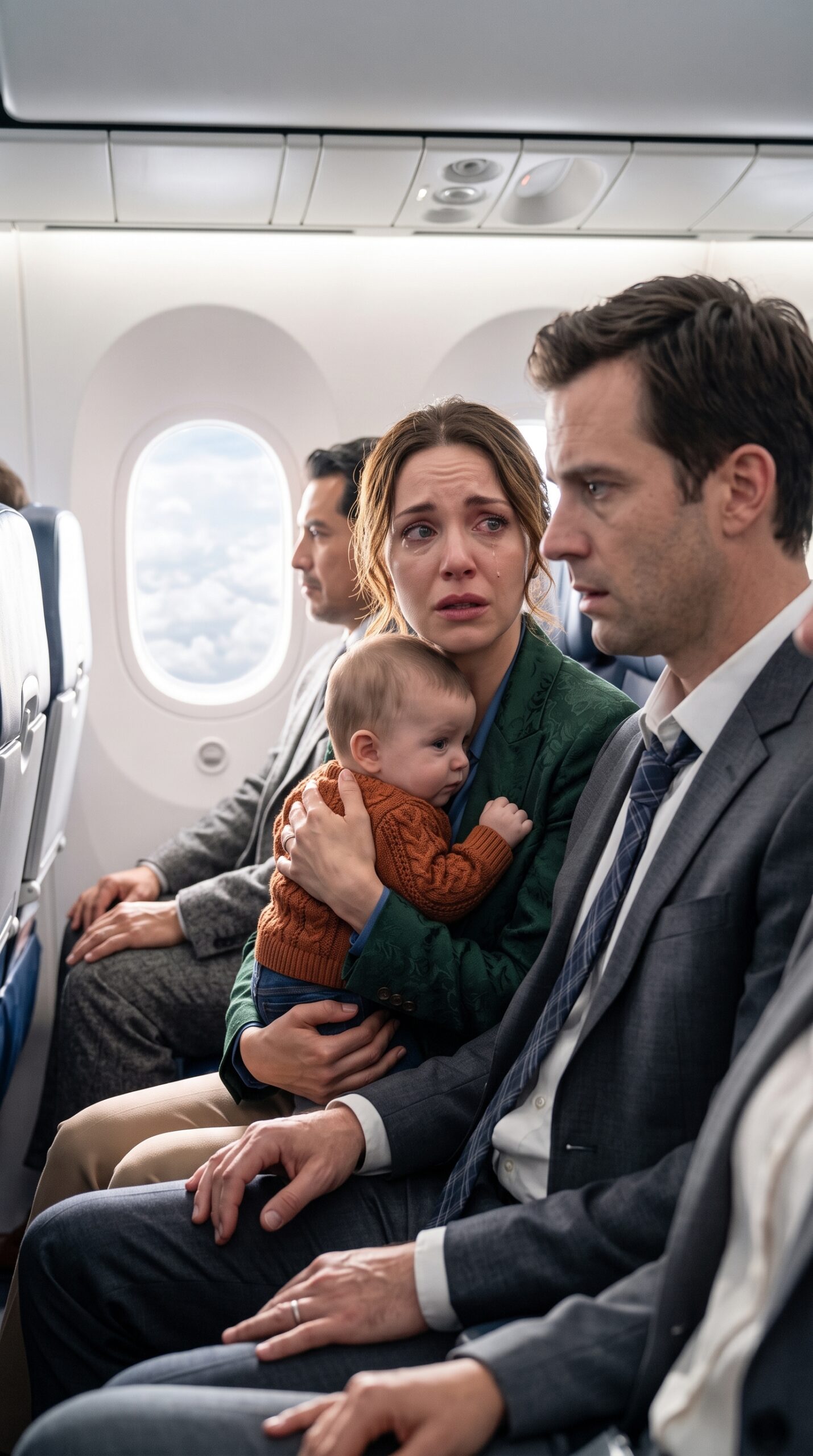
The plane was crossing a storm over Mexico City when the past settled next to Mariana Solís without asking for permission.
She held her one-year-old son Mateo, sleeping against her chest.
An old backpack rested under her feet.
And in the depths of her bag, hidden among diapers and a little blanket, lay the evidence that could sink one of the most powerful families in Nuevo León.
Mariana was exhausted.
She had spent the entire night traveling from Mérida to Monterrey, with a layover in the capital, trying to keep Mateo from crying.
The baby had a slight fever, his cheeks flushed, those gray-green eyes that always broke her heart.
Because those eyes were the only clue to a night she had been trying to understand for a year.
The plane shook.
Mateo stirred restlessly.
Mariana closed her eyes for just a few seconds, holding him tighter.
Her head unintentionally fell onto the shoulder of the man seated in 12B.
—Sorry… —she murmured, half-asleep.
The man didn’t move away.
He said nothing at first.
He simply looked down at the child.
Then his voice, cold and contained, cut through the noise of the engines.
—That child… has my eyes.
Mariana jolted awake.
The blood drained from her face.
She looked at the man.
Dark suit, white shirt, manicured hands, perfectly trimmed beard.
And those eyes.
The same impossible eyes as Mateo's.
—Who are you? —she asked, her throat dry.
The man held her with a gaze that felt less like curiosity and more like old wounds.
—That’s a question I should be asking you.
Mariana squeezed Mateo against her chest.
The name came to her before he said it.
Santiago Robles Garza.
The public heir of Robles Laboratories, the pharmaceutical company that controlled hospital contracts, political campaigns, and bought silence across half the republic.
The man whose family had destroyed her career.
The man who, according to all the hidden files she had gathered, had been on the same terrace where her life shattered.
A year ago, Mariana was a lawyer at a firm in Monterrey.
She was working on a class-action lawsuit against Robles Laboratories for a child medication that had been withdrawn from the market too late.
That night, she attended a private dinner in San Pedro Garza García to negotiate documents.
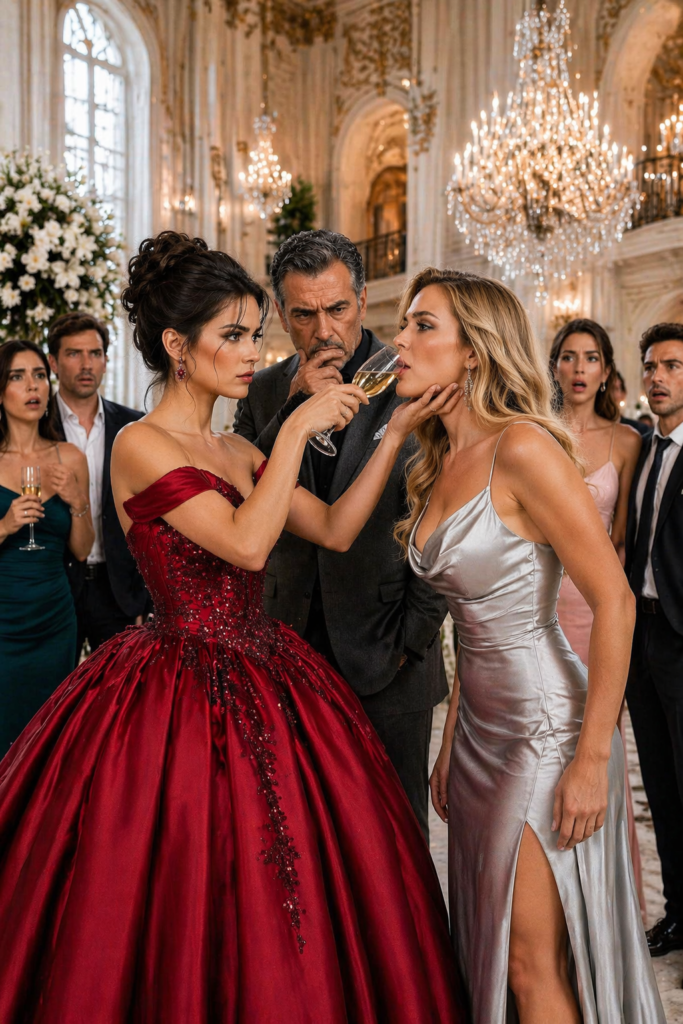
They offered her a drink.
Then she remembered blurry lights, norteño music playing in the background, a hand gripping her arm, and a voice saying:
—Make it look like she came voluntarily.
She woke up alone in a hotel on the national highway.
With her dress torn.
Her phone without a chip.
And a note on the table.
“Don’t mess with the Robles. No one believes an ambitious woman.”
Three weeks later, she found out she was pregnant.
Her boss fired her.
Local news hinted that she had tried to seduce a businessman.
Her own aunt told her to keep quiet because “a single mother doesn’t win against people with money.”
Mariana disappeared.
Not out of cowardice.
But out of intelligence.
She went to Yucatán, had Mateo in silence, and began gathering evidence.
Fake invoices.
Transfers.
Deleted videos.
Messages leaked by a sick accountant who no longer wanted to carry dead weight on her conscience.
And in every path, one last name appeared.
Robles.
Now Santiago was next to her.
On the same flight.
Looking at Mateo as if they had just opened his chest.
—Don’t come near my son —Mariana said.
—I didn’t know he existed —he replied, almost breathless.
—How convenient, right? The rich never know anything until the truth crashes down on them.
Santiago swallowed hard.
—You are Mariana Solís.
She felt the plane plummet even though it was still in the air.
—Then you do know who I am.
—My family said you invented everything.
Mariana let out a dry laugh.
—Well, now they’re going to hear the whole story. But not on a plane. In a courtroom.
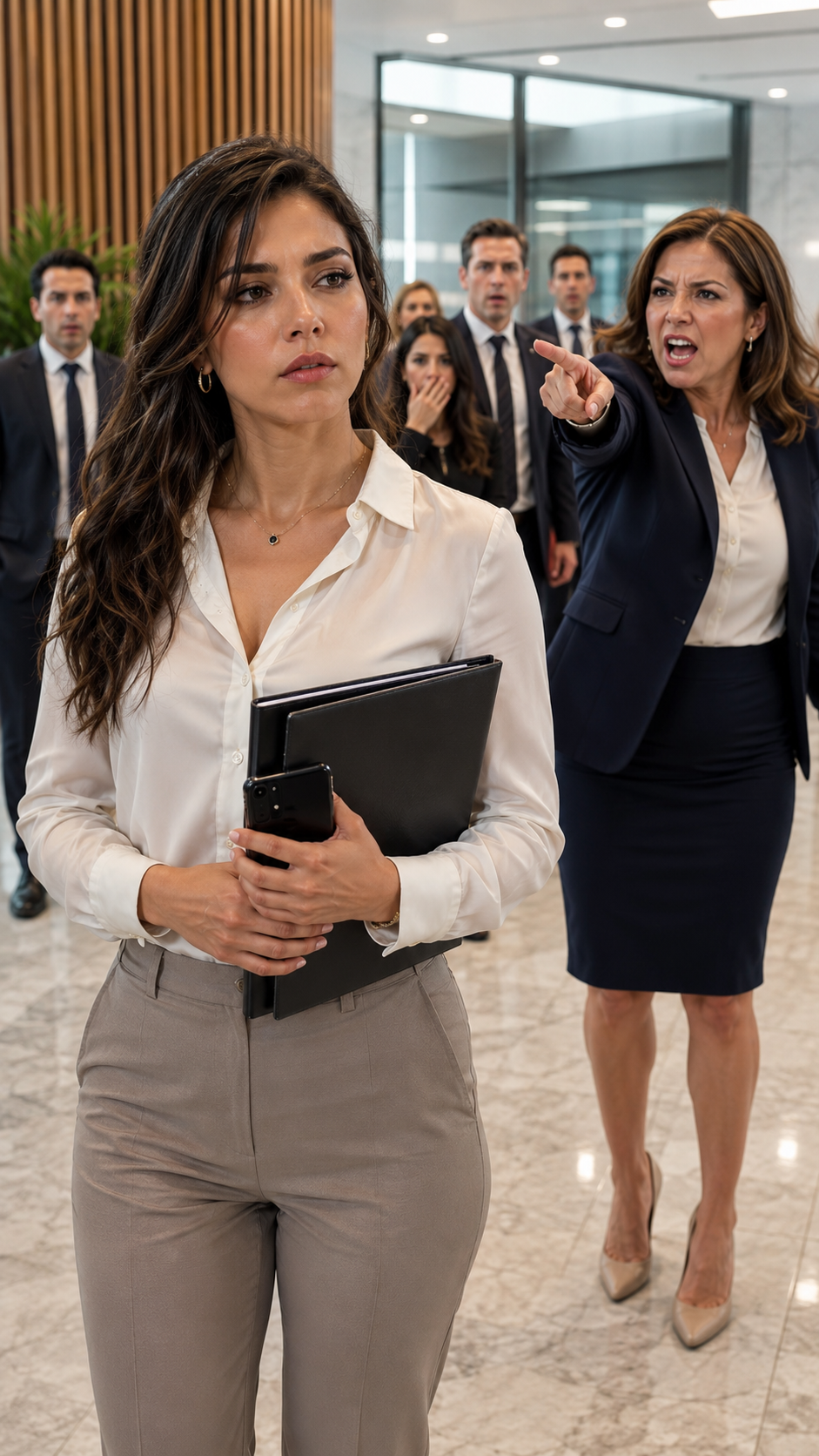
Upon landing in Monterrey, Mariana got off with Mateo in her arms.
She didn’t make it to the exit.
Two men in black suits waited by the baggage claim.
Among them was Alonso Robles, Santiago’s older brother, legal director of the group.
The man who had signed her public destruction.
Alonso smiled as if he had been waiting for her for a year.
—Mariana Solís… just look at you. And what an interesting boy you have.
Santiago stepped in front of her.
—Alonso… tell me you didn’t know.
The silence was a confession.
Alonso let out a laugh.
—Oh, little brother. Don’t make a scene here. That old lady wanted to sink us, then she shows up pregnant, and now she’s coming for money.
Mariana reached into her pocket and activated her phone's recorder.
—Repeat that —she said—. I love it when cowards feel so tough.
Alonso stepped closer.
—You’re nobody. A burned-out lawyer, a single mother with a bastard and a story no one will buy.
Santiago grabbed him by the collar of his jacket.
—Shut up.
Alonso looked at him with venom.
—No, you shut up. You were drugged that night too, you idiot. They had to take you out of the presidency. She was just the perfect collateral damage.
Santiago froze.
Mariana did too.
Because that phrase had just confirmed that the worst was only beginning.
PART 2
The airport turned into a murmur around them.
People passed by with suitcases, crying children, coffees in hand, as if the world kept on spinning normally.
But for Mariana, Santiago, and Alonso, everything had stopped at that phrase.
“You were drugged too.”
Santiago slowly released his brother's jacket.
His face had drained of color.
—What did you say?
Alonso realized too late that he had overshared.
His smile cracked for just a second, but Mariana saw it.
And she also saw how Santiago looked down at Mateo.
The boy remained asleep, oblivious to the disaster that had just fallen upon them all.
—Santi, don’t be dramatic —Alonso said, trying to regain control—. It was a family strategy. You were weak, you wanted to review contracts, open audits, play the saint. You were going to throw away years of work.
—They drugged me? —Santiago repeated, his voice broken.
—We protected you from yourself.
Mariana felt disgust.
Not from surprise.
But from confirmation.
For months, she had believed that Santiago had been part of the attack.
His face was in the videos.
His name appeared in the hotel reservation.
His signature was on documents that closed the internal investigation.
But there were details that never fit.
The time of departure.
The lack of direct messages.
The erased medical report from a private clinic.
And now everything made a different sense.
Alonso hadn’t just used her to destroy her.
He had also used his own brother’s body to clear him from the way.
Santiago looked at Mariana.
—I didn’t know.
She didn’t respond immediately.
Because inside her, two pains were fighting.
The pain of having been ruined by a powerful family.
And the pain of discovering that perhaps the father of her child had also been a victim.
But one thing was clear.
Mateo couldn’t be caught between these monsters.
—That will be decided by a judge —Mariana said—. Not you. Not your brother. Not your family.
Alonso clicked his tongue.
—How brave you’ve gotten, Mariana. Do you think an airport recording saves you?
She raised her gaze.
—No. But it helps.
Alonso lost his smile.
—You recorded?
Mariana pulled out her phone.
—Since you opened your mouth.
Santiago stepped forward.
—If you try to touch her, I swear this time I don’t care about the last name.
Alonso took a deep breath, adjusted his jacket, and looked at the guards.
—Take her to the truck.
One of the men advanced.
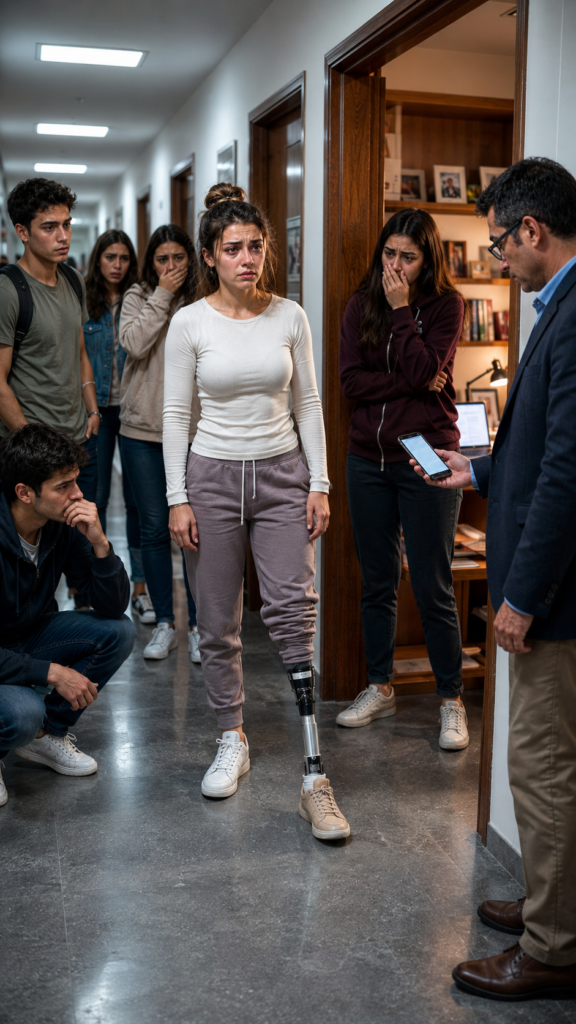
But before he could get close, a woman in a black jacket appeared behind Mariana.
—Don’t you dare, buddy.
It was Lucía Barrera, her best friend from college.
She used to work as a forensic accountant.
Now she collaborated with the Prosecutor's Office on financial crimes.
She was accompanied by two agents in civilian clothes.
Alonso tensed.
—This is a show.
Lucía smiled.
—No, attorney. The show starts tomorrow. Today, we just came to ensure that Mariana and the minor arrive alive at the hotel.
Santiago turned, surprised.
Mariana hadn’t traveled alone.
She never thought to do so.
For a year, while everyone imagined her hidden and defeated in Mérida, she had woven a silent network.
A nurse from the private clinic.
A laid-off accountant.
A camera technician.
A driver who saw too much.
And Lucía, the only one who believed in her when even her family told her not to make noise.
Alonso raised his hands pretending calm.
—You’re going to make a fool of yourselves. My mom already spoke to the media. Tomorrow everyone will know that this woman came back to extort.
Mariana looked at him with a serenity that irritated him even more.
—Tomorrow the media will indeed talk. But not about me.
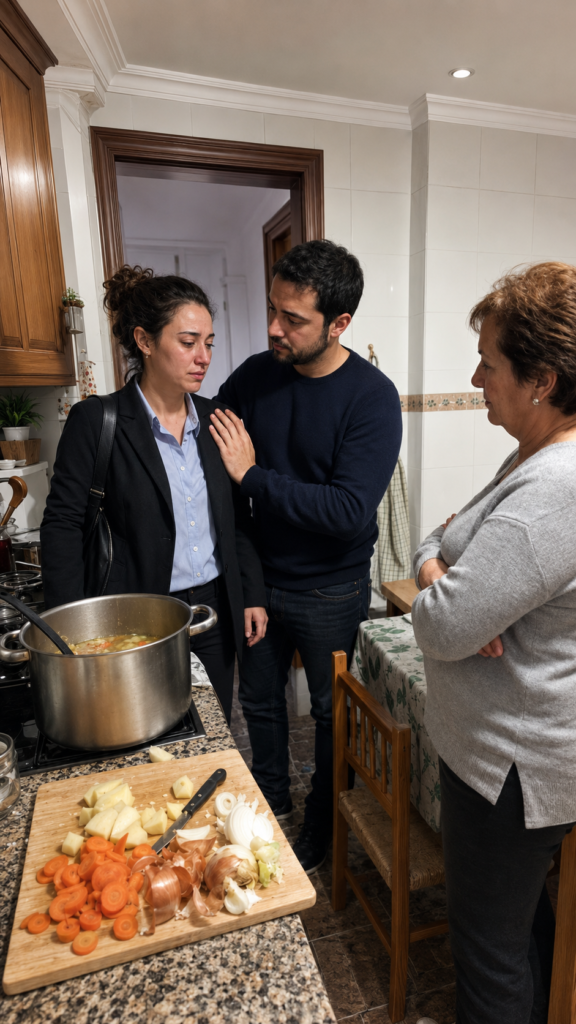
That night, in a safe house in downtown Monterrey, Santiago asked to speak with her.
Lucía didn’t want to allow it.
—Seriously, Mari, that guy carries the last name of the same people who destroyed you.
Mariana looked out the window.
Mateo slept in a portable crib, clutching his teddy bear to his chest.
—I know.
—Then don’t give him a chance to get into your head.
—I’m not going to give him a chance for anything. But I need to hear what he remembers.
Santiago entered without escorts, no jacket, and without that untouchable businessman pose.
He looked like a man whose floor had been ripped away.
He sat across from Mariana without getting too close.
—I remember pieces —he said—. The dinner. A toast. Alonso insisting I drink. Then a room. Someone saying not to wake up yet. When I opened my eyes, my mom was there.
Mariana furrowed her brow.
—Doña Teresa?
Santiago nodded.
Teresa Garza widow of Robles.
Chairwoman of the board.
A woman who went to mass on Sundays and threatened on Mondays.
The same one who, on television, had called Mariana “a confused young woman hungry for fame.”
—My mom told me I had a shameful night —Santiago continued—. That a lawyer had come into my room to compromise me. That you were asking for money. I didn’t remember anything. They showed me pictures. Papers. Witnesses.
—Fabricated.
—Yes.
Mariana gritted her teeth.
—While you doubted, I was called a prostitute online. I lost my job, my apartment, my name. My mom stopped answering because she was embarrassed that the neighbors were asking.
Santiago looked down.
—I’m sorry.
—That doesn’t help me.
—I know.
The silence weighed heavily.
Then Mariana pulled out a folder.
—Tomorrow there will be a hearing. Genetic testing has already been requested. There is also evidence about the medication Cardenil Kids. Your family concealed reports of liver damage in minors.
Santiago looked up, horrified.
—That’s what I wanted to audit.
—And that’s why they took it away.
He covered his mouth with a hand.
For the first time, Mariana saw something that didn’t seem like defense or pride.
It looked like real guilt.
—If Mateo is my son —Santiago said—, I won’t take him from you.
Mariana looked at him harshly.
—You’re not in a position to promise anything.
—I want to protect him.
—Then tomorrow don’t sit with your family.
Santiago didn’t respond.
And that was the first decision he had to make.
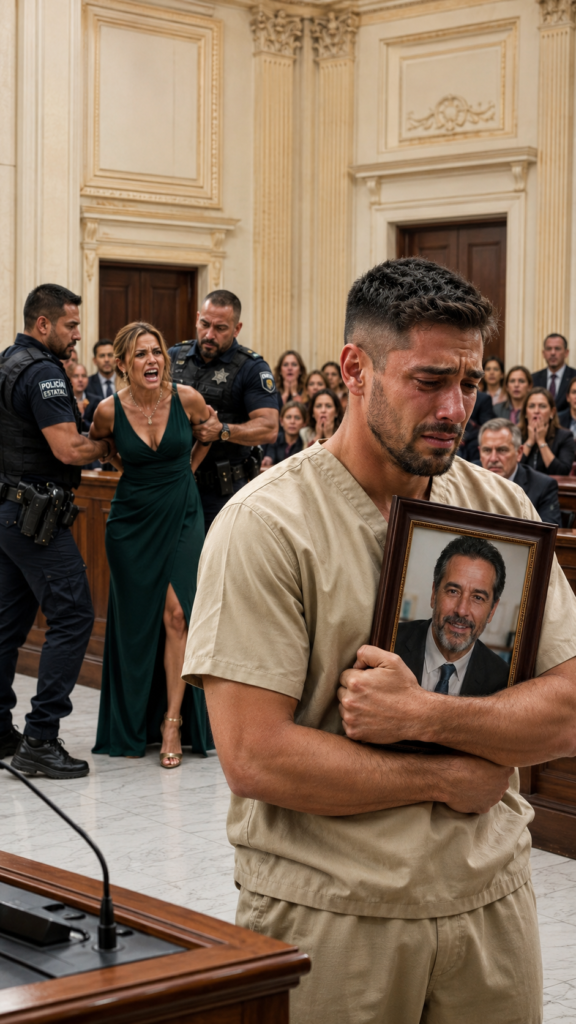
The next day, the family and criminal court was full.
Not for a final trial yet, but for an initial hearing on protective measures, provisional custody, and formal investigation opening.
But outside, there were cameras.
Reporters.
Red note influencers.
And ladies streaming live on Facebook as if it were a telenovela.
Doña Teresa arrived dressed in white, rosary in hand.
Alonso walked alongside her, smiling at the cameras.
—We trust in justice —he said—. My family is a victim of vulgar extortion.
Minutes later, Mariana arrived with Mateo in her arms.
She made no statements.
She didn’t look down.
Santiago arrived alone.
And in front of everyone, instead of sitting next to his mother and brother, he crossed the room and sat next to Mariana.
The murmur exploded.
Doña Teresa turned pale.
Alonso clenched his jaw.
—What are you doing, Santiago —he whispered, furious.
Santiago didn’t turn.
—For the first time, what’s right.
The judge ordered silence.
Mariana’s lawyer presented the toxicology report recovered.
It showed sedatives in Mariana’s blood that night.
Then he presented another report.
There were also sedatives in Santiago’s blood.
The room fell silent.
Alonso shifted in his seat.
Doña Teresa pretended to pray louder.
Then came the restored video from the terrace.
Mariana was seen staggering.
Santiago sitting, almost unconscious.
A waiter receiving an envelope.
And Alonso talking on the phone in a corner.
The audio wasn’t perfect, but the essentials were clear.
—Get them up together. Make it look like a scandal. Tomorrow we leak that she pursued him. That way Santiago is off the hook and the lawsuit dies.
Mariana closed her eyes.
Not because she doubted.
But because hearing the truth in public hurt differently.
Santiago clenched his fists until he turned white.
Alonso stood up.
—That’s manipulated.
Lucía stood up.
—It was validated by certified experts. The original metadata from the security server was also recovered.
The judge looked at Alonso.
—Sit down.
But the hardest blow was yet to come.
Mariana’s lawyer requested authorization to show internal messages from Robles Laboratories.
A conversation appeared on the screen between Alonso and Teresa.
Teresa: “If the child is born, that child could be a problem.”
Alonso: “We’ll make her look crazy. No one will believe her.”
Teresa: “Santiago must never know.”
Santiago turned to his mother.
—Did you know she was pregnant?
Doña Teresa stopped pretending.
Her face hardened.
—I knew that girl would destroy you.
—He was my son.
—He was a threat.
The phrase fell like a stone.
Mariana hugged Mateo.
At that moment, the baby woke up and started crying.
The sound filled the room in an unbearable way.
It wasn’t a scandal.
It was a baby.
A baby that had been called a threat before they knew him.
The judge then authorized the preliminary DNA result requested legally with samples taken that same morning.
The ruling confirmed with 99.99% probability that Santiago Robles was the biological father of Mateo.
The room exploded in murmurs.
Doña Teresa closed her eyes.
Alonso slammed the table.
—That doesn’t prove extortion!
Mariana stood up.
Her lawyer tried to stop her, but the judge allowed her to speak.
—I didn’t come for money —Mariana said, looking at Teresa and Alonso—. I came because for a year I was called a liar. Because you used my body, my name, and my fear to cover up a crime. I came because while you protected your name, children were getting sick from a medication you knew was dangerous.
Medical reports appeared on the screen.
Signatures.
Emails.
Dates.
Payments to officials.
Lists of affected minors.
And a transfer to Alonso for covering up clinical studies.
The hearing was no longer just about Mariana.
It was about entire families.
Mothers who had buried children.
Parents indebted to hospitals.
Doctors pressured to stay silent.
The accountant who delivered the files appeared via video call.
Her name was Elena Muñoz.
Her voice was weak from illness.
But she spoke clearly.
—I signed false reports out of fear. My son took Cardenil Kids. He died at eight years old. When I asked to review the batch, Mr. Alonso told me that if I opened my mouth, no one would remember my child’s name.
The room fell silent.
Alonso stopped looking powerful.
He looked exposed.
Doña Teresa whispered:
—Elena, you received money.
Elena looked at her from the screen.
—Yes. And every peso burned me. That’s why I’m speaking today.
The judge ordered the evidence to be sent to the Attorney General's office and dictated urgent measures.
Protection for Mariana and Mateo.
Suspension of any attempt at contact by Alonso and Teresa.
Opening of an investigation for assault, manipulation of evidence, cover-up, corporate fraud, and crimes against health.
Alonso tried to leave before the hearing ended.
He didn’t make it.
The agents were waiting at the door.
—This is abuse —he shouted—. I did everything for the family!
Santiago slowly stood up.
His eyes were filled with tears, but his voice came out firm.
—No. You did it for power.
Alonso looked at him with hatred.
—Without me, you’re nobody.
Santiago pointed at Mateo.
—Without the truth, no one is anything.
Doña Teresa was also escorted to testify.
She didn’t shout.
She didn’t cry.
She just looked at Mariana with disdain.
—You’re going to regret it.
Mariana held her son and replied without raising her voice:
—I’ve already regretted a year of being afraid. Never again.
The following months were a storm.
Robles Laboratories was intervened.
Several contracts were frozen.
Families of victims joined the class-action lawsuit.
The case went viral throughout Mexico.
Some defended Mariana.
Others said that “there must have been a reason she stayed silent.”
On Facebook, thousands debated whether Santiago deserved a chance or if the Robles surname should be enough to condemn him.
Mariana didn’t respond to comments.
She had more important things to do.
She reopened her career with a small firm in Monterrey.
At the door, she put a simple phrase:
“Mariana Solís. Justice for those who don’t have a microphone.”
She didn’t accept money to stay silent.
She demanded a reparations fund for the affected families.
She asked for a public apology.
Primary custody of Mateo.
And supervised visits for Santiago while he proved, with deeds, that he wanted to be a father and not an owner.
Santiago resigned from any position within the company.
He handed over documents.
Testified against his brother and mother.
Sold part of his shares to start the victims’ fund, although many said that didn’t erase anything.
Mariana thought the same.
Nothing erased.
But some actions could begin to repair.
Six months later, Santiago arrived at the firm with a wooden cart painted blue.
He had no bodyguards.
He wore no expensive suit.
He had dark circles under his eyes and a bag of sweet bread.
—I didn’t come to ask you to forgive me —he said—. That would be too easy for me and very unfair for you.
Mariana looked at him from the desk.
Mateo was on the floor, playing with blocks.
—Then why are you here?
Santiago took a deep breath.
—to bring the receipt for the first full deposit to the fund. And to ask if I can see him for 20 minutes. Here. With you present.
Mariana took the paper.
Checked it.
Then looked at Mateo.
The boy looked up, saw Santiago, and smiled with that innocence that sometimes hurts more than any complaint.
Santiago knelt at a distance.
—Hello, champ.
Mateo clumsily walked toward him and offered him a yellow block.
Santiago accepted it as if it were something sacred.
Mariana felt her chest loosen just a little.
It wasn’t love.
It wasn’t trust.
Not yet.
It was something harder.
The possibility that the truth, though late, could also open a different door.
That night, Mariana closed the firm and walked with Mateo down the wet street after the rain.
The lights of Monterrey sparkled on the pavement.
She thought of everything they took from her.
Her job.
Her reputation.
Her peace.
A year of fear.
But she also thought of what they couldn’t take from her.
Her memory.
Her intelligence.
Her stubbornness.
Her son.
And the voice that, although they tried to bury it under money, lawyers, and gossip, ended up sounding louder than all of them.
Because in Mexico, many still ask why a woman takes time to speak.
But few ask how much power it takes to force her to stay silent.
Mariana didn’t return to beg.
She didn’t return to take revenge.
She returned with Mateo in her arms to prove that a hidden truth can take one year, ten years, or a lifetime...
But when it finally lands, no one remains seated in the same place.