PART 1
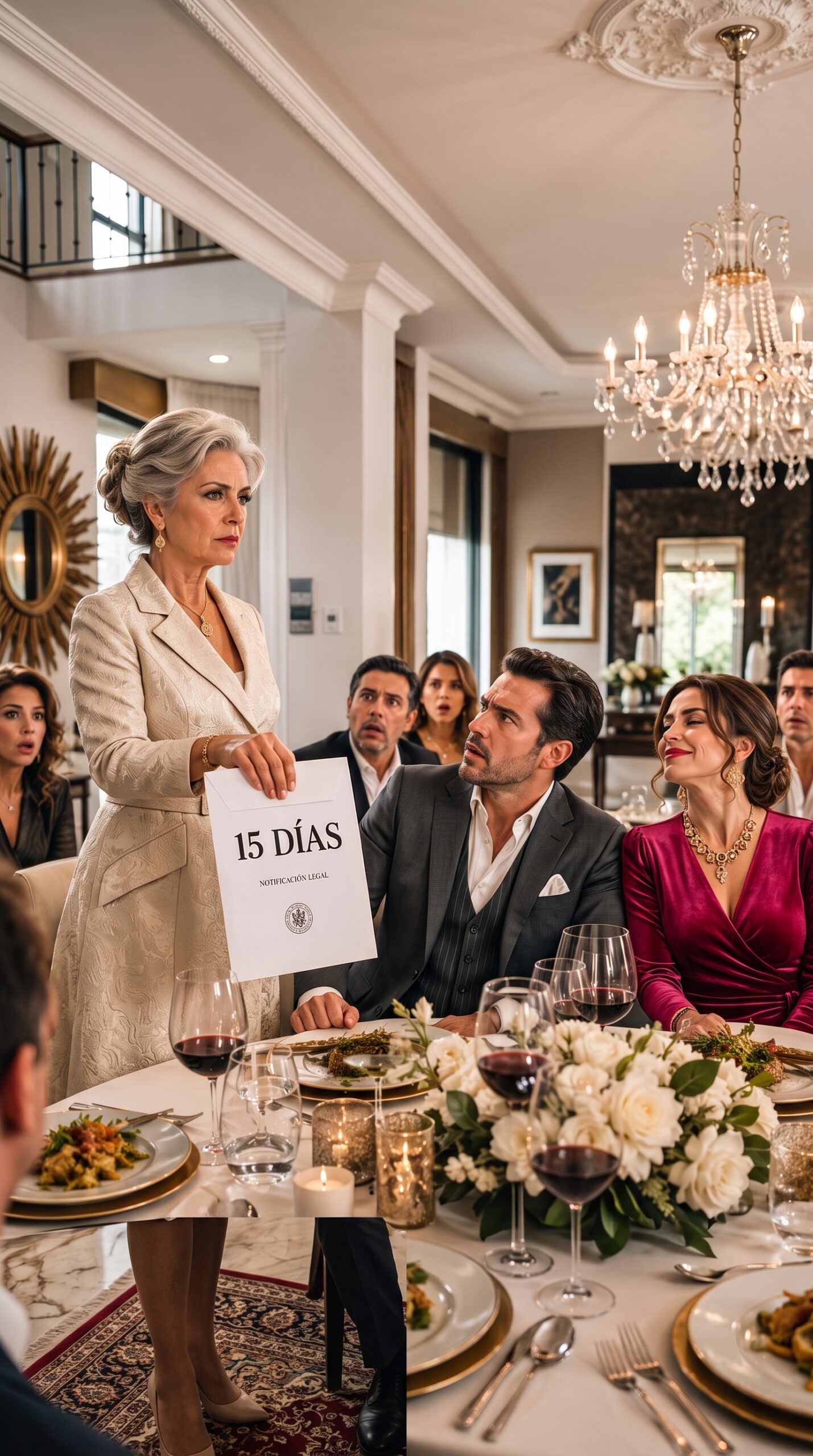
—Those children are better off in heaven than in the hands of a mother like her.
The words fell in the funeral home like a public slap.
No one dared to move.
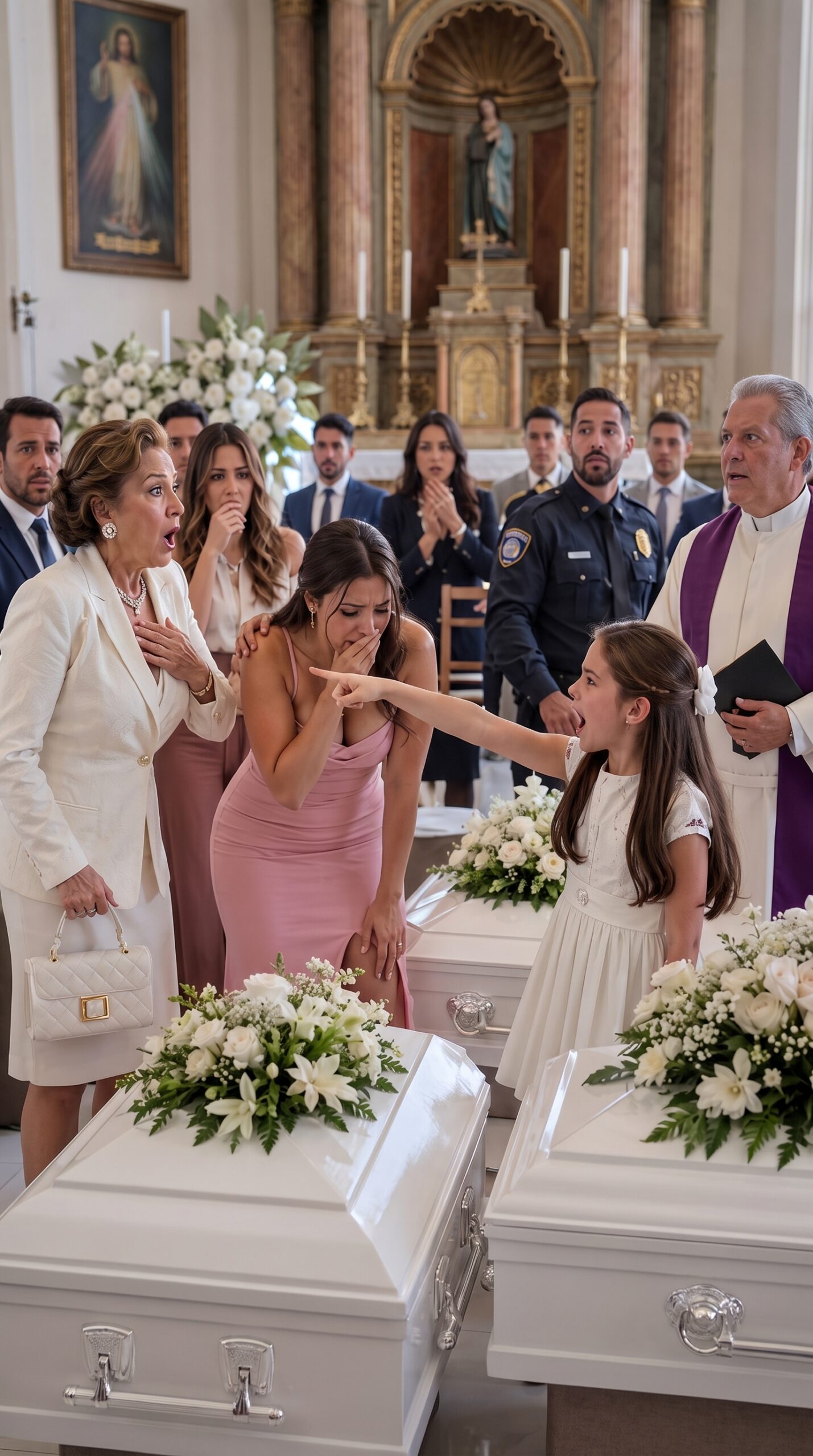
Before two white coffins, Valeria Mendoza felt the air clogging in her chest. Her twins, Santiago and Mateo, were barely three months old. They had been her miracle after five years of treatments, injections, prayers to the Virgin of Guadalupe, and nights spent crying in silence.
The funeral home was in Guadalajara, near a busy avenue where trucks, motorcycles, and flower vendors continued to pass, as if the world didn’t know that for Valeria, everything had ended.
Beside the coffins stood Doña Refugio, her mother-in-law.
Dressed impeccably in black, with a rosary between her fingers and her hair perfectly styled. She brought a handkerchief to her eyes, but not a single tear fell. Not one.
—I warned you —she continued, looking at everyone present—. A proud woman, stubborn, who refuses help, ends up failing where it matters most.
Valeria wanted to scream.
She wanted to say that she had cared for her babies every night, that she had checked their bottles, their temperature, their breathing. She wanted to say that she wasn’t a bad mother, that she was tired, yes, but never neglectful.
But her throat didn’t respond.
Her husband, Ricardo, stood beside her. Gray suit, head down, hands clasped. He said nothing.
Not even when his mother was tearing her apart in front of the whole family.
—Mom, stop —he murmured.
So low that almost no one heard him.
Doña Refugio looked at him with the false tenderness she used when she wanted to manipulate him.
—No, son. The truth hurts. God took those little angels because He knew they weren’t safe here.
A murmur ran through the room.
—She always looked exhausted.
—Three children were too much for her.
—Doña Refugio did help a lot. We all saw that.
Valeria closed her eyes. She felt herself breaking inside.
Then a tiny hand squeezed her fingers three times.
It was Camila, her seven-year-old daughter.
She wore a black dress that was too big and shoes Valeria had bought for a school party. Her little eyes were red, but she wasn’t crying. She looked at her grandmother with a seriousness that didn’t seem like a child.
—Mommy —she whispered.
Valeria looked down, but before she could respond, Doña Refugio spoke again.
—I went to that house on Tuesdays and Thursdays. Everyone knows it. I went because I saw Valeria couldn’t handle it. But there are women who prefer to play the victim rather than listen to someone who knows how to raise children.
Aunt of Ricardo nodded.
—That’s true. Refugio always gave so much.
Father Tomás, who was in front of the lectern, cleared his throat uncomfortably. He didn’t know whether to stop her. Doña Refugio donated every year to the parish, and the whole neighborhood respected her.
Valeria felt shame, rage, impotence.
And then Camila let go of her hand.
The girl walked slowly toward the lectern. Her little footsteps echoed on the shiny floor. Everyone turned to look at her.
—Camila, come here —Ricardo said, nervously.
But she didn’t stop.
She reached Father Tomás and lifted an old cell phone with a cracked screen.
—Father —she said, with a trembling but clear voice—, can I show them what my grandmother put in my siblings' bottles?
The silence was total.
Doña Refugio lost all color in her face.
Ricardo jerked his head up.
And Valeria understood that the pain could still become darker.
She couldn’t believe what her daughter was about to reveal.
PART 2
Three months before that funeral, Valeria still thought her home could be happy.
She lived with Ricardo in a quiet neighborhood in Zapopan, in a small house with a white gate, pots of geraniums, and a yard where Camila played with her pink bicycle.
It wasn’t a rich life, but for Valeria, it was enough.
She had painted the twins' room herself. Light blue, with little white clouds and stars stuck to the wall. Each blanket was folded carefully. Each bottle washed. Each diaper arranged as if preparing everything could protect them from the world.
Santiago and Mateo were born after five years of attempts.
Valeria had gone through consultations, tests, hormones, and cruel comments from Doña Refugio.
—A woman who cannot give her husband children should ask herself what she is paying for —she once told her during a family meal.
Ricardo only lowered his gaze.
He always did that.
When the twins were born in a private hospital in Guadalajara, Ricardo cried as he held them. He promised Valeria that now they would be a complete family.
She wanted to believe him.
Even Doña Refugio pretended to be happy. She arrived with balloons, medals of San Benito, and a huge bouquet. But before leaving, she unleashed her usual poison.
—I hope you can handle three, because wanting children is one thing, and knowing how to raise them is another.
The first weeks were exhausting but beautiful.
Valeria slept in bits. Ate cold food. Washed clothes at midnight. Sometimes she cried in the bathroom so Camila wouldn’t see her, but when she held her babies, it all felt worth it.
Camila was the sweetest older sister.
She sang them songs, taught them drawings, and ran to tell her mom if one made strange noises.
But on Tuesdays and Thursdays, everything changed.
Those days, Ricardo traveled for work. He was a representative for a pharmaceutical company and visited doctors in León, Morelia, or Aguascalientes. He left before six in the morning with his black briefcase filled with medical samples and returned at night.
And just on those days, Doña Refugio would arrive.
—You can’t handle this alone —she told her from the first week—. I raised four children without all this drama. Let me help you, dear, don’t be proud.
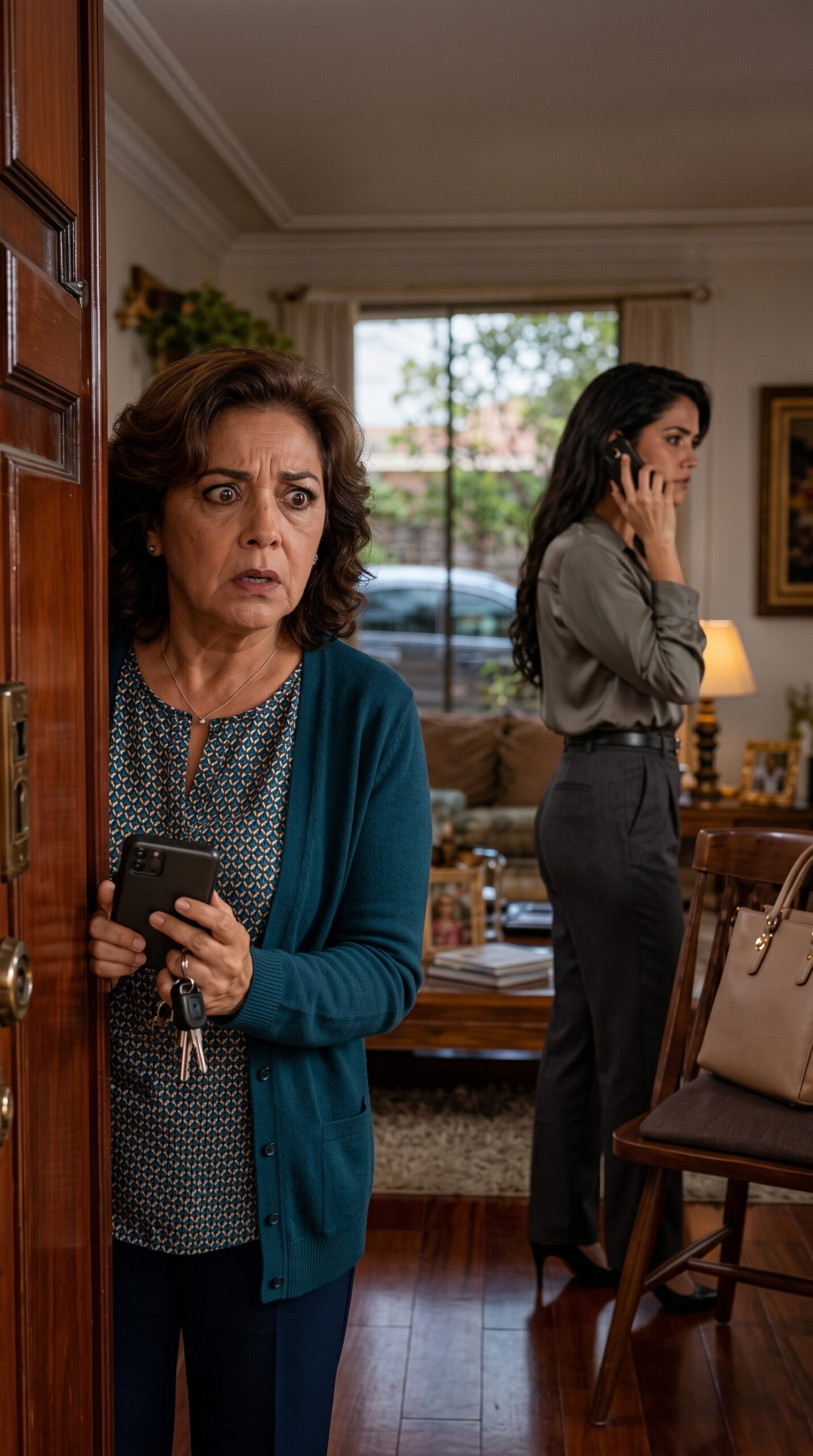
Valeria didn’t want to give her a key.
Ricardo insisted.
—She’s my mom. She just wants to support. Don’t get hung up.
From then on, Doña Refugio entered without knocking.
First, she changed everything in the kitchen.
—The bottles don’t go here. The formula doesn’t either. You’ve got everything all messed up.
Then she checked the babies’ drawers.
—You fold the clothes like you don’t care.
Afterward, she began taking the children from Valeria’s arms.
—Don’t hold them too much. You’ll make them whiny. Babies also manipulate, even if you don’t believe it.
Valeria began to feel like a guest in her own home.
Camila noticed it.
—Mommy, why does my grandmother talk to you ugly? —she asked one night while Valeria tucked her in.
—It’s not ugly, my love. It’s just her way of being.
—No. She wants you to cry.
Valeria didn’t know what to answer.
One Thursday, Camila pretended to have a stomach ache to skip school. Valeria thought maybe she was jealous of the babies or needed to be close to her. She let her stay.
After breakfast, Camila went to the kitchen for water.
She stopped at the door.
Doña Refugio was by the table. She had two open bottles and Ricardo's black briefcase beside her. She took out a small sample vial, crushed a pill with a spoon, and let the white powder fall into the milk.
Camila froze.
Doña Refugio saw her.
For a moment, neither said anything.
Then the grandmother smiled.
—They’re vitamins so your siblings can sleep better. Good babies sleep a lot. Whiny babies make their moms look bad.
Camila didn’t respond.
That day, Santiago and Mateo slept too much.
Valeria got scared because they hardly woke up to eat.
—Finally, they’ve got a routine —Doña Refugio said—. See how they needed discipline.
But Camila didn’t stay calm.
That night, she looked for a purple notebook and started writing.
“Thursday. Grandma put powder in the bottles. Said it was vitamins. The babies slept a lot. My mom was worried.”
She didn’t understand everything, but she understood enough.
In the following days, she observed more.
Tuesday.
Doña Refugio opened Ricardo’s briefcase again.
Another pill.
Another spoon.
Another bottle.
Camila took a photo with an old cell phone Valeria had given her to watch videos without internet. The camera was poor, the screen was broken, but it was possible to see her grandmother's hand, the vial, and the bottle.
Thursday.
She recorded a video from the hallway.
—With this, they’ll sleep like angels —Doña Refugio said—. Your mom should thank me instead of playing the victim.
Camila pressed her lips to hold back tears.
The last night before the tragedy, Ricardo called from León.
—How were the kids?
Valeria looked at the cribs. Santiago and Mateo were too still.
—Very sleepy —she replied—. I don’t know, Richi, something doesn’t feel right.
Ricardo sighed.
—Not again with this. Honey, my mom knows. Don’t look for trouble where there isn’t any.
Valeria wanted to tell him she didn’t want his mother coming in anymore. That her babies weren’t okay. That Camila was acting strange. That she was scared.
But she stayed silent.
At 4:38 AM, she awoke by instinct.
Not from crying.
Not from hunger.
From silence.
She entered the room and found Santiago cold. Then Mateo the same.
Valeria’s scream woke the whole house.
Now, in the funeral home, Camila was standing before Father Tomás, with the old cell phone in hand.
—That girl is making things up —Doña Refugio said, advancing toward her—. She’s confused. Her mother put ideas in her head.
Don Ernesto, Valeria’s father, stepped in front of Camila.
—You do not touch my granddaughter.
Doña Refugio tried to keep her victim face, but her mouth trembled.
Camila unlocked the phone.
The first photo appeared on the screen.
Doña Refugio was in the kitchen. In front of her, there were two open bottles. Beside her, Ricardo's black briefcase. In her hand, there was a small vial with a medical label.
A murmur swept through the room.
—That doesn’t prove anything —said the mother-in-law—. She was just organizing things.
Camila swiped her finger.
The second photo showed the spoon with white powder on a bottle.
The third, the vial closer.
Ricardo approached, pale.
—Mom… what is that?
Doña Refugio didn’t answer.
Camila played the video.
The grandmother’s voice filled the funeral home.
—with this, they sleep, and your mom stops playing the victim. Kids need to learn from a young age who’s in charge.
Valeria felt her soul leave her body.
—What did you give them? —she asked, barely able to breathe.
Doña Refugio tightened the rosary.
—Don’t exaggerate. It was small amounts.
The room exploded.
—Did you give my three-month-old babies medicine? —Valeria screamed.
—I just wanted them to rest —the mother-in-law replied, losing control—. They cried all day. You couldn’t handle them. You were holding them for anything. You were making them weak.
Ricardo put his hands on his head.
—No, no, no…
Then Camila took out the purple notebook.
—I also wrote it down.
Valeria fell to her knees in front of her daughter.
—My love…
—I’m sorry, Mommy —Camila said, crying—. I thought if I gathered proof, someone would believe me.
Valeria hugged her tightly.
—You didn’t have to save us, my love. The adults were supposed to protect you.
Father Tomás called the police.
Don Ernesto called the Prosecutor’s Office.
Doña Refugio tried to leave through a side door, but two cousins of Valeria blocked her way.
—You’re not going anywhere —said one.
When the patrols arrived, the scene looked like a nightmare: two white coffins, a girl with a notebook, a destroyed mother, and a grandmother screaming that she did it all for love.
—I am their grandmother! —she shrieked as they handcuffed her—. I just wanted to bring order!
Valeria looked at her without blinking.
—You didn’t want order. You wanted control.
The next 72 hours confirmed the horror.
The Prosecutor’s Office reopened the investigation. Toxicology reports found a strong sedative in the bodies of Santiago and Mateo. It wasn’t spoiled formula. It wasn’t sudden infant death. It wasn’t an unexplained tragedy.
The samples came from Ricardo's briefcase.
Doña Refugio’s computer revealed searches for medications to make babies sleep, dangerous dosages, and respiratory risks in infants.
It wasn’t ignorance.
It was obsession.
She wanted to prove Valeria was incapable. She wanted her son to return to obeying her. She wanted to keep being the woman in charge of that family.
Ricardo collapsed.
One afternoon, sitting in the empty living room, he cried while looking at a photo of his twins.
—I gave her the key —he repeated—. I told you were exaggerating. I let her in.
Valeria looked at him from the door.
Once, she would have run to comfort him.
But not anymore.
—Your mother killed them —she said—. But you let her in every time I asked you to stop her.
Ricardo shut his eyes.
—I know.
—You stayed silent when she humiliated me. You stayed silent when Camila was scared. You stayed silent at the funeral.
He couldn’t respond.
The trial came months later.
Doña Refugio entered dressed in black, with an offended saintly face. Her lawyer said it was an error, that she was a tired grandmother, that she never meant to kill anyone.
But Camila took the stand.
The forensic psychologist was beside her. Valeria squeezed her hand three times before letting go.
Camila read from her notebook.
Dates.
Phrases.
Photos.
Videos.
Everything.
When the judge heard the audio where Doña Refugio said, “with this they sleep like angels,” no one in the room could hold their gaze.
The sentence was life imprisonment.
Doña Refugio didn’t cry for Santiago or Mateo. She screamed that her son was ungrateful, that Valeria had destroyed the family, that no one understood what it was like to sacrifice.
Ricardo signed the divorce weeks later.
He didn’t fight for the house. He didn’t ask for money. He only requested to see Camila under therapeutic supervision. Valeria accepted because her daughter still loved him, though she was also hurt by his silence.
—I don’t expect you to forgive me —Ricardo said the day he left.
Valeria looked at him without hatred.
—Don’t live seeking forgiveness. Live remembering what happens when a man prefers not to disturb his mother over protecting his family.
Time later, Valeria moved with Camila to Mazatlán, near her parents.
The apartment was small, with a partial view of the sea. It didn’t have the blue room or the yard from before, but it had something Valeria hadn’t felt in years: peace.
Camila started therapy.
Sometimes she had nightmares. She dreamed of bottles. Of white powder. Of adults who didn’t listen.
One night, while they were having soup for dinner, she asked:
—Mommy, do my siblings know that I tried to help them?
Valeria set down her spoon.
She hugged her as tightly as she could.
—They know you loved them. They know you were brave. But you were a child, my love. Saving them was the job of the adults.
Camila cried in silence.
Valeria did too.
A year later, Valeria began to tell her story in talks about domestic violence. She didn’t seek pity. She wanted other women to understand that abuse doesn’t always come with blows.
Sometimes it comes with a borrowed key.
With unsolicited advice.
With a rosary in hand.
With a mother-in-law who says, “I just want to help.”
And with a husband who stays silent to avoid upsetting his mother.
At the grave of Santiago and Mateo, Camila left a folded letter next to the flowers.
“Dear Santi and Mati: I’m in third grade now. I still remember your little hands. Grandma can’t hurt anyone anymore. I told the truth. I love you both so much. Your sister Camila.”
Valeria read the letter and cried.
Her children would not return.
But her story left a question that many didn’t want to answer:
How many tragedies begin not with the monster that acts, but with all those who see, hear, and remain silent?