PART 1
—If that child isn’t mine, don’t use my last name to force me to save her.
Dr. Sebastián Alcázar said this standing in front of the operating room at Santa Regina Hospital, in the Del Valle neighborhood, as the orderlies wheeled Valeria Montes in, her gown flapping open, her face drained of color, and her trembling hands clutching her belly.
Nurse Chayo looked at him as if he had just spat in a church.
—Doctor, the baby has a heartbeat of 82. The mother is bleeding. Your family drama stays outside.
Sebastián lowered his eyes to the file.
Valeria Montes.
His ex-wife.
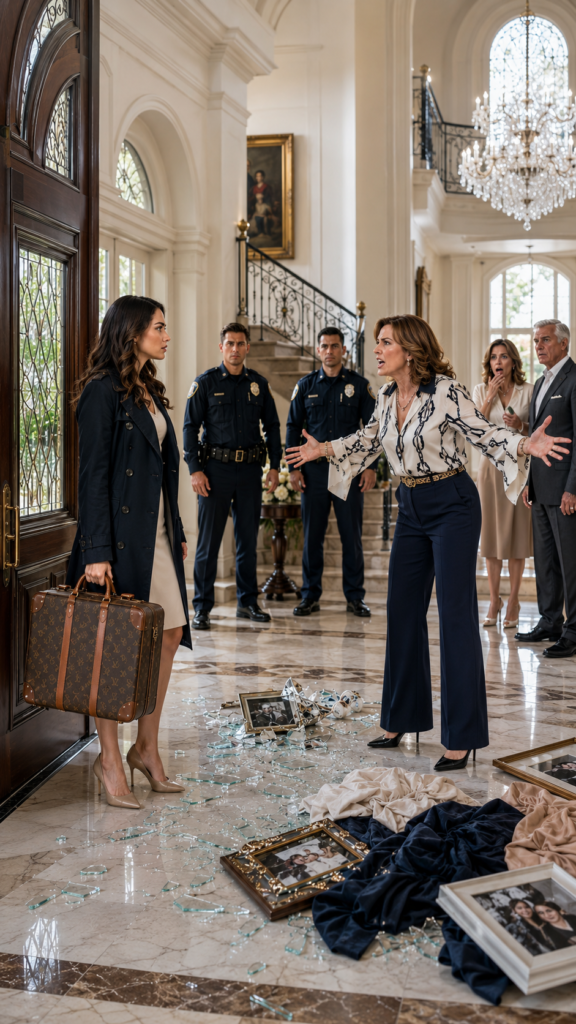
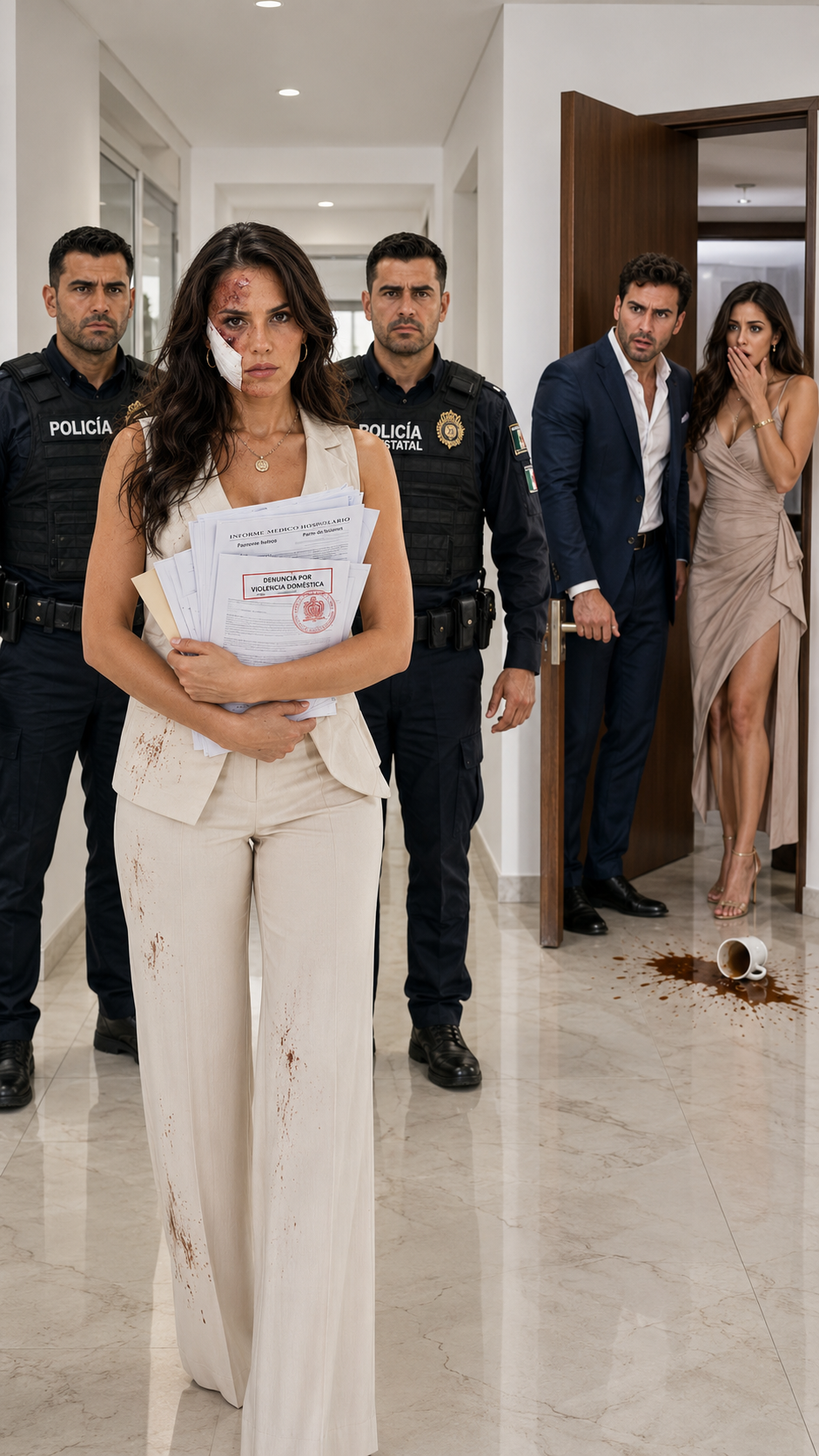
The woman he had dragged out of his home in Las Lomas nine months earlier, pregnant, soaked to the skin, with a broken suitcase while the rain turned the street into a river.
—I didn’t come for you —Valeria whispered, her voice breaking—. I came because my daughter is dying.
Sebastián’s face hardened.
He was a renowned gynecologist, known for saving impossible pregnancies, the only son of Doña Regina Alcázar, the woman who graced magazine covers holding poor babies and boasting about the family foundation.
On the outside, Regina embodied charity, rosaries, and smiles.
On the inside, she controlled everyone’s lives as if God had signed a power of attorney.
—How convenient —Sebastián said—. You disappear for the entire pregnancy and show up right here.
Valeria let out a bitter laugh that ended in pain.
—I didn’t disappear. You shut the door on me.
The hallway turned icy.
The night returned to both their memories.
Valeria worked as an accounting auditor at the Alcázar Foundation, where supposedly surgeries for girls with heart conditions were funded.
While reviewing accounts, she found duplicate receipts, diverted donations, and files of families from Oaxaca used without permission to solicit money from businessmen.
She wanted to give evidence to a lawyer in a hotel downtown.
She carried a hidden memory stick in the lining of her bag.
But someone photographed her entering the elevator with him.
That same night, Doña Regina laid the photos on the table.
—Look what this woman did to you —she cried—. Pregnant and getting involved with another man, how shameless.
Valeria tried to speak.
She tried to pull out the memory stick.
She tried to explain that she was protecting him.
Sebastián didn’t listen.
He only saw the photos, the belly, and his pride shattered.
He opened the front door and shouted into the storm:
—I’m not raising another man’s child, Valeria! Get out!
She stood on the sidewalk, cradling her belly, as he slammed the door.
Now, nine months later, that girl was fading inside her.
—Doctor —Chayo shouted—, we either go in now or we lose both.
Sebastián swallowed hard.
For one second, he stopped being the wounded husband.
He became a doctor again.
—Emergency cesarean. Blood bank ready. Neonatology inside. Move!
The stretcher moved forward.
Before crossing the threshold, Valeria grabbed his wrist.
—Don’t save me if you don’t want to… but save my girl.
He gritted his teeth.
—I won’t let her die.
Inside the operating room, the harsh white light felt crueler than the rain that night.
Anesthesia began to take hold of Valeria.
Sebastián leaned in.
—Hang on.
She looked at him, tears in her eyes.
—you lost the right to ask me that.
Then came the cut.
The silence.
A long, horrible pause.
—Why isn’t she crying? —Valeria whispered—. Why isn’t my baby crying?
No one answered.
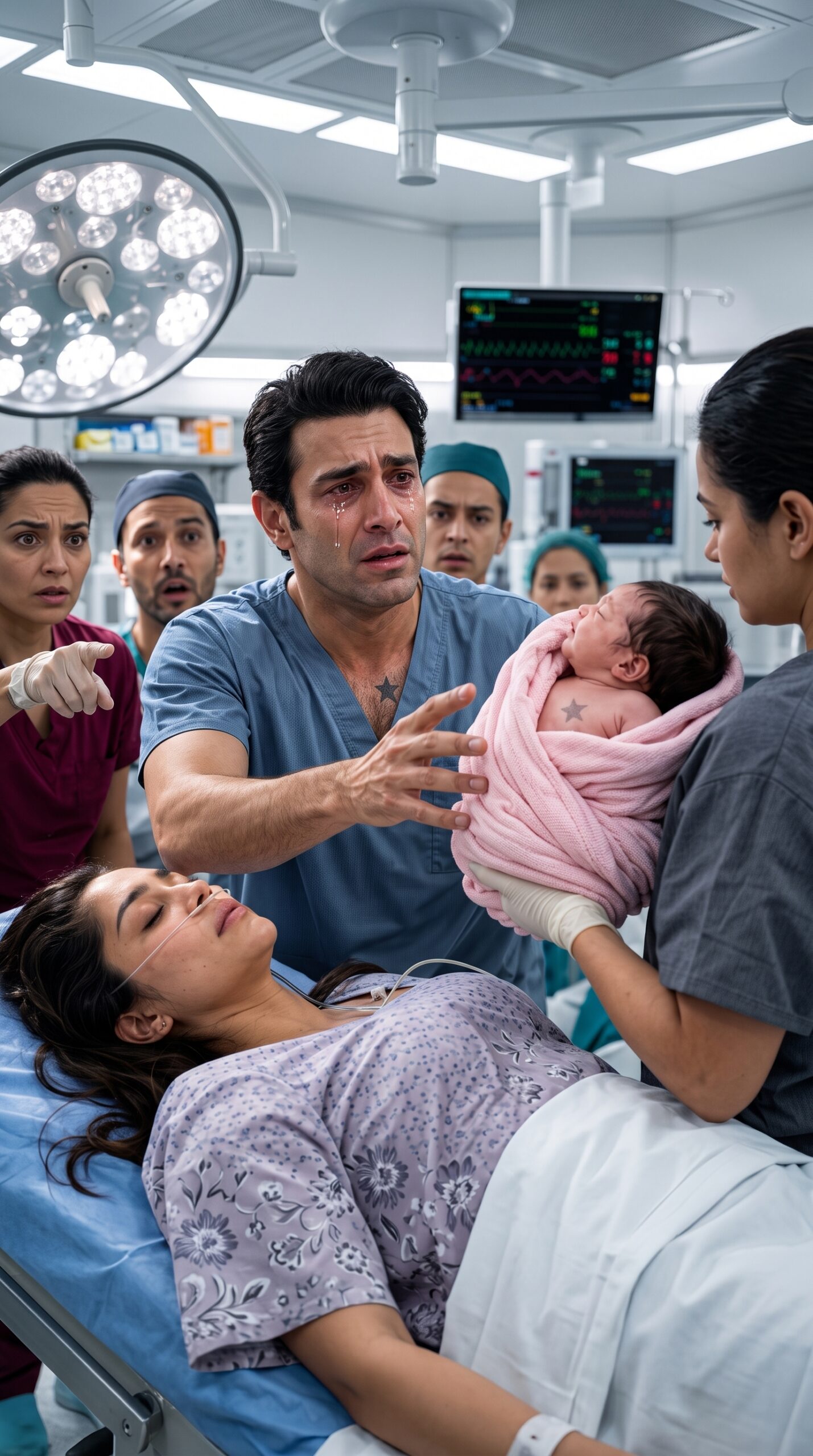
Sebastián was bent over a table, surrounded by nurses, rubbing the back of a tiny, purple newborn.
—Come on, little one. Breathe. Don’t do this to me.
Eternal seconds passed.
Then a weak cry broke the stillness of the operating room.
Chayo cried out in relief.
—It’s a girl. She’s alive.
When they brought her close, the blanket revealed her left shoulder.
Everyone fell silent.
The baby had a dark crescent-shaped mark.
The same mark Sebastián had under his collarbone.
The same mark his grandfather and father had.
The mark the Alcázars called “the blood moon.”
Sebastián took a step back, white as a wall.
Valeria barely managed to say:
—Her name is Camila.
But before he could touch the girl, the monitor shrieked violently.
Chayo turned in terror.
—She’s hemorrhaging! We’re losing Valeria!
PART 2
Sebastián returned to the table as if the floor had been ripped away from him.
—No, no, no… Valeria, stay with me.
The blood was advancing too quickly.
The beeping of the monitor filled the operating room like a threat.
Chayo called for more gauze.
Another resident rushed for blood units.
The anesthesiologist raised his voice.
—Pressure 40 over 20. No response.
Sebastián had operated on women in terrible situations.
He had seen families praying in hallways.
He had seen husbands cry in regret when there was nothing left to do.
But he had never felt that kind of fear in his hands.
Because the woman in front of him wasn’t a complicated case.
She was Valeria.
The woman who made him coffee at dawn while he studied for his conferences.
The woman who laughed at his bad jokes.
The woman who told him, with a test in hand, that they were going to be parents.
The same woman he called a liar without giving her a chance to defend herself.
—Clamps. Suction. More blood. Now!
His hands moved with precision, but his heart was breaking.
He glanced toward neonatology.
Camila cried, wrapped in a pink blanket, alive, stubborn, fighting to stay.
She had his mark.
His blood.
His last name, even though he had denied it before seeing her.
And Valeria was dying on the table because of a lie he had preferred to believe.
—Valeria, listen to me —he said, his voice cracking—. You can’t go. Not like this.
Chayo confronted him without stopping her work.
—Doctor, less guilt and more hands.
That hurt because it was true.
Regret didn’t stop hemorrhages.
The surgery became a battle.
For nearly an hour, the team fought against the blood, against exhaustion, against that absurd fate that seemed to take everything from them at once.
When the bleeding finally subsided, no one celebrated.
Only the monitor beeped a weak but steady line.
Chayo closed her eyes.
—We have her.
Sebastián leaned against the wall.
Then he covered his face with his hands.
And he cried.
Not as a doctor.
Not as the son of a powerful family.
He cried as a man who had just understood that his pride nearly killed his wife and daughter.
Valeria remained in intensive care.
One day passed.
Then two.
Then three.
Sebastián didn’t return home.
He slept sitting in a plastic chair, in a wrinkled gown, with an unshaven beard and cold coffee in hand.
Every few hours he entered to see Camila.
The baby was small but strong.
She gripped Sebastián’s finger as if she wanted to reclaim every day he hadn’t been there.
And every time he saw the crescent moon on her shoulder, he felt someone pouring salt on an open wound.
The truth had always been there.
But he preferred to believe his mother because it was easier to hate Valeria than to accept that Doña Regina could be a monstrosity in expensive heels.
On the fourth day, Regina appeared at the hospital.
She arrived dressed in white, with dark glasses, a pearl necklace, and a bag that cost more than Chayo’s annual salary.
She walked as if the hospital belonged to her, too.
—Son —she said, trying to hug him—. I was informed that the girl survived. Thank God.
Sebastián didn’t move.
—Have you seen her mark?
Regina froze.
—What mark?
—The crescent moon.
She smiled faintly.
—Oh, Sebastián, babies are born with spots. Don’t make a scene about everything.
—Don’t play dumb, Mom.
The air in the hallway tensed.
Regina looked around.
—You’re tired. It affects you to see that woman again.
Sebastián pulled out a folder from the backpack beside his chair.
He opened it slowly.
On the pages were the hotel photos.
But there was something more.
The report from the private investigator.
The transfers made from an account of the Alcázar Foundation.
The name of the driver who followed Valeria that afternoon.
And the copy of the memory stick she had hidden in her bag’s lining.
During those three days, Sebastián had requested to review everything.
He called an expert.
He talked to the lawyer who appeared in the photos.
He reviewed the foundation’s transactions.
And what he found left him breathless.
Invoices from ghost companies.
Receipts for surgeries that never happened.
Signatures of indigenous mothers copied onto documents.
Donation money used for trips, jewelry, and Regina’s image campaigns.
The foundation that claimed to save sick girls was using their pain to wash prestige and money.
—Valeria wasn’t lying to me —Sebastián said—. She was trying to protect me from you.
Regina clenched her jaw.
—That girl was going to destroy us.
—No. She was going to tell the truth.
—And you’re going to believe an auditor from Iztapalapa over your mother?
Sebastián let out a dry laugh.
—that was my mistake.
Regina’s expression changed.
She no longer looked like an elegant lady.
She looked like a cornered woman.
—Everything you have, I built. Your name, your hospitals, your contacts, your reputation. That woman was never part of our world. She got in here because you were infatuated with a nobody.
Sebastián raised his gaze.
—Don’t ever talk about her like that again.
—I warned you from the start. She wasn’t enough for you.
—She was too much for me. That’s why I didn’t know how to take care of her.
Regina stepped closer, furious.
—Don’t be ridiculous. A decent woman doesn’t meet with men in hotels.
—A decent mother doesn’t fabricate evidence to throw a pregnant woman onto the street.
Regina slapped him.
The strike echoed through the hallway.
Chayo, coming out of neonatology, stopped.
Several employees turned.
Regina breathed heavily.
—I’m your mother.
Sebastián touched his cheek.
—And Valeria was my family.
—Was.
—She is still the mother of my daughter.
At that moment, the elevator opened.
Two agents from the Prosecutor’s Office and a lawyer stepped out with an order.
Regina looked at Sebastián in disbelief.
—You didn’t dare.
He had tears in his eyes, but he didn’t lower his head.
—Yes. I finally dared.
The agents approached.
—Regina Alcázar Medina, you are under arrest for fraud, forgery, and misappropriation of funds.
Regina tried to regain her composure.
—This is nonsense. I’m the president of a recognized foundation.
Chayo murmured from the door:
—Well, too bad, ma’am, because children don’t eat recognition.
The hallway fell silent.
For years, everyone had seen Regina enter the hospital giving orders, handing out fake smiles, and posing with babies for photographers.
That day, they saw her handcuffed.
Before getting into the elevator, she glared at her son with hatred.
—you’re going to lose everything because of that woman.
Sebastián replied without shouting:
—I already lost what mattered most when I left her in the rain.
Valeria woke up two weeks later.
The first thing she heard was a soft cry.
She opened her eyes with difficulty.
Her whole body ached.
Her throat felt dry, her legs heavy, and her belly felt like it had been split in two.
Beside her, in a transparent crib, Camila slept.
She had her fists clenched and a tiny mouth, as if dreaming of claiming the world.
Valeria started to cry.
—is she okay? —she barely asked.
Chayo smiled.
—Tougher than many adults, honestly.
The nurse took Camila and settled her on Valeria’s chest.
The baby moved, seeking warmth, and settled down.
Valeria closed her eyes.
For a moment, there was no fear.
There was no rain.
There was no closed door.
Only her daughter breathing against her.
Then she saw Sebastián sitting by the window.
He had dark circles under his eyes, a beard, and the face of a man who had been paying a debt inside.
He stood up but didn’t approach.
—I didn’t come to ask you to forgive me.
Valeria looked at him in silence.
—I also didn’t come to ask you to come back to me.
She hugged Camila tighter.
—Then, why are you here?
Sebastián took a deep breath.
—My mother was arrested. The foundation is under intervention. The evidence you found is now with the Prosecutor’s Office. The lawyer has testified. The photographer too.
Valeria closed her eyes.
A tear rolled down her cheek.
—I tried to tell you.
—I know.
—I begged you to listen to me.
—I know.
—and you called me a nobody.
Sebastián lowered his gaze.
—I know.
Valeria spoke with a calmness that hurt more than any scream.
—Do you know what was the worst?
He shook his head slowly.
—it wasn’t the rain. It wasn’t sleeping in a bus terminal waiting room. It wasn’t selling my chain to pay for consultations. It wasn’t giving birth believing my daughter was going to die.
Sebastián closed his eyes.
Valeria swallowed hard.
—the worst was that I still expected you to knock on the door and say, “I was wrong.”
He broke.
But he didn’t get closer.
He had no right.
—I was wrong —he said—. And I came too late.
Valeria didn’t respond.
She only kissed Camila’s forehead.
Months later, Valeria left the hospital.
She didn’t return to Las Lomas.
She didn’t accept to live in any apartment bought by Sebastián.
She rented a small place in Coyoacán, near a market where the neighbors called her “mija” and gifted her soup when they saw her tired.
Sebastián respected her boundaries.
He visited Camila only when Valeria allowed it.
He arrived with diapers, milk, fruits, and home-cooked meals.
He didn’t come with a driver.
He didn’t talk about lawyers.
He didn’t use money to buy forgiveness.
He learned to hold the baby without fear, to change diapers, to sleep sitting while Camila tugged at his shirt, and to warm bottles without making a martyr’s face.
Sometimes Valeria watched him from the kitchen.
She saw the man who destroyed her trying to become someone different.
That didn’t erase what he had done.
But it also wasn’t a lie.
Regina’s trial was a scandal.
Mothers who had never received the promised surgeries came forward.
Children used in gala photos stepped into the light.
Doctors forced to sign false files emerged.
Transfers to jewelry stores, trips, and Polanco restaurants paid with donations surfaced.
The woman who flaunted rosaries ended up crying in front of a judge.
When asked why she did it, she replied:
—Because that foundation was my life.
Valeria turned off the television.
Camila was sleeping on her chest.
—No, ma’am —she whispered—. Life was those girls.
Two years passed.
Then three.
Camila grew cheerful, bossy, and smiley.
She had the crescent moon on her shoulder and the same way of scrunching her nose as Sebastián when something displeased her.
One Sunday in Parque México, while chasing bubbles, the girl stopped between her parents.
—Mom, why does Dad sleep in another house?
Valeria and Sebastián exchanged glances.
No one had an easy answer.
Camila crossed her arms.
—In my kindergarten, they say there are different families, but I want to know if you love each other or not.
Sebastián nearly choked on his coffee.
Valeria let out a nervous laugh.
—that’s complicated, sweetheart.
—Well, say it simply. I’m 3 years old, I’m not a lawyer.
A nearby couple laughed softly.
Valeria looked at Sebastián.
For the first time in a long while, she didn’t feel anger.
She felt exhaustion.
Also something akin to tenderness.
Time later, Sebastián invited Valeria to dinner.
He didn’t take her to Polanco.
He didn’t go to a restaurant where one salad costs as much as a month’s groceries.
He took her to a small eatery in Coyoacán where they had eaten green enchiladas when he was a resident and she was reviewing accounts in an office without air conditioning.
The same table.
The same plastic tablecloth.
The same owner who looked at them and said:
—I knew you two would come back one day.
Valeria blushed.
Sebastián didn’t pull out a ring.
He pulled out a letter.
—I don’t want you to forget —he said—. I don’t want you to act as if it didn’t happen. I just want you to know that I will spend my life being better than the man who left you alone in the storm.
Valeria read in silence.
She didn’t cry at first.
But when she reached the part where Sebastián wrote that Camila wasn’t his “second chance,” but the person who taught him to deserve one, the tears won.
—I don’t know if I can trust like before —she said.
—I don’t want like before —he replied—. Before, I didn’t know how to take care of you.
Valeria looked at him for a long time.
Then she took his hand.
It wasn’t complete forgiveness.
It wasn’t forgetfulness.
It was a beginning.
A year later, they married again.
It was a small ceremony, without press, without last names weighing more than people.
Chayo was there, some doctors, neighbors from Coyoacán, and Camila walking in a white dress with a basket of flowers.
When they reached the front, the girl raised her hand.
—I want to say something.
Everyone laughed.
Valeria crouched down.
—Alright, my love.
Camila looked at her parents.
—My mom says the rain cleans. My dad says it hurts to get wet. I say that if someone leaves you in the rain, they have to learn to be an umbrella.
No one laughed.
Because even the adults understood.
Sebastián cried without hiding.
Valeria did too.
Not because the wound had disappeared.
But because finally, it no longer controlled them.
That night, when the party ended, it began to rain softly over the city.
Sebastián looked at Valeria and Camila sleeping under a blanket.
He didn’t close any doors.
He didn’t shout.
He didn’t hesitate.
He simply tucked them in better and stayed awake watching them breathe.
Because he understood too late, but he understood forever:
whoever abandons someone in the storm doesn’t deserve love just for feeling remorse.
They deserve it only if they learn, day by day, to become a refuge.