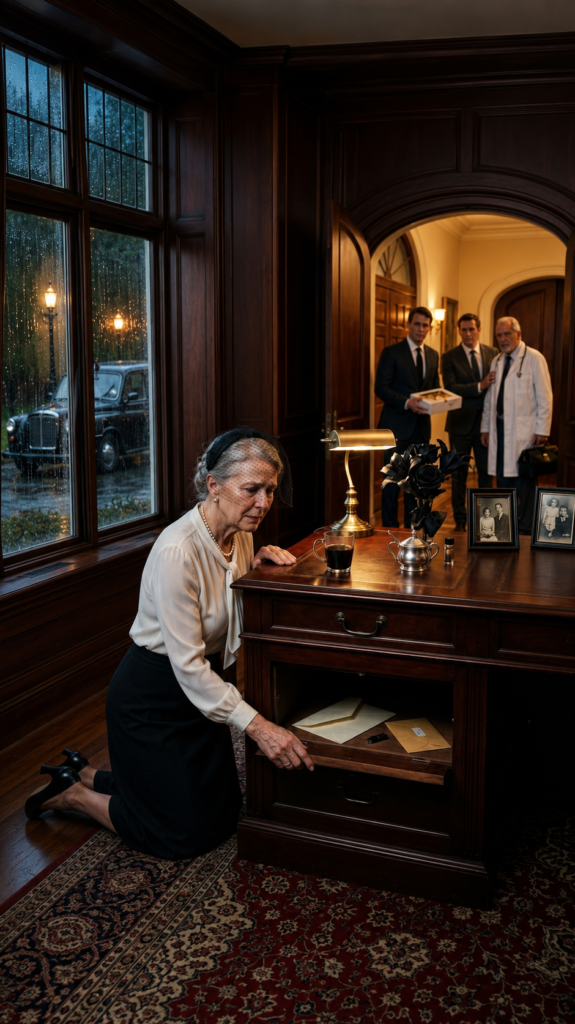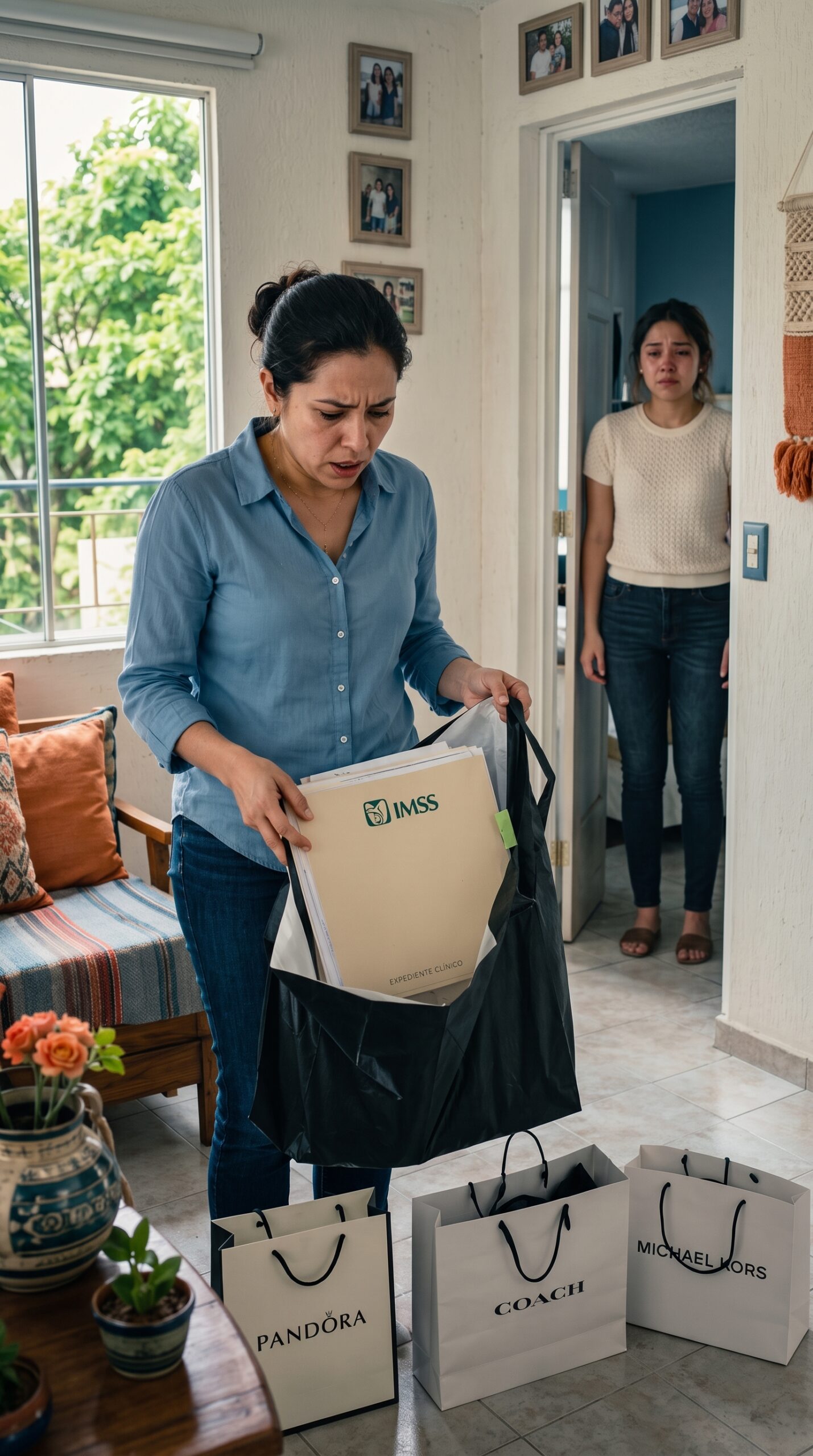
PART 1
—If you don’t deposit tomorrow, I’ll tell half of Monterrey that you’re a poor woman disguised as a refined lady.
The threat came from the mouth of Leonor Arriaga during a Sunday family meal, just as the cabrito was still served on the table and no one dared to move their cutlery.
Mariana Robles remained still.
For 8 years she had learned not to respond immediately. She had learned to swallow her anger when her mother-in-law called her "bitter." She had learned to smile when Leonor said in front of her friends that her son Andrés had made the mistake of marrying a "low-class" woman.
But most of all, Mariana had learned to pay.
Every month, $6,000 left her personal account and ended up in Leonor’s account. Andrés said it was temporary assistance. Leonor said it was the least she could do after receiving "the Arriaga name." Mariana silently called it buying peace.
Mariana did not come from a wealthy family. She had studied medicine on scholarships, with endless shifts and worn-out shoes. At 40, she owned 2 dermatology clinics in San Pedro and Monterrey. She worked late, reviewed every expense, and knew her patients by name.
Andrés, on the other hand, claimed to be involved in real estate investments. In reality, he lived off meetings in expensive cafés, impeccable suits, and businesses that were always "about to close."
Mariana paid the mortgage, the credit cards, Andrés’s car, the family trips, and even the remodeling of Leonor’s house in Cumbres.
That meal began like any other. Leonor had invited everyone "to get together." Andrés asked Mariana not to argue.
—My mom is sensitive —he told her in the car—. Please don’t start with your boundaries.
Mariana looked at him tiredly.
—My boundaries are not a lack of respect.
He sighed, as if she were the problem.
—Just don’t make a scene.
But the scene was made by Leonor.
After dessert, she pulled out a folder and slammed it on the table. There were quotes for a trip to Cancún, a designer purse, jewelry, and an aesthetic treatment.
—I need another 120,000 pesos by Wednesday —she said, as if asking for tortillas.
Mariana set her glass down on the table.
—For what?
—I’m going with my friends. I don’t plan to go like a beggar.
Andrés cleared his throat.
—We’ll talk about it later, Mari.
—No —she said.
The word left the table icy.
Leonor’s eyes widened.
—What did you say?
—I said no. And the monthly deposits are over.
Andrés turned pale.
—Mariana, don’t exaggerate.
—I’m not exaggerating. I’m fed up with maintaining a life that I don’t even respect.
Leonor pushed her glass away. The wine spilled on the tablecloth.
—You don’t maintain anything. Everything you are you owe to my son.
Mariana let out a dry laugh.
—My clinics do not carry his last name. Neither do my sleepless nights.
Then Leonor changed. The elegant lady, the respected widow, the church-going woman with a pearl necklace disappeared. In her place stood an enraged woman.
—You’re ungrateful.
—I’m a woman who will no longer pay to be humiliated.
Andrés said nothing. He didn’t defend his wife. He didn’t ask his mother to calm down. He just stared at the table.
Leonor got up, walked to a corner, and took an old baseball bat that Andrés kept as decoration.
—In my house, no one threatens me.
Mariana looked at her husband.
He was there. Sober. Awake. Watching everything.
And he did nothing.
The blow hit her in the ribs. Mariana fell against the table, knocking over plates and glasses. The pain took her breath away, but it didn’t elicit a plea.
Andrés barely murmured:
—Mom, enough...
Leonor lifted the bat again.
Mariana managed to grab her purse, walked toward the door with one hand on her side, and left without saying a word.
Outside, the Monterrey night was warm. Andrés followed her to the sidewalk.
—Mariana, don’t make this bigger.
She turned with dry eyes.
—You made it big.
She got into her truck, locked the doors, and called her lawyer.
When Leonor turned off the lights thinking Mariana would come back to apologize, she still didn’t know that this blow would open a door that no one in that family could close.
PART 2
Mariana drove to a private hospital with one hand. Each breath hurt as if something was breaking inside her.
Her phone vibrated.
It was Andrés.
My mom got upset. Tomorrow you come, apologize, and we fix this like adults.
Mariana read the message without crying.
Then another came.
Don’t cancel the deposit. I was counting on that money.
That phrase shattered the little that was left.
She called Natalia Duarte, her lawyer, a serious woman who had been reviewing documents that Mariana had started to gather in secret for weeks.
—My mother-in-law hit me with a bat —Mariana said—. Andrés saw it and did nothing.
Natalia remained silent for a second.
—Go to the emergency room. Don’t return home. Don’t talk to him. I’ll take care of calling the Public Ministry.
At the hospital, they confirmed 2 fractured ribs, bruises, and an injury to her left wrist. They took photos, filed a medical report, and an agent took her statement.
At 2:19 a.m., Andrés wrote again.
Don’t ruin my mom’s life over a bad night.
Mariana showed the phone to the agent.
—Please add that.
The man nodded and continued writing.
At 6:40, Natalia arrived with coffee, her hair tied up, and a thick folder. She placed it in front of Mariana.
—This is no longer just a divorce.
Inside were account statements, credit cards opened in Mariana’s name without her authorization, transfers to Leonor disguised as "consulting," "decorating," and "medical expenses." There were also loan requests digitally signed from Andrés’s laptop.
Mariana had already suspected something. She had noticed when a card charged her for a watch worth 190,000 pesos that she had never bought.
But she didn’t know the worst.
—Andrés tried to use one of your properties as collateral for a loan —Natalia said.
Mariana stood still.
—That property was mine before the marriage.
—Exactly. Someone forged your authorization.
For years, Mariana believed that Andrés was weak in front of his mother. A comfortable, spoiled man unable to set boundaries.
But those papers said otherwise.
Andrés was not a victim of Leonor.
He was her accomplice when it suited him.
At 7:30, a judge granted a protection order. They also authorized a raid for assault, fraud, and identity theft.
While Leonor was surely sipping coffee in her remodeled kitchen with Mariana’s money, 2 patrols and a ministerial truck arrived at her house.
The agents knocked.
No one answered.
Inside, footsteps and a woman’s voice could be heard.
—Don’t open anything.
The commander gave the order.
The door fell on the third knock.
Leonor appeared in a silk robe, half-made up, indignant as if the police had come to disrespect her.
—My daughter-in-law is crazy —she said—. She has always been confrontational.
Andrés came down the stairs with a laptop in hand.
—We can explain everything.
An agent saw the screen. There were open windows to delete files. Invoices. Contracts. Folders with account names.
Andrés lowered his gaze.
The raid lasted for hours.
They found the bat wrapped in a wet towel in the laundry room. They found receipts from luxury stores paid with Mariana’s cards. They found fake contracts where Leonor appeared as an advisor to the clinics, even though she had never set foot in one.
But what changed everything was inside a safe in Leonor’s closet.
There were copies of identifications, passwords, account statements, deposit dates, and a blue notebook.
On the first page it said:
MARIANA'S MONEY — WAYS TO TAKE MORE
The commander photographed each page.
Leonor had kept a cold record of her daughter-in-law’s income. Clinic profits. Bonuses. Payment dates. Bank expirations. Even notes on how to pressure Andrés to ask for more money without Mariana suspecting.
One phrase was underlined 3 times:
Make her feel guilty for not having children.
When Natalia read that aloud, Mariana couldn’t speak.
For years Leonor had told her that a woman without children should serve the family of her husband more. That for some reason God hadn’t given her babies. That the minimum comfort was to help financially.
Andrés never stopped her.
Now Mariana understood that these weren’t random cruel comments.
It was a strategy.
That afternoon, Andrés called from the holding cells. Natalia put the phone on speaker.
—Mari, please —he said—. This got out of control. My mom didn’t mean to hurt you. You know how she gets.
Mariana looked at her bruises reflected in the window.
—You’re making the money situation worse —he continued—. We’re spouses. What’s yours and mine was both.
Natalia clenched her jaw.
Andrés breathed heavily.
—If you keep this up, you’re going to send my mom to jail. She’s 65. Do you really want to carry that?
Mariana took the phone.
—I carried your mom for 8 years.
Andrés fell silent.
—Now you all carry the truth.
And she hung up.
The first hearing was 10 days later. Leonor arrived dressed in dark blue, with a rosary in hand and an offended grandmother’s face. Andrés wore a gray suit and an expression of a misunderstood man.
His lawyer tried to present everything as an exaggerated family dispute caused by a resentful wife.
Natalia didn’t shout.
She showed the photos from the hospital. The medical report. Andrés’s messages. The false transfers. The cards. The fake invoices. The forged signature. The laptop with deleted files.
Then she talked about the blue notebook.
When she read the title, the room fell silent.
MARIANA'S MONEY — WAYS TO TAKE MORE
Leonor stopped crying.
Andrés stopped looking at Mariana.
At that moment, she understood that her husband’s silence had never been cowardice. It was calculation. His favorite phrase, “don’t make this bigger,” was not peace. It was control.
The judge granted the full protection order. Neither of them could approach Mariana, her clinics, or her house. The accounts were frozen. The criminal case continued its course.
As they left, a local reporter asked her:
—Dr. Robles, do you want to say something?
Mariana breathed painfully, but she stopped.
—For years, I paid to have peace. Today I understood that peace is not bought. It is defended.
Months later, Leonor pleaded guilty to assault and receiving illicit funds. Her friends from the club didn’t save her. Her acquaintances from church didn’t either. Her house was sold to cover part of the damages.
Andrés resisted longer. He tried to present himself as a husband trapped between 2 difficult women.
But banks don’t feel pity. Computers hold memory. Forged signatures speak even if no one wants to hear them.
In the end, he accepted charges for identity theft, forgery, and obstruction. In the divorce, he lost any rights to the clinics, the properties, and the marital home. The car that Mariana paid for was returned.
The last time she saw him, Andrés looked thinner. In the courthouse hall, he approached her slightly.
—Was it worth it to destroy us? —he whispered.
Mariana could have told him about her ribs, her sleepless nights, the years of humiliation, and the shame of discovering that her husband had not only abandoned her but used her.
But she only said:
—Yes.
Then she went in and signed her freedom.
Almost a year later, Mariana received the first restitution check. It didn’t cover all that was stolen, but she held it for a long time.
She thought of Leonor lifting the bat.
She thought of Andrés asking her not to cancel the deposit.
She thought of the woman who believed that enduring was loving.
That night she had dinner alone in her new house. A smaller house, with bougainvilleas in the yard, open windows, and no room reserved for people who confused generosity with obligation.
Her phone didn’t vibrate.
No one asked for money.
No one called her exaggerated.
No one told her she should be grateful for a last name.
Her ribs healed. Her wrist did too.
What took the longest was forgiving herself for having called family a cage with monthly receipts.
But one morning, while reviewing her accounts, Mariana saw something she hadn’t seen in 8 years: everything that was there was hers.
Not just the money.
Also the silence.
Also the house.
Also the air.
And for the first time in a long time, every breath belonged to her completely.