PART 1
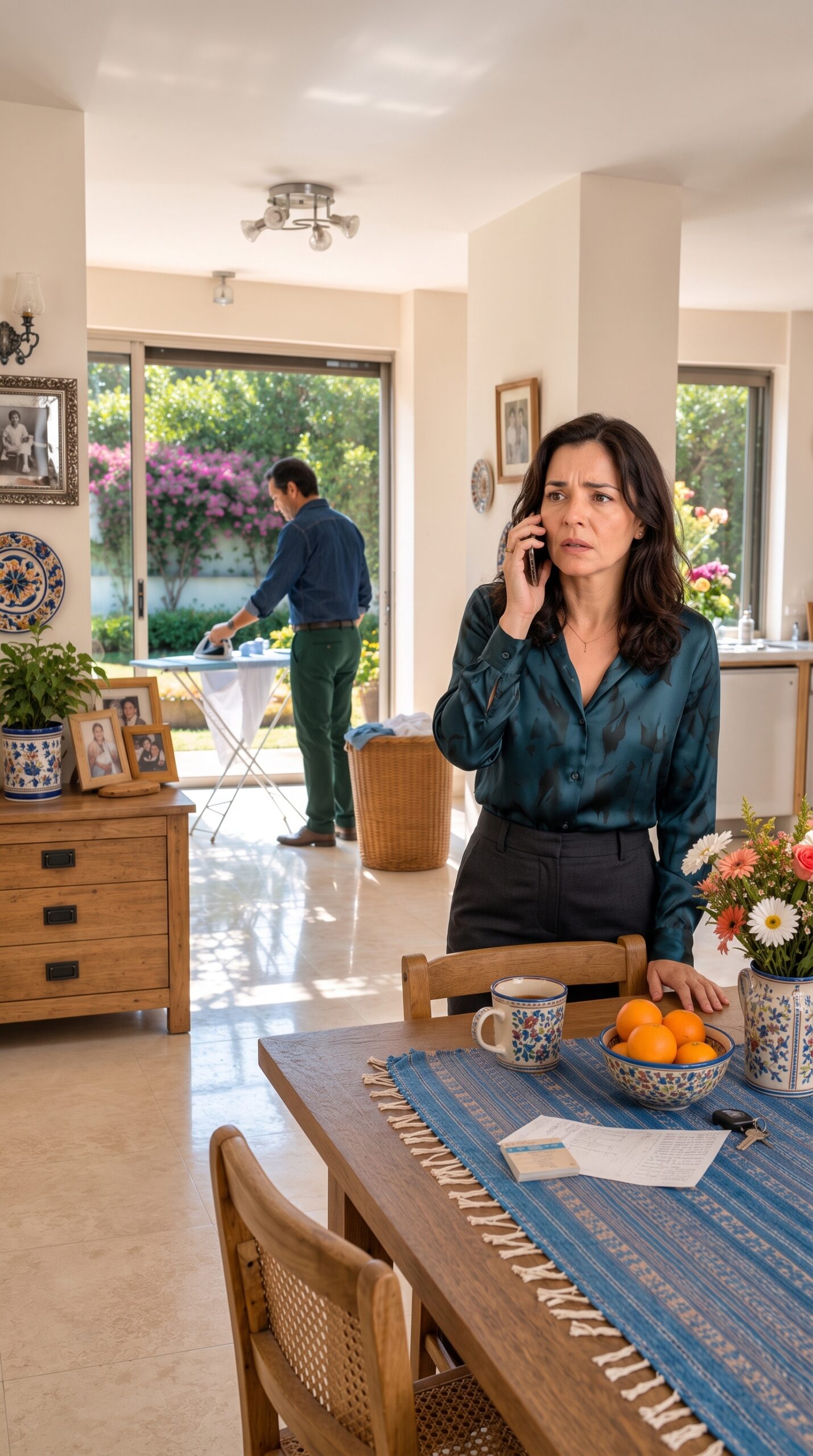
The cardboard box that Julián Aranda carried seemed light, but inside it held a humiliation that weighed like a stone.
Inside was just a mug decorated with drawings from his daughter, an old charger, a black notebook, and a folded folder. Nothing more. That was all he was allowed to take from the 23rd floor of Grupo Aranda, a massive tower on Paseo de la Reforma where everyone spoke softly when the bosses passed by.
He had just been fired for "loss of trust."
After only three weeks.
No one in that office knew that the man in the cheap shirt, with the simple backpack and worn-out shoes was not just any temp.
He was the owner’s son.
And he was also a single dad who raced every afternoon to pick up his 7-year-old daughter from school.
As he descended in the elevator, Julián caught a glimpse of his reflection in the metal doors. He wasn’t angry as they expected. He was too calm.
That was worse.
When he reached the parking lot, he took out his cell phone and dialed.
—Dad —he said in a low voice—. I’ve seen enough.
On the other end, Don Aurelio Aranda, the founder of the company, fell silent.
—What happened, son?
Julián looked up. On the 23rd floor, Mariela, César, and Tamara were surely still laughing at him.
—Freeze all access to the 23rd floor. Call the board. Have Legal review every email, every evaluation, and every file movement from the last four years. And no one is to leave until they hand in their equipment.
Don Aurelio took a deep breath.
—Is it that rotten?
Julián pressed the box against his chest.
—More than we imagined.
Three weeks earlier, Julián had entered Grupo Aranda with a different last name. In Human Resources, he was registered as "Julián Moreno," an internal operations assistant.
He had requested it himself.
He didn’t want to arrive as the heir. He didn’t want false applause, served coffee, or bought smiles.
He wanted to see the real company.
The one that didn’t appear in fancy presentations.
The one that employees who had no connections, drivers, or famous last names lived.
His direct boss was Mariela Sotelo, a 46-year-old manager with expensive perfume, perfect nails, and a smile that never reached her eyes. Beside her were César Rivas, the typical mocker who turned any cruelty into a joke, and Tamara Vela, silent, calculating, always ready to please whoever held power.
From day one, Julián understood something.
In that floor, they didn’t work.
They survived.
They loaded him with overdue reports, blamed him for others’ mistakes, and then stole his work. When he cleaned up databases, César presented them as his own. When he organized audits, Tamara signed the final emails. When something went wrong, Mariela would say:
—It’s just that the new guy hasn’t found his rhythm yet.
But what hurt him the most was seeing Renata, an analyst who had been there for six years, humiliated in front of everyone for a minor mistake.
—That’s why you never get promoted —Mariela told her—. Because you’re pathetic, kid.
Renata lowered her gaze.
She didn’t cry.
And that broke something inside Julián.
Because he recognized that look. It was the same one his daughter had when she tried to be strong not to worry him.
That Thursday, Mariela called him to a conference room with Human Resources.
Eleven minutes later, Julián was leaving fired for an alleged data leak.
César smiled.
Tamara feigned sadness.
Mariela walked over to the glass door and told him:
—Some people simply aren’t cut out for big companies.
Julián stared at her.
—You’re right. Some levels are too low to stay.
And when the elevator doors closed, no one imagined that in less than an hour that same man would return… but no longer as an employee.
PART 2
At 4:15 PM, all the cell phones at Grupo Aranda vibrated almost simultaneously.
"Mandatory general meeting in the main atrium. Subject: transition and internal audit."
The message was signed by the Presidency.
A strange silence fell over the tower. It wasn’t the normal office silence, but a heavy one, one that announced trouble.
On the 23rd floor, César stopped laughing.
Tamara slammed her laptop shut.
Mariela tried to call someone, but her access to the system no longer worked.
—What the hell is going on? —César murmured.
The answer came when he tried to exit through the glass door.
His card didn’t open.
Nor did Tamara’s.
Nor did Mariela’s.
Two lawyers from Legal, an external auditor, and security personnel were already at the entrance.
—By instruction from the Presidency, no one from the 23rd floor can leave the area with company equipment —one of the lawyers said.
Mariela straightened up, trying to regain her boss tone.
—I’m the manager of this area.
—Precisely because of that, Ms. Sotelo.
Below, in the main atrium, hundreds of employees gathered amid murmurs. Some believed Don Aurelio would announce his retirement. Others thought they would sell the company. No one understood why there was security in the elevators.
Renata descended with cold hands. She had worked there for years and recognized that feeling: when something serious happened, it was always the lower ones who paid.
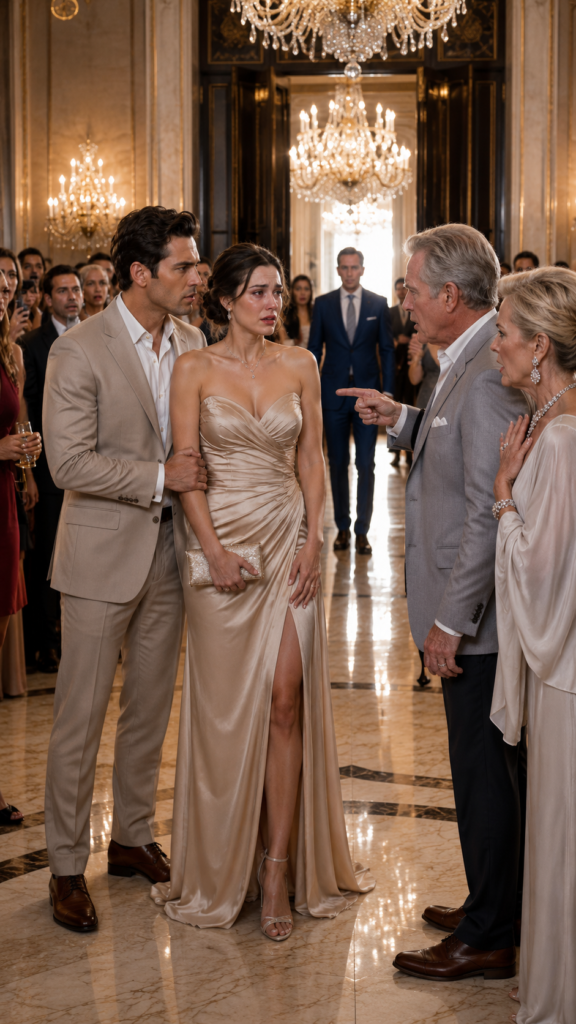
At 4:30, Don Aurelio Aranda stepped up to the podium.
He was 73 years old, with white hair and the weary gaze of someone who had built a company from scratch but had stopped walking his own halls.
He took the microphone.
—For 38 years, I believed that Grupo Aranda was a strong company because it had good numbers.
He paused.
—Today I discovered that a company can grow outward and rot from within.
The murmur faded.
—Before naming my successor, I asked him to come in as just another employee. No privileges. No last name. No protection. I wanted him to see what I no longer could.
Mariela, who had just come down escorted by Legal, felt her stomach drop.
Don Aurelio continued:
—For three weeks, he worked in internal operations under the name Julián Moreno.
Renata raised her gaze.
César’s mouth dropped open.
Tamara stood frozen.
—But his real name is Julián Aranda. My son. And starting today, he is the new chief executive officer of Grupo Aranda.
Julián stepped up to the podium wearing the same shirt he had been fired in.
He still carried the cardboard box.
The visual impact was brutal.
Employees began to whisper. Some covered their mouths. Others turned directly toward Mariela, César, and Tamara.
Julián didn’t smile.
He set the box on a table, pulled out the black notebook, and took the microphone.
—I didn’t come to humiliate anyone —he said—. I came to understand why so many good people work in fear.
No one moved.
—In three weeks, they stole reports from me, loaded me with errors, left me out of meetings, and manufactured an accusation to fire me. But that’s not what’s serious.
He took a deep breath.
—What’s serious is that they messed up with me because I could call my father. Many of you couldn’t call anyone.
Renata felt her eyes fill with tears.
Julián opened the notebook.
—I have dates, names, emails, screenshots, and testimonies. But today I want to make something clear: this didn’t start with me. This has been going on for years.
Then the general counsel took the floor.
He explained that the alleged leak attributed to Julián had been made from César’s computer, using cloned credentials by someone on the same team. They also found overnight access to evaluation files, changes in performance reports, and emails where they distributed others’ projects before presenting them to management.
The atrium filled with murmurs.
But the real blow came afterward.
The external auditor revealed that several denied promotions in the last four years had the same signature of approval: Mariela Sotelo.
And among those promotions was Renata’s.
Not once. Not twice. But five times.
Renata clutched a hand to her chest.
She had spent years believing she wasn’t enough. Years arriving early, leaving late, accepting reprimands in front of everyone, thinking maybe she was the problem.
But no. They had deliberately closed the door on her.
Mariela tried to speak.
—This is a malicious interpretation. Everyone here knows I’ve always protected the company’s interests.
Julián looked at her calmly.
—Protect the company’s interests or protect your chair?
The silence was total.
Then Tamara, pale, stepped forward.
—I have something to say.
César glared at her furiously.
—Shut up.
But Tamara was already trembling.
—Mariela forced us to move evaluations. She said that if someone grew too much, they could take away her power. César falsified accesses. I forwarded emails. Yes, I did. But there’s something else.
Mariela shot her a lethal glare.
—Tamara, don’t you dare.
Julián lowered the microphone a few inches.
—Go on.
Tamara swallowed hard.
—The accusation against Julián wasn’t improvised. Mariela knew he wasn’t an ordinary assistant.
The atrium exploded with murmurs.
Don Aurelio stood up.
Julián narrowed his eyes.
—What did you say?
Tamara pulled out her phone with trembling hands.
—Two weeks ago, Sandra from Human Resources sent Mariela a copy of the onboarding file. It was blocked, but it had an internal alert. It said "strategic candidate, confidential." Mariela thought you were an undercover auditor. She didn’t know you were the owner’s son, but she did know you were there to review.
Mariela’s face changed.
For the first time, she no longer looked like an elegant boss.
She looked like someone cornered.
César took a step back.
Julián felt a cold rage.
They hadn’t fired him by accident.
They had treated him that way because they were afraid of being discovered.
And still, they continued humiliating the others.
—So you knew there was a review —Julián said— and your solution was to fabricate a crime.
Mariela lifted her chin.
—I protected my area. You don’t know what it costs to manage mediocre people.
Renata let out a sad laugh.
It wasn’t mockery. It was pain.
Julián heard her and turned toward her.
—Renata, do you want to say something?
She froze.
For years, she had been taught that speaking was dangerous.
But this time everyone in the atrium was looking at her.
She took a deep breath.
—I just want to know one thing —she said, her voice cracking—. Was my work really never enough, or did you need to make me believe that so I wouldn’t ask for more?
Mariela didn’t answer.
It wasn’t necessary.
Renata cried, but she didn’t lower her head.
And that moment was worth more than any speech.
Don Aurelio returned to the microphone.
—Mariela Sotelo, César Rivas, and Tamara Vela are hereby separated from the company. Legal will determine civil and criminal responsibilities. Sandra Quiroz from Human Resources will be suspended while her participation is reviewed.
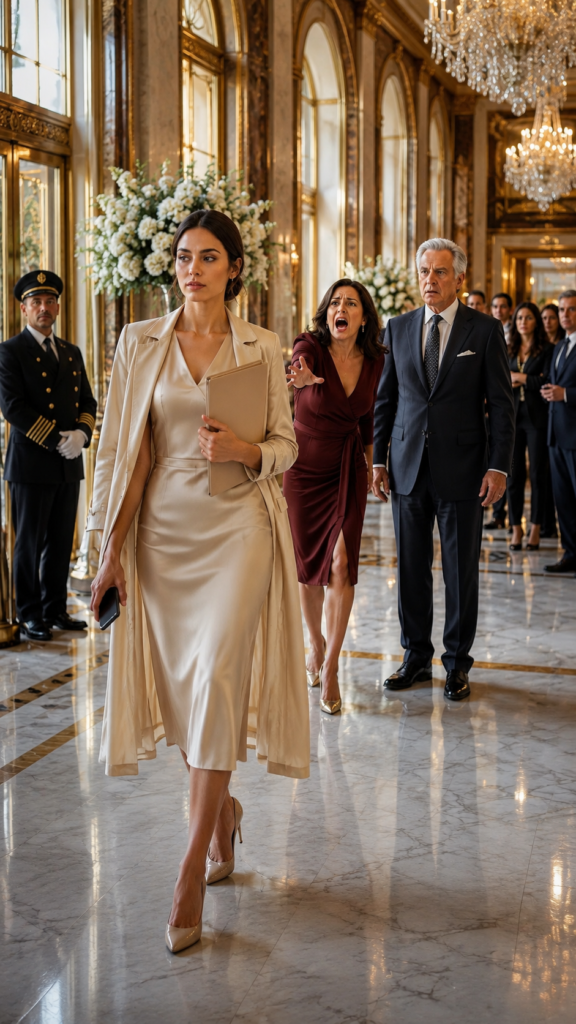
Mariela tried to walk toward the exit, but two lawyers were already waiting for her.
César started saying it was all Mariela’s fault.
Tamara was crying in silence.
No one applauded.
It wasn’t a party.
It was the end of a lie that had lasted too long.
The next day, Julián returned to the 23rd floor. This time he didn’t carry a cardboard box.
He carried the keys to the Presidency.
But he didn’t sit in the main office.
He gathered everyone in the middle of the area, amid desks, cables, dry plants, and distrustful glances.
—I’m not going to ask you to believe in me overnight —he said—. That would be foolish. Trust isn’t demanded. It’s rebuilt.
Several employees looked up.
—Starting today, all evaluations from the last four years will be reviewed. Any denied promotion due to manipulated reports will be reopened. Any ignored complaint will be investigated. And no manager will be able to block reports before they reach Legal.
A young man asked from the back:
—And what if we report and then face retaliation?
Julián nodded.
—That’s the right question. That’s why there will be an external, direct, and anonymous channel. And if anyone retaliates, they’re out. No pretty speeches.
Renata raised her hand.
—Will you also review the projects that others signed?
—All of them —Julián replied—. Including yours.
She couldn’t hold back her tears.
But this time no one mocked her.
In the following weeks, the Aranda tower slowly changed. Not like in motivational ads, but as real things change: with resistance, exhaustion, uncomfortable meetings, and painful truths.
Two employees who had resigned under pressure were contacted and compensated. One coordinator received formal apologies. Several reports were corrected with the true names of those who had done them.
Renata was promoted to interim head of the area.
Not out of pity.
But for results.
The day she received the news, she brought a folder full of reports and told Julián:
—I don’t want you to give me anything.
He smiled faintly.
—That’s why you earned it.
But the strongest change happened one afternoon when Julián brought his daughter, Emilia, to see the office.
The girl was 7 years old, with two uneven braids and a pink backpack covered in stickers. She walked hand in hand with her dad, looking around with curiosity.
—Is this where they made you cry? —she asked softly.
The entire floor froze.
Julián crouched down in front of her.
—I didn’t cry, shorty.
Emilia looked at him seriously.
—But you did come back sad.
Something broke inside Julián’s chest.
Because he could face lawyers, boards, and audits, but not that truth spoken by his daughter.
Renata approached gently.
—Your dad was very brave.
Emilia looked at her.
—And you all too?
Renata took a moment to respond.
Then she smiled with damp eyes.
—We’re learning.
Months later, Grupo Aranda presented a new system of workplace culture to all employees. It was no longer an event of numbers, false awards, or empty phrases on giant screens.
It was an assembly where those who could not speak before spoke.
Renata took the podium.
She shared that for years she believed enduring humiliation was part of the job. That she confused stability with fear. That many times she returned home feeling worthless, not knowing there were people manipulating her path.
Then she looked at Julián.
—Sometimes it doesn’t take someone powerful to save you. It takes someone with power to stop looking the other way.
The applause was long.
Julián didn’t feel like a hero.
He felt responsible.
That night, he went up alone to the 23rd floor. The lights were on, but the atmosphere was different. There were no more nervous whispers or cruel laughter. There was a new wall where anyone could leave proposals anonymously. At a table, Renata was reviewing a report with two young analysts. They were laughing at something simple.
Something normal.
Don Aurelio appeared beside him.
—Was it worth coming in as a common employee?
Julián looked at the spot where his temporary desk had been.
He remembered the box.
César’s laughter.
Mariela’s phrase.
The call from the parking lot.
—Yes —he replied—. If they had treated me well for suspecting who I was, I would never have seen how they treated those who couldn’t defend themselves.
Don Aurelio lowered his gaze.
—I failed too. I stopped listening.
Julián didn’t deny it.
—So let’s listen now.
Below, Mexico City remained lit, noisy, filled with people returning home after work. Some with pride. Others with fear. Others carrying an invisible box in their chests.
Julián thought of his daughter.
He thought of Renata.
He thought of all the employees who had no famous last name or a call capable of locking down an entire floor.
And he understood that inheriting a company wasn’t about occupying a big chair.
It was about deciding what kind of fear would no longer be allowed within its walls.
Because injustice doesn’t always shout.
Sometimes it wears a suit, signs evaluations, and smiles in meetings.
And for that reason, when it finally falls, everyone should ask themselves something before judging:
How many people had to stay silent for one single Mariela to seem untouchable?