PART 1
“If anyone asks, my mom isn’t in her right mind to make any decisions,” Leonardo said, standing beside his father’s coffin.
Carmen Robles felt her legs go weak.
The funeral home chapel in Coyoacán was filled with white flowers, expensive wreaths, and votive candles that seemed to tremble in the cold air. In the center lay the coffin of Don Ernesto Robles, her husband of 46 years.
Ernesto had been a stubborn, serious, and hardworking man. He started with a hardware store in Iztapalapa and ended up owning three warehouses, two shops, a house in Coyoacán, and a plot of land in Querétaro.
He never boasted.
He wore patched shirts and always said,
“Money doesn’t change people, it just takes off their disguise.”
His sons, Leonardo and Mauricio, seemed to have learned just the opposite.
They were dressed in black, impeccably dressed, receiving hugs as if they were attending a business meeting. Leonardo spoke in a firm voice. Mauricio wiped his eyes with a handkerchief, but Carmen didn't see a single real tear.
The neighbors murmured:
"Poor Doña Carmen."
"Thank goodness she has her children."
"They'll take care of her."
Care of her.
That word had been hurting her for months.
First, they took away her car keys "so she wouldn't take any risks." Then they started reviewing her bank statements. After that, Leonardo insisted that she never sign anything again without telling him.
Mauricio, the younger one, spoke of a live-in nurse, even though Carmen could walk, cook, and perfectly remember even her grandmother's recipes.
Ernesto had noticed.
"Don't confuse love with control, Carmela," he told her one night. "When someone rushes you to sign, it's because they don't want you to think."
Three days later, Ernesto was found lying next to the dining room table.
There was a broken coffee cup on the floor.
Dr. Samuel Pineda arrived before the ambulance. He examined Ernesto, sighed, and said:
"It was a sudden heart attack. He didn't suffer."
Leonardo took control of everything too quickly.
Funeral home.
Wake.
Cremation at 8:00 a.m.
"Dad didn't want them to see him deteriorating," he repeated.
Carmela didn't remember Ernesto ever saying that.
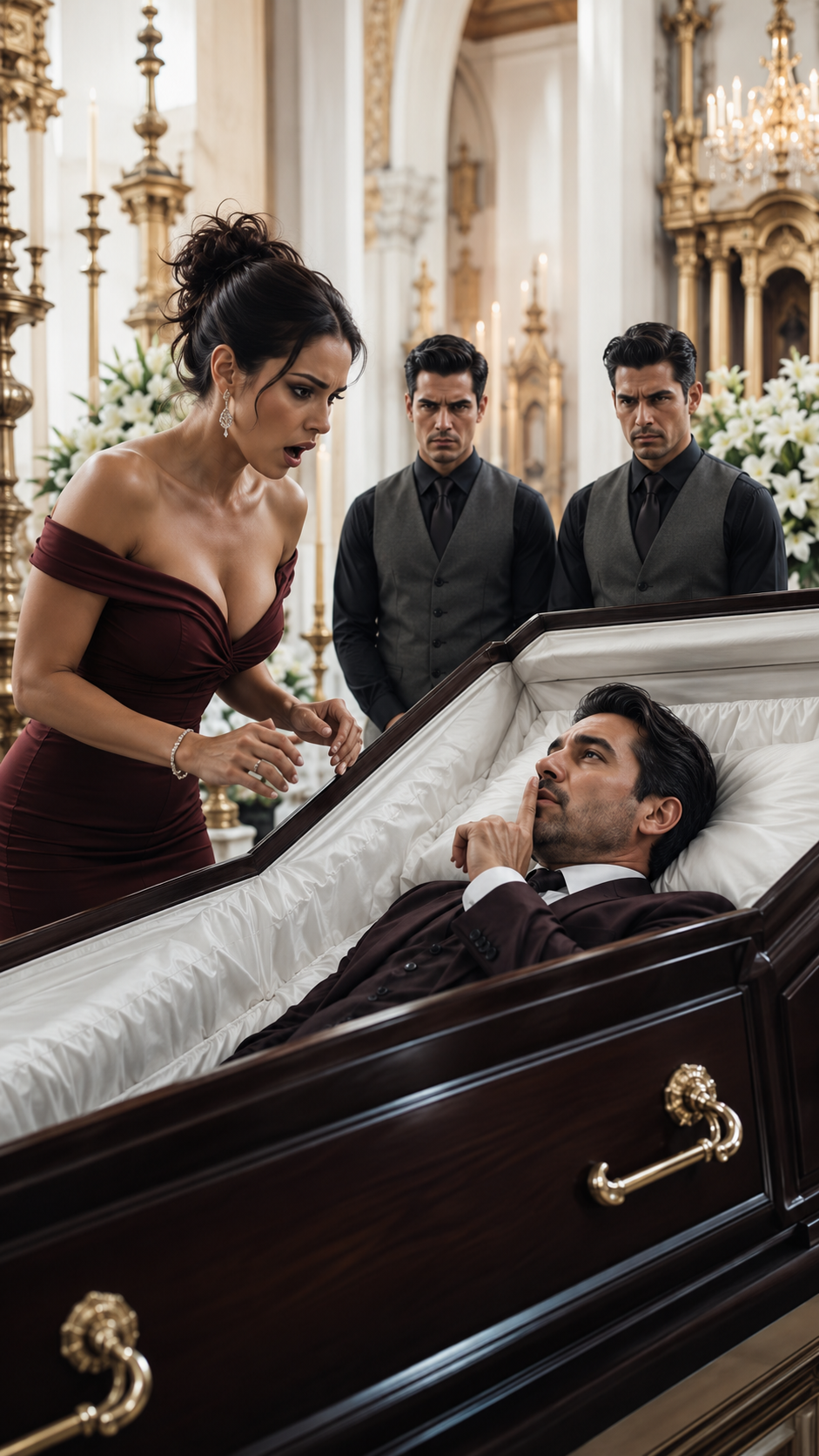
When the priest finished the prayer, she approached the coffin. The glass revealed her husband's pale face, his mouth barely open, his skin stiff as wax.
Carmen placed her hand on the wood.
"You foolish old man," she whispered. "You promised you wouldn't leave me alone."
Then Ernesto opened his eyes.
Carmen felt like her world was shattering.
It wasn't her imagination.
It wasn't the reflection of a candle.
Ernesto looked at her with fear. With urgency. With a plea that needed no words.
Then he lifted just one finger and placed it against his lips.
Silence.
Carmen wanted to scream, but Leonardo appeared behind her.
"What are you doing, Mom?"
She swayed.
"I got dizzy."
Mauricio grabbed her arm too tightly.
"Don't come any closer. You're hurting yourself."
Carmen looked at him.
There was no tenderness in his voice.
There was a sense of urgency.
That night, the wake continued at the family home in Coyoacán. There was coffee, sweet bread, prayers, and people talking quietly in the living room.
Carmen stayed near the coffin, watching the glass whenever no one looked.
Ernesto didn't move again.
But she knew what she had seen.
Around midnight, Leonardo brought her a cup.
"Drink this tea, Mom. It will calm you down."
Carmen smelled the chamomile.
Underneath it was a strange, metallic bitterness, like the smell of the coffee Ernesto had drunk before he fell.
She pretended to drink it.
She let the liquid drip onto a napkin hidden on her lap.
Leonardo didn't take his eyes off her.
"You need to sleep soundly. Tomorrow is going to be tough."
Then Mauricio placed a white pill on her nightstand.
"Dr. Pineda said this will help you rest, Mom."
Carmen hid it under her tongue, drank some water, and waited for the door to close.
As soon as she heard their footsteps, she ran to the bathroom and spat out the pill.
Then she heard voices in the hallway.
"Pineda will be here early with the final certificate," Leonardo said. "Lozano already has Mom's medical leave ready."
Mauricio replied, trembling:
"What if Dad's condition wears off before they cremate him?"
Carmen grabbed the sink to keep from falling.
They weren't holding a wake for Ernesto.
They had locked him alive inside a coffin.
And her own children were waiting for the fire to finish what the poison couldn't.
PART 2
Carmen waited until the house was silent.
She went downstairs barefoot, without turning on the light, with an old screwdriver hidden in the sleeve of her sweater. She knew every sound in that house: the creaking step, the glass cabinet, the portrait where Leonardo and Mauricio smiled as children, hugging their father.
How cruel a photograph can be.
It holds smiles that no longer exist and hangs them up as if they were still real.
In the living room, the coffin was surrounded by flowers that were already beginning to smell of dampness.
Carmen approached.
"Ernesto," she whispered.
At first, nothing happened.
Then there was a faint knock from inside.
She covered her mouth.
She forced the locks with trembling hands until the lid barely gave way. A chemical smell suddenly filled the air.
Ernesto was frozen, pale, his lips parched.
But he was breathing.
"Carmela…" he murmured, almost inaudibly.
She wanted to pull him out, scream, call the police, wake up half the neighborhood.
But Ernesto squeezed her fingers.
"Don't make a sound. They can still hear us."
"What did they do to you?"
"Pineda gave them something to lower my pulse. It looked like a heart attack. They wanted to cremate me before anyone requested an autopsy."
Carmen felt her stomach turn to stone.
"Your children..."
Ernesto closed his eyes.
"Our children."
That word hurt him more than any blow.
“I heard them two weeks ago,” he continued. “Leonardo embezzled money from the company. Mauricio signed false sales contracts. The doctor received payments. And Lozano prepared paperwork to have you declared legally incompetent so he could take the house, the accounts, and even your voice.”
Carmen shook her head slowly.
“Mauricio wouldn’t be capable of that.”
Ernesto looked at her sadly.
“Mauricio was afraid. And fear, when combined with ambition, also destroys.”
She wanted to cry, but she couldn’t waste any time.
“I’ll get you out of here now.”
“No. If I turn up alive without proof, they’ll say you’re crazy. We need them to trust me.”
Ernesto breathed heavily.
“In my study, behind the painting of Popocatépetl, is the safe. The combination is our wedding date: 12-07-78. There’s a blue memory stick, wire transfers, audio recordings, and the number for attorney Rebeca Cárdenas. She’s my real lawyer.” Not Lozano.
Carmen swallowed.
"Who else knows?"
"Don Chava. The driver. Thirty-four years driving for this family and hearing what everyone says when they think a driver doesn't exist."
A noise upstairs froze them.
Carmen lowered the lid, leaving a crack hidden among the flowers.
Mauricio entered the living room, cell phone in hand. He looked at the coffin.
"Sorry, Dad," he murmured. "But you were never going to tell us anything."
He recorded a voice message.
"Leo, Mom's already asleep. She signs tomorrow, and it'll all be over."
When he left, Carmen opened the door again.
Advertisement Ernesto had tears in his eyes.
"We lost them, Carmela."
"No," she said, though her voice broke. "They got lost on their own."
She went upstairs to the study.
She opened the safe.
She found the blue memory stick, a folder of transfers, a letter for her, and two envelopes with the names Leonardo and Mauricio on them.
She also put the tea in a jar, wrapped the broken coffee cup, and placed the pill in a bag.
At 5:20, Don Chava knocked on the service door.
He was 72 years old, with thick hands and the look of a respectable man.
"Are you still alive?" he asked.
Carmen nodded.
Don Chava crossed himself.
"Then hurry, ma'am. The funeral home is on its way."
He took her to a discreet office in the Del Valle neighborhood. Attorney Rebeca Cárdenas was waiting with a forensic chemist, a notary, and a direct contact at the prosecutor's office.
Carmen handed everything over.
Rebeca listened without interrupting.
"You're coming back," she said. "They need to believe you're still alone. When they ask you to sign, insist on doing it in the office." The cameras are there.
"And Ernesto?"
"Don Chava and a trusted doctor will get him out before the oven arrives. We'll take him to a private clinic in Santa Fe. Hang in there, even if your heart is trembling."
Carmen returned before 7:00.
Leonardo was waiting for her in the dining room with folders, pens, and stamps.
"Where were you?"
"In the garden. I couldn't breathe."
He looked at her suspiciously.
Then Dr. Pineda entered, perfumed and serious, with his black briefcase. Behind him came Lozano, the family lawyer, smiling as if he were bringing peace.
"Doña Carmen," Lozano said, "let's keep this simple. It's for your own good."
Carmen almost laughed.
For your own good.
The favorite phrase of those who want to take away your freedom without seeming like executioners.
Pineda sat down across from her.
"Have you seen anything strange since last night?"
Carmen lowered her voice.
"I think I saw Ernesto open his eyes."
Leonardo sighed dramatically.
Mauricio covered his face.
"Poor Mom."
Pineda wrote something.
"Delirium of grief. Very common."
Carmen stared at him.
"Is it also common for the coffee of a dead man to smell the same as the tea given to his widow?"
The room fell silent.
Leonardo gritted his teeth.
"Sign, Mom."
"Of course," she said. "But in Ernesto's study. I want to feel close to him."
Lozano looked at Leonardo.
Leonardo hesitated, but agreed.
In the study, Carmen sat in her husband's chair. Pineda placed the first sheet of paper in front of her.
"Here you agree to medical supervision."
Lozano slid another folder over the table.
"And here you authorize temporary family guardianship."
"Guardianship?" Carmen asked.
"A humane procedure," Lozano replied.
"What a lovely name for stealing an old woman's life."
Mauricio looked up.
"Mom, don't say that."
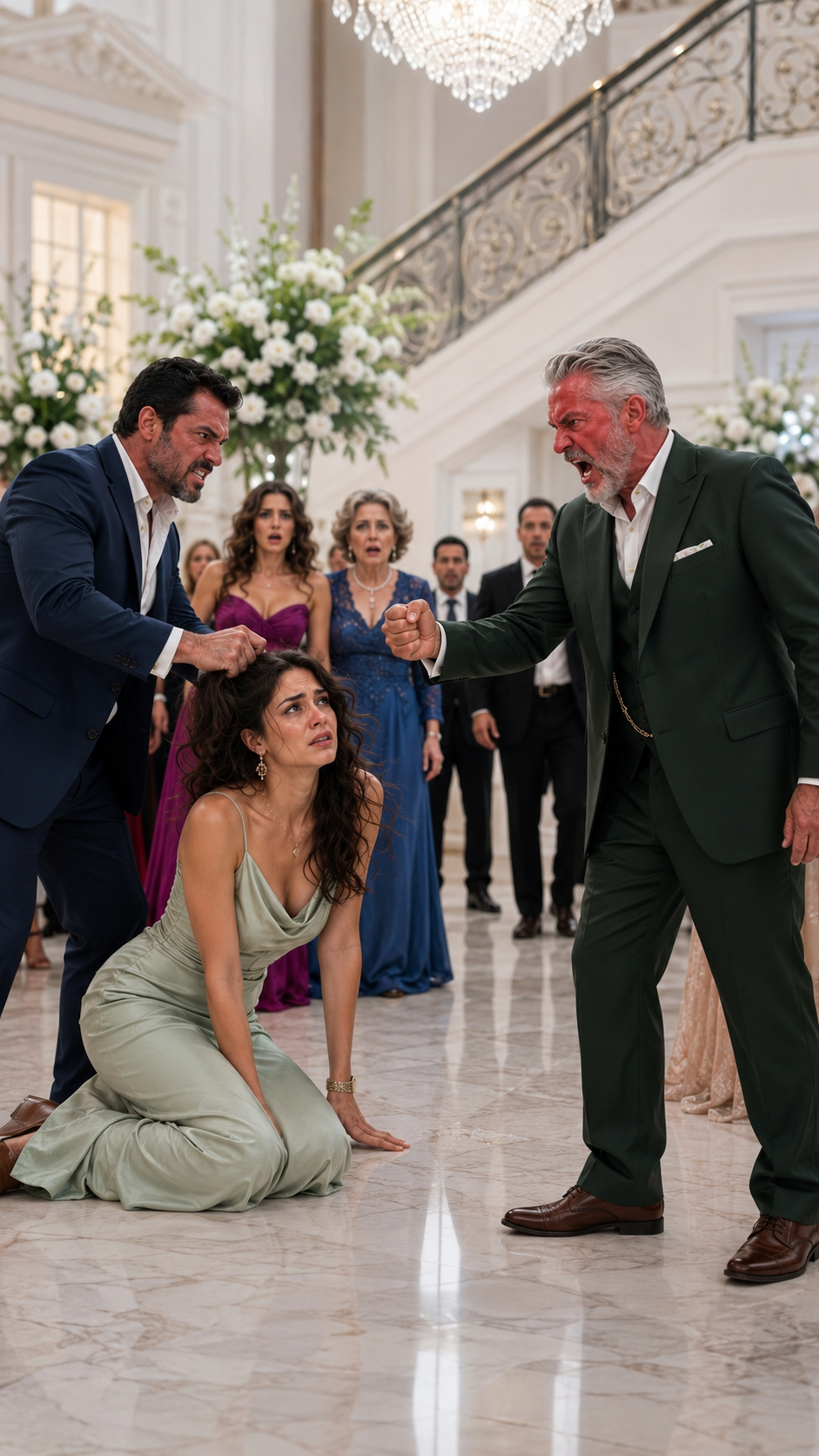
Leonardo slammed his fist on the table.
"That's enough! Sign and don't make a scene."
Carmen picked up the pen.
She took a deep breath.
—Doctor, I have a question. When a substance makes a living man appear dead, how long does it take for him to wake up before they put him in the oven?
Pineda's pen fell to the floor.
Then the door opened.
Rebeca Cárdenas entered with two agents from the prosecutor's office, the forensic chemist, a notary, and Don Chava.
Leonardo jumped up.
"What the hell is this?"
Rebeca didn't blink.
"A search warrant authorized by the Mexico City Prosecutor's Office."
Lozano tried to smile.
"This is private property."
Carmen stood up.
"And the owner authorized entry."
Leonardo turned to her.
"Did you bring these people into my house?"
Carmen looked at him calmly.
"It's not your house."
That silence weighed more than a shout.
Rebeca placed a tablet on the desk.
"Before we go any further, let's listen to something."
The same study appeared on the screen.
Leonardo was talking to Pineda and Lozano. Mauricio was pacing nervously.
Leonardo's voice came out clearly:
"I need it to look natural. If there's an autopsy, the whole thing falls apart."
Pineda replied:
"There won't be an autopsy if they cremate him quickly. The substance lowers the pulse and cools the body. It'll look like a heart attack to anyone."
Mauricio asked:
"And if he wakes up?"
Leonardo answered without hesitation:
"Then he'll wake up too late."
Carmen closed her eyes.
Not because she didn't want to see.
But because she didn't want hatred to overcome her grief.
The forensic expert held up three transparent bags.
"We have samples of the tea, a pill, and residue from Mr. Ernesto Robles's cup. The reagents match a depressant capable of simulating a severe cardiac event."
Pineda swallowed.
"That doesn't prove anything."
Rebeca opened another folder.
"We also have four transfers from Leonardo Robles to an account linked to you." And messages where you indicate dosage, times, and risks.
Mauricio started to cry.
"I didn't know about the oven."
Leonardo glared at him.
"Shut up, dude."
"I didn't know they were going to cremate him alive!" Mauricio shouted. "You said it was to scare him, so he'd give up the company and Mom would accept guardianship."
Carmen looked at him as if she were seeing a stranger with her son's face.
"Just to scare him? Your 74-year-old father?"
Mauricio slumped in his chair.
"He owed money. A lot. Leonardo said if Dad didn't give up the land, they were going to destroy us."
Rebeca looked at Leonardo.
"He'll also be glad to know that Don Ernesto can testify."
Pineda turned pale.
"That's impossible."
The sound of wheels could be heard from the hallway.
Everyone turned around.
Ernesto appeared in a wheelchair, with a gray blanket over his legs. His face was white, his eyes were sunken, and his lips were dry.
But he was alive.
Don Chava was gently pushing him. A doctor in a light-colored coat was beside him.
Mauricio fell to his knees.
"Dad..."
Ernesto raised a weak hand.
"Don't use that word yet."
Leonardo stepped back as if he'd seen a ghost walk in.
"It can't be."
Ernesto looked at him without anger.
That was worse.
He looked at him with such profound sadness that Leonardo didn't know where to hide his face.
"I said that too when I heard you planning my cremation."
The officers arrested Dr. Pineda for attempted murder, forgery, and criminal conspiracy.
Lozano tried to wash his hands of the matter.
"I only prepared documents."
Rebeca replied:
"Forged documents to deprive a healthy woman of her rights. That can also be explained to the Public Prosecutor's Office."
When they came for Leonardo, he didn't cry.
"Mom," he said. "You can't allow this."
Carmen looked at him.
She saw the boy who had once run into her arms, afraid of fireworks. She saw the teenager who cried over his first failure. She saw the man who was now not repentant, only cornered.
Then she understood something no mother wants to understand.
Remembering the son he was doesn't obligate him to save the criminal he chose to be.
"I gave you life," Carmen said. "But I won't lie so you can take mine."
Leonardo's face hardened.
"All of this was ours."
Ernesto breathed heavily.
"No. It was responsibility. And you never understood the difference."
They took Mauricio too.
He was crying.
"Mom, I didn't want him to die."
Carmen didn't take his hand.
"But you accepted that I stopped living."
When the house fell silent, Carmen sat beside the open coffin. The flowers were still there, rotting around the wood.
Ernesto looked at the coffin.
"I never liked that model."
Carmen let out a broken laugh.
"After almost dying, you still criticize the decoration?"
"It was ridiculously expensive and ugly."
She took his hand.
"Don't ever get into a coffin again without telling me."
"Don't ever open one with a screwdriver again."
"Then don't give me a reason."
The case exploded on social media and news programs. They called it “the Coyoacán coffin.” Some spoke of ambition. Others of monstrous children. Still others of how a mother managed to stand firm.
Carmen gave no interviews.
She just wanted to sleep without smelling bitter chamomile.
The investigation revealed that Leonardo had embezzled money for three years. Mauricio had signed fraudulent sales. Pineda had been paid to alter certificates. Lozano had Carmen's incapacity ready to appoint her children as administrators.
Ernesto's true will was different.
Half of his assets were designated to protect Carmen. Another portion went to a foundation for elderly victims of family abuse. His children would only receive a share if they worked for five years under external auditing.
Leonardo discovered this.
That's why he was in a hurry.
That's why Ernesto had to disappear.
The trial lasted months.
Leonardo was convicted and never apologized. In a hearing, he said his father humiliated him by not confiding everything in him.
Ernesto responded:
"I entrusted you with my name. You had to earn the rest."
Mauricio confessed, handed over documents, and received a reduced sentence. For months, he wrote letters from prison.
Carmen kept them unopened.
Until one early morning, she read the first one.
“Mom, I don’t write for money or an inheritance. I write because I understood that silence was also a form of killing. I didn’t put the medicine in the coffee, but I saw the cup. I didn’t close the coffin, but I let them close it. If you ever see me again, I want you to know that I no longer hide behind my brother.”
Carmen cried until dawn.
Ernesto found her in the kitchen.
“Does it hurt?”
“Like giving birth again, but in reverse.”
He said nothing.
He just sat beside her.
Months later, they sold the house in Coyoacán to a cultural association. With the land in Querétaro, they built a residence for elderly people abandoned by their families.
They called it Casa Jacaranda.
There, Carmen would repeat to anyone who arrived fearful:
"Blood doesn't give permission to destroy. A family that loves can make mistakes, but it doesn't need to silence you."
Years later, Mauricio was released from prison. He didn't return to the company. He went to Puebla and worked in a carpentry shop.
Ernesto and Carmen visited him one Sunday.
There were no hugs.
There was no complete forgiveness.
Only a crooked table that Mauricio had made with his own hands.
Ernesto looked at it and said:
"It's not level."
Carmen tapped him on the arm.
"Ernesto."
Mauricio let out a broken laugh.
"Yes. It's crooked."
Ernesto ran his hand over the wood.
"Then it can still be fixed."
They bought the table and placed it in the patio of Casa Jacaranda.
It wasn't perfect.
But it was real.
Leonardo never wrote anything. In seven years, he only sent one legal request to review the will.
That was also an answer.
Time didn't heal everything. That's a lie. Time only taught Carmen to live with a crack without falling in.
And every time someone came saying that her own children wanted to take away her house, her pension, or her freedom, Carmen would look at the crooked table and say:
"Don't be ashamed to stand up to your own people. If they love you, they won't destroy you for obeying them. And if they try to destroy you, then your duty is to survive."