PART 1
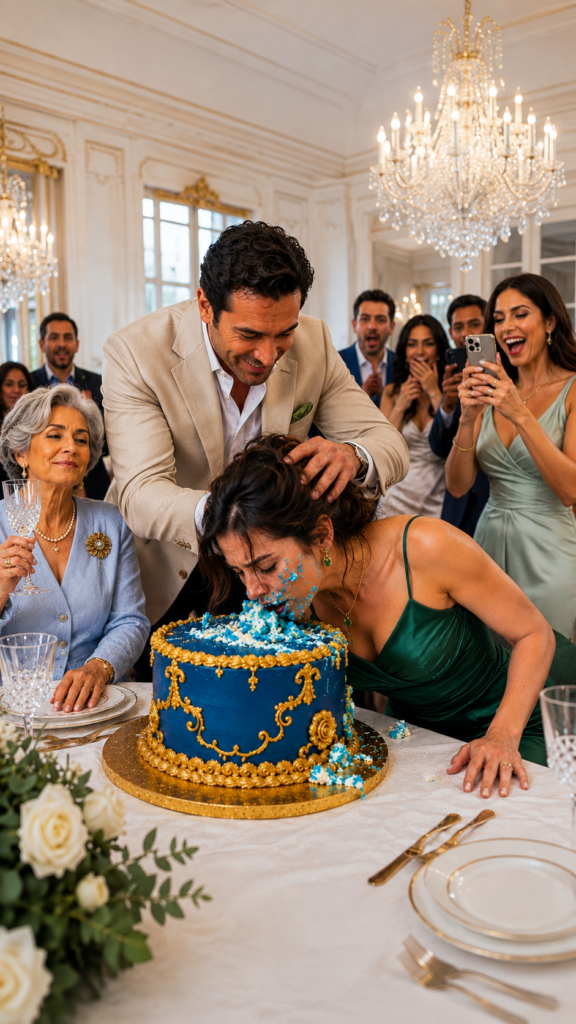
When Valeria Cárdenas turned 18, her father raised a glass in front of 160 guests in an elegant Santa Fe hall and said something that made everyone laugh.
"Now, my little girl is of age. She can understand that in this family, no one decides alone."
The applause filled the room.
Valeria smiled.
Not because it amused her. Not because she was happy. She smiled because in her home, she had been taught that a well-bred daughter does not embarrass her parents in public, even if she was breaking apart inside.
Her mother, Mónica, had grabbed her arm before entering the hall and whispered through clenched teeth:
"Don’t you dare put on that victim face. Everyone is watching us today."
But what no one knew was that three hours before that party, Valeria wasn’t at a salon trying on dresses.
She was sitting in a notary's office in the Roma neighborhood, signing an irrevocable trust.
Her maternal grandfather, Don Esteban Arriaga, had died seven months earlier. And in his will, he made it clear that his inheritance of 3 million dollars was solely for Valeria.
Not for her parents.
Not for her brother.
Not to “save the family name.”
For her.
Don Esteban always told her:
"Money doesn’t make you free, dear. What makes you free is knowing who shouldn’t touch it."
That's why, on the very day she turned 18, Valeria transferred everything into a trust for education, housing, and independence. Only she and an external trustee could authorize large withdrawals.
Lawyer Rebeca Montiel asked her three times if she was sure.
Valeria answered three times that she was.
When her parents found out during the party, they didn’t scream. That would have been too common for them.
Her father, Álvaro Cárdenas, merely squeezed her shoulder while posing for a photo.
"You turned out intense, Valeria," he murmured, still smiling. "At 18, already playing the adult with lawyers."
Her mother sipped champagne and looked at her as if she had betrayed them.
"Your grandfather put strange ideas in your head," she said. "That money always belonged to the family."
But no one laughed, not even Julián, her older brother.
From a table, he watched her with a cold rage. Next to him was Paulina, his girlfriend, wearing an emerald necklace that Valeria recognized immediately.
It was her grandmother’s.
According to her mother, it had been stored in a safe.
Valeria felt a punch in the stomach, but she said nothing.
The night went on as if nothing had happened. There was cake, music, photos, speeches about family unity, and an edited video featuring Valeria as a child.
At 1:20 AM, Valeria stepped into the hallway to breathe.
Then she heard her father talking on the phone.
"She can’t move, dude," he said in a low fury. "She put everything in the trust. Everything. She left us blocked."
Valeria froze.
Álvaro turned and saw her.
For a second, his face twisted with anger. Then he put back on the mask of the respectable businessman.
"Go to sleep," he ordered.
The next morning, Valeria went down to the dining room of the family home in Bosques de las Lomas.
There was no coffee. No flowers. No maids bustling about the kitchen.
Only her parents were there.
Álvaro stood by the head of the table.
Mónica sat in a silk robe, her eyes red, but not from sadness.
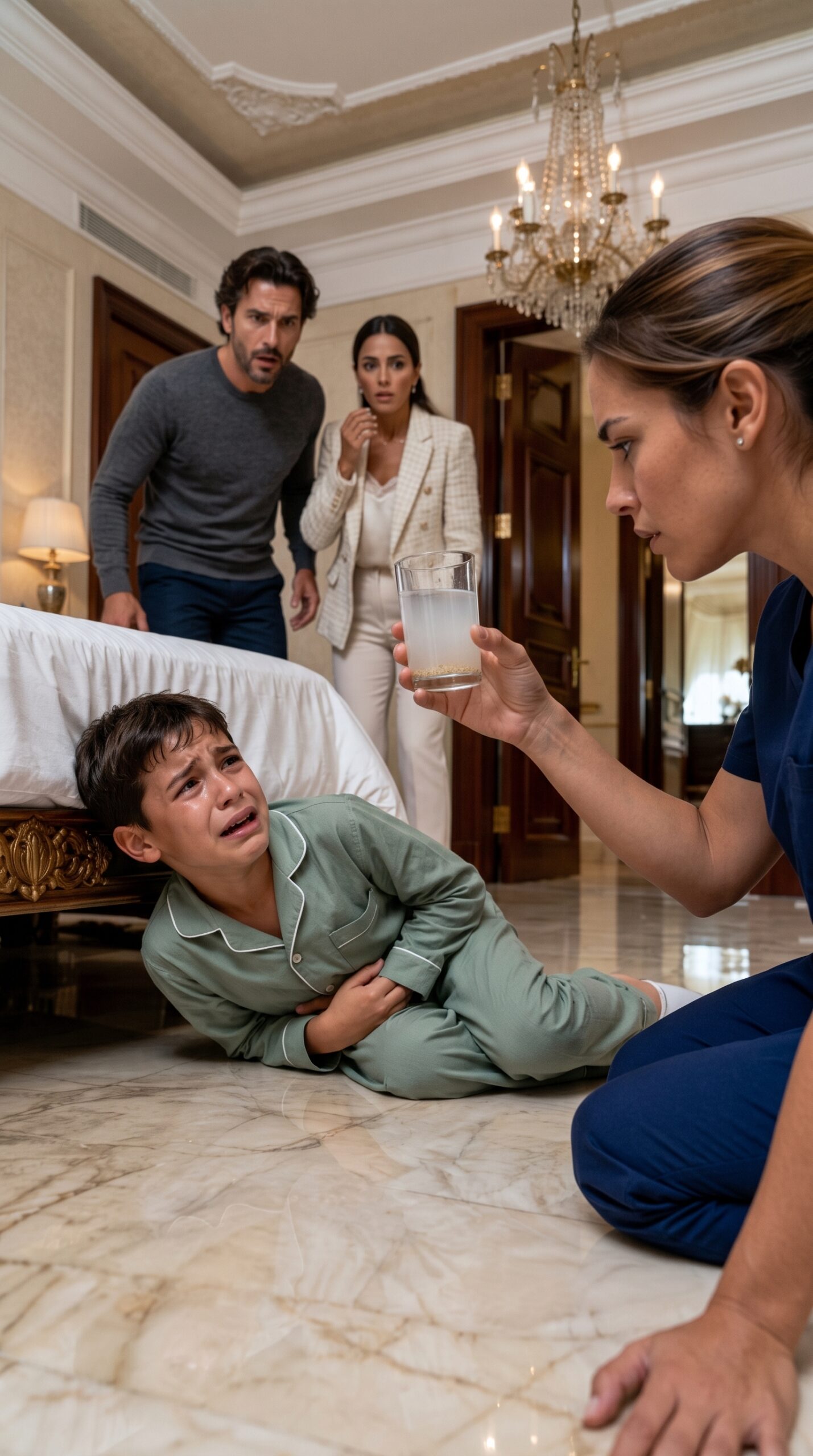
Valeria barely had time to ask what was going on when her father dropped the phrase that shattered her life in two.
"Since you decided to protect yourself from your own family, you have until noon to pack and leave this house."
Valeria felt the air leave her.
"You’re kicking me out for taking care of what my grandfather left me?"
Mónica let out a dry laugh.
"Don’t be naive. Your grandfather didn’t leave you that money for you to play at independence. He left it to support us."
"No," Valeria replied. "The will said my name."
Álvaro slammed his hand on the table with such force that the glasses rattled.
"Don’t talk to me about papers! Do you have any idea what you just ruined?"
Valeria remembered the call.
"What did I ruin?"
Mónica tried to look away, but Álvaro could no longer contain himself.
"Your brother needed capital to open his restaurant. Your mother had commitments with the foundation. I had a bridge loan backed by incoming family liquidity."
Valeria understood everything.
Liquidity.
That was her.
Not a daughter.
Not a granddaughter.
Not a person.
A bank account in a birthday dress.
She went up to her room without crying. She packed clothes into two suitcases, her laptop, documents, a small wooden box from her grandfather, and four photographs.
At 11:47, she came down.
Julián was by the door.
"You screwed us all," he said.
"All of us or your debts?"
He clenched his jaw.
"Don’t act all dignified. You weren’t even going to use that money."
"I was going to study."
"And you think a trust makes you untouchable?"
Before Valeria could respond, the doorbell rang.
The door opened.
At the entrance stood lawyer Rebeca Montiel, with a black folder under her arm and a truck waiting outside.
"Valeria," she said calmly. "Your grandfather prepared this in case it happened. I’m here for you. Your apartment is ready."
Mónica turned pale.
Álvaro said nothing.
Rebeca looked at everyone and dropped the phrase that left the house in silence:
"And it’s in your best interest not to stop her. Don Esteban knew exactly what you all planned to do."
PART 2
The apartment was not an improvised room or an emergency solution.
Valeria expected to find a mattress on the floor, a small window, and sad walls. But the truck took her to a quiet building in the Del Valle neighborhood, with security, natural light, and a silence that didn’t hurt.
Rebeca opened the door on the sixth floor.
"Eighteen months of rent paid," she explained. "Utilities included, basic groceries, monthly support, and separate university coverage."
Valeria entered slowly.
In the kitchen, there was bread, fruit, coffee, milk, and a new notebook on the table. On top of the notebook rested an envelope.
She recognized her grandfather’s handwriting.
Her hands trembled.
Valeria:
If you’re reading this, it means those who were supposed to protect you punished you for protecting yourself.
Don’t return just because guilt knocks on the door with a family voice.
You are not responsible for rescuing those who saw you as a pulse with money.
Live. Study. Build.
That will be your answer.
Grandpa.
Valeria sat on the floor and cried.
Not for the apartment.
Not for the suitcases.
She cried because her grandfather had seen the truth before she did, and even in death, he had arrived just in time.
The first few days were strange. The silence weighed heavily. Valeria woke up expecting to hear her mother criticizing her clothes or her father talking on the phone from the study.
But there were no shouts disguised as advice.
No smiles with threats.
Just a small apartment, hers, where no one could enter without permission.
Mónica called 29 times in four days.
Julián sent increasingly aggressive messages.
"I hope you’re happy destroying your family."
"Because of you, Dad is looking bad."
"Seriously, how selfish are you?"
Valeria forwarded everything to Rebeca.
The lawyer only replied:
"Keep evidence. Don’t respond."
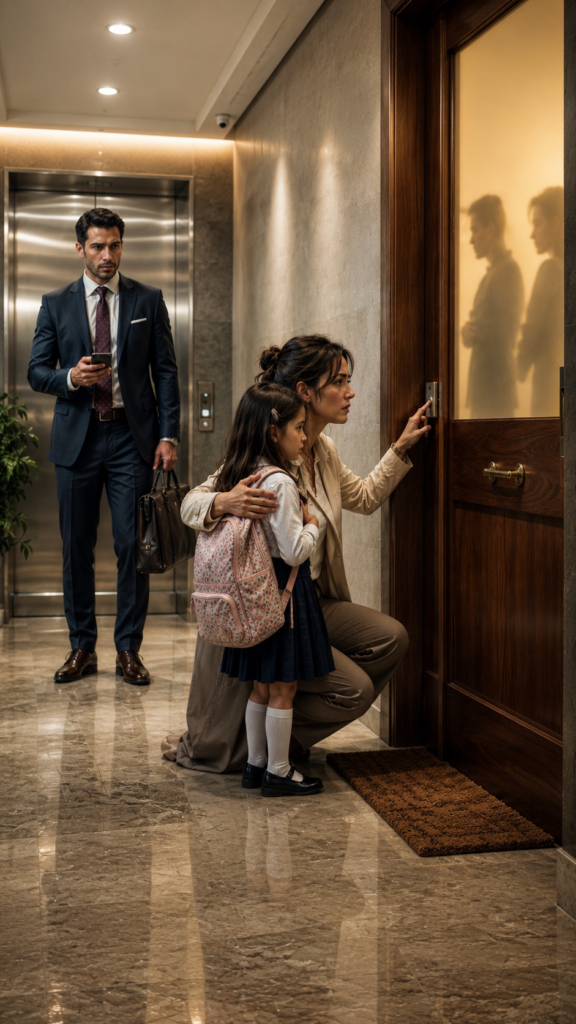
On the ninth day, Álvaro appeared at the building.
The guard called her on the intercom.
"Miss Valeria, there’s a man who says he’s your dad."
Valeria's chest tightened.
"Don’t let him up."
Minutes later, the messages arrived.
"Come down. Let’s talk like adults."
"Your mother is sick because of you."
"That money without us won’t do you any good."
Valeria didn’t respond.
But that night, she understood something that hurt more than being expelled: her family didn’t miss her. They missed the money.
Three weeks later, Rebeca summoned her to her office.
"There are things you need to know," she said.
Valeria sat in front of the desk where she had signed the trust. She no longer felt like a girl doing something forbidden. She felt like someone who had survived the first fire.
Rebeca opened a thick folder.
"Your grandfather started investigating your family’s finances a year before he died."
Valeria swallowed hard.
"Why?"
"Because your father asked him to guarantee a large loan. Don Esteban grew suspicious."
The lawyer laid out several documents on the table.
There were emails, account statements, contracts, printed messages, and financial projections.
Álvaro’s construction company was in debt. He had stalled projects in Puebla and Querétaro. He had used new loans to cover old losses.
Mónica’s foundation had strange payments to suppliers linked to her friends.
And Julián’s restaurant wasn’t a promising business.
It was a debt decorated with expensive chandeliers, a modern menu, and Instagram photos.
Valeria felt cold.
"So they were going to use my inheritance."
Rebeca nodded.
"They would have called it a loan, family support, investment, or act of trust. The name changed. The intent didn’t."
A month later, the Cárdenas family struck again.
They sued to invalidate the trust.
They claimed that Valeria had been manipulated by Rebeca, that she was affected by her grandfather’s death, and that she didn’t understand what she signed on her birthday.
Mónica declared that her daughter was "impulsive and emotionally unstable."
Álvaro said he just wanted to "guide her as a father."
Julián wrote that Valeria had hidden the money to humiliate them.
When Rebeca showed her the lawsuit, Valeria didn’t cry.
She only asked:
"Can we win?"
Rebeca looked at her with a sharp calm.
"We can do more than just win."
The hearing was held in a civil court in Mexico City.
Valeria arrived wearing a dark blue dress and the pearl earrings her grandmother had secretly left to her through Don Esteban.
Her parents were on the other side.
Mónica pretended to cry with a white handkerchief.
Álvaro stared straight ahead, serious, as if he could still control the room.
Julián checked his phone until he realized everything was being recorded.
The family’s lawyer spoke of mourning, manipulation, breach of trust, and lack of maturity.
Then Rebeca stood up.
She didn’t shout.
She didn’t put on a show.
She presented the will, the trust deed, the notarial certificate, the legal capacity assessments, and Don Esteban’s emails.
Then she requested to play a video.
The screen lit up with Valeria’s grandfather, thinner, sitting in his library, a blanket over his legs.
"My granddaughter Valeria must receive her inheritance without interference from Álvaro or Mónica Cárdenas," he said. "I have reasons to believe they will attempt to access those resources through emotional pressure, family guilt, or legal threats."
Mónica stopped pretending to cry.
Álvaro clenched his fists.
The video continued.
"If they contest the trust, I authorize my legal representative to deliver the evidence explaining why I made this decision."
No one spoke in the room.
Rebeca opened another folder.
First, she showed the messages sent after the birthday.
Then the call records of Álvaro to the trust bank: 14 attempts in 48 hours.
Next, she presented a statement from a hotel worker who overheard Álvaro say in the hallway:
"She put everything in the trust. She left us blocked."
Valeria lowered her gaze.
Not out of shame.
But out of pain.
Because one thing was to suspect they were using you, and another to see your life turned into evidence.
But the final blow was still to come.
Rebeca projected a financial sheet prepared by Álvaro himself. In one column, there was an entry marked as "upcoming liquidity."
The figure was exact.
3 million dollars.
It didn’t say Valeria.
It didn’t say daughter.
It didn’t say inheritance.
It said "available resource."
The judge called for silence as Mónica began to genuinely sob.
Julián, for the first time, lifted his gaze from his phone.
The lawsuit was dismissed.
The judge determined that Valeria had full legal capacity, that the trust was valid, and that there were clear indications of direct economic interest from her parents.
Álvaro left without looking at her.
Mónica did look at her.
But not with love.
With that strange resentment of people who feel you stole something that was never theirs.
The defeat in court opened another door.
In trying to invalidate the trust, the Cárdenas family left their finances exposed. Creditors began to ask questions. Mónica’s foundation received internal complaints. Two investors demanded audits.
In five months, the Cárdenas name went from social magazines to uncomfortable murmurs.
Álvaro’s company sank.
The foundation removed Mónica from the presidency.
Julián's restaurant closed before Christmas.
Paulina disappeared from his social media a week later.
The house in Bosques de las Lomas went up for sale.
Valeria watched it all from afar.
She didn’t celebrate.
Because watching a family fall, even a family that used you, doesn’t feel like victory. It feels like listening to the collapse of a house where you once wanted to be embraced.
Months later, Álvaro called her.
Valeria answered because Rebeca was by her side and the call was being recorded with a warning.
"This call is being recorded," Valeria said.
There was silence.
Then her father let out a bitter laugh.
"Now you talk like a lawyer."
"No. I speak as someone who learned to take care of herself."
"Do you think you won?"
Valeria looked out the window. The city was gray, full of traffic and normal life.
"I didn’t win," she replied. "My grandfather protected me."
"You have no idea what you cost us."
Valeria took a deep breath.
"You all cost yourselves."
He hung up.
Then came an even harder phase.
Valeria entered university and chose to study finance. She wanted to understand every word they had used to manipulate her: liquidity, guarantee, credit, collateral, investment.
She didn’t become invincible.
There were nights when she missed her mom. There were days when she wanted to call Julián and pretend nothing had happened. She missed birthdays, breakfasts, family photos, and even the silly fights.
But missing something doesn’t mean it’s safe to return.
On her 19th birthday, there was no hall, no photographers, no champagne.
She had tacos on a small terrace with Rebeca, a university friend, and two classmates who sang Las Mañanitas off-key.
At the end, Rebeca handed her another envelope.
Valeria recognized her grandfather’s handwriting.
Valeria:
One year free.
Now make it two.
Grandpa.
Valeria cried and smiled at the same time.
Years later, many people asked her if she regretted shielding her inheritance.
She always answered the same.
The trust didn’t take her family away.
The trust revealed what her family already thought she was worth.
And that truth, although it hurt like few things, was also the key that opened the door to her life.
Because at 18, Valeria believed she was just moving money.
But in reality, she was shifting the boundary between the future others planned to take from her and the future she could finally build with her own hands.