PART 1
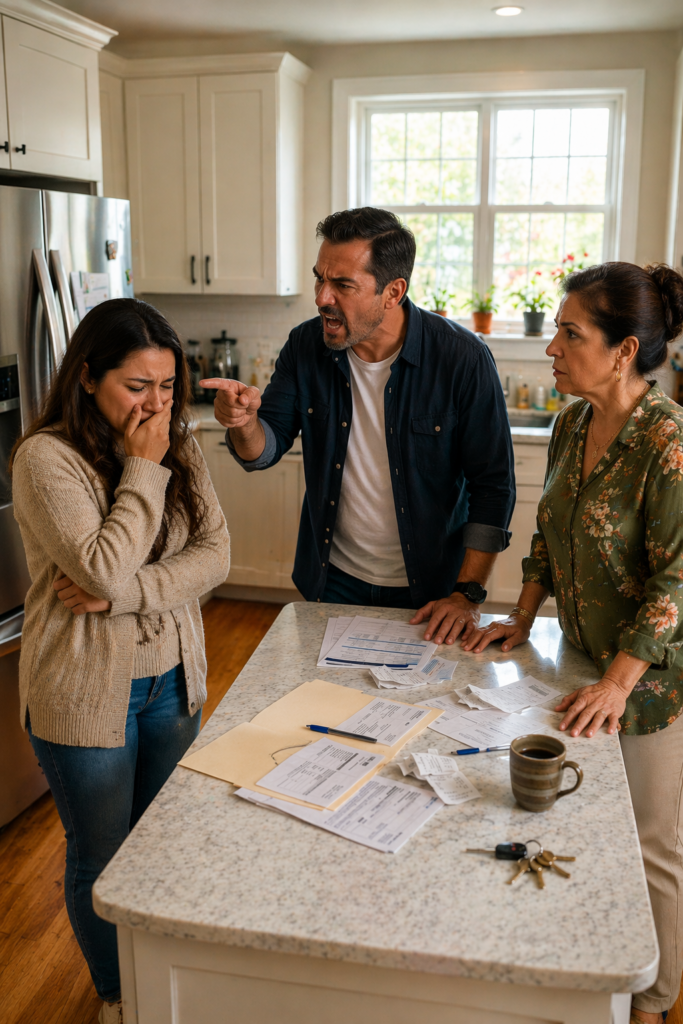
In the immaculate kitchen of a house in Lomas de Angelópolis, Puebla, Beatriz Robles heard the phrase that shattered her life in two.
—I don't care about that girl —said her mother-in-law, Doña Amparo Cárdenas, her voice unwavering—. Sofía doesn't carry our blood.
Upstairs, in the bedroom, Sofía, 9 years old, was feverish, clutching a pink bucket, asking when her stepfather would return with her lemon electrolyte.
But Rodrigo, Beatriz's husband, didn't go to see her.
He stayed with his mother, arms crossed, as if this were a business meeting.
—My wife doesn't understand paperwork —he said, releasing a dry laugh—. She signs whatever is put in front of her. Seriously, Mom, don’t worry.
Beatriz stood barefoot in the hallway, a laundry basket against her hip. They thought she had gone out to the service patio.
For 8 years, she had played the role assigned to her by the Cárdenas family: silent wife, grateful woman, well-mannered daughter-in-law, single mother “rescued” by a man with a heavy surname.
But there was something they could never take from her.
Her father had left her a small building of medical offices near Hospital Ángeles. It wasn't a mansion or an outrageous fortune, but it generated rent every month and was in her name.
Rodrigo always said that place was “money sleeping.”
Doña Amparo called it “assets that needed to be integrated into the family.”
That night, Beatriz understood what it meant.
They wanted her to sign a supposed refinancing process so Rodrigo could use the building as collateral for his new financial venture. But Doña Amparo's lawyer had prepared something else: a disguised transfer to pass the property into a trust controlled by Rodrigo and his mother.
—And the girl? —Rodrigo asked.
—Sofía is not a Cárdenas —Amparo replied—. We're not going to build wealth for the daughter of another dead man.
Beatriz felt her blood run cold.
The next day, she made a call she had postponed for years.
She reached out to Don Arturo Velasco, her father's old lawyer, a 74-year-old man who still remembered the day Don Efraín handed him the deeds to the building and said:
—This is so my daughter never has to bow her head.
When Beatriz told him everything, Don Arturo didn't yell or seem surprised.
He just said:
—Send me every document they give you. And please, don’t sign anything without me seeing it.
2 days later, Rodrigo left a folder on the breakfast table.
—Sign where the yellow tabs are —he ordered—. It’s just a formality, Bea.
She lowered her gaze, smiled shyly, and asked permission to take it to the notary near Sofía's school.
Rodrigo kissed her forehead.
—That’s how I like you, obedient.
7 days later, Doña Amparo's lawyer called trembling because the signed document was not what they expected.
And no one could believe what was about to happen.
PART 2
The lawyer's name was Licenciado Óscar Treviño, and when he called Beatriz, his voice no longer sounded like that of a man used to charging dearly for intimidating women.
He sounded like someone who had just realized he had stepped on a mine.
—Mrs. Cárdenas… it seems there was a confusion with the documents signed last week.
Beatriz was outside Sofía's elementary school, watching her daughter through the fence as she shared crayons with another girl. She still looked pale from the fever, but she was smiling.
—There was no confusion, Licenciado —Beatriz replied.
There was silence on the other end.
—I recommend you be very careful with what you say.
—I didn’t say anything. I signed a declaration under protest of telling the truth. You should know the difference.
Óscar took a deep breath.
—Who prepared that document for you?
—My lawyer.
—And who represents you?
—Arturo Velasco.
The silence that followed was almost delicious.
In Puebla, every notary, corporate lawyer, and old businessman knew Don Arturo. He had spent over 40 years dismantling families that confused money with intelligence.
When Beatriz got home, Rodrigo's black truck was blocking the driveway.
He was waiting for her in the foyer, his tie loose and hair disheveled. Doña Amparo was sitting in the living room, stiff as a statue, her pearls shining, her face devoid of color.
—What did you do? —Rodrigo asked.
Beatriz set her bag on the table.
—I read.
Doña Amparo shot up.
—Ridiculous little woman. Do you have any idea what you've just done to this family?
—For the first time, yes.
Rodrigo stepped toward her.
—Bea, listen to me. You're exaggerating. My mom said ugly things because she was pressured.
—She said she didn't care about Sofía.
—She was upset.
—And you gave her reason.
Rodrigo clenched his jaw.
Doña Amparo raised a perfectly manicured finger.
—That building must be protected within the Cárdenas estate. Rodrigo is your husband.
—That building was my father's —Beatriz said—. And after me, it will be Sofía's.
Rodrigo let out a false laugh.
—Sofía is 9 years old.
—And even so, she’s more reliable than you two.
Rodrigo's expression changed.
For the first time, Beatriz saw the man behind the expensive suit. Not the husband who brought flowers after insulting her. Not the stepfather who smiled in school photos. She saw a cornered man, furious, convinced that a woman should obey as if she were part of the furniture.
—Do you think that old man is going to save you? —he spat.
—No —Beatriz replied—. I think the evidence will.
Rodrigo’s eyes darted to his mother.
There Beatriz understood that Don Arturo had already sent them a copy.
The audio from the kitchen. The hallway camera. The messages where Rodrigo told her “sign without making a fuss.” The email from Óscar Treviño’s office with the original transfer document. And Beatriz's declaration registered as a preventive notice before the Public Registry, indicating attempts of economic coercion, fraud, and property damage against the rights of a minor.
Doña Amparo had to sit down again.
Rodrigo lowered his voice.
—What do you want?
Beatriz looked toward the stairs, where Sofía's backpack hung with a unicorn keychain.
—I want my daughter safe. I want my building intact. And I want both of you out of my life.
Rodrigo didn't leave that night.
Men like Rodrigo don’t obey the first clear statement from a woman. They treat it as noise, as a tantrum, as something that will pass.
—This is also my house —he said.
—No —Beatriz replied—. It’s not.
He blinked.
She pulled a folded sheet from her bag.
—The house is in the name of Inmobiliaria Cárdenas, your mother's company. You reminded me of that every time you wanted to humiliate me. The rent is in your name. I’ve already signed a lease for a smaller house near Sofía's school. We’re leaving on Friday.
Doña Amparo smiled with venom.
—you can't take the furniture.
—I don’t want it.
—Nor the truck.
—the red Tsuru was my father’s. It’s in my name.
Rodrigo scoffed.
—Did you plan this all?
—For 7 days —she said—. While you called me stupid.
That sentence hit harder than Rodrigo expected.
Not because it hurt his pride, but because his mother looked at him with disdain. In Amparo Cárdenas's world, failure was shameful. But being discovered was unforgivable.
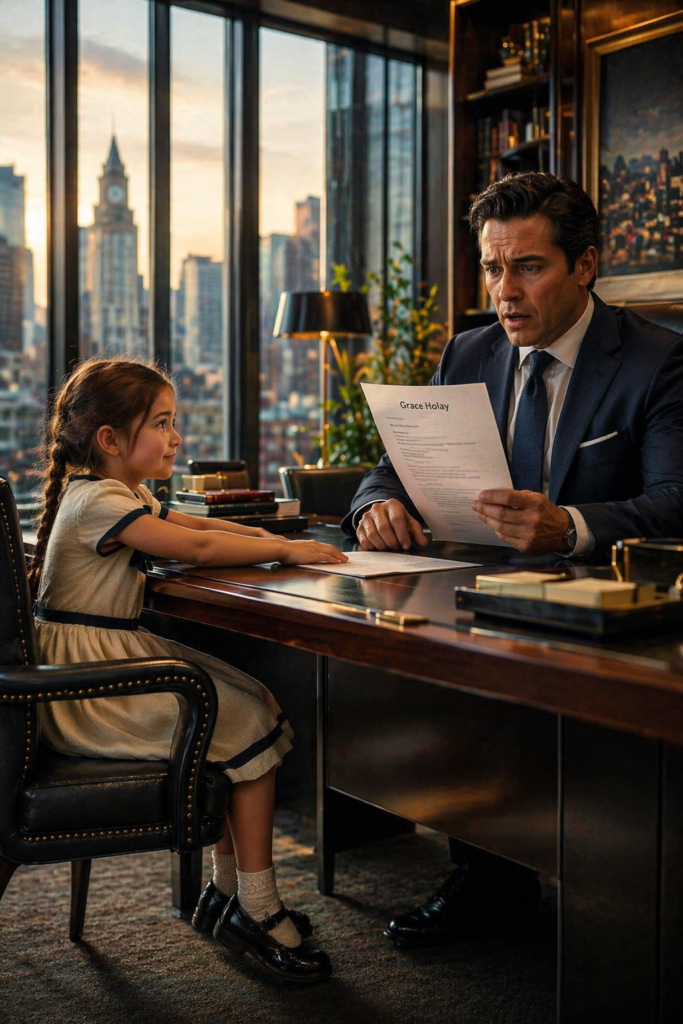
The next morning, Beatriz sat in Don Arturo’s office with a yellow notepad in front of her. Sofía was drawing flowers in a corner, not understanding everything, but understanding enough.
The office smelled of strong coffee, old wood, and important papers. On the wall was a photo of her father with Don Arturo, taken the day they purchased the building of medical offices.
Licenciado Treviño spoke through the speakerphone.
—My clients wish to resolve this without scandals.
Don Arturo adjusted his glasses.
—Your clients tried to deceive my client into transferring a separate property. They talked about excluding a 9-year-old girl because she didn't carry their blood. And prepared documents with signature tabs to conceal the real content.
—Allegedly —Treviño murmured.
Don Arturo smiled without joy.
—I have audio.
Sofía continued coloring but lifted her gaze slightly.
—What do they offer? —Don Arturo asked.
Treviño took a moment to respond.
—Written acknowledgment that the building belongs solely to Mrs. Beatriz Robles. Total renunciation by Rodrigo and Doña Amparo of any present or future claims. Payment of legal fees. And cooperation in an uncontested divorce.
Beatriz closed her eyes.
The word divorce trembled in her chest, but it didn't scare her.
Sofía looked at her.
Beatriz smiled slightly.
The girl returned to her drawing with her shoulders more relaxed.
—And Doña Amparo? —Don Arturo asked.
—She will have no direct contact with Mrs. Robles or the minor.
Beatriz leaned toward the phone.
—The minor has a name. Her name is Sofía Robles.
There was another silence.
—With Sofía Robles —Treviño corrected.
—And Rodrigo? —Don Arturo asked.
—He could request emotional visitation.
—No —Beatriz said.
Don Arturo didn’t interrupt her.
She had spent 8 years being interrupted by self-assured men. Don Arturo left her the entire silence.
—Rodrigo never adopted Sofía. Her father died when she was 3 years old. Rodrigo wanted the family photo, not the responsibility. There will be no visits.
—He might feel affected —Treviño said.
—Feeling affected doesn’t give legal rights —Don Arturo replied.
Sofía smiled softly in front of her sheet.
On Friday afternoon, Claudia, Beatriz's sister, arrived with a rented truck and two teenage nephews ready to load boxes. They only packed the important things: clothes, documents, photos of Don Efraín, Sofía's toys, and a blue pot that had belonged to her grandmother.
Rodrigo didn’t show up.
But Doña Amparo did.
She arrived in a cream Mercedes, wearing dark glasses even though the sky was overcast.
—You're making a spectacle —she said.
Beatriz closed a box with tape.
—you came to see it.
—Rodrigo is devastated.
—No. Rodrigo is uncomfortable.
—He loved you.
—He loved access.
The phrase came out clean, like an open window after years of confinement.
Doña Amparo took off her glasses. For the first time, she looked old. Not weak, never. But tired, as if not even all her money could cover her face.
—You think you won.
—No —Beatriz said—. I think I left.
—It's not the same.
—Exactly. Winning still puts you in the center. Leaving doesn’t anymore.
Sofía came out hugging her stuffed rabbit. Upon seeing Amparo, she stopped.
The woman looked at her for a few seconds.
—You should say goodbye —she said.
Sofía looked at her mom.
Beatriz didn’t answer for her.
The girl hugged the rabbit tightly against her chest.
—Goodbye, Mrs. Amparo.
She didn’t say grandmother. She didn’t say family.
Just Mrs. Amparo.
The woman’s mouth trembled, but she didn’t respond.
They left before sunset.
The new house was much smaller. The kitchen had old tiles, the patio was filled with weeds, and the bathroom mirror had a crack in one corner.
But Sofía ran from room to room as if she had entered a castle.
—This can be my room and my art studio —she announced.
—Both? —Claudia asked.
—Yes —Sofía replied, very seriously—. Artists sleep close to their work.
That night, they had basket tacos on the floor because the table hadn’t arrived yet. Sofía fell asleep on a mattress with her rabbit under her arm and a blue lamp turned on.
Beatriz sat on the stairs and cried.
She didn’t cry with screams or drama. She cried with those tears a woman saves for years so she doesn’t scare her daughter.
Claudia sat next to her and handed her a napkin.
—I should have realized sooner —Beatriz whispered.
—you realized in time —her sister replied.
In the following weeks, Rodrigo became exactly the man Beatriz knew he was.
First, he sent flowers.
Then, messages of apology.
After that, furious messages.
Then indirect posts speaking of betrayal, loyalty, and ungrateful women.
Don Arturo ordered her not to respond to anything outside of the lawyer.
And Beatriz obeyed.
The divorce progressed quickly because Rodrigo had more to lose. The acknowledgment of the building was registered. The false transfer remained within the case file. Óscar Treviño resigned from representing Doña Amparo when Don Arturo hinted that the Bar Association might be very interested in the strategy behind the yellow tabs.
The final hearing was on a rainy Tuesday.
Rodrigo arrived in a navy blue suit and a rehearsed wounded man’s face. Beatriz wore a gray dress, flat shoes, and her father's watch.
The judge reviewed the agreement.
—There are no children of the marriage —she said.
Rodrigo looked at Beatriz.
She looked straight ahead.
The phrase hurt, but it protected Sofía.
No children of the marriage meant Rodrigo could not use the girl to control her mother. There would be no surprise visits. No school pickups. No affection turned into chains.
As they were leaving, Rodrigo approached.
—Do you really think I'm a monster?
Beatriz studied him.
Before, she would have tried to console him. She would have said no, that everyone made mistakes, that things were complicated.
But the truth wasn’t complicated.
—You heard your mother say she didn’t care about a sick girl —she said—. And your first impulse was to agree with her because it helped you get what you wanted.
Rodrigo lowered his gaze.
—I was under pressure.
—I was too.
Beatriz passed by him without waiting for another excuse.
A year later, the building was still hers.
She hired a new manager and divided the rent into three accounts: maintenance, taxes, and Sofía's education. Don Arturo updated his will. If something happened to her, Claudia would be the legal guardian, and the building would remain in a trust for Sofía, managed by someone independent.
This time, Beatriz read every page.
Sofía also changed.
At first, she asked if Rodrigo hated her. Beatriz told her a truth a child could carry without breaking.
—Some adults want to get their way more than they want to care for people. That’s not your fault.
Sofía thought about that a lot.
Then she asked:
—Did my grandfather leave the building to keep us safe?
—Yes —Beatriz replied—. So we would be safe.
The girl nodded.
—Then we should take care of it too.
By spring, Sofía no longer asked about Rodrigo.
In summer, she painted a watercolor of their new house. The weeds in the patio looked like wildflowers. The crack in the bathroom mirror turned into a rainbow.
At the school art fair, she won a blue ribbon.
The title was written in her careful handwriting:
“Our Real Home.”
Beatriz stared at those four words until her eyes burned.
No one in that café knew what had happened in the kitchen. No one knew Doña Amparo's phrase, Rodrigo's laughter, the folder with yellow tabs, or the frightened lawyer's call.
And that was okay.
The best endings don’t always need witnesses.
Sometimes they are a registered deed.
A locked drawer.
A child sleeping soundly.
And a mother finally understanding that underestimating a woman can be outrageously costly.