PART 1
—God doesn’t make mistakes. Maybe those children are better off in heaven than with a mother like her.
Doña Hortensia’s words landed in the funeral home like a slap.
No one dared to breathe.
In front of the two white coffins, Carolina Méndez felt her body lurch forward. Her three-month-old twins, Diego and Mateo, lay there, surrounded by flowers, candles, and light blue ribbons.
They had been born after five years of doctors, injections, prayers, loans, and nights when Carolina fell asleep crying with a negative test in hand.
The funeral home was in Tlaquepaque, on a street where trucks passed by, coffee vendors shouted, and people continued living as if the world hadn’t shattered into two.
Inside, everything smelled of white flowers, incense, and pain.
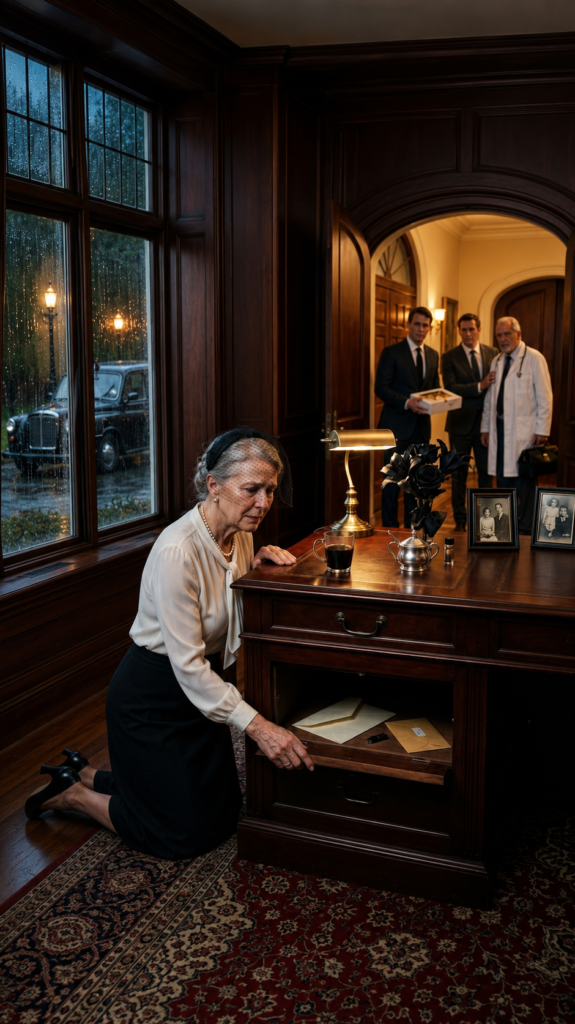
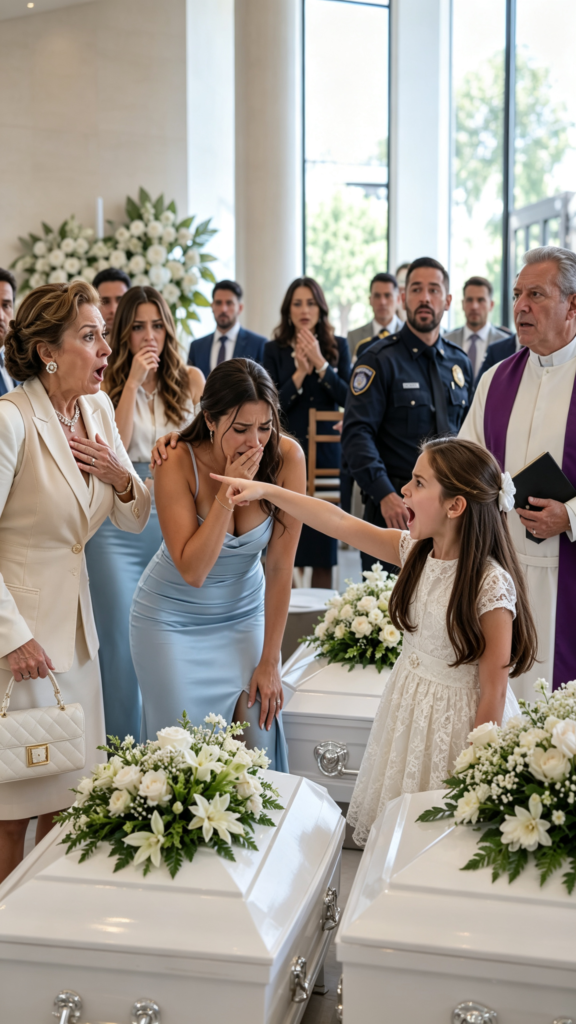
Doña Hortensia, Carolina's mother-in-law, stood next to the coffins in an elegant black dress, silver rosary in hand, her hair neatly tied up as if she were heading to Sunday mass.
She wasn’t crying.
She pressed a handkerchief to her eyes, but her lashes remained dry.
—I tried to help —she continued, looking at everyone—. Everyone knows I went to that house because Carolina couldn’t handle three kids. But there are stubborn, proud women who don’t accept advice.
Carolina wanted to scream.
She wanted to say that she could.
That she got up every night, washed bottles until her hands burned, counted every feeding, every diaper, every breath.
She wanted to say that Doña Hortensia had been humiliating her for years.
But she couldn’t.
Beside her, Rubén, her husband, kept his gaze fixated on the floor.
He wore a gray suit, polished shoes, and the face of a destroyed man, but he said nothing.
Not a word to defend her.
In the second row, Carolina’s parents had come from Tepic. Her mother wept, her head covered by a black shawl. Her father clenched his fists as if he were about to commit an outrage.
But Rubén’s family filled almost the entire room.
Aunts, cousins, neighbors from the parish, friends of Doña Hortensia. People murmuring softly and looking at Carolina as if she had already been judged.
—She always looked tired —said one woman.
—Three kids were too much for her —answered another.
Carolina hung her head.
Then a small hand took hers.
It was Sofía, her seven-year-old daughter.
The girl wore a simple black dress and shoes that pinched a little. Her eyes were swollen, but she wasn’t crying. She squeezed her mother’s hand three times.
It was their secret signal.
“I love you.”
—Mom —Sofía whispered.
Before Carolina could respond, Doña Hortensia raised her voice even more.
—A mother must have order. It’s not enough to love. You must know how to raise them. Sometimes God allows these things to show the truth.
Father Esteban cleared his throat at the podium. He looked uncomfortable but didn’t interrupt. Doña Hortensia was one of those who donated for the patronal festivals, and everyone in the neighborhood feared her.
—That’s enough, Mom —Rubén finally said.
But he said it so softly that almost no one heard.
Doña Hortensia looked at him with false tenderness.
—No, son. The truth hurts. But someone has to say it. God knew what kind of mother those little angels had.
Carolina felt something inside her break.
Then Sofía released her hand.
She walked slowly toward the podium. Her little shoes tapped on the floor. Everyone followed her with their gaze.
Carolina tried to call her, but the words wouldn’t come out.
Sofía reached Father Esteban and gently tugged on his sleeve.
He bent down.
The girl spoke with a clarity that froze everyone in the funeral home.
—Father… can I show them what my grandmother Hortensia used to put in my baby brothers’ bottles?
The silence grew heavy.
Doña Hortensia lost color.
Rubén raised his head for the first time.
And Carolina understood that what she was about to hear could be worse than death itself.
She couldn’t believe what was about to happen…
PART 2
Father Esteban looked at Sofía as if he had just seen a girl carrying a huge stone on her back.
He didn’t scold her.
He didn’t ask her to be quiet.
He simply knelt to her height and asked gently:
—Sweetheart, what do you have there?
Sofía reached into a black bag that hung from her shoulder. She pulled out an old cell phone, one that Carolina had left for her to play with when she behaved.
Doña Hortensia took a step toward her.
—That girl is talking nonsense. She’s confused. Carolina manipulated her.
Carolina’s father stood up abruptly.
—You don’t get near my granddaughter.
The entire room tensed.
Rubén looked at his mother, then at his daughter, not understanding anything. For the first time, his face didn’t show sadness, but fear.
Sofía unlocked the phone with trembling hands.
—I didn’t want anyone to be mad at me —she said—. But I also didn’t want them to say my mom killed them.
Carolina walked toward her as best as she could.
Every step hurt.
When she reached her side, Sofía looked at her with tear-filled eyes.
—I’m sorry, Mommy. I thought if I gathered evidence, the grown-ups would believe me.
Carolina felt her soul shatter again.
Her seven-year-old daughter had carried a truth that no adult wanted to face.
—You don’t have to apologize to me, my love —she managed to say.
Sofía opened the gallery.
The first photo appeared.
Doña Hortensia was in the kitchen of the house, facing away, in front of the table where the bottles were always prepared. There were two open bottles. Next to them lay Rubén’s black bag, the one he used to store medical samples from the clinic where he worked as a visitor.
In Doña Hortensia’s hand was a small jar.
In the other, a spoon with white powder.
A murmur swept through the funeral home.
—That doesn’t prove anything —Hortensia said, but her voice no longer sounded firm—. I was just organizing things. That’s all.
Sofía moved to the next photo.
This time the jar was closer. Part of the label could be read: a sleeping medication, controlled use.
Rubén approached slowly, as if the floor had turned to mud.
—Mom… what is that?
Doña Hortensia didn’t look at him.
Sofía slid her finger again.
Another photo.
Hortensia was pouring the spoon over a bottle.
Another.
She was closing the lid.
Another.
She was shaking the milk.
Another.
She repeated the same with the second bottle.
An aunt covered her mouth.
Nadia, Rubén’s sister, began to cry for real for the first time.
—It can’t be… Mom, tell me you didn’t do that…
Doña Hortensia exploded.
—I only wanted them to sleep! That was all! They cried all the time! That girl couldn’t handle them. She was finished, disheveled, hysterical. I was putting order.
Carolina felt the rage returning her voice.
—Did you give my babies sleeping medication?
Hortensia looked at her with disdain.
—Don’t exaggerate. They were drops. Small amounts. In my time, we did what was necessary to teach children.
—Did you give sedatives to two three-month-old babies? —Carolina shouted.
Rubén put his hands to his head.
—Mom, please… tell me you didn’t do that.
—I was saving your family —Hortensia replied—. You worked all day. She was useless. That house was a mess. I was doing what a responsible grandmother had to do.
The silence that followed was crueler than any scream.
Then Sofía pulled out a pink notebook with butterfly stickers.
—I also wrote it down.
Carolina looked at her devastated.
—What did you write, my girl?
Sofía opened the notebook. Her childish letters filled the pages with dates, crooked drawings, and short phrases.
—Tuesday, June 4 —she read—. My grandmother put medicine in the bottles. She said it was vitamins so Diego and Mateo would be good babies. Then they slept a lot and my mom got scared because they didn’t want to eat.
Doña Hortensia began to breathe quickly.
—Thursday, June 6. Grandma said my mom doesn’t know how to raise kids. She said that when my dad gets tired, she will educate us well.
Rubén closed his eyes.
Sofía kept reading.
—Tuesday, June 11. Grandma put in more powder. She said, “This time they will sleep like angels and Carolina will stop playing the victim.”
Someone in the room murmured:
—Holy God…
Sofía turned another page.
—Thursday, June 13. Mateo cried a lot. Grandma got mad and said that babies who cry command weak mothers.
Carolina couldn’t stop looking at her daughter.
While she doubted herself, while she thought her exhaustion was driving her crazy, Sofía had seen the horror forming slowly in their own kitchen.
—The last one —the girl said, her voice cracking—. Tuesday, June 18. Grandma said that this time they would sleep all night. That nothing would wake them up.
The notebook fell from her hands.
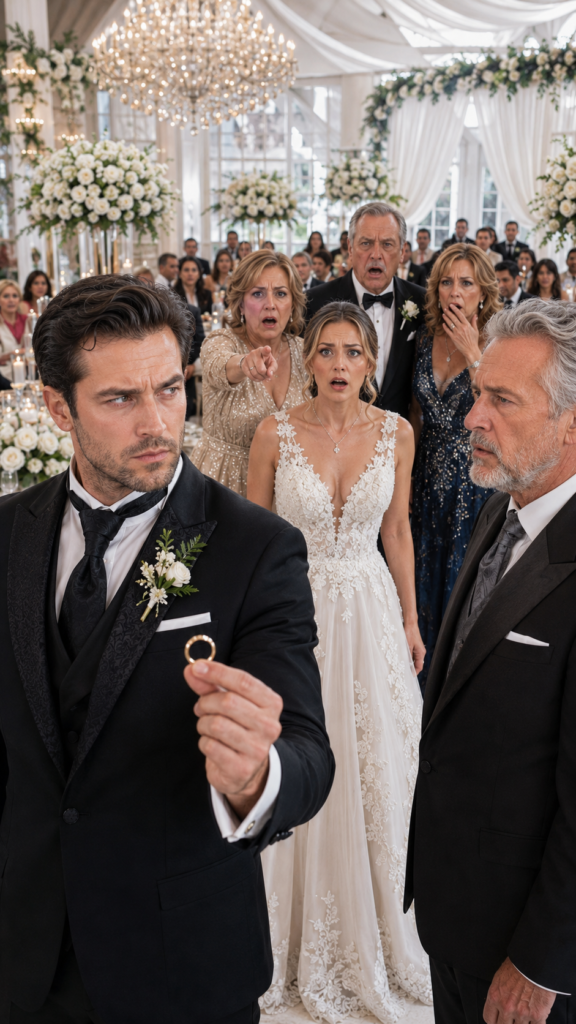
The funeral home erupted.
A woman screamed “murderer.” A cousin ran out. Nadia sank into a chair repeating, “I didn’t know, I didn’t know,” as if that could cleanse the years of supporting her mother.
Doña Hortensia tried to walk toward the side exit.
But Carolina’s father and two other men blocked her way.
—You’re not leaving —Don Manuel said, with a calmness that was frightening.
Father Esteban was already calling 911. Carolina’s mother hugged Sofía, covering her ears as the room filled with screams, crying, and accusations.
Rubén approached his mother with red eyes.
—you killed my children.
Hortensia slapped him.
—Don’t talk to me like that! I’m your mother!
Rubén didn’t even flinch.
—you killed Diego and Mateo.
—Your wife killed them with her incompetence —she spat—. I only tried to correct her.
When the patrols arrived, the scene looked like a nightmare: two white coffins in the center, flowers everywhere, a mother hugging her daughter, a man destroyed in front of his own mother, and a grandmother screaming that everything had been “for the good of the family.”
Officer Patricia Larios ordered everyone not to touch anything.
—That phone and that notebook are evidence —she commanded.
A policeman approached Hortensia.
—Ma’am, you need to come with us.
—I didn’t do anything wrong! —she screamed as they put the handcuffs on her—. The kids cried! Someone had to put order in that house!
Before they took her away, she looked at Carolina with hatred.
—This is your fault. If you had been a good mother, I wouldn’t have had to intervene.
Carolina didn’t respond.
For the first time in eight years, she didn’t need to defend herself against that woman.
The truth was there: in an old cell phone, in a pink notebook, and in the voice of a girl that everyone had underestimated.
The next 72 hours turned into a different nightmare.
The prosecutor's office reopened the investigation. The initial reports had treated the deaths of Diego and Mateo as an inexplicable tragedy, a possible sudden death. But with the photos, the notebook, and Sofía’s testimony, everything changed.
The toxicological analyses confirmed the impossible.
The twins had lethal levels of a sedative in their bodies that should never have been near a baby.
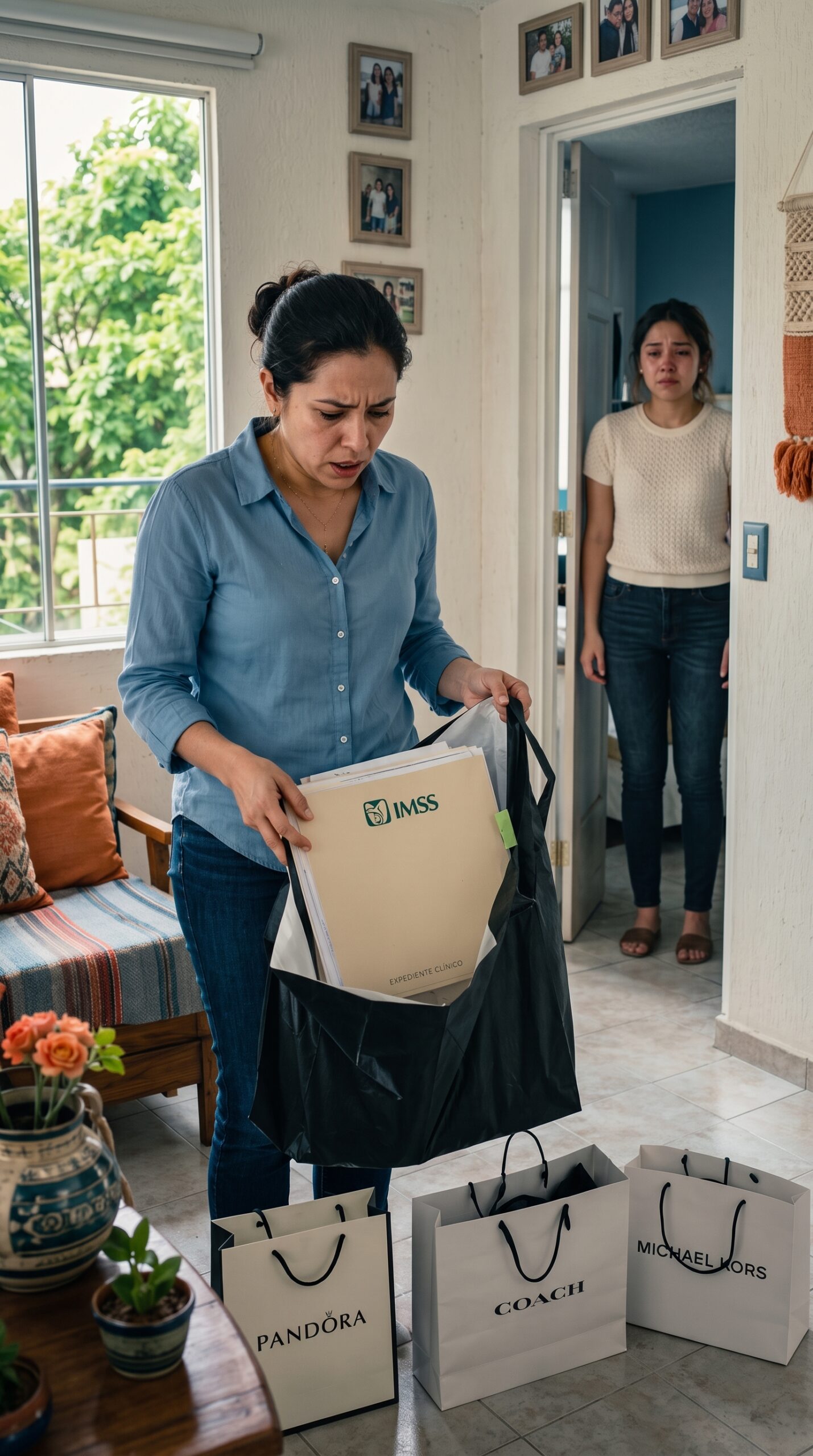
The medication came from samples Rubén had in his bag.
It wasn’t an accident.
It wasn’t a misunderstanding.
Doña Hortensia had been drugging her grandchildren for weeks.
But the final blow came when they reviewed her computer.
There were searches on dosages for babies, respiratory risks, strong medications, and ways to “make infants sleep.”
They also found messages she had sent to a friend from the parish.
“Carolina is useless. If something happens, everyone will know it was due to her negligence.”
The prosecutor's office then understood that Hortensia not only wanted the babies to sleep.
She wanted to prove that Carolina was incapable.
She wanted to regain control of her son, of the house, and of the family.
Rubén crumbled.
One afternoon, sitting in the room where the cribs used to be, he took a light blue blanket and began to cry like a child.
—I gave her the key —he repeated—. I left my bag. I told you that you were exaggerating. I let her in.
Carolina watched him from the doorway.
She would have run to console him before.
She would have carried his guilt, his pain, and even his shame.
But not anymore.
—Your mother killed them —Carolina said—. But you opened the door every time I asked you to close it.
Rubén lowered his head.
—I know.
—You heard how she humiliated me. You saw how she took the babies from my arms. You knew I was breaking and chose not to upset her.
—I know —he repeated, destroyed.
—And at the funeral, you remained silent while she blamed me for the death of our children.
That phrase sank him completely.
There were no broken dishes.
There were no screams.
Just a truth too heavy to continue living under the same roof.
Months later the trial began.
Doña Hortensia arrived dressed in black, with dyed hair and a victim's face. Her lawyer tried to argue that it was a “mistake of a tired grandmother.” That she never intended to kill the babies. That Carolina was overwhelmed. That Hortensia was only trying to help.
But then Sofía testified.
The room changed when the girl walked in accompanied by a forensic psychologist.
Carolina wanted to stop the world to protect her.
Sofía turned to her and squeezed her hand three times.
“I love you.”
The prosecutor asked her if she knew the difference between lying and telling the truth.
Sofía replied:
—Yes. Lying was what my grandmother did when she said that I cried for my brothers.
Carolina closed her eyes.
Sofía read parts of her notebook. Dates. Phrases. Photos. What she saw every Tuesday and Thursday. How the babies slept too much. How her mom tried to wake them up to eat. How her grandmother said that a weak mother ruins her children.
Then they showed the images.
Doña Hortensia stopped looking at the judge.
The prosecutor didn’t need to shout.
The facts spoke for themselves.
When they issued the verdict, Carolina held Sofía’s hand tightly.
Hortensia was found guilty of the deaths of Diego and Mateo. She was sentenced to life in prison.
Hearing the verdict, she didn’t cry for the babies.
She screamed that they had ruined her life.
That no one appreciated her sacrifice.
That Carolina had destroyed the family.
The family.
In her mouth, that word sounded like a mockery.
Rubén signed the divorce papers weeks later. He didn’t fight for the house, the furniture, or the money. He only asked to see Sofía under therapeutic supervision.
Carolina agreed, not for him, but for her daughter.
Sofía still loved him, even though she was also hurt by his silence.
—I don’t expect you to forgive me —Rubén told her the day he left—. I don’t even know if I’ll forgive myself.
Carolina looked at him without hatred.
Hatred is exhausting too.
—Don’t live seeking forgiveness —she replied—. Live remembering what happens when someone stays silent to avoid upsetting the wrong person.
Carolina moved with Sofía to Tepic, near her parents.
They rented a small house with a lemon tree in the yard. It didn’t have the blue room for the twins, nor the walls filled with photos, nor the entrance where Doña Hortensia showed up unannounced.
But for the first time in years, Carolina could sleep without hearing a foreign key opening her door.
They took very few things: two little blankets, the photos of Diego and Mateo, the stuffed animals that were in their cribs, and Sofía’s pink notebook, kept in a special box.
Sofía began therapy.
At first, she had nightmares. She dreamed of bottles. Of white powder. Of her grandmother smiling. She dreamed that she screamed and no one heard her.
One night, while they were having quesadillas at the little kitchen table, Sofía asked:
—Mom, do my brothers know that I tried to help them?
Carolina put down her plate.
She walked over and hugged her.
“They know you loved them. They know you were very brave.”
—But I should have told you sooner.
—No, my love. You were a child. Protecting them was the adults’ job. And many adults failed. You did more than anyone had the right to ask of you.
Sofía cried silently against her chest.
Carolina did too.
A year later, Carolina began speaking in workshops about domestic violence. She didn’t tell her story to elicit pity. She told it so that other women could see the signs: a mother-in-law barging in unannounced, a husband always justifying his mother, relatives confusing abuse with “strong character,” adults not listening to children because they think they don’t understand.
She always ended up talking about Sofía.
About how a girl saw what everyone denied.
About how she wrote the truth when no one wanted to listen.
About how her small voice broke a chain of silence that had killed two babies.
The last time they visited Diego and Mateo’s grave, Sofía left a folded letter next to the flowers.
“Dear Dieguito and Mati: I’m already in third grade. I still remember your little hands. Grandma Hortensia can’t hurt anyone anymore. I told the truth. I love you both very much. Your sister Sofía, the one who did see.”
Carolina read the letter and cried.
Because her children would not come back.
There would be no first steps, first words, or laughter in the living room.
But their death had pulled off a mask.
It showed that evil doesn’t always arrive screaming. Sometimes it arrives with a rosary, with advice, with a copy of the key, and with the excuse that “they just want to help.”
And it also showed something more powerful:
That the truth can live in an old cell phone, in a pink notebook, and in the voice of a girl that no one expected to hear.