PART 1
—Forgive me!
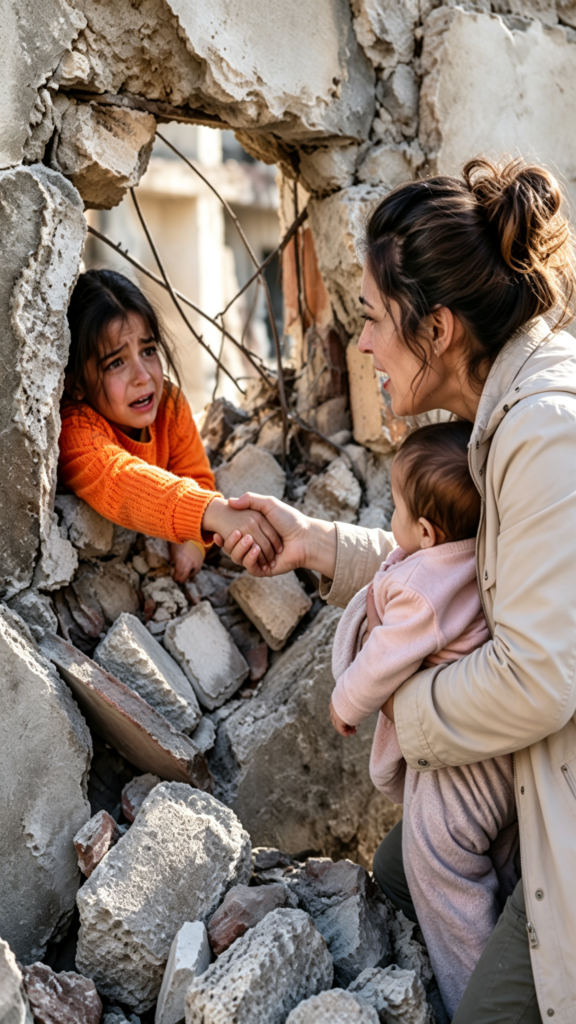
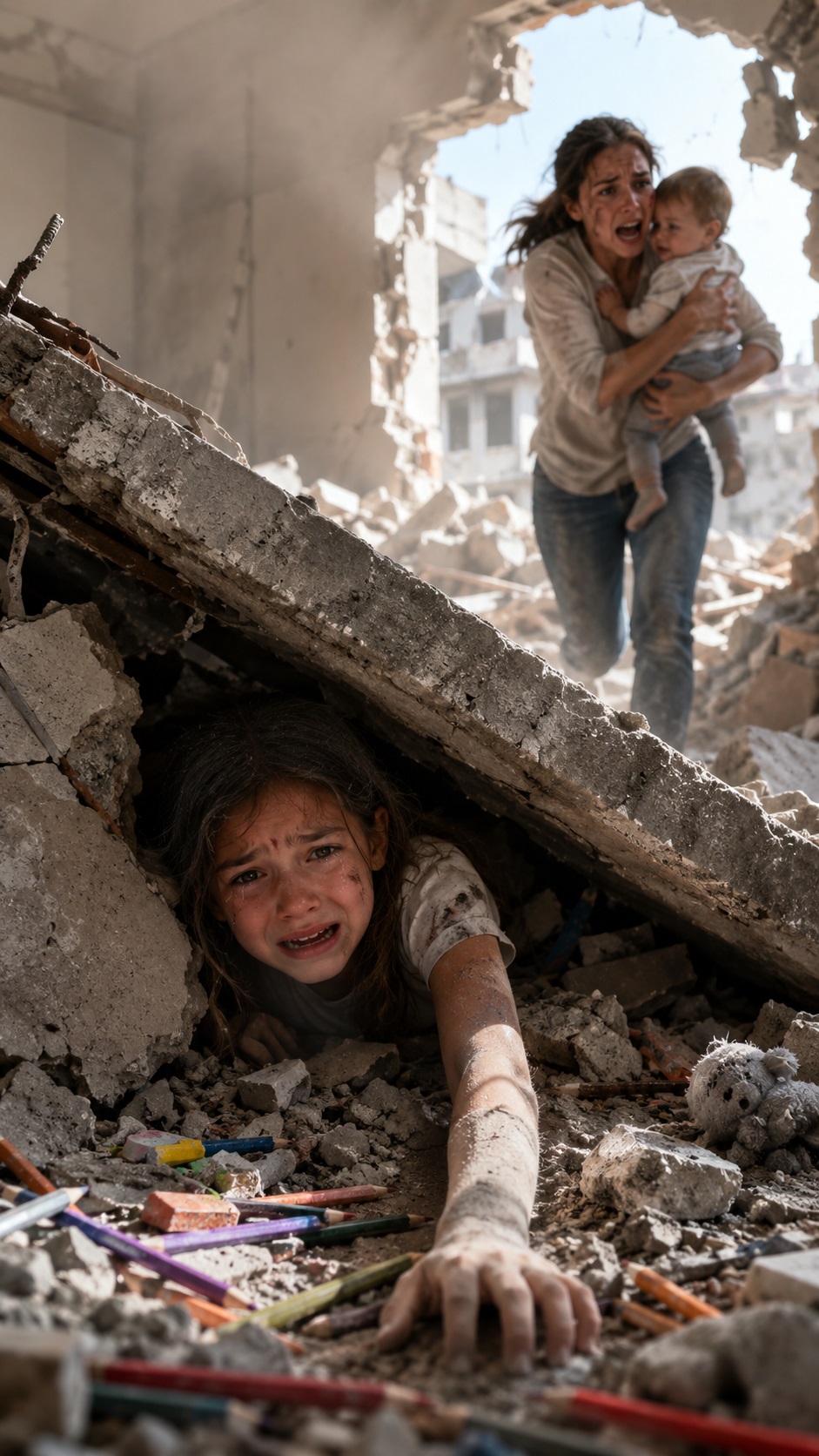
That scream was the last thing Sofia heard before she saw Patricia, her mother, racing through dust and screams with Mateo, her one-year-old brother, clutched against her chest.
Sofia was 11 years old.
She was trapped under a concrete beam, with one leg pinned and her mouth full of dirt. From where she lay, all she could see were her mother's tear-filled eyes before she disappeared through the broken door of that house in Puebla.
And in that second, an idea that had been hidden inside her for years became a sentence.
“She chose her own flesh and blood.”
Because Sofia was adopted.
No one in her house had ever treated her differently. Javier, her dad, took her to school. Patricia made her hot chocolate when she was sick. Mateo followed her everywhere, even as he chewed on her crayons and hid her dolls.
But Sofia always felt afraid.
Afraid that love would run out the day life forced a choice.
That Saturday felt normal. The food was on the stove, the radio played softly, and Mateo was making a mess with a box of crayons.
—Mom, this kid is eating my colors —Sofia complained.
Patricia laughed.
—Let him be, little one. He’s hungry for art.
—No, he’s hungry to ruin my life.
Javier appeared from the patio with dirt on his hands.
—Stop fighting, you sound like neighbors at a condo meeting.
Then the floor roared.
First, there was a slight vibration. Then the glasses jumped from the cupboard. The lamp shook as if someone were pulling it from above.
—It’s shaking! —Javier yelled.
Patricia grabbed Mateo. Sofia ran towards her, but the wall opened with a horrible sound. A beam fell between mother and daughter.
Everything turned to dust.
When Sofia woke up, she couldn’t move. She heard Mateo crying. She heard Javier screaming from afar. She saw Patricia on the other side of the rubble, pale, trembling.
—Mom, don’t leave me! —she begged.
Patricia took a step toward her.
Then she looked up. The ceiling was still breaking apart.
Mateo shrieked in desperation.
Patricia clutched the baby against her chest.
—Forgive me! —she shouted.
And she ran.
Sofia felt like not only was the house collapsing on her.
Her entire family was falling apart.
PART 2
Dust continued to settle like ash. Sofia tried to scream, but her throat burned. Every breath tasted like blood and cement.
—Mom? —she whispered.
No one answered.
—Dad?
She only heard creaking.
The girl thought of her bed, her backpack, the crayons chewed by Mateo. She thought of Patricia combing her hair for school. She thought of all the times she said “my love.”
And then she heard that word again in her head.
Forgive me.
It didn’t sound like an apology.
It sounded like goodbye.
Minutes passed. Or maybe hours. Under the rubble, time became a strange, heavy, formless thing.
Until a male voice broke the silence.
—There’s someone here! A girl!
A light entered through a small hole.
—Hold on, little one. We see you. Don’t close your eyes, okay?
It was Ruben, a neighbor from the back street. He wasn’t a rescuer, he wasn’t a firefighter, he wasn’t family. But he lay on the ground, reached his arm between the stones, and held Sofia's hand throughout the rescue.
—My mom left —she murmured.
Ruben didn’t know what to say.
He just squeezed her hand tighter.
When they finally pulled her out, Puebla looked like a horror movie. There were sirens, people crying, open walls, downed wires. The ambulances were overwhelmed, and Sofia was loaded into a truck.
Before passing out, she saw Patricia running towards her.
She came without Mateo.
She had blood on her face and her shirt torn.
—Sofia! My girl!
But Sofia closed her eyes before her mother could touch her.
She woke up in a hospital. Her leg was bandaged, her arm had an IV, and a sadness larger than the pain poured over her.
Javier was by her side with a bandage on his forehead.
—Where’s my mom? —Sofia asked.
He swallowed hard.
—With your brother. They’re checking him too.
Sofia turned her face to the wall.
—Of course.
—Sofi, don’t think things...
—I don’t want to see her.
Patricia tried to come in many times. Sofia pretended to be asleep. Sometimes she could hear her crying on the other side of the door.
—Please, let me see her just a little.
But Sofia had already made up her mind.
One afternoon, Patricia came in anyway. She sat by the bed and wanted to hold her hand.
Sofia pulled away.
—I came back for you —Patricia said, her voice broken.
The girl let out a dry laugh, a laugh that didn’t seem like it belonged to an 11-year-old.
—Later.
—It wasn’t like that.
—It was like that.
Patricia covered her mouth with a hand.
—You are my daughter.
Then Sofia looked at her for the first time since the earthquake.
—But I’m not your real daughter.
Javier froze in the corner.
Patricia turned pale.
—Who told you that?
—No one. I know.
—Sofia, you are my daughter.
—That day I wasn’t.
Patricia didn’t respond.
And that silence was the proof Sofia used to condemn her for years.
The family moved to Cholula, to a small apartment lent by an aunt. The house was left uninhabitable. Mateo grew up without remembering anything. Sofia remembered everything.
She remembered the screams.
She remembered the dust.
She remembered her mother leaving with the baby.
Patricia made her atole, left her notes in her backpack, took her to therapy, sat outside her room even when Sofia wouldn’t open the door.
But the girl built a wall.
Tougher than concrete.
At 15, she didn’t want Patricia to accompany her to the prom. At 18, she left to study architecture in Mexico City and answered her mom's calls only when she felt obligated.
Javier would say:
—Daughter, you’re punishing your mom for something you don’t understand.
And Sofia would respond:
—I understand perfectly.
But she didn’t understand.
It just hurt.
Twelve years passed.
Sofia became a structural architect. She said she wanted to know why buildings fell, but in reality, she wanted to understand why her life had crumbled.
At 23, she worked at a firm in Mexico City. She had few friends, a small apartment, and a clear rule: not to depend on anyone.
Patricia kept calling every Sunday.
Sofia almost never answered.
Until one early morning, the phone rang.
It was Javier.
—Sofi… it’s your mom.
She sat up straight.
—What happened?
—She fainted. We’re at the hospital. They say she has a tumor.
Sofia drove to Puebla before dawn. When she arrived, she saw her dad in the waiting room, suddenly aged.
—It’s advanced —he said.
Sofia felt fear, anger, and guilt all at once.
—Why didn’t you tell me sooner?
Javier looked down.
—Your mom didn’t want to bother you.
That phrase hit harder than she expected.
She entered the room. Patricia was sleeping, thin, with a tired face and hair stuck to her forehead. For the first time in years, Sofia didn’t see the woman who had left her under the rubble.
She saw her mom.
On a chair was an old metal box.
—She asked me to give this to you —Javier said from the door.
—What is it?
—The truth.
Sofia opened the box that night, sitting in a cold hallway of the hospital. There were photos of her as a baby, kindergarten drawings, a bracelet from her adoption day, and a yellow envelope.
Inside she found a Civil Protection report, a statement signed by Ruben, and a letter written by Patricia.
She read the report first.
Each line took her breath away.
Patricia hadn’t escaped to save herself.
She had pulled Mateo out because he was right beneath a slab that was still falling. He was a baby. He couldn’t walk. He couldn’t cover himself. Patricia left him in the arms of a neighbor outside.
And she returned.
She returned for Sofia.
But when she tried to cross back, another part of the ceiling collapsed. A rebar pierced her side. She lost blood. Still, she wanted to crawl back in.
The report said that three neighbors had to stop her because she screamed that her daughter was still inside.
Ruben stated that Patricia didn’t say “the girl.”
She said “my daughter.”
Again and again.
“My daughter is inside. Sofia is my daughter. I have to get her out.”
Sofia’s hands trembled.
Then she opened the letter.
“My Sofia:
If you’re reading this, it’s perhaps because I couldn’t explain it to you by looking into your eyes.
That day I didn’t leave you because I loved you any less.
I had two children in front of me and only two arms.
Mateo was beneath a slab that was going to fall. You were trapped, but you could breathe. I made the most horrible decision of my life: to take out the baby first and come back for you.
I came back, my girl.
I swear I came back.
But the house fell again.
Since then, I live with your gaze embedded in my soul.
I know you thought I chose blood.
But you didn’t come from my body, Sofia.
You came from my decision.
I chose you when you came into my arms. I chose you in your fevers, in your tantrums, in your fears, in your first steps into this family.
And that day I chose you too.
Forgive me not because I left you.
Forgive me because I couldn’t save you without breaking your heart.”
Sofia couldn’t go on.
She crumpled to the floor and cried like she hadn’t cried in 12 years.
She cried for the trapped girl.
For the guilty mother.
For the Sundays unreturned.
For every rejected hug.
Javier sat next to her. He didn’t scold her. He didn’t say, “I told you so.” He just held her.
—She wanted to explain this to you many times —he whispered—. But you weren’t ready.
—I destroyed her, Dad.
—No. You both were hurt.
That night, Sofia entered Patricia’s room. She sat by her side and took her hand.
—Mom —she said softly.
Patricia opened her eyes with effort.
—Sofi…
—I read the letter.
Patricia’s lips trembled.
—I came back.
Sofia started to cry.
—I know now.
—I came back for you, my love.
Sofia leaned in and hugged her carefully, as if she could break.
—Forgive me to you.
Patricia stroked her hair.
—I have nothing to forgive you for. You were a scared child.
—I hated you for many years.
—I loved you all those years.
That phrase shattered her heart.
The following months were tough. Patricia underwent treatment. There were good days and terrible days. Sofia took a leave from work and stayed in Puebla to care for her.
Mateo, now 13, looked at her with shame.
One afternoon, Sofia found him on the rooftop.
—Did you hate me too? —he asked.
She froze.
—No, Mateo.
—But mom took me out first.
Sofia took a deep breath.
—you were a baby. It wasn’t your fault.
—Sometimes I feel like I’m the reason you all broke apart.
She hugged him.
—The earthquake broke us. Fear broke us. But not you, dude. You were a child too.
Mateo cried against her shoulder.
And Sofia understood that they had all been trapped under different rubble.
Patricia improved for a time. It wasn’t a miracle, but it was a gift. They had one year to talk, to look at photos, to laugh, to remember.
One morning, Patricia told her how adoption day went.
—You arrived really angry. You were clenching your little fists as if you were going to sue the DIF.
Sofia burst into laughter.
—So I was intense from babyhood.
—You didn’t come from me, but you came out just like me.
That laughter healed more than many apologies.
One Sunday, Patricia asked to go to the lot where the house once stood. There were no ruins anymore. The neighborhood had built a small park with benches, young trees, and a plaque with the names of those who died in the quake.
Patricia walked supported by Sofia.
She stopped where the kitchen used to be.
—This is where it was —she said.
Sofia thought returning would destroy her.
But it didn’t.
The place no longer felt like a tomb.
It felt like a closed scar.
Patricia took a little box from her bag. Inside were two chewed crayons.
Sofia recognized them instantly.
—Mateo chewed them that morning —she whispered.
—I found them among the things that were rescued. I could never throw them away.
Sofia took them and cried.
Not out of anger.
Out of tenderness.
—Mom —she said—, you chose me when you adopted me. But I also chose you. Even if it took me too long to remember.
Patricia smiled with eyes full of light.
—Then we are at peace.
Three months later, Patricia died at home, surrounded by Javier, Mateo, and Sofia.
There were no screams.
No dust.
No fear.
Just a family holding hands.
Before leaving, Patricia opened her eyes one last time. She looked at Sofia.
For 12 years, Sofia believed she would hear that cursed word again.
Forgive me.
But Patricia didn’t say that.
She whispered:
—My daughter.
Sofia kissed her forehead.
—My mom.
And then Patricia was gone.
At 30, Sofia continued working as a structural architect. She inspected schools, hospitals, and homes to ensure no girl would be trapped under a poorly built house again.
On her desk, she kept a photo of Patricia, one of Javier, one of Mateo, and next to them, the two chewed crayons.
To anyone, they were trash.
To her, they were proof that a family can break, bury itself under tons of guilt, and still breathe again.
For years, Sofia believed her mother had left her under the rubble.
The truth was different.
Patricia never left her.
It was Sofia’s pain that had kept her from seeing her return.