PART 1
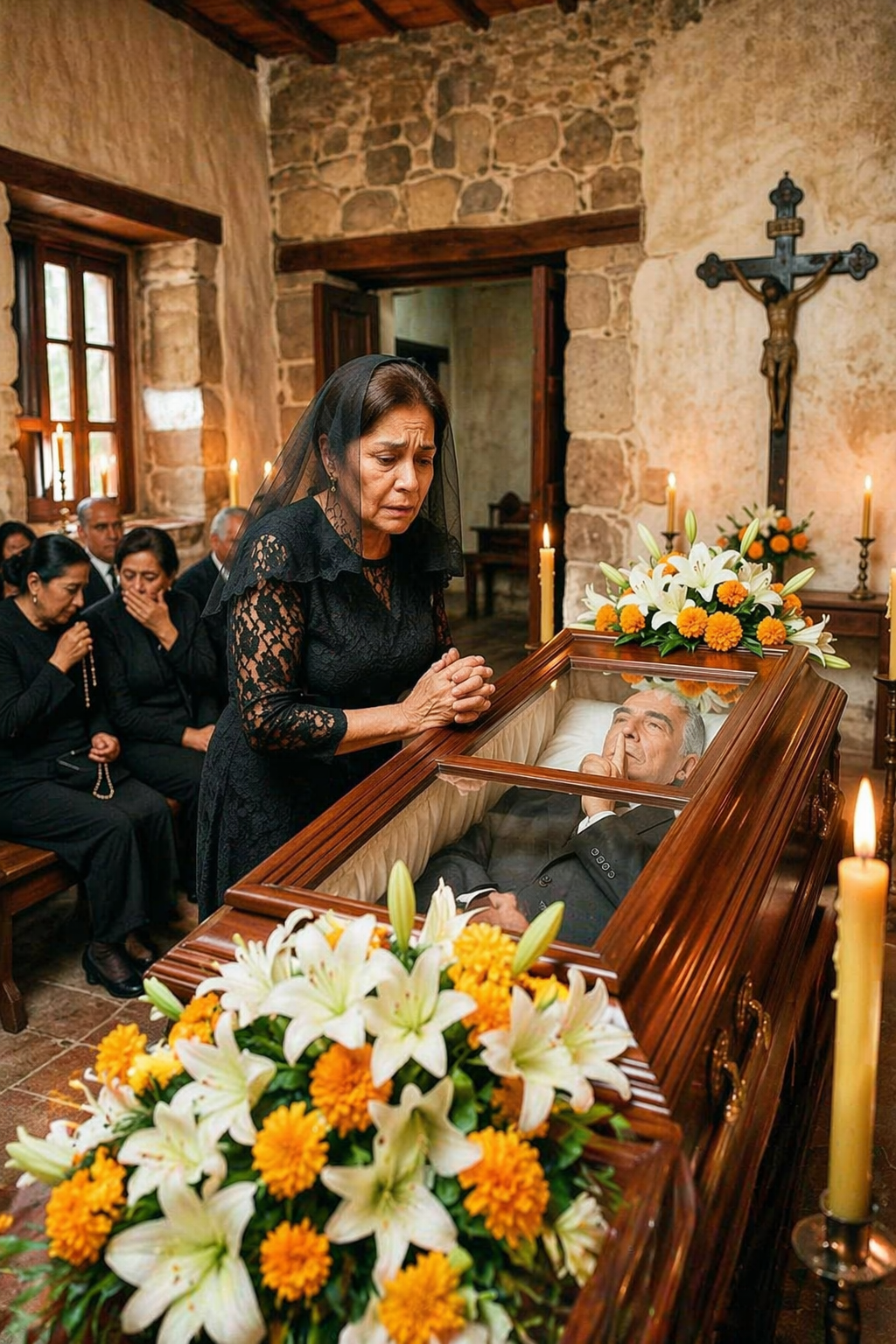
The bells of the San Ángel church tolled as if they were striking Guadalupe Morales directly in the chest.
Before her lay the coffin of Salvador Ortega, her husband of 43 years, the man who had secretly bought her churros in Coyoacán behind the doctor's back, the one who still called her "my Lupita" even though they both walked slowly now.
Beside the coffin stood her sons, Raúl and Esteban.
Too elegant.
Too serene.
Their eyes too dry to be saying goodbye to their father.
Raúl wore a black suit from Polanco and an expensive watch that Salvador had given him years before. Esteban held a white handkerchief, touching his eyes from time to time, but not a single tear fell.
People murmured behind them.
"Poor Doña Lupita."
"Don Salvador left us so quickly."
"Thank goodness she has her children to take care of her."
Guadalupe heard everything, but she didn't believe anything anymore.
Because just minutes before, when she approached the coffin to see her husband's face one last time through the glass, she saw something that froze her blood.
Salvador opened his eyes.
It wasn't a reflection.
It wasn't a widow's illusion.
His eyes looked at her with the same intensity as always, like when he waited for her outside the market with a bag of tangerines and a mischievous look on his face.
Then he raised a finger, slowly, almost weakly, and brought it to his lips.
Silence.
Guadalupe felt the floor shift beneath her feet.
Raúl approached immediately.
"What's wrong, Mom?"
She clutched her chest and pretended to choke.
"I... I got dizzy."
Esteban took her arm, but squeezed too tightly.
"You shouldn't get so close. Dad's gone."
"Dad's gone."
He said it as if locking a door.
The wake continued at the family mansion in San Ángel, amidst coffee, sweet bread, rosaries, white flowers, and marigolds. Salvador's photo lay next to the Virgin of Guadalupe, surrounded by votive candles.
Guadalupe sat near the coffin and didn't look away.
She knew what she had seen.
She knew her husband was still alive.
And she also knew that her children were feigning a grief they didn't feel.
Salvador had built a fortune from the ground up: buildings in Roma Norte, land in Querétaro, a restaurant in Puebla, and that volcanic stone house where they had all grown up.
Raúl and Esteban had been talking for years about inheritances, signatures, powers of attorney, and “practical decisions.”
She never imagined how far they might go.
Around 11 p.m., as the guests began to leave, Raúl appeared with a cup of chamomile tea.
“Drink this, Mom. It’ll help you sleep.”
Guadalupe picked up the cup.
The aroma was mild, but there was something bitter beneath it.
Something she recognized immediately.
It was the same strange smell she'd noticed in Salvador's last cup of coffee the morning before.
Raúl stood before her, waiting.
"You need to get some rest," he said.
Really rest.
That word pierced her skin.
Guadalupe pretended to drink, but let the tea trickle down the corner of her mouth, staining her black dress.
"Sorry… my hand is shaking."
Raúl clenched his jaw.
"It's okay. But finish it."
"I can't. My stomach is in knots."
Esteban appeared in the hallway.
"Don't be stubborn, Mom."
She looked up.
"Stubborn?"
His voice softened instantly.
"We just want to take care of you."
Take care of you.
Guadalupe understood that that word no longer meant love.
It meant confinement.
Raúl and Esteban took her to her bedroom as if she were a helpless child. On the nightstand, they left a glass of water and a white pill.
"Dr. Valdés said he'll help you," Raúl explained. "He'll come early tomorrow."
"For what?"
Raúl smiled coldly.
"To check on your emotional state. You've said some strange things by the coffin."
Guadalupe hid the pill under her tongue, drank some water, and pretended to swallow.
When her sons left, she ran to the bathroom and spat it out in the sink.
Then she turned off the light and listened.
At 11:40, she heard voices downstairs.
"What if the effect on Dad doesn't last until the cremation?" Esteban asked.
Guadalupe stopped breathing.
Raúl answered in a whisper:
"Valdés said yes. Besides, Mom will be sedated. No one will open the coffin."
Guadalupe's heart pounded so hard she thought her children could hear it.
Then she understood everything.
It hadn't been a heart attack.
It wasn't a wake.
It was a trap.
And her husband was locked alive inside a coffin, waiting for her to do something before it was too late.
PART 2
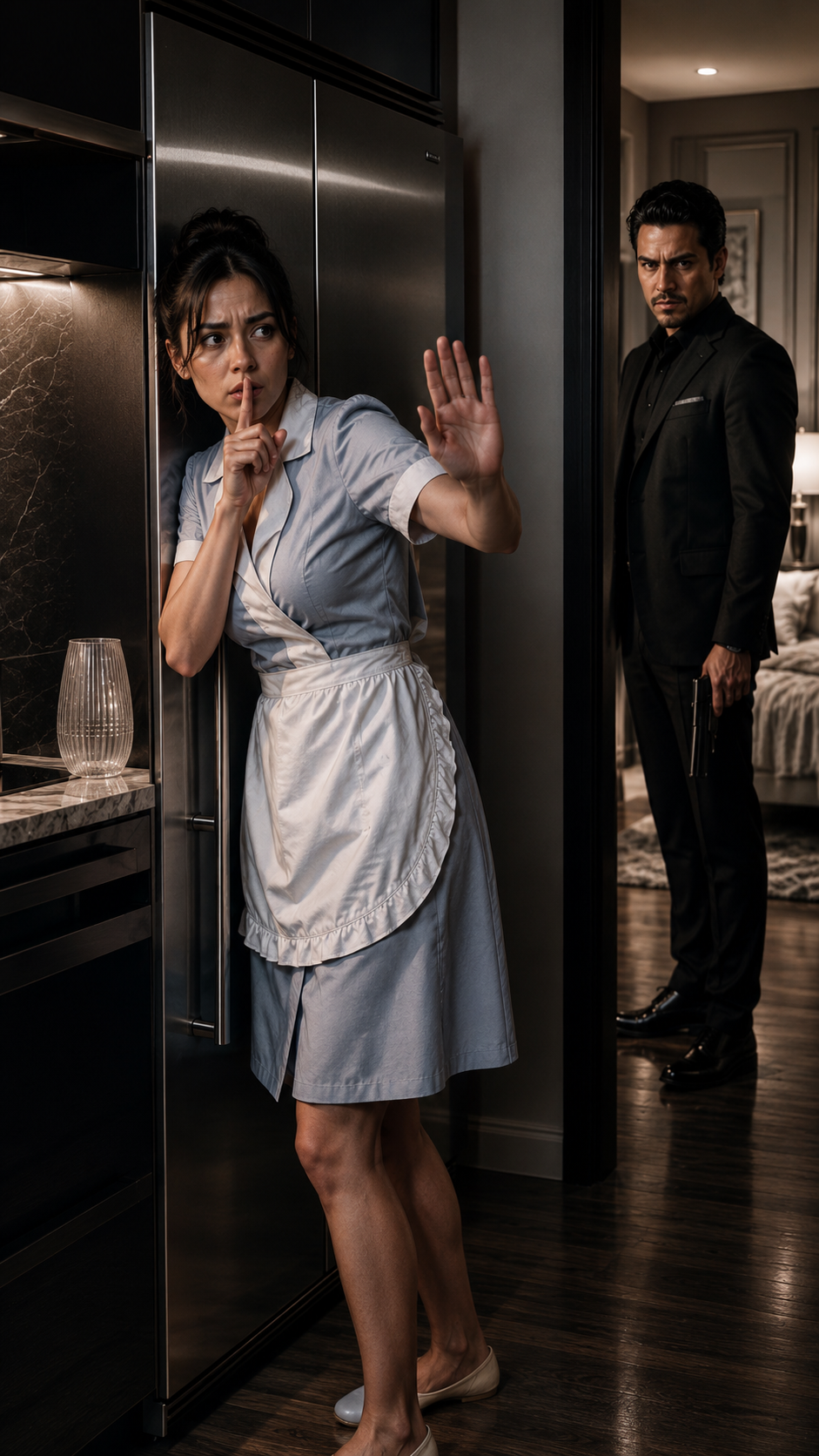
When the house fell silent, Guadalupe got up without turning on the light.
She took a small screwdriver from Salvador's drawer, the one he used to adjust his glasses. It seemed ridiculous to her that something so small could be the difference between life and death.
She went downstairs slowly, avoiding the creaking steps.
Only two votive candles remained lit in the living room. The scent of the flowers was heavy, sweet, almost rotten. The coffin stood in the middle, dark and solemn, as if it held a secret too big for that house.
"Salvador," she whispered.
Nothing.
Then she heard a faint tap against the glass.
One.
Another.
Guadalupe covered her mouth to stifle a scream.
With trembling hands, she searched for the coffin's clasps. The first lock clicked open. Then the second. Then the third.
When she lifted the lid, the chemical smell of the funeral home hit her face.
Salvador's eyes were open.
Pale as wax.
But alive.
"My love," he murmured, his voice seeming to rise from the earth. "We don't have time."
Guadalupe cupped his icy face.
"What did they do to you?"
“Valdés gave them a concoction. It lowers your pulse, relaxes your muscles, makes it look like a heart attack. If no one checks properly, it goes unnoticed.”
“My God…”
“I heard them three weeks ago. Raúl, Esteban, Valdés, and Paredes. They wanted to do it before I changed the will.”
“You knew?”
“I suspected. That’s why I didn’t take the whole dose. I faked more than I drank.”
Guadalupe felt anger and love at the same time.
“You’re crazy!”
Salvador tried to smile.
“You always liked difficult men.”
“Don’t joke around right now, Salvador.”
“If I don’t joke around, Lupita, I’ll get scared.”
She wanted to get him out, call an ambulance, wake up all of San Ángel.
But Salvador squeezed her hand.
“No. If I go out now, they’ll say you’ve lost your mind. Valdés can sign anything. We need proof.”
"And you'd rather stay here?"
"I'd rather they all fall tomorrow."
Then he explained the plan.
In his studio, behind a Frida Kahlo painting, there was a safe. The combination was his wedding date: June 22, 1979. Inside were the recordings, documents, transfers, a royal will, and a blue USB drive.
"Don't touch the red one," Salvador said. "It's the last lock."
"Who else knows?"
"Don Mateo."
Guadalupe thought of the 70-year-old driver, quiet, always with his hat in hand, invisible to his children.
"He'll come at 5:30 through the service entrance. He'll take you to Mariana Beltrán, my real lawyer. Not Paredes. Paredes's been bought off."
Before she could answer, they heard footsteps.
Guadalupe lowered the lid without closing it completely and hid behind a column.
It was Esteban.
He came in with his cell phone in his hand, looked at the coffin, and muttered:
"You old bastard. If you hadn't been so stubborn, none of this would have happened."
He took a picture and sent an audio message.
"Raúl, everything's fine. She's still the same. Mom seems to be asleep. We'll wrap this up tomorrow."
When he left, Guadalupe returned to the coffin.
Salvador had tears in his eyes.
Not from fear.
From grief.
“We lost them,” she whispered.
“No, Lupita. They got lost on their own.”
Guadalupe went upstairs to the study, opened the safe, and took the blue memory card. She also put a letter with her name on it inside. Then she went down to the kitchen, hid the tea in a jam jar, and wrapped Salvador’s coffee cup.
If her children spoke the language of poison, she would learn the language of evidence.
At 5:30, Don Mateo knocked on the service door.
“Doña Lupita,” he said softly. “Did you see him?”
"He's alive."
The old driver closed his eyes.
"Thank God."
He took her to a discreet office in the Del Valle neighborhood. Mariana Beltrán was waiting for them with gloves, forensic experts, and a public prosecutor.
Guadalupe handed over the memory card, the tea, the cup, and the pill.
"He's going back home today," Mariana said. "He's going to pretend to be tired. Don't sign anything. Ask to do it in the study. The cameras are there."
"And Salvador?"
"Don Mateo and a doctor will take him out before the funeral home arrives. This time everything will be documented."
Guadalupe returned before 7:00.
Raúl was waiting for her, furious.
"Where were you?"
"In the yard. I couldn't sleep."
Esteban appeared behind her.
"The doctor's coming. Don't start with your nonsense, Mom."
At 7:10, Valdés arrived, smelling of perfume, elegant, with his leather briefcase. Then came Paredes, the fake lawyer, with a sly grin.
They placed papers, pens, and folders on the table.
"Mom," Raúl said, "we need you to sign so Esteban and I can handle everything while you rest."
"Everything?"
"Banks, properties, the company. Boring stuff."
Valdés sat down across from her.
"Doña Guadalupe, have you had any visions?"
She stared at him.
"I think I saw my husband open his eyes."
Raúl lowered his head, feigning sadness.
"I knew it."
Valdés sighed.
"It's common in traumatic grief."
"Is it also common to smell something strange in a dead husband's coffee?"
The room fell silent.
Paredes stopped arranging papers.
Raúl gritted his teeth.
"Not this again."
Guadalupe lowered her gaze.
"Maybe I do need help. But I want to sign at Salvador's office."
Raúl hesitated, but agreed.
In the office, Paredes placed the documents on the mahogany desk. Valdés took out a medical form.
"First, I'll sign my evaluation," he said. "Then you agree to family support."
"Family support?" she asked.
"That's the human way of saying it," Paredes replied.
"And the legal way?"
No one answered.
Guadalupe picked up the pen.
"Before I sign, I want to ask a question."
Esteban snorted.
"What?"
She looked at Valdés.
"Doctor, when a person takes a substance that makes them appear dead, how long can they survive inside a coffin?"
Valdés's pen fell to the floor.
Raúl jumped up.
"Mom, shut up."
He didn't say "you're confused."
He didn't say "please."
He said "shut up."
And that's when the mask broke.
Guadalupe barely smiled.
"Why? Are you afraid the dead man will answer?"
The study door opened.
Mariana Beltrán entered with two law enforcement agents, a forensic expert, and a notary.
Raúl shouted:
"What the hell is this?"
“An authorized procedure,” Mariana said. “And this property belongs to Salvador Ortega and Guadalupe Morales de Ortega. You are not listed as the owner.”
Mariana placed a tablet on the desk.
A recording from the studio appeared on the screen. Raúl was standing next to Valdés and Esteban. Raúl’s voice was clear:
“When it looks like a heart attack, there won’t be an autopsy. Mom will be so drugged she won’t even know what day it is.”
Valdés replied:
“The dose has to be exact. If she wakes up before the cremation, we’re done for.”
Esteban asked:
“And if she wakes up?”
Raúl answered:
“Then she’ll wake up inside an oven.”
Guadalupe felt something inside her break forever.
Esteban began to cry.
“I didn’t want this. Raúl said it was only to protect the company…”
“You signed,” Guadalupe said. “No one moved your hand for you.”
Raúl glared at her with hatred.
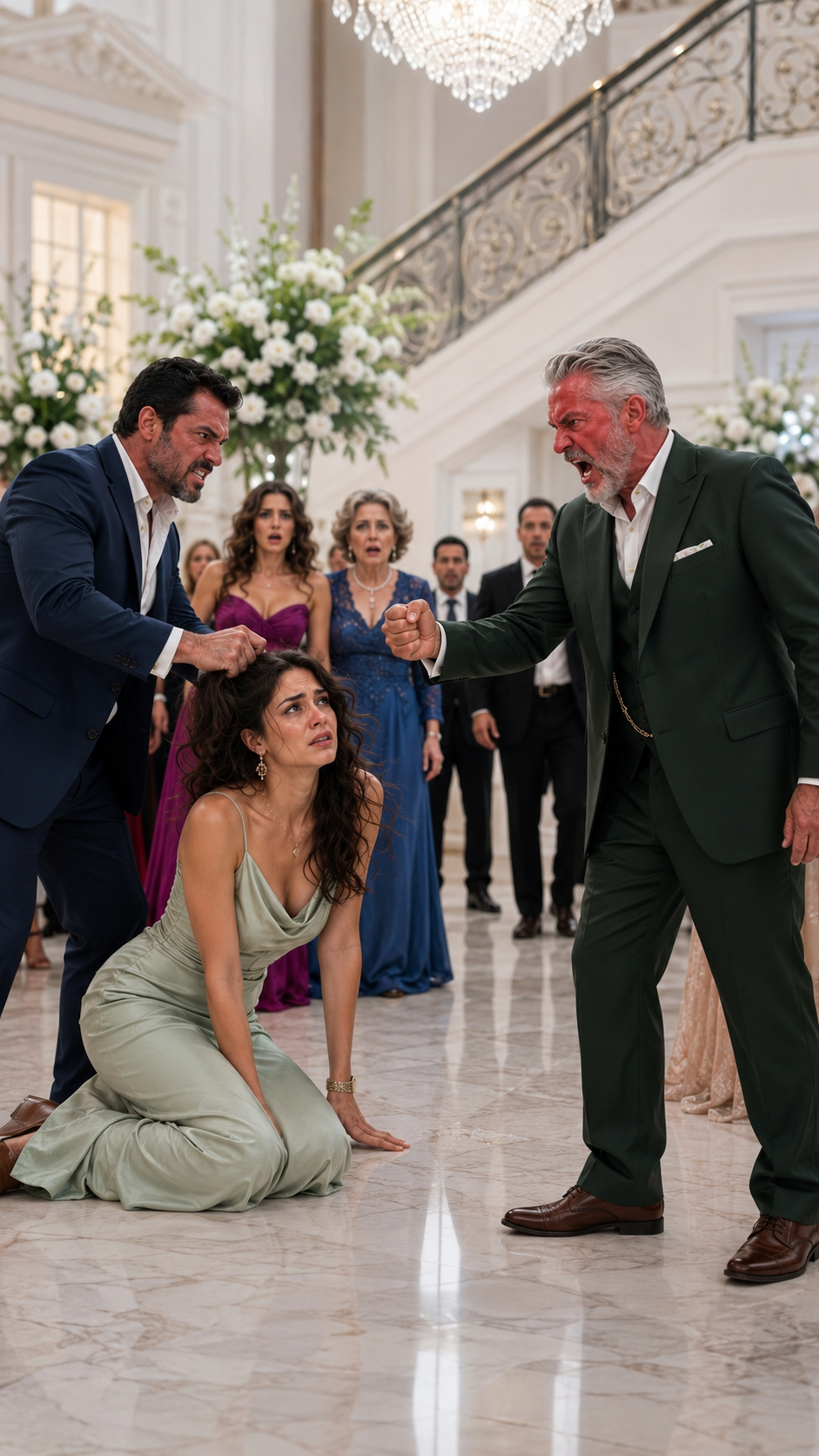
"How could you betray us?"
She stood up.
"Betray them? Salvador was your father. And I'm your mother, not your stepping stone to wealth."
Then a voice came from the doorway.
"And I'm still alive."
They all turned around.
Salvador was in a wheelchair, pushed by Don Mateo. Pale, weak, with a blanket over his legs, but his eyes were open.
Raúl aged 20 years in a second.
"Dad..."
Salvador raised a hand.
"That word is earned, too."
Esteban fell to his knees.
"Forgive me."
Salvador looked at him with tears in his eyes.
"I can forgive fear. I can forgive weakness. But I can't forgive that they wanted to lock up your mother to steal her life after trying to take mine."
The officers handcuffed Valdés, Paredes, Raúl, and Esteban.
Raúl didn't cry.
He just looked at Guadalupe until the very last second.
"Mom, please."
Her heart broke.
But she didn't back down.
“I prayed for you when you were born. I prayed for you when you were sick. Today I’m going to pray for you again. But I’m not going to lie for you.”
The house fell silent.
It wasn’t peace.
It was the sound after an explosion.
Salvador was taken to a private clinic in Santa Fe. He survived, although it took him months to walk without assistance. Guadalupe never left his side. Every time she saw a cup of coffee, she smelled it first.
The case made headlines in all the newspapers as “the San Ángel coffin scandal.” Raúl was convicted of attempted murder, fraud, and forgery. Valdés lost his license and ended up in prison. Paredes was caught with his forged documents. Esteban received a reduced sentence for confessing, but he also paid the price.
Guadalupe and Salvador sold the mansion.
Not to a construction company.
They sold it to a cultural foundation to turn it into a reading center for children and senior citizens.
“Let those walls learn other stories,” she said.
With part of their fortune, they created the Jacaranda Foundation, dedicated to helping elderly victims of family abuse and financial fraud. Mariana was their legal advisor. Don Mateo, stubborn as ever, took charge of transporting those who had no way to get around.
Salvador would repeat to everyone:
“Don’t sign anything without reading it. And if they rush you, be suspicious.”
Years later, in a smaller house in Coyoacán, Salvador and Guadalupe would sit under a young jacaranda tree, secretly eat churros, and argue as if life hadn’t tried to bury them.
After his release from prison, Esteban worked as a carpenter in Puebla. There was no easy forgiveness. No telenovela-style embrace. But one day, Salvador bought a crooked table he had made himself.
“It’s crooked,” Salvador said.
Esteban lowered his gaze.
“Yes. A little.”
Salvador touched the wood.
"Then it can still be fixed."
Raúl never asked for forgiveness.
He died years later in prison, alone. Guadalupe wept at Mass for the child she had once held in her arms, but she didn't mistake grief for absolution.
Because she learned something no mother should ever have to learn: blood isn't always family, and love doesn't compel you to cover up a crime.
One afternoon, an elderly woman arrived at the Jacaranda Foundation crying because her nephew wanted to take her house.
“I don’t know how to start over,” he said.
Guadalupe took his hand.
She thought of the church.
Of the coffin.
Of Salvador’s finger to his lips.
Of the night she had to stay silent so the truth could speak for itself.
Then she answered:
“Don’t try to be who you were before. That person suffered too much. Be the person who opened the coffin.”
And she smiled.
Because her story didn’t end with poison.
It didn’t end with a forged signature.
It didn’t end with her children feigning tears beside the corpse of a living man.
She started again when Salvador opened his eyes, she stayed silent, and together they let the guilty build their own prison.