PART 1
—Your father just traded you for his freedom —murmured Bruno Montenegro, without kissing the bride—. Congratulations, Sofía. You’re now part of my hell.
Sofía Armenta didn’t look up. She was 23 years old, wearing a high-necked white dress with long sleeves, and her hands were so cold that the ring almost slipped from her finger before it reached its place.
The wedding took place in a restored hacienda in San Miguel de Allende, closed off by black trucks and men speaking into radios. Outside, a discreet mariachi played. Inside, no one smiled for real.
The guests pretended this was an elegant union between powerful families. But everyone knew it wasn’t love. It was a debt.
Bruno Montenegro, 35, controlled construction companies, warehouses in Manzanillo, and transportation routes that many preferred not to ask about. His surname opened doors but also silenced mouths.
Two months earlier, his younger brother, Esteban, had been found dead on a road to Querétaro. The press said it was a robbery. Bruno knew better.
The trail led him to Álvaro Armenta, a financier from Polanco, famous for gracing magazines with talks of philanthropy while hiding million-dollar frauds. Esteban had gone to collect a debt from him. Álvaro, cornered, paid to get him out of the way.
When Bruno confronted him, Álvaro wept on his knees.
—I didn’t know he was your brother. I swear I didn’t know. I have no money left, but I have my daughter. Her grandfather left her a trust. It matures when she gets married.
Bruno looked at him with disgust.
—You’re offering me your daughter?
—Marry her. Keep everything. Just let me live.
Bruno accepted not out of greed but out of revenge. He thought taking Álvaro’s perfect daughter would be a slow way to make him pay.
That’s why Sofía stood before the altar, covered up to her throat despite the heavy heat of July. Bruno believed it was pride. That the rich girl didn’t want him to touch her.
After the party, he took her to the Montenegro mansion in Lomas de Chapultepec. He didn’t plan to force her into anything. He wasn’t that kind of beast. But he did want her to understand that her comfortable life was over.
When he entered the room, Sofía was turned away, trying to unbutton her dress. Her fingers trembled.
—I can’t take it off —she whispered—. Just give me a minute.
—What’s wrong, princess? Can’t you live without maids?
She stepped back.
—Don’t touch me, please.
Bruno grew tired of the theatrics. He grabbed her shoulders and turned her around. Sofía let out a dry scream, as if she had seen a blow coming.
The lace tore from her neck to her waist.
Bruno was frozen.
Sofía’s back was not that of a pampered heiress. It was a map of old scars, recent marks, and wounds that no one had healed properly.
She fell to her knees, covering herself with the torn fabric.
—I’m sorry… don’t hit me with the belt. I promise I’ll behave.
And Bruno Montenegro understood that the monster he sought to punish was not in that room.
It was free, toasting somewhere in the city, believing he had sold his daughter for a second time.
PART 2
Bruno knelt slowly, not touching her. The fury that always ignited his blood caught in his throat.
Sofía trembled on the floor, curled up under the torn dress. She no longer looked like an arrogant bride. She looked like a girl who had learned to apologize before knowing what crime she’d be blamed for.
Bruno took off his jacket and placed it over her shoulders.
—Sofía, look at me.
She barely opened her eyes.
—Who did this to you?
Sofía pressed her lips together. For years, she had been taught that telling the truth was worse than receiving the blow.
—My dad.
Bruno clenched his fists.
—When he lost money, it was my fault. When a dinner went wrong, it was my fault. When I didn’t smile right for his partners, it was also my fault. He told me no one would believe me because he was Álvaro Armenta and I was just an ungrateful daughter.
Bruno then understood the full game. Álvaro hadn’t delivered a princess to save himself. He had handed over his favorite victim.
—He told me you were worse than him —Sofía whispered—. That you would finish what he started.
Bruno stood up. His face changed.
—Your father was right about one thing. I am dangerous. But not to you.
Sofía looked at him, confused.
—In this house, no one enters your room without permission. No one touches you unless you say yes. And no one raises their hand to you again.
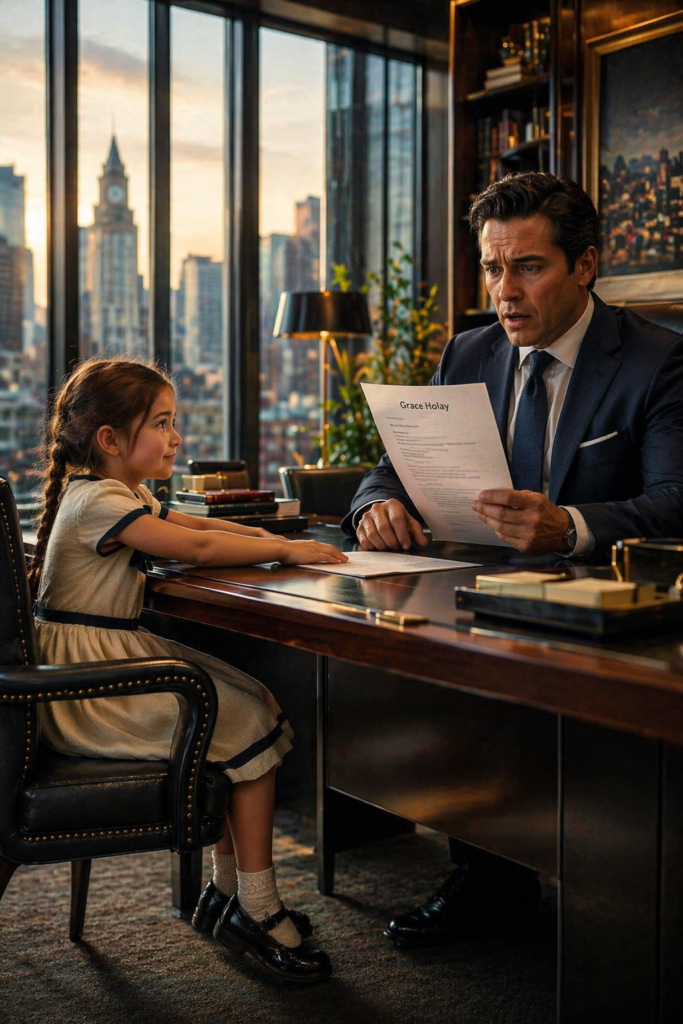
The next morning, Sofía woke up alone. On the nightstand, there were water, painkillers, and a handwritten note:
“You’re safe. The doctor will come only if you agree. Bruno.”
Sofía cried upon reading it. Not for love. For something simpler and more brutal: no one had asked her permission in 23 years.
In the library, Bruno was meeting with Darío, his trusted man, and Elisa Robles, a criminal lawyer who knew too well the secrets of powerful people.
On the table lay bank statements, photos, fake contracts, and private flight records.
—Álvaro leaves tonight from Toluca —Elisa said—. Before, he’ll stop by a safe deposit box. He wants to move 48 million dollars.
—Sofía’s money? —Bruno asked.
—from the trust, from defrauded investors, and from shell companies. The guy thought he was untouchable.
Darío looked at Bruno.
—Boss, with Esteban it was blood. With the girl, it’s another mess. If we get involved wrongly, half the government will be on us.
Bruno lifted his gaze.
—This stopped being business when I saw her back.
At that moment, Sofía appeared at the door wearing an oversized shirt that covered her knees. She was pale, but her gaze was no longer empty.
The men lowered their eyes in respect.
—Get out —Bruno ordered.
When they were alone, he didn’t approach more than necessary.
—You don’t have to do anything. The lawyer can protect your trust. The doctor can check your wounds. And if you want to annul this marriage, it can be done.
Sofía looked at the documents.
—Are you going to kill him?
Bruno held her gaze.
—No. A man like your father would find death too easy. I’m going to strip him of his mask.
She swallowed hard.
—I want to be there.
—No.
—Yes —she said, trembling—. My whole life I saw him angry. I want to see him scared.
Bruno watched her. There was terror in her eyes, but also a new spark. One that Álvaro hadn’t managed to extinguish.
—Then tell me what you want me to lose.
Sofía took a deep breath.
—Everything.
That night, the rain lashed the private hangar in Toluca. Álvaro Armenta walked nervously beside a white jet, clutching a metal briefcase.
He thought he would escape before dawn.
Then he heard a voice behind him.
—Did you really think selling me would save you?
Álvaro turned.
Sofía was there, alongside Bruno Montenegro, wrapped in a black coat, her back straight for the first time in years.
—Daughter —Álvaro said, feigning surprise—. You don’t know what you’re doing.
Sofía felt her body wanting to obey out of habit. To lower her head. To be quiet. To apologize.
But this time she wasn’t alone.
—I do know —she replied—. For the first time, I do know.
Álvaro glanced at Bruno.
—We had a deal.
—The deal changed —Bruno said— when I discovered that besides being a murderer, you were a coward.
Álvaro let out a nervous laugh.
—You don’t know what she told you. Sofía always exaggerates. Since she was a child, she made up things. She was difficult, dramatic, attention-seeking.
Those words hurt more than a slap. They were the same ones he had repeated in front of doctors, teachers, maids, and family.
“Sofía hurts herself.”
“Sofía wants attention.”
“Sofía isn’t right in the head.”
Bruno turned to her.
—You don’t have to listen to this.
—I do —Sofía said—. But this time he’s going to listen to me.
Álvaro hardened his face.
—Shut up.
The word fell like a whip. For a second, Sofía was ten years old again, standing in front of the mirror as her father taught her how to cover a bruise with makeup.
But that night, she didn’t lower her gaze.
—I will not be silent again.
Elisa Robles stepped out of a truck with a thick folder.
—Mr. Armenta, your main accounts were frozen three hours ago. Sofía’s trust is now protected by court order. You cannot touch it.
Álvaro paled.
—That’s impossible.
—Impossible was how so many people kept silent —Elisa said—. But your driver spoke. The nurse spoke. The employee you fired did too.
Darío turned on a small speaker.
First, an old audio played. Álvaro’s voice, clear, arrogant:
“If the girl speaks, no one will believe her. I am Álvaro Armenta. She is a hysterical brat.”
Sofía covered her mouth with one hand. She remembered that day. The cold hallway. The blood on her lip. The fear of breathing too hard.
Then came the photos. The falsified medical reports. Messages to a private doctor. Payments to employees to lie. And something more.
Elisa pulled out a different sheet.
—We also found the payment you made to have Esteban Montenegro killed.
Bruno stood still. His pain appeared in his eyes, but it didn’t explode.
Álvaro stepped back.
—We can sort this out. I’ll give you names. I’ll give you routes. I’ll give you whatever you want.
Bruno stepped closer, just barely.
—You already gave me the only thing I needed. The truth.
Álvaro looked at Sofía desperately.
—Daughter, please. Tell them you’re confused. If you destroy me, you destroy your own blood.
Sofía felt the word blood no longer meant family. Sometimes blood was just a chain.
—I didn’t destroy you, Dad —she said—. I just stopped protecting you.
Two official trucks drove into the hangar. Federal agents got out with signed orders. Álvaro tried to shout names of politicians, lawyers, partners. No one responded.
When they put the handcuffs on him, he broke.
—Sofía! Don’t do this to me!
She looked at him without hate. That was what hurt him the most. Hate still binds. Sofía was already letting go of the rope.
—You were my first fear —she said—. But you will not be my end.
The scandal erupted the next day. The headlines spoke of fraud, money laundering, Esteban’s murder, and the daughter who had lived locked away behind a perfect facade.
Some called Sofía brave. Others judged her for staying in Bruno Montenegro’s house. Online, half of Mexico debated whether justice could come from the hands of a dangerous man.
But Sofía didn’t go out to defend herself from everyone.
She recorded a single video, without showing her wounds.
“For years, I was told that no one would believe me. Today, I speak for myself and for those who are afraid in houses that seem perfect from the outside.”
The video went viral.
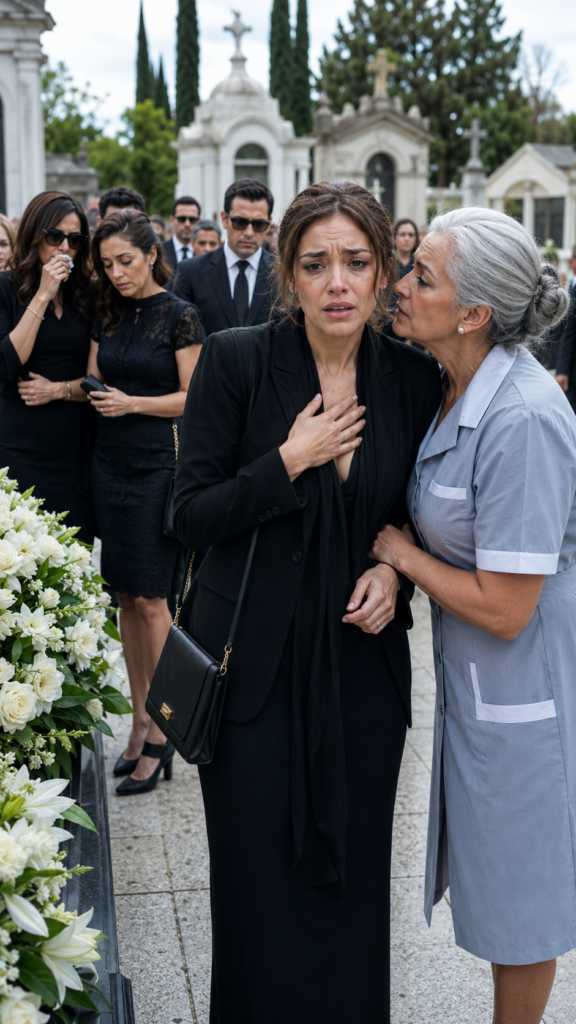
A month later, Sofía visited her mother’s grave. She brought white flowers and sat for a long time.
—I’m out now, Mom —she whispered—. It took me a while, but I’m out.
Bruno waited for her several meters away. He didn’t invade her silence.
When she returned, he didn’t take her hand immediately.
—I want to study law —she said.
Bruno looked at her, surprised.
—Law?
—I want to help women who have evidence but no power. Girls who speak and no one listens. People trapped with monsters in suits.
Bruno smiled faintly.
—you’ll need good teachers.
—and good enemies —she replied.
There was no fairytale ending. Sofía had bad nights, panic attacks, and days when she couldn’t stand anyone getting close. Bruno learned to knock before entering and wait. He learned that protecting wasn’t possessing.
Months later, Sofía changed the dark curtains of the mansion for light fabrics. She filled the terrace with bougainvillea. In the library, where vengeance had once been plotted, she began to study the files of women who couldn’t afford lawyers.
One night, Bruno found her asleep on a book. He covered her with a blanket without waking her.
Sofía barely opened her eyes.
—Did you close the door?
—Yes.
—With a key?
—Only from the inside. You have the key.
She smiled, half asleep.
For anyone else, it would have been a small detail.
For Sofía, it was the whole world.
Because sometimes justice doesn’t arrive clean or perfect. Sometimes it arrives late, with scars, surrounded by people who also don’t know how to save themselves.
But when it arrives, it doesn’t always restore what was lost.
Sometimes it returns something more powerful.
The voice.