PART 1
At 1:13 AM, Daniela lay sprawled at her mother's door on a quiet street in Coyoacán.
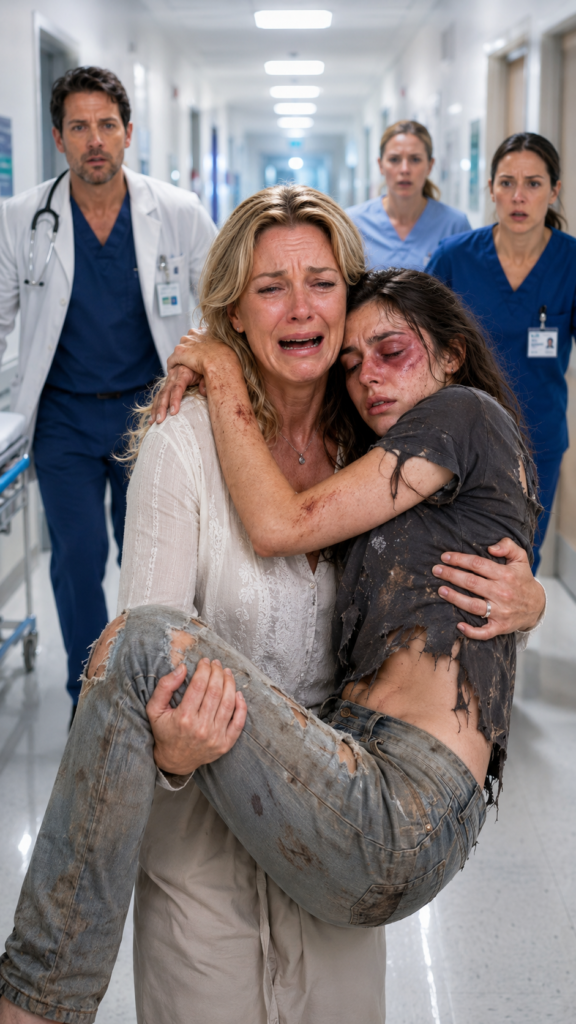
Her hair was drenched by the drizzle, her lip split, one arm pressed against her chest, and a dark stain marred her dress. She could barely breathe.
—Mom... please... don’t send me back to Esteban.
Rosario opened the door, thinking it was a drunk kicking the gate. But when she saw her 29-year-old daughter crumpled on the floor, her legs felt like they were going to give out.
Daniela had always been proud. The kind of woman who says, “I’m fine” even as she’s breaking inside. Ever since she married Esteban Luján, she stopped going out for Sunday lunches, stopped laughing loudly, and even started asking for permission just to visit her own mother.
Esteban owned a construction company in Santa Fe. He came from a prominent family, the type that preached “values” in public while humiliating half the world in private.
His mother, Doña Consuelo Luján, boasted about donations at charity events but treated Daniela like an employee.
Rosario called an ambulance while her daughter gripped her wrist.
—If you send me back, I’ll die, Mom... I swear I’ll die.
At the Tlalpan hospital, the doctors rushed to examine her. Rosario stood by the stretcher, her clothes soaked, looking at every bruise as if it were a stab wound.
Twenty minutes later, Esteban entered the hallway in a black coat, an expensive watch, and a calmness that made her stomach turn.
—My wife is upset —he told the nurse—. She fell down the stairs. She's pregnant and lately makes up stories.
Rosario froze.
Pregnant.
Daniela closed her eyes and began to cry soundlessly.
Behind Esteban came Doña Consuelo, impeccably coiffed, clutching a gold rosary in her hand, wearing a false mask of concern.
—Poor thing —she murmured—. The pregnancy has made her unstable. We didn’t know what to do with her at home anymore.
The doctor appeared with a folder. She didn’t smile.
—Mrs. Daniela —she said carefully—, we’re very sorry. The baby didn’t survive.
Daniela’s scream pierced the hallway.
Esteban lowered his gaze, but Rosario caught a glimpse of him.
It wasn’t pain.
It was relief.
Then Consuelo leaned in closer to Rosario and whispered:
—Take your daughter and teach her not to destroy decent families.
Rosario didn’t respond. She only watched Esteban as he tried to take Daniela’s hand.
—Sign what I asked you —he said—, and this all ends.
Daniela began to tremble like a frightened child.
Rosario didn’t yet know what the papers were, but she understood that the beating wasn’t the worst of it.
No one could believe what was about to be uncovered...
PART 2
Esteban attempted to take Daniela out of the hospital that very night.
—She’s my wife —he repeated in front of security—. I decide for her.
Rosario stood between him and the stretcher.
She was a 58-year-old woman, owner of a small bakery in the Portales neighborhood. Many knew her for her filled conchas, her tres leches cakes, and her calm way of speaking.
The Lujáns had always seen her as a simple lady.
But they didn’t know something.
Before selling bread, Rosario had worked for 22 years investigating property fraud for a special unit of the Prosecutor's Office. She had encountered ghost companies, forged wills, bought notaries, and entire families destroyed by money.
And that night, Esteban’s lie smelled too familiar.
—You will not touch my daughter again —Rosario said, keeping her voice steady.
Esteban let out a short laugh.
—You don’t know who you’re messing with.
—I do —she replied—. I’m dealing with a coward who thinks money can cover up blood.
Security escorted him out of the hospital. Consuelo stormed out behind him, indignant, threatening with lawyers, judges, and acquaintances in the Public Ministry.
When Daniela fell asleep from the sedatives, Rosario didn’t go pray or seek advice.
She asked for copies.
Complete medical report. Photographs of injuries. A sealed bag with the torn clothes. Admission registry. Names of everyone who heard Esteban call Daniela “crazy.”
Then she took her daughter’s cell phone.
There were deleted messages, but not entirely.
Rosario found recovered audio where Esteban said:
—If you talk, I’ll declare you incapable. No one believes a hysterical woman.
She also found messages from Consuelo:
“Take your tea. It’s for your own good.”
“A obedient wife doesn’t embarrass her husband.”
“That baby will only bring problems.”
At 9:30 AM, Daniela woke up in Rosario’s room, pale, with swollen eyes and a broken voice.
—Mom, it wasn’t just Esteban.
Rosario sat beside her.
—Tell me everything.
Daniela took several seconds to speak.
She recounted how Consuelo prepared infusions for her every night. She said they were for nausea, but after drinking them, Daniela would get dizzy, confused, and forgetful. When she refused, Esteban would lock her in the bedroom until she complied.
—They told me I was losing my mind —she whispered—. That if I continued like this, they would request a psychiatric evaluation.
Rosario felt a chill run down her spine.
—Since when did this start?
—Since they found out I was pregnant.
Daniela clutched the sheets.
—Last night, I heard them talking in the study. Consuelo said that if the baby was born, the trust would change hands.
Rosario stopped breathing for a moment.
Daniela’s father, Don Armando, had left a plot of land in Valle de Bravo within a family trust. It wasn’t just a nice piece of land by the lake. It was worth millions because a developer had been trying to buy the entire area for luxury residences for years.
The main clause stated that Daniela would have full control upon becoming a mother. But if she were declared incapable, her husband could request temporary administration of her assets.
Esteban didn’t want a family.
He wanted the land.
And Consuelo didn’t want a grandchild.
She wanted to remove an obstacle.
Daniela cried with a shame that didn’t belong to her.
—They wanted to make me seem crazy, Mom. They wanted me to sign a consent for Esteban to manage everything. When I said no, he pushed me. Then Consuelo said that I brought this misfortune upon myself.
Rosario closed her eyes.
For years, she had taught her daughter to endure, to be prudent, to not fight over every little thing. In that moment, she regretted every time she had said, “Be patient, dear, marriage is complicated.”
No.
Abuse wasn’t complicated.
It was abuse.
That afternoon, Rosario opened a metal box she kept under her bed. Inside were old contacts, files, keys, and a notebook she never thought she’d use again.
She called Patricia Robles, a detective she had helped years ago in a case involving falsified invoices.
—Rosario —Patricia said—, tell me this isn’t about revenge.
—It’s for my daughter —she replied—. But the evidence is clean.
In less than six hours, Rosario’s dining room looked like a prosecutor’s office.
A lab confirmed traces of dangerous substances in a cup Daniela had hidden in her bag. A pharmacy camera showed Consuelo buying controlled herbs and over-the-counter medications. An email from Esteban’s lawyer mentioned an “urgent report of emotional instability.”
The most serious evidence came from a USB drive Daniela had hidden in her purse.
There were recordings.
In one, Esteban said:
—If that child is born, the old clause ruins us.
In another, Consuelo replied:
—Then let it not be born. And let her seem guilty of everything.
Rosario listened to that phrase three times.
The first, she was frozen.
The second, she cried.
The third, she stopped being just a mother and returned to being the woman who knew how to build a cage with papers, dates, and evidence.
At 7:12 PM, a message arrived on Daniela’s phone.
“Come back before 8. Bring your ID. You will sign. If not, I’ll report your mother for kidnapping.”
Daniela turned pale.
—I can’t go back there.
Rosario took the phone.
She typed:
“I’m coming. Have the documents ready.”
Esteban replied with a smiling emoji.
He thought Daniela was returning defeated.
He didn’t know the police were already outside his house in Lomas de Chapultepec.
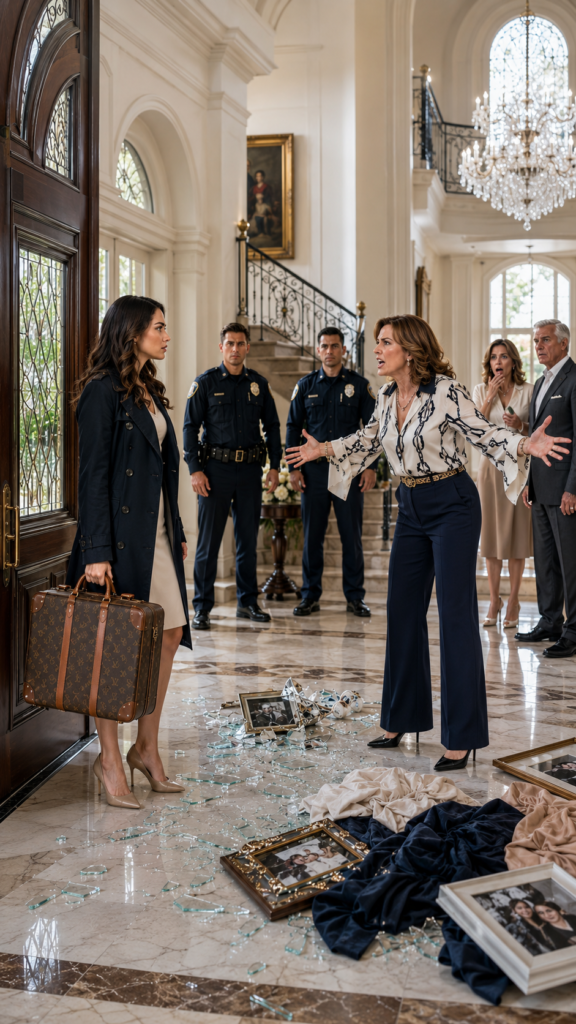
At 7:50, Rosario and Daniela entered the Luján mansion. The living room smelled of expensive flowers and freshly brewed tea. Consuelo sat like a queen, a cup in front of her. Esteban waited beside his lawyer and a private doctor.
—You finally understood —he said—. A wife must return to her place.
Daniela lowered her gaze, but Rosario squeezed her hand.
—She didn’t come to obey —said Rosario—. She came to hear how you sink on your own.
Esteban frowned.
Rosario placed a folder on the table.
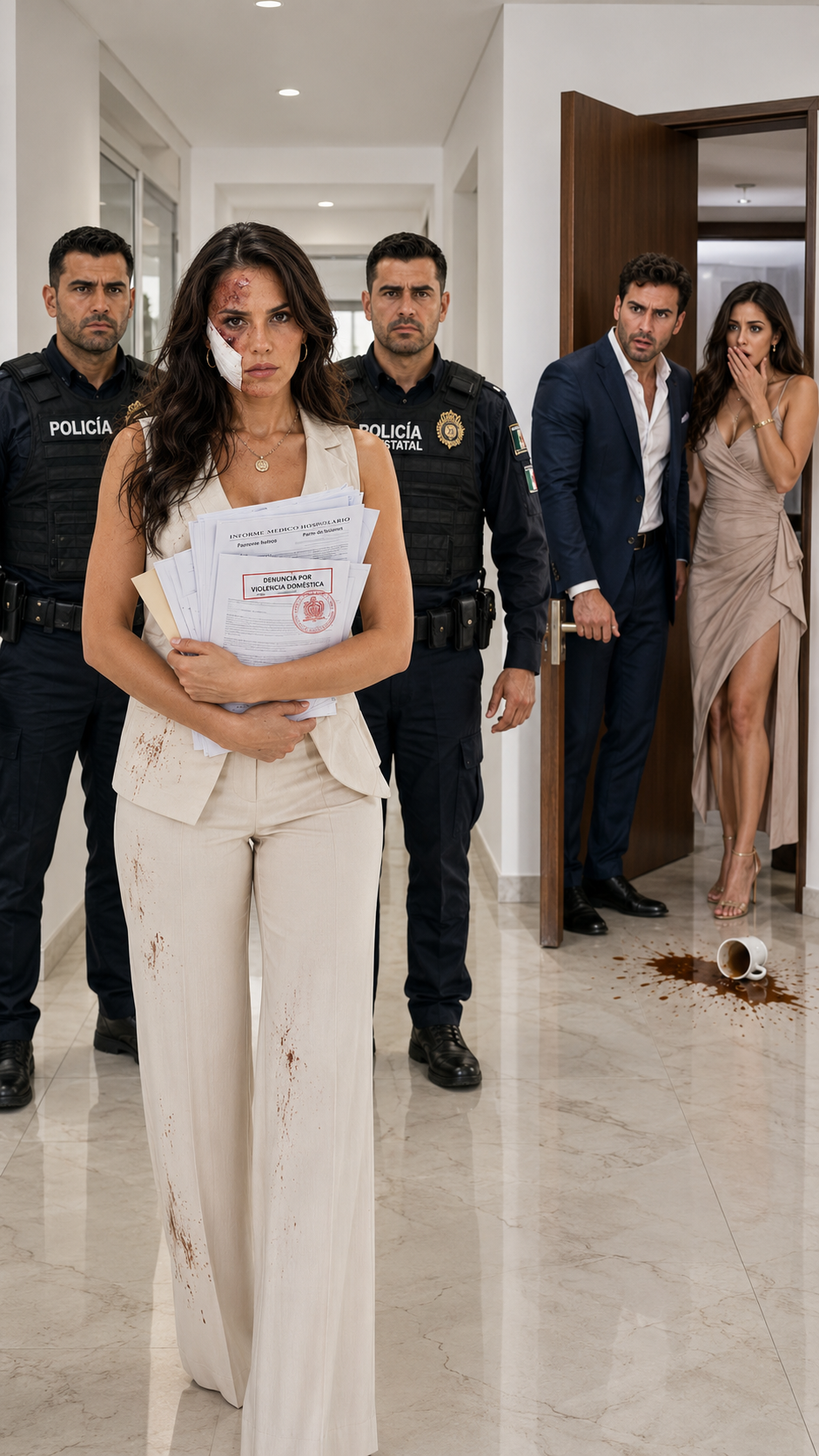
—Medical reports. Photographs. Messages. Audios. Pharmacy video. Toxicological evidence. Emails about false incapacity. And recordings where you discuss the trust.
The lawyer paled.
—I wasn’t informed of possible crimes.
—How quickly you wash your hands, Counselor —said a voice from the entrance.
Detective Patricia Robles entered with two agents.
Consuelo stood up furiously.
—This is nonsense. Daniela is sick. My son is just trying to protect the family estate.
Daniela took a step forward. Her hands trembled, but her voice didn’t.
—I’m not sick. You isolated me, drugged me, beat me, and made me believe that no one would believe me.
Esteban clenched his jaw.
—Shut up, Daniela.
She touched her belly.
—My baby died because you wanted a signature.
The room fell silent.
Then Esteban made the mistake that men used to getting their way always make.
—That baby was a problem —he spat—. Everything was going to get complicated because of a kid we didn’t even need.
Consuelo whispered:
—Esteban, shut up.
But it was too late.
A body camera recorded every word.
Daniela covered her mouth with a hand. Rosario felt her heart shatter again, but she didn’t move.
—It wasn’t a problem —said Rosario—. It was your child.
Esteban tried to approach, but the agents stopped him.
Patricia read the initial charges: domestic violence, threats, forgery, property fraud, and administration of harmful substances. The investigation would determine their responsibility in the loss of the pregnancy.
Rodrigo, Esteban’s brother, fell that same night. He had accessed Daniela’s email to send false requests to the trust. The private doctor confessed he was offered 820,000 pesos to sign a psychiatric report. The lawyer submitted emails to save his license, though he didn’t succeed.
Consuelo tried to call a judge friend.
Patricia took her phone away.
—Call him from the Public Ministry, ma’am.
For weeks, the Luján name stopped appearing in social magazines and began to show up in judicial notes. The construction company was investigated for irregular contracts. The accounts were frozen. The Valle de Bravo trust was protected by court order.
But none of that brought back the baby.
That was the part no one knew how to fix.
Daniela spent months waking up in fear. Sometimes she cried upon seeing strollers on the street. Sometimes she got so angry that she smashed plates in the yard. Rosario learned not to say, “Get over it,” because that was also a form of abandonment.
A year later, Daniela returned to the Valle de Bravo land.
She no longer went as a scared heiress.
She went as the owner.
In front of the lake, where her father had built a small dock, she had a simple house erected with large windows and secure rooms. At the entrance, they placed a sign:
Casa Renacer: refuge for women who don’t have to return to fear.
The money recovered from the civil compensation helped open the place. It wasn’t revenge. It was something stronger: turning pain into an exit for others.
Rosario watched her daughter welcome the first woman who arrived with two children and a bag of clothes.
Daniela didn’t ask why she had endured so much.
She didn’t judge her.
She just opened the door and said:
—You’re safe now.
At 1:13 AM that night, Daniela had arrived bleeding, pleading not to return to her husband.
A year later, at the same hour, she turned on the first light of the refuge.
And Rosario understood something many families prefer to ignore:
Sometimes a daughter returns home broken not because she failed, but because she finally found the courage to save herself.
What would you have done if your daughter came to your door begging you not to let her go back?