PART 1
"The one who’s broken is Claudia, not me. In my blood, men know how to leave a legacy."
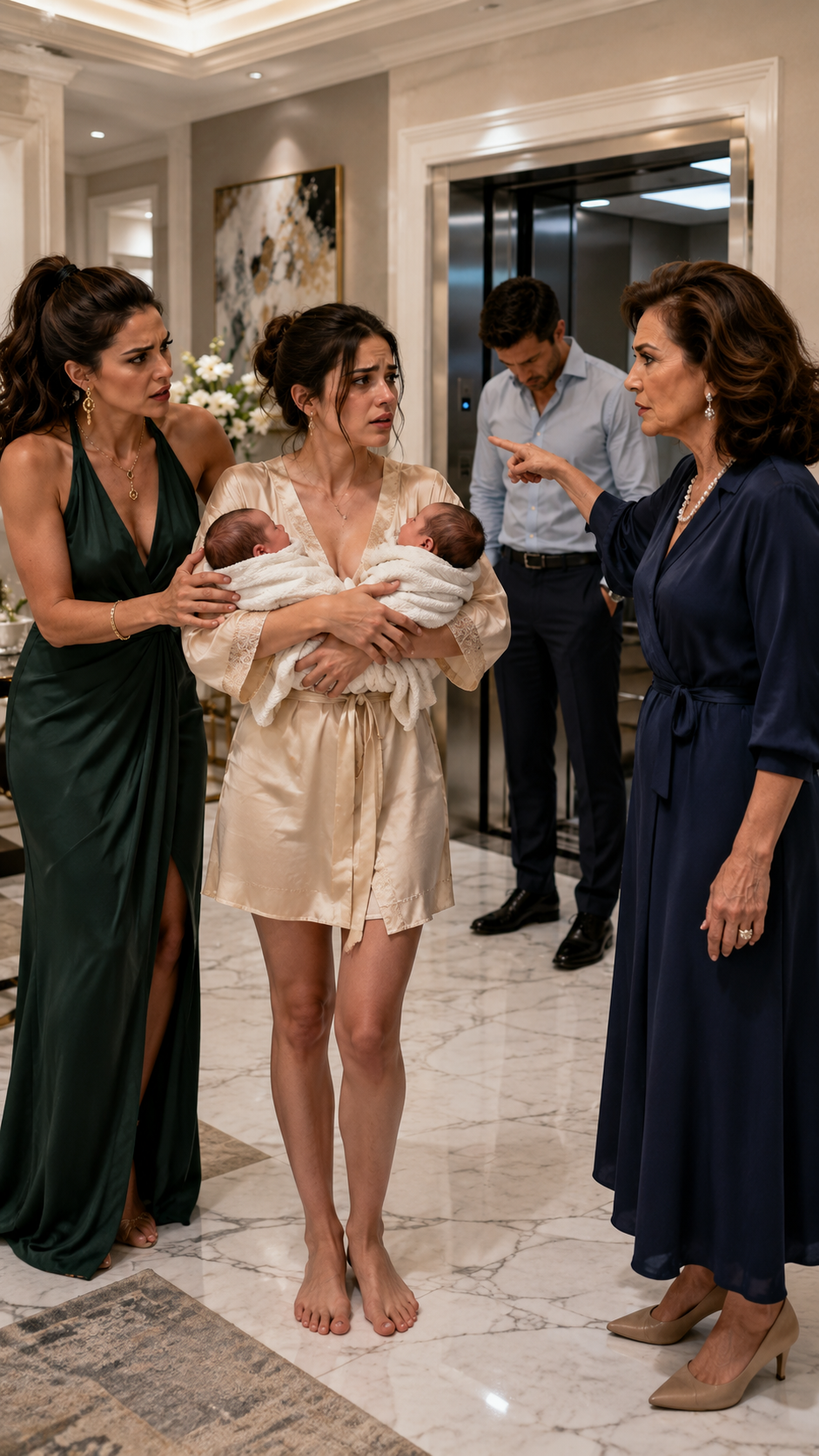
Óscar spat the words out with a twisted smile, raising his shot of tequila in front of the entire table.
It was Sunday at the Medina household in Tonalá. There was birria, freshly made tortillas, salsa from the molcajete, and the raucous noise of a big family laughing until someone said something that shouldn't have.
The laughter died instantly.
Claudia froze, her spoon hovering over her plate.
There were uncles, cousins, a pregnant sister-in-law seven months along, a grandmother quietly praying, and even Claudia's mother, who for the first time agreed to join the family meal.
Óscar kept smiling, as if he had just told a hilarious joke.
"Don’t get serious on me. It’s the truth."
Claudia felt her eyes burn.
She had been trying to conceive for three years.
Three years of tests, vitamins, expensive injections, ultrasounds, appointments in Guadalajara, remedies suggested by neighbors, and novenas to the Virgin of Zapopan.
At first, Óscar would hold her.
"It’ll happen when it’s meant to, my love."
But then he began to change.
If he saw a woman with a baby at Plaza Fórum, he would murmur:
"Look, some can succeed."
If a nephew was born, he would say:
"Let’s see if one day it’s our turn, if God and Claudia allow it."
And when he drank, he became cruel.
Doña Elvira, his mother-in-law, confused Claudia the most.
In private, she would make her chamomile tea and say:
"Don’t lose faith, dear. You’re a good woman."
But in front of the family, she had a different face.
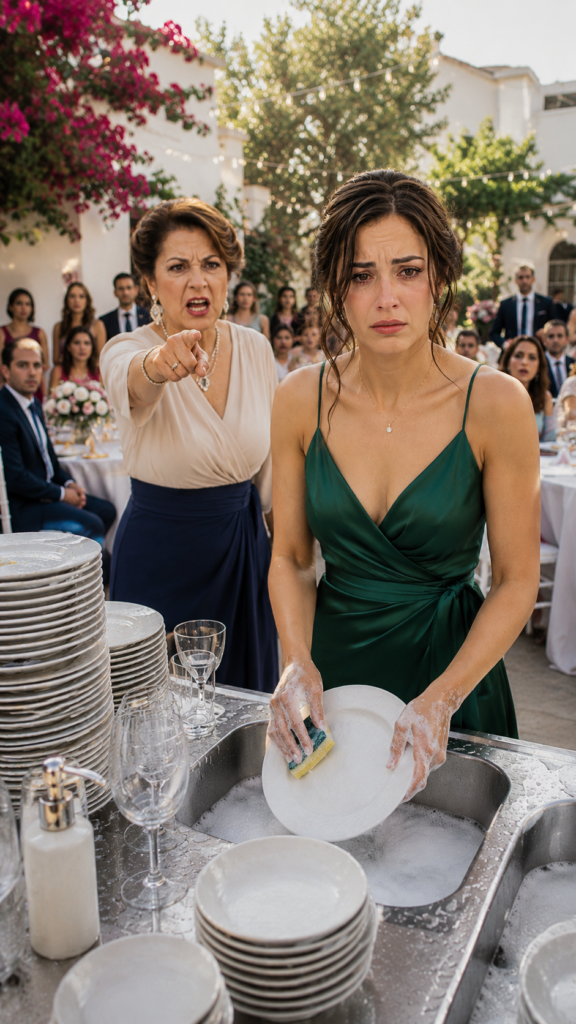
"In the Medina family, we’ve never struggled to have children. The problem doesn’t come from our side."
Claudia couldn’t understand.
Sometimes she thought Doña Elvira cared about her.
Other times she felt buried slowly, with a smile and a warm tortilla in hand.
One afternoon, Dr. Salinas called her to the clinic in Providencia.
Claudia arrived with a thick folder, full of papers, tests, and broken hopes.
The doctor reviewed everything calmly.
"Claudia, your results are very good. There are no signs of infertility on your end."
Claudia blinked, not comprehending.
"Then… why can’t I get pregnant?"
The doctor fell silent for a few seconds.
"I need to see your husband’s study. The sperm analysis that was requested months ago."
Claudia felt cold.
"Óscar said he didn’t get an appointment. That there were too many people."
The doctor didn’t say anything else.
But her silence screamed the truth.
That afternoon, Claudia arrived home early. Óscar was still at the car dealership where he worked, and Doña Elvira had gone to the market.
Claudia planned nothing.
She walked straight to the bedroom.
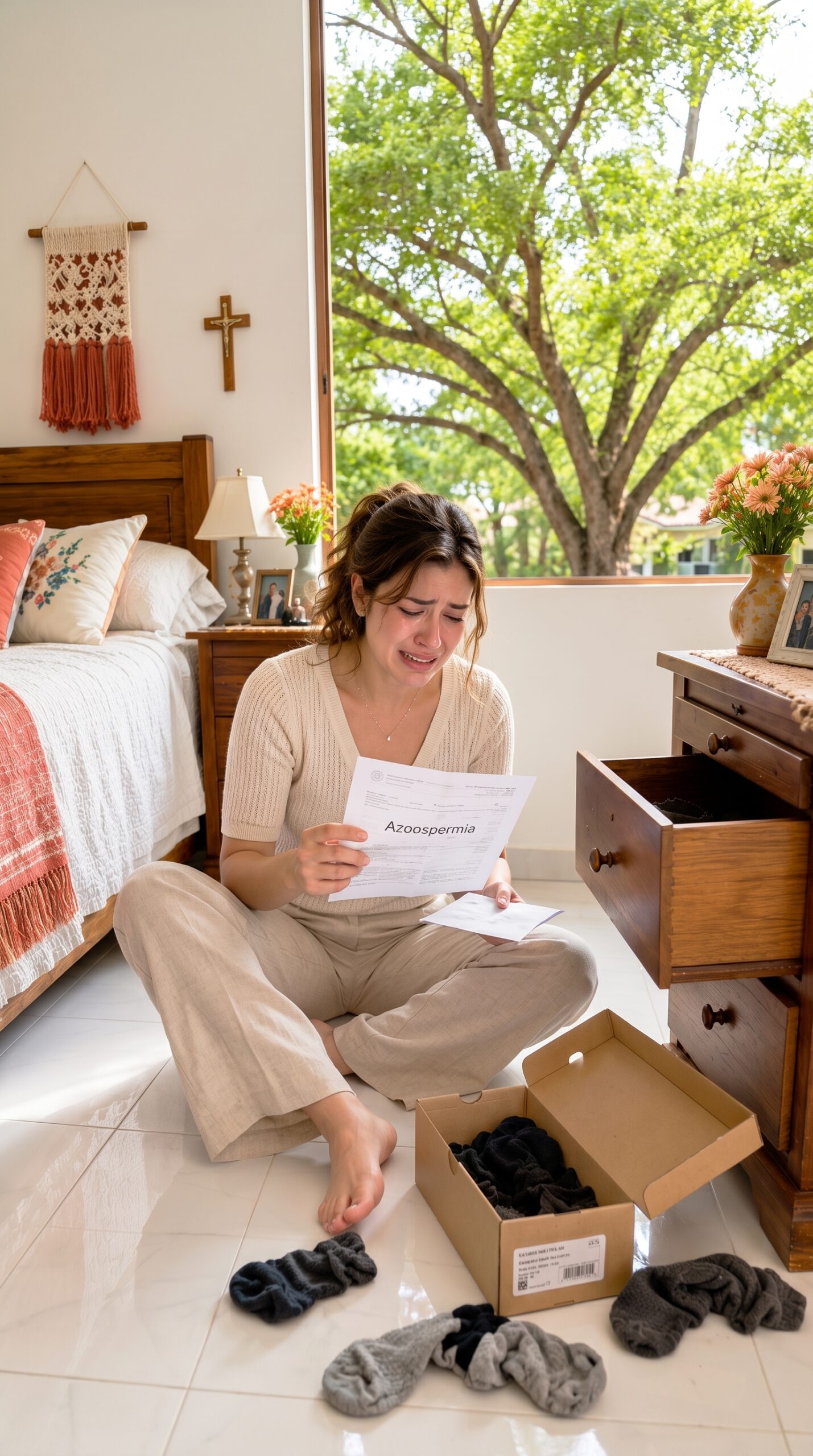
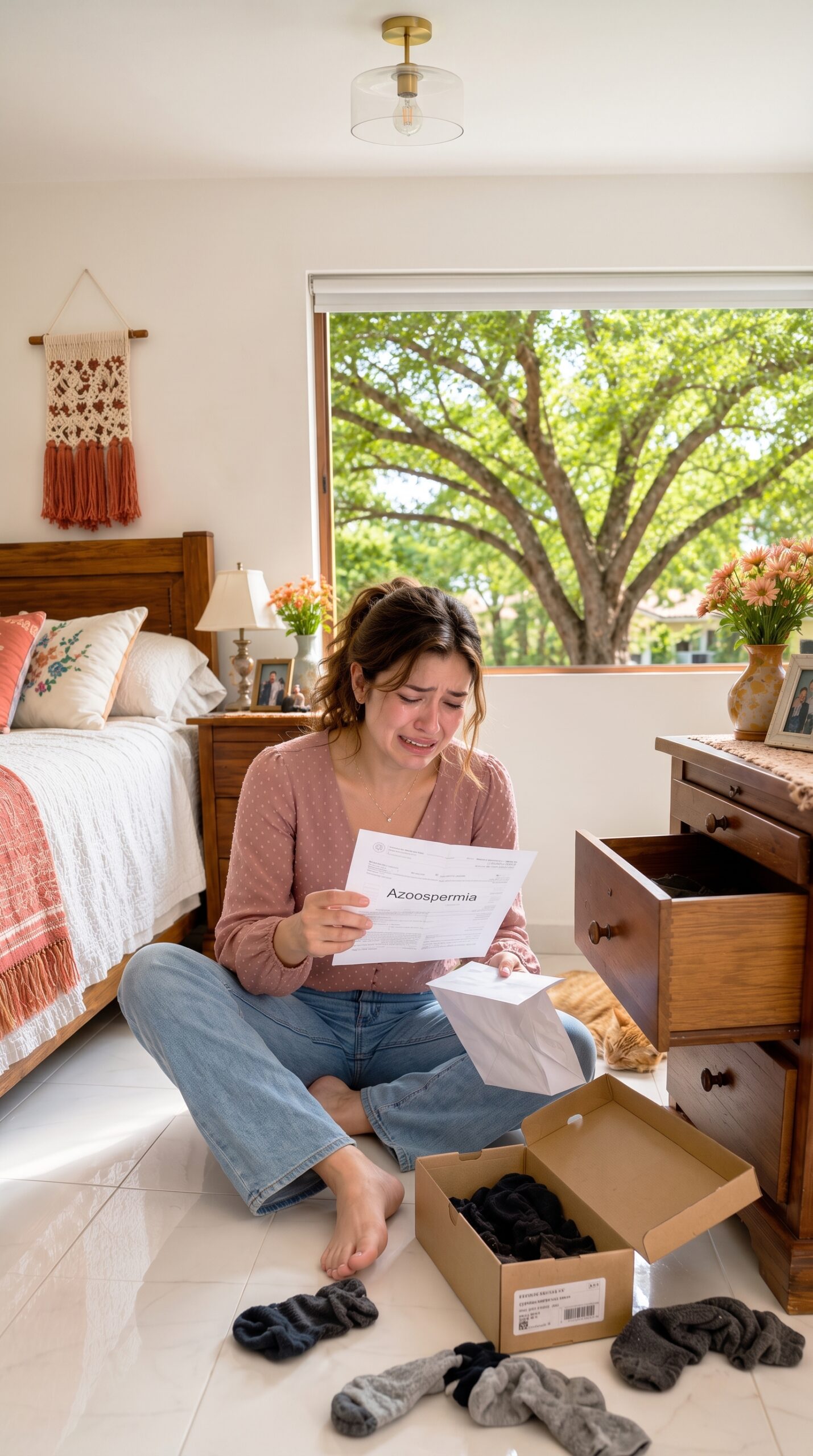
She opened Óscar’s nightstand. She found watches, receipts, old chargers, and meaningless papers.
Until her fingers touched a box taped to the bottom of the drawer.
It was a crushed shoebox.
She opened it with trembling hands.
Inside was a white envelope with Óscar Medina Ríos's full name and the seal of a clinic.
Claudia read it.
Azoospermia.
Total absence of sperm.
The world collapsed around her.
Three years carrying a guilt that wasn’t hers.
Three years hearing that she was defective, dry, incomplete.
But beneath the study, there was another folder, old, yellowed, dated twenty-one years ago.
And above it, written in shaky handwriting by Doña Elvira, there was a note:
"May my boy live. The rest I’ll bear, even if one day he hates me."
PART 2
Claudia read that phrase once.
Then again.
And a third time, because her mind couldn’t piece it all together.
"May my boy live?"
What was Doña Elvira talking about?
Óscar had never told her anything serious about his childhood. To Claudia, he had always been that confident, joking, show-off man who styled his hair in front of the mirror like a soap opera star.
But the box held more.
At the bottom was a folded, damp medical folder from the IMSS.
The header read:
Pediatric Oncology.
Claudia felt her anger mix with fear.
She opened the folder slowly.
There were medical reports, nursing notes, signed authorizations, and blood tests.
Óscar Medina Ríos, age ten.
Acute lymphoblastic leukemia.
Intensive treatment.
Prolonged hospitalization.
Critical relapse.
Claudia covered her mouth with her hand.
Suddenly, she remembered an old photo she had seen in Doña Elvira’s living room: a thin boy, bald, with huge eyes and a blue blanket over his legs.
When Claudia asked who he was, her mother-in-law snatched the photo away.
"That’s not for showing, dear."
Claudia thought they were hiding a shame.
No.
They were hiding a tragedy.
The treatment that saved Óscar's life also left him without the possibility of having biological children.
The document stated it with brutal coldness:
"Probable permanent infertility."
Claudia shut her eyes.
A part of her wanted to cry for that sick boy who almost died.
But another part remembered the grown man raising his tequila glass, humiliating her in front of everyone, saying she was the problem.
Leukemia didn’t force him to lie.
Fear didn’t put those words in his mouth.
He chose that.
Every Sunday.
Every baptism.
Every baby shower where she had to smile while internally she fell apart.
Claudia took photos of all the documents with her phone.
Then she arranged the box exactly as it was.
That night, when Óscar arrived, she was already waiting for him in the bedroom.
The folder lay open on the bed.
Óscar came in, taking off his watch, but upon seeing the papers, he froze.
He didn’t ask what was going on.
He simply said:
"Did you go through my things?"
Claudia let out a dry laugh.
"Is that what worries you?"
Óscar turned pale.
"That’s not how I wanted you to find out."
"And how did you want that? After another three years? After my mom saw me bow my head while you tore me apart at your table?"
He sat on the edge of the bed.
For the first time, he didn’t seem like the confident macho of the Medinas.
He seemed like a scared boy, trapped in a lie too big to handle.
"I was afraid of losing you."
Claudia looked at him with tear-filled eyes but a firm voice.
"No. You were afraid everyone would know you couldn’t. So you chose it was easier to make me look like the useless one."
Óscar ran his hands over his face.
"My mom told me I didn’t have to tell anyone."
"Your mom didn’t raise a glass in front of my mother to mock me."
He clenched his jaw.
"I was desperate, Claudia."
"So was I. And yet I didn’t destroy you."
The phrase left the room in silence.
Óscar cried.
He promised her they could adopt.
That they could seek treatments.
That they could start over.
That he would tell the truth, this time.
But Claudia was already pulling a suitcase out of the closet.
"The problem was never that you couldn’t have children," she said, "The problem was that you preferred to see me broken rather than vulnerable."
Óscar tried to stop her.
"Please don’t leave."
She folded a blouse without looking at him.
"I gave you three years of my body, my hope, and my dignity. You paid me back with public humiliation."
Claudia went down the stairs with the suitcase.
Doña Elvira was in the kitchen, stirring beans in a clay pot.
Seeing her, she turned pale.
Claudia placed a copy of the study on the table.
The mother-in-law didn’t need to read it.
She simply sat down slowly, as if all the years fell on her.
"You know."
Claudia nodded.
"I know about Óscar. I know about the leukemia. I know about the treatment. And I know you wrote that note."
Doña Elvira gripped her apron between her hands.
"I was given thirty minutes to decide, dear. Thirty minutes. One treatment could give him a better chance of living, but it could also leave him without children. I signed for his life. I signed for my boy to breathe another day."
Her voice broke.
"I thought that if he ever hated me, at least he would be alive to do so."
Claudia felt a knot in her throat.
For the first time, she saw Doña Elvira not as the cruel mother-in-law but as a mother forever trapped in a hospital hallway.
But that didn’t erase everything.
"You let me carry a guilt that wasn’t mine."
Doña Elvira closed her eyes.
"Yes."
She didn’t defend herself.
And that hurt more.
"Why did you humiliate me at the table? Why did you say there were no problems in your family?"
Doña Elvira lifted her gaze, her eyes filled with water.
"Because my son is a coward, Claudia. I always knew."
Claudia stood frozen.
She hadn’t expected that answer.
"I saved him from the illness, but I couldn’t save him from becoming a man who hides. I knew he would never tell you the truth. I knew he would have you trying, spending money, time, hopes… and I couldn’t say it without betraying him."
"So you chose to hurt me."
Doña Elvira nodded.
"Yes. So you would leave. So one day you would say: 'I can’t stand this house anymore.' I was cruel to you on purpose, dear. Not because I didn’t love you. But because I didn’t know how to protect you otherwise without breaking my son."
Claudia didn’t respond.
The woman who made her tea in private and humiliated her in public didn’t have two faces.
She had a gigantic guilt.
That didn’t make her innocent.
But it made her human.
And sometimes that hurts more than discovering a monster.
Claudia left the Medina household that night.
She didn’t scream.
She didn’t post screenshots on Facebook.
She didn’t send the studies to the family group, though she was tempted.
She could have destroyed Óscar like he had destroyed her.
But she decided her freedom didn’t need revenge to be real.
The divorce came two months later.
In the hearing, Óscar appeared haggard, skinny, with a wrinkled shirt and his arrogance extinguished.
He apologized in front of the lawyer.
Claudia simply said:
"You didn’t lose your wife for being sterile. You lost her for being a liar."
Óscar hung his head.
There were no shouts.
Just that phrase, which left him bare before everyone.
With time, Claudia rented a small apartment near Chapalita.
She returned to work at an accounting firm.
She adopted a stray dog she found trembling outside an Oxxo during a heavy rain. She named her Rain.
At first, it hurt to see strollers, baby photos, diaper ads, and gender reveal parties.
But little by little, she understood something that no one had told her gently:
A woman isn’t valued by the children she can have.
Nor by the ones she can’t.
She is valued by what she decides to do with her life when others try to define it with a wound.
A year passed.
A cousin of Óscar wrote to her:
"Claudia, sorry to bother you. Doña Elvira is in a nursing home downtown. Her memory is failing. Sometimes she asks about you."
Claudia stared at the message for a long time.
She could not go.
No one was forcing her.
That woman had hurt her for three years.
But she had also tried to push her out of a lie, even if she did it in the cruelest and most twisted way.
On Saturday, she bought chamomile tea and cinnamon cookies.
The nursing home smelled of chlorine, old flowers, and chicken broth.
Doña Elvira was by a window, smaller than before, in a pink sweater, her hands still on her lap.
Claudia approached slowly.
"Good afternoon, Doña Elvira."
The elderly woman looked at her like one looks at a stranger with something familiar in their eyes.
"Are you a nurse?"
Claudia smiled sadly.
"No. I came to have tea with you."
She poured a little in a plastic cup.
Doña Elvira took it with both hands.
For a while, they didn’t speak.
Outside, a vendor shouted:
"Sweet potatoes! Hot ones!"
That street sound, so Mexican, so alive, made Claudia want to cry.
When Doña Elvira finished the tea, she stroked Claudia’s hand.
"Have faith, daughter," she murmured. "It will come."
Claudia froze.
Those were the same words as before.
But now they didn’t sound like a lie.
They sounded like the only thing that woman knew how to say when she couldn’t repair anyone’s pain.
Claudia held her hand.
She didn’t completely forgive her.
Nor could she hate her like before.
Because sometimes life doesn’t deliver perfect villains or clean victims of rage.
Sometimes it just leaves two women by a window: one remembering too much and the other forgetting everything.
Before leaving, Claudia adjusted the blanket over Doña Elvira’s legs.
The elderly woman murmured:
"My boy will be saved, right?"
Claudia felt her heart break.
It took her a few seconds to respond.
Then she squeezed her hand and said:
"Yes, Doña Elvira. He was saved."
And though no one in that family had come out unscathed, Claudia understood something that would accompany her forever:
There are people who hurt while trying to protect someone else.
That doesn’t absolve them.
But it forces us to ask how many stories we judge without knowing what diagnosis, what fear, or what guilt each person hides at the bottom of a drawer.