PART 1
—If they’re going to put my son in the ground without letting me see his face, then they better bury me first.
Doña Amalia’s scream cut the silence of the funeral home in Guadalajara in two.
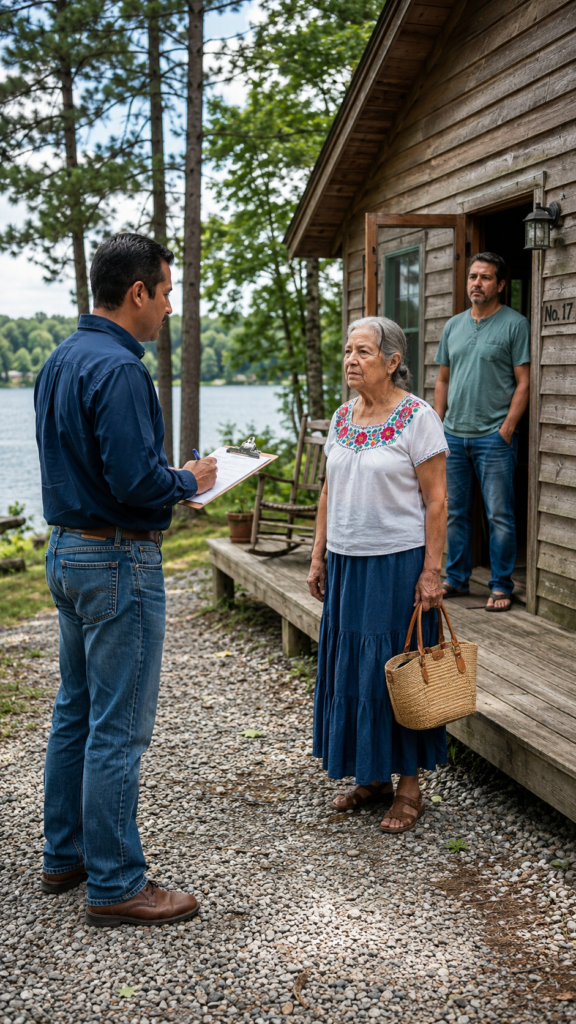
She arrived with her shawl crooked, her sandals covered in dust, and eyes red from crying all the way on the bus. She was 67 years old and had come from Tepatitlán after a neighbor told her that Mauricio, her only son, had died.
No one told her.
Not a call.
Not a message.
Nothing.
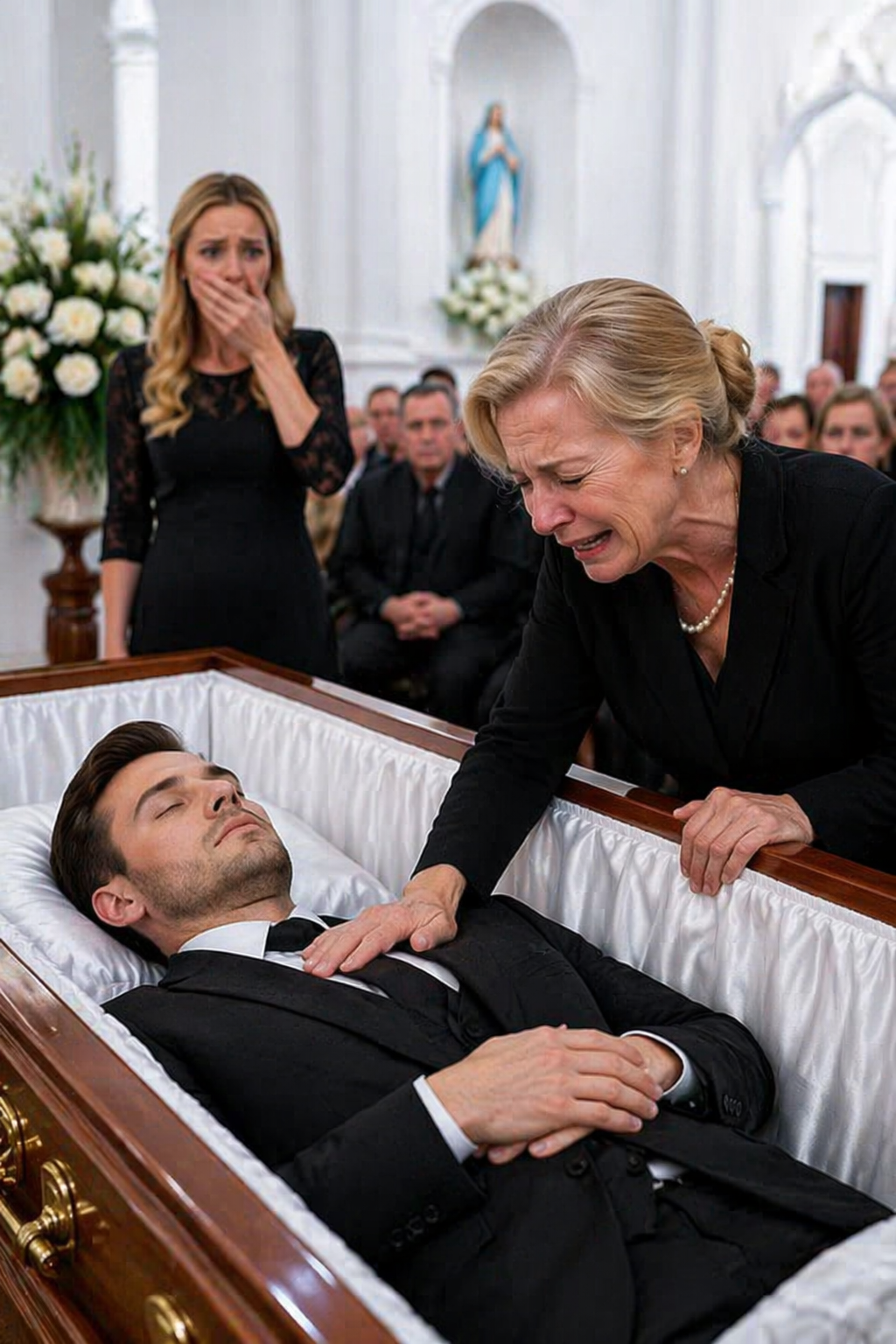
In front of her was the closed coffin, covered in white roses, expensive candles, and wreaths with golden ribbons. Beside it, dressed in flawless black, stood Renata, her daughter-in-law, rigid like a statue.
—Don’t make this harder, señora Amalia —Renata said, pressing her lips together—. Mauricio asked not to be seen like this.
Doña Amalia looked at her with tired rage.
—My son used to call me even to ask how much garlic went into the soup. Don’t you come here telling me what Mauricio wanted.
The attendees lowered their eyes.
There were company employees, two partners looking nervous, a sweating lawyer, and elegant people who seemed more worried about time than about the dead man.
Doña Amalia understood something terrible immediately: everyone knew about the funeral except her.
The night before, she had received a blunt message from Doña Lupita, a neighbor:
“Amalia, I’m sorry. I just found out about Mauricio. It’s so sad they are burying him today.”
Her coffee cup fell from her hands.
She called Mauricio’s phone 12 times.
Nothing.
She called Renata.
Nothing.
She asked, begged, insisted, until someone confirmed that the funeral had been arranged in haste, with a closed coffin and immediate burial.
On the way, she held tightly to an old photo of Mauricio as a child, in a blue uniform with a school medal. She had raised him alone, selling tamales, washing other people’s clothes, and cleaning houses. His father left before even knowing him, but she swore her son would never lack a mother.
That’s why, when Renata stood in front of the coffin, Doña Amalia didn’t see a widow.
She saw a door blocking her son.
—Open it.
—No.
—I’m telling you to open it.
Renata stepped forward, lowering her voice.
—You and Mauricio had been fighting for months. Don’t come here acting like a perfect mother.
The words hurt because they were true.
Mauricio had grown distant since marrying Renata, a refined, ambitious woman, partner in a technology company that grew too fast. Doña Amalia never trusted her. She had seen how Renata answered for him, took his phone, isolated him little by little.
—That woman doesn’t look at you like a husband, son —she once told him—. She looks at you like a signature.
Mauricio got angry.
Stopped calling on Sundays.
But pride doesn’t erase 38 years of love.
Doña Amalia shoved Renata with a strength no one expected. Two employees tried to stop her, but she broke free like a wounded beast.
She placed trembling hands on the lid.
And opened it.
Mauricio was there.
Pale.
Cold.
With purple lips.
Doña Amalia let out a cry that made even a worker cry. She leaned down to kiss his forehead.
Then she saw it.
A tiny movement in his eyelid.
Almost nothing.
Then his chest rose slightly, as if air was fighting to stay inside.
Doña Amalia froze.
—He’s alive —she whispered.
No one responded.
She lifted her tear-covered face.
—My son is alive! He is breathing!
Renata stepped back, white as paper.
—That… that can’t be… —she muttered.
And in that second, everyone understood they were not facing a miracle, but something much darker.
—Call an ambulance, damn it! —Doña Amalia shouted, holding Mauricio inside the coffin—. What are you waiting for? For him to actually die?
A company employee dialed 911 with trembling hands. The rest remained frozen.
Renata wasn’t crying.
Wasn’t screaming.
She only stared at the open coffin with a terror that wasn’t grief, but fear of a lie collapsing on her.
Doña Amalia held her son’s cold face.
—You knew —she said without taking her eyes off Mauricio—. You knew my son wasn’t dead.
Renata clenched her jaw.
—I’m not saying nonsense. I followed medical instructions.
—From which doctor?
Renata didn’t answer.
Paramedics arrived minutes later. They checked Mauricio and confirmed the impossible: he was still alive, but his pulse was so weak it was barely detectable.
—He’s in critical condition. We need to move him now.
Doña Amalia got into the ambulance without asking permission. She held Mauricio’s hand and spoke to him like when he was a child with a fever.
—I’m here, son. Don’t leave me. You still owe me dinner.
At the hospital, doctors fought for hours to stabilize him.
Meanwhile, Doña Amalia walked the waiting room holding a rosary. Beside her was Javier, an old colleague of Mauricio, the only one who hadn’t left.
Soon after, Commander Ernesto Salazar arrived, a university friend of Mauricio and now a prosecutor investigator.
—Doña Amalia —he said seriously—, this is no longer a funeral mistake. Nobody ends up breathing inside a coffin by accident.
She looked toward the hallway where Renata spoke with an expensive lawyer.
—Then start with the one who was in such a hurry to bury him.
The first findings arrived before dawn.
The death certificate had a forged signature.
The supposed doctor denied ever personally examining Mauricio.
The funeral home admitted Renata paid in cash for an urgent service, closed coffin, no wake.
But the worst came from the company.
48 hours before the supposed death, someone modified legal powers so Renata would gain full control of accounts, shares, and contracts if Mauricio died.
Doña Amalia felt her world collapse.
—It was never love —she murmured—. It was money.
Then Javier handed the commander a message Mauricio had sent 3 days earlier:
“I found strange transfers. Renata doesn’t know I checked everything. If anything happens, tell my mom. Don’t let her sign anything.”
Doña Amalia covered her mouth.
—My son tried to reach me… and I wasn’t there.
The commander shook his head.
—You arrived when he needed you most. That’s why he’s still alive.
Renata was taken in for questioning that same morning.
At first she denied everything. Said Mauricio was stressed, that a private doctor confirmed death, that she only respected his wishes.
But when they showed videos, forged documents, transfers, and the final message, she stopped pretending sadness.
—Mauricio was weak —she finally said—. Always thinking about employees, his mother, doing “the right thing.” I helped build that company too. I wasn’t going to let him destroy it with sentiment.
—What did you give him? —Salazar asked.
Renata stayed silent.
—What did you give him? —he repeated.
She lowered her gaze, not in guilt, but anger.
—A sedative. Something that looked like death for a few hours. I just needed to finish the transfer.
—They were going to bury him alive.
Renata exhaled.
—I never thought that old woman would dare open the coffin.
When the commander left, Doña Amalia was waiting outside.
—She confessed —he said.
Before she could answer, a doctor came out of intensive care.
—Ma’am Amalia… your son woke up.
Her legs almost gave out.
She entered the room and saw Mauricio surrounded by cables, pale, lips cracked. But his eyes were open.
The same eyes of the child she had held 38 years ago.
—Mom… —he whispered.
Doña Amalia held his hand and kissed it again and again.
—I’m here, son. I’m not moving anymore.
Mauricio cried like a child.
—Forgive me. I pushed you out of my life.
—One argument doesn’t erase blood —she said—. And pride is nothing against a mother.
He closed his eyes.
—You were right about Renata.
The next day he gave a statement.
He told everything.