PART 1
The boy barely placed a white carnation on his father's grave when his grandmother looked at him as if he wore shame written across his forehead.
The drizzle fell over the Jardines del Recuerdo pantheon in Zapopan. Camila Serrano tightened her grip on Mateo, her 6-year-old son, as they lowered Julián Aranda's coffin.
Julián was no ordinary deceased.
He was the heir of one of the most powerful construction companies in Jalisco, owner of subdivisions, warehouses, and lands well-known to many politicians.
But for Camila, Julián was not a magazine name.
He was the man who made molletes on Saturdays. The dad who crawled under the table to play cars with Mateo. The husband who would tell her: “Never let my family make you feel less.”
That day, those words burned fiercely in her chest.
After the burial, everyone returned to the Aranda mansion in Puerta de Hierro. A massive house, with cold marble, expensive stained glass, and a silence heavier than grief.
In the main room, there was a giant photo of Julián, surrounded by candles, white wreaths, and arrangements that seemed more extravagant than sincere.
Mateo slowly approached the portrait.
His little black suit was wrinkled, his shoes wet, and his eyes swollen from crying.
“My dad looks sad,” he whispered.
Camila knelt beside him.
“No, my love. He’s finally at rest.”
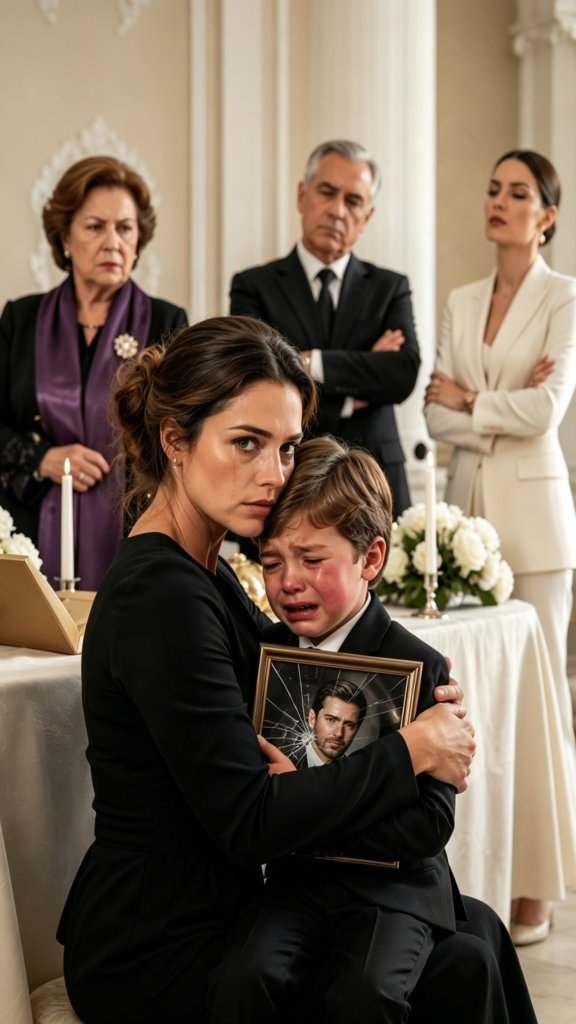
Mateo raised his hand to touch the frame. Unintentionally, he tugged at the tablecloth. The photo slipped, fell to the floor, and the glass shattered with a dry thud.
Before Camila could move, Doña Ofelia, Julián’s mother, crossed the room and slapped the boy.
The blow paralyzed everyone.
Mateo stood frozen, his cheek red and his mouth agape. He didn’t cry at first. He just stared at his grandmother as if he couldn’t believe she had struck him on the same day they buried his father.
“Don’t you ever touch my son again!” Camila shouted.
She ran to Mateo and hugged him to her chest.
“I'm sorry, Mommy... I didn’t mean to break it...”
“You did nothing wrong, my life. Nothing.”
Doña Ofelia adjusted her pearl necklace, breathing with contempt.
“That boy has always been a burden. Since he was born, Julián stopped being ours.”
The room fell silent.
Mariana, Julián’s sister, chuckled from the couch.
“Oh, Mom, it was about time someone said it. Since Camila showed up, my brother turned into a henpecked husband. For real.”
Don Ignacio Aranda, the patriarch, approached with a low voice and hard gaze.
“Camila, understand something. You never belonged here. Julián made a mistake with you, but we are not going to carry that mistake for life.”
Camila raised her gaze.
In the room were uncles, cousins, partners, wives with rosaries, and employees pretending not to listen.
No one defended Mateo.
No one.
Doña Ofelia pointed to the staircase.
“Go upstairs, get your things, and leave. This house is not yours. And that boy will not grow up thinking he can tarnish our name.”
Something broke inside Camila.
But it wasn’t her dignity.
It was the last thread of patience.
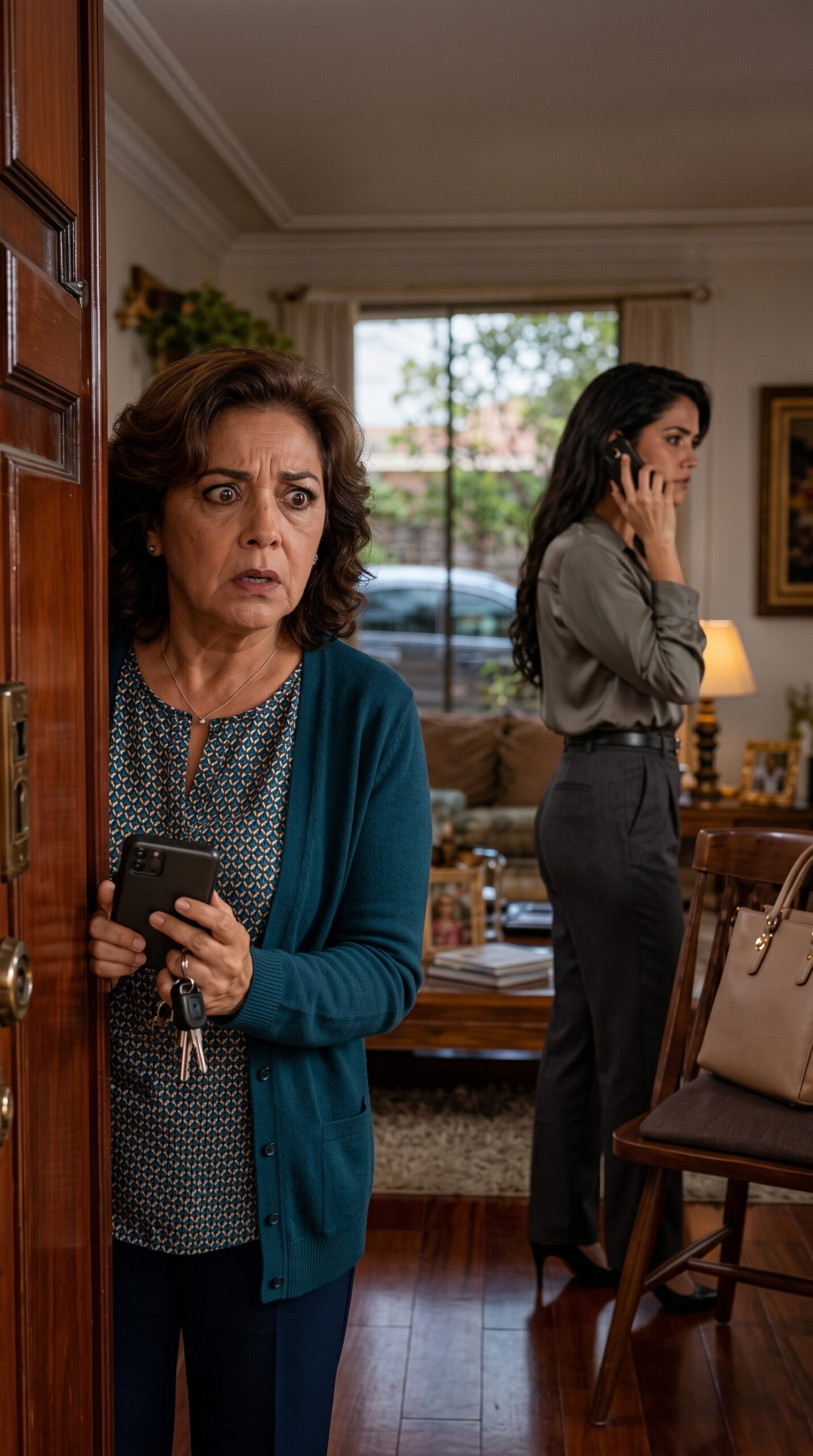
She kissed Mateo's forehead, pulled out her phone, and dialed.
“Attorney Salvatierra, come now. Yes. It has happened. Julián was right.”
She hung up.
Don Ignacio narrowed his eyes.
“Who did you call?”
Camila looked at him without blinking.
“The man Julián told me to call if you dared to touch his son.”
And for the first time since they left the pantheon, the Arandas stopped smiling.
PART 2
For the next 40 minutes, the mansion filled with venomous whispers.
Mariana walked with a glass of red wine, as if she were at a family dinner and not at her brother's wake.
“Sure, she called her mom to come pick her up in an Uber,” she mocked. “Poor thing, she must have a bounced card.”
A cousin chuckled quietly.
An aunt pretended to check her phone.
Don Ignacio glanced at his gold watch in annoyance, as if Camila were delaying a meeting with investors.
Camila didn’t respond.
She sat on the edge of an armchair, with Mateo sleeping on her lap. The boy was exhausted from crying. The red mark still stood out on his cheek.
Every time Camila saw it, her breath slowed.
She didn’t want to scream.
She wanted to remember.
Julián had spoken to her two months before he died. He arrived late, pale, with a wrinkled shirt and the smell of gasoline on his hands.
He closed the bedroom door and told her that if anything happened to him, not to trust his family.
Camila thought it was stress.
She thought the construction company was wearing him down, that the fights with his father had him paranoid, that the strange numbers in the business were making him sick.
Now she understood it wasn’t paranoia.
It was fear.
The doorbell rang.
The maid opened, and three people entered.
Attorney Ernesto Salvatierra, Julián’s personal lawyer. A gray-suited notary with white hair. And a young accountant with a black backpack clutched to his chest.
They didn’t ask for permission.
They didn’t greet the guests.
They walked straight to the center of the room, in front of the broken photo of Julián.
Don Ignacio stood up.
“What the hell does this mean, Salvatierra?”
The lawyer didn’t flinch.
“It means that Mr. Julián Aranda left very clear instructions for today.”
Doña Ofelia pressed her lips together.
“My son is dead. He can’t order anything anymore.”
“He ordered this before he died,” the notary replied. “And it was all ratified in public faith.”
Mariana slammed her glass down on a table.
“Don’t come here to put on a legal show in front of everyone.”
Salvatierra opened a blue folder.
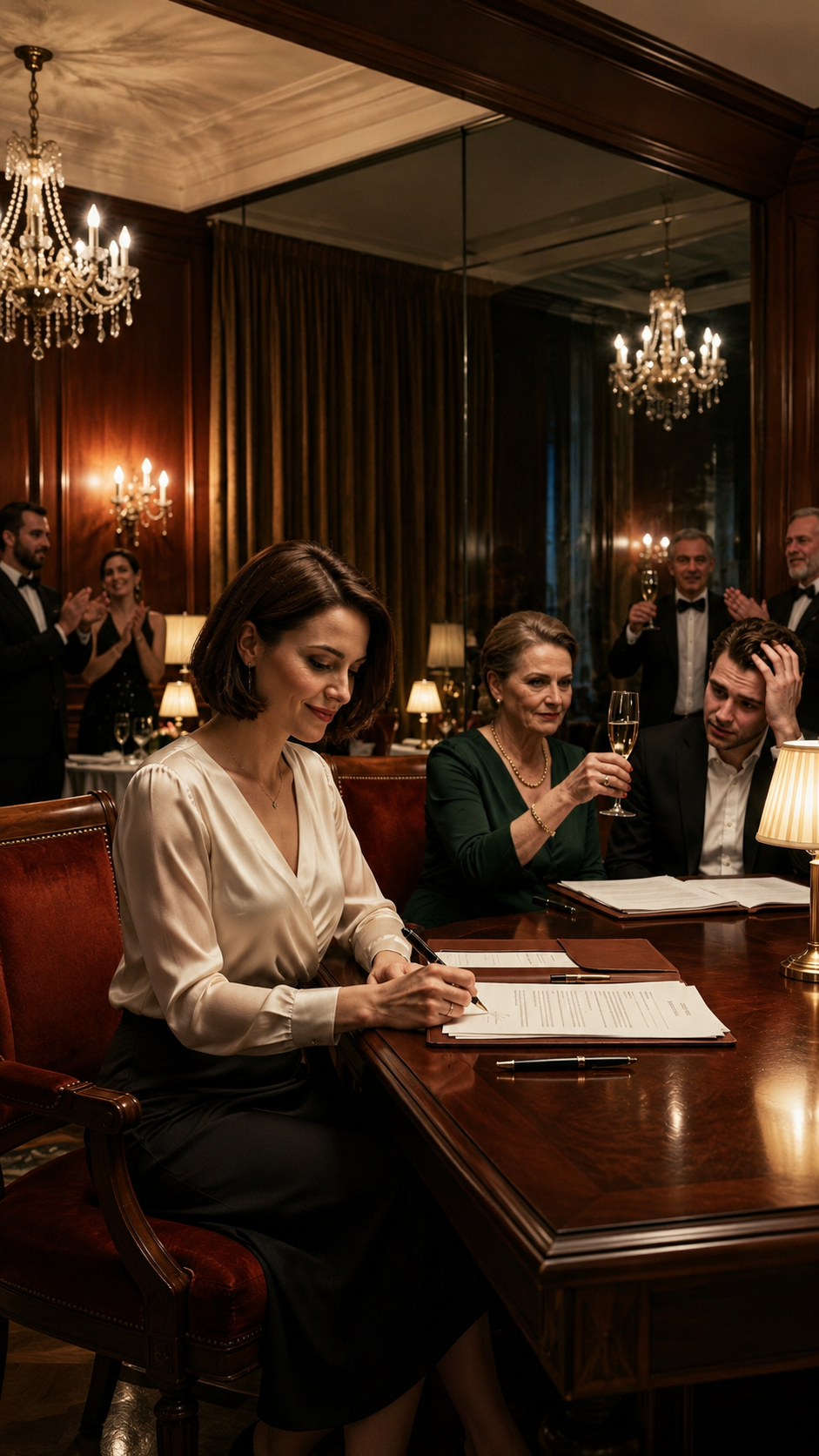
“Mr. Julián Aranda Serrano requested that his will and his property annexes be read on the same day of his burial only if his wife Camila Serrano or his son Mateo were expelled, threatened, struck, or humiliated by any member of this family.”
The word “struck” landed like a stone.
Doña Ofelia glanced sideways at Mateo’s cheek.
Her confidence crumbled in her face.
“It was an accident. The boy broke the photo.”
Camila spoke without raising her voice.
“It wasn’t an accident. It was disdain.”
The notary nodded and took another document.
“Julián Aranda designated his son Mateo Aranda Serrano as the universal heir to his personal belongings, shares, properties, bank accounts, corporate rights, and participation in Grupo Aranda.”
Mariana went pale.
“How can it be everything?”
“Everything,” Salvatierra said. “The estate remains in an irrevocable trust for the minor. Mrs. Camila Serrano is named legal guardian, provisional administrator, and sole representative of the estate until Mateo reaches adulthood.”
Don Ignacio turned red.
“My son would never have left the company in that woman’s hands.”
“Your son left the company in his son’s hands,” corrected the lawyer. “And he left Camila to protect him from you.”
The silence became unbearable.
The notary continued reading.
“Furthermore, Julián revoked any prior authorization granted to his father, mother, and sister to sign contracts, move funds, sell assets, mortgage properties, use corporate cards, or inhabit properties registered in his name without express permission from the legal administrator.”
Doña Ofelia took a step back.
“This house is mine. I lived here for 25 years.”
The notary checked the document.
“This residence was purchased by Julián five years ago. It is in his name. From today, it is part of Mateo’s trust.”
Mariana covered her mouth.
Don Ignacio let out a dry laugh.
“This isn’t going to end like this.”
Camila stood up carefully, not wanting to wake Mateo fully.
“No. Of course not. It’s just beginning.”
Everyone stared at her.
She held Don Ignacio’s gaze.
“Julián knew about the false invoices. He knew that Mariana was paying for her boutique, her trips to Miami, and even her wedding with money from the construction company. He knew you, Don Ignacio, mortgaged machinery without permission to cover gambling debts.”
Mariana burst into tears.
“I just needed money. My business was failing. Julián was my brother; he had to help me.”
“No,” Camila said. “He didn’t have to pay for your lies.”
Don Ignacio regained his voice.
“You don’t know how to run a company. You’re going to destroy what Julián built.”
Camila looked at him with a calm that disarmed him.
“What you built was fear. Julián left lawyers, accountants, and an external audit. I don’t need your last name. I need honest people.”
Salvatierra closed the folder.
“From this moment, you are notified. Any attempt to move funds, intimidate Mrs. Camila, or approach the minor without authorization will be reported immediately.”
Doña Ofelia clutched the back of a chair.
“You can’t kick us out. We have nowhere to go.”
Camila almost smiled, but not out of joy.
Hours earlier, that same woman had ordered her to leave with her son without asking where they would sleep.
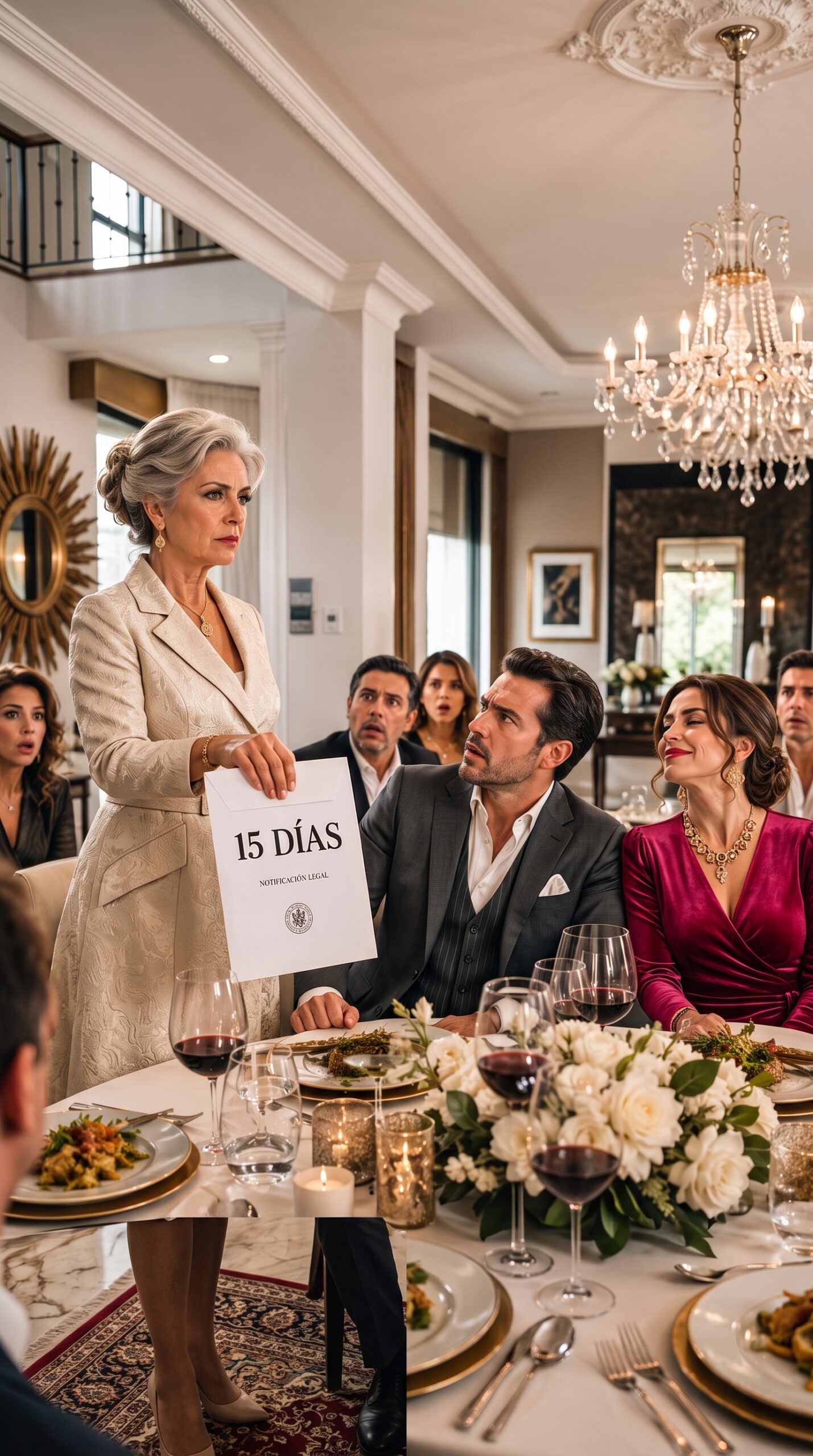
“You’re not leaving today,” she said. “Mateo doesn’t need to learn cruelty from me. You have seven days to get your things. Everything will be inventoried and done in the presence of legal authorities. After that, you can’t enter without permission.”
Mariana cried louder.
“What about my apartment?”
Salvatierra looked at her.
“That was also paid with Julián’s resources. It will be reviewed in the investigation.”
Mariana couldn’t respond.
Then Mateo, still hugging Camila, looked at his grandmother.
His voice came out soft, but everyone heard.
“I’m not a burden.”
The silence hurt more than any scream.
Doña Ofelia covered her mouth. Maybe she understood too late. Maybe she was just afraid of losing everything. But Mateo didn’t have to heal the one who had hurt him.
Camila stroked his hair.
“No, my love. You are loved. You are the most valuable thing your dad left in this world.”
That night, Camila didn’t sleep.
She stayed in the bedroom she had shared with Julián, with Mateo sleeping beside her and the broken photo on the nightstand, now without glass.
In the hallways, she could hear suitcases, desperate calls, and footsteps of people who had believed for years they owned everything.
At dawn, the mansion felt different.
Clear light poured through the windows. The smell of funeral flowers began to mix with coffee, toasted bread, and a new silence.
It wasn’t a silence of fear.
It was a silence of rest.
In the following days, the truth came out in pieces.
The audit revealed false invoices, land shifted between shell companies, payments to employees who never existed, and transfers disguised as service fees.
The name of the man who was seen next to the truck also appeared.
He worked for a company linked to a partner of Don Ignacio.
The investigation wasn’t quick. In Mexico, when there’s money and heavy surnames, justice moves like it’s wearing stones in its shoes.
But this time there was evidence.
There were videos.
There were documents.
And there was a widow who no longer intended to lower her gaze.
On the seventh day, Doña Ofelia came down the stairs with a beige suitcase. She no longer wore pearls. She looked smaller, older, more human.
Mateo was in the living room, sitting next to Camila.
The grandmother stopped in front of him.
“Mateo... forgive me.”
The boy didn’t respond.
He only hid a little behind his mom.
And that was enough.
Doña Ofelia cried silently. Perhaps she expected a hug. Perhaps she thought a 6-year-old boy should absolve her to leave peacefully.
But Camila understood something that day.
Children are not born to heal the adults who break them.
When the gate closed behind the Arandas, Camila breathed for the first time without guilt.
Months later, Grupo Aranda changed management.
There were lawsuits, threats, calls from supposed friends, and paid notes saying Camila was ambitious, that she had waited for Julián's death to take it all.
She didn’t respond on social media.
She responded with actions.
She hired an external council. She closed shady contracts. She sold properties used to hide debts. She preserved the construction company Julián wanted to clean up for years.
And with a portion of the profits, she created a foundation for children of workers who died in workplace accidents.
On the inauguration day, Mateo arrived in a white shirt and new sneakers. He placed a yellow carnation in front of his dad’s photo.
“Would Dad be happy?” he asked.
Camila looked at the clear Guadalajara sky. The pain was still there, but it no longer crushed her.
“Yes, my love. Very happy.”
Mateo took her hand.
“Then I am too.”
That night, they returned to the same room where he had been struck, where he had been called a burden, where everyone had fallen silent.
But it didn’t feel the same anymore.
Camila took down the huge portraits of the Arandas. She put up plants, Mateo’s books, a blanket woven by her mother, and a photo of the three of them eating esquites in a park, with Julián laughing without a tie.
The mansion stopped looking like a museum of a wealthy surname.
It began to feel like a home.
Before sleeping, Camila knelt in front of Mateo.
“I want you to always remember something. No one is worth more than you for having more money, a big house, or a famous last name.”
Mateo nodded seriously.
“And if someone says again that I’m a burden?”
Camila kissed his forehead.
“Then you remember what Dad said: you were chosen above all.”
Mateo smiled.
“Dad was really smart.”
“A lot.”
“And you too, Mom.”
Camila hugged him until the boy let out a small laugh.
In the drawer of the nightstand, she kept the letter Julián had left her. In one line it read: “I don’t want to leave you wealth to live in fear. I want to leave you freedom to live with dignity.”
That was exactly what they did.
Because Julián’s true inheritance wasn’t the house, nor the accounts, nor the shares.
It was the proof that love can also leave you prepared for defense.
And even though Mateo was called a burden in front of everyone, no one in that room understood that, amidst so much luxury and so many empty hearts, he was the only thing that truly mattered.