PART 1
—God knows why certain children are taken too soon. Maybe He wanted to save them from a mother who was never prepared.
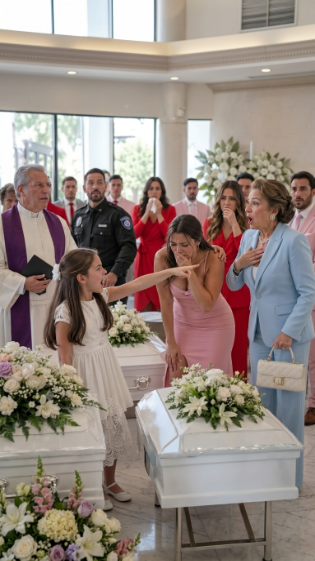
Ofelia Barragán's voice cut through the funeral chapel in Querétaro while the two white coffins rested before the altar, surrounded by lilies and balloons that read "Always Together."
Sofía Mendoza felt the floor tilt beneath her.
Inside those tiny boxes were Gael and Bruno, her three-month-old twins. The babies for whom she had endured four years of treatments, injections, debts, and venomous comments from the very woman who now pretended to pray for them.
Ofelia held a silver rosary.
She did not cry.
Beside her, Mauricio, Sofía's husband, kept his gaze fixed on his shoes. He was a sales supervisor for a lab and always had an answer for everything—except when his mother humiliated his wife.
—Mom, just stop —he murmured.
So low it seemed to ask for permission.
Ofelia raised her chin.
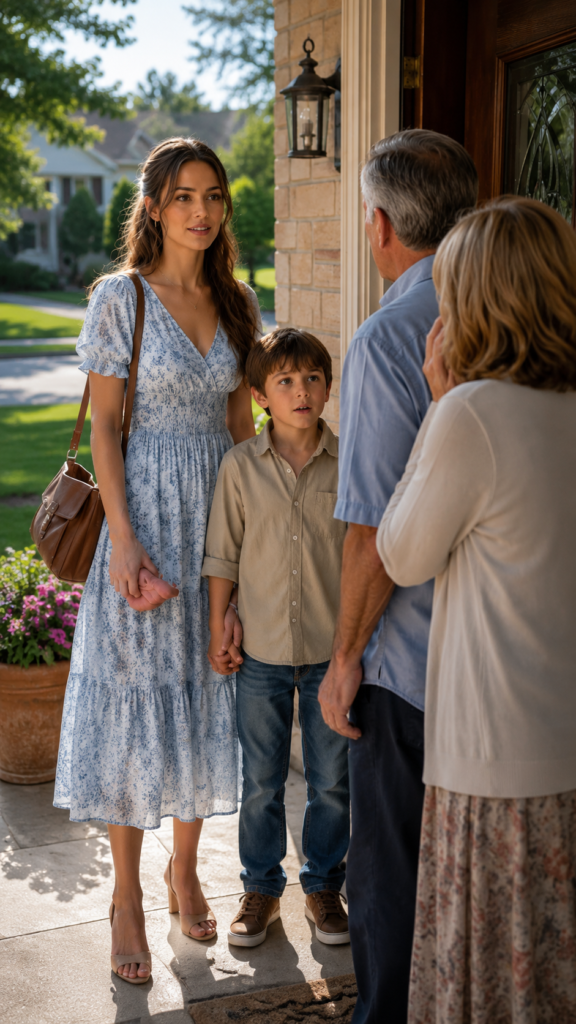
—No, son. The truth is also a form of mercy. I went to that house every Tuesday and Friday because Sofía couldn’t handle three children. Everything was a mess. The babies cried nonstop. A good mother listens to advice.
Several aunts nodded.
A cousin whispered that Sofía "always looked overwhelmed." Someone else said that working from home didn't mean she knew how to raise children.
Sofía wanted to scream that she woke up every two hours, that she measured every feeding, that she had taken the babies to the pediatrician three times because they slept too much after Ofelia's visits.
But Mauricio always said the same thing:
"My mom just wants to help. Don’t start a fight over everything."
A little girl's hand sought hers.
It was Valentina, her seven-year-old daughter, in a black dress, with swollen eyes and a small sequined backpack pressed against her chest.
The girl squeezed Sofía's hand three times.
Her secret code to say, "I love you."
—Mom —she whispered—, I know you didn’t do anything to them.
Sofía bent down to hug her, but Ofelia approached the coffins again.
—Poor things. So small and paying for the mistakes of adults.
This time, Sofía lifted her head.
—Don’t speak about my children again.
Ofelia smiled with a calm that was terrifying.
—And what will you do? Blame me for them stopping breathing too?
Mauricio closed his eyes.
He didn’t defend his wife.
Then Valentina let go of Sofía's hand, walked to the altar, and asked the priest for the microphone.
—Father Tomás —she said in a small but firm voice—, does God forgive grandmothers who put medicine in babies' milk?
The chapel fell silent.
Ofelia turned pale.
—She’s confused —she said immediately—. The girl is traumatized.
Valentina opened her backpack and took out an old cellphone with a cracked screen.
—I’m not confused. I took pictures because no one believed me.
Mauricio looked up for the first time.
Sofía felt the air disappear from the room.
And when Valentina unlocked the phone, Ofelia ran toward her as if her life depended on stopping everyone from seeing the first image.
PART 2
Don Ernesto, Sofía's father, stepped in before Ofelia could reach the girl.
—You won’t touch my granddaughter —he said, his voice so dry that even Mauricio's cousins took a step back.
Valentina took refuge next to Sofía, holding the cellphone with both hands.
—I’m sorry, Mommy —she whispered—. I wanted to gather a lot of evidence so the adults would believe me.
Sofía felt another pain, different from losing her children.
Her daughter had borne a monstrous truth alone because the adults around her had taught her that Ofelia's word was worth more than any childhood fear.
The first photograph showed the kitchen of the house.
On the counter were two open bottles. Beside them was Mauricio's black briefcase, where he kept medical samples. Ofelia held a small jar and a spoon.
In the second image, the label was clearer.
It was a controlled substance sedative.
Mauricio stepped back.
—That medication was in my inventory.
Ofelia pressed her lips together.
—It was just a few drops. To help them sleep.
The phrase provoked a murmur of horror.
Sofía moved closer slowly.
—Did you give sedatives to Gael and Bruno?
—Don’t exaggerate. You were exhausted, irritable, out of control. I was trying to help you.
—Did you give sedatives to my three-month-old babies?
Ofelia lost her mask.
—Yes! But because they cried about everything. You carried them around all the time, and they were becoming spoiled. Someone had to bring order to that house.
A woman shouted from the pews:
—They were newborns, ma'am!
Ofelia didn’t even turn.
Valentina swiped her finger.
There were more photos.
Ofelia crushing pills.
Ofelia pouring powder into a bottle.
Ofelia shaking the second one.
Ofelia putting the jar into Mauricio's briefcase.
Then the girl pulled out a yellow notebook.
The pages were filled with twisted letters, drawings of cribs, and dates.
—Tuesday, June 9 —she read—. Grandma put powder in the milk. She said it was vitamins so the babies wouldn’t embarrass Mommy.
Ofelia looked at Mauricio, seeking support.
He didn’t move.
—Friday, June 12 —Valentina continued—. Gael didn’t wake up to eat. Mommy called the doctor, and Grandma said it was normal.
Sofía remembered that afternoon.
She had held Gael in front of the window, begging him to open his eyes. Ofelia assured her she was being paranoid, and Mauricio, over the phone, told her to stop "inventing tragedies."
—Tuesday, June 16 —the girl read—. Grandma gave more because Bruno cried a lot. She said Mommy was useless.
Sofía's legs began to tremble.
—Friday, June 19. Grandma said soon Daddy would get tired of Mommy and that she would teach us how to live well.
Mauricio covered his mouth.
Then Valentina reached the last page.
—Tuesday, 23. Grandma said: "Today they will sleep all night. Nothing will wake them."
The notebook fell to the floor.
Father Tomás called 911.
Ofelia tried to escape through a side door, but two relatives blocked her. No one nodded anymore. No one pretended that her cruelty was "a strong character."
—I didn’t mean to kill them —she screamed—. I knew what I was doing!
—No —Sofía replied—. You only knew how to control everyone.
The police arrived before the funeral ended.
Officer Verónica Saucedo examined the photographs, stored the cellphone and notebook in evidence bags, and ordered Ofelia's arrest.
When the officer placed the handcuffs on her, she turned to her son.
—Mauricio, do something. I’m your mother.
He looked at her as if he had never truly seen her before.
—And they were my children.
Ofelia let out a bitter laugh.
—Your children died because you chose a weak wife.
Sofía didn’t respond.
For the first time, that woman’s words found no place to sink in.
The Prosecutor's Office reopened the investigation that very night.
The initial studies had pointed to sudden infant death syndrome, but the lab expanded the toxicological tests. They found lethal levels of the sedative in both babies, as shown in the photos.
They also discovered something Sofía hadn’t expected.
Eighteen samples were missing from Mauricio's work inventory.
He had noticed the discrepancy two weeks before the children's deaths.
He reported nothing.
He had modified the record to avoid problems with the company.
—I thought I had lost them during a visit —he explained, sitting in front of the prosecutor—. If I reported controlled medications, they could fire me.
The prosecutor placed on the table a message recovered from his cellphone.
It was from Sofía, sent ten days before the tragedy:
"Your children sleep too much when your mom comes over. Something isn’t right. Please check your briefcase."
Mauricio had replied:
"Enough already. Don’t involve my mom in your anxiety attacks."
Sofía read the message during her testimony and felt the last piece of her marriage turn to dust.
Ofelia had administered the poison.
But Mauricio had seen the door wide open, had heard the alarm, and had chosen not to disturb his mother.
Ofelia's computer sealed her fate.
She had searched for doses for adults, respiratory effects in babies, and how long certain sedatives took to leave the body.
Her lawyer tried to argue that she was researching out of curiosity.
But in an audio sent to her daughter Nadia, Ofelia said:
—Sofía is about to break. When Mauricio sees that she can’t handle the kids, he will kick her out, and I will take over everything.
There appeared the true motive.
She didn’t want to calm the twins.
She wanted to provoke a crisis, to demonstrate that Sofía was incapable and regain absolute control over her son, her granddaughter, and the house.
What she hadn’t planned was the death.
Nor did she plan for Valentina to observe her from the hallway.
For months, the family split into two.
Some relatives insisted that Ofelia "wasn’t a killer" because she supposedly didn’t mean to kill the babies.
Others blamed Mauricio for allowing his mother to have the key, access to the briefcase, and authority to humiliate Sofía in her own home.
Nadia, Mauricio's sister, visited Sofía one afternoon.
—My mom did something unforgivable —she said—, but sending her to prison for life won’t bring your children back.
Sofía opened the door for her to leave.
—And letting her free won’t either.
—She’s our mom.
—Gael and Bruno were family too. How strange that no one remembered that when she was drugging them.
Nadia looked down.
—We didn’t know.
—You didn’t want to know. It’s different.
The trial began eight months later.
Ofelia appeared in a dark suit, freshly dyed hair, and a crucifix on her chest. Her defense presented her as an exhausted grandmother who had made "a terrible mistake" by helping too much.
Then Valentina took the stand.
The forensic psychologist sat beside her. Before walking to the witness stand, the girl squeezed Sofía's hand three times.
“I love you.”
The prosecutor asked her if she knew what lying was.
—Yes —Valentina replied—. Lying is saying you love someone while hurting them and then blaming someone else.
Not a single adult in the room could hold her gaze.
Valentina narrated what she had seen. She explained why she took the photos and why she had remained silent.
—Grandma said no one would believe me because I was a girl. And Dad always said she knew more than Mom.
Mauricio cried silently.
During the cross-examination, Ofelia’s lawyer insinuated that Sofía had influenced the girl.
Valentina responded:
—My mom didn’t know anything. That was the problem. No one listened to her.
The jury found Ofelia guilty of the homicide of both babies.
The sentence was 47 years in prison.
When she heard the punishment, Ofelia didn’t ask for forgiveness.
She screamed that Sofía had destroyed the family and that Mauricio was ungrateful.
The judge regarded her coldly.
—The family wasn’t destroyed by the one who revealed the truth but by the one who believed she had the right to decide over the lives of others.
Mauricio lost his job and faced administrative charges for altering the inventory. He wasn’t charged with the babies' deaths, but guilt followed him in a way no sentence could measure.
He signed the divorce without arguing.
Before leaving the house, he asked Sofía for one last conversation.
—I don’t expect you to forgive me —he said—. I just want you to know that I would give my life to go back to that night.
Sofía looked at him without hatred.
She was too tired to hate.
—Your mother killed our children —she replied—. But you taught me to doubt my own instinct every time I tried to protect them.
Mauricio lowered his head.
—I know.
—At the funeral, you were silent too.
He began to cry.
Sofía didn’t hug him.
She moved with Valentina to San Luis Potosí, near her parents. They rented a small house with a lemon tree in the yard and changed all the locks on the first day.
The girl started therapy.
For weeks she had nightmares about bottles, spoons, and doors opening without permission.
One night she asked:
—Mommy, do Gael and Bruno know I tried to save them?
Sofía knelt in front of her.
—They know you loved them. But protecting them was the adults’ job, not yours. You did more than any little girl should have had to do.
Valentina cried against her chest.
So did Sofía.
One year later, they both brought flowers to the twins' grave.
Valentina left a letter between the two headstones.
"Dear Gael and Bruno: I’m no longer afraid to speak. Grandma can’t hurt anyone anymore. Mommy and I are learning to live without you, even though it still hurts. I love you. Your sister, the one who did see."
Sofía read the letter and understood something she would never forget.
Evil doesn’t always enter a house by breaking down the door.
Sometimes it receives a copy of the key.
Sometimes it arrives with food, advice, a rosary, and the phrase "I just want to help."
And many tragedies don’t start with a scream, but with an entire family deciding to stay silent to avoid upsetting the wrong person.