PART 1
Natalia Becerra's graduation was supposed to be the most beautiful day of her life.
After five years of sleepless nights, packed trucks, hard-won scholarships, and part-time jobs, she had finally graduated as a doctor from UNAM. Her mother, Elisa, cried when she saw her ascend the stage. Her friends cheered like crazy. Even some professors hugged her proudly.
But the party would be at the family home, an old mansion in San Ángel, and that meant one thing: her younger sister, Miranda, was going to steal the night as always.
Miranda was the golden child.
The one who looked perfect in every photo. The one her father, Ricardo Becerra, boasted about at meals with businessmen, politicians, and even priests. The one who didn’t have to ask for permission because a smile was all it took.
Natalia, on the other hand, was “the intense one,” “the problematic one,” “the one who always wanted to ruin the peace.”
Ricardo barely hugged her when he saw her arrive in her gown and cap.
“Congratulations, daughter,” he said, coldly, giving her a pat on the shoulder as if greeting an employee.
Natalia pretended it didn’t hurt.
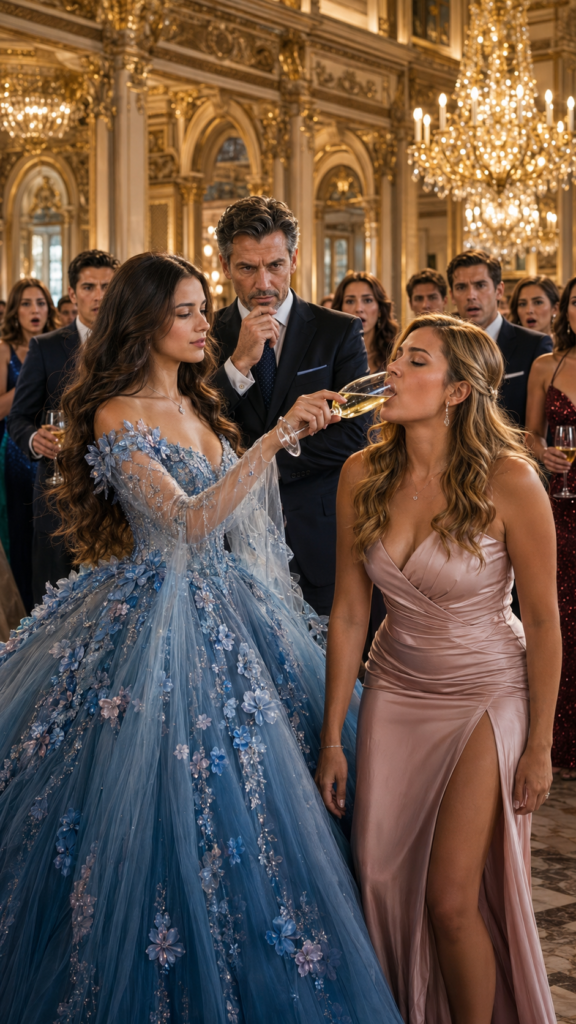
The party was filled with elegant guests, live music, waiters with silver trays, and a huge table of champagne glasses. Ricardo had insisted on making a special toast.
“My eldest daughter deserves something fine,” he had said in front of everyone, with that smile he wore when he wanted to appear as the exemplary father.
Natalia was chatting with two friends near the garden when she noticed something strange.
Her father wasn’t laughing.
He wasn’t greeting anyone.
He was watching her.
There was something in his face that froze her stomach. It wasn’t pride. It wasn’t excitement.
It was calculation.
Ricardo walked to the drinks table, scanned the area, and slipped a hand into his jacket. He pulled out a tiny envelope, almost invisible, and opened it with his fingers. Then he poured a white powder into a separate glass, the only one with a small card bearing Natalia’s name.
She stopped breathing.
For a second, she wanted to convince herself that she had seen wrong.
Maybe it was sugar.
Maybe it was medicine.
Maybe it was a horrible joke.
But Ricardo Becerra didn’t joke. Ricardo punished in silence. He smiled in public and destroyed in private.
Natalia felt her legs weaken, but she didn’t scream.
She didn’t run.
She didn’t cry.
She forced herself to smile.
She walked slowly toward the table, as if nothing had happened. Her father was watching her from across the room, waiting. His eyes were fixed on her, like someone watching a domino piece fall.
Natalia took the glass.
She lifted it just a bit, pretending she was about to drink.
And then Miranda appeared.
“Nati!” she shouted, hugging her shoulders. “Finally a doctor, huh? Let’s see if now you stop being so serious.”
Miranda wore an emerald green dress, her hair perfect, her smile impeccable. Everyone turned to look at her, as always.
Natalia looked at the glass.
She looked at her father.
And she understood that if she drank, maybe no one would ever know the truth.
Then she smiled.
“Look, Miranda… you should have this glass,” she said sweetly. “You’ve always been Dad’s pride.”
Miranda laughed, delighted.
“Oh, don’t start with your stuff.”
But she took the glass.
Ricardo’s eyes widened slightly.
Natalia watched him.
Miranda raised the champagne.
“To my sister, who finally did it.”
And before anyone could stop her, she drank it all.
PART 2
As soon as Miranda lowered the empty glass, Natalia knew she couldn’t wait another second.
She pushed her way through the guests, climbed onto the small stage where the elegant norteño band Ricardo had hired was playing, and snatched the microphone from the vocalist.
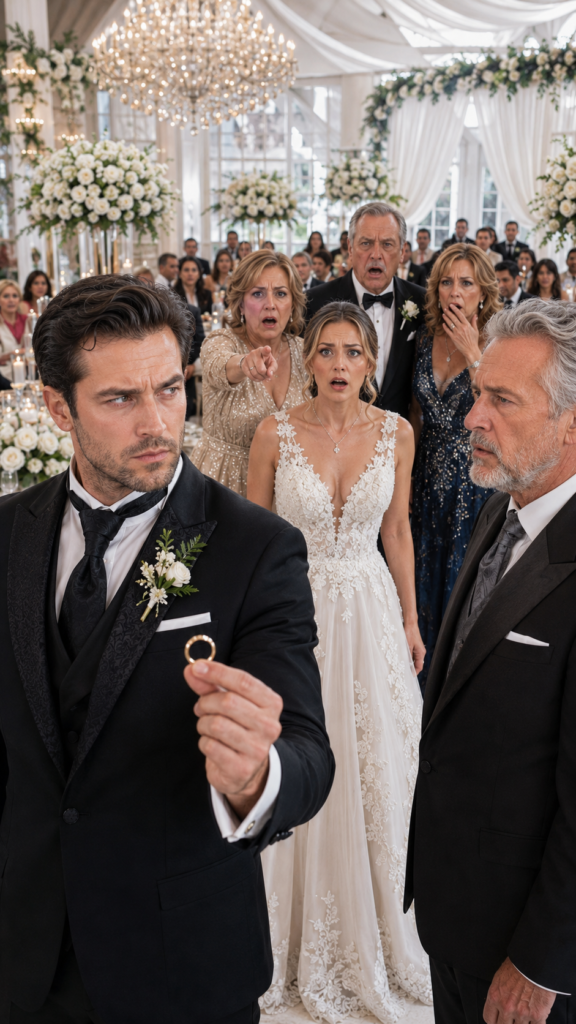
“Everyone, don’t drink anything!” she shouted, her voice trembling but loud. “Stay away from the glasses!”
The music cut off abruptly.
The room froze.
Guests exchanged confused looks. An uncle let out a nervous laugh. A cousin murmured that Natalia “was trying to make drama again.” But Ricardo didn’t laugh.
His face hardened.
“Get down from there, Natalia,” he ordered. “You’re making a fool of yourself.”
She pointed at him with her hand.
“I saw you.”
Silence fell like a stone.
Miranda, still holding the glass, frowned.
“What did you see?”
Natalia swallowed hard. For the first time, her sister didn’t seem mocking. She seemed scared.
“I saw Dad put something in my champagne.”
The room erupted in murmurs.
Elisa, Natalia’s mother, put a hand to her chest.
“Ricardo… tell me that’s not true.”
He let out a dry laugh.
“See? This happens when a daughter grows resentful. Today she couldn’t stand that her sister was getting attention and decided to invent a story.”
Natalia felt the blow, but she didn’t back down.
“The glass had my name. He asked for it to be prepared separately.”
A young waiter, no more than 22 years old, turned pale next to the table.
Ricardo glanced at him out of the corner of his eye.
“Don’t say anything,” he whispered.
But it was too late.
The boy raised his hand, trembling.
“Ma’am… Mr. Ricardo did request a special glass. He said no one else should touch it.”
Miranda dropped the glass.
The glass shattered on the floor.
Everyone jumped.
“What did I just drink?” she asked, her voice breaking.
Ricardo stepped toward her.
“Nothing, daughter. Don’t listen to your sister. You know how Natalia is.”
But Miranda stepped back.
That movement broke something in the room.
Ricardo’s favorite, the perfect girl, the one who always defended him, had just become afraid of him.
Natalia got down from the stage and took her by the arm.
“Sit down. Don’t move.”
“I’m feeling dizzy,” Miranda whispered.
Elisa screamed for an ambulance.
Ricardo tried to approach her again, but at that moment, the main door opened.
Two police officers entered, followed by a man in a dark suit with a badge from the Prosecutor’s Office.
“Ricardo Becerra,” the investigator said. “We need to speak with you.”
Ricardo paled.
“This is private property.”
“And this is already an investigation for possible attempted poisoning,” the man replied. “Not to mention a reopened case regarding the death of Clara Montes, your first wife.”
Natalia felt the world stop.
Clara Montes.
Her real mother.
The woman who, according to Ricardo, had died from an allergic reaction when Natalia was seven years old.
For fifteen years, Natalia had heard the same story: that her mother was fragile, that she fell ill suddenly, that Ricardo did everything to save her.
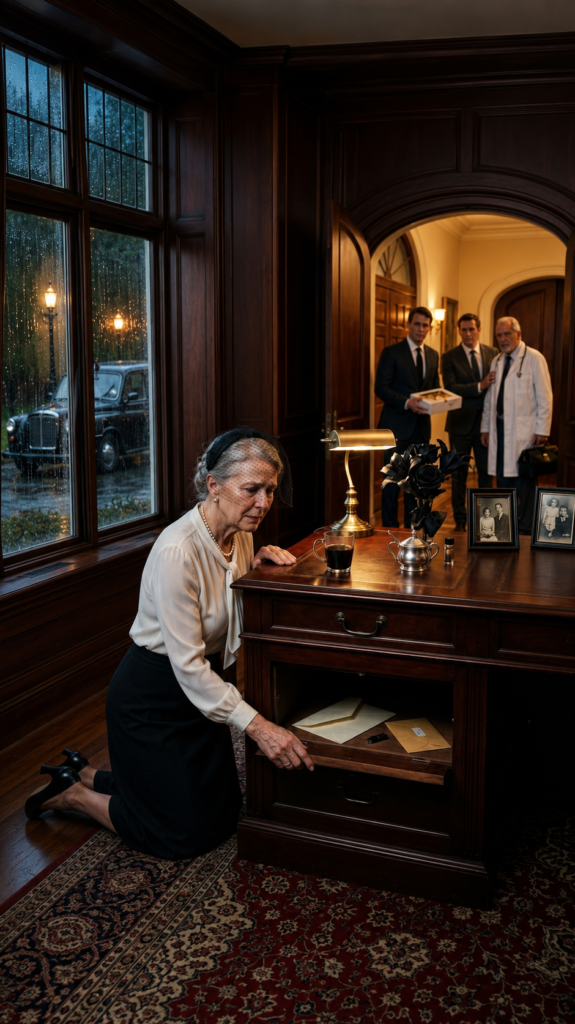
But three nights before graduation, Natalia had found a wooden box hidden in the service room closet.
Inside were letters.
Bank statements.
Medical notes.
And a phrase written in Clara’s handwriting:
“If something happens to me, check on Ricardo.”
Natalia hadn’t slept since then.
She had gone to the Prosecutor’s Office with everything. She thought no one would believe her. But the investigator, lawyer Mauro Salgado, listened to every word.
He asked her for discretion.
He told her they needed to observe Ricardo.
But Natalia never imagined her father would try to drug her that very night.
Nor that Miranda would end up drinking the glass.
The paramedics arrived eight minutes later.
Miranda was already sweating cold. She didn’t faint, but she could barely keep her eyes open. When Ricardo tried to get into the ambulance, she shook her head.
“I don’t want you to come.”
Ricardo stood still.
“Miranda, I’m your father.”
She cried.
“Then tell me what you gave me.”
No one spoke.
Natalia got in with her sister. Elisa followed. On the way to the hospital, Miranda squeezed Natalia’s hand as if for the first time she understood something.
“I’m sorry,” she murmured.
“Don’t talk.”
“I always thought you were exaggerating.”
Natalia felt her eyes fill with tears.
“I wanted to be wrong too.”
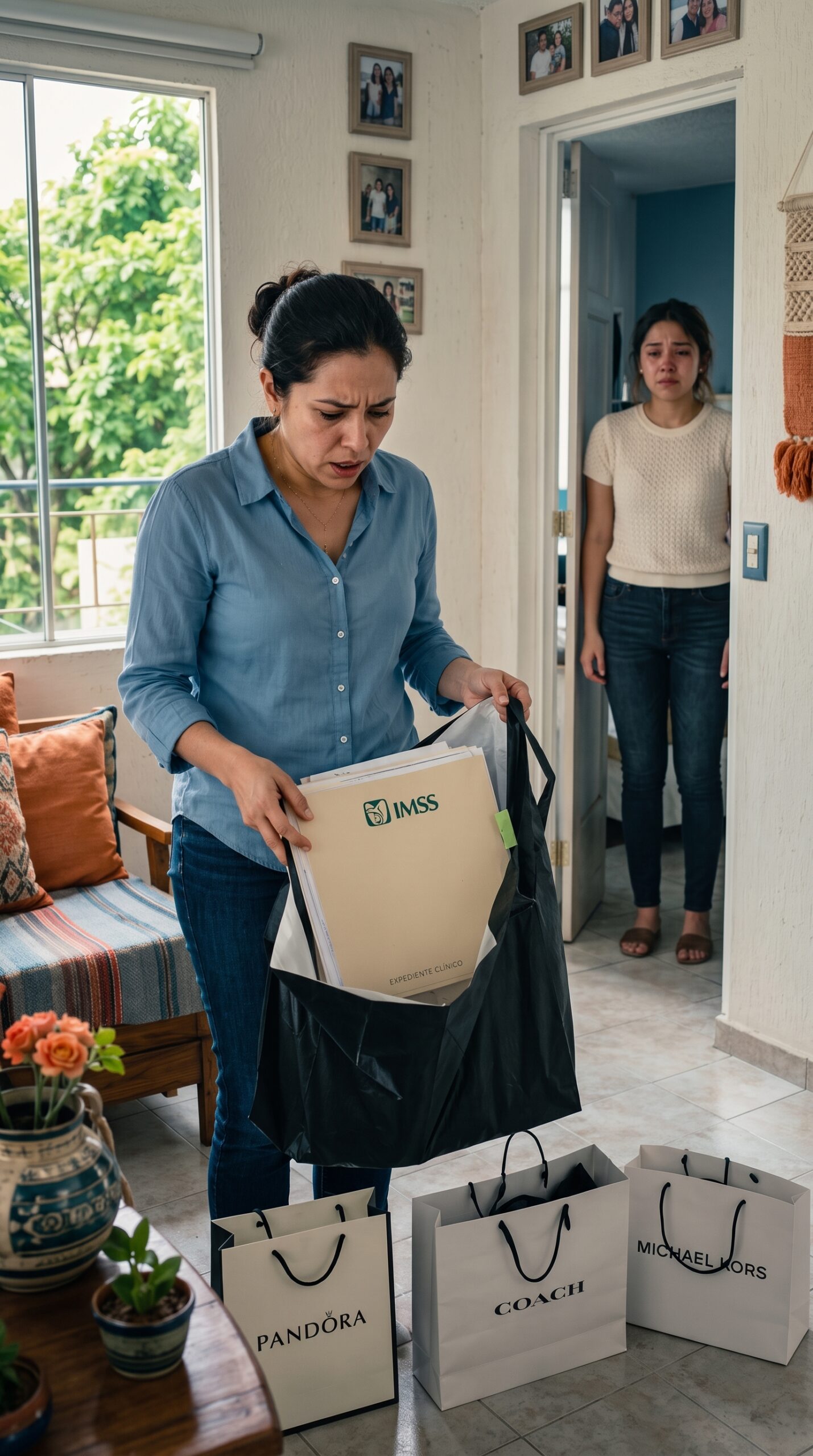
At Ángeles del Pedregal Hospital, they confirmed the worst: Miranda had ingested a strong sedative mixed with a low-dose anticoagulant. It wasn’t enough to kill her in minutes, but it was enough to leave her vulnerable, confused, unable to sign or give a clear statement.
There was the real motive.
The next day, Miranda would turn 25 and had to sign the separation of a trust from her maternal grandfather: 40 million pesos in stocks, properties, and accounts that Ricardo had managed for years.
If Miranda signed, that money would be out of her father’s control.
If she appeared intoxicated or “unstable,” Ricardo could request temporary guardianship.
And if Natalia drank from the glass, the plan was even more cruel: to blame her for a nervous breakdown, say she mixed alcohol with medication, and disqualify her as a witness to Clara’s letters.
Everything was calculated.
Everything was planned.
But there was one detail Ricardo didn’t calculate: Miranda drank from the glass in front of everyone.
That same morning, Mauro Salgado arrived at the hospital with a search warrant. In Ricardo’s study, they found envelopes with the same powder, receipts from a private clinic, and a draft of a lawsuit to declare Natalia “mentally unstable.”
They also found a USB hidden behind a family picture.
There came the twist no one expected.
The USB contained not only financial information.
It had recordings from fifteen years ago.
In one of them, Clara, Natalia’s mother, was arguing with Ricardo.
“I’m not going to sign the stocks for you,” her voice could be heard, weak but firm. “And if you keep threatening me, I’m going to tell everything.”
Then Ricardo’s voice was heard, cold, without emotion.
“No one will believe you. And if you die, everyone will say you were a sick woman.”
Elisa, upon hearing that recording, collapsed.
She didn’t know what Ricardo had done to Clara.
But she did know something she had kept quiet for years.
In tears, she confessed that Ricardo forced her to raise Natalia as if she were a “difficult” child, repeating to her that her biological mother had been unstable, dangerous, manipulative. Elisa believed that version because she was in love and because Ricardo knew how to lie like few others.
“I failed you,” she told Natalia in the hospital hallway. “I didn’t hit you, I didn’t kick you out, but I left you alone in your own home. And that was also a way to hurt you.”
Natalia didn’t respond immediately.
Because forgiveness doesn’t just appear because someone cries.
Justice moved quickly.
Ricardo was arrested two days later in a vacation house in Valle de Bravo. He was trying to leave the country with a fake passport and three suitcases full of documents.
When the agents handcuffed him, he didn’t ask about Miranda.
He didn’t ask about Natalia.
He just said:
“You don’t know who you’re messing with.”
But this time, no one was afraid of him anymore.
Miranda slowly recovered. For weeks she didn’t want to look in the mirror. Guilt haunted her: guilt for having humiliated Natalia so many times, for having defended her father, for having believed that being the favorite was the same as being loved.
One day, from her hospital bed, she asked Natalia to come closer.
“I thought he loved me more.”
Natalia looked at her with weariness, sadness, and broken tenderness.
“He didn’t love us. He used us differently.”
That phrase went viral months later when the case appeared on television.
People argued on social media: some said Natalia had been cruel for giving the glass to Miranda. Others said if she hadn’t done it, Ricardo would have won again. Some asked what they would do if they saw their own father trying to drug them at a party full of witnesses.
But those who knew the whole story knew something harsher.
Natalia didn’t act out of revenge.
She acted because, for the first time in her life, she understood that the monster in her house would only fall if everyone saw it with their own eyes.
Miranda and Natalia didn’t become perfect sisters overnight. That only happens in cheap novels. There were grievances, silences, therapy, and many awkward conversations.
But a year later, when they inaugurated the Clara Montes Foundation to help women victims of property and family violence, they went together.
Miranda took the microphone first.
“My dad made me believe that love was obedience,” she said in front of everyone. “My sister taught me that the truth can also save you, even if it hurts horribly.”
Natalia, standing beside her, didn’t smile.
She just looked at her mother’s photo on the wall.
Clara appeared young, with strong eyes, as if she had waited 15 years for someone to say her name without fear.
Ricardo lost the company, the house, and the mask. In prison, he continued to say it was all a conspiracy of ungrateful daughters.
But outside, the story no longer belonged to him.
It belonged to Natalia.
To Miranda.
To Clara.
And to all the people who were ever called exaggerated for pointing out the truth within their own family.
Because sometimes the poison isn’t in a glass.
Sometimes it has a last name, sits at the head of the table, and waits for everyone to toast to it.