PART 1
At 13 years old, Mariana Luján understood that not all wounds come from illness. Some are inflicted by family when they let go of your hand just when you’re most afraid.
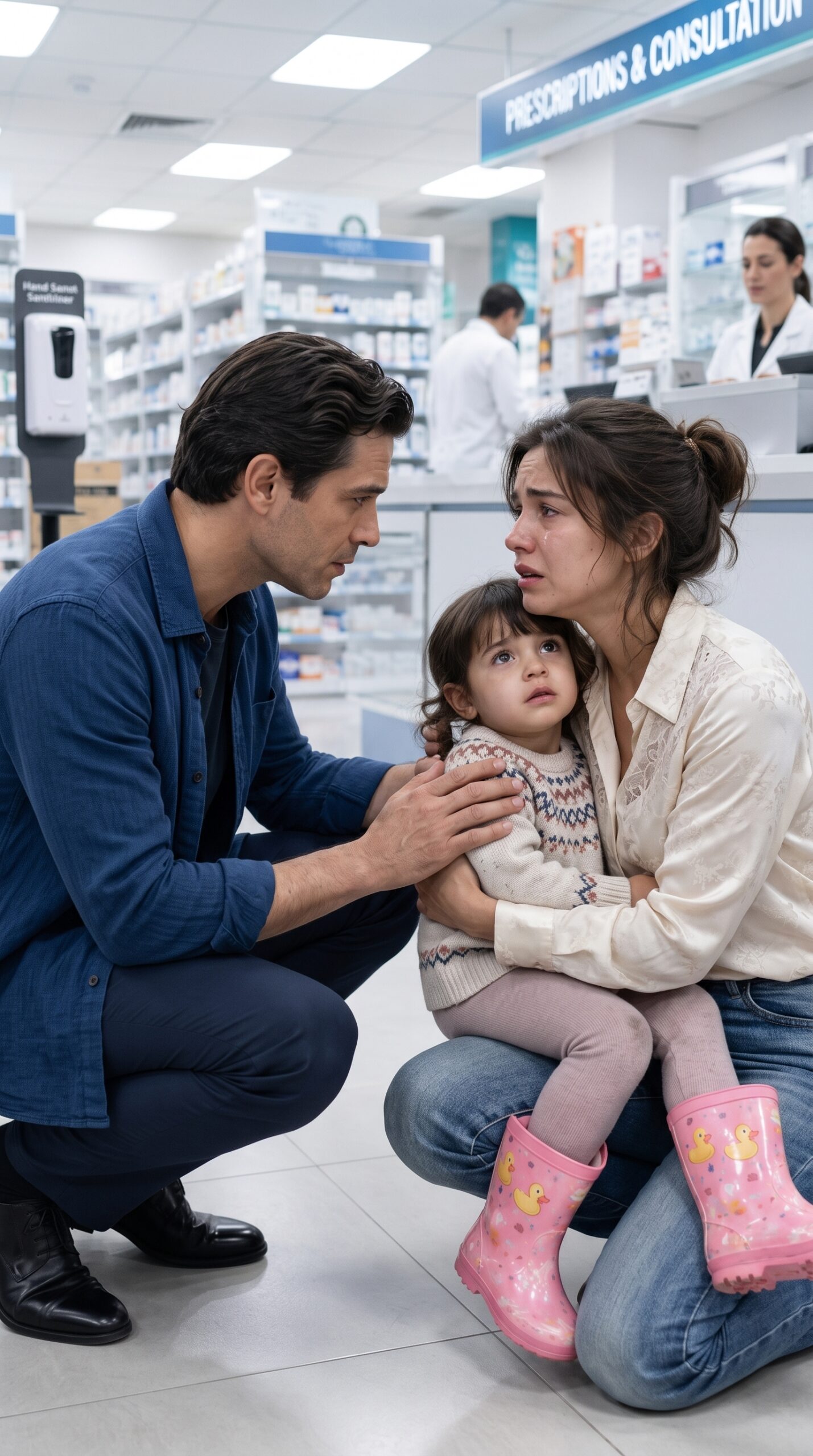
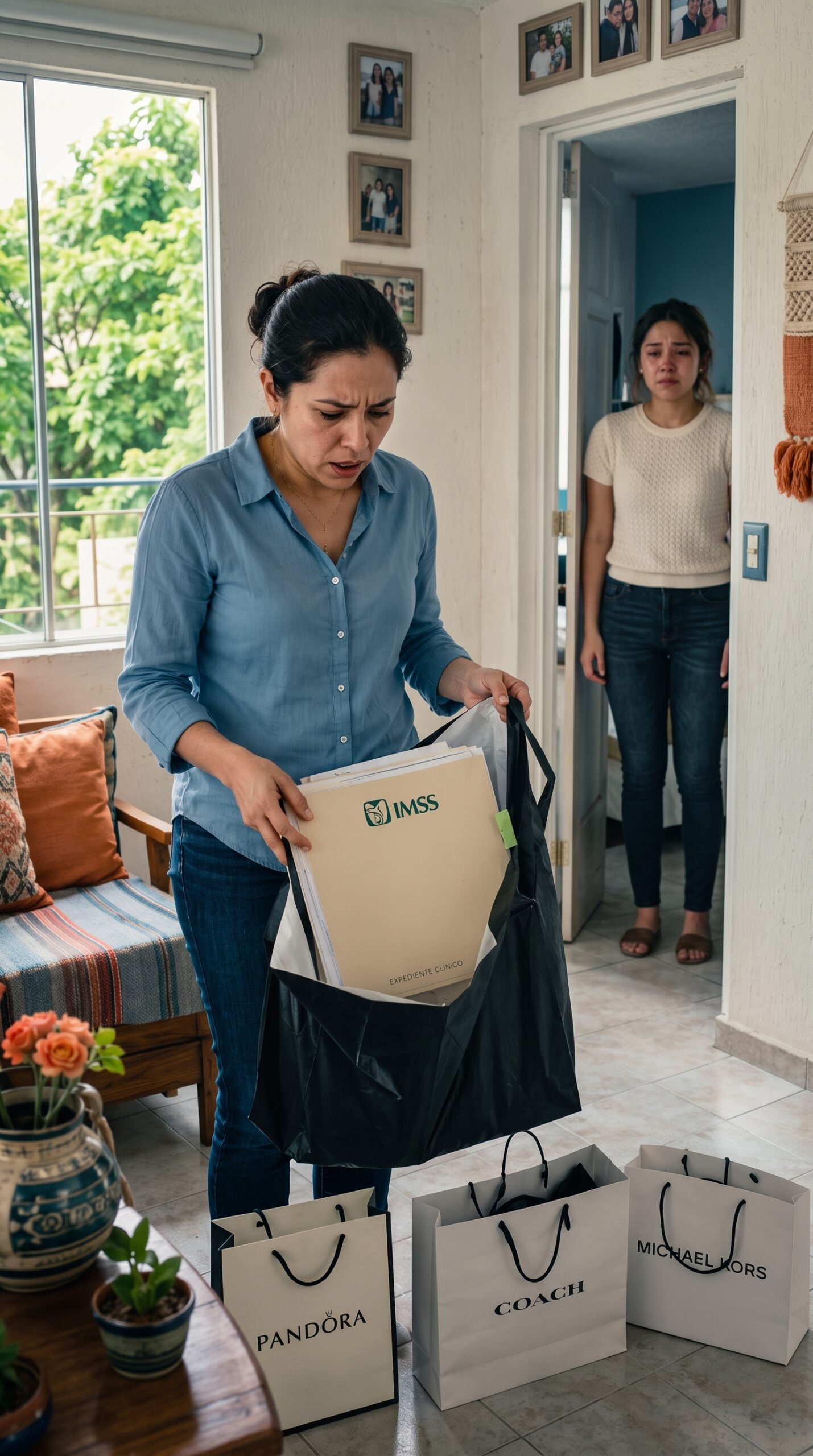
It all happened at the Federico Gómez Children's Hospital in Mexico City. Outside, the rain poured heavily, cars crawled along Cuauhtémoc Avenue, and inside a white room, Mariana heard words she didn’t quite understand: leukemia, chemotherapy, urgent treatment, high risk.
She looked at her mother, Graciela, waiting for her to run and embrace her.
But Graciela only clutched her bag to her chest.
Ramiro, her father, sat across from the doctor, his face stone cold. He didn’t ask if Mariana would survive. He didn’t ask if she would feel pain. He didn’t ask if she could smile again.
He only asked:
—And how much is all of this going to cost?
The doctor explained there were supports, processes, foundations, and alternatives, but also unavoidable expenses. Medications, tests, transfers, food, time, patience.
Ramiro sighed as if a debt had been placed on him, not like he’d just been told his daughter could die.
At home, there was also Daniela, the older sister, 17 years old. The perfect daughter. The one who attended private school, the one with a graduation trip to Cancun, the one who dreamed of an expensive university in Monterrey.
That night, Mariana pretended to sleep while her parents talked beside her bed.
—We can’t sink everyone because of a possibility —Ramiro said quietly—. Daniela already has her path. Mariana… who knows.
Graciela cried, but she didn’t say no.
And that silence was crueller than any scream.
Three days later, they signed the papers.
They renounced custody.
They said they didn’t have the resources. That it was too much. That they could not do it anymore.
They left Mariana with a bag containing 2 changes of clothes, a pair of old sneakers, and a little card of the Virgin of Guadalupe.
—Hang in there, my girl —Graciela murmured, without looking her in the eyes.
Ramiro didn’t even say goodbye.
The door closed.
Mariana was left alone, connected to an IV, her heart shattered before the chemotherapy could touch her body.
That night, she met Teresa Robles, a night shift nurse, short, dark-skinned, with a firm voice and a sweet gaze.
Teresa wiped away her tears without asking questions.
—Listen to me well, my girl. You are not an expense. You are a life. And a life is not abandoned just like that.
Mariana didn’t answer.
She only took her hand.
From that day on, Teresa wouldn’t leave her side. She accompanied her through vomiting, fevers, tests, relapses, and nights of fear. She brought her broth in a thermos, played soft Juan Gabriel music, and told her that life was still waiting for her.
Months later, Teresa asked to adopt her.
And against all odds, Mariana survived.
Fifteen years later, Mariana Robles stood backstage at Columbia, ready to graduate as the top medical student of her class.
Then a nervous coordinator approached.
—Dr. Robles, there’s a Mexican couple demanding VIP seats. They say they are your parents.
Mariana looked towards the front row.
Ramiro and Graciela were there, with flowers, smiling proudly as if they had never abandoned her.
And no one could believe what was about to happen.
PART 2
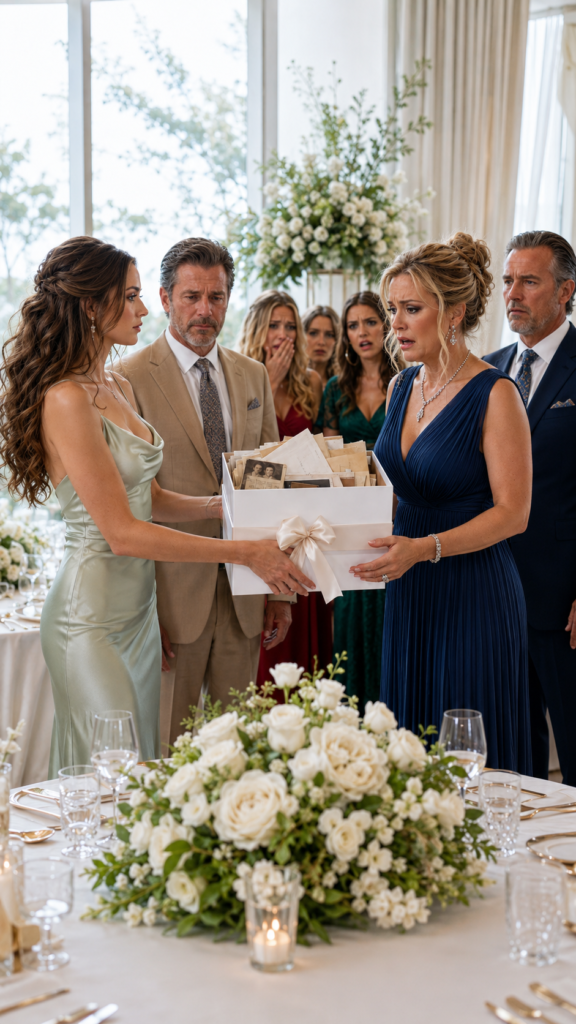
Ramiro Luján wore a navy blue suit, a new tie, and a smile that seemed rehearsed in front of a mirror. Graciela held a huge bouquet of white roses, wrapped in golden paper, as if the absence of 15 years could be covered with a pretty gift.
Beside her was Daniela, elegant, made up, recording everything with her phone.
—My little sister, the doctor from Columbia —she said softly, searching for the best angle—. This is going to break Facebook, for real.
Ramiro greeted other Mexican families as if he were a model dad.
—Our Mariana has always been a brilliant girl —he boasted—. Since she was little, we knew she would go far.
Graciela nodded with tears in her eyes.
But Mariana, behind the curtain, watched them without trembling.
She was no longer the bald, skinny, scared girl they had left in a hospital bed.
Now she was a 28-year-old woman, a pediatric oncologist in training, with an academic merit medal hanging around her neck and a truth lodged in her throat for far too long.
A few meters away was Teresa Robles.
She wasn’t wearing an expensive dress. She wore a simple beige suit, comfortable shoes, and a shawl folded over her legs. She was in a wheelchair because diabetes and so many years of double shifts had taken their toll.
In her hands, she held an old folder full of photographs.
Mariana at 13, without hair.
Mariana asleep after chemotherapy.
Mariana in high school uniform.
Mariana selling gelatin with Teresa to pay for a registration.
Mariana in a white coat on her first day of internship.
Teresa hadn’t had extra money.
But she had something that Ramiro and Graciela didn’t have: the courage to stay.
—Mija —Teresa said, her voice breaking—, don’t let them steal this day from you. You’ve already won.
Mariana bent down in front of her and adjusted the shawl.
—I won’t let them steal it, Mom. Today I’m going to give you back what should have always been yours.
Teresa wanted to say something, but the presenter announced Mariana's name.
The entire auditorium stood up.
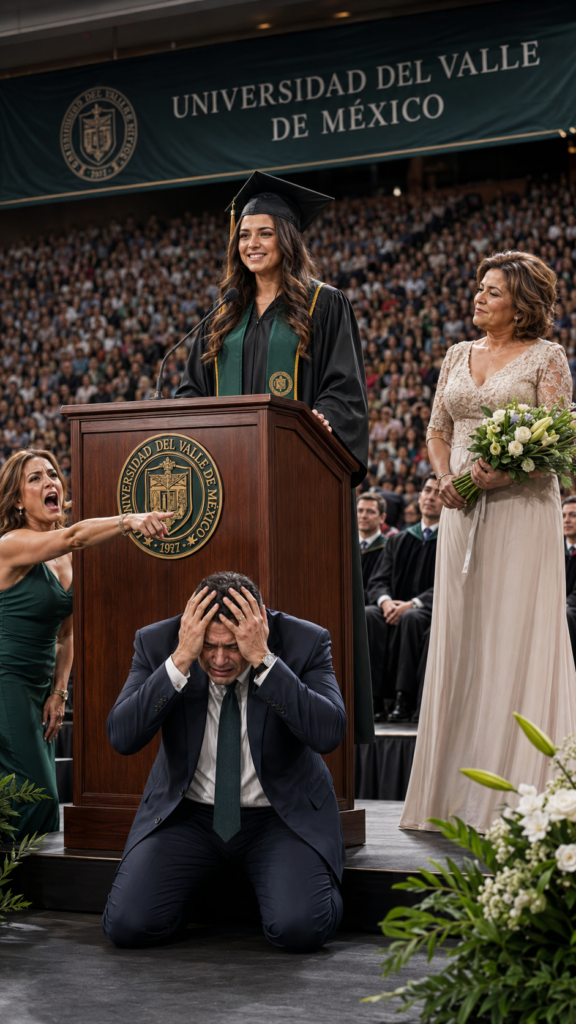
—Mariana Robles, top of her class, recognized for her research in childhood cancer and for her volunteer work with children from vulnerable communities in Mexico.
The applause thundered.
Ramiro stood up before anyone else.
He clapped hard, puffing out his chest, wanting everyone to notice that he was “the dad.”
Graciela cried.
Daniela continued streaming live.
Mariana walked onto the stage.
She received the diploma.
She received the medal.
Then she walked towards the microphone.
For a few seconds, she only looked at the audience.
Then she spoke in Spanish.
—Thank you all. Today I am not going to give a speech about grades, scholarships, or academic sacrifices. Today I want to talk about something more difficult: the price some adults put on a child’s life.
The auditorium fell silent.
Ramiro stopped smiling.
Graciela tightened the bouquet.
Daniela lowered her phone a bit but didn’t turn it off.
Mariana took a deep breath.
—When I was 13, I was diagnosed with leukemia. I was in a hospital in Mexico City. I was scared. So scared. And while the doctors explained my treatment, my biological father asked one question: how much would it cost.
A murmur swept through the room.
Ramiro shifted in his seat.
—A few days later, my parents signed documents to relinquish custody of me. They left me with 2 changes of clothes, some old sneakers, and a little card. There was no promise to return. No birthdays. No calls. Not a single visit in 15 years.
Graciela began to cry harder.
But this time it didn’t seem like emotion.
It seemed like shame.
Mariana didn’t raise her voice. She didn’t need to.
Every word fell like a stone.
—Today those same people are sitting in the VIP section. They came with flowers. They came to say they are my parents. They came to boast about a triumph in which they didn’t spend a single sleepless night.
Daniela’s camera continued recording.
Hundreds of people were watching the stream.
And comments started to appear:
“What?”
“No way.”
“How low.”
“That’s not right.”
Ramiro shot up abruptly.
—That’s not true! —he shouted in Spanish—. You don’t know how hard it was for us!
Two guards approached, but Mariana raised her hand.
—Let him speak. For 15 years I kept silent. Today he can try to explain himself.
Ramiro turned red.
—We didn’t have money. Your mom suffered. Your sister had a future too. We couldn’t sacrifice the whole family for a treatment that wasn’t even guaranteed.
The auditorium tensed.
Mariana looked at him with a calmness that was more terrifying than any anger.
—Thank you, Mr. Ramiro. You just said it exactly as it is written in the records.
The giant screen behind her changed.
A scanned document from the hospital appeared.
Mariana had requested her file years ago. She had read every page, every social note, every signature.
On the screen was a note from the social worker:
“Parents informed about options for institutional support and foundations. Parents refuse complete follow-up and state they cannot commit resources destined for their older daughter’s education.”
Daniela stopped recording.
Graciela opened her mouth, but no sound came out.
Ramiro remained frozen.
The excuse had crumbled before everyone.
It wasn’t that there weren’t options.
It wasn’t that no one had lent a hand.
It wasn’t that poverty had forced them into a dead end.
They had chosen.
They chose the private school.
They chose the trip.
They chose Daniela’s comfort.
They chose to leave Mariana alone because her illness was an inconvenience.
—That’s out of context —Ramiro stuttered.
Mariana shook her head slowly.
—No. What was out of context was seeing you sitting in VIP today, smiling as if you had been family.
Then the screen changed again.
A photograph of Teresa appeared, young, asleep in a chair next to Mariana's bed.
Then another: Teresa selling tamales outside a clinic.
Another: Teresa signing adoption papers.
Another: Mariana in her school uniform hugging her at a ceremony.
Another: Teresa, now gray-haired, holding Mariana's first medical coat.
The auditorium began to applaud, but Mariana asked for silence.
—This woman is named Teresa Robles. She was a nurse. She had no obligation to stay. She had no money. She had no big house. She had no connections. But she had something that my biological parents didn’t have: heart.
Teresa began to cry.
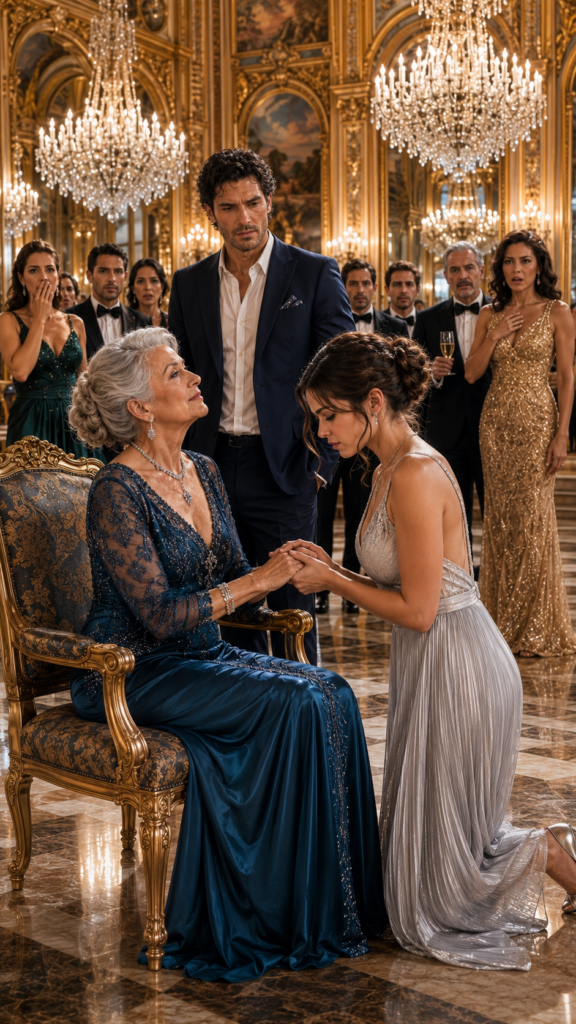
Mariana stepped down from the stage, walked over to her, and took her hand.
—She saw me lose my hair. She saw me vomit blood. She saw me afraid to sleep because I thought I wouldn’t wake up. She worked double shifts to buy me notebooks. She sold food to pay for my paperwork. She taught me that a daughter isn’t measured by how much she costs, but by the love with which she is cared for.
The entire auditorium stood up.
The applause was long, loud, impossible to stop.
Teresa covered her face, embarrassed by all the attention.
Mariana hugged her.
And for the first time that afternoon, the brilliant doctor let the girl still living inside her show through.
—My diploma has my name on it —Mariana said, returning to the microphone—, but this achievement also belongs to my mom. To the woman who chose me when others discarded me.
Graciela stood up, swaying.
—Mariana, please… forgive us. We were young. We were scared. I cried for you many nights.
Mariana looked at her.
There was no hatred in her eyes.
That hurt more.
—I cried many nights too, Mrs. Graciela. But I was 13 and sick. You were my mother.
Graciela tried to get closer, but a guard respectfully interposed.
Ramiro attempted to regain authority.
—We are your blood. Whether you like it or not, we are your family.
Mariana smiled faintly.
—Blood can also be abandoned, Mr. Ramiro. Family cannot.
Daniela, who had remained silent, approached with real tears.
—Mariana… I didn’t know everything. I swear I didn’t know there were supports. Dad said there was no way.
Mariana looked at her for a moment.
Daniela no longer seemed like the perfect sister. She looked like a woman discovering that her comfort had come at a human cost.
—Maybe you didn’t know everything —Mariana replied—, but for 15 years you did know that I existed. And you never called.
Daniela lowered her head.
That sentence left her defenseless.
The ceremony continued, but nothing was the same. The story was shared online, first among students, then on Mexican pages, later in the news. The video of Mariana saying “a daughter is not measured by how much she costs” went viral within hours.
Some users said it was cruel to expose her parents.
Others responded that it was cruel to leave a girl with cancer in a hospital.
The discussion exploded.
But Mariana wasn’t seeking fame.
That same night, at a small dinner, she announced that she would return to Mexico to open a foundation to support children with cancer abandoned or neglected by their families.
She would call it Casa Teresa.
When Ramiro and Graciela found out, they tried to find her at the hotel.
They arrived with the same bouquet of roses, now wilted.
Teresa was sitting in the lobby when they appeared.
Ramiro couldn’t hold her gaze.
Graciela approached Mariana, crying.
—Daughter, let us make this right. We want to be in your life.
Mariana took a deep breath.
For years, she had imagined that moment. She thought she would scream, break things, tell them every word that hurt her in childhood.
But when she had them in front of her, she only felt distance.
As if they were strangers using an old last name.
—You didn’t come when I was in a bed believing I was going to die —she said—. You came when there were cameras, applause, and a diploma.
Ramiro clenched his fists.
—That’s not fair.
Teresa, in a soft but firm voice, spoke for the first time:
—It would have been fair if you hadn’t let her go when she needed you the most, sir.
Ramiro didn’t answer.
Mariana took a card from her purse and handed it to Graciela.
—Here will be the donation account for Casa Teresa. If you want to make amends, help other children. But don’t buy back a place that you lost by your own choice.
Graciela looked at the card as if it weighed a ton.
—Will you never call me mom again?
Mariana turned to Teresa.
The nurse who had loved her unconditionally was there, with wrinkled hands, tear-filled eyes, and her whole heart in her.
—My mom is here —Mariana replied—. And she’s waiting for me.
Then she took Teresa’s wheelchair and walked down the hotel hallway.
She didn’t run.
She didn’t tremble.
She didn’t look back.
Because that night, Mariana wasn’t fleeing from her past.
She was finally letting the past stay where it belonged.
Behind.
And when the video was shared thousands of times again, one phrase became etched in the comments throughout Mexico:
There are parents who give life, but there are also mothers who save it.