PART 1
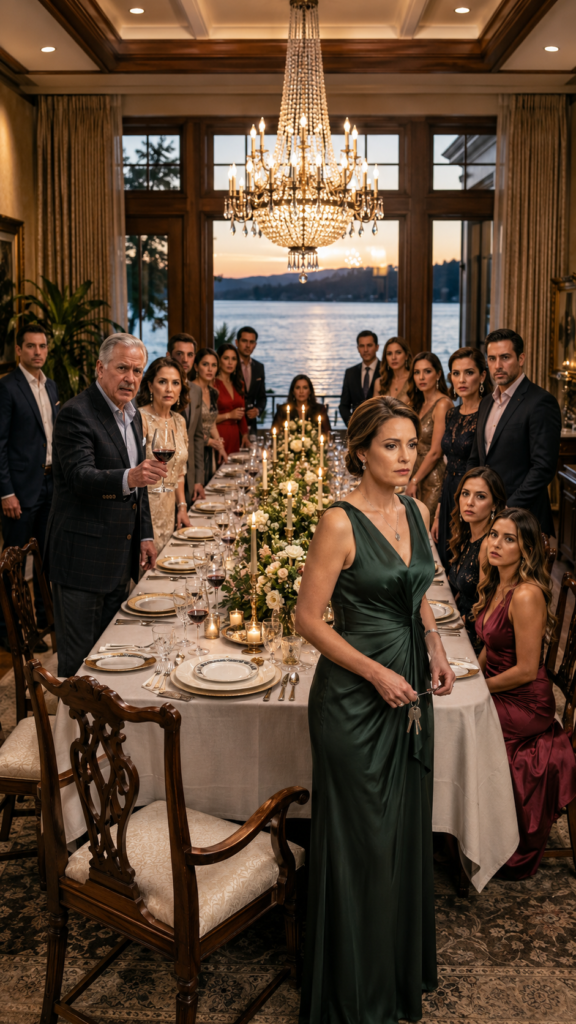
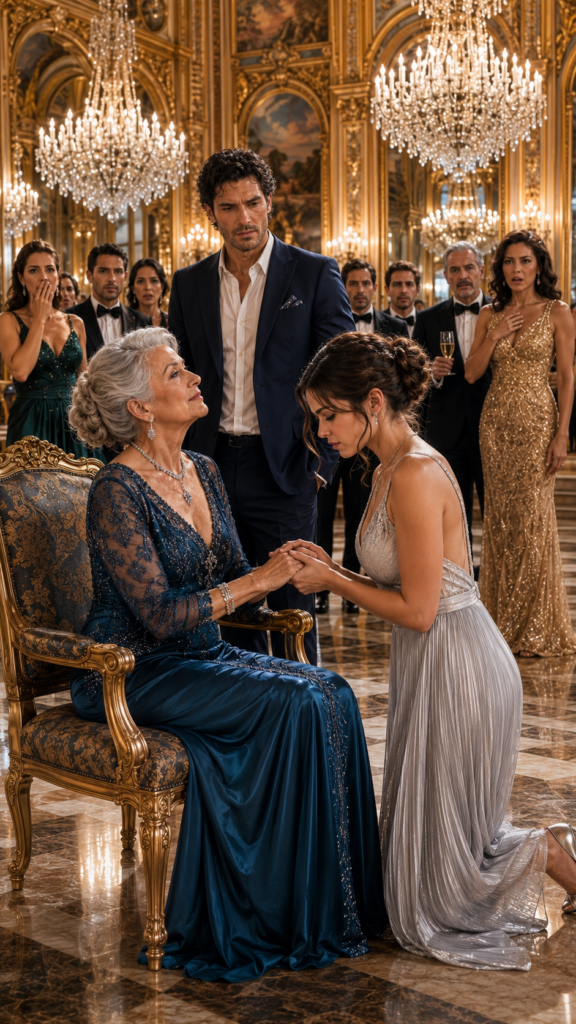
For 12 hours, Daniela Morales paced back and forth in the Imperial hall of a Reforma hotel, carrying trays laden with glasses, canapés, and smiles that no longer reached her lips.
The gala was meant to raise funds for sick children.
That’s what the giant screens said.
But at the tables sat businessmen, senators, judges, artists, and jewel-clad ladies more preoccupied with their dresses than with the children they were supposedly there to help.
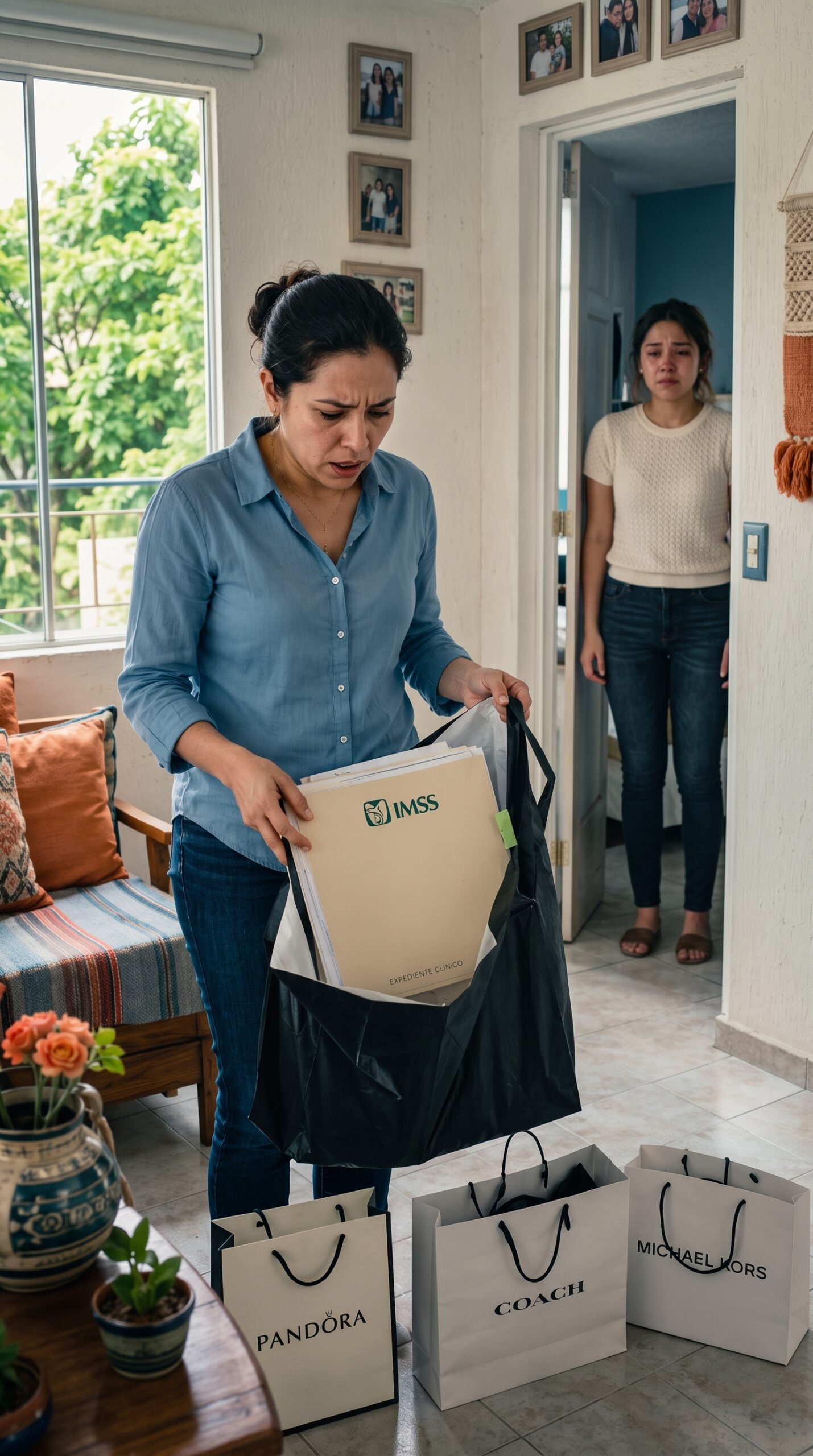
At 24 years old, Daniela lived in a tenement in the Obrera neighborhood, and that night her mind was consumed by two things: paying the overdue rent and getting medicine for her little brother Leo, 14, who had been suffering from a terrible cough for days.
In her bag, she carried 220 pesos, a shattered cell phone, and an old photo of her mother.
Nothing more.
At 11:17 PM, she spotted an elderly woman near the dance floor.
The woman wore a dark green dress, elegant yet outdated. Her white hair was carefully pinned back, and she clutched a fabric pouch as if it contained everything she had left in life.
It was Doña Ofelia Nájera.
But Daniela didn’t know that.
Nor did she know that this old woman was the mother of Gael Nájera, the man many whispered about as “the boss of the center.”
Some feared him for his business dealings.
Others for his connections.
And still others because they knew that when Gael spoke, even the most powerful looked down.
Doña Ofelia took a clumsy step, felt dizzy, and bumped into a woman in a silver dress.
The wine glass spilled onto the expensive fabric.
The hall fell silent.
“What’s wrong with you, stupid old woman!” the lady shrieked.
Her name was Renata Luján, the wife of a deputy who thought he owned half the country.
Doña Ofelia clasped her hands together.
“I’m sorry, dear. I felt unwell.”
“Don’t call me dear. You don’t belong here.”
More than 300 guests watched.
No one approached.
Some recorded with their phones.
Others chuckled quietly.
Daniela set her tray down on a table.
“That’s enough, ma’am.”
Renata turned around as if a chair had spoken to her.
“Excuse me?”
“It was an accident. The lady already apologized.”
“Shut up, little waitress. You’re here to serve, not to give your opinion.”
Daniela felt her stomach tighten, but she didn’t back down.
“Seriously, there are people here with loads of cash who don’t have an ounce of decency.”
The murmur exploded.
Renata raised her hand to slap her.
But before she could touch her, a deep voice boomed from the main staircase.
“Put that hand down.”
Gael Nájera appeared dressed in black.
He didn’t shout.
It wasn’t necessary.
The entire hall parted as if a storm had swept in.
Gael walked over to Doña Ofelia and embraced her in front of everyone.
“Mom, are you okay?”
Renata paled.
So did Daniela.
Gael looked at the guests.
“300 people just watched my mother be humiliated. Only one had the guts to defend her.”
Then he turned to Daniela.
“From now on, no one touches you.”
Daniela raised her chin.
“I don’t need anyone to buy me protection, sir.”
Gael stood still, surprised.
Doña Ofelia, however, was staring at the pendant that Daniela wore around her neck.
She grasped it with trembling fingers.
It was a small locket with two letters engraved.
M.M.
The old woman let out a gasp.
“Gael… this girl is Marisol’s daughter.”
And then Daniela understood that that night wasn’t over.
It had barely begun something unbelievable.
PART 2
The silence was so heavy that even the music stopped.
Daniela gently moved the locket away from Doña Ofelia’s hand.
“Did you know my mom?”
The old woman didn’t answer immediately.
Her eyes were full of tears, but they weren’t just tears of sadness. They were of guilt. Of fear. Of something kept buried for too many years.
“Marisol Morales worked with me,” she finally said. “And she also worked against all of them.”
Daniela looked around.
Renata tried to escape between the tables, but Gael raised a hand and the guards closed off the exit.
Daniela tensed.
“Don’t confine anyone for me.”
Gael looked at her.
Something in his face shifted.
“You’re right.”
He signaled again, and the doors opened.
But no one moved.
Because Doña Ofelia had already pulled out a rusty key tied with a red ribbon from her bag.
“Your mother asked me to give you this when someone powerful tried to silence you in public.”
Daniela felt a chill run down her spine.
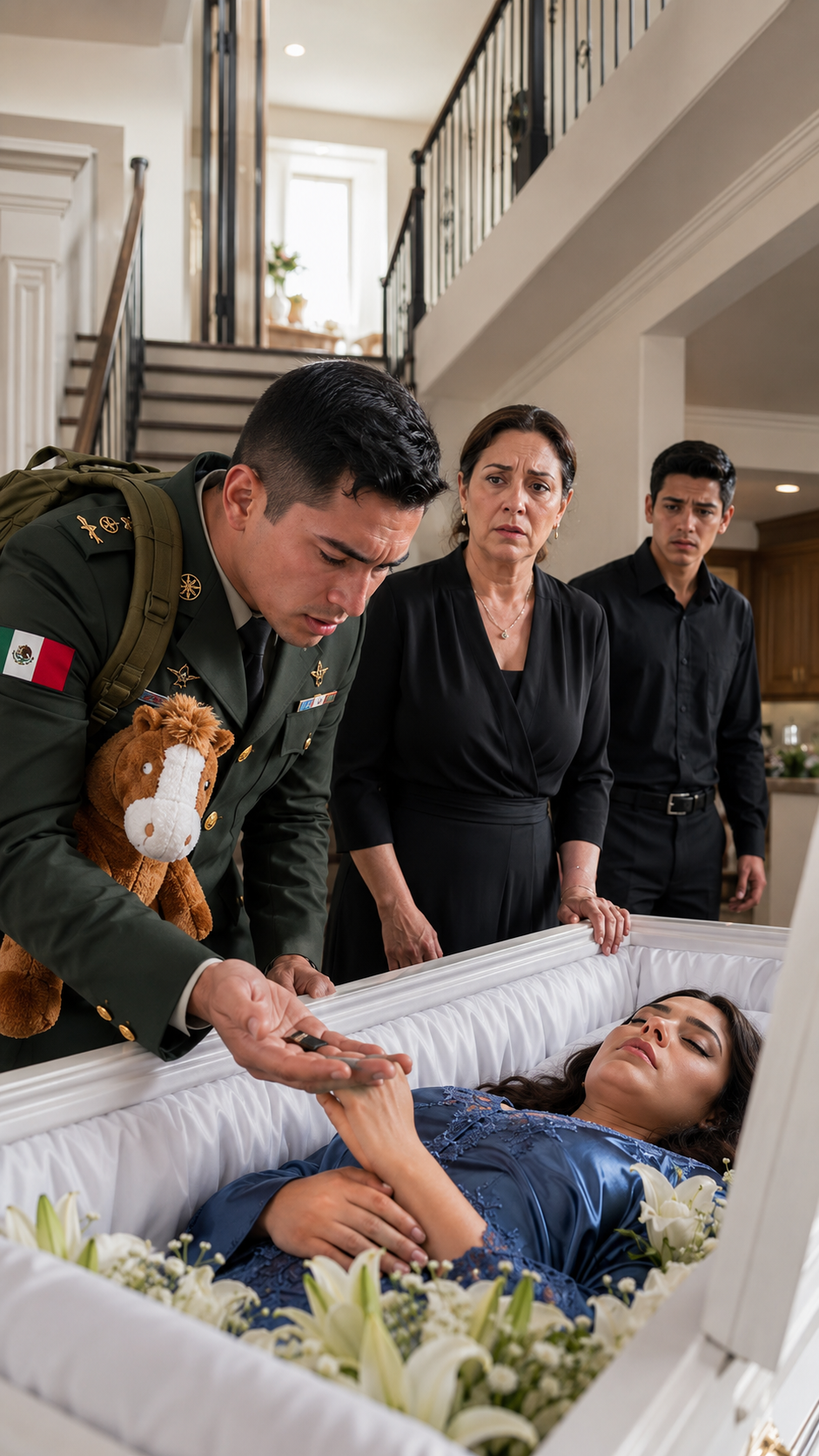
Her mother had died 5 years ago, consumed by an illness the family could never afford to treat properly.
She had always been discreet.
Never spoke of her past.
Never said names.
Never explained why she cried every time a campaign from the Ángeles del Norte Foundation aired on television, the same foundation hosting the gala that night.
“What does my mom have to do with this?” Daniela asked.
Doña Ofelia swallowed hard.
“She discovered that the donated medications for children with cancer were disappearing.”
The hall murmured again.
Renata let out a fake laugh.
“What a clichéd novel.”
Doña Ofelia looked at her with a painful calmness.
“Your husband signed 8 contracts with ghost suppliers.”
Renata’s smile vanished.
Gael turned towards his mother.
“Why didn’t you ever tell me this?”
“Because your father made me swear to keep silent.”
Daniela felt like she couldn’t breathe.
“My mom died without medicine. My brother can barely breathe. And you were playing with children’s medications?”
At that moment, her phone vibrated.
It was a neighbor from the tenement.
Leo was in crisis.
He couldn’t breathe.
Daniela ran out without asking for permission.
Gael followed her.
“I have a truck and a doctor waiting outside.”
“I don’t want to owe you anything.”
“You owe me nothing. Your brother shouldn’t have to pay for your pride or my guilt.”
Doña Ofelia took Daniela’s hand.
“Accepting help doesn’t make you less free, daughter.”
Daniela got in.
During the drive, she didn’t speak.
She just clutched the locket while Gael called a trusted pulmonologist and ordered them to prepare a room at a private clinic.
Leo was treated in time.
When he opened his eyes, he saw Gael by the door.
“Is that the dangerous man?” he asked in a hoarse voice.
Daniela wanted to cover his mouth.
Gael merely raised an eyebrow.
“That’s what they say.”
“My sister doesn’t listen to anyone.”
“Yeah, I’ve figured that out.”
The next morning, Daniela, Leo, Doña Ofelia, and Gael went to the address the key opened: an abandoned warehouse near the Doctores neighborhood.
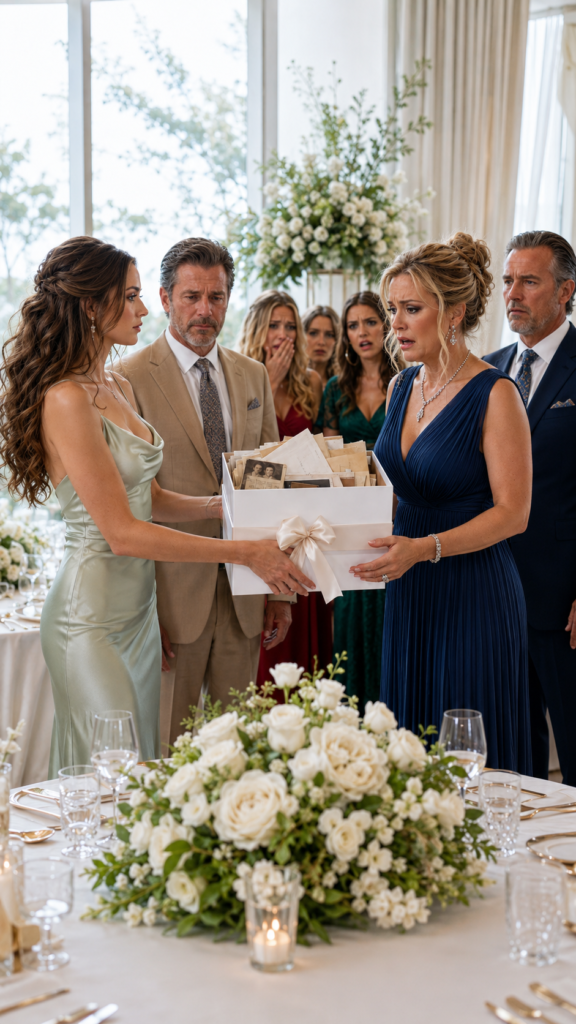
Inside were boxes filled with files, invoices, USB drives, photos of hospitals, and notebooks with names.
There was also a letter.
Daniela recognized her mother’s handwriting and broke down before reading the first line.
“Dani: if you’re reading this, it means someone tried to humiliate you like they have many poor women before you. Don’t let them convince you that dignity has a price.”
Leo sat on a box.
Doña Ofelia cried silently.
The letter explained that Marisol had been the accountant for the Ángeles del Norte Foundation. While reviewing accounts, she found diverted donations, resold medications, and children removed from lists to cover up shortages.
She also discovered that Renata’s husband, several businessmen, and former partners of the Nájera family were using the foundation to launder money.
But the hardest blow was at the end.
“Your father didn’t die in the warehouse fire. He was taken because he knew too much.”
Daniela dropped the page.
“No.”
Gael opened a box marked with black ink.
Inside was an old phone.
Incredibly, the battery was still connected to a portable charger.
The device rang.
No one dared to touch it.
Daniela answered with trembling hands.
“Hello?”
A male voice said:
“Dani, don’t hang up.”
She went pale.
Leo stood up.
“Who are you?”
“I’m Tomás. Your dad.”
Daniela felt rage before joy.
“My dad is dead.”
“That’s what you had to believe to stay alive.”
She tightened her grip on the phone.
“My mom died alone. Leo grew up asking about you. And you come to say it was for our own good?”
Tomás didn’t defend himself.
He said he had survived the fire because Marisol got him out before the men sent to kill him arrived. Since then, he had been collaborating with a special prosecutor’s office, using another identity, gathering evidence against the network.
“I didn’t disappear because I wanted to,” he said. “I disappeared because if I came back, they would kill you.”
“How convenient that sounds when I’m the one who stayed behind with the pain,” Daniela replied.
Tomás fell silent.
Then he released the phrase that changed everything:
“Ask Gael what his father did when Marisol brought him the evidence.”
All eyes turned to Gael.
He didn’t try to escape.
He said that his father, Armando Nájera, had learned the truth. First, he promised to report it. Then he got scared. He feared that the scandal would sink his businesses, break alliances, and put his family in the crosshairs.
“My father chose the surname,” Gael said. “He chose silence.”
Daniela looked at him with disdain.
“And you?”
Gael lowered his head.
“I found part of those files three years ago. I started closing deals, paying debts, getting people out. But I didn’t make a public denunciation.”
“So you also chose the surname.”
“Yes.”
The word fell like a stone.
It didn’t save him.
But at least he wasn’t hiding.
Tomás instructed them to take the files directly to Prosecutor Mara Santoyo, without going through any intermediaries.
Hours later, in a fortified office of the Prosecutor’s Office, Mara confirmed that Tomás had been collaborating for six years and that Gael had been providing anonymous information for three years.
Neither knew that they were both pushing the same case from different sides.
The files contained audio recordings, contracts, transfers, names of officials, fake invoices, and videos.
One of those videos was of Marisol.
Daniela couldn’t breathe when she saw her mother on screen, younger, sitting in the kitchen of the tenement.
“If my children see this,” Marisol said, “it means the truth took too long, but it arrived.”
Leo covered his mouth.
Marisol explained that the network not only stole money. It stole time, treatments, and hope.
Every box of resold medication meant a child without doses.
Every false signature meant a mother waiting in a hallway.
Every elegant gala was a mask.
Then she revealed the twist that shattered Daniela.
Tomás hadn’t just been a witness.
Before he regretted it, he had signed three false deliveries thinking they were simple accounting movements.
When he understood that those signatures had left real children without treatment, he wanted to report it.
That’s why they tried to kill him.
Daniela cried out of rage.
Her father wasn’t a clean hero.
He wasn’t just a victim either.
He was a man who had made a brutal mistake and spent years trying to repair it from the shadows.
Marisol looked at the camera.
“Dani, don’t let anyone use sacrifice to erase guilt. But don’t use pain to deny that a person can change by paying the full price.”
The video ended.
The investigation exploded across Mexico.
There were arrest warrants issued for suppliers, executives, officials, and politicians.
Renata’s husband was arrested for money laundering, fraud, and organized crime.
Renata claimed she knew nothing.
But 300 guests remembered her face when Doña Ofelia mentioned the contracts.
And millions remembered the video where she humiliated an old woman over a wine stain.
Gael held a press conference.
He didn’t hide behind lawyers.
He admitted that his family had protected the network with silence, fear, and prestige.
He resigned control of the foundation and handed over his assets related to the case to make reparations.
“A foundation that protects its image before children is not charity. It’s a business disguised as goodness,” he said.
Doña Ofelia also asked for forgiveness.
Not on television.
She went to Daniela’s tenement, sat in a plastic chair, and spoke in front of Leo.
“Your mom entrusted me with a key, and I took years to use my voice. That too was cowardice.”
Leo didn’t know what to say.
Daniela did.
“I don’t forgive you today. But thank you for not staying silent.”
Tomás returned under federal protection.
When he saw his children, he wanted to hug them.
Daniela took a step back.
“Not yet.”
He nodded.
He didn’t ask for quick understanding.
He didn’t play the victim.
He accepted to testify, face lesser charges for his early signatures, and work on recovering funds.
Leo started seeing him on Sundays at a fonda.
Daniela went once a month.
Sometimes they talked.
Sometimes they yelled.
Sometimes she left before the tacos arrived.
But Tomás no longer disappeared.
With part of the recovered money, the Marisol Morales Center was opened, a community clinic with medications, inhalers, and legal advice for families no one had listened to before.
Daniela set aside the trays and studied social work.
In time, she became the center’s coordinator.
Doña Ofelia went every Thursday to arrange flowers, distribute water, and tell anyone who would listen that shame serves a purpose when it forces a person to change.
Gael appeared rarely.
When he did, he asked for permission before entering Daniela’s office.
One afternoon, he found her reviewing files.
“That night, I said no one would touch you,” he recalled.
“It sounded like you were my owner.”
“I know. I was taught to confuse protection with control.”
Daniela closed a folder.
“And now?”
Gael placed a copy of the new statutes of the center on the table.
Daniela would have the majority vote.
Not him.
Not his surname.
Not his money.
“Now I understand that protecting someone also means stepping aside when you’re in the way.”
Daniela looked at him for a long time.
She didn’t smile.
But she didn’t throw him out either.
Outside, Leo was arguing with a doctor because the inhalers should come in cooler colors.
Doña Ofelia was teaching some children to play lotería and cheating without guilt.
Tomás was carrying boxes without asking for applause.
Everyone had lost something.
Some lost power.
Others lost masks.
Daniela lost the comfortable idea that the truth always arrives clean.
Because it doesn’t.
Sometimes it arrives stained, late, and with names that hurt.
But when it arrives, it forces a choice.
To stay silent to preserve a false family.
Or to speak up to build one that finally deserves that name.
And the question burned on social media: does a father who abandons his children to save lives deserve forgiveness… or are there absences no noble cause can justify?