PART 1
Sebastián Montiel’s foot had not moved for twenty years.
Not a single toe.
Not a reflex.
Nothing.
So when Lucía Navarro pressed two fingers under his left ankle and the big toe lifted just a few millimeters, the four armed men in the room held their breath.
Sebastián saw it too.
His face didn’t change, but his hands gripped the titanium armrests of his chair with a fierce intensity.
—Do it again —he ordered.
Lucía swallowed hard.
She wasn’t in that mansion in Valle de Bravo out of bravery. She had accepted because she needed to pay for her son Mateo’s treatment, his eight-year-old body plagued by a respiratory illness that turned every cold night into a threat.
They lived in a small apartment in Iztapalapa. They were three months behind on rent, the pharmacy refused to extend credit any longer, and the hospital demanded a deposit she didn’t have.
Before the divorce, Lucía had been a respected physiotherapist. Afterward, she ended up treating retired boxers, injured construction workers, and men who paid in cash and never gave their names.
Among them, a nickname began to circulate:
The woman with the hands that wake.
She never spoke of miracles. She just knew how to listen to muscles, scars, and nerves better with her fingertips than many doctors with their machines.
That reputation reached Gabriel Salgado.
One rainy night, he walked into her office, closed the door, and left 200,000 pesos on the examination table.
—One session.
Lucía refused.
Then Gabriel mentioned Mateo’s name, his medication, the exact dosage, and the pharmacy where she had bought the last inhaler.
It wasn’t a direct threat.
It was worse.
It was proof that they already knew everything.
Hours later, Lucía arrived with her eyes blindfolded at the most surveilled property by the lake. There she met Sebastián Montiel, the man who controlled businesses, police, judges, and silences from a custom-made black chair.
At twenty-two, a bomb planted under his truck had killed his father and shattered his spine. The best specialists in Mexico and the United States swore he would never walk again.
Sebastián stopped trying to heal.
Instead, he learned to rule from his seat.
When Lucía entered, he greeted her with a cold smile.
—Let’s see, miracle woman. Do you have quartz, snake oil, or just the desire to scam me?
She ignored the mockery and examined his legs.
She found something strange: atrophied muscles, yes, but not completely dead. Beneath a scar lay a minimal response, buried like a spark under ash.
She pressed a point.
The toe moved.
Gabriel turned pale.
Sebastián’s personal doctor, Dr. Valdés, took a step back.
—That’s just a spasm —he said too quickly.
Lucía touched again.
The toe responded once more.
Sebastián looked at the doctor.
—Why are you scared?
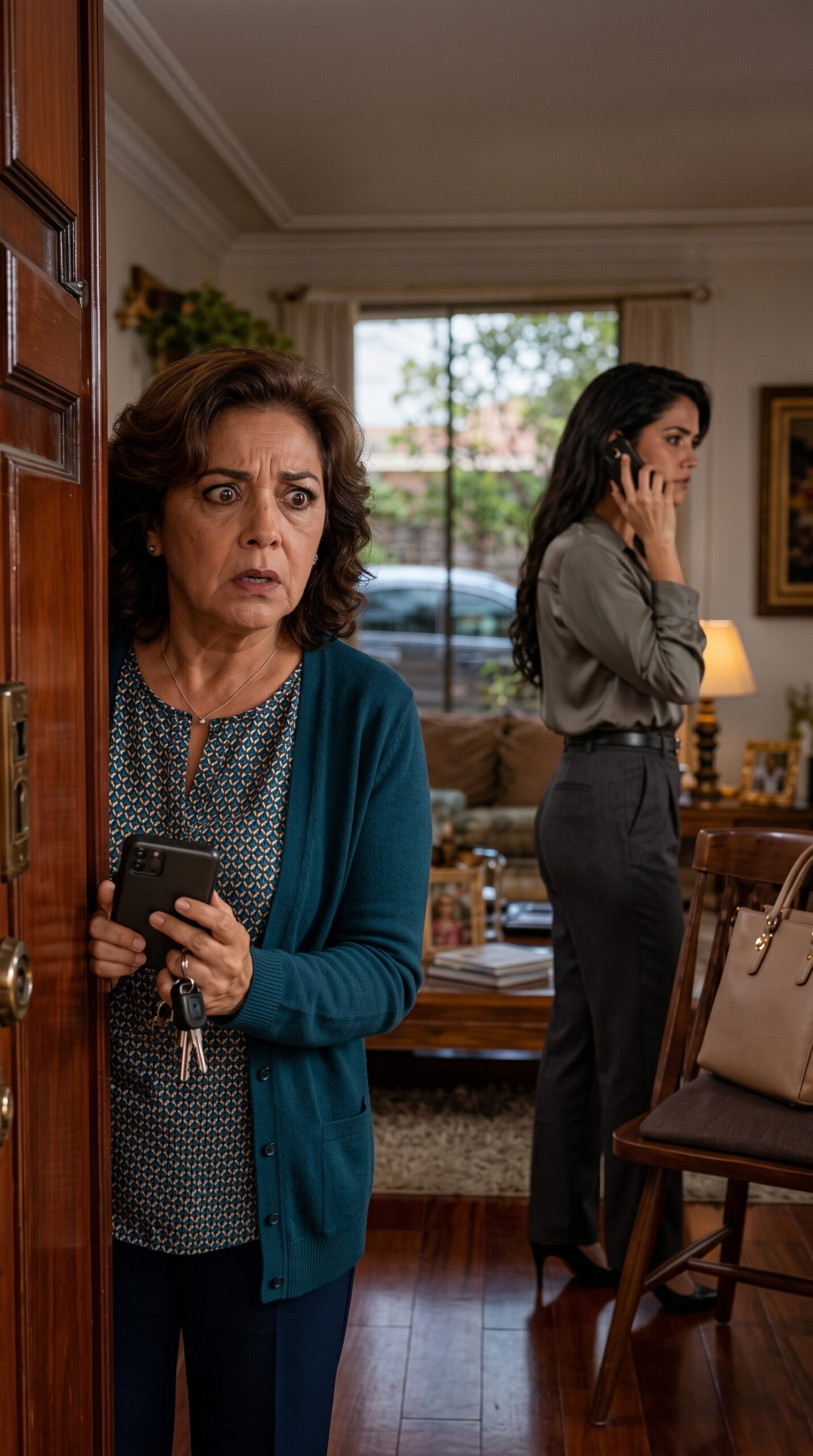
Before Valdés could answer, Lucía’s phone vibrated.
An anonymous message appeared on the screen:
STOP TREATING HIM. ASK ABOUT MATEO’S FATHER.
Lucía looked up, frozen.
Gabriel read the message and lost all color.
Sebastián understood that his leg wasn’t the only secret in that house.
And when he asked who Mateo’s father was, Gabriel lowered his gaze like a man who had been waiting for that moment for years.
PART 2
Lucía stood up so quickly that the bench collided with the bed.
—Don’t give me your silences, seriously. My son has nothing to do with your business.
Sebastián didn’t raise his voice.
—Then tell us who his father is.
She gripped her phone tighter.
Daniel Navarro had been charming, intelligent, and an expert at hiding the truth. He claimed to work in medical logistics. After Mateo was born, he began to disappear for days, receiving calls at dawn, and storing documents in a warehouse.
The divorce left her in debt.
Daniel had vanished seven years ago without paying child support, leaving no address or explanation.
—Mateo thinks his dad was too broken to stay —Lucía said—. I let him believe it because it was less cruel than telling him he abandoned him.
Gabriel closed his eyes.
Sebastián noticed.
—Speak.
Gabriel confessed that Daniel appeared in old files from the Umbral Project, a private network that transported patients, bought doctors, and concealed experimental treatments for powerful families.
He was also linked to Sebastián’s hospitalization after the attack.
Lucía felt the floor sink beneath her.
—Did you know Daniel?
—We knew his name —Gabriel replied—. We didn’t know about you or the child.
Sebastián ordered them to trace the message.
The signal wasn’t coming from outside.
It had come from the guest house, where Ernesto Montiel, the uncle who had led the family during Sebastián’s recovery, had been staying and who for twenty years had presented himself as his protector.
Lucía wanted to run and confront him, but Sebastián turned his chair toward the door with an expression that made the guards step back.
She planted herself in front.
—You’re not going in furious. That’s what they want.
No one spoke to Sebastián Montiel like that.
Gabriel nearly stopped breathing.
—Move —he said.
—No.
The silence grew heavy.
Lucía pointed at his leg.
—Your toe moved and someone panicked. Before punishing, find out why.
For the first time, Sebastián relented.
They searched files hidden in Dr. Valdés’ office. They found an authorization signed in 2006 by a neurologist named Lucas Beltrán.
The document stated that Sebastián’s spinal cord wasn’t completely severed.
There was severe damage, inflammation, and risk, but also nerve activity.
Possibility of recovery.
Sebastián read the word several times.
—I was told there was no possibility.
Gabriel pulled out an old photograph.
In it was Sebastián’s mother, Isabel Montiel, next to Lucas Beltrán. Beside them stood a teenager with dark eyes.
It was Gabriel.
He confessed that Lucas had raised him after his mother died. Isabel treated him like family, but Ernesto kept him away because he didn’t want “outside blood” near the Montiel name.
Gabriel returned after the attack to care for Sebastián.
Not for Ernesto.
For the promise he made to Isabel.
At that moment, security reported that Ernesto was trying to leave the property accompanied by Dr. Valdés.
The system closed the gates.
They found them in the old greenhouse, among white roses that Isabel had planted before she died.
Ernesto remained calm, as if he could still control the story.
—Did you send the message? —Sebastián asked.
—Yes.
Lucía stepped forward.
—Why did you mention Daniel?
Ernesto looked at her with a false compassion that was sickening.
—Because Daniel isn’t dead. He’s been living under federal protection for seven years.
Lucía had to hold onto a planter.
All the anger she had stored over the years mixed with a hope she didn’t want to feel.
Sebastián asked what Daniel knew.
Ernesto answered:
—Enough to survive.
Then he confessed the truth.
Lucas Beltrán had discovered that Sebastián could respond to an experimental protocol from the Umbral Project. He planned to transfer him to a safe clinic and keep him hidden while he recovered.
Ernesto canceled the transfer.
He paid Dr. Valdés to falsify reports.
He convinced everyone that Sebastián was doomed.
—I kept you alive —Ernesto said.
Sebastián let out a dry laugh.
—you kept me seated.
—I kept you in control. A paralyzed heir inspired pity and caution. A young heir recovering would have sparked a war.
Lucía looked at him with rage.
—you didn’t save his life. You stole the option to live it.
Ernesto insisted he did it for the family.
Then Sebastián uttered the phrase that disarmed the old man:
—you taught me obedience and called it love.
Lucas attempted to report him.
He died shortly afterward in a supposed traffic accident.
No one believed it was a coincidence.
Everyone waited for Sebastián to order an execution.
But he surprised even his own men.
He called for the prosecutor, to preserve the servers, deliver the files, and arrest Ernesto and Dr. Valdés.
—Are you going to turn in your own blood? —Ernesto asked.
—Blood doesn’t erase twenty years of lies.
At that moment, Lucía’s phone rang.
Unknown number.
She answered with trembling hands.
—Lucía? —a male voice said.
She stopped breathing.
—Daniel?
The man began to cry.
He explained that he had uncovered files from the Umbral Project about patients used to test treatments that were then hidden or sold. He copied documents and collaborated with federal agents.
He was forbidden from contacting his family because Ernesto had people inside hospitals, courts, and corporations.
Lucía listened, shattered.
—you let Mateo think you didn’t love him.
—I know —Daniel replied—. And there’s no explanation that can give those years back.
Then he revealed something worse.
Mateo’s respiratory illness was linked to a genetic marker that Umbral had known about since his birth.
It wasn’t incurable.
It had been misdiagnosed.
A specialist in Monterrey had a possible treatment, but the reports never reached Lucía because Ernesto blocked them to keep Daniel silent.
Lucía looked at the old man.
For the first time, Ernesto seemed defeated.
Daniel added that Lucas had left a hidden file with Sebastián’s original studies and Mateo’s genetic report.
—it’s where Isabel kept the winter roses.
Gabriel ran to a stone planter. Beneath the moss, he found a latch and pulled out a metal box.
Inside were X-rays, recordings, files, and a letter written by Isabel.
Sebastián opened it.
His mother had written that no man should decide his life for him, even if he carried the same blood. She asked him to trust Lucas and Gabriel, and to remember that roses survive winter because their roots work where no one can see them.
Sebastián didn’t cry.
But he placed a hand over his mother’s signature and lowered his head.
Outside, sirens began to sound.
In the following weeks, Ernesto was arrested for corruption, medical falsification, and obstruction of justice. Dr. Valdés lost his license and agreed to testify.
Daniel slowly returned to Mateo’s life.
There was no movie-style hug.
There were supervised calls, therapy, painful questions, and a boy who took months to say “dad” again.
Lucía didn’t forgive him immediately either.
She learned that repairing wasn’t about saying sorry once, but about staying when there were no excuses left.
Mateo began treatment and improved.
The first night he slept without wheezing in his chest, Lucía locked herself in the bathroom and cried with a towel over her mouth to avoid waking him.
Sebastián started rehabilitation three times a week.
He was stubborn, distrustful, and angry with every exercise.
—Lift your knee —Lucía ordered.
—I’m lifting it.
—you’re glaring at it with hatred.
—Sometimes fear works.
—Your knee isn’t afraid of you, dude.
Mateo laughed from a bench.
Against all odds, the boy didn’t find the most feared man in the center of the country terrifying. He asked him questions, ate his cookies, and celebrated every movement like it was a goal for the national team.
One Saturday, Sebastián held himself between parallel bars.
His left leg moved forward two centimeters.
Gabriel covered his mouth.
Lucía kept her voice steady.
—Breathe. Again.
Mateo whispered:
—Come on, you can do it.
Sebastián moved his foot a second time.
—Does that count as walking? —the boy asked.
—it counts as arguing with the floor.
—And did you win?
Sebastián looked at Lucía.
—This time, yes.
Months later, the old greenhouse became the Isabel Beltrán Foundation, dedicated to ignored, misdiagnosed, or impoverished patients.
In the lobby, they placed a phrase proposed by Mateo:
“No one has the right to decide that your story is over.”
On the day of the inauguration, Sebastián appeared standing with devices under his pants and his chair a few meters away.
He wasn’t walking easily.
He wasn’t cured by magic.
But he was moving.
Lucía found him among the roses, and he handed her a document: a permanent fund for childhood respiratory treatments in Mateo’s name.
Then he showed one last photograph.
In it, Isabel was embracing a young nurse in front of a public clinic.
Lucía recognized the face.
It was her grandmother Margarita.
The files revealed that Margarita had helped Isabel hide the evidence and years later guided Daniel to obtain documents from Umbral.
Lucía remembered her grandmother’s hands, always warm, always steady.
The woman with the hands that wake hadn’t begun with her.
Sebastián looked at Mateo laughing with Gabriel and Daniel by the fountain.
—Do you wonder what would have happened if you hadn’t accepted that money?
Lucía shook her head with a smile.
—No. I think a part of me had been coming here for years.
Sebastián struggled to rise.
His hand trembled.
Lucía reached out hers without holding him, just reminding him he wasn’t alone.
He took one step toward the light.
It wasn’t a miracle.
It was proof that a family can call itself love while destroying a life, and that sometimes justice begins when someone dares to touch the wound everyone ordered to be ignored.