PART 1
Saturday began like any other for Mateo Ríos: tired, cheap coffee in hand, and his son Bruno sleeping on his lap.
At 35, he worked as an emergency technician in a public hospital in Mexico City and had spent four years raising Bruno alone, a serious, noble child who had learned not to ask for much because he knew his dad worked miracles with little.
That afternoon, after his shift, Mateo took him to Chapultepec Forest to let him run around before heading back to the little room they rented in Portales.
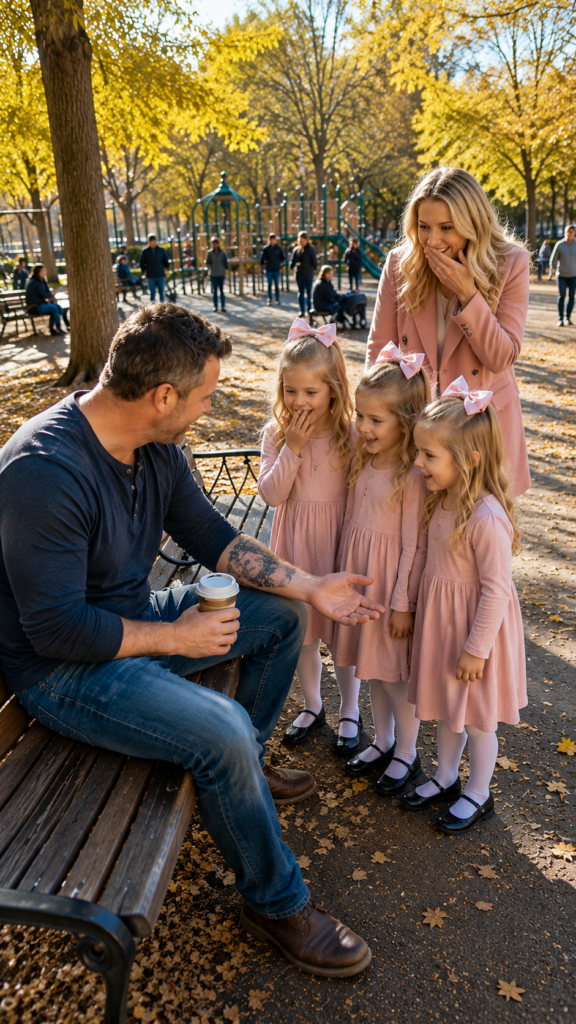
Mateo sat on a bench, rolling up his shirt sleeve in the heat, when three identical girls stopped in front of him.
They looked about seven years old.
All three wore cream-colored dresses, knitted sweaters, polished shoes, and perfect bows, as if they had just stepped out of a magazine featuring wealthy families from Polanco.
Bruno opened his eyes and looked at them with curiosity.
One of the girls pointed to Mateo's forearm.
“Sir, our mom has a tattoo exactly like yours.”
Mateo felt the world dim just a little.
It wasn’t just any phrase.
On his skin, almost faded from the years, was a tattoo of a broken compass, with a diagonal line crossing it and an initial hidden among the cracks of the design.
No one had that design.
No one.
Mateo had drawn it on a napkin eight years ago, one night in Mazatlán, when he still believed life could change with a kiss and a promise said at dawn.
The woman’s name was Camila.
Or so she had told him.
Camila had arrived alone at a bar by the boardwalk, dressed simply but with the way of speaking of someone who had never counted coins to eat.
They laughed all night.
Danced to banda music with tourists, walked barefoot on the beach, and before the sun rose, she asked him to get matching tattoos.
“A broken compass,” she had said, “because neither of us knows where we’re going.”
The next day, Camila disappeared.
She left no real phone number.
No address.
Just a note at the hotel reception: “Forgive me. There are lives that cannot be mixed.”
Mateo searched for her for months until he understood it had been a one-night story.
But now those three girls were there, looking at him as if they carried a truth embedded in their eyes.
“What’s your mom’s name?” Mateo asked, his voice dry.
The girl in the middle was about to answer when a woman in a gray nanny uniform came running up.
She was pale.
Not angry.
Terrified.
“Regina! Lucía! Valeria! What did I tell you about talking to strangers?”
The girls lowered their gazes.
The nanny took all three by the hand and looked at Mateo as if she had seen a ghost.
“I'm sorry, sir. They didn’t mean to trouble you.”
“I’m not troubled,” Mateo said, standing up. “I just want to know who their mom is.”
The woman swallowed hard.
“Mrs. Camila will not forgive this.”
Mateo felt his hands go cold.
Camila.
The same word.
The same name.
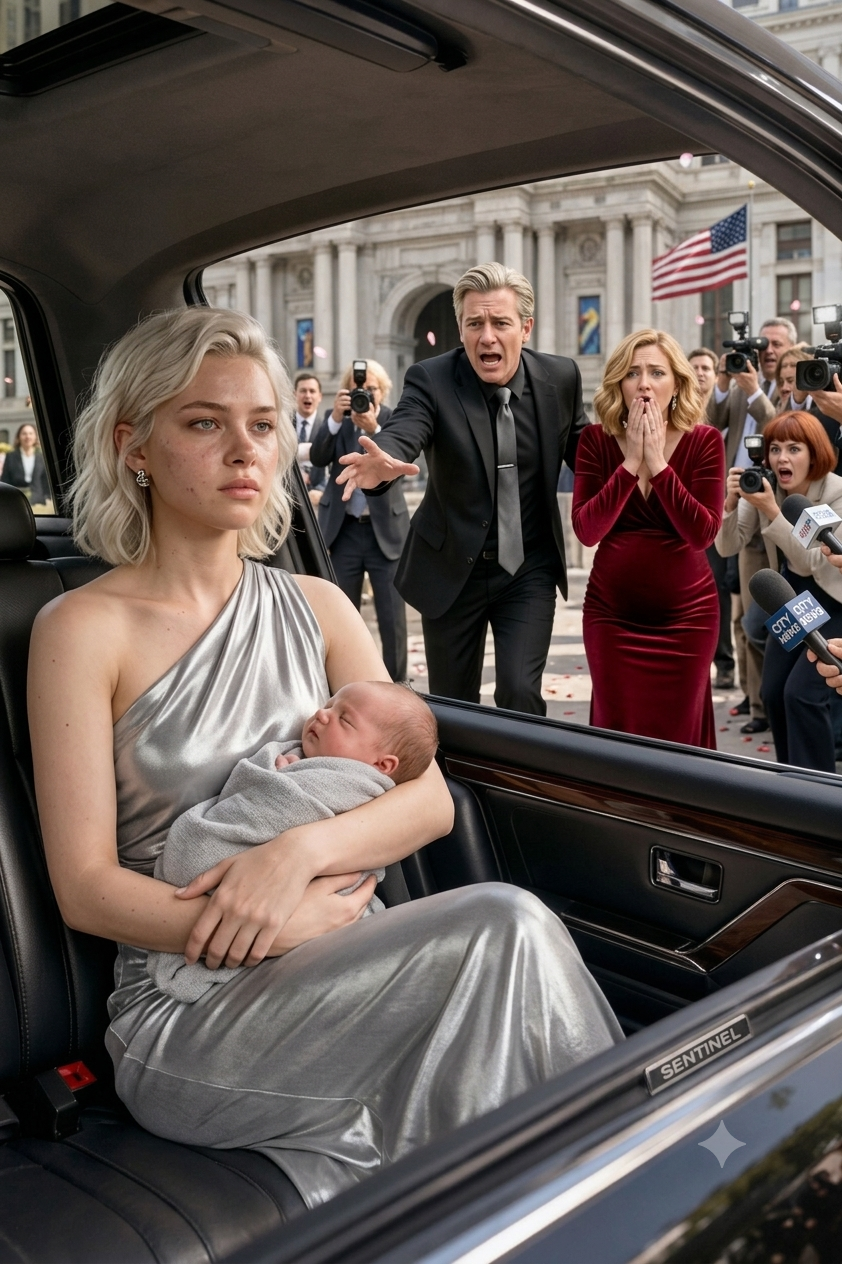
Before he could step closer, a black armored truck pulled up beside the curb. A bodyguard hurriedly opened the door.
The girls were practically shoved inside.
One of them, Valeria, turned from the back seat and pressed her palm against the tinted glass.
Mateo caught a glimpse of her crying.
The truck sped away.
Mateo ran a few steps, with Bruno yelling behind him, but he couldn’t catch it.
Then he saw something fall to the ground.
A pink brooch.
He picked it up.
On the back, written in tiny marker, was a surname:
Montenegro.
Mateo gasped.
All of Mexico knew that surname.
Businesses, hotels, politicians, foundations, magazine covers.
And if Camila Montenegro was the woman from Mazatlán, then those three girls not only had the same age as the secret he buried.
They could also be his daughters.
PART 2
Mateo couldn’t sleep that night.
Bruno, sitting on the bed next to him, asked if those girls were his friends.
Mateo didn’t know how to respond.
He couldn’t explain to a six-year-old that his dad had just felt the past kick down the door.
The next day, he searched for “Camila Montenegro daughters” online.
There they were.
Camila Montenegro Aranda, heir to Grupo Montenegro, mother of triplets, a widow for three years of businessman Emiliano Landa.
In the photos, Camila smiled with a sad perfection.
The girls appeared holding her hand, always dressed alike, always watched over by bodyguards.
The article stated that the triplets were born seven years earlier in a private hospital in Santa Fe.
Mateo did the math.
He felt nauseous.
The date matched.
Exactly.
But there was something else odd.
The supposed father, Emiliano Landa, was seen in old interviews talking about “the family miracle,” though a leaked medical note years earlier hinted at fertility issues.
Mateo closed the laptop.
He didn’t want to imagine.
He didn’t want to get his hopes up.
But he also couldn’t just sit back.
For two weeks, he returned to the park at the same time.
He didn’t see the girls again.
Until one Thursday, outside the Hospital Ángeles, while waiting for Bruno to finish an asthma check-up, he saw the gray nanny getting out of a truck.
She was alone.
Mateo followed her to a café.
“I don’t want any trouble,” he said, sitting across from her. “I just need to know if those girls are Camila’s daughters.”
The woman stiffened.
“Leave, sir.”
“Please.”
The nanny gripped the cup with both hands.
“You don’t understand who you’re dealing with.”
“I understand that three girls told me their mom has my tattoo. I understand they were born seven years after I met Camila. And I understand you looked scared as if I were a threat.”
The woman lowered her gaze.
“It’s not you who’s the threat.”
Mateo fell silent.
The nanny took a deep breath.
“My name is Teresa. I’ve worked with Mrs. Camila since the girls were born. I don’t know everything, but I do know the Montenegro family has hidden some very ugly things.”
Mateo felt a punch to the chest.
Teresa pulled out a napkin and wrote down a number.
“Don’t call me. Text me from another phone. And for God’s sake, don’t approach the house yet.”
That night, Mateo bought a cheap phone in Tepito.
The first message he received from Teresa said:
“Camila never forgot you. But they told her you had died.”
Mateo read the line five times.
Then another message came.
“After Mazatlán, she returned pregnant. Her father had her investigated. They found your name, your job, your neighborhood. Then they handed Camila a fake note saying you died in a car accident. She cried for three months.”
Mateo felt rage.
But the third message broke something inside him.
“When the girls were born, Don Octavio Montenegro forced Emiliano to be registered as their father. He said a Montenegro daughter wouldn’t have three kids with a poor paramedic.”
Mateo dropped the phone.
Bruno woke up with the noise.
“Dad?”
Mateo quickly wiped his face.
“Nothing, champ. I just dropped it.”
But it was more than nothing.
It was a whole life stolen.
The next day, Teresa sent him a photo.
It was Camila in a room years ago, holding three newborn babies.
Her shoulder was exposed.
There it was.
The broken compass.
Just like Mateo’s.
But below the tattoo was something he had never seen: a tiny date.
The date of Mazatlán.
Mateo couldn’t stop himself now.
He sought out a public attorney who had once helped a colleague from the hospital. Her name was Adriana Salgado, and she had a reputation for not bending to powerful names.
When she heard the story, Adriana didn’t laugh.
On the contrary, she asked for proof, dates, photos, messages, and any memento from that night.
“This doesn’t get solved with shouting outside a mansion,” she said. “It gets solved with DNA, documents, and a well-placed lawsuit.”
The problem was getting close to Camila.
Teresa secured an opportunity.
The triplets would have a ballet performance in a theater in the Roma neighborhood. Camila was going to attend, although her family didn’t want her going out without bodyguards.
Mateo arrived with Bruno, dressed in his only decent shirt.
He didn’t plan to make a scene.
He just wanted to see her.
Camila appeared in the lobby, thinner than in the photos, with her hair tied back and a tired look in her eyes.
When their eyes met, she froze.
Mateo saw the color drain from her face.
“It can’t be,” Camila whispered.
He said nothing.
He simply raised his arm and showed her the broken compass.
Camila covered her mouth.
The triplets, who were next to her, looked back and forth between them.
“Mom,” Regina asked, “is he the man with the tattoo?”
Camila began to cry.
One of the bodyguards stepped forward, but she raised her hand to stop him.
“Mateo… they told me you were dead.”
He felt all his anger mix with a horrible sadness.
“Nobody told me you were pregnant.”
Camila closed her eyes.
“My dad found out before I could look for you. They locked me in Cuernavaca. They took my phone. They made me sign papers. Emiliano agreed to put his surname because his family also needed to clean up a scandal. I… I couldn’t fight against all of them.”
Mateo gritted his teeth.
“And after? Eight years passed, Camila.”
She lowered her head.
“After, it was no longer just fear. It was shame. It was thinking that if you showed up, the girls would suffer. My dad said he would destroy you, that he would take Bruno away from you too when he found out you had a child.”
Mateo took a step back.
“Did he also know about Bruno?”
Camila nodded, broken.
“Yes.”
That was the lowest blow.
Not only had they stolen his daughters from him.
They had also been watching him.
But the whole theater turned to look when Don Octavio Montenegro appeared at the main entrance, accompanied by two lawyers.
He was an elegant man, with white hair and an expensive cane. His presence was imposing, but his eyes were as cold as marble.
“Camila, get in the truck,” he ordered. “Girls, with your nanny.”
Mateo stood in front of them.
“No.”
Don Octavio looked at him with contempt.
“You must be the mistake from Mazatlán.”
The phrase fell like poison.
Camila trembled.
The girls hugged each other.
Bruno hid behind his dad.
“Don’t ever come near my family again,” Octavio said. “You have no idea what it costs to keep a name clean.”
Mateo replied softly but firmly:
“A name doesn’t get cleaned by stealing children.”
Octavio smiled.
“Children? How sweet. In this country, young man, children belong to whoever can protect them. And you can’t even protect your shoes.”
Attorney Adriana, who had been recording from a few meters back, stepped forward.
“Good thing you made that so clear, Don Octavio.”
The old man turned.
Adriana raised her phone.
“Threats, indirect confession, and witnesses. Thanks.”
Octavio paled slightly, but regained his composure.
“You don’t know who you’re talking to.”
“Yes, I do,” Adriana replied. “I’m talking to a man who falsified information, hid paternity, manipulated records, and possibly committed domestic violence against his own daughter.”
The scandal exploded that same week.
Teresa delivered copies of emails, payments to private investigators, and a letter signed by a former family lawyer mentioning Mateo as a “biological risk.”
Camila, for the first time in her life, testified against her father.
She confessed that during her pregnancy, they told her Mateo had died.
She confessed that they forced her to register the girls with another surname.
She confessed that she lived for years believing that loving a poor man had been an unforgivable shame.
The DNA arrived 21 days later.
99.999%.
Mateo was the biological father of Regina, Lucía, and Valeria.
When he received the result, he didn’t scream.
He didn’t celebrate.
He sat on the curb outside the courthouse and cried like he hadn’t cried since his mother died.
Bruno, confused, wrapped his arms around his neck.
“So, I have sisters?”
Mateo looked at him with tears in his eyes.
“Yes, champ. Three.”
The process wasn’t pretty.
The Montenegro family tried to negotiate money, silence, and controlled visits in a monitored house.
Mateo rejected everything.
Camila did too.
That was the true twist no one expected: Camila publicly renounced her father’s economic control and requested protective measures for herself and her daughters.
The press tore her apart for a few days.
That she was ungrateful.
That she was tarnishing the name.
That a paramedic was looking for fortune.
But then an audio snippet leaked of Octavio saying:
“Those girls will never grow up believing they come from a deadbeat.”
All of Mexico turned against him.
At the final hearing, Regina asked to speak.
The judge hesitated but allowed the three girls to approach.
Regina held Lucía’s hand.
Lucía held Valeria’s.
Valeria looked at Mateo and then at Camila.
“We don’t want anyone fighting for us as if we were things,” she said in a small voice. “We just want to know the truth. And we want to see the man with the tattoo because when we saw him, Mom cried beautifully, not ugly.”
No one in the room moved.
Even Camila broke down.
The judge ordered paternity recognition, gradual visitation with Mateo, family therapy, and restrictions against Octavio Montenegro.
She also requested an investigation into the altered records and the false death notice.
Octavio wasn’t handcuffed that day, but he left defeated.
No cameras.
No smile.
No surname to save him from public disdain.
Months later, Mateo took the girls and Bruno back to the same Chapultepec Forest.
There were no armored trucks.
No bodyguards pulling them by the arms.
Just four children running around a cotton candy stand, fighting over which flavor to choose.
Camila sat next to Mateo on the bench.
Between them, there was no easy romance or storybook ending.
There were wounds.
There were lost years.
There were questions that hurt.
But there was also a truth finally breathing without fear.
Camila touched her tattoo on her shoulder.
“I thought that broken compass was gone forever.”
Mateo looked at the four children playing.
“Maybe it did break,” he said. “But it can still point to them.”
That day, Valeria ran up to him with her cheeks smeared in sugar.
“Dad Mateo, can we finally say that the tattoo found us?”
Mateo embraced her gently, as if holding the eight years that had been stolen from him.
“Yes, my girl,” he replied. “Now we can.”
And though many said Camila should have sought him out sooner, others swore that no one knows what it’s like to live under a family that decides even whom you have the right to love.
The question lingered in the comments:
Does a mother who remained silent out of fear deserve forgiveness… or must she also pay for the years a father could never recover?